REVIEW · TOKYO
Tokyo: Akihabara, Shibuya, Karaoke & City Lights Night Tour
Book on GetYourGuide →Operated by AMIGO TOURS JAPAN GK · Bookable on GetYourGuide
Neon Tokyo hits different after dark. This guided route strings together Akihabara energy, Shinjuku karaoke, and the big-photo moments in between, with bilingual guidance that keeps you moving without feeling rushed. I like that the plan gives you real time to wander (especially in Akihabara) and then lands you in the right spot for iconic night photos at Shibuya. The main consideration: it is not suitable for wheelchair users, and the evening is geared toward comfortable walking.
A big reason this tour feels good is the guide style. Names that come up from the team include Hiro, Ethan, Erik, Pastor, and Oliver, and the common thread is patient, clear explanations rather than barking directions. You’ll also meet in a way that’s easy to find: a Seven Eleven right next to the pandas at Ueno Station.
At $79 per person, the value comes from what’s handled for you. Train tickets between stops, karaoke entry, and a bilingual guide are included, and snacks/drinks may be available if you pick that option. Food isn’t included unless you choose the add-on, so plan on grabbing something before or after.
In This Review
- Key things that make this Tokyo night tour work
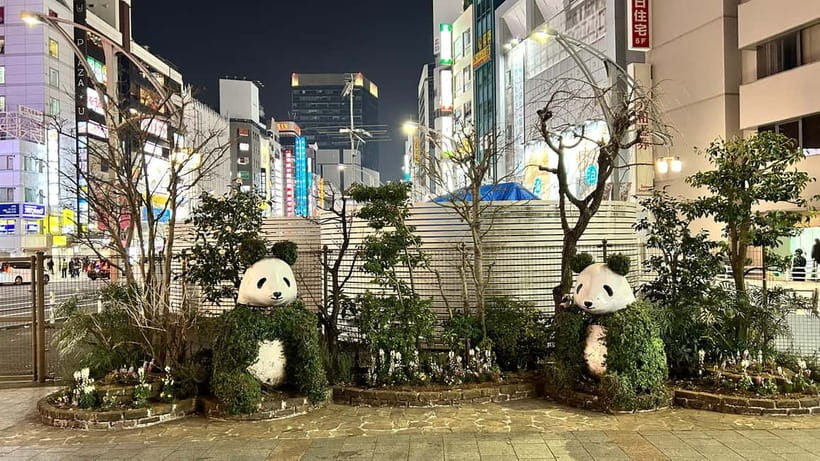
- Meeting at Ueno Station: Seven Eleven next to the pandas
- Ueno Park at dusk: cherry blossoms and calmer Tokyo moments
- The train ride to Akihabara: watching Tokyo switch on
- Akihabara free time: electronics and anime hunting with guidance
- Shibuya Crossing: iconic night photos without getting lost
- Shinjuku and Kabukichō: night lights and a safe, guided stroll
- Karaoke in Shinjuku: the fun part you can actually control
- Price and value: what $79 buys in real Tokyo costs
- Who this tour fits best (and who should choose something else)
- Quick decision guide: should you book this Tokyo night tour?
- FAQ
- What does the Tokyo night tour include?
- Where do I meet the guide?
- Which stops are included on the itinerary?
- Do I need to pay for karaoke separately?
- Are meals included?
- Is the tour available in Spanish?
- What should I bring for the night tour?
- Is the tour wheelchair-friendly?
- Can I cancel and get a full refund?
Key things that make this Tokyo night tour work
- Ueno Park at dusk: cherry blossoms and open pathways before the city noise ramps up
- Akihabara free time: enough room to browse electronics, anime, and video-game shops at your own pace
- Shibuya Crossing photo moment: a guided arrival so you can actually enjoy the scene
- Shinjuku walk through Kabukichō: a night stroll through Tokyo’s entertainment-district lights
- Karaoke in a Shinjuku venue: a set activity with time to sing, not just watch
- Bilingual guide (English/Spanish): helpful context if you’re not traveling with fluent Japanese
Meeting at Ueno Station: Seven Eleven next to the pandas
Tokyo tours live and die on meeting-point clarity, and this one is refreshingly specific. You start at a Seven Eleven next to the pandas, near Ueno Station, and you’re told to use Exit C7. The guide holds a sign for Amigo Tours, so you can confirm you’re in the right place quickly.
Here’s the practical angle: show up at least 10 minutes early for check-in. At night, that extra buffer saves you from sprinting through station corridors while everyone else is already lining up. If you’re coming by transit, this is one of those setups where you’ll be grateful you didn’t cut it close.
You also finish back at the meeting point. That matters more than people expect, because it reduces the “what now?” stress after karaoke and night walking.
You can also read our reviews of more city tours in Tokyo


Ueno Park at dusk: cherry blossoms and calmer Tokyo moments
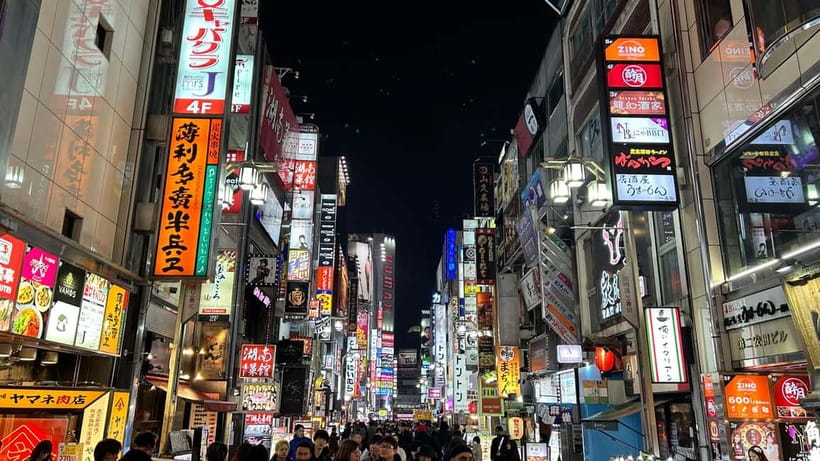
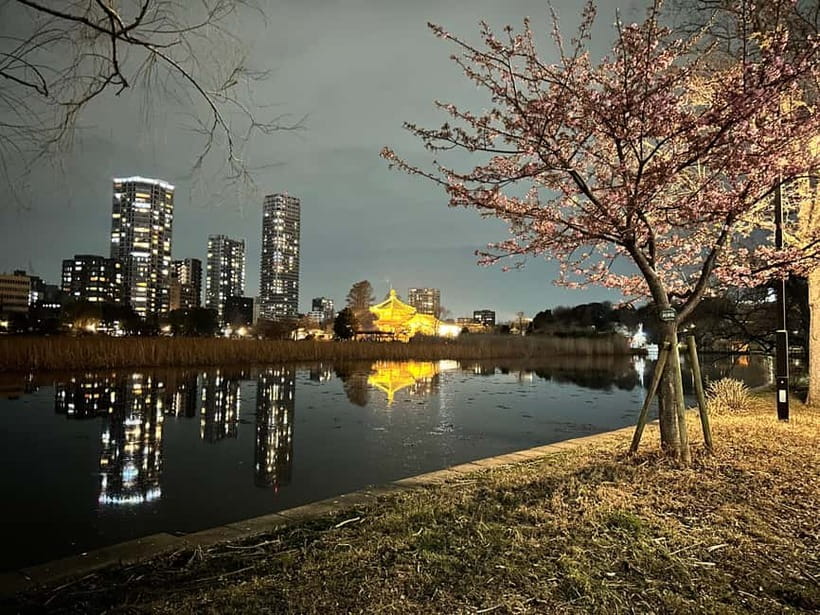
The first stop is Ueno Park, and the key word here is timing. As dusk falls, you get the park’s open feel before the neighborhood lights take over. The tour’s framing leans into both scenery and atmosphere: you’ll stroll through paths where cherry blossoms are a highlight, and you’ll get context about why Ueno Park is such a well-known name on the Tokyo map.
Why this works for a night tour: parks reset your senses. After you spend time around Ueno’s greenery and wide walkways, the shift to neon districts later feels more dramatic—in a good way, not exhausting. It’s also a nice chance to set your photography settings before you hit the high-contrast chaos of Shibuya and Akihabara.
A small consideration: night air and uneven pavement happen in parks. If you’re the type who wears flip-flops on vacation, this is where you’ll wish you didn’t.
The train ride to Akihabara: watching Tokyo switch on
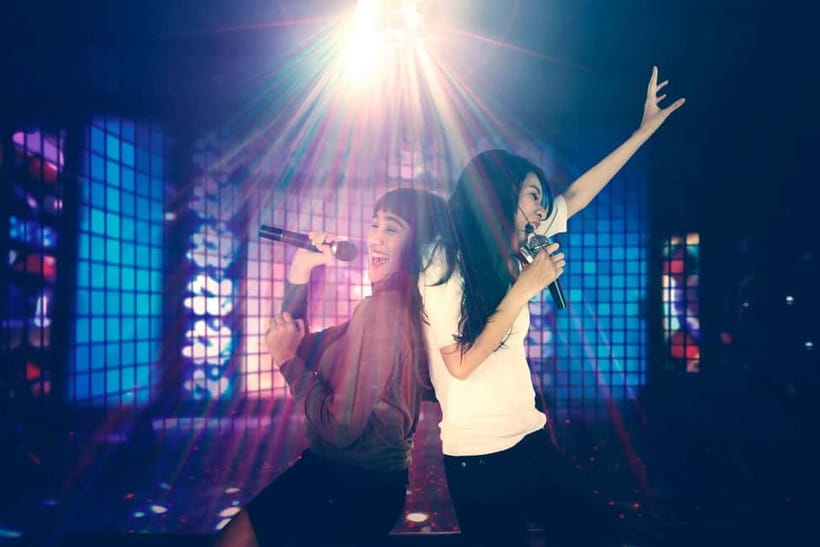
From Ueno, you transfer to Akihabara by train, and that transit segment isn’t just “getting there.” The plan is built around the city’s lighting coming up as you move. Train tickets for transfers are included, so you don’t have to decode route changes while tired.
This is one of the smartest parts of the itinerary because Tokyo night travel can be confusing if you’re doing it alone. Even if you know the basics of the subway system, it’s the little details—platform timing, which entrance to use, how to avoid getting turned around—that eat energy. Here, you’re basically buying back that mental effort.
If you like taking night photos, the train window can also give you quick framing opportunities as the city gets brighter. Keep your camera ready, but don’t break the flow by stopping every thirty seconds.
Akihabara free time: electronics and anime hunting with guidance
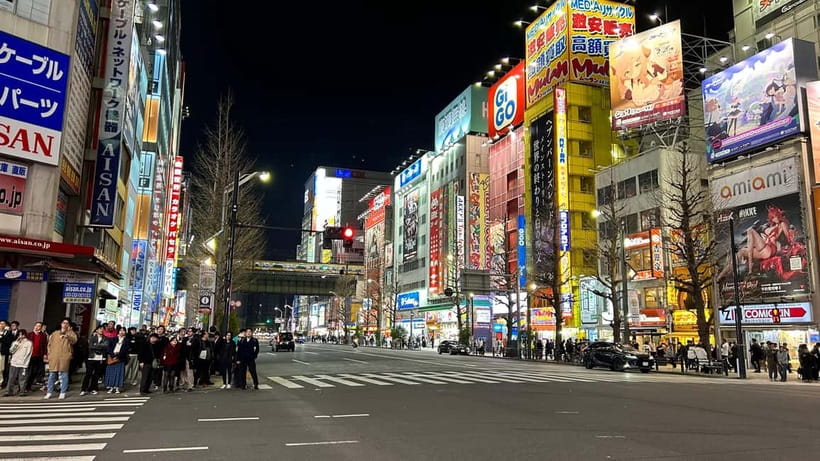
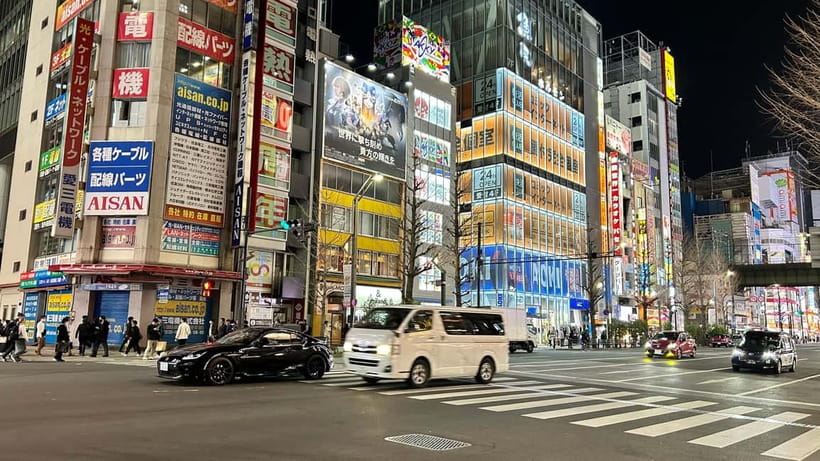
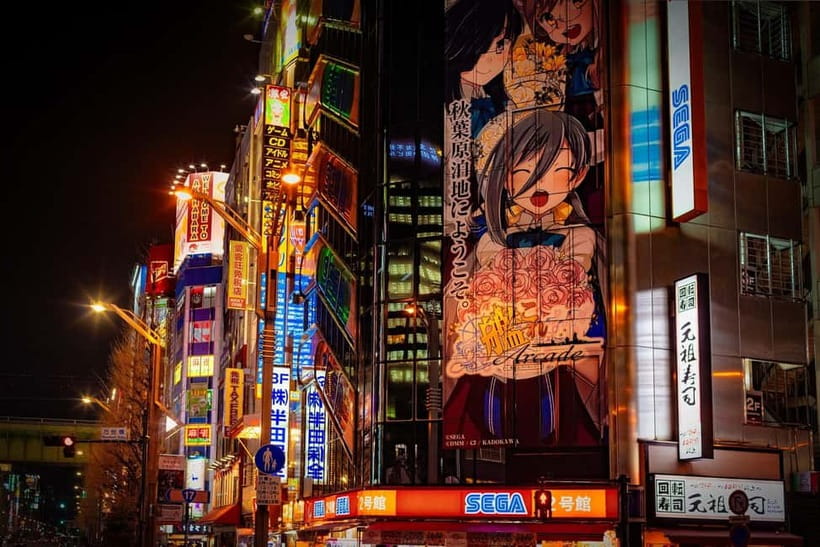
Akihabara is the big thematic stop, described as a hub for electronics and otaku culture, including anime and video games. The tour gives you a brief overview first, then you get free time to explore at your own pace.
This mix is the sweet spot. Too many tours “teach” and then push you out immediately. Here you start with the context—what the district is known for—so you can make better choices once you’re walking the streets and browsing shops.
What you can do with that free time:
- Browse electronics stores and gadget displays
- Wander through themed areas where anime and video-game culture shows up in signage and merch
- Look for memorabilia related to series you already enjoy (or just window-shop and learn what’s popular)
What you can’t really control: how much you’ll want to keep looking. Akihabara can pull you in fast. The upside is that the tour doesn’t treat you like a passenger on a factory line. You’re given time to actually look.
Possible drawback: if you’re not especially into electronics, games, or anime shopping, this section may feel less rewarding. In that case, focus on the visual culture—storefronts, themed streets, and the overall “everything tech” atmosphere.
Shibuya Crossing: iconic night photos without getting lost
Shibuya is where the tour leans hard into the “big Tokyo moment” idea. You arrive at the famous Shibuya Crossing, with thousands of people crossing at once, and you’ll pause for photos and atmosphere.
The value of a guide here isn’t just navigation—it’s timing and orientation. Without guidance, you might end up crossing at the wrong time, standing in a spot that doesn’t give you a good view, or spending energy trying to figure out how to line up for photos.
This stop is also a good mental reset between districts. Akihabara is niche and shop-focused. Shibuya is visual and crowd-focused. Your brain gets two different kinds of Tokyo energy in one evening, which makes the night feel like more than one long walk.
Practical tip: keep your phone charged and your camera settings simple. Night scenes in Shibuya can be very bright, and too much fiddling can lead to missed shots. Take a few steady frames, then just watch the crowd flow. The fun is in seeing how Tokyo organizes chaos.
You can also read our reviews of more evening experiences in Tokyo


Shinjuku and Kabukichō: night lights and a safe, guided stroll
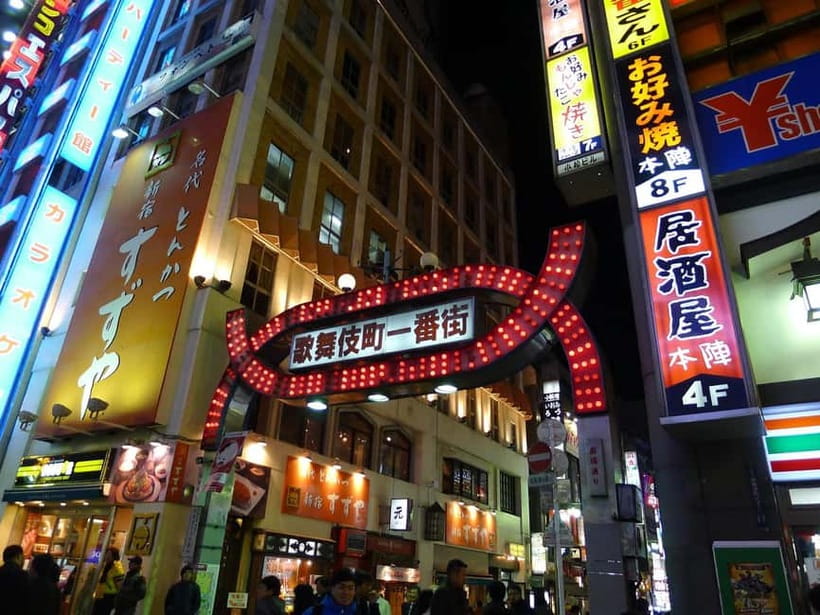
The final nightlife neighborhood is Shinjuku, and the walking portion goes through Kabukichō, Tokyo’s famous entertainment district. This is the part of the itinerary that shifts from daytime-style sightseeing into evening “Tokyo people watching.”
The tour is set up so you’re not wandering alone. Having a guide for this segment helps you feel more confident in a district known for busy streets and constant light. You’ll see the bright signage and busy energy up close, and you’ll get a sense of how Tokyo’s entertainment areas pulse after dark.
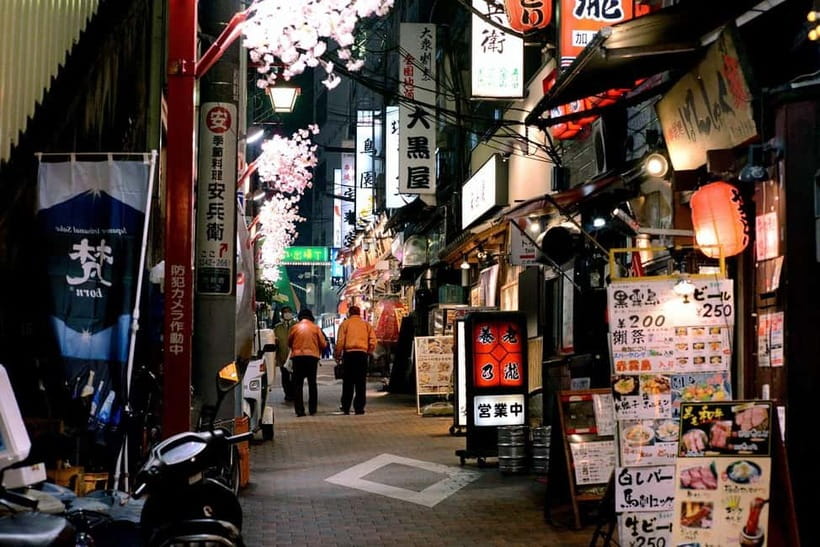
One key thing to keep in mind: this is nightlife territory. Even if you’re not going into bars or clubs, the streets can feel intense. If you’re sensitive to crowds, pace yourself during the walk and use water breaks. Comfortable shoes matter even more here than in the park.
Karaoke in Shinjuku: the fun part you can actually control
The night ends with karaoke in a Shinjuku venue, and the karaoke entrance fee is included. This is the “everyone participates” section of the tour, which is why it gets so much praise.
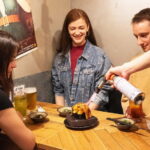
From the strongest feedback patterns, the karaoke experience is not treated like an awkward checkbox. The vibe is social and upbeat, with a room that supports group fun. One standout detail that shows up in accounts is that the karaoke setup can include a room atmosphere with lights and comfortable seating, plus a huge choice of songs. The energy tends to build fast: by the second song, people are often fully singing along, with laughter and drinks in hand.
What I like about this as a tour structure: it gives you a memorable finale even if you’re tired from walking. You’re not just watching Tokyo—you’re making noise with it, in your own language or whatever your vocal range allows.
If you’re worried about confidence, don’t. Karaoke in Japan often feels less about perfection and more about participation. You’ll likely be in a shared room setting where the group energy helps you relax.
Price and value: what $79 buys in real Tokyo costs
At $79 per person, you’re paying for a guided night sequence with multiple paid components. What’s included is the big value driver:
- Bilingual guide in Spanish and English
- Train tickets for transfers between itinerary points
- Karaoke entrance fee
- Snacks and drinks if you choose that option
When you add those up, the price starts to make sense. Tokyo transit isn’t free, and karaoke venues charge per entry. More importantly, you’re paying for guided transitions between districts—something that can cost you time and sanity if you do it on your own.
Where you should plan for extra spending: food and drinks are not included unless you pick the option that adds them. That means you’ll want to eat before the tour or budget for something easy during the evening. The tour does provide snacks/drinks only if that add-on is selected, so don’t assume dinner is handled.
Also note what’s not included: no statement says meals are covered, so treat $79 as a “night activities package,” not a “full meal plan.” That keeps expectations realistic and helps you avoid surprise costs.
Who this tour fits best (and who should choose something else)
This is a strong match if you want a structured Tokyo night with built-in variety: park calm, tech/anime streets, crowd-spectacle photos, then entertainment lights and a karaoke finale.
It also fits well if you want Spanish support. A number of guide mentions are tied to Spanish-speaking friendliness, and bilingual guidance is a real quality-of-life feature when you’re trying to understand what you’re seeing.
Choose a different style if:
- You hate walking and crowds, because this tour is designed for night strolls and transfers.
- You’re not interested in electronics/anime at all, since Akihabara is a core stop.
- You need wheelchair-friendly accommodations, because it’s not suitable for wheelchair users.
For everyone else, this tour is the kind of planning that makes Tokyo feel less like a maze and more like a set of moments you can actually enjoy.
Quick decision guide: should you book this Tokyo night tour?
Book it if you want:
- A guided route that hits Ueno Park, Akihabara, Shibuya Crossing, and Shinjuku karaoke in one evening
- Bilingual help in English/Spanish so the night makes sense as you go
- Included train transfers and a karaoke entry fee so you’re not juggling tickets and reservations
Skip it if:
- Karaoke isn’t your thing, or you’d rather spend the night freely choosing your own schedule
- You’re traveling with mobility needs that conflict with walking-heavy, non-wheelchair-suitable routes
- You don’t care about electronics/anime shopping vibes, since Akihabara free time is a big part of the experience
If you’re on the fence, here’s the tiebreaker I’d use: do you want Tokyo nightlife “with training wheels”? This tour does that well—so you can focus on seeing the sights, taking photos at the right moment, and singing your way out of the night.
FAQ
What does the Tokyo night tour include?
The tour includes a bilingual guide in Spanish and English, train tickets for transfers between stops, karaoke entrance fee, and snacks and drinks if you choose the option that includes them.
Where do I meet the guide?
Meet at the Seven Eleven next to the pandas at Ueno Station. Use Exit C7, and the guide will be waiting with a sign for Amigo Tours.
Which stops are included on the itinerary?
You’ll visit Ueno Park, Akihabara, Shibuya (including Shibuya Crossing), and Shinjuku (walking through Kabukichō) before ending with karaoke.
Do I need to pay for karaoke separately?
No. The karaoke entrance fee is included in the tour price.
Are meals included?
Food and drinks are not included unless you select the option that includes snacks and drinks. Otherwise, plan to purchase your own food and drinks.
Is the tour available in Spanish?
Yes. The guide is bilingual and the tour is available in English and Spanish.
What should I bring for the night tour?
Bring comfortable shoes, a camera, and a charged smartphone.
Is the tour wheelchair-friendly?
No. It is not suitable for wheelchair users.
Can I cancel and get a full refund?
Cancellation up to 24 hours in advance is eligible for a full refund.