REVIEW · TOKYO
Tokyo: 3-Hour Bike/E-Bike Tour of the City’s Highlights
Book on Viator →Operated by Tokyo Rental Bicycle · Bookable on Viator
Tokyo looks different when you’re pedaling. This 3-hour bike/e-bike tour stitches together major Tokyo sights with a guide so you cover ground fast and stay oriented—no wandering, no guesswork, just motion. I like that it’s built for tight schedules, and I really like how the guides (Naoki, Hiroto, Rin, Sho, Casey, and others) share stories that make each neighborhood feel more than just a postcard.
One thing to consider: you’ll ride in traffic and at crowd-heavy spots. If you’re not comfortable cycling through busy intersections, plan to take it slow at the start, follow your guide’s signals, and understand that the goal is to keep you moving with brief stops—not a long sightseeing crawl.
In This Review
- Key highlights you’ll actually feel on the ride
- Why a 3-hour bike or e-bike tour fits Tokyo so well
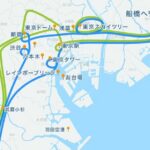
- Meeting at Shibakoen and finishing near Harajuku: the route logic
- Zojo-ji Temple by Tokyo Tower: a smart first hit of history
- Imperial Palace gates and the Kokyo Otemon entrance: where photos matter
- Tokyo Station Marunouchi frontage: red-brick heritage in motion
- Akasaka Palace (State Guesthouse): the quiet power of government spaces
- Japan National Stadium and the Olympic legacy zone
- Aoyama Street: design, architecture, and an easy sightseeing pace
- Shibuya Cat Street: street fashion energy up close
- Shibuya Crossing on two wheels: the payoff (and the nerves test)
- Ending at Yoyogi Park and Harajuku Station: where to go next
- What you get included (and what you need to bring)
- Riding safely in central Tokyo: how to make it easier on yourself
- Price and value: is $63 a good deal for Tokyo?
- Who should book this bike highlights tour?
- Should you book? My take
- FAQ
- How long is the Tokyo bike/e-bike highlight tour?
- What are the main highlights on the route?
- Where does the tour start and end?
- Is the helmet included in the price?
- Is there anything included for bad weather?
- What else is included besides the bike and guide?
- Do I need to be an experienced cyclist?
- What is the cancellation policy?
Key highlights you’ll actually feel on the ride
- 8–9 major stops in about 3 hours, so you get an overview without burning your day
- Guides who connect history to street-level Tokyo, with clear directions for riders
- Navigation and pacing handled for you, which is a big deal in a city this size
- Shibuya Crossing on a bike, plus time in style zones like Aoyama Street and Cat Street
- Raincoat included on rainy days, and a phone/wallet/keys mini pouch on the bike
- Helmet rental is extra, so bring cash if you want it (¥1000)
Why a 3-hour bike or e-bike tour fits Tokyo so well
Tokyo is amazing, and also huge. On foot, you can lose time zigzagging between areas, especially if you’re trying to hit famous landmarks in one day. On a bike, you trade that friction for momentum—more Tokyo per hour, and you spend your energy seeing instead of figuring.
This tour keeps the stops focused and the ride purposeful. Zojo-ji Temple, the Imperial Palace area, Tokyo Station’s Marunouchi frontage, and Shibuya Crossing are all on the itinerary, but the route is designed so you don’t feel stuck in any one place for too long. If you like getting your bearings fast, this format makes sense.
You also get something underrated: a local guide on a bike. In a city where street flow and crossing rules can feel intense, the guide becomes your moving safety net and your context provider at the same time.
You can also read our reviews of more cycling tours in Tokyo
Meeting at Shibakoen and finishing near Harajuku: the route logic
You start at the Statue of Commodore Perry in Shibakoen (Minato City). That’s a memorable starting point, and it helps you mentally place yourself before you start threading through central Tokyo.
You end near Yoyogi Park, close to Harajuku Station, and the tour finishes in the Jinnan area (shopping and dining between Yoyogi Park and Shibuya, with short walks to both). I like this ending because it doesn’t trap you far away from where people actually want to go next—cafés, stores, and easy onward transit.
The ride itself has a rhythm: short photo moments, quick perspective changes, then back on the bike. It’s a “see and go” approach. If you like lingering, you might wish for more time at each stop, but the payoff is that you cover a lot.
Zojo-ji Temple by Tokyo Tower: a smart first hit of history
The tour opens with Zojo-ji Temple, a major religious center and a resting place linked to historical warlords. It’s also right by Tokyo Tower, so you get the immediate contrast Tokyo is famous for: old stone and modern skyline energy side by side.
The time here is brief—about 5 minutes. That means you won’t do a slow temple experience, but you will get the key view and the orientation. In practice, that’s perfect if you want a first taste of Tokyo’s depth without spending your whole morning standing still.
A practical tip: this is an area where photos can be tempting from every angle. Keep moving. Grab your wide shot, then let your guide’s direction pull you to the best view before you hop back on.
Imperial Palace gates and the Kokyo Otemon entrance: where photos matter
After Zojo-ji, you pivot to the Imperial Palace area. You’ll spend time learning about the Imperial Palace as the residence of Japan’s Emperor, then focus on the Kokyo Otemon Gate, the main entrance and a classic photography target.
This stop sequence works because it gives you both context and a visual anchor. You learn what the site represents, then you see the gate itself—so it’s not just a random landmark stop. Expect about 10–15 minutes total across these palace-related moments.
If you’re the type who worries about getting the “right” angle for famous gates, you’re in luck here. The tour timing is built for quick, high-impact viewing, and the guide can help you find where to stand without blocking others.
One realistic note: palace grounds are not designed for long roaming during a bike tour. This is best for people who want the highlight, the significance, and the next move.
Tokyo Station Marunouchi frontage: red-brick heritage in motion
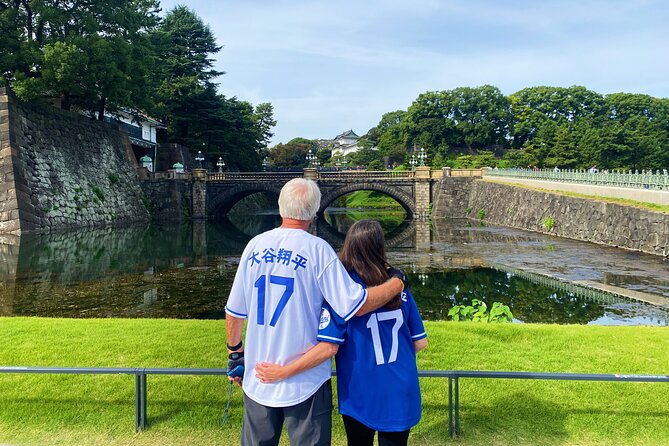
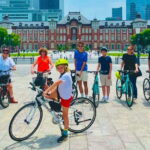
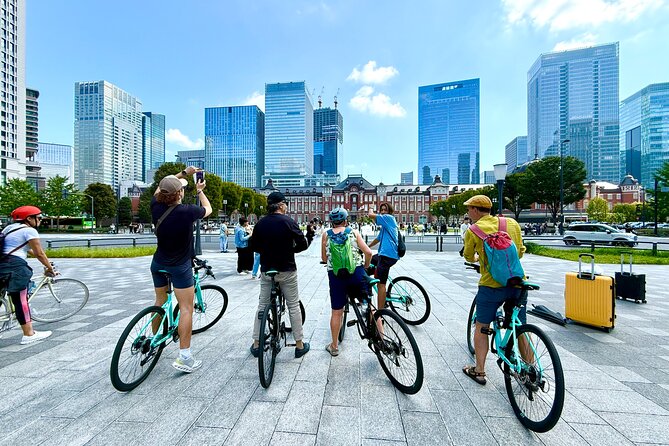
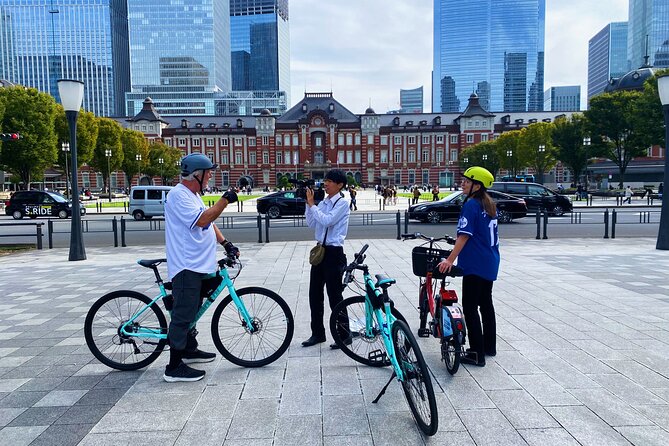
Tokyo Station is one of those places you can walk past while you’re doing everything else—unless you plan it. This tour gives Tokyo Station the spotlight with the Marunouchi Ekimae Hiroba, where you’ll see the iconic red-brick facade.
The stop is short (about 10 minutes), but it’s enough time to register the look and take a few good shots. What I like is that it breaks the pattern of temples and gates with an architecture-and-transport moment.
This is also a useful mental reset. You’ll feel the shift from ceremonial landmarks to the city’s fast rail hub energy. It helps you understand Tokyo as a place where movement is part of daily life, not just tourism.
You can also read our reviews of more city tours in Tokyo


Akasaka Palace (State Guesthouse): the quiet power of government spaces
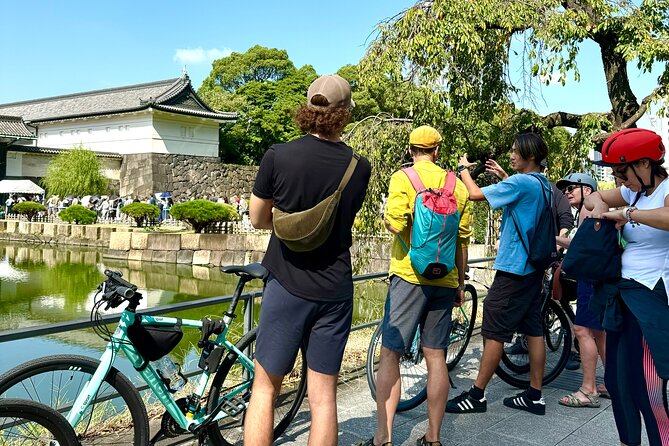
Next comes Akasaka Palace, originally built as a royal villa and now used as a state guesthouse. You only get about 5 minutes here, so think of it as a brief cultural checkpoint rather than a full visit.
This stop can be surprisingly satisfying if you like Japan’s blend of private space and public history. Even in short form, it adds variety to the route, which otherwise stays focused on heavy sightseeing icons.
If you want to maximize your time at stops, this is one where listening matters. A short stop paired with a good explanation can do more than an extra five minutes of staring.
Japan National Stadium and the Olympic legacy zone
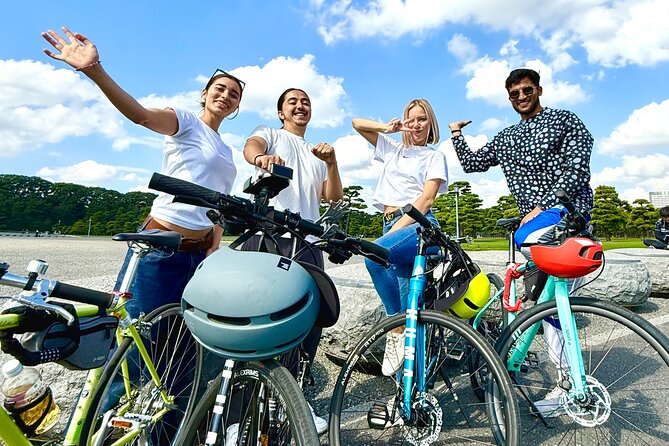
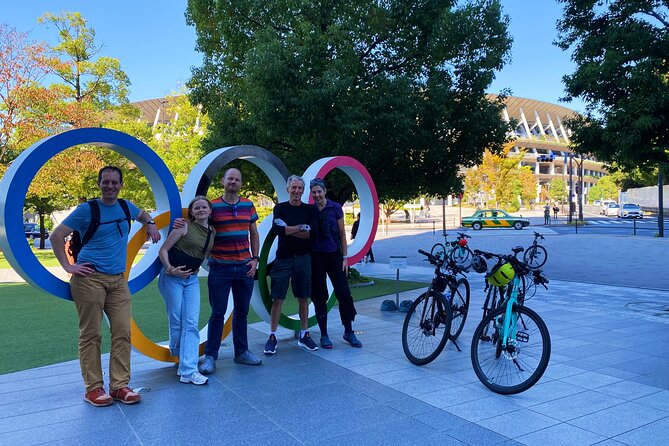
You’ll ride by Japan National Stadium, the venue for the 2020 Olympic and Paralympic games. The stop is about 15 minutes, which is longer than some of the other landmarks.
That extra time is helpful because the stadium area can be visually impressive from different vantage points. You’ll also be building context for Tokyo as a modern city that still remembers major events and world attention.
This is also a good break point in the tour’s flow. By this stage you’ve already done several stops, so having a longer view moment helps your brain reset before the ride shifts to fashion streets.
Aoyama Street: design, architecture, and an easy sightseeing pace
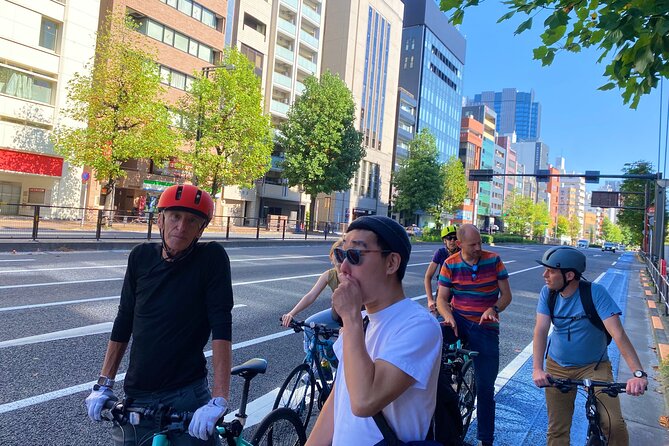
Aoyama Street is where the route starts feeling more like Tokyo’s style culture. You’ll spend about 5 minutes in the area, seeing high-end fashion brands and distinct architecture.
I like Aoyama for bike tours because it’s visual without demanding deep exploration. You can absorb the vibe quickly—clean streets, polished storefronts, and that feeling Tokyo has when it’s showing you its “present.”
Because the stop is short, pay attention to your guide’s pointers. If they tell you where to look for specific architectural features or typical street layout cues, you’ll come away with a better sense of the neighborhood than if you only snap a couple of photos.
Shibuya Cat Street: street fashion energy up close
Cat Street is next, with about 5 minutes on the itinerary. This is where Tokyo becomes more youthful and fashion-forward, with the mix of newer labels and vintage-style shopping you’ll associate with Shibuya.
A key advantage of seeing Cat Street by bike: you can move between micro-areas quickly. If you tried to do this on foot, you’d spend time crossing, retracing, and getting turned around in dense blocks.
This is also one of the stops where you’ll probably start recognizing what you’re seeing from social media and travel photos, but now you’re close enough to notice the small texture—signage style, storefront layout, street rhythm.
Shibuya Crossing on two wheels: the payoff (and the nerves test)
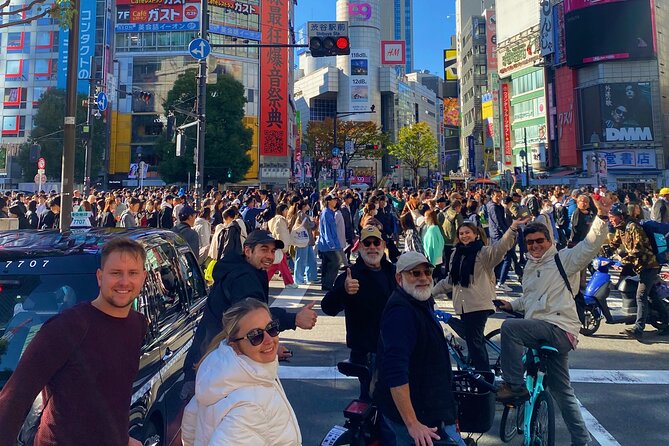
Then comes Shibuya Crossing—about 5 minutes, and yes, you’ll bike through it. This is the moment many people book for, and the one where you need to be mentally ready for crowds and motion.
One of the strongest themes from the best-guided experiences is safety and guidance in the thick of it. Guides explain how to handle traffic flow and how to stay together, and they ride in front and back to manage the group.
If you’re anxious about riding in busy places, don’t hide it—ask early. A calm start usually makes everything easier later. Also, remember the tour pacing: short looks, then back into movement. You’re here to experience the intersection dynamic, not to picnic in the middle of it.
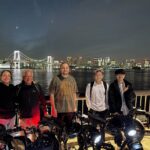
Timing can add extra payoff. Some people recommend booking the afternoon tour if you want the possibility of seeing Shibuya Crossing near night lighting. Even if you don’t get full-on night vibes, you still get the signature effect: the crossing as a system, not just a photo spot.
Ending at Yoyogi Park and Harajuku Station: where to go next
The tour finishes at Yoyogi Park, right next to Harajuku Station. That’s a smart landing spot because Harajuku and the surrounding streets are easy to explore after the ride.
You’ll end around the Jinnan area, with short walks to where you’ll likely want to wander for dinner and browsing. I like this because you can transition smoothly from guided sightseeing into independent wandering, without the “now what?” feeling.
If your day is crowded with other plans, this ending reduces stress. You’re not pushed far from transit, and you’re placed right in an area with lots to do.
What you get included (and what you need to bring)
Included items are part of why this feels low-hassle. You get use of the bicycle, an in-person guide (English and Japanese), raincoat on rainy days, a mini pouch on the bike for phone/wallet/keys, and bike insurance.
A couple of details to plan around:
- Helmet is not included. Rental is available for ¥1000, and you need cash on the activity date.
- Food and drink are not included, so eat before you meet—or plan on buying a snack after you finish.
- Child seats cost extra (set-up fee is ¥3000), and the provider asks you to contact them at least 2 days before if you need one.
Most importantly, this tour assumes you have moderate physical fitness. It’s not described as a hardcore workout, but you are riding for about 3 hours total. If you’re comfortable with steady cycling and you can manage a few traffic segments, you’ll be fine.
Riding safely in central Tokyo: how to make it easier on yourself
Even with a guide, your comfort matters. This route can include pockets of traffic and crowd-heavy segments. The good news: multiple riders highlight that guides explain road rules and group-handling clearly.
Here’s how you set yourself up for a smoother ride:
- Start confident. Ask questions before you roll out.
- Keep your phone put away during movement. Use the mini pouch so you’re not digging while biking.
- Stay relaxed at Shibuya Crossing. Your job is to follow the guide and keep spacing.
- If you’re unsure about speed, slow down early rather than fighting later.
Also, consider that e-bike assist can make a big difference. Some guides and riders talk specifically about pedal assist being helpful, especially when traffic is stop-and-go. If your bike has assist settings, using them wisely can turn the ride from effort into sightseeing.
Price and value: is $63 a good deal for Tokyo?
At about $63.01 per person for roughly 3 hours, this isn’t a budget bargain—but it’s often a good value for what you’re buying: transport + route planning + a guide who handles the “how do I get there” problem.
Walking or taking transit to hit all these landmarks would take more time than you think, and it could leave you with a stressful day trying to line up famous places. A bike tour compresses that into a single guided block, which is exactly what time-tight visitors need.
It’s also a value play if you want Shibuya Crossing as more than a distant view. Getting through that intersection on a bike is a different experience than standing in a crowd.
Where it’s not the best deal: if you want long time at every site, you might feel slightly rushed. But the tour is transparent in its style—short stops, steady ride, lots of variety.
Who should book this bike highlights tour?
This tour is ideal if:
- you want a fast overview across central Tokyo highlights
- you enjoy guided context instead of reading guidebooks alone
- you can handle riding in moderately busy traffic
- you’re okay with short stops and prefer moving through neighborhoods
It’s less ideal if:
- you want a slow, museum-like pace
- you’re very uncomfortable riding in crowds
- you want extensive time for shopping at each stop
If you’re doing Tokyo for the first time and you want to get your bearings, this is one of the smartest ways to spend a few hours. Several people also recommend doing it early in the trip, because it helps you plan where to go next based on what you liked most.
Should you book? My take
Book it if you want a guided, efficient way to see Tokyo’s biggest hits without getting buried in directions. You’ll get a clean route through iconic landmarks like Zojo-ji and Shibuya Crossing, plus variety in architecture and style areas like Tokyo Station, Aoyama Street, and Cat Street. The guide component is the difference-maker here—clear instructions for safety, plus stories that give the stops meaning.
Skip it if your top priority is unhurried time at each sight. Also skip it if you’re not comfortable riding in crowded intersections, because Shibuya Crossing is the featured moment and you’ll be right in the thick of it.
If you book, go in with the right mindset: treat it as a fast, guided “Tokyo orientation on wheels.” Then use the finishing point near Yoyogi and Harajuku to keep exploring.
FAQ
How long is the Tokyo bike/e-bike highlight tour?
It runs for about 3 hours, including travel time between stops.
What are the main highlights on the route?
You’ll see Zojo-ji Temple, the Imperial Palace area including Kokyo Otemon Gate, Tokyo Station (Marunouchi Ekimae Hiroba), Akasaka Palace (State Guesthouse), Japan National Stadium, Aoyama Street, Shibuya Cat Street, and Shibuya Crossing.
Where does the tour start and end?
It starts at the Statue of Commodore Perry (Shibakoen, Minato City) and ends at the Bell of Peace (Udagawacho, Shibuya). The tour finishes in the Jinnan area between Yoyogi Park and Shibuya, near Harajuku Station.
Is the helmet included in the price?
No. Helmet rental is available for ¥1000 and requires cash on the day of the activity.
Is there anything included for bad weather?
Yes. A raincoat is included on rainy days.
What else is included besides the bike and guide?
You get a mini pouch for your phone/wallet/keys, bike insurance, and an in-person guide who speaks English and Japanese.
Do I need to be an experienced cyclist?
The tour requires moderate physical fitness. It’s a bike tour in busy areas, so you should feel comfortable riding in traffic and crowd conditions.
What is the cancellation policy?
You can cancel for a full refund if you cancel at least 24 hours before the experience starts. If you cancel less than 24 hours before, you won’t receive a refund.