REVIEW · TOKYO
Tokyo: Mt. Fuji Tour, Hakone Ropeway, Owakudani, Lake Ashi
Book on GetYourGuide →Operated by TAIHOU CO,LTD · Bookable on GetYourGuide
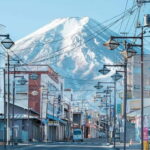
Fuji views feel like a lucky weather lottery, and this tour stacks the odds. You’ll get Lake Ashi with the famous red torii gate and a real slice of Hakone with Owakudani’s black eggs.
The one catch: Mt. Fuji visibility isn’t guaranteed, and this is a long 10-hour day with meals coming later (and lunch not being included).
In This Review
- Key things to know before you go
- Getting to Hakone: Tokyo pick-up, timing, and how the day stays on track
- Heiwa no Torii and Hakone Shrine on Lake Ashi
- Pirate ship cruise on Lake Ashi: worth the add-on if you want the water views
- Hakone Ropeway: classic angles, plus one thing to plan around
- Owakudani Volcanic Valley: black eggs, steam, and the guided pace
- Lake Yamanaka Swan Lake Shore: quick Fuji-in-the-frame photography
- Lunch on a long day: what you should actually plan for
- Oshino Hakkai: the eight ponds where Fuji snowmelt does the work
- What the guides do well (and how names like Jack, Kousei, and Wanting fit in)
- Price and value: why $54 can work for a full Fuji + Hakone sampler
- Should you book this Mt. Fuji and Hakone day tour?
- FAQ
- Where do I meet the guide for this Mt. Fuji tour?
- How long is the tour?
- What’s included in the tour price?
- Is the pirate ship cruise included?
- Is lunch included?
- What should I bring?
- Is Mt. Fuji guaranteed to be visible?
- What happens if the Hakone Ropeway closes?
- What languages are available for the tour guide?
- Is this tour suitable for everyone?
Key things to know before you go
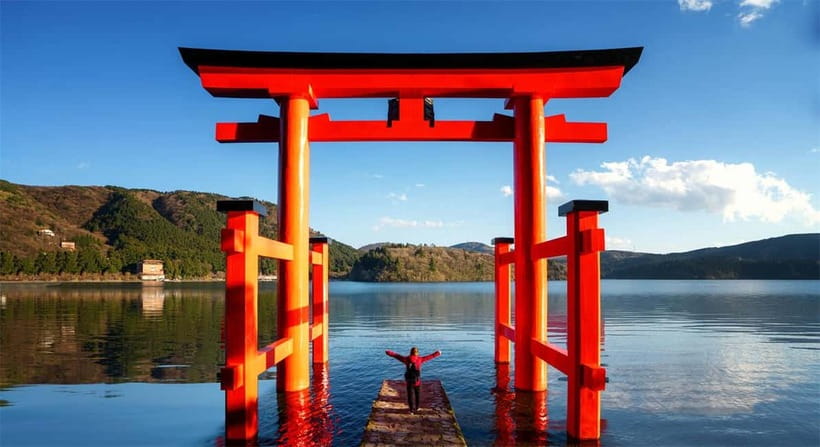
- Heiwa no Torii + Hakone Shrine: short, scenic stops with strong photo payoff over Lake Ashi.
- Ropeway panoramas: included Hakone Ropeway ride for classic Mt. Fuji angles and Lake Ashi views.
- Owakudani geothermal stops: guided time in the volcanic valley, plus the black egg snack ritual.
- Optional pirate ship cruise: add-on views of torii and Fuji over the water (self-paid around 1700 JPY).
- Oshino Hakkai ponds: eight snowmelt-fed ponds for reflective Fuji-style photos near the end of the day.
- Lunch is on you: you’ll either bring snacks or plan for a restaurant break suggested by the guide.
Getting to Hakone: Tokyo pick-up, timing, and how the day stays on track
This is a shared day trip built around efficiency: you start in Tokyo, then let the group logistics do the heavy lifting. You’ll meet your guide at Tokyo Station or Shinjuku Station (your exact meeting point can vary), and you should arrive at least 15 minutes early. Staff are typically easy to spot, wearing a yellow vest, which helps when lots of groups pile into the same pick-up area.
The first big block is simple: an air-conditioned bus ride of about 2 hours toward Hakone. You’ll want to treat the bus like a transit bubble, not a comfort zone—no eating is allowed in the vehicle, and a couple of practical details matter: bring water and snacks, and plan to eat breakfast before you go. The tour is long, and lunch is not included in the price.
One more reality check: it’s multilingual and shared, with English, Japanese, Chinese, and Korean options depending on your guide. That’s great for first-timers who want context, but it also means the schedule is managed for the group, not for private wandering.
You can also read our reviews of more tours and experiences in Tokyo.

Heiwa no Torii and Hakone Shrine on Lake Ashi
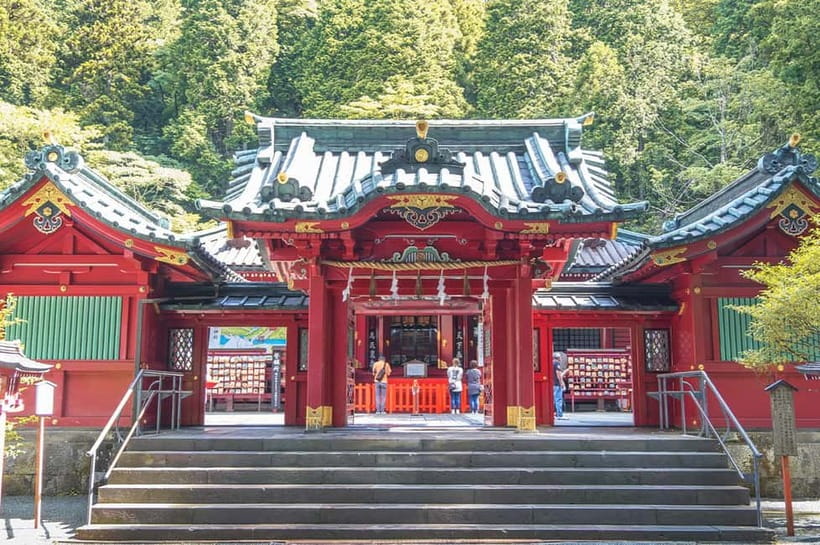
Hakone’s “red torii over the water” moment is the reason many people book this day. You’ll stop at Heiwa no Torii (about 20 minutes), then head to Hakone Shrine for another 20 minutes plus some free time in the area.
A few useful details help you make the most of this short window:
- This isn’t a museum-style stop. You’re here for atmosphere: shrine grounds, the lakeside feel, and getting your photos without turning it into a sprint.
- The shrine is old: it was founded in 757, so it has that classic Japanese sense of place—quiet, layered, and not just scenic.
- The torii gate photo is a highlight, but timing and crowding can affect how long you really get at the exact best angle. Go with the mindset: you’re there to get a great shot, then move on. You’ll thank yourself later.
Important seasonal note: the Lake Ashi torii gate will be closed from Dec. 28 to Feb. 10, 2026. If your travel dates overlap that window, your expectations should shift toward the shrine atmosphere and the rest of the Hakone highlights.
Pirate ship cruise on Lake Ashi: worth the add-on if you want the water views
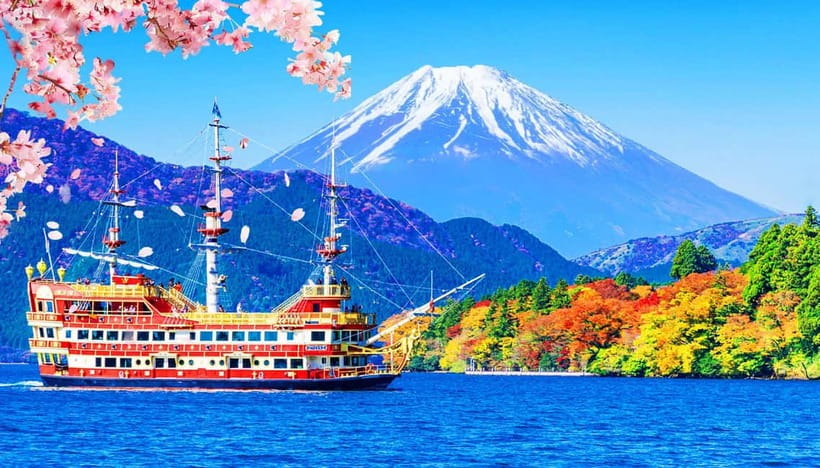
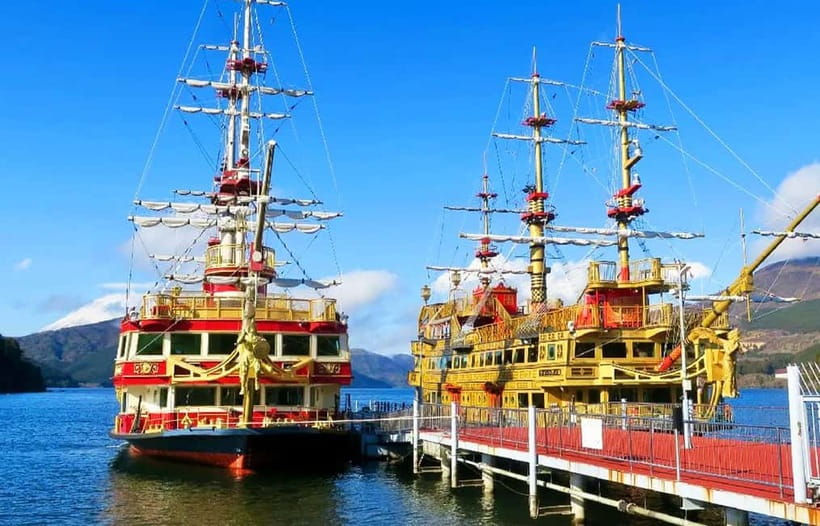
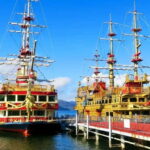
After the shrine stops, you’ll have a chance to add the Hakone pirate ship cruise on Lake Ashi. This is optional and self-paid (about 1700 JPY). If you take it, you’ll choose among themed ships, including Royal II, Victory, and Queen Ashinoko, and enjoy about 25 minutes on the water.
Why I like this option: it turns Lake Ashi into something more than a backdrop. The torii gate, the lake, and (when weather cooperates) Mt. Fuji all sit in the same frame from a moving vantage point. Even if Fuji is faint, the water angle is still special.
One practical tip: when queues get long, you don’t have to lose your photo time. There’s a workable approach—if the line is overwhelming at the torii gate, you can still get a nice picture from areas near the gate and walk the view to find a clean angle.
Weather note: if visibility is poor, the cruise can feel like “pretty lake time” instead of “Fuji moment.” That risk is true for the whole day, not just the boat.
Hakone Ropeway: classic angles, plus one thing to plan around
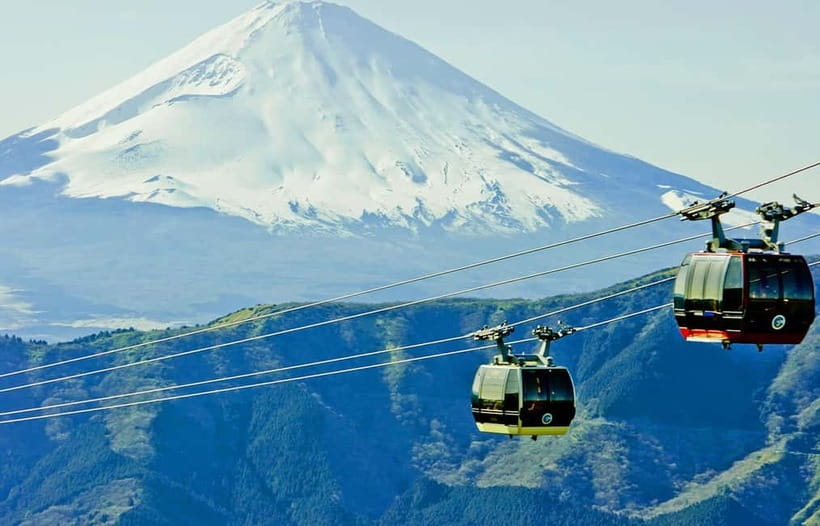
Next up is the Hakone Ropeway ride. This part is included, and it’s where you get elevated perspectives over Mt. Fuji (if it’s visible) and Lake Ashi. Expect about 30 minutes for the ropeway segment and sightseeing time around it.
Two things you should keep in mind:
- The ropeway is weather-sensitive. Visibility can change fast, and clouds can move in like they have a schedule.
- There’s a clear contingency: if the ropeway closes due to bad weather or maintenance, you’ll need to email for a ticket refund (1000 JPY per person).
If you’re thinking “I’ll just wing it,” don’t. Bring your camera, wear footwear you can walk in comfortably, and be ready to stop moving when the group does. The ropeway portion is short, and your best photos come from being ready before the doors open.
Owakudani Volcanic Valley: black eggs, steam, and the guided pace
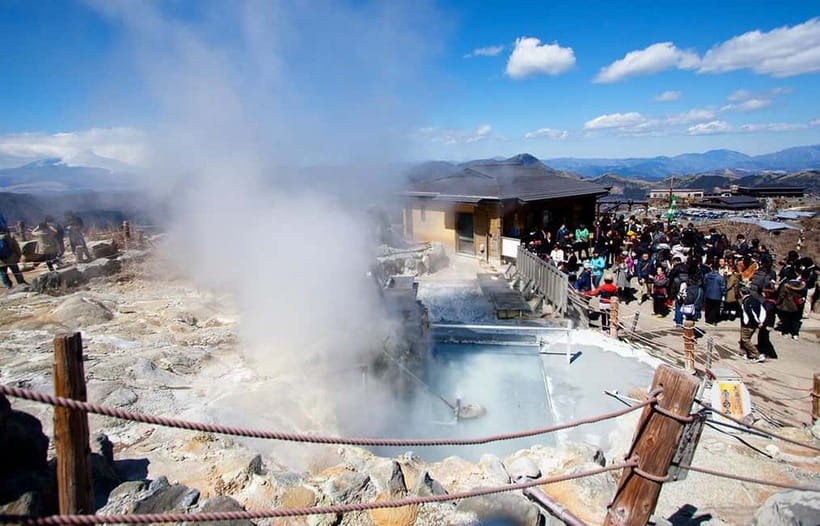
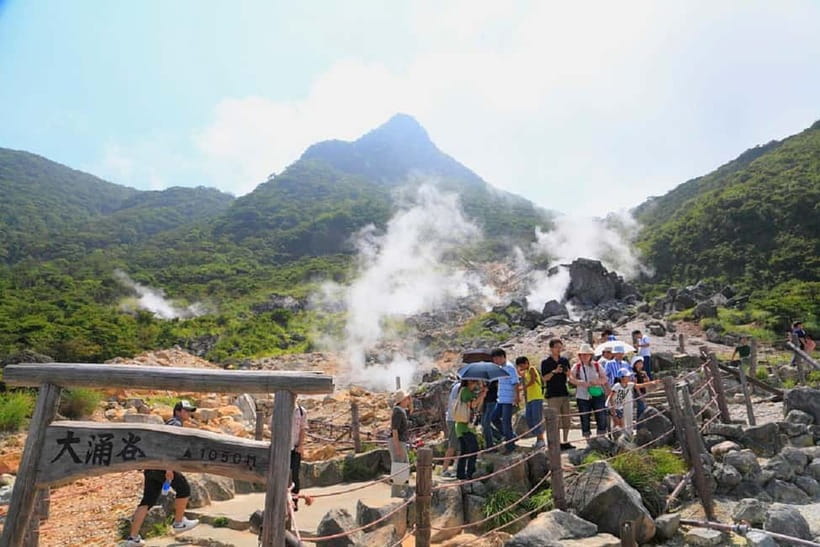
Then you arrive at Owakudani, the volcanic valley known for geothermal activity. This area formed after a massive eruption of Mt. Hakone about 4,000 years ago, and the ground still tells that story with steam and heat.
You’ll get about 50 minutes here with a guided tour and time for sightseeing. It’s not just a quick look—this stop is designed to make you understand what you’re seeing. Your guide will point out the geothermal features and explain the area in plain terms that help the place feel real.
The signature snack: black eggs, boiled in volcanic spring water. It’s a simple thing, but it’s memorable—and it’s one of those food moments that makes the volcanic setting feel personal. If you’re the type who likes to “collect” a story with each photo, the black egg experience is worth not skipping.
Practical advice:
- Wear shoes with traction. The ground can be uneven and steamy.
- Expect strong smells near geothermal areas. If you have breathing sensitivities, this matters—this tour is listed as not suitable for people with respiratory issues.
Lake Yamanaka Swan Lake Shore: quick Fuji-in-the-frame photography
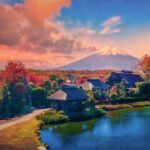
After Owakudani, you head to Lake Yamanaka and stop at 白鳥浜 (Swan Lake Shore). You’ll have about 20 minutes for a photo stop and free time.
This is one of those stops that can be magic or just pleasant, depending on the day. When Mt. Fuji shows up clearly, it can become an excellent background for swan photos. The area is described as home to many swans, so even if you’re not chasing a perfect shot, it’s a nice break from the volcanic and shrine intensity.
One timing reality: because the day is structured and routes can shift, swan feeding might not always happen when you arrive. The best mindset is flexibility. Show up, look around quickly, take your photos, and move on when the group calls.
Lunch on a long day: what you should actually plan for
Lunch is a big planning point here. Lunch is not included in the tour price. You can:
- bring something to eat,
- buy lunch at attractions, or
- follow the guide’s suggested restaurant stop.
The schedule includes a local restaurant break of about 40 minutes later in the day, but it may not be as early as you’d like. Some guides run late on breaks if queues or traffic stack up. That’s why the tour strongly encourages bringing snacks and water, and why no one should assume they’ll eat comfortably at a predictable time.
My advice: treat breakfast as mandatory and snacks as insurance. If you’re prone to getting cranky when you’re hungry, pack like it’s a hike, not a city day.
Oshino Hakkai: the eight ponds where Fuji snowmelt does the work
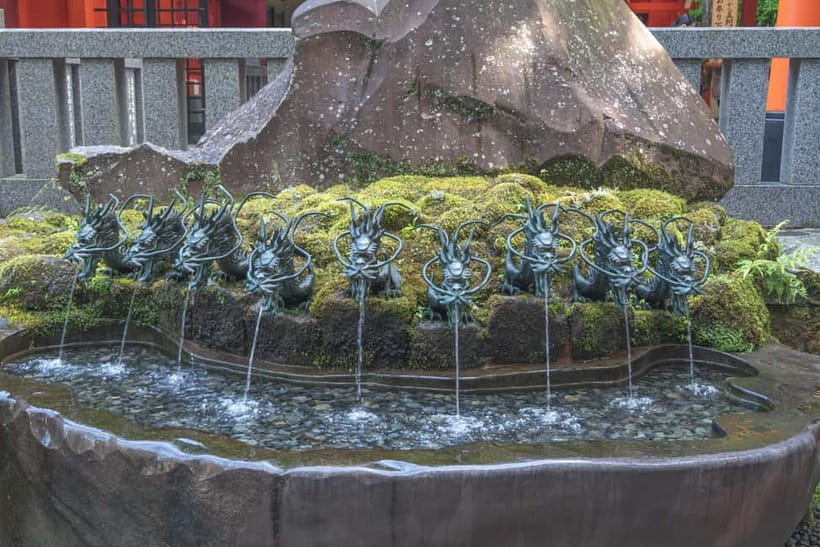
Near the end of the day, you’ll visit Oshino Hakkai, a scenic area known for eight crystal-clear ponds formed from Mt. Fuji’s snowmelt. You’ll have about 40 minutes for photos and sightseeing.
Why this stop is a strong closer: it’s calmer than the volcanic valley and it feels more “Fuji mythology meets real water.” If the mountain is visible, the reflections can be excellent. If Fuji is hidden, the ponds are still scenic and easy to enjoy in a slower rhythm.
This is also one of the best places to practice being efficient:
- Take your establishing photo fast.
- Walk a bit to find cleaner reflections.
- Don’t get stuck only at one angle, because your time here is timed, and the return ride is coming.
What the guides do well (and how names like Jack, Kousei, and Wanting fit in)
A big part of why people rate this tour so highly is the guide style: clear explanations, smooth timing, and a “everyone gets oriented” approach. You may hear guide names like Wanting, Leonard, Jack (including Captain Jack), Kousei, Tom, Andrew, or Sato—and the common thread is how they keep the day moving while still giving context about what you’re looking at.
You’ll get English support (and other language options), plus guidance on where to be and when to be there. That matters on a route like this, where lines can form quickly at major photo points like the torii gate, the boat, and the cable system.
If you want a day trip that explains the “why” behind the “wow,” this tour fits that goal.
Price and value: why $54 can work for a full Fuji + Hakone sampler
At about $54 per person for this 10-hour circuit, the value comes from what’s bundled. You’re paying for:
- round-trip transport from Tokyo with pickup/drop-off at two designated points,
- an air-conditioned vehicle,
- parking fees,
- a tour guide, and
- the included Hakone Ropeway fare.
Meals and the optional pirate cruise are the main extras you’ll likely add. The pirate ship is around 1700 JPY, and food/drinks aren’t included. Lunch is effectively an on-your-own cost.
So the math works best if you:
- want the ropeway,
- want a guided structure across multiple sites,
- and don’t mind buying lunch.
If you hate group pacing, this price might feel tight because you’re paying for logistics and access, not for freedom.
Should you book this Mt. Fuji and Hakone day tour?
Book it if you’re a first-timer who wants an efficient, full-day sampler: Lake Ashi torii + Hakone Shrine, ropeway views, Owakudani geothermal valley with black eggs, Lake Yamanaka swan shore, and Oshino Hakkai ponds. It’s especially good if you’d rather spend your energy on photos and stories than on figuring out transfers across multiple towns.
Skip it if:
- you need mobility-friendly terrain (this tour is not suitable for people with mobility impairments),
- you have breathing sensitivities (the volcanic areas can be an issue),
- or you’re the type who needs guaranteed clear views of Mt. Fuji (visibility depends on weather).
If you do book, your success factor is simple: dress for variable conditions, bring snacks, and show up early enough that you don’t start the day stressed.
FAQ
Where do I meet the guide for this Mt. Fuji tour?
You meet at either Tokyo Station or Shinjuku Station, depending on the option you booked. The exact meeting point can vary, and you should arrive at least 15 minutes early. The guide and driver details are sent the evening before.
How long is the tour?
The duration is about 10 hours, from morning meeting to evening drop-off. Traffic and weather can change timing.
What’s included in the tour price?
Included items are Hakone Ropeway fare, pickup and drop-off at two designated points, air-conditioned transportation, a tour guide, the driver, and parking fees.
Is the pirate ship cruise included?
No. The Hakone Pirate Ship Cruise is optional and self-paid (around 1700 JPY).
Is lunch included?
No. Lunch is not included. You can bring something, buy food at stops, or eat at a restaurant suggested by the guide.
What should I bring?
Bring comfortable shoes, a camera, snacks, water, and weather-appropriate clothing.
Is Mt. Fuji guaranteed to be visible?
No. Mt. Fuji visibility depends on the weather and is not guaranteed.
What happens if the Hakone Ropeway closes?
If the ropeway closes due to bad weather or maintenance, you’ll need to email for a ticket refund of 1000 JPY per person.
What languages are available for the tour guide?
The live guide supports Chinese, English, Japanese, and Korean (as listed).
Is this tour suitable for everyone?
No. It’s listed as not suitable for people with mobility impairments and people with respiratory issues. Also, there is no smoking in the vehicle and food isn’t allowed on the bus.

![[Self-Drive] Tokyo & Daikoku Custom Car Driving Tour - The all-important paperwork and age rules (don’t skip this)](https://b.tokyosights.com/wp-content/uploads/self-drive-tokyo-daikoku-custom-car-driving-tour-400x400.jpg)