REVIEW · TOKYO
Tokyo:Mt.Fuji,Kawaguchiko Oishi Park,Arakurayama Sengen Park
Book on GetYourGuide →Operated by VIP Japan Tour · Bookable on GetYourGuide
Mt. Fuji in one day feels like magic. This tour earns its love by hitting multiple Fuji viewpoints and pairing them with classic spots like Arakurayama’s pagoda and Lake Kawaguchi reflections. I especially like that you get structured time at each stop, so you’re not wasting your day figuring out routes or photo angles.
Another reason I think this works is the mix: parks for views, craft areas for food and shopping, and Saiko’s thatched-roof village for a totally different vibe. A realistic drawback: it’s a long day and Mt. Fuji visibility depends heavily on clouds and timing, so you should treat the forecast as a best-effort, not a promise.
In This Review
- Key things to know before you go
- The Mt. Fuji “multi-angle” strategy that makes this tour worth it
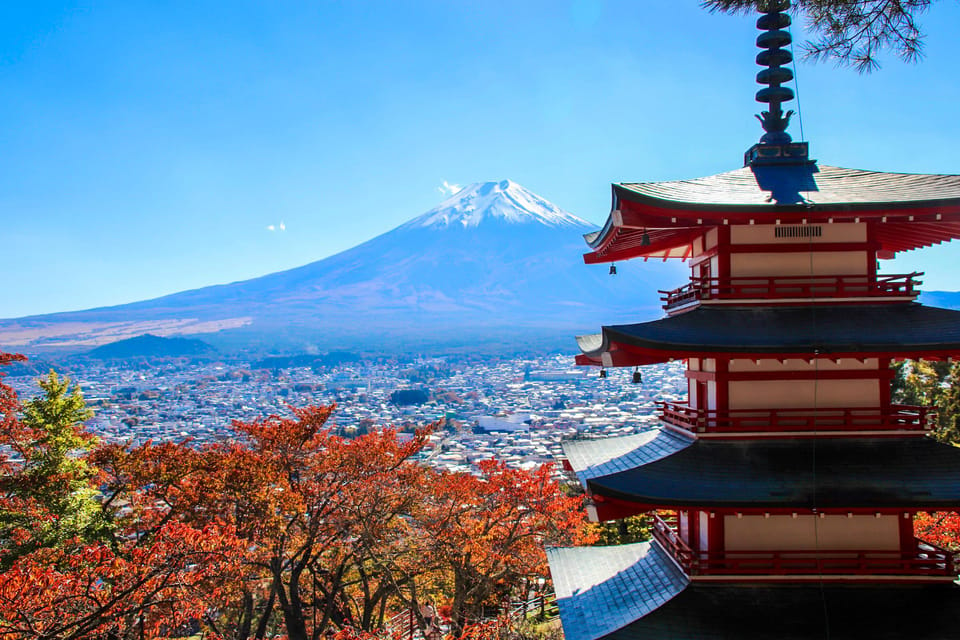
- Arakurayama Sengen Park and Chureito Pagoda: the classic frame, with steps
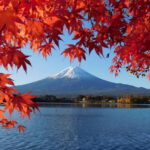
- Lake Kawaguchi: the best bet for Fuji reflections (and a solid food stop)
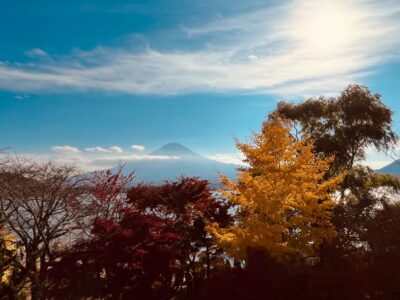
- Maple Corridor: when autumn turns the route into more than a viewpoint
- Oishi Park and the 350-meter Flower Road: Fuji with color and space
- Saiko Iyashi-no-Sato Nenba: thatched roofs, crafts, and a different kind of Fuji photo
- Lunch at Kawaguchiko Craft Park: when fuel turns into part of the view
- Logistics and pace: what you need to mentally prepare
- Who this trip is best for (and who may want something slower)
- Guides and on-the-ground experience: the human factor matters
- Should you book this Mt. Fuji circuit?
- FAQ
- How long is the tour?
- What does the $54 price include?
- Where does the tour start and where does it finish?
- What language is the tour guide?
- What should I do if there’s traffic and delays?
- What is the cancellation window?
Key things to know before you go
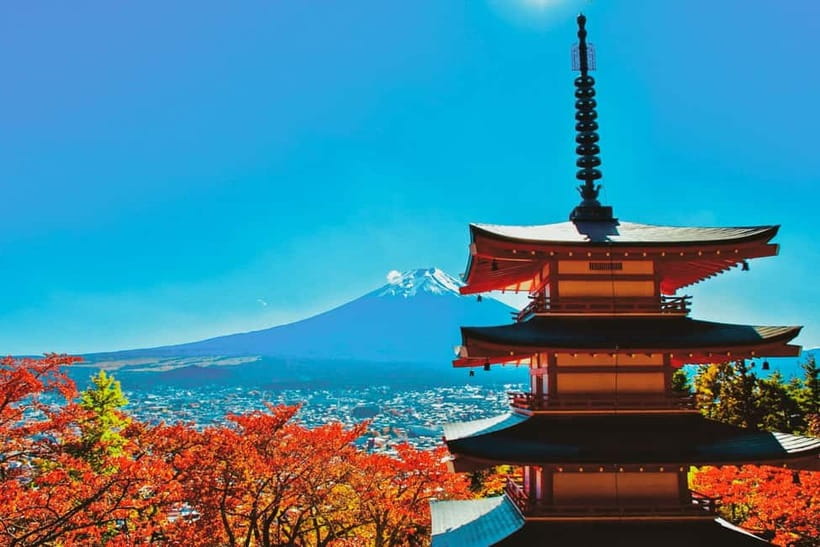
- Five-plus Mt. Fuji angles: you’ll see Fuji framed by pagoda, lakeside water, flower fields, and a village backdrop
- Arakurayama’s photo setup: the famous pagoda + Fuji combo comes from a short-but-steep climb
- Lake Kawaguchi planning wins: you get scenic free time plus a lunch option inside a view-friendly facility
- Oishi Park’s Flower Road seasons: tulips, lavender, or kochia depending on when you travel
- Iyashi-no-Sato Nenba adds culture + photos: a restored village by Lake Saiko with craft stops and optional dress-up
- Realistic pace: the schedule is full, so expect walking and a lot of movement in one day
The Mt. Fuji “multi-angle” strategy that makes this tour worth it
For many first-timers, the biggest problem with Mt. Fuji trips from Tokyo is timing. You can spend hours commuting, only to stare at clouds from one viewpoint. This is why I like this tour’s design: it stacks several spots that each capture Fuji a little differently, so you’re not betting the whole day on one view.
You’re also paying for more than sightseeing. The day includes transportation in an air-conditioned vehicle, a guide, and entry to Saiko Iyashi-no-Sato Nenba. If you add the lunch option at Kawaguchiko Craft Park, you’re buying convenience: fewer logistics, less decision fatigue, and a meal break built into the route.
Price-wise, $54 per person is the real hook—because the value comes from how much you’re trying to see in one go. You’re basically buying a one-day “Fuji circuit” that would take time to assemble on your own, especially if you want iconic photo frames without getting stuck in public-transport transfers or arriving late to the best angles.
You can also read our reviews of more tours and experiences in Tokyo.
Arakurayama Sengen Park and Chureito Pagoda: the classic frame, with steps
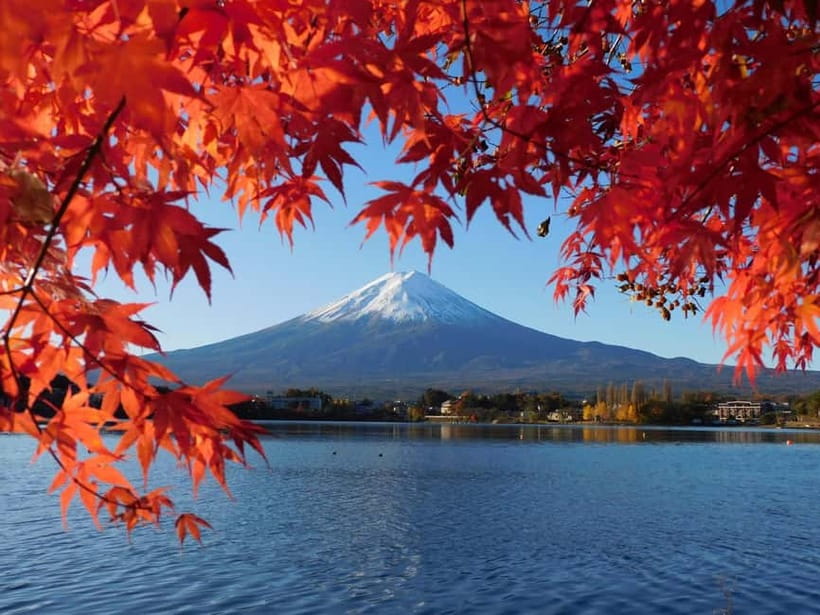
Arakurayama Sengen Park is where people come for the image: Mt. Fuji plus a five-story pagoda in the same scene. The park is famous for seasonal changes too. From late March to mid-April, cherry blossoms light up the area, with around 650 cherry trees in bloom during peak season. In autumn, the scenery flips into red-and-gold foliage that contrasts beautifully with the pagoda and Fuji.
Your time here includes a climb up stone steps—398 steps from the entrance area—to an observation deck. That’s the part to plan for. Even if you’re in decent shape, it’s noticeable on a day already packed with travel. The upside is that the payoff is direct: you’re in position for one of Japan’s most photographed Fuji views.
Also pay attention to the smaller photo stops nearby. You’ll pass through areas connected to the Hikawa Clock Shop and Arakura Fuji Sengen Shrine photo viewing spots, which can give you additional Fuji angles before you commit to the main viewpoint climb.
Practical note: if stairs are a concern, this tour has been reported to offer a slope option. Still, I’d treat the day as “active,” not leisurely.
Lake Kawaguchi: the best bet for Fuji reflections (and a solid food stop)
Lake Kawaguchi is the heart of the day in terms of vibe. This is where Fuji can look calm and close, especially when conditions are right. The tour gives you time at Lake Kawaguchi itself—enough to wander and take in lakeside scenery on your own schedule rather than just snapping photos from a bus window.
One smart move here is the inclusion of Kawaguchiko Craft Park. It’s not just a shopping stop. It’s a sightseeing facility with restaurants, souvenir shopping, and comfortable spaces to sit while you look out toward Mt. Fuji and the lake area a few minutes away. In other words, you get food with a view, plus places to pick up small gifts without racing from one shop to another.
The lakeside area also changes by season:
- In spring, you’ll find paths lined with cherry blossoms for an easy strolling mood.
- In autumn, the Maple Corridor nearby becomes a popular add-on for fall color.
If your goal is that mirror-like Fuji-on-the-water feeling, Lake Kawaguchi is where you’ll want to slow down for a few minutes and keep scanning the horizon. It’s the kind of moment where clouds can shift.
Maple Corridor: when autumn turns the route into more than a viewpoint
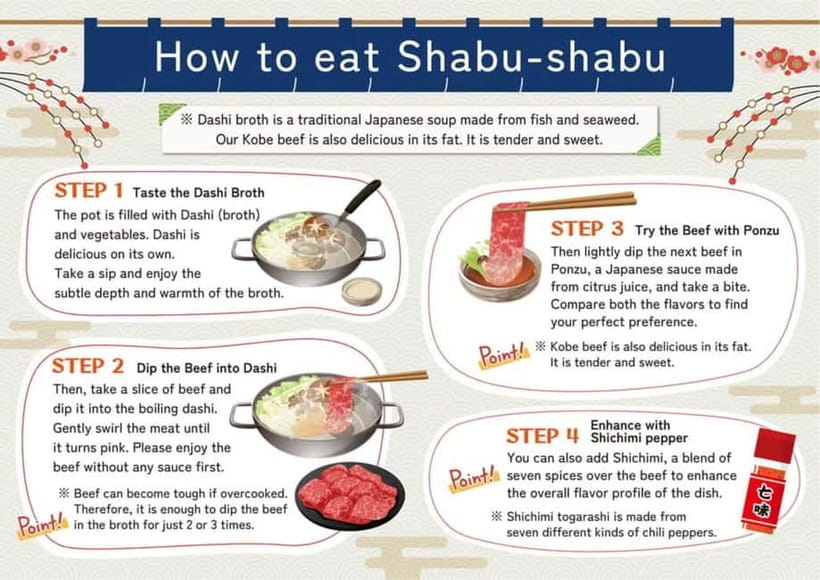
If you travel in autumn, the Maple Corridor makes the day feel less like a checklist. You get a photo stop and time around the route where fall foliage is a main attraction. Because Mt. Fuji can be partially obscured by weather, fall color can keep the day visually rewarding even if Fuji isn’t perfectly framed.
I’d use the time here like this: take a few photos, then step back and let your eyes adjust. In seasonal Japan settings, the small distance between trees and paths can make the difference between a flat view and a layered one.
Oishi Park and the 350-meter Flower Road: Fuji with color and space
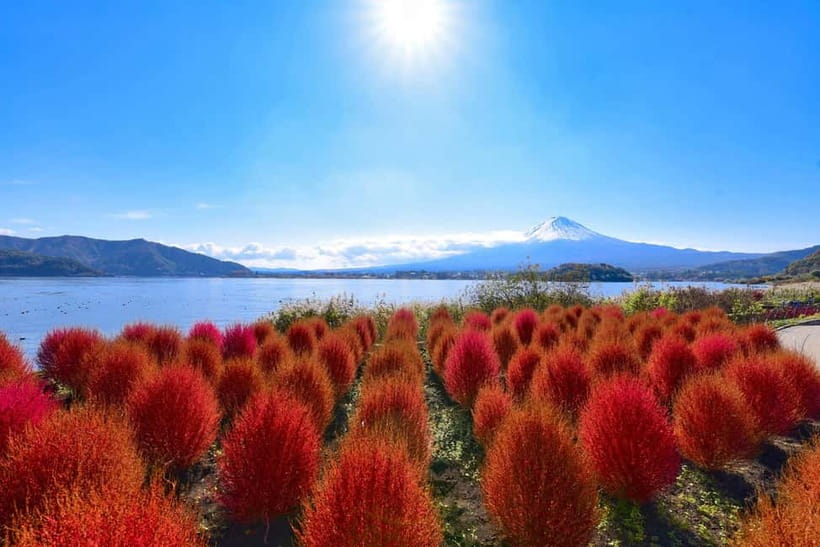
Oishi Park is known for expansive views of both Mt. Fuji and Lake Kawaguchi. The big feature is the lakeside “Flower Road,” a 350-meter stretch where seasonal planting changes the look of the whole area.
Depending on the time of year:
- spring brings tulips
- summer is associated with lavender fields (especially around the Kawaguchiko Herb Festival period, roughly late June to mid-July)
- autumn often highlights kochia, sometimes described as broom grass
This matters because it changes what “Fuji day” means. Instead of only chasing the mountain, you get a more complete scene: flowers and lake in front, Fuji as the background structure. That’s the kind of photo composition you can’t easily replicate from one tight urban viewpoint.
You also get a shorter bus ride between stops, with a dedicated time window to visit and walk around. Just remember you’ll be on your feet again, so wear shoes you trust.
Saiko Iyashi-no-Sato Nenba: thatched roofs, crafts, and a different kind of Fuji photo
Saiko Iyashi-no-Sato Nenba is a restored traditional village by Lake Saiko in Yamanashi. The setting is built around thatched-roof houses inspired by Shirakawa-go, and it gives you a break from the “only mountains and lakes” rhythm.
You’ll find about 20 houses that function as craft studios, souvenir shops, and places to eat. This is where the day gets more hands-on. Even if you only browse, you’re stepping into a slower, more cultural atmosphere.
One of the reasons this stop lands well is the photo opportunity style. You can dress up in kimono or ninja outfits for photos with Mt. Fuji in the background. Whether you do the dress-up or not, it adds a playful element that’s different from the standard pagoda-and-horizon shots.
The seasons here are also worth thinking about. In spring you might see cherry blossoms and carp streamers; in summer you get greenery; autumn brings fall leaves; and winter can mean snow scenes. So even if Fuji visibility is mixed, the village setting itself usually keeps you feeling like the stop was worthwhile.
Entry to this site is included, which is another value point.
Lunch at Kawaguchiko Craft Park: when fuel turns into part of the view
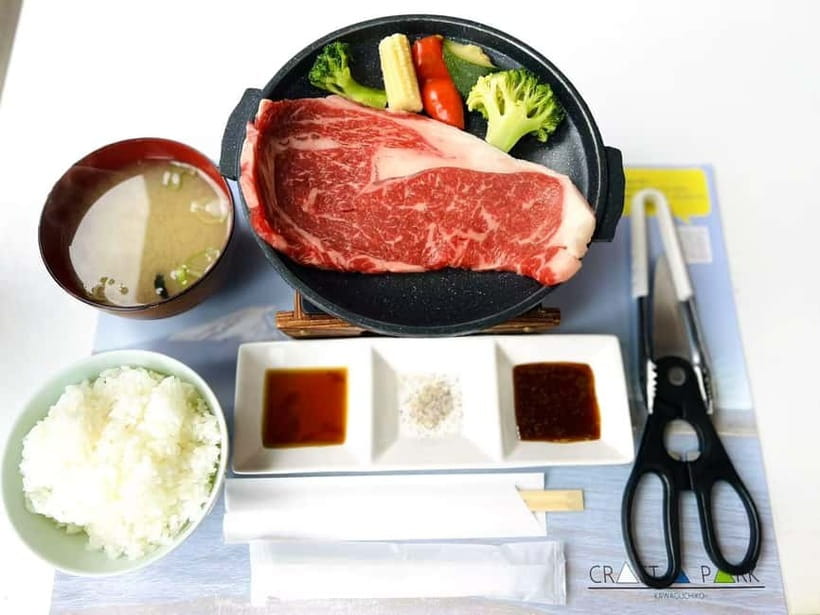
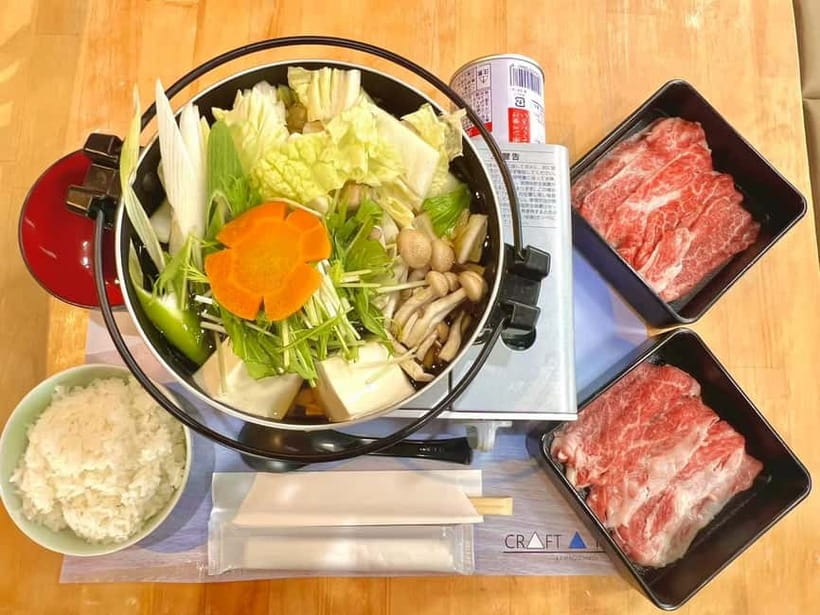
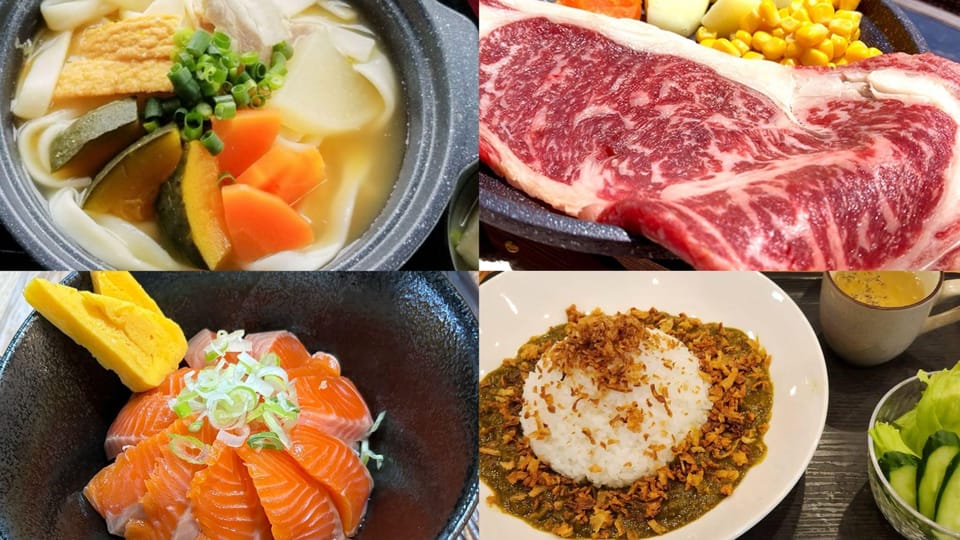
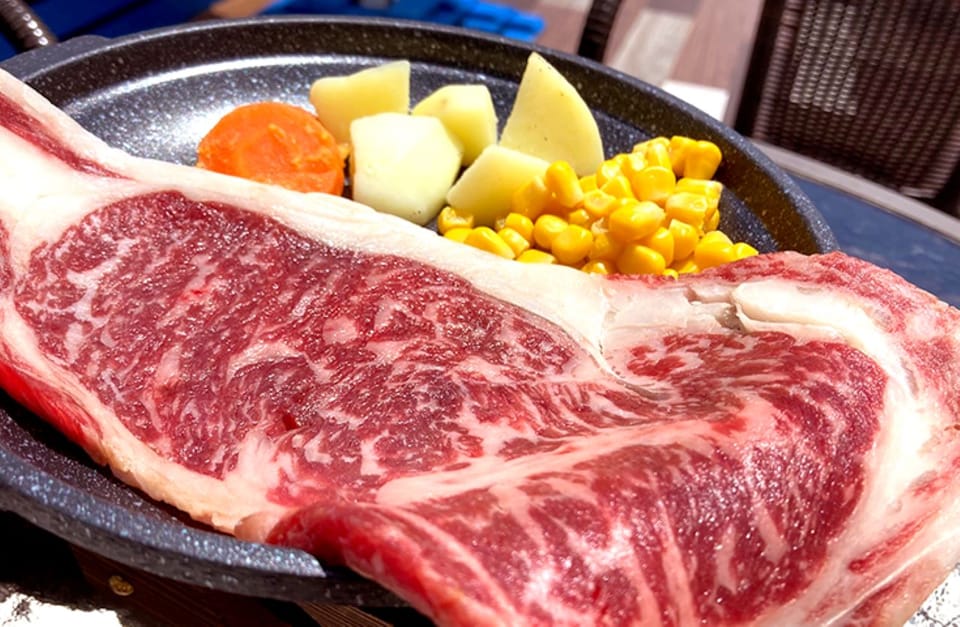
The lunch option at Kawaguchiko Craft Park is a real quality-of-life feature. You get multiple menu choices linked to regional specialties and higher-end Japanese ingredients.
Reported options include:
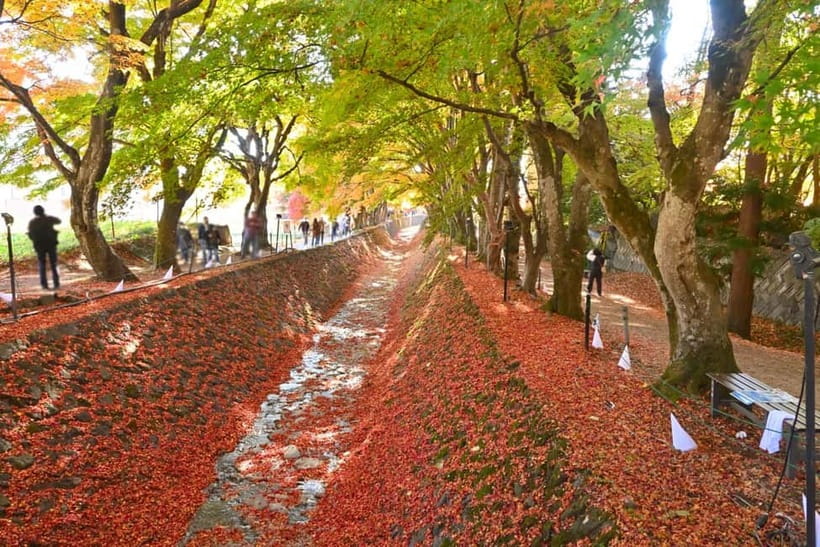
- Kobe beef shabu-shabu using A5-grade Japanese black Wagyu
- Koshu wine beef steak, featuring Wagyu raised on grapes in Yamanashi
- Houtou noodles, a local specialty simmered in miso broth with vegetables and chicken
I like the structure here because lunch isn’t bolted on randomly. It happens inside the craft park, and you can eat in spaces that make it easy to keep an eye on the Fuji-lake direction.
If you’re going to choose your lunch, do it with your day-plan in mind. Houtou noodles are hearty and warming, which helps on cooler days when you’re already walking stairs and standing outside. If you’re feeling adventurous, the Wagyu options can make the meal feel like a destination, not just a pit stop.
Logistics and pace: what you need to mentally prepare
This tour is well organized, but it’s still a full day: long transit out of Tokyo, multiple stops, and walking at several of them. Expect a real schedule rather than a slow sightseeing day.
A few practical realities to keep you comfortable:
- You’ll be asked to arrive about 10 minutes early at the starting point so the bus can leave on time.
- Traffic can happen. If the bus is delayed, stop times at attractions may be adjusted.
- People who booked different languages may be combined into the same vehicle.
- The vehicle type can change depending on how many people are on board.
- If you want to leave the group midway, you must tell the guide and complete the departure form.
Comfort helps too. Many people highlight that the coach is comfortable and air-conditioned, which matters when you’re spending a big chunk of the day riding.
Finally: treat Mt. Fuji as weather-driven. There are days when Fuji shows up later, and there are days when clouds block the mountain for much of the route. The good news is that even in off-visibility conditions, you still get lakeside scenery, a traditional village experience, and seasonal parks—so the day doesn’t become a total loss.
Who this trip is best for (and who may want something slower)
This is a strong fit if:
- you’re short on time in Tokyo and want the Mt. Fuji highlights without building a plan
- you want multiple Fuji framing opportunities in one day
- you like a mix of photo spots plus a little culture and shopping
- you’re traveling solo or as a couple and want a guide to keep you moving smoothly
It may be less ideal if:
- you want very long “hang time” at just one location
- you dislike walking stair sections (even with time for free exploration, some stops involve steps and steady walking)
- you prefer a low-commitment pace with fewer transitions
The sweet spot is travelers who enjoy structured discovery: you get told what to look for, then you have freedom to roam within the time window.
Guides and on-the-ground experience: the human factor matters
What repeatedly comes through is that the guides make the day smoother. Names you may hear associated with great experiences include Omar and Koji, plus Eric and George/Jorge in other departures. People mention clear instructions, friendly humor, and a good sense of timing at each stop.
One more thing I like: the guides help you get your bearings fast. When you’re hopping between viewpoints and different areas of lakeside parks, it helps to know what matters most for photos and what to skip if you only have a short window.
Should you book this Mt. Fuji circuit?
If your priority is seeing Mt. Fuji from several iconic angles in a single day, I think this tour is a smart booking. At $54, you’re getting transportation, a guide, entry to a key cultural stop, and an optional lunch at a view-friendly craft park. The itinerary also protects you from bad luck by giving you multiple chances for Fuji views rather than pinning everything on one viewpoint.
I’d book if you can handle a long day and don’t mind walking. I’d also go in with a flexible mindset about weather. If clouds roll in, you’ll still get a traditional village experience at Saiko Iyashi-no-Sato Nenba and seasonal scenery around Lake Kawaguchi and Oishi Park.
If you’re hoping for a stress-free, minimal-effort day, or you want to spend hours at one place, then consider a slower Fuji-focused plan. But for most first-timers, this “Fuji circuit” is exactly the right kind of concentrated Japan.
FAQ
How long is the tour?
The total duration is 10 hours.
What does the $54 price include?
It includes air-conditioned vehicle transportation, a tour guide, entry tickets to Saiko Iyashi-no-Sato Nenba, and lunch only if you select the lunch option.
Where does the tour start and where does it finish?
There are two starting location options: LOVE Robert Indiana near the Kokuyo Tokyo Shinagawa Office, and the tour finishes at Shinjuku Station. The exact meeting point can vary by the option you book.
What language is the tour guide?
The tour guide is available in English and Chinese.
What should I do if there’s traffic and delays?
If the bus is delayed due to traffic or other unexpected issues, the time at attractions will be adjusted.
What is the cancellation window?
You can cancel up to 24 hours in advance for a full refund.