REVIEW · TOKYO
【NEW】Matcha Making Experience and Matcha Comparison in Tokyo
Book on Viator →Operated by matcha trip · Bookable on Viator
Real matcha has a way of surprising you. In a small Tokyo tea-bar setting, I got to taste 10 matcha samples drawn from five production areas and learn what makes matcha truly matcha (and what gets marketed as matcha when it should not).
I really loved the hands-on parts. You don’t just sip and nod. You compare by color, fragrance, and taste, then you pick your favorite and whisk your own cup. One possible drawback: the whole experience is about 1.5 hours, so if you want a slow, deep classroom-style session on the finer points of farming, you may wish you had more time.
In This Review
- Small Group, Big Flavor Differences
- Key Highlights You’ll Care About
- Matcha Making in Tokyo: What This Experience Actually Teaches
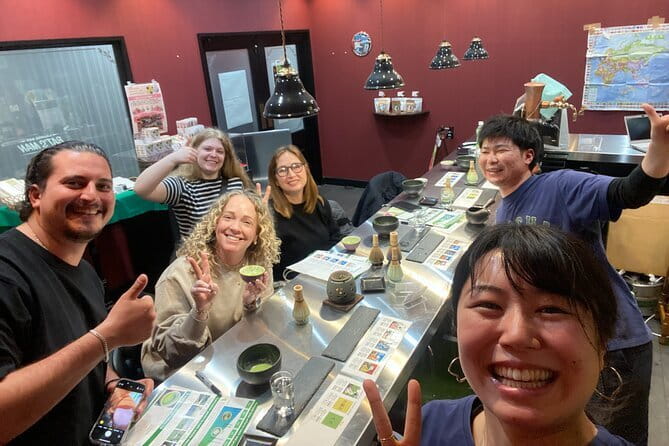
- The Meet-Up Spot and Why Small Groups Matter
- Welcome Drink and the Matcha Story You’ll Actually Use
- The Big Tasting: 10 Samples, Five Regions, One Clear Skill
- Why Kyoto, Shizuoka, Aichi, Fukuoka, and Kagoshima Taste Different
- Making Your Own Ousucha With a Bamboo Whisk
- Matcha Latte and Sweets: When Milk Enters the Story
- Price and Value: Is $62.12 Worth It?
- Who This Tour Suits Best
- Quick Practical Tips Before You Go
- Should You Book This Matcha Comparison and Making Experience?
- FAQ
- What is the duration of the matcha making experience?
- How much does the tour cost?
- Where does the experience take place?
- What time does it start?
- How many matcha samples will I taste?
- Which regions of Japan are included in the matcha comparison?
- Will I make matcha myself?
- What food and drinks are included?
- Is gratuity included?
- How big is the group?
- Is there a mobile ticket?
Small Group, Big Flavor Differences
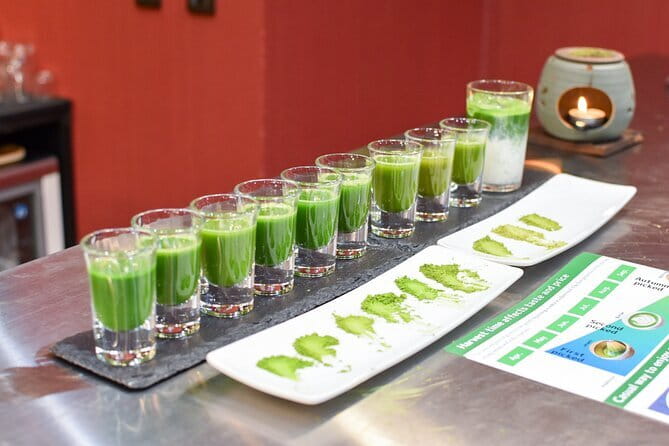
This is the kind of tour that gives you a working nose and palate for matcha fast. With a group capped at 5, you get room for questions and you’re not stuck watching someone else do the whisking. The lineup spans Kyoto, Shizuoka, Aichi, Fukuoka, and Kagoshima, so you can taste how growing choices change the drink.
If you’re already a matcha fan, you’ll still probably learn something. And if you’re new to matcha, you’ll get a practical explanation of why the stuff in Western stores can taste different.
Key Highlights You’ll Care About
- Five regions, real comparison: Kyoto, Shizuoka, Aichi, Fukuoka, and Kagoshima in small portions so you can actually compare.
- Ceremonial-grade vs “sold as matcha”: During tasting, you’ll sample a mix of types, including some marketed as matcha internationally that may not fit the formal definition.
- See the color, then taste: The tasting format has you look first, then smell and sip while the tea is prepared.
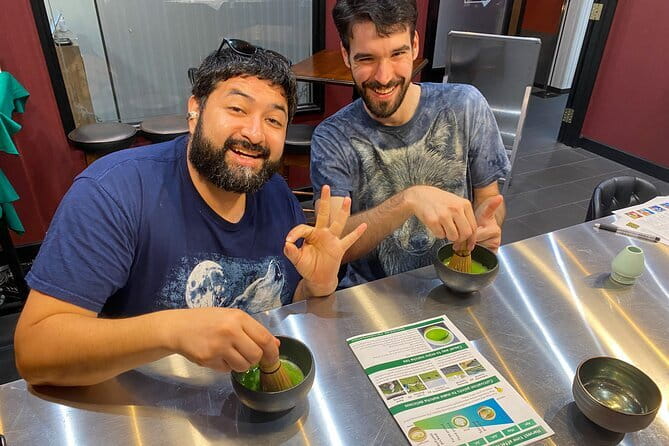
- You make Ousucha with a bamboo whisk: Pick your favorite sample and whisk your own matcha at the end of the tasting.
- Matcha latte and sweets included: You’ll taste how an original blend works with milk and sugar, plus matcha sweets.
- Instructors with serious background: Chisei (agricultural science, former Kyoto tea farmer) and Rina (pharmacy bachelor, practicing pharmacist) bring a science-and-care angle to tea.
You can also read our reviews of more tours and experiences in Tokyo.


Matcha Making in Tokyo: What This Experience Actually Teaches
Tokyo has a way of packaging traditional things for modern tastes. This matcha experience does something smarter than just selling you a cute ritual. It teaches you how to spot difference in the cup—quickly, clearly, and without needing a chemistry degree.
The theme is also timely. You start with the idea that there’s plenty of fake or misleading matcha in the world. That message is not just marketing. It sets you up to pay attention to what matcha should look like, how it should smell, and what kind of flavor hits first. You’re not aiming for a single “best” matcha. You’re training your judgment.
You’ll spend about 1 hour 30 minutes total. That’s short, yes, but it’s the right length for this format: lots of tasting, a clear build toward making your own cup, and then a finish with latte and sweets. Think of it as a focused matcha reset for your palate.
The Meet-Up Spot and Why Small Groups Matter
You’ll meet at matcha trip in Tokyo’s Taito City, at the Henn Na Hotel (2F), sports bar Leaf. The start time is 9:30 am, and you’ll have a mobile ticket.
The practical win here is the group size. The tour caps at 5 travelers. That changes the vibe. With a small group, you can ask questions without feeling like you’re holding everyone hostage. It also makes the tasting more useful, because you can notice how your reaction differs from others in the room.
You should also come with a simple mindset: you’re not “judging” matcha like a sommelier. You’re learning what you personally like—then learning what might be behind that preference.
Welcome Drink and the Matcha Story You’ll Actually Use
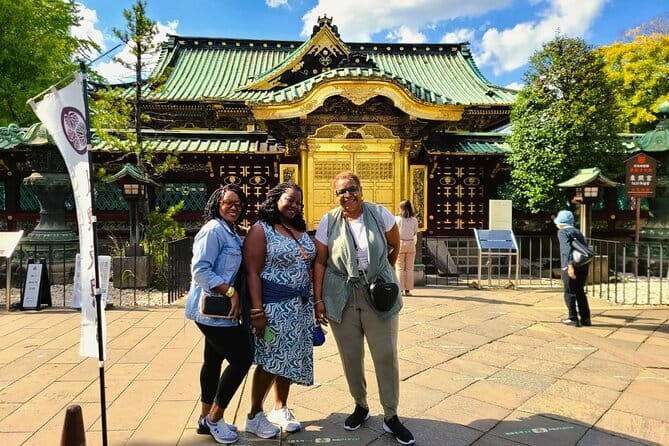
The experience starts with a welcome drink while the instructors explain what you’ll be tasting and why it matters. This is where the tour earns its keep.
You’ll hear about:
- What matcha is supposed to be
- How it’s cultivated
- The history behind the drink
- Why mislabeling and lower-quality products exist
The instructors bring strong background to this. The main instructor, Chisei, has a bachelor’s degree in agricultural science and focuses a lot on soil science. He’s a former tea farmer who was involved in cultivation and processing in Kyoto. His assistant, Rina, has a bachelor’s degree in pharmacy and works as a practicing pharmacist. That combination—soil basics plus practical health-minded thinking—makes the talk feel less like folklore and more like real-world understanding.
One thing I enjoyed about the tone: they’re not trying to overwhelm you. You get enough context to taste with intention. And if you’re curious about other teas, the vibe is open. When someone asked about Indian tea, Chisei responded with a friendly, engaged Q&A energy rather than just shifting back to the script.
The Big Tasting: 10 Samples, Five Regions, One Clear Skill
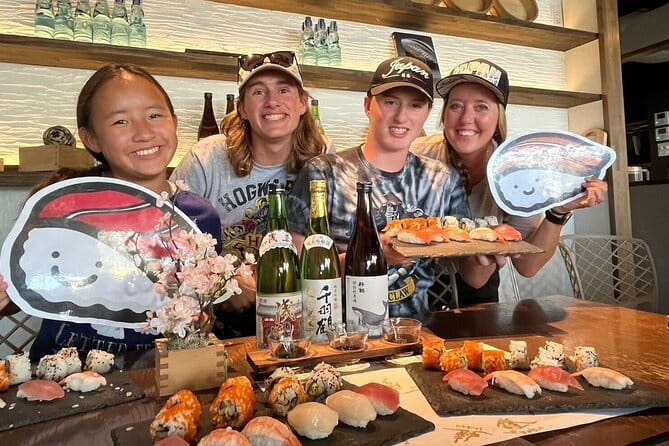
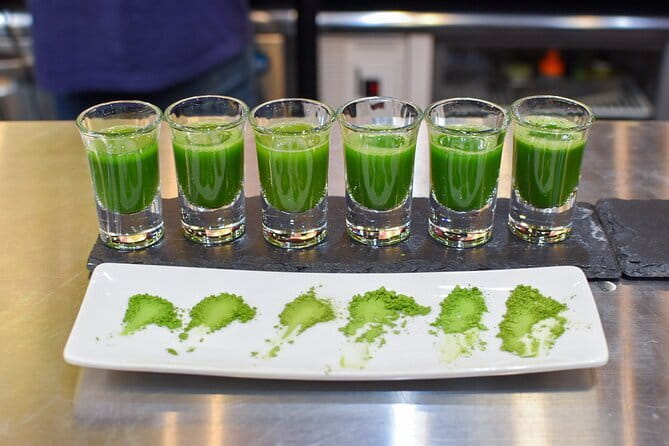
Here’s the core activity: you taste matcha from five production areas—Kyoto, Shizuoka, Aichi, Fukuoka, and Kagoshima. You’ll receive small portions across the tasting so you can compare without feeling sick or over-caffeinated.
During the comparison phase, you’ll be served 8 types of matcha. Of those, 6 are ceremonial grade, and 2 are sold as matcha internationally even though they aren’t defined as matcha in the same way. That detail matters because it explains why some matcha can taste flatter, sweeter in a different way, or feel off in texture.
The tasting method is also structured:
- You look at the matcha color.
- Then the tea is made and served.
- You pay attention to fragrance and taste as you compare.
This is a small thing, but it’s a big skill. A lot of people try matcha blindly. Here you learn to start with the visual cue, then confirm with smell and flavor. That’s what makes the later “make your own” part feel rewarding instead of random.


Why Kyoto, Shizuoka, Aichi, Fukuoka, and Kagoshima Taste Different
You’ll hear cultivation and processing explanations tied to what you’re tasting. Even if you don’t memorize every detail (don’t stress), you’ll start to notice patterns.
For example, you may find some matcha feels more grassy or clean, while others feel rounder or a bit heavier in aroma. The whole point is that matcha from different areas is not interchangeable.
And because you’re tasting multiple regions back-to-back, you’re less likely to blame your palate for the result. You can say, I liked this one better than that one, for reasons that make sense—color, aroma, and taste.
If you’ve only tried matcha from a convenience store or powder you dissolve at home, this portion is where your expectations get re-written. Western matcha products can be very good, but they often don’t show the same range you’ll find in this kind of comparison.
Making Your Own Ousucha With a Bamboo Whisk
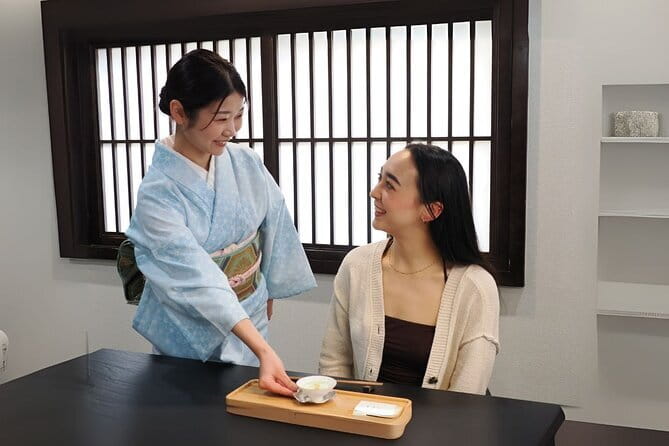
After tasting and choosing your favorite, you move into the hands-on step. This is when the experience stops being educational and becomes practical.
You’ll make Ousucha (matcha) yourself using a bamboo tea whisk. You choose the matcha you liked best from the ones you tried. That’s smart: it turns tasting into a personal recipe choice instead of a generic demo.
What you get out of this step:
- You learn how matcha behaves when whisked properly
- You experience how texture changes as you whisk
- You get a sense of what your selected matcha actually tastes like when prepared with care
Finally, you don’t just leave with a memory. The tour notes that once you finish, you can still make matcha at home afterward. That’s the goal: bring home a skill, not only a souvenir cup.
Matcha Latte and Sweets: When Milk Enters the Story
Not every matcha shines the same way in milk and sugar. Some taste great on their own but get overwhelmed once dairy joins the party. This is why the last food-and-drink portion is so useful.
You’ll enjoy matcha latte and matcha sweets, and you’ll taste an original blend matcha that’s meant to work with milk and sugar. The idea is simple: learn how to enjoy matcha in forms that fit different cravings.
If you’re the type who drinks matcha mostly as latte, this part helps you understand what those blends are trying to accomplish. And if you’re more of a straight matcha person, this section still matters, because it shows how to enjoy matcha without insisting everyone drink it the same way.
Price and Value: Is $62.12 Worth It?
At $62.12 per person for about 90 minutes, you’re paying for three things that tours often separate into different experiences: structured tasting, guide-led explanation, and a real making session.
Is it cheap? No. But here’s where the value shows:
- You taste matcha from five production areas, not just one.
- You get a small-group experience (max 5), which is rare at this price.
- You get hands-on whisking and you leave with practical confidence.
- Latte and sweets are included, so you’re not paying extra for the fun finale.
Also, note the demand signal: it’s typically booked around 20 days in advance. That usually means people find it worth planning for. If you wait until the last minute, you may find fewer openings.
Who This Tour Suits Best
This experience is a strong fit if any of these sound like you:
- You want to understand why matcha varies, not just which one tastes best
- You like food education that’s actually tied to tasting
- You drink matcha and want to improve how you choose and prepare it
- You prefer a small group experience with time for questions
It’s also a good pick for people who aren’t matcha experts yet. The tour gives you a guided path from basics (what matcha is) to outcomes (your own Ousucha).
If you’re only chasing coffee-style caffeine hits, you might find it a bit too focused on tea craft. But if you’re curious, you’ll probably walk away with a clearer view of what you’re buying.
Quick Practical Tips Before You Go
- Plan for a tea-forward morning. The experience starts at 9:30 am, so eat lightly beforehand if you’re sensitive to caffeine.
- Come ready to compare. Don’t decide your favorite after the first cup.
- Ask questions. With Chisei and Rina, you’ll likely get answers that connect to cultivation and preparation, not just general vibes.
- Wear comfortable clothes. You’ll be at a tea counter and doing whisking, so moving is easier if you’re not wearing anything fussy.
Should You Book This Matcha Comparison and Making Experience?
Yes, I think you should book it if you want matcha literacy, not just a drink. The strongest reason is the format: you taste multiple regions, learn why they differ, then make Ousucha with the matcha you picked.
Skip it only if you want a long, slow course or you already feel fully confident about matcha differences and you just want a quick snack. For most people, though, this hits a very practical sweet spot: tasting + explanation + making, all in 90 minutes with a small group.
If you’re planning Tokyo around food experiences that feel traditional but still educational, this one is worth the advance planning. And when you whisk your own matcha later, you’ll know why it tastes the way it does.
FAQ
What is the duration of the matcha making experience?
It lasts about 1 hour 30 minutes.
How much does the tour cost?
The price is $62.12 per person.
Where does the experience take place?
You meet at matcha trip at Henn Na Hotel (2F), sports bar Leaf, in Tokyo’s Taito City.
What time does it start?
The start time is 9:30 am.
How many matcha samples will I taste?
You can enjoy 10 kinds of matcha, with 8 types served during the comparison phase.
Which regions of Japan are included in the matcha comparison?
You’ll taste matcha from Kyoto, Shizuoka, Aichi, Fukuoka, and Kagoshima.
Will I make matcha myself?
Yes. After tasting and choosing your favorite, you’ll make Ousucha using a bamboo tea whisk.
What food and drinks are included?
The experience includes coffee and/or tea, and you’ll also have matcha latte and matcha sweets. You’ll make one matcha as part of the experience.
Is gratuity included?
Tips are not included.
How big is the group?
The tour/activity has a maximum of 5 travelers.
Is there a mobile ticket?
Yes, the tour includes a mobile ticket.