REVIEW · TOKYO
From Tokyo: Hiroshima and Miyajima Day Trip by Bullet Train
Book on GetYourGuide →Operated by AMIGO TOURS JAPAN GK · Bookable on GetYourGuide
Two icons, one heavy lesson. This day trip pairs a guided walk through Hiroshima Peace Memorial Park with the famous floating torii at Miyajima, so you get both reflection and wonder in one packed route, led in English and Spanish by a guide who can switch languages without fuss. I also like how the timing is built around the key sights instead of wasting time on back-and-forth.
One thing to plan for: it’s a long day (and you’ll do a moderate amount of walking). Add in possible ferry changes due to weather, and you’ll want to travel with flexible expectations about how much time you’ll spend at each stop.
In This Review
- Key highlights I think you’ll care about
- How the Tokyo to Hiroshima Shinkansen day works
- Miyajima ferry and Itsukushima Shrine: where timing matters
- Strolling Miyajima: streets, deer, oysters, and momiji manju
- Hiroshima Peace Memorial Park: walking with meaning
- Getting value from the clock: what will feel tight
- Price and value: what about $104 makes sense
- Who this tour suits best (and who should skip)
- Should you book this Hiroshima and Miyajima day trip from Tokyo?
- FAQ
- FAQ
- How long is the Hiroshima and Miyajima day trip from Tokyo?
- What’s included in the price?
- Are meals included?
- Do I get a guided tour at both Hiroshima and Miyajima?
- What languages is the live guide available in?
- What should I bring for the day?
- Is photography allowed?
- What are the rules about smoking?
- What if the weather is bad?
- Is this tour suitable for wheelchair users?
Key highlights I think you’ll care about
- Shinkansen comfort for the long haul: Tokyo to Hiroshima and back without slow local connections.
- A guide for both big stops: Itsukushima Shrine gets a guided visit, and Hiroshima Peace Memorial Park includes guided time.
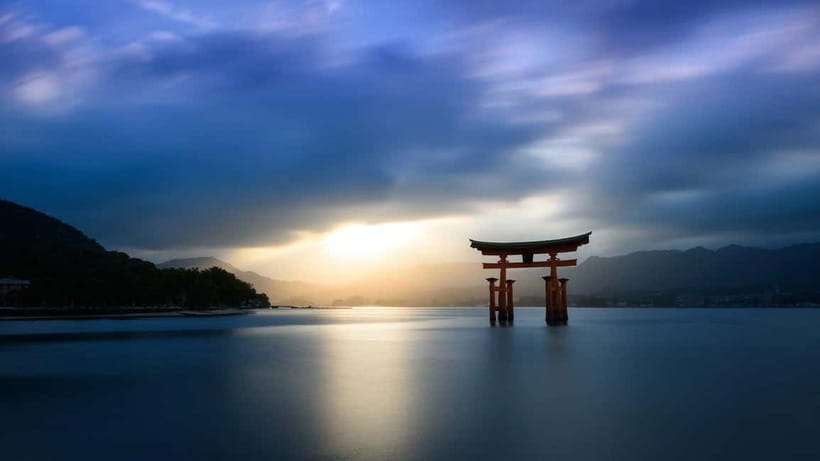
- Miyajima’s signature torii photo moment: the torii appears lifted from the water during high tide.
- Time to roam, not just rush: free time on Miyajima for streets and snacks.
- Small details that add flavor: deer roaming near the main areas, plus local foods like oysters and momiji manju.
- Names you might recognize from the tour experience: one guide noted as Alex/Alejandro and a driver named OE.
How the Tokyo to Hiroshima Shinkansen day works
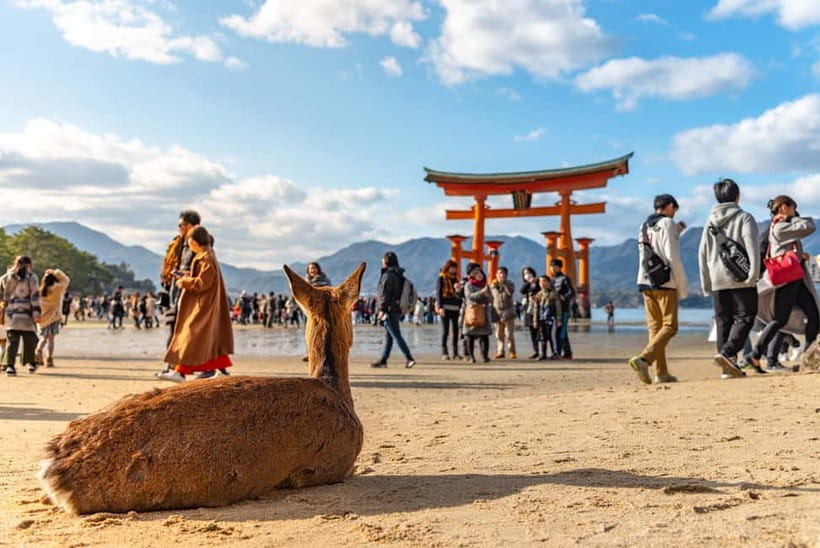
This is built as a true day trip: you start in Tokyo, ride the high-speed Shinkansen down to Hiroshima, then work your way through Hiroshima and Miyajima before returning to Tokyo. The schedule is structured enough that you’re not stuck figuring out trains and connections, but it still leaves room to look around on your own.
Depending on the option you choose, the round-trip bullet train is included; the tour description also lists Shinagawa Station and Hiroshima Station as starting or drop-off points, so check which end of the day trip you’re assigned to. Either way, you should expect a travel day with several transfers: train, bus/coach segments, and ferries.
The practical win here is mental: you won’t spend your limited time on transit puzzles. The trade-off is stamina. You’re going to be on your feet, and the long overall duration (listed from 8 to 16 hours) means you’ll want a real break mindset: see the highlights, breathe, and don’t expect to linger everywhere.
You can also read our reviews of more tours and experiences in Tokyo


Miyajima ferry and Itsukushima Shrine: where timing matters
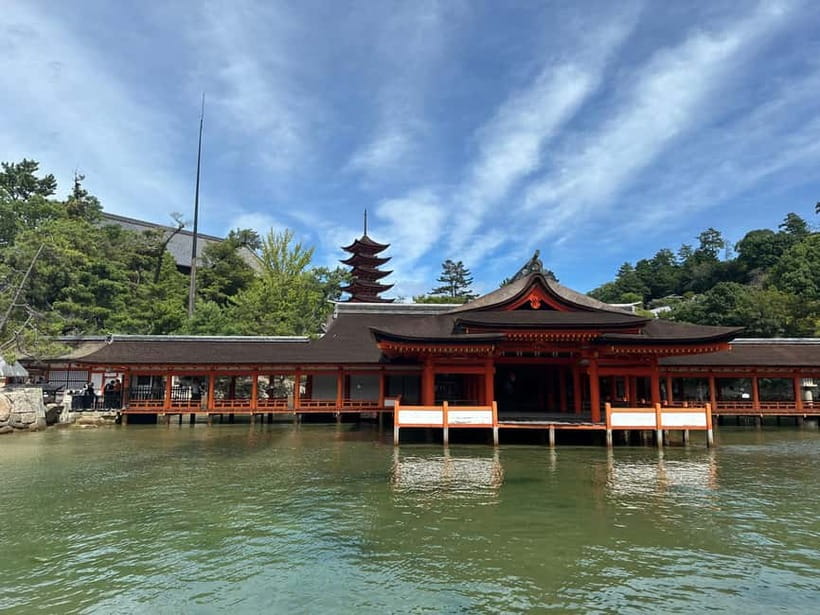
After reaching Hiroshima, the route heads toward the coast for the ferry to Miyajima. Even if you’re not a ferry person, this part is worth it because it immediately changes the feel of the day. Miyajima is associated with quiet, temple-lined charm, and the water crossing helps you arrive in the right mood before you start walking.
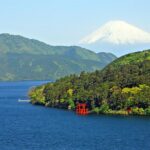
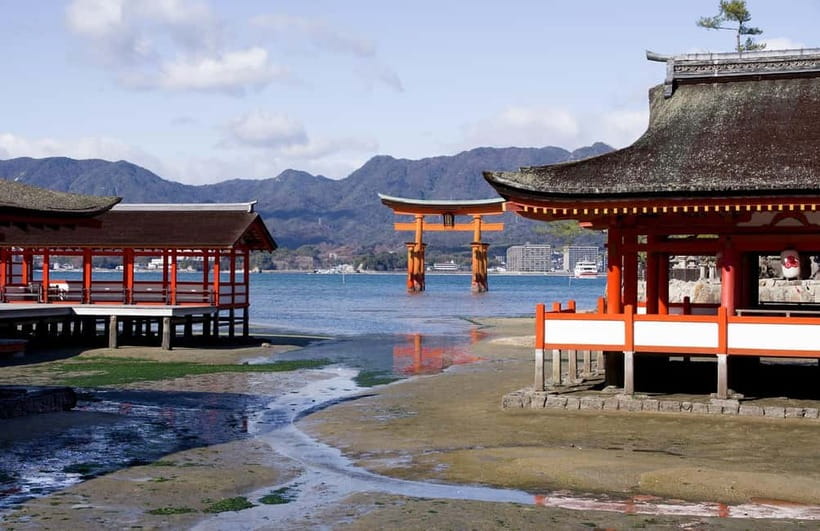
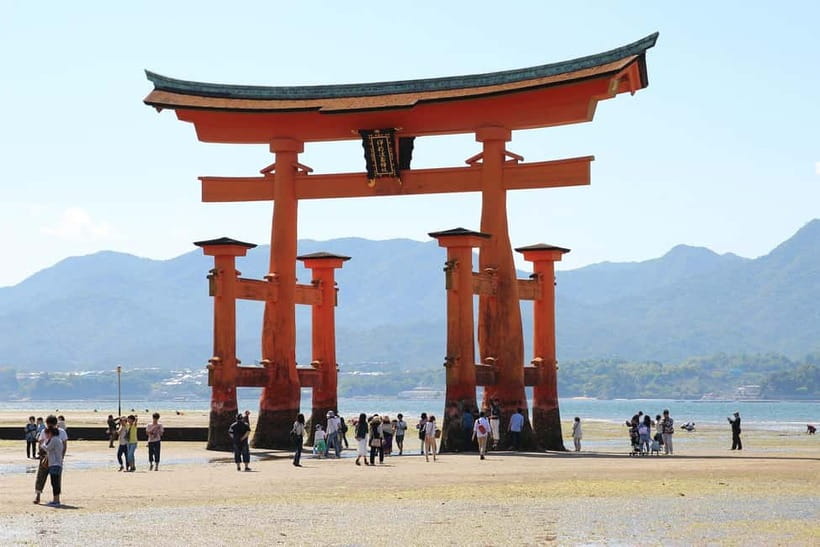
The headliner on the island is Itsukushima Shrine, a UNESCO World Heritage site. You’ll have a guided visit here, roughly 30 minutes. The reason this stop is so memorable is the iconic torii gate: it looks like it’s rising from the water at high tide, and that famous visual is the whole point of coming to Miyajima.
A small reality check: tides aren’t something you control, and the tour description phrases the torii effect as appearing at high tide. If you’re the type who plans photos down to the minute, you’ll still appreciate the guide’s pacing and the way the group is kept moving. If you’re more relaxed, you’ll still get a great shot because the torii is the most recognizable thing on the island no matter what.
Also remember the experience includes admission to Itsukushima Shrine. That saves time and avoids the common hassle of figuring out ticket lines when you’re already juggling multiple transport legs.
Strolling Miyajima: streets, deer, oysters, and momiji manju
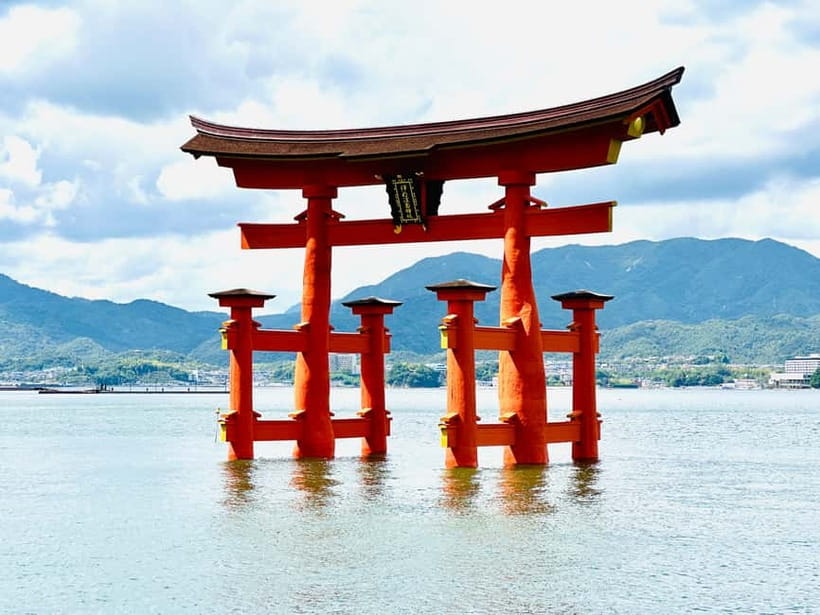
Once you’re on Miyajima, the schedule shifts from guided to free time, about 100 minutes. This is where the island’s character comes through. You can wander the charming streets at your own pace, take photos, and pick your snack without worrying about catching the group every ten minutes.
One detail I really like from the tour info: deer roam freely. They’re part of the island’s everyday scene, not a staged attraction. It’s also a good reminder to watch your footing and keep your food close. If you want a calm moment for photos, plan to step aside when groups form near the most popular corners.
Food is another big reason to carve out time to roam. The tour specifically calls out Miyajima oysters and momiji manju, the maple-leaf shaped pastries. You can treat this as your chance to try local flavors without needing reservations or research. If you’re a planner, you can also use your free time to choose whether you want something savory (like oysters) or something easy to carry (like pastries).
The only drawback: 100 minutes goes by fast on a small island. If you’re hoping to do a long, slow walk to every viewpoint, this day trip will feel short. But if your goal is the torii, the shrine area, and an enjoyable snack-and-stroll loop, you’ll likely find the timing just right.
Hiroshima Peace Memorial Park: walking with meaning
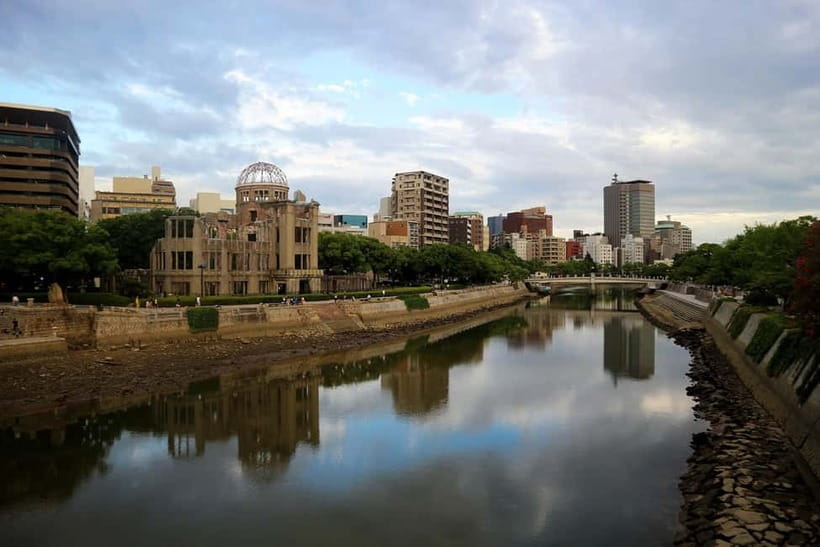
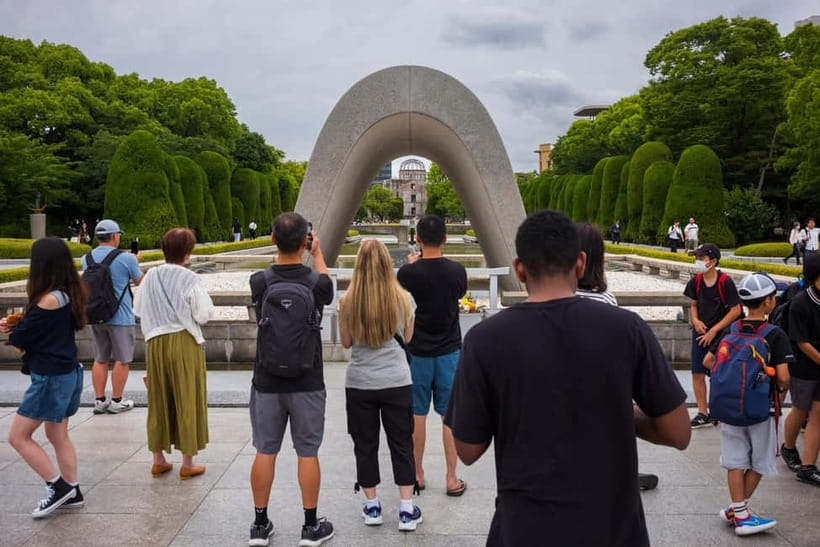
After Miyajima, the day turns heavier. You return toward Hiroshima and head to Hiroshima Peace Memorial Park, with a guided visit plus free time afterwards (about 2 hours total for the park portion). This isn’t a stop you treat like sightseeing with a checklist. The setting is built for remembrance, and the tour description is clear that the focus is reflecting on the tragic events of 1945.
The Peace Memorial Park includes major monuments such as the Peace Memorial and the Atomic Bomb Dome, which is identified as a UNESCO World Heritage site. The Atomic Bomb Dome is also the visual anchor for many people’s first mental image of Hiroshima. Seeing it in this context matters, because it’s not presented as a photo prop. The guide helps you slow down and understand what you’re looking at.
Photography is allowed, but the instructions ask you to be respectful in memorial areas. That’s easy advice to follow. If you want a smooth experience, keep your camera ready but don’t hover. Take your photos, then step back and let the space do its job.
The guided portion helps here because it puts the sights into words. Without that, you’d still be able to read signs, but you might miss the emotional thread that connects the different monuments. With a guide, you get a clearer sense of why this park exists and why remembrance is part of the story.
Getting value from the clock: what will feel tight
This route is efficient, but it’s still long. You’ll move through multiple transportation modes: Shinkansen rides, bus/coach segments, and two ferry segments (one longer ferry ride and one shorter ferry ride back). That means you’ll want to keep your essentials in one bag you can grab quickly when you board.
Here’s what I’d watch for in your own planning:
- Moderate walking: the tour explicitly warns about comfortable shoes, and the days at both Miyajima and the memorial park are the parts that add up.
- Weather matters: the ferry schedule to Miyajima may change. Even if you don’t get a full cancellation scenario, delays can compress your free time.
- All-weather packing: bring an umbrella or raincoat if needed. You’ll likely be outside enough that weather changes your comfort level more than you’d expect.
One more practical thing: meals aren’t included. So plan to eat during the free time window or bring a snack you can manage easily. A day like this can make you forget to eat until you feel it, and then your energy crashes.
If you’re the type who hates being rushed, you’ll still do fine as long as your expectations match the structure: highlights first, then a small amount of wandering.



Price and value: what about $104 makes sense
The price is listed at $104 per person, with the duration ranging from 8 to 16 hours. The big value question is what’s included versus what you pay separately.
Included items in the tour description:
- round-trip by high-speed bullet train from Tokyo (if you select that option)
- ferry ride to Miyajima
- admission to Itsukushima Shrine
Not included:
- hotel pickup and drop-off
- meals
So when you compare costs, you’re basically paying for the day-trip structure: transport management, a live guide in English or Spanish, ferry and shrine admission. You’re also paying for time. On a one-day schedule, the cost of figuring out trains, tickets, and timing on your own can be higher than it looks.
If you’re already comfortable navigating Japan transit and you’re traveling with fewer constraints, you could build a DIY plan. But if you want a guided, organized day that keeps you from losing hours, the $104 figure looks more reasonable. The quality signals in the info also support that idea: the guide is bilingual, and there’s mention of a driver named OE who was respectful and pleasant during the ride segments.
Who this tour suits best (and who should skip)
This is best for you if you want both sides of the Hiroshima-Miyajima story: the solemn memorial experience and the cultural island stop. It’s also a strong fit if you like having a bilingual guide helping you make sense of what you’re seeing in real time.
It may not fit as well if:
- you want a long, slow day with lots of free wandering in each place
- you have mobility challenges (the tour is not suitable for wheelchair users)
- you need meals included in the price, because meals aren’t provided
If you’re traveling solo, the structure is a plus. If you’re with family, it can work, but you’ll want to judge whether kids can handle the memorial portion’s tone and the walking involved.
Also, remember this is a day trip from Tokyo. That means you’ll spend a large chunk of your time getting there and back. The payoff is you don’t have to plan an overnight trip.
Should you book this Hiroshima and Miyajima day trip from Tokyo?
If your goal is to hit Hiroshima and Miyajima in one day without juggling tickets and connections, I’d say this is a solid choice. You’re getting the key sights with guided time in the places that benefit most from context: Itsukushima Shrine and Hiroshima’s memorial park. The bilingual guide experience also sounds like a real quality point, with Alex/Alejandro switching between English and Spanish smoothly, and the driver OE described as respectful and enjoyable.
Book it if:
- you want a structured day with a live guide
- you’re comfortable with moderate walking
- you can handle a long schedule and weather uncertainty
Skip or rethink it if:
- you need lots of meal and rest flexibility (meals aren’t included)
- you want to linger slowly at fewer stops
- mobility access is a concern
FAQ
FAQ
How long is the Hiroshima and Miyajima day trip from Tokyo?
The duration is listed as 8 to 16 hours, depending on the starting time you select.
What’s included in the price?
The included items listed are round-trip high-speed bullet train from Tokyo (if the option is selected), ferry ride to Miyajima, and admission to Itsukushima Shrine.
Are meals included?
No. Meals are not included.
Do I get a guided tour at both Hiroshima and Miyajima?
Yes. The shrine includes a guided visit, and the Hiroshima Peace Memorial Park includes a guided tour time as well.
What languages is the live guide available in?
The guide is listed as available in English and Spanish.
What should I bring for the day?
Bring comfortable shoes, a hat, a camera, sunscreen, and water.
Is photography allowed?
Photography is allowed, but you should be respectful in memorial areas.
What are the rules about smoking?
Smoking is not allowed.
What if the weather is bad?
The ferry schedule to Miyajima may be subject to change due to weather conditions, so be prepared for all weather.
Is this tour suitable for wheelchair users?
No. It is not suitable for wheelchair users.