REVIEW · TOKYO
Tokyo: Guided Go Kart Tour from Harajuku to Shibuya Crossing
Book on GetYourGuide →Operated by Monkey Adventure Kart · Bookable on GetYourGuide
Tokyo turns into Mario Kart here. You get the Shibuya Crossing buzz and the digital photo delivery when the ride ends, plus guides who keep things orderly (like Gas and Lewis). One possible catch: the driving paperwork is strict, so bring the right hardcopy IDP or you won’t be able to drive.
This is a guided tour, not just karting. In a small group (limited to 5), the route is designed so you can actually see Tokyo—Harajuku’s energy, Shibuya’s lights, and Shinjuku’s momentum—while still staying focused on the road.
You’ll meet near Shibuya Station, then get a safety briefing, optional costumes, and an action-camera setup (or Insta 360 mount). The only downside I’d plan around is that rain can reshuffle the schedule, so check the day-of timing.
In This Review
- Key points to know
- The core idea: why this go-kart tour feels uniquely Tokyo
- Price and value: $103 for 75 minutes (what you’re really paying for)
- IDP rules: the part you must not mess up
- Meeting point in Shibuya: how to find it fast
- Safety briefing: what “street-legal” really means in practice
- Day or night: when Tokyo looks best from the kart
- Harajuku to Shibuya: how the tour builds momentum
- Shinjuku street time: speed, tunnels, and photo stops
- Costumes and action-camera mounts: making it feel extra
- The photo package: digital sharing made easy
- Who should book this (and who should skip it)
- Timing, rain, and what to expect on the street
- Quick practical checklist before you go
- Should you book the Harajuku to Shibuya Crossing go-kart tour?
- FAQ
- How long is the go-kart tour?
- What is the group size like?
- Do I need an international driver’s permit, and what type?
- Where do I meet the guide?
- Is hotel pickup and drop-off included?
- Can I bring alcohol in the vehicle?
- What happens if it rains?
Key points to know
- Shibuya Crossing is the star: you’ll ride through the area everyone recognizes, not just around it
- Safety + signaling matters: guides like Gas and Lewis are praised for clear instructions
- Costumes are part of the experience: you can dress up before you roll out
- Photos are built in: digital delivery via AirDrop or email plus one printed picture
- No hotel pickup: plan on getting to the FamilyMart meeting point yourself
- Paperwork rules are real: a 1949 Geneva hardcopy IDP is required to drive
The core idea: why this go-kart tour feels uniquely Tokyo
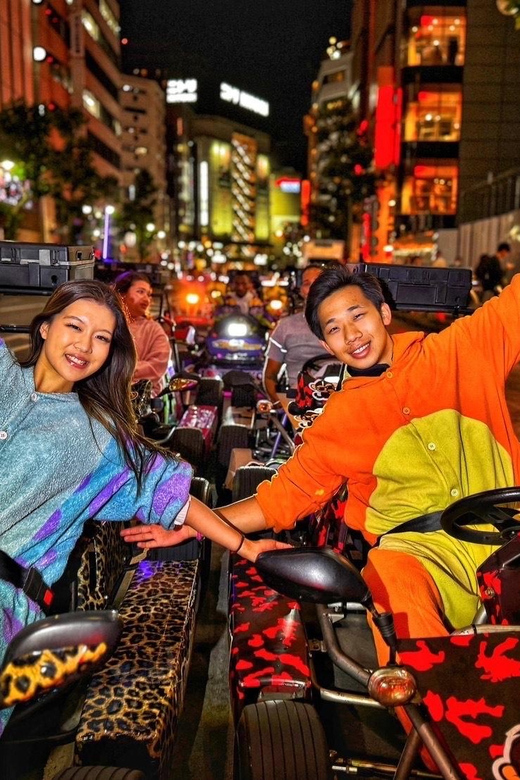
I like tours that let you move through a place instead of just standing in it. This one does that. You’re literally behind the wheel, threading through central Tokyo at a pace where you can look up and take it in—signs, crowds, sky-high buildings, and those big-crossing moments that Tokyo is famous for.
The route is built around recognition. Harajuku gives you style and street-life vibes, Shibuya gives you the wow-factor, and Shinjuku brings the fast, neon-soaked energy. Even if you’ve seen photos of the city, riding through it changes how it feels. The streets stop being flat pictures and turn into real space you’re navigating.
And yes, it’s fun. But it’s also structured: you get a briefing, you follow a guide, and you stop at key spots for photos. That balance is what makes it a good first-time activity in Tokyo, especially if you want something different from the usual rail-and-museum routine.
You can also read our reviews of more guided tours in Tokyo

Price and value: $103 for 75 minutes (what you’re really paying for)
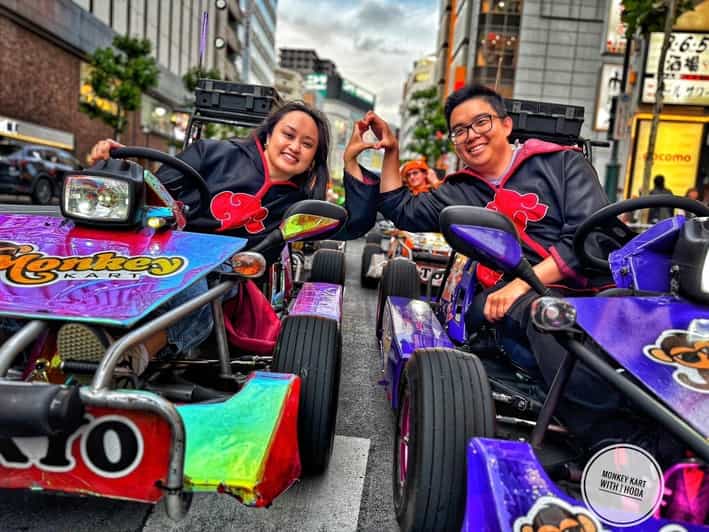
At about $103 per person for a 75-minute tour, this isn’t the cheapest thing you can do in Tokyo. The value comes from three areas that most budget karting options skip:
First, it’s guided. You’re not guessing routes or trying to interpret confusing signage while you’re learning a kart. The guide handles where you go and helps keep the ride calm and predictable.
Second, it includes photo work. You get a photoshoot during the route, digital delivery at the end (AirDrop or email), and one hard copy photo. That turns the experience into something you can actually share without hunting for strangers to take pictures.
Third, the kart ride is positioned for high-impact sightseeing. If the main draw is the Shibuya Crossing moment plus nearby districts, this price starts making more sense, because you’re paying for the combination of transport + sights + photos in one package.
One thing to keep in mind: the tour length is listed as 75 minutes, and there’s a chance you may get less driving time than expected (one booking noted a shorter driving window). If time matters to you, I’d treat the 75 minutes as the full tour window, not guaranteed throttle time.
IDP rules: the part you must not mess up
This tour requires an international driver’s permit in the 1949 Geneva Convention format, and you need the hardcopy paper booklet from an official issuing agency in your country. Online copies, Xerox copies, and card-style licenses aren’t valid for driving here.
If you’re from certain countries, Japan can also require extra paperwork. For drivers who have licenses issued from France, Switzerland, Taiwan, Germany, Monaco, and Belgium, you need a Japanese translation of your local license, and the physical copy can be obtained through the JAF office (Japan Automobile Federation).
There’s also a recognition issue: permits issued under the 1968 Vienna Convention, and certain other permit formats (like IDA/IAA) are not recognized. Some countries’ permits are not permitted to drive in Japan at all, so it’s worth checking before you leave home.
Quick practical take: don’t wait until you land to confirm your documents. The cost of a day lost to paperwork mistakes in Tokyo is brutal. If you have the correct IDP in the right format in hand, this tour becomes smooth and stress-free. If you don’t, it becomes a no-go.
Meeting point in Shibuya: how to find it fast
You’ll meet at a FamilyMart on the main big street: 3-chome-17-3 Shibuya, Shibuya City, Tokyo. The nearest train station is the central gate of Shibuya Station, about a 2-minute walk from Shibuya Station Exit C2.
No hotel pickup is included, so plan your route to Shibuya and build in a little buffer for walking. Shibuya is busy even when everything looks calm from the street level, and that last 5–10 minutes walking to a meeting point can feel longer than you expect.
If you’re coming from elsewhere in Tokyo, I’d aim to arrive early. One experience noted a waiting period before the tour started, which is exactly the kind of thing that matters when you’re working around trains and dinner plans.
Safety briefing: what “street-legal” really means in practice
You start with a thorough safety briefing and driving instructions from a professional English-speaking guide. The goal is simple: you’re going to drive on real roads, so you need clear rules and confident control.
From the way guides are described, the best part isn’t that the ride is exciting—it’s that it feels controlled. Names like Gas, Lewis, Rakesh, and Mirko come up repeatedly for helping riders feel safe through clear guidance and consistent signaling. You should expect signals, rules for turning and spacing, and a pace that lets you react without panic.
Also note one hard rule: no alcoholic drinks in the vehicle. That’s part of keeping it orderly.
If this is your first time driving in Japan, you’ll probably appreciate that the guide takes the heavy lift. You focus on driving and looking out for signals, while the guide manages the route and timing.



Day or night: when Tokyo looks best from the kart
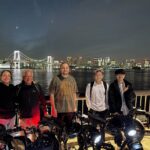
Tokyo can be amazing in daylight, but this ride has a special edge at night. Several riders specifically called out how the city lights look from behind the wheel and how the night drive made the whole experience feel more intense.
If you go in the daytime, you’ll still get iconic street views—Harajuku’s style streets, Shibuya’s big-brand city feel, and the central-city traffic flow. But at night, signage and reflections make the route more cinematic, especially around Shibuya and Shinjuku.
Practical advice:
- If you hate crowds, consider a non-peak time and expect street bustle anyway—Shibuya is Shibuya.
- If you love photos, night tends to deliver stronger visuals, since those neon layers show up in the background and in your digital photo set.
Harajuku to Shibuya: how the tour builds momentum
The tour typically starts by rolling through Harajuku, then moves toward Shibuya Crossing, and continues into the Shinjuku area and surrounding central Tokyo neighborhoods.
Harajuku is fun because it feels like Tokyo is dressing up. You get the street energy and youth-fashion vibe that’s hard to capture from public transport alone. You’re driving, so you notice the rhythm of the district—where people gather, how the traffic moves, and how the street layout guides your line.
Then comes the part everyone wants: the route includes the Shibuya Crossing area. This is one of those Tokyo “you have to see it live” moments. In a car or on a train, it’s a background scene. On a go-kart, you’re part of the motion.
You’ll also get stops or photo moments led by your guide so you can capture the big sights without turning the ride into a photo scavenger hunt.
Shinjuku street time: speed, tunnels, and photo stops
After Shibuya, the ride continues into Shinjuku and nearby central neighborhoods. Shinjuku’s streets feel busier and more layered, with tall buildings and nonstop movement. In a kart, you notice how fast Tokyo changes from one street corner to the next.
One highlight you might get is a stretch where the kart can move faster, and at least one ride mentioned a tunnel segment with light traffic—exactly the kind of moment that turns a standard city tour into a story you’ll remember.
Throughout the route, the guide takes high-quality photos at key locations. If you’ve ever tried to take a group photo while walking through crowds, this is the opposite: you drive, the guide cues the moments, and you get images at the end.
Costumes and action-camera mounts: making it feel extra
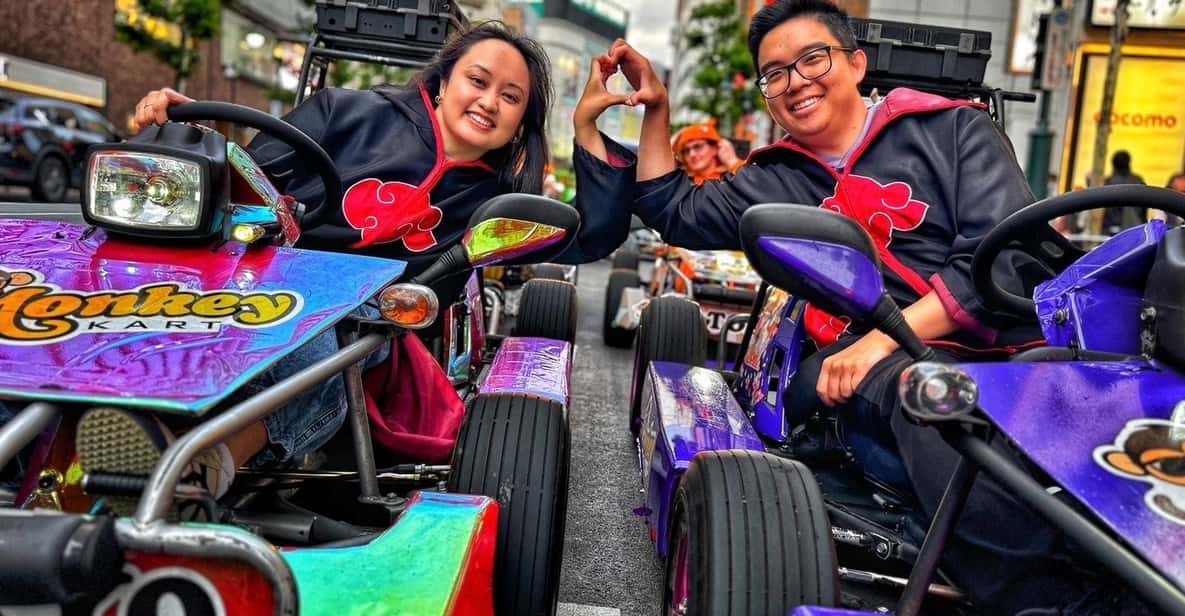
You can dress up in costumes before you head out. This isn’t a gimmick-only option; it’s part of the experience setup, and the tour includes costumes so you don’t have to travel with anything bulky. Think character energy and photo-worthy looks in a place where people already dress for attention.
You also get an action-camera or Insta 360 mount included. That matters because it helps capture your ride experience from your perspective. You’ll likely see that in the final photo/video set you receive digitally.
And yes, it helps the photos too. A kart + costume + Tokyo streets makes your pictures look like something you can’t get at a typical sightseeing stop.
The photo package: digital sharing made easy
Photos are handled during the tour, then delivered afterward. You should plan to get your digital images via AirDrop or email, plus you’ll receive one hard copy photo too.
This is one of the smartest inclusions for a Tokyo activity. You can spend your time riding instead of searching for a good shooting spot and then hoping the photo actually turns out. It also reduces the stress of coordinating group shots in a crowded area like Shibuya.
Practical tip: bring a phone with enough battery and make sure your email/AirDrop settings are ready so you can receive the files promptly at the end.
Who should book this (and who should skip it)
This fits best if you want:
- A hands-on way to see Tokyo, not just look at it
- A memorable first-day or last-day activity (75 minutes is short enough to still enjoy your main itinerary)
- A mix of thrill and structure: you get a guide, safety brief, and planned sightseeing areas
- The chance to wear a costume and get photos without extra planning
It may not be right if:
- You’re pregnant (not suitable)
- You’re over 95 years old (not suitable)
- You’re under 18 years old as a driver (drivers under 18 aren’t allowed)
- You don’t have the required IDP paperwork in the correct 1949 Geneva format
Also, if you’re expecting a calm, low-energy walking tour, this is not that. You’ll be on the move the whole time with real street driving.
Timing, rain, and what to expect on the street
Tokyo rain can change everything fast. This tour may be rescheduled due to rain, so don’t book it as the one activity you can’t afford to move.
As for timing on the ground, plan to arrive early because there can be waiting before you roll out. One note mentioned about a 30-minute wait, and another mentioned the driving time felt shorter than expected. Those aren’t dealbreakers, but they’re good to mentally budget for so you don’t end up irritated later.
Quick practical checklist before you go
Here’s what I’d double-check before leaving for Shibuya:
- International Driver’s Permit in 1949 Geneva hardcopy format
- Your eligibility: over 18 to drive
- No alcohol planned for the vehicle
- Comfortable shoes for the walk to the FamilyMart meeting point
- Phone ready for photo delivery via AirDrop or email
- A plan for rain (and a bit of patience for city timing)
If you’ve got your paperwork handled, the rest is straightforward: you show up, you get briefed, you drive with the guide, and you go home with pictures.
Should you book the Harajuku to Shibuya Crossing go-kart tour?
I’d book this if you want one Tokyo experience that’s clearly not museum-and-platform sightseeing. The Shibuya Crossing moment is the headline, but the real win is how the guide keeps it safe and confident, while still letting you feel the city as you drive through Harajuku and Shinjuku.
Skip it (or at least pause) if your driving documents aren’t already squared away. This tour is strict about IDP formats and hardcopy requirements, and it’s not the type of activity where you can improvise at the last minute.
If you’re comfortable driving and you want a high-energy, photo-ready Tokyo highlight in just 75 minutes, this is a strong pick.
FAQ
How long is the go-kart tour?
The tour duration is 75 minutes.
What is the group size like?
It’s a small group, limited to 5 participants.
Do I need an international driver’s permit, and what type?
Yes. Drivers must have a hardcopy paper booklet of the 1949 Geneva Convention International Driving Permit (IDP) issued by an official agency in your country. Online copies, Xerox copies, and card licenses are not valid. Some countries’ permits are not permitted in Japan, so you should confirm yours meets the recognized requirements.
Where do I meet the guide?
Meet at a FamilyMart on the main big street at 3-chome-17-3 Shibuya, Shibuya City, Tokyo. The nearest train station is Shibuya Station, central gate, about a 2-minute walk from Exit C2.
Is hotel pickup and drop-off included?
No. Hotel pickup and drop-off are not included.
Can I bring alcohol in the vehicle?
No, alcoholic drinks are not allowed in the vehicle.
What happens if it rains?
The tour may be rescheduled due to rain.