REVIEW · TOKYO
Tokyo: Sushi Making Class in a Happi Coat near a Famous Spot
Book on GetYourGuide →Operated by SUSHI GARYU · Bookable on GetYourGuide
Sushi lessons can feel intimidating, but this one doesn’t. You learn nigiri with tuna and salmon, then taste what you made in just 90 minutes, all while wearing a traditional happi coat.
What I like most is how hands-on the class feels and how you get real guidance, not vague tips. You also walk away with a skill you can repeat at home, plus plenty of photo-ready moments in Japanese chef style.
One thing to keep in mind: the meeting point can vary by option, and if the venue is busy you may be seated with other customers, even though the class stays focused and interactive.
In This Review
- Key things to know before you go
- Why the Happi Coat Makes This Sushi Class Feel Different
- Where You Meet Up and How Seating Works in the Room
- A 90-Minute Timeline: From Welcome to Eating Your Nigiri
- Tuna and Salmon Nigiri: What You’ll Be Able to Repeat at Home
- The Teachers: English Help, Patient Coaching, and Real Personality
- Pictures, Props, and That Chef-Mode Feeling
- Price and Value: Is $42 a Good Deal in Tokyo?
- Dietary Needs, Allergies, and Kids: Simple Rules That Prevent Headaches
- Who This Sushi GARYU Class Fits Best (and Who Might Skip It)
- Quick Practical Tips Before You Book
- Should You Book This Sushi Making Class in Tokyo?
- FAQ
- How long is the sushi making class?
- What does the class cost?
- What type of sushi will I learn to make?
- Do they provide instructions in English?
- Can I request vegetarian, vegan, or gluten-free options?
- What if I have a food allergy?
- Do I wear a Japanese chef coat during the class?
- Will I be in a private group?
Key things to know before you go
- Happi coat experience: You put on a traditional tube-sleeved chef-style coat, which makes the whole class feel special and photo-friendly.
- Beginner-friendly nigiri practice: You focus on nigiri sushi with popular fish like tuna and salmon, then eat your results.
- English-and-Japanese instruction: Teachers work in English (and Japanese), so you can follow steps and ask questions.
- Small, personal feel: Many reviews mention attentive teaching, with some sessions feeling close to private if the group is small.
- Dietary options available with notice: Vegetarian, vegan, and gluten-free options exist, but you need to request them in advance.
- Fun, relaxed teaching style: Reviews repeatedly call out friendly energy and humor, including instructors who patiently help with questions.
Why the Happi Coat Makes This Sushi Class Feel Different
Most cooking classes in Tokyo are good at one thing: feeding you. This one is better at teaching you, because it turns you into part of the process. The moment you slip into the happi coat, the lesson stops feeling like a demo and starts feeling like work—fun work, the kind you can take seriously.
That chef coat also changes your headspace. You tend to slow down, watch more closely, and copy the teacher’s moves instead of rushing to the tasting. And yes, it’s great for photos. Reviews mention picture spots and props, so expect at least a few moments where you’ll want to pause, hold your sushi, and capture the memory.
The practical upside: if you want something more useful than another meal, this format is built for that. You’re learning how the sushi is made, not just eating what someone else made.
You can also read our reviews of more tours and experiences in Tokyo

Where You Meet Up and How Seating Works in the Room
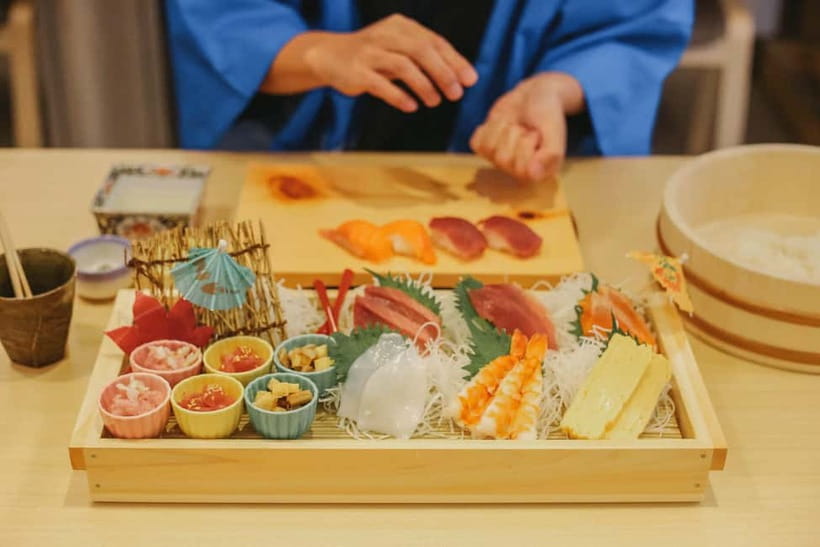
The meeting point may vary depending on the option you book. That’s not unusual in Tokyo, but it matters because arriving flustered can ruin the first 10 minutes of any class.
Plan for two realities:
- You should confirm the exact address for your time slot before heading out.
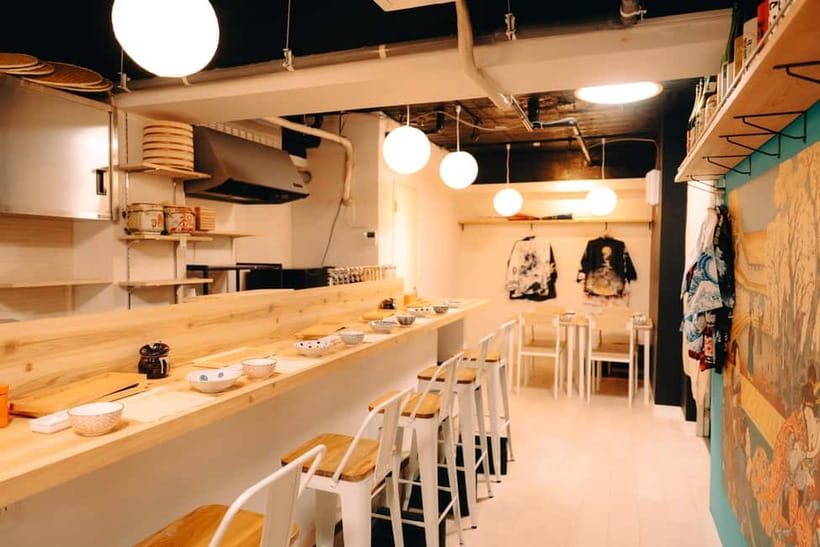
- Your seating may be shared with other customers depending on how busy the venue is.
That second point is a useful heads-up. Even when you’re in a group, the experience still seems to stay hands-on, but it helps to know you might not always get a totally private workstation. The good news from the feedback: instructors still find a way to keep the class personal. People repeatedly note that teachers paid attention and helped throughout the steps.
A 90-Minute Timeline: From Welcome to Eating Your Nigiri
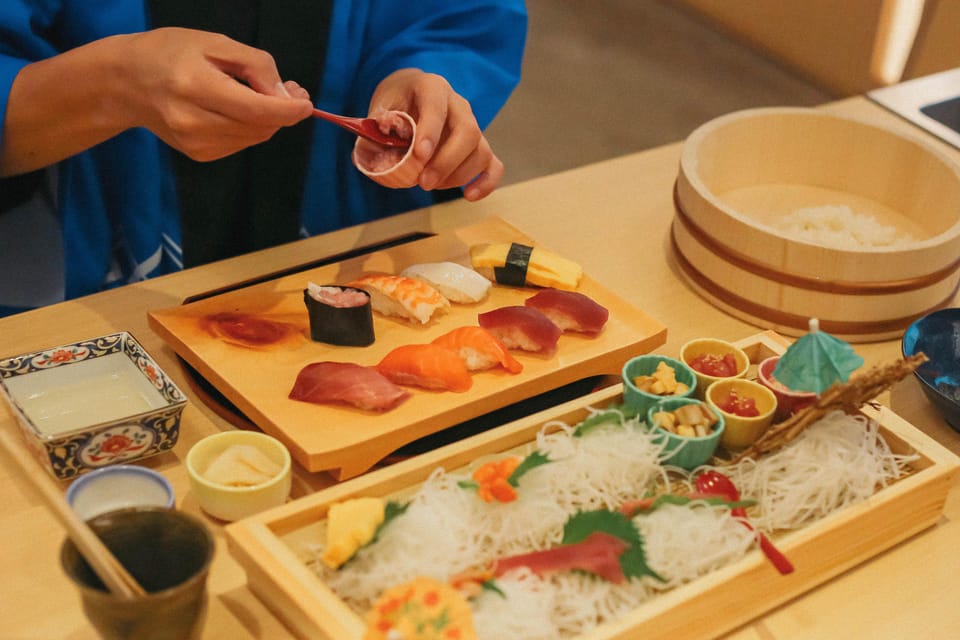
This class is 90 minutes, and it’s structured so you’re not waiting around. You get instruction, then you make sushi yourself, then you eat it—so the time feels efficient instead of rushed.
Here’s the flow you can expect, in plain terms:
1) Welcome and explanation of the plan
You start with a beginner-friendly workshop format. The instructor walks you through what you’ll be doing and how to approach the steps. Reviews mention clear explanations and an easy pace, with teachers willing to answer questions.
2) Learn nigiri basics, then watch the technique
You work under the guidance of a skilled sushi chef in a Japanese-style setting. The class focuses on nigiri sushi, using popular ingredients like tuna and salmon. Some sessions include additional sushi styles (reviews mention maki and onigiri in certain classes), but the core is always nigiri.
3) Put your hands to it
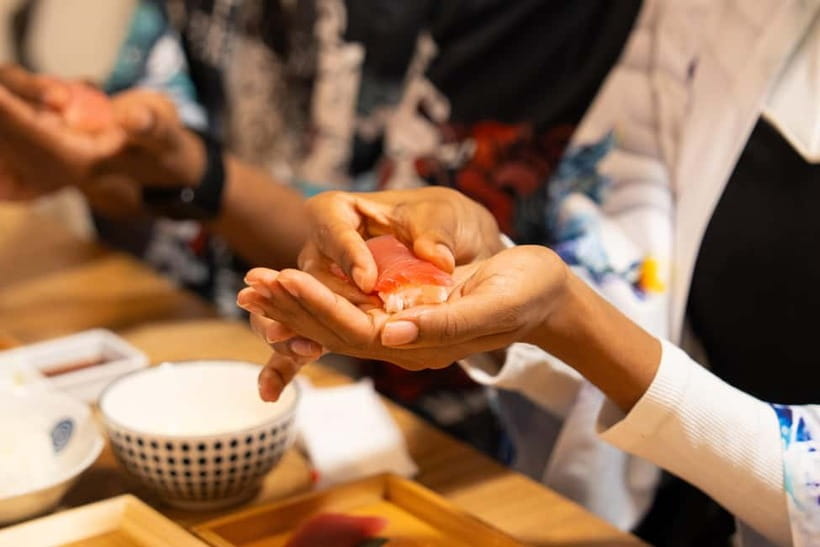
After the lecture portion, you make your own nigiri sushi. This is where the class earns its reputation. Reviews repeatedly praise instructors for being patient—especially when people are first-timers and need help with the small motions that make sushi look right.
4) Taste what you made
At the end, you enjoy the sushi you prepared yourself. Reviews describe portions as generous, often enough to feel like a real meal, not just a snack. If you’re the type who wants to “earn” your lunch, this format hits the mark.
Tuna and Salmon Nigiri: What You’ll Be Able to Repeat at Home
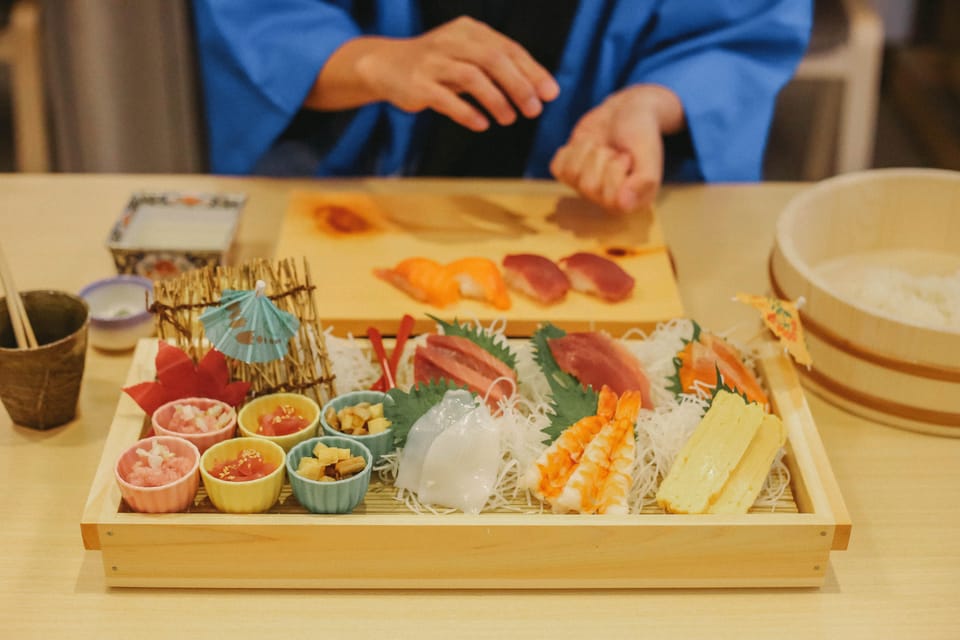
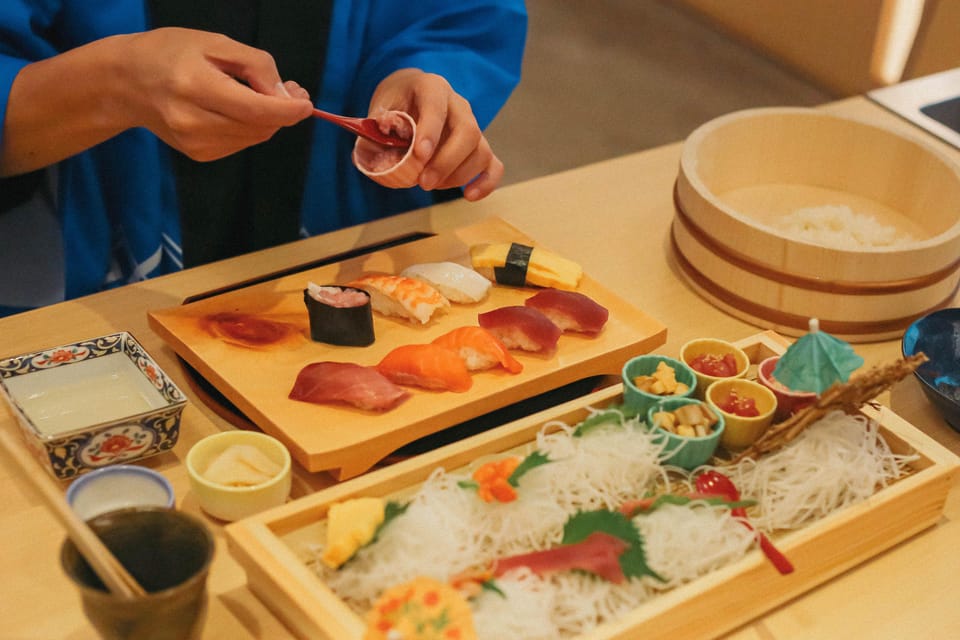
The highlight is straightforward: you learn to make nigiri sushi using tuna and salmon. That choice matters for value and comfort. These ingredients are familiar to most people, and they’re also the type of fish you can think about translating into your home cooking later.
What you’re really practicing is not only shaping sushi—it’s learning the workflow:
- get the ingredients ready,
- follow the steps taught by the chef,
- build the nigiri correctly,
- then adjust when something doesn’t look right.
In other words, you’re learning a process you can repeat, not just copying one final plate.
A few extra details show up in the feedback that you’ll likely appreciate in the moment:
- Teachers often give practical tips and small tricks, the kind that make your sushi easier to handle.
- People mention that even after only one lesson, they felt confident making sushi at home afterward.
- The class often includes photo-taking moments in Japanese outfits, which helps you remember what you did and how it was supposed to look.
And about quality: fresh ingredients show up in the reviews, which is important. When you start with good ingredients, your sushi tastes right even before you get perfect technique.
The Teachers: English Help, Patient Coaching, and Real Personality
One of the strongest themes in the reviews is the teaching style. You’re not stuck figuring things out alone. Instructors are described as friendly, funny, and supportive, and they help people succeed even when they’re brand new.
Names mentioned in the feedback include Chef Hide, Mikoto, Kohji, Mitsuko, Emmy, Miwa, Emi, Ami, Mai, Mizuki, and Masa. If you’re choosing a time slot based on instructor availability, you might notice those names when you book, but the bigger point is this: English support is a core part of the experience, not an add-on.
This matters in Japan because “cooking” classes often rely on gestures and rapid instruction. Here, people consistently note that explanations were clear, English was strong, and questions were welcome.
Also, don’t underestimate the emotional side. If you’ve ever felt shy in a kitchen, a relaxed chef with humor can make all the difference. Multiple reviews mention a relaxed vibe—meaning you can focus on learning without feeling graded.





Pictures, Props, and That Chef-Mode Feeling
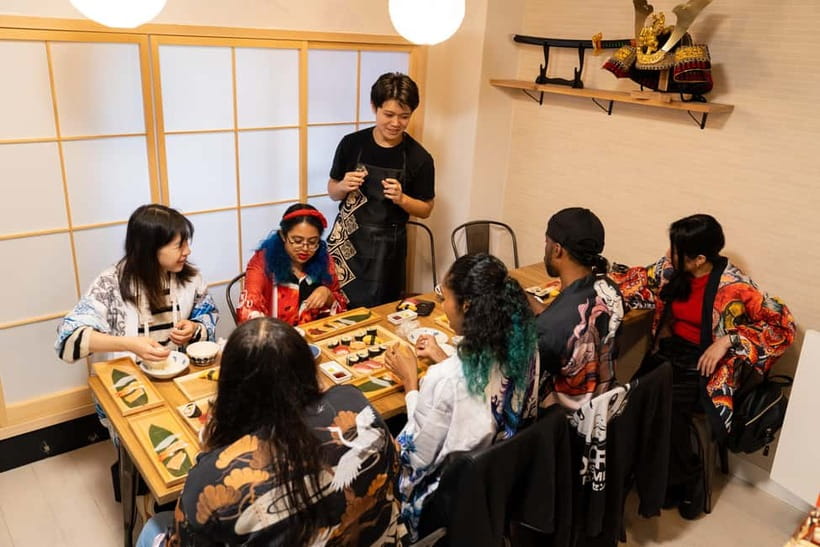
The happi coat is the headline, but the experience includes other “you’re in Japan” details. Reviews talk about picture opportunities, props like the sushi coat setup, and teachers taking photos of you during the class.
That’s not just for fun. It gives you a tangible record of what you learned. After the lesson, you’re more likely to try again at home because you can refer back to how it looked when you did it right.
If you like small cultural touches—like dressing in traditional style while you cook—this one will feel satisfying.
Price and Value: Is $42 a Good Deal in Tokyo?
At $42 per person for 90 minutes, this class lands in the “worth it” zone for a couple reasons.
First, you’re paying for more than instruction. The class includes the cooking lesson, ingredients, and the instructor. That bundle matters in Tokyo, where buying ingredients and learning proper technique on your own can become expensive fast.
Second, you’re not just watching. You’re making nigiri, then eating what you make. Many people leave feeling full and satisfied, which turns the class into a meal experience, not a separate cost.
Third, this is a skill-building activity. You’re buying time with a sushi chef, in English, with hands-on coaching. That’s hard to replicate casually.
The main “value check” for you is personal: if you already love cooking and want a structured way to learn sushi basics, it’s a solid deal. If you only want a fancy lunch, you might find other food options more to your taste.
Dietary Needs, Allergies, and Kids: Simple Rules That Prevent Headaches
If you have food allergies or dietary requirements, you’ll want to handle this early and clearly.
From the information provided:
- Let the organizer know about any food allergies in advance by message.
- Vegetarian and vegan options are available if you request them ahead of time.
- Gluten-free is available as well, but you must ask in advance.
- If you wait until the day of, they may not be able to accommodate.
That’s worth taking seriously. Sushi is simple in theory—rice and fish—but small substitutions can be tricky. So communicate early and double-check what will be used.
Families should also note the children policy: you’ll be charged for those over 4 years old, and dishes under 4 may be shared. Children fees follow the listed pricing.
Who This Sushi GARYU Class Fits Best (and Who Might Skip It)
This class is a strong match if you:
- want a beginner-friendly activity you can handle even if you’ve never rolled sushi before,
- want to learn nigiri specifically (tuna and salmon),
- prefer a hands-on class where you eat what you make,
- enjoy cultural experiences tied to food, especially when you get traditional chef style.
It may be less ideal if you:
- want lots of free time for exploring afterward during the class itself,
- hate group settings, since seating can be shared when the venue is busy,
- dislike hands-on cooking and only want a restaurant meal.
The time length helps here. Ninety minutes is enough to learn the steps and taste the results without turning the day into a long project.
Quick Practical Tips Before You Book

A few things I’d do to make your class smoother:
- Choose a time when you’re not racing across Tokyo. You’ll learn better if you’re not stressed.
- Message about allergies and dietary needs right away, not later.
- Bring a camera or phone you’re comfortable using. Photo-taking is part of the experience.
- Wear comfortable clothes. You’ll be leaning in and working with your hands.
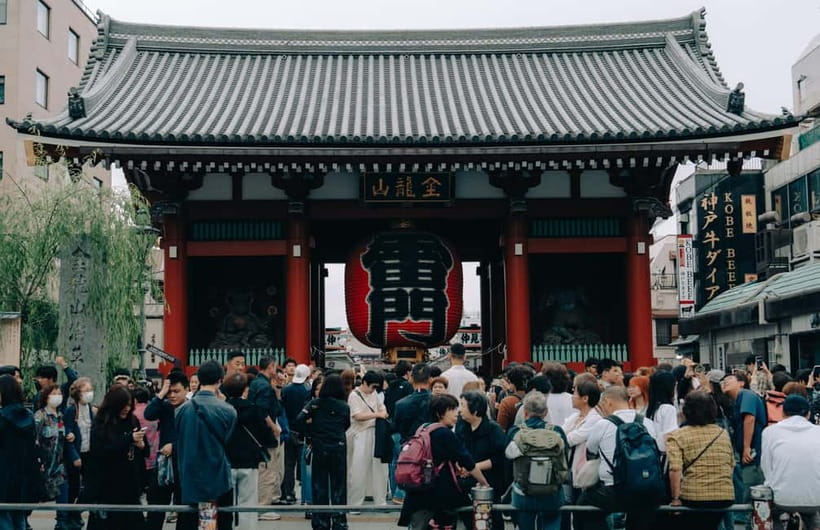
Also, consider pairing the class with a nearby temple or market visit afterward. Several people mention wandering after the workshop, and it’s a natural flow: learn the craft, then go soak up more everyday Tokyo life with your stomach already happy.
Should You Book This Sushi Making Class in Tokyo?
Yes, if you want a practical, hands-on Tokyo food experience that results in a real meal and a real skill. The class structure is built for first-timers: instruction first, then you make nigiri yourself, then you eat it.
I’d especially recommend it for:
- couples looking for a fun shared activity,
- food lovers who want technique, not just taste,
- anyone who wants an easy win in Tokyo—90 minutes, clear steps, and strong English support.
Skip it only if you’re purely seeking a sit-down restaurant experience. This is a workshop. You’ll be working with your hands, learning the process, and leaving with sushi-making confidence you can use later.
If that sounds like your kind of day, book it and plan to show up curious. The happi coat alone is worth it, but the hands-on nigiri practice is what makes it stick.
FAQ
How long is the sushi making class?
It runs for 90 minutes.
What does the class cost?
The price is listed as $42 per person.
What type of sushi will I learn to make?
The class focuses on making nigiri sushi, including tuna and salmon.
Do they provide instructions in English?
Yes. The instructor’s languages are listed as English and Japanese.
Can I request vegetarian, vegan, or gluten-free options?
Yes. Vegetarian, vegan, and gluten-free options are available, but you need to inform them in advance by message.
What if I have a food allergy?
You should let them know about any food allergies in advance by message so they can plan for it.
Do I wear a Japanese chef coat during the class?
Yes. You’ll be provided a traditional tube-sleeved Japanese coat called a happi to wear during the experience.
Will I be in a private group?
You may be seated with other customers depending on how busy the venue is, though the class remains guided and hands-on.