REVIEW · TOKYO
Tokyo: Izu Scenic Oceanview Train, Volcano, Coast Day Trip
Book on GetYourGuide →Operated by TAIHOU CO,LTD · Bookable on GetYourGuide
Pacific air changes your whole mood. This Tokyo-to-Izu outing strings together big scenery with a Resort 21 coastal train ride and summit views from Omuroyama.
I like the way the day mixes viewpoints with hands-on stops: you get a proper 360-degree volcano walk, then you shift gears to greenhouses with animals and a DIY souvenir. One watch-out: lunch and food aren’t included, and the schedule can feel tight if you want more time at each place.
In This Review
- Key highlights to notice before you go
- Sanity-saving start: 7:00am pickup and a small-group day
- Omuroyama summit loop: the extinct volcano with 360-degree views
- Izu Cactus Park: greenhouses, animals, and a DIY souvenir you’ll actually use
- Resort 21 sea train: the coastal stretch where waves hit the frame
- Jogasaki Coast and Kadowaki Suspension Bridge: lava cliffs and roaring waves
- Ito Marine Town quick stop: food, omiyage, and seaside views
- Price and what you truly get for about $90
- Timing, food, and communication: the day can move fast
- Who this tour fits best (and who should skip)
- Should you book this Tokyo to Izu day trip?
- FAQ
- How long is the Tokyo to Izu tour?
- Where do I meet the tour?
- Is the Resort 21 scenic train ticket included?
- Is lunch included?
- Is the Omuroyama chairlift included?
- Is the Izu Cactus Park entrance included?
- What languages does the driver speak?
- How large is the group?
- Is the tour wheelchair accessible?
Key highlights to notice before you go
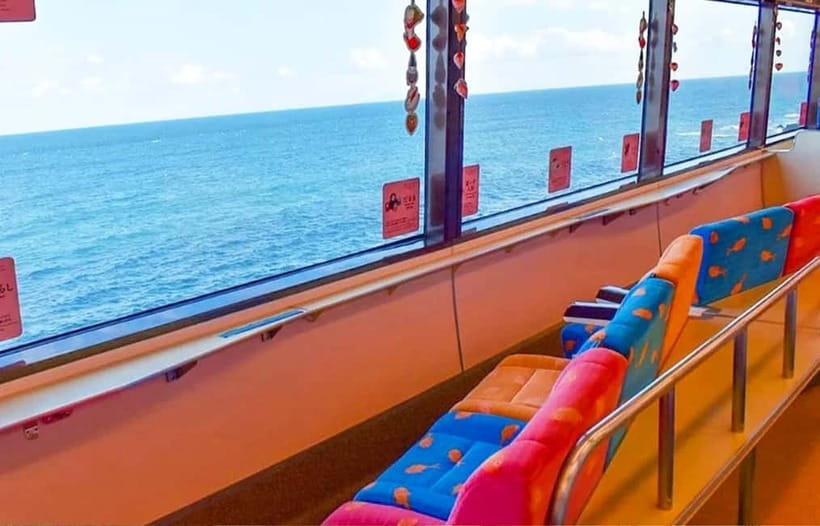
- Resort 21 scenic train: the short cliff-hugging run where the sea looks right beside the windows
- Omuroyama summit loop: a circular trail with sights that can include Mt. Fuji, Sagami Bay, and the Hakone mountains
- Izu Cactus & Animal Park: five themed greenhouses plus friendly animals like squirrel monkeys and kangaroos
- Kadowaki Suspension Bridge: a high, wave-crashing bridge (48 meters long, 23 meters up)
- Jogasaki Nature Trail: volcanic-rock coast views, even if you only sample it in the allotted time
Sanity-saving start: 7:00am pickup and a small-group day
This tour runs for about 11 hours, starting with an early meet-up at Tokyo Mode Gakuen (1-7-3 Nishi-shinjuku, Shinjuku-ku, Tokyo). You meet at 6:45am and depart at 7:00am. The earlier start matters here: it gives you daylight for the volcano viewpoint and coast walks, and it helps you beat the worst of the crowds and traffic.
It’s also built as a small group (up to 9 people). That size is great for comfort—especially since Japan bus seats are usually smaller than Western ones—yet you still move as a group, not at your own pace.
One practical note: you’ll get an email the night before with the driver and vehicle details. It’s worth checking spam/junk, because that message is what keeps you from wandering around Shinjuku guessing which coach you’re on. The tour guide/driver gives simple multilingual commentary during the drive, but they don’t accompany you inside each attraction.
You can also read our reviews of more tours and experiences in Tokyo

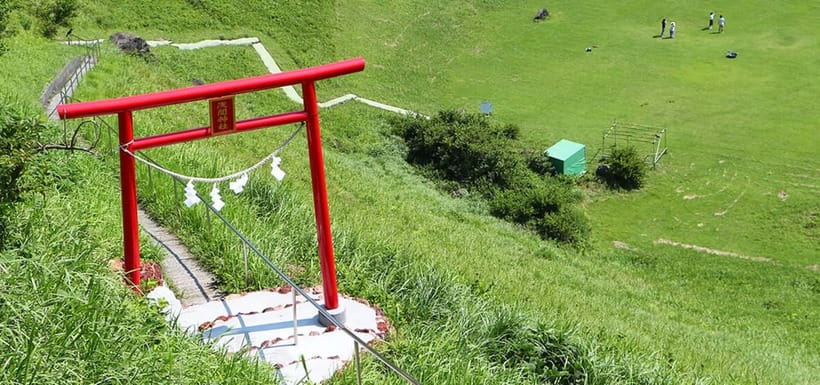
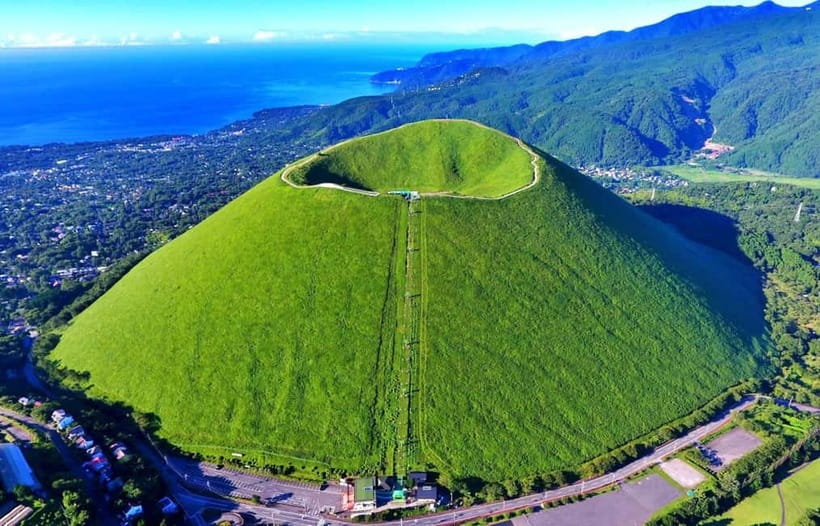
Omuroyama summit loop: the extinct volcano with 360-degree views
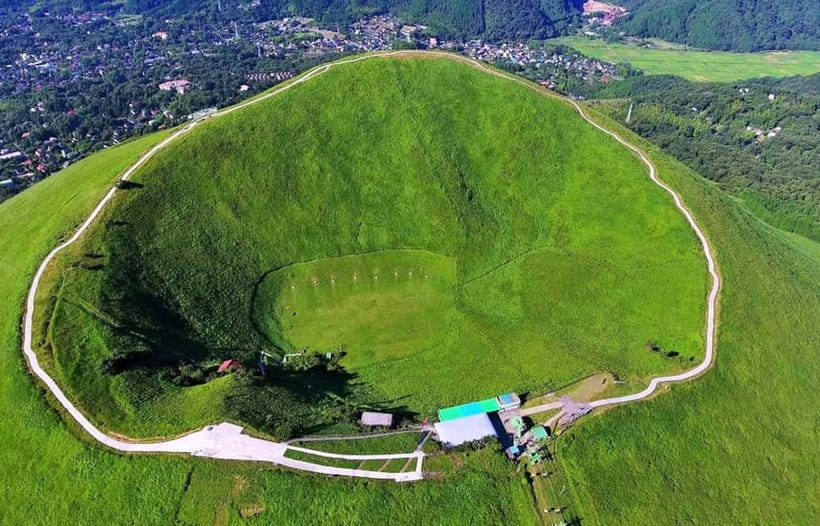
Your first major nature stop is Omuroyama, an extinct volcano with a cone shape that’s often compared to a giant matcha pudding. You reach the summit via a 6-minute scenic chairlift—and that lift fee is optional, meaning it’s not included in the base price.
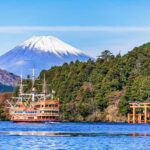
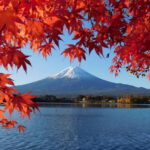
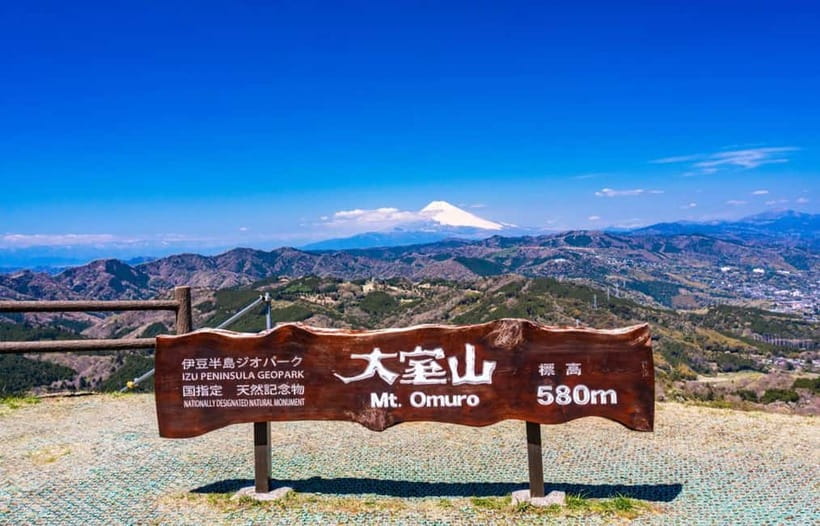
At the top, you get a 360-degree circular trail. That loop is the payoff: you’re positioned to take in wide angles rather than just a single viewpoint. Depending on weather and visibility, the views can include:
- Mt. Fuji (snow-capped when conditions cooperate)
- Sagami Bay
- The Hakone mountains
- Izu’s Seven Islands floating offshore
Is this a “walk a lot” stop? Not in the marathon sense. It’s more about getting to the viewpoint fast and using the trail loop for your photo angles and skyline time.
What to consider: if the chairlift is part of your plan, budget that optional fee ahead of time. Also, chairlift and summit time can be affected by weather—so pack for wind and keep your camera settings ready for bright glare.
Izu Cactus Park: greenhouses, animals, and a DIY souvenir you’ll actually use
Next comes Izu Cactus & Animal Park, a fun change of pace from mountains and ocean. This stop is built around tropical plants and animal-friendly exhibits, not just one photo spot.
Here’s what you can expect:
- Five themed greenhouses
- Over 1,500 cacti and succulents from around the world
- Animals that roam in a friendly setup, including squirrel monkeys and kangaroos (you can interact)
Then there’s the practical, gift-worthy part: a DIY succulent potting experience. You make your own creation, which is the kind of souvenir that doesn’t just sit on a shelf—it looks good on a desk or windowsill later.
Season details are part of the charm. In winter, the park highlights cuteness by having capybaras enjoy hot spring baths. That’s very “Japan seasonal experience” energy, but you’ll only see it during the colder months.
If you’re traveling with kids, this stop tends to land well because it combines plants with animals and gives you a task (potting) instead of only sightseeing. If you’re short on time, focus on the greenhouses first—five of them can feel like a lot quickly.
Resort 21 sea train: the coastal stretch where waves hit the frame

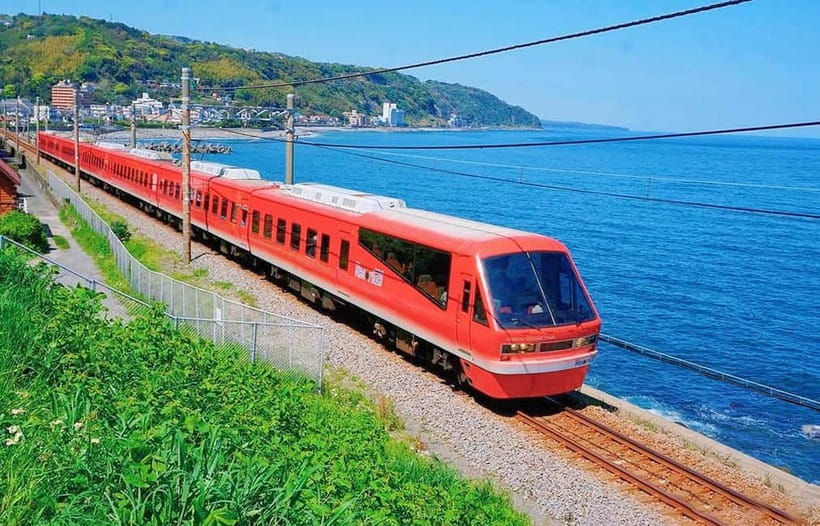
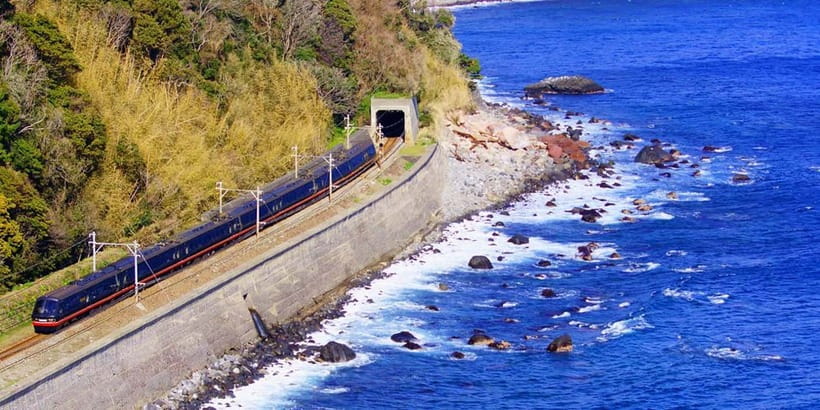
One reason this tour gets attention is the Resort 21 limited express. You board at Izu-Kogen Station. The car experience is part of the fun: you’ll get big sea views, and the ride is timed so you notice the coastline changing as you go.
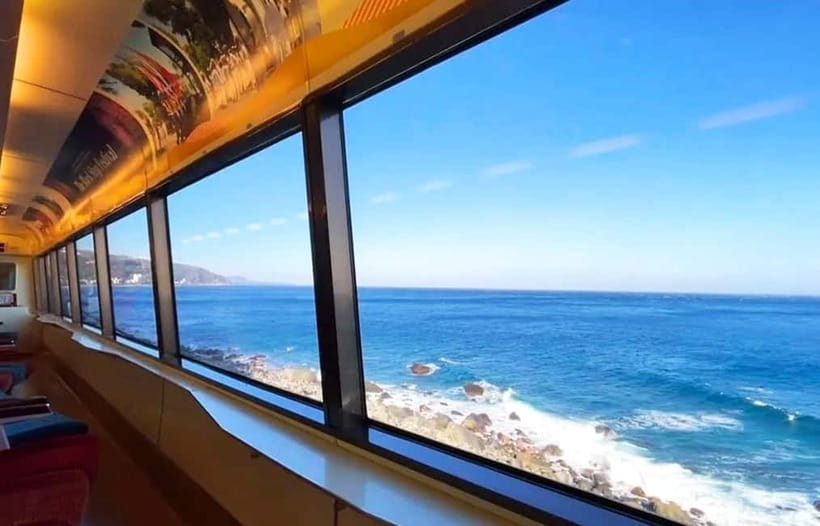
The highlight segment is the 5-minute run between Katase-Shirata and Izu-Inatori. This is the window moment—when the sea feels close enough to make you duck back and look again. The windows can frame crashing waves just outside, with the horizon stretching into a clean line.
What makes this valuable is that it’s not just a ride from A to B. It’s the kind of short route section where you sit down with your camera ready and actually watch the coast instead of zoning out. Even if you aren’t a train person, this is one of the easiest parts of the day to enjoy without needing deep planning.
Jogasaki Coast and Kadowaki Suspension Bridge: lava cliffs and roaring waves
After the train, you reach one of Izu’s standout coast areas: Jogasaki Coast. This shoreline was shaped by a volcanic eruption about 4,000 years ago, which helps explain the rugged rock shapes you’ll see at close range.
You’ll have time for quick photo stops and sightseeing around:
- Kadowaki Suspension Bridge
- 48 meters long
- 23 meters high
- suspended over roaring waves
That bridge is the dramatic engineering shot, and it’s also a great place to feel how exposed the coastline is. On a windy day, it can be bracing in a good way—bring a sense of humor and hold your phone or camera firmly.
Then you’ll likely end up on the Jogasaki Nature Trail. It’s listed as a 9 km path with epic viewpoints and volcanic rock formations. Real talk: with a day tour schedule, you probably won’t cover the full distance. You’ll want to pick a viewpoint section you can reach confidently and then stop when you’ve got your shots and breathing room.
This is also the part of the itinerary that rewards comfortable shoes. Coast paths can be uneven, and the goal is to enjoy your pace, not power through in the wrong footwear.
Ito Marine Town quick stop: food, omiyage, and seaside views
Before heading back to Tokyo, there’s a short stop at Ito Marine Town. Think of it like a seaside rest area with practical variety.
You can browse local souvenirs (omiyage) and pick up snacks or treats. The tour notes that you can try regionally made sweets and ice cream, and you can also find things like hot spring skincare goods.
This stop is valuable if you need:
- a final bite before the ride home,
- a place to buy small gifts that don’t require extra packing,
- and a few last photos with bright, colorful seaside buildings.
Just keep in mind it’s a quick visit. I recommend deciding in your head what you want most—food, shopping, or photos—so you don’t burn the whole window wandering.
Price and what you truly get for about $90
The posted price is around $90 per person for an 11-hour day. On paper, that’s not “cheap,” but it’s also not just a bus ride and a ticket to one attraction.
Included items cover the big ticket logistics:
- Scenic train ticket (the Resort 21 part)
- Round-trip transportation in an air-conditioned vehicle
- A professional multilingual driver
- Expressway tolls, vehicle fuel, and parking fees
Not included are the same things that often surprise people:
- Food and drinks
- The Omuroyama lift fee (optional)
- Zoo/park entrance fees (optional)
So the real value equation depends on how much you plan to do at Omuroyama and the park. If you want the chairlift and full park time, the day cost can climb a bit. If you’re okay doing it lean and spending most of your time on the outside viewpoints and coast trail, the included package covers the expensive transport and scenic train.
Timing, food, and communication: the day can move fast
Here’s where you should set expectations correctly. The tour is built for multiple highlights, which means you’re not lingering forever at each stop. Also, the driver provides commentary but doesn’t accompany you inside attractions, so you’re responsible for getting back on time.
Food is the other big point. Food and drinks aren’t included, and that matters on an 11-hour outing—especially if you need to snack regularly for comfort. I’d plan to bring cash and snacks you can tolerate, or budget for buying food during stops like Ito Marine Town.
One more practical detail: the itinerary assumes smooth flow, but delays can happen due to bad weather, traffic, or holiday crowds. If that happens, the tour may shorten or reschedule parts of the day. That’s normal in Japan, but it’s still worth knowing so you don’t plan another tight activity after your return.
Who this tour fits best (and who should skip)
This is a good fit if you want a high-scenery day trip with minimal decision-making. You’ll ride a scenic train, walk volcano viewpoints, and get coast drama without needing to figure out local transport on your own.
It’s also a decent match if you like:
- outdoors and viewpoints (Omuroyama and Jogasaki)
- “small tasks” and souvenirs (DIY succulent pot)
- nature-meets-play stops (animals at the park)
It’s not a good match if you need a slower pace, lots of guided time inside attractions, or guaranteed long stops. And it’s not suitable for wheelchair users, based on the tour’s accessibility limits.
Should you book this Tokyo to Izu day trip?
I think this is worth booking if your priority is the Resort 21 coastal train experience plus two very different outdoor highlights: a volcano summit loop and a lava-coast walking day with a suspension bridge. You’ll get strong variety in one long day.
I’d only hesitate if you’re the type who needs detailed step-by-step guidance, long breaks, or an included lunch. This itinerary assumes you’ll manage timing, wear decent shoes, and handle your own food planning.
If you do book, go in with a simple strategy: choose your must-do chairlift option and your must-see greenhouse area, then let the coast viewpoints be your photo sessions rather than your marathon hike plan.
FAQ
How long is the Tokyo to Izu tour?
The tour duration is listed as 11 hours.
Where do I meet the tour?
You meet at Tokyo Mode Gakuen, address 1-7-3 Nishi-shinjuku, Shinjuku-ku, Tokyo, 160-0023 Japan. Meet-up is 6:45am and departure is 7:00am.
Is the Resort 21 scenic train ticket included?
Yes. The scenic train ticket is included.
Is lunch included?
No. Food and drinks are not included.
Is the Omuroyama chairlift included?
The Omuroyama lift fee is listed as optional, so it is not included.
Is the Izu Cactus Park entrance included?
Zoo entrance fees (listed as optional activity) are not included, so you should expect additional costs if you visit.
What languages does the driver speak?
The driver provides multilingual service in English, Chinese, and Japanese.
How large is the group?
It’s a small group limited to 9 participants.
Is the tour wheelchair accessible?
No. The tour is not suitable for wheelchair users.