REVIEW · TOKYO
Samurai sword cutting experience
Book on GetYourGuide →Operated by 株式会社テイク · Bookable on GetYourGuide
A sword class that feels ceremonial. You’ll learn Iaido basics in full traditional style—then put it to work with real blades and focused instruction from a Battoushi Do teacher. I like that it’s not just action; you get greetings and meditation built into the flow. One catch: it’s physical and not suitable for everyone, including children under 14, wheelchair users, and visually impaired people.
The other big draw for me is the gear. You’ll handle real Japanese swords said to be more than 100 years old, and you’ll also see plenty of armor on display, which helps you picture the world this training comes from. If you’re expecting a casual try-swing-and-leave experience, this isn’t that kind of class.
You’ll go step by step: costume, mental unity, sword explanation, practice swings, instructor demo, then your own cutting. You’ll even get time to take photos and videos of your tatami strikes if you want, plus a commemorative photo at the end.
In This Review
- Key things I’d circle on your decision list
- Dress the Part: iaido costume change, greetings, and mental unity
- Meeting the sword: explanation, swinging practice, and safety mindset
- Battoushi Do instruction you can actually follow
- Tatami cutting: the instructor demo, then your two strikes
- After the cuts: teacher performance, questions, and a commemorative photo
- What you get for $93: value check for a real sword experience
- Who this samurai sword experience suits best
- Practical travel notes: where to meet and how the session ends
- Should you book this Iaido sword cutting session in Honshu?
- FAQ
- What is the location for this Samurai sword cutting experience?
- How much does it cost?
- What language options are available?
- Is this activity suitable for children?
- Is it suitable for wheelchair users or visually impaired people?
- What happens when the session starts?
- Do you practice with real swords?
- How many times do you cut the tatami mats?
- Can I take photos or videos during the cutting?
- What is the cancellation policy?
Key things I’d circle on your decision list
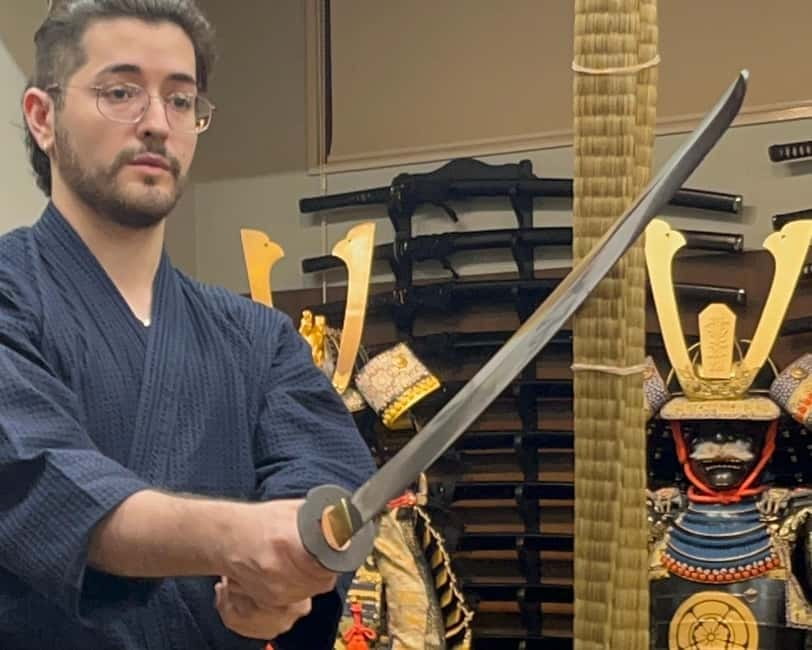
- Traditional iai costume change before any sword work, so you’re in the right mindset fast
- Greetings and meditation that frame the practice as more than technique
- Real swords older than 100 years plus an instructor who teaches Battoushi Do
- Two tatami cuts with guidance, with you choosing the timing for your strikes
- Instructor performance and Q&A so you can ask questions instead of leaving confused
Dress the Part: iaido costume change, greetings, and mental unity
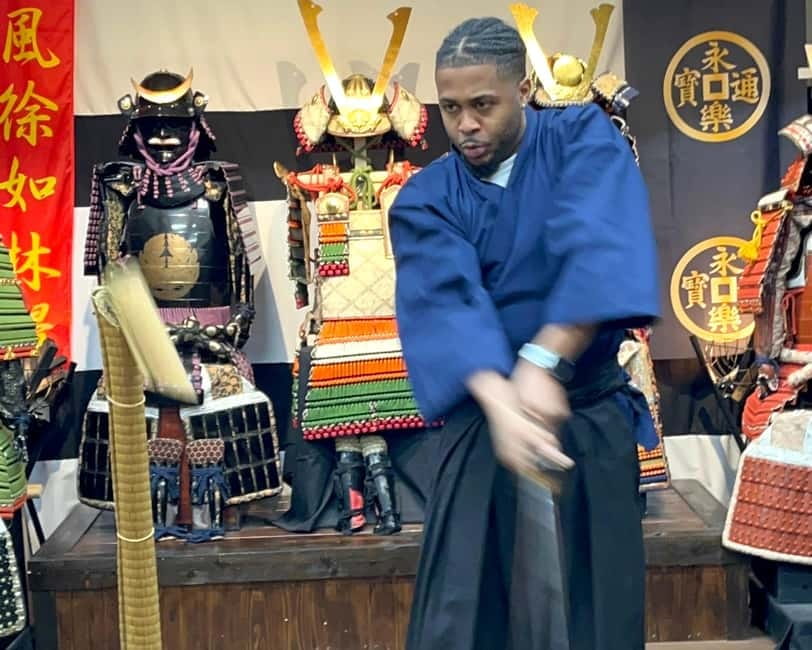
The experience starts with a costume change into traditional iai/iaido training clothing. That matters more than it sounds. The point is to get your body and attention into the same shape the practice requires—stable posture, calm movements, and room to focus on details.
Right after you’re dressed, you’ll move into greetings and mental unity. This is one of the most “samurai spirit” parts of the session. You’re not only learning what to do with the sword; you’re learning how to behave while doing it. In practical terms, it helps you settle before you start handling a sharp tool and practicing controlled cuts.
If you’re the type who gets nervous in hands-on classes, this built-in calm routine is a smart way to get from tourist mode to training mode. It gives you a mental checklist before you ever lift a blade.
You can also read our reviews of more tours and experiences in Tokyo.



Meeting the sword: explanation, swinging practice, and safety mindset
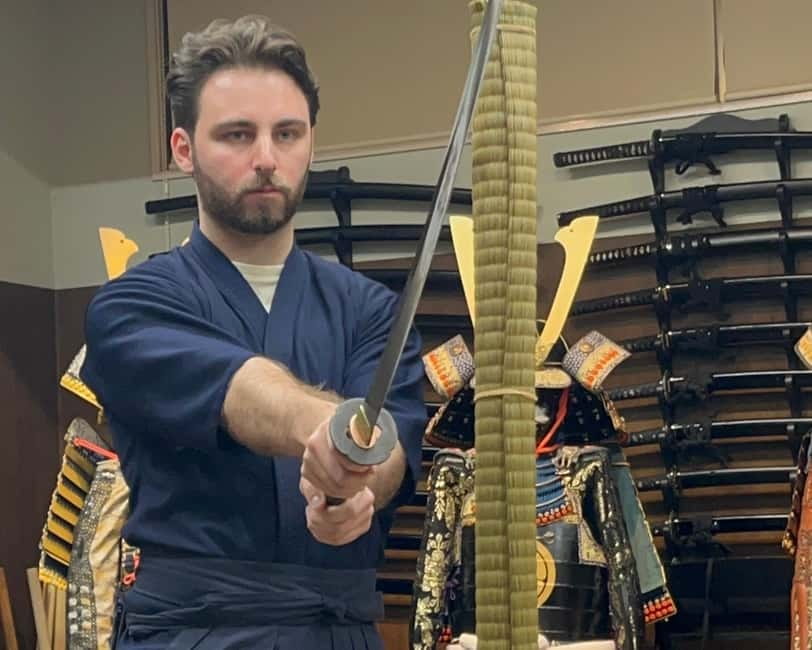
Once you’ve settled in, you’ll get a clear sword explanation—including what you’re holding, why the movements matter, and how the practice is structured. You’ll also get instruction on how to swing and handle the sword properly before cutting. That “practice first” order is what makes the session feel grounded instead of chaotic.
You’ll go through sword practice using training tools too. The experience includes an imitation sword, which is a good bridge between being a beginner and using the real one. Then, later, you’ll switch to the real Japanese sword. This pacing is important: it lets you learn the mechanics without rushing straight to the moment of cutting.
A really distinctive detail here: you’ll also see a lot of armor on display, and that visual context helps the class feel tied to real history rather than just a cool demo. It doesn’t replace technique, but it gives the setting meaning.
Battoushi Do instruction you can actually follow
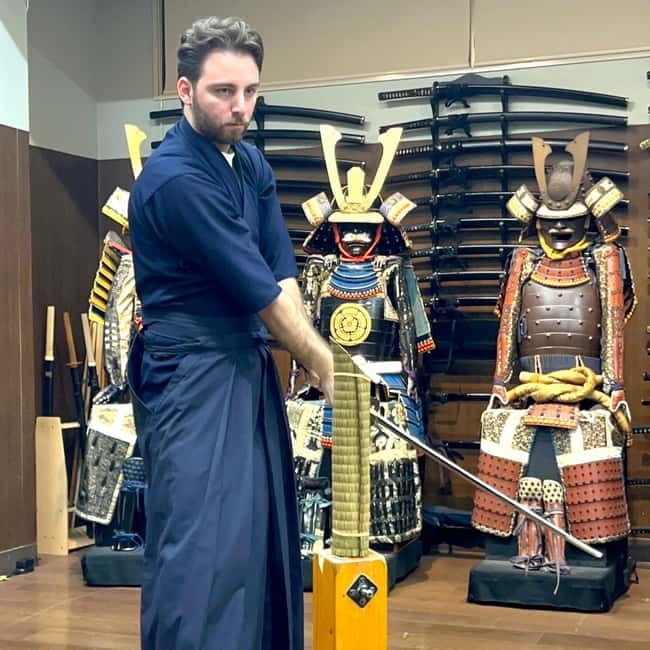
The class includes instruction from a real teacher of Battoushi Do. That’s a key difference between a show and a training session. Battoushi Do instruction tends to focus on disciplined form—how you position your body, how you move the blade, and how timing and intention fit together.
The way the session is staged supports that. You’ll get:
- an explanation,
- your own practice swings,
- an instructor demonstration,
- then guided cutting.
This order keeps you from guessing. Even if you’re new to swords, you get repeated references to what to do and when to do it.
Also, the experience is offered in English and Japanese. If you’re not fluent in Japanese, that’s a big comfort. You’ll still be able to follow what you’re supposed to do and ask questions at the right moment.
Tatami cutting: the instructor demo, then your two strikes
Now for the moment you came for: cutting rolled tatami mats. The experience includes a step-by-step cutting process that builds confidence.
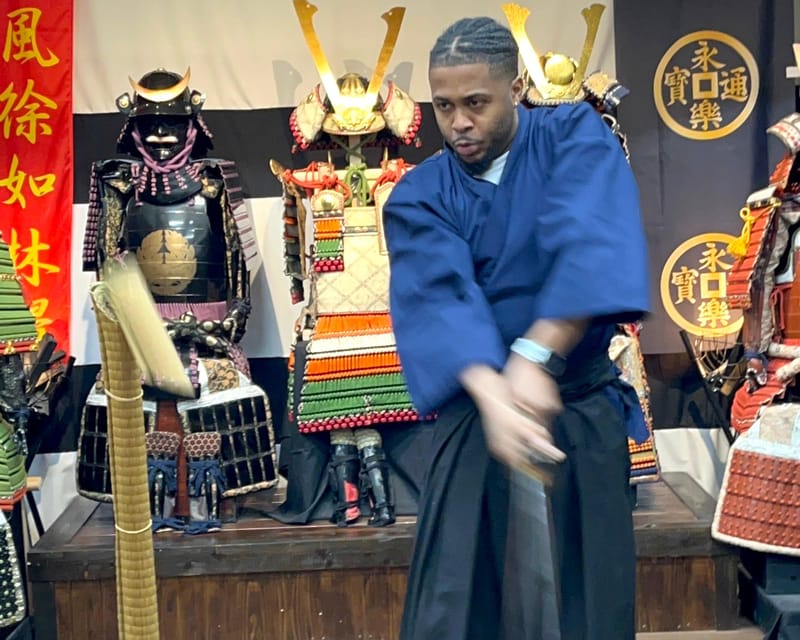
First, the instructor demonstrates the cut you’ll be asked to perform. Watching that kind of demo is more than entertainment. You learn what “good” looks like—where the sword travels, how the body supports the motion, and what timing feels like when the technique is executed smoothly.
Then it’s your turn. You’ll be instructed to cut the tatami mat twice. The timing part is especially interesting: you’ll cut the tatami twice at the timing you want. That doesn’t mean total freedom—think of it as you being guided to choose your moment while still following the instructor’s timing framework.
Practically, that’s a great setup for beginners. It’s not just one repeatable “click and cut.” Instead, you get a chance to control your timing so the technique becomes something you can replicate.
You’ll also have the option to take pictures and videos of yourself cutting. That’s not just for souvenirs. For many people, it’s the easiest way to review what happened and understand what felt right versus what didn’t.
After the cuts: teacher performance, questions, and a commemorative photo
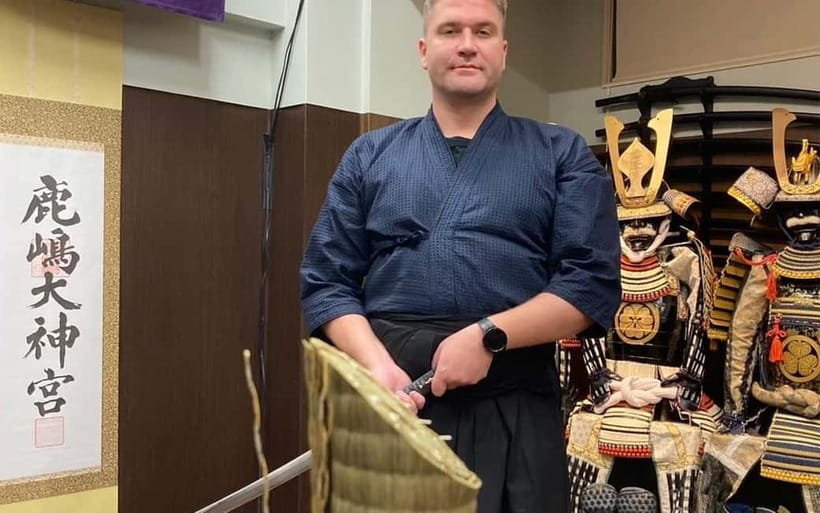
When the cutting round is done, you’ll see the teacher perform again, followed by greetings and mental unification once more. Ending with a performance matters because it shows you the full idea of the practice, not just the one moment of impact.
Then you’ll take a commemorative photo. It’s a simple thing, but in a hands-on class like this, it helps you mark the end of the training block and recognize what you actually accomplished.
You’ll also have the chance to ask questions to the teacher (if you wish). This is one of those underrated benefits. If you felt a mismatch—like the movement looked right but didn’t feel clean—you can ask why and what to focus on next time. Since the session is structured around instruction, it makes sense that questions are welcomed.





What you get for $93: value check for a real sword experience
The price here is $93 per person. For a true sword-cutting experience, the value hinges on three things: authenticity, instruction quality, and access to real equipment.
You get:
- a teacher and sword explanation,
- your own practice time,
- practice suit and a practice sword (plus an imitation sword),
- real sword cutting with instruction,
- rolled tatami mats,
- instructor demonstration,
- and photography and video recording.
That combination is what turns this into more than a one-minute stunt. You’re not only watching the instructor; you practice steps, get guided cuts, and you get help understanding what you’re doing.
Is it cheap? No, sword training with real equipment almost never is. But for the amount of structured instruction and the fact that you’re using a real Japanese sword said to be over 100 years old, this pricing can feel fair. You’re paying for safety-aware teaching, a ceremonial approach, and real tools—not just a themed photo.
Who this samurai sword experience suits best
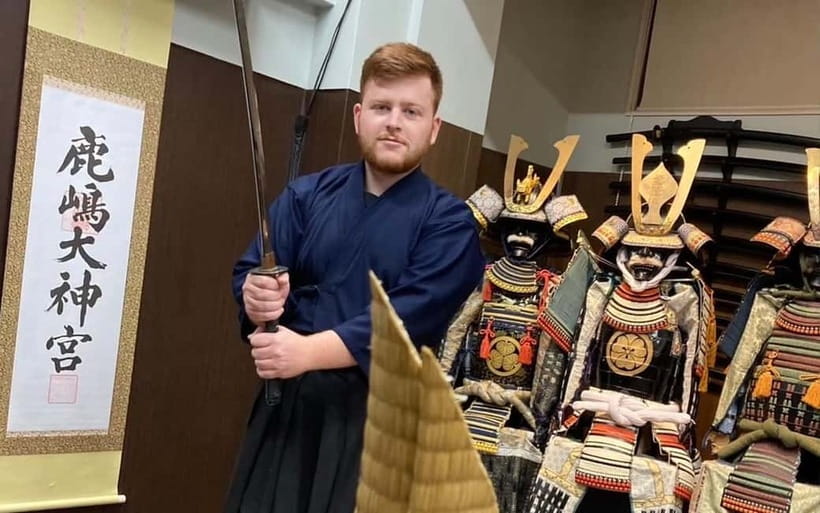
This is best for you if you want a hands-on experience that still respects discipline. If you’re the type who likes structure—explanation, practice, demonstration, then your own execution—you’ll probably feel at ease.
It’s also a good fit if you care about more than “cutting stuff.” The combination of costume, greetings, meditation, and mental unity gives it a spiritual/ceremonial framing that many action-only activities skip.
On the other hand, it’s not suitable for:
- children under 14
- pregnant women
- wheelchair users
- visually impaired people
If any of those apply, skip this one. The session clearly involves movement and specific physical participation.
Practical travel notes: where to meet and how the session ends
Plan to meet at the starting location by searching Samurai Theater Tokyo on Google Maps. The experience ends back at the meeting point, so you’re not left figuring out transport right after a timed, adrenaline-and-focus activity.
Language support includes English and Japanese, which makes it easier to follow instructions and ask questions without guessing.
Should you book this Iaido sword cutting session in Honshu?
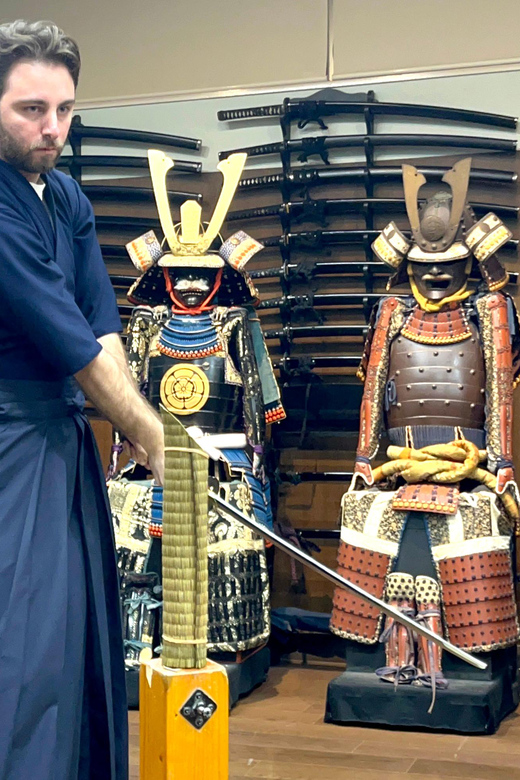
If you want an experience that feels like training instead of a theme park stunt, I think this one is a strong choice. The standout features are the ceremonial flow (costume change, greetings, meditation), the instruction from a Battoushi Do teacher, and the chance to cut with real Japanese swords said to be over 100 years old.
Book it if:
- you want clear, step-by-step instruction,
- you care about doing the cuts correctly (not just doing them once),
- you like the idea of taking photos and videos of your own tatami strikes.
Skip it if:
- you’re looking for a fully accessible experience (it isn’t for wheelchair users or visually impaired people),
- you need a more relaxed activity with minimal physical demand,
- or you fall into the listed unsuitability categories.
FAQ
What is the location for this Samurai sword cutting experience?
The experience is listed in Honshu, Japan, and you start by searching Samurai Theater Tokyo on Google Maps.
How much does it cost?
It costs $93 per person.
What language options are available?
The experience is available in English and Japanese.
Is this activity suitable for children?
No. It is not suitable for children under 14.
Is it suitable for wheelchair users or visually impaired people?
No. It is not suitable for wheelchair users or visually impaired people.
What happens when the session starts?
You begin with a change into traditional iaido/iai practice clothing, followed by greetings and mental unity.
Do you practice with real swords?
Yes. The experience includes practice with an imitation/practice setup, and you also cut using a real Japanese sword.
How many times do you cut the tatami mats?
You cut the tatami mat twice following the instructor’s instructions.
Can I take photos or videos during the cutting?
Yes. Photography and video recording are included, and you can take pictures and videos of yourself cutting tatami if you wish.
What is the cancellation policy?
You can cancel up to 24 hours in advance for a full refund.