REVIEW · TOKYO
Japanese Knife Skills & Tuna Don/Sushi Workshop in Tokyo
Book on GetYourGuide →Operated by 日本割烹道協会 · Bookable on GetYourGuide
Tokyo’s best shortcut to knife skill.
In just 2 hours, you get the full chain: Japanese knife basics, hands-on sashimi cutting, then cooking your own tuna zuke-don or a 10-piece sushi set. I like that the group stays small (up to 8), so you’re not just watching. I also like the meal part: your handmade bowl or sushi comes with miso soup plus sake and green tea. One drawback to plan for: fish can vary based on what’s available, so the exact ingredients may not always match your expectations.
You’ll start with a practical look at why Japanese knives are prized, including how sharpening changes what your blade can do. Then you’ll switch from idea to action by practicing cutting fresh sashimi yourself. This is the kind of class where you walk out with new muscle memory, not just recipes on paper.
In This Review
- Key Takeaways Before You Go
- Knife Skills and Tuna Don in Tokyo: What This Class Really Does
- Finding the Workshop: The Samurai Mural Meeting Point and Small-Group Focus
- Japanese Knife Culture and Blade Basics: Why Sharp Matters
- Whetstone Sharpening Techniques: The Skill That Follows You Home
- Knife Skills Performance and Sashimi Slicing: The Hands-On Moment
- Cook Your Own Tuna Zuke-Don or Sushi Set: From Cutting to Cooking
- Lunch with Miso Soup, Sake, and Green Tea: A Proper Finish
- What You Take Home: Recipe, Certificate, and Knife Confidence
- Price and Value: Is $127 Fair for Two Hours?
- Who Should Book This Tokyo Workshop (and Who Might Skip It)
- Should You Book: My Decision Rule for This Class
- FAQ
- How long is the Japanese Knife Skills and Tuna Don/Sushi workshop?
- Where is the meeting point?
- What is the price per person?
- Is the class small group?
- Will I get to practice slicing sashimi myself?
- What will I cook during the class?
- What drinks and lunch are included?
- Does fish vary during the workshop?
- Is it suitable for children or people with allergies?
Key Takeaways Before You Go
- Whetstone sharpening practice taught step-by-step, with the goal of understanding how sharpness affects your cuts
- Hands-on sashimi slicing: you’ll cut tuna for sashimi yourself, not just watch
- Cook your own dish: tuna zuke-don or a 10-piece sushi set, plus miso soup
- A real sit-down meal with sake and green tea after you cook
- Small group, up to 8 people, so your questions don’t get lost
- Take-home support: recipe/skills takeaways, plus a participation certificate and same-day 10% shop discount
Knife Skills and Tuna Don in Tokyo: What This Class Really Does
This workshop is built around one idea: in Japanese cooking, the tool changes the food. A sharp knife helps you make clean, thin slices for sashimi, and that same precision shows up in how your sushi or zuke-don comes together.
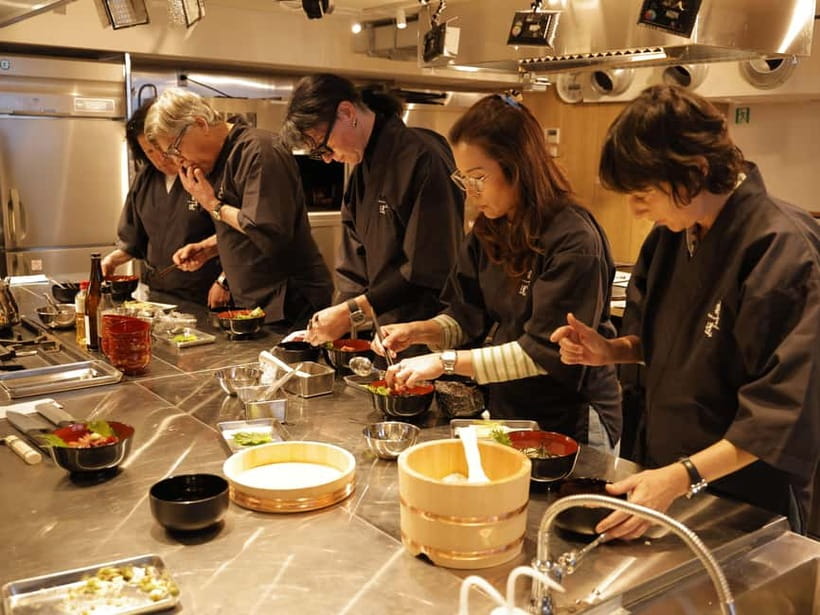
What I like for you is that it isn’t only theory. You begin with an introduction to Japanese knife culture, then you move straight into technique. After the instructor demonstrates, you take the knife yourself and practice slicing sashimi. That shift matters. If you’ve ever tried to copy food prep from a video, you know the hardest part isn’t the ingredients. It’s the motion, the pressure, the confidence.
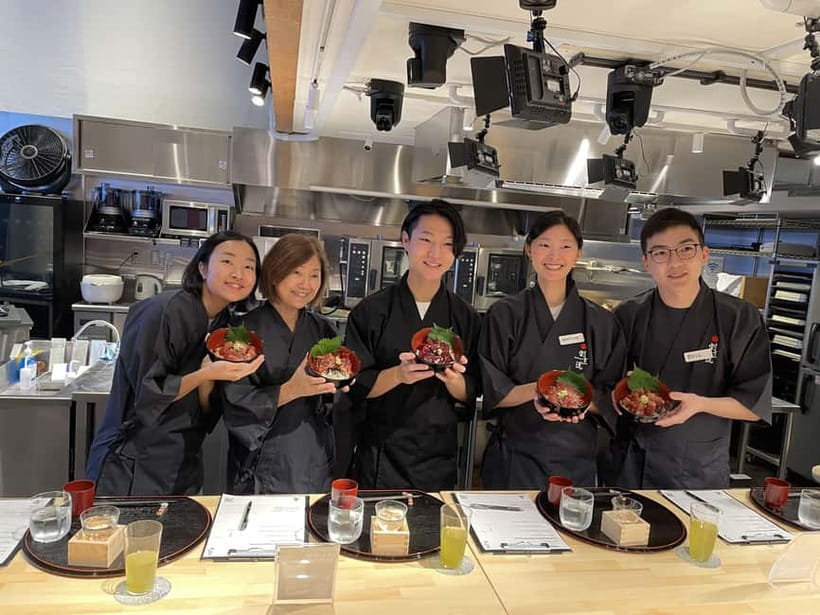
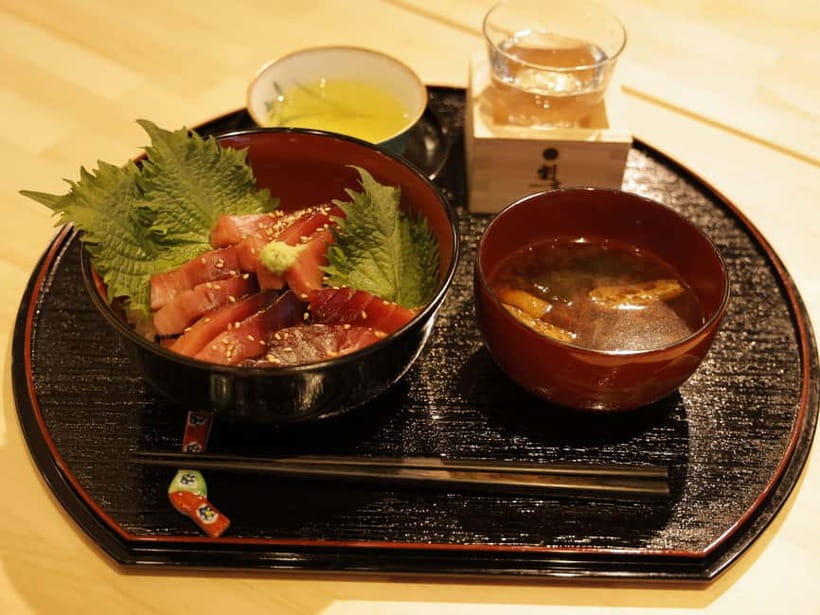
Then comes the cooking you can eat immediately. You’ll prepare either a tuna zuke-don (tuna on marinated rice) or a 10-piece sushi set, with miso soup warming up the table. You also get a sake tasting to finish the meal in a relaxed, friendly setting.
You can also read our reviews of more tours and experiences in Tokyo

Finding the Workshop: The Samurai Mural Meeting Point and Small-Group Focus
Your meeting point is easy to describe but may be hard to spot if you arrive late: look for a building with samurai-style murals painted on the outside. Give yourself a few minutes to locate it calmly.
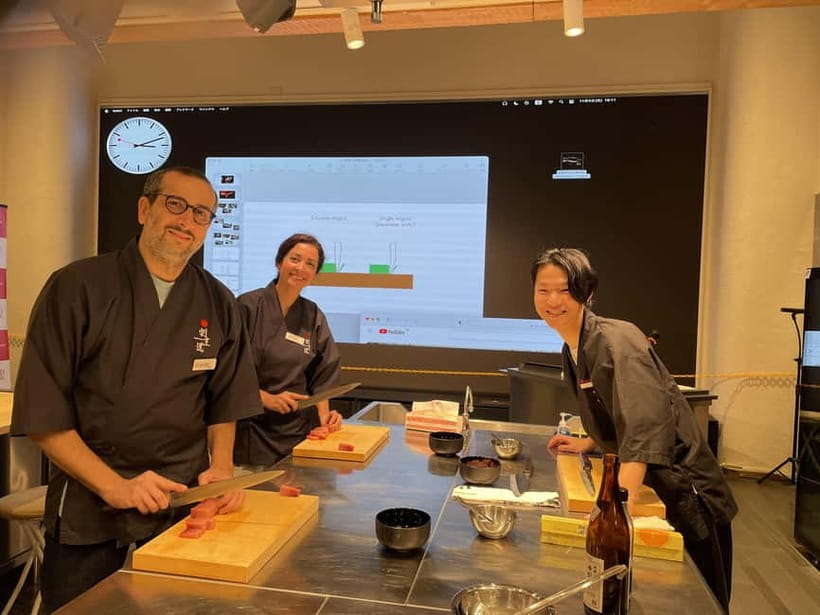
The class is limited to 8 participants, which is a big deal for a hands-on skill like sharpening and slicing. It means you’re more likely to get corrections on your cutting technique and guidance while you’re using the knives. It also means the room doesn’t feel like a cafeteria line. You’ll actually be able to see what the instructor is doing, and your turn at the blade doesn’t feel like a rushed token practice.
English support is available (the instructor also speaks Japanese), so if you’re nervous about technique instructions, you’re not going in blind.
Japanese Knife Culture and Blade Basics: Why Sharp Matters
The workshop starts with a short, focused look at Japanese knife culture: why these blades are prized worldwide for craftsmanship and sharpness. This isn’t marketing talk. You’ll connect the idea of sharpness to what happens in your own cutting.
Even if you’ve used a regular kitchen knife before, Japanese slicing is a different game. The class frames it around one practical outcome: how well your knife performs directly affects how sashimi looks and feels when it lands on the plate.
And because the session is hands-on, you don’t just hear about sharpness. You see what a properly sharpened blade does, then you practice close to that standard.
Whetstone Sharpening Techniques: The Skill That Follows You Home
One of the most valuable parts here is the knife sharpening instruction. You use a whetstone and follow guided steps to learn the technique. Sharpening is one of those skills that sounds intimidating until someone breaks it down into repeatable motions.
In this workshop, that means you learn sharpening as a real process, not a vague statement like keep your blade sharp. You’ll also learn why sharpening isn’t only about making the edge pointier. It’s about restoring the cutting performance so you can slice cleanly, with less force and more control.
What to expect in the room: some time where you step back, watch, and then try. Knifework is physical, and it takes a few tries to settle into a steady rhythm. You’ll wear comfortable clothing because you’re moving, handling tools, and working near prep surfaces.
If you plan to buy Japanese knives later, this section gives you a reality check. You’ll better understand why sharpening tools and technique matter as much as the knife itself.
Knife Skills Performance and Sashimi Slicing: The Hands-On Moment
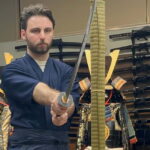
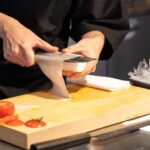
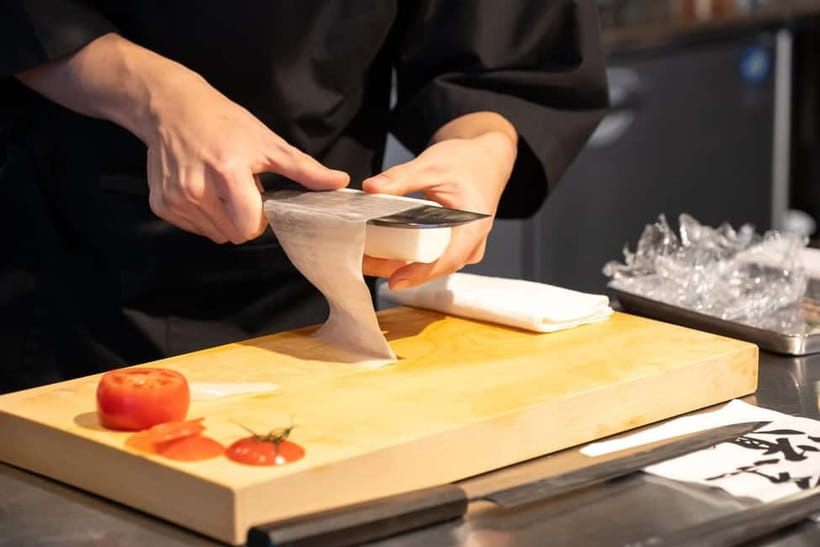
This is the centerpiece. You’ll start with a knife skills performance where the instructor demonstrates sashimi slicing. Then you switch roles and cut sashimi yourself.
That hands-on practice is where the class earns its value. Watching someone slice is interesting; doing it is transformative. You’ll feel the difference that sharpness makes when your blade glides and the cut stays clean.
You’ll also learn something practical about how Japanese knives are used for precise slicing. The key takeaway isn’t fancy terminology. It’s the feel: how to hold the knife, how to guide the cut, and how to focus on clean separation instead of smashing through.
A note from the class details that matters for expectations: the fish used can vary depending on availability. The workshop is centered on tuna, but keep flexibility in your head if you see slight variations on the day.





Cook Your Own Tuna Zuke-Don or Sushi Set: From Cutting to Cooking
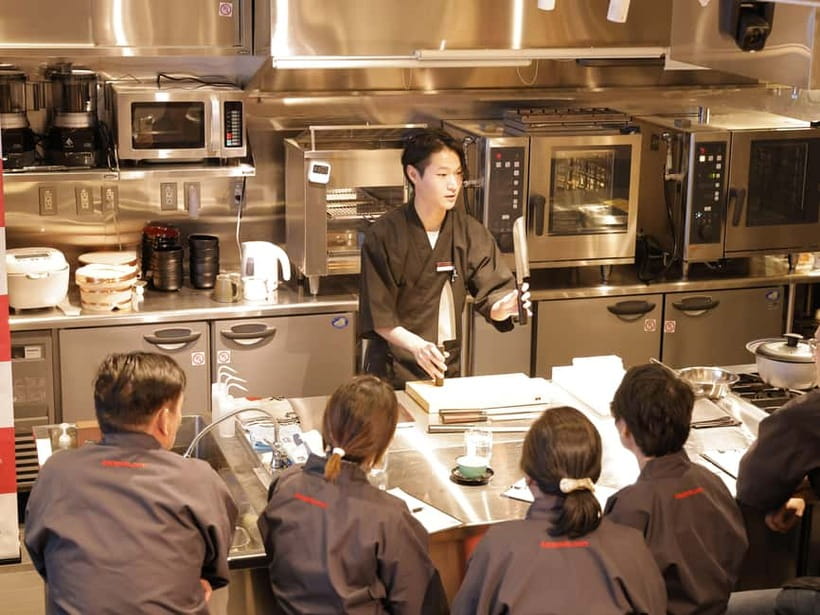
After the knife portion, you shift into traditional cooking. This is where your knife skill turns into a meal you can actually eat.
You’ll either make:
- Tuna zuke-don (marinated tuna over rice), or
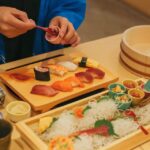
- A 10-piece sushi set
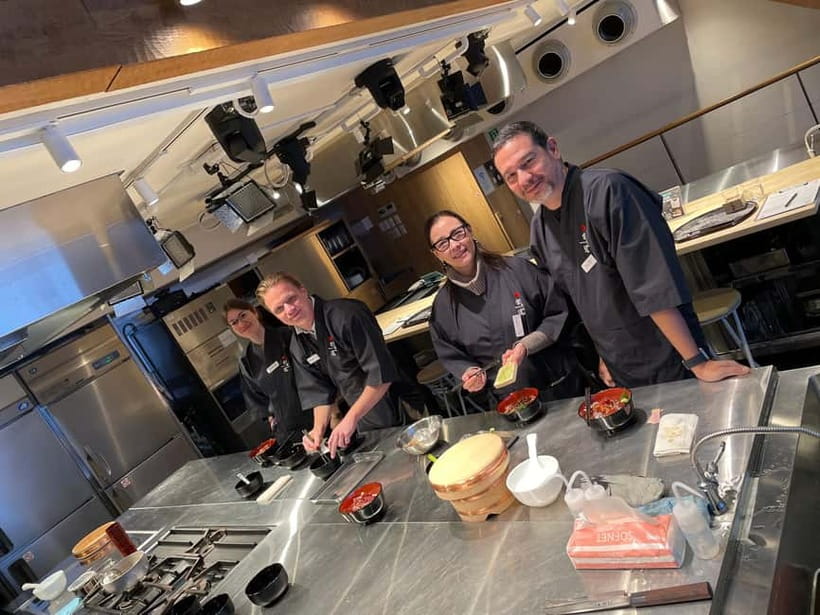
Either way, you’ll be working with ingredients and tools provided for the class. You’ll also make miso soup, which brings warmth and balance right after the intensity of knife practice.
Why this matters for you: Japanese cooking isn’t only about taste. It’s also about timing and presentation. Even in a short workshop, the class trains your brain to connect slicing technique with how the dish looks and how it’s assembled.
For zuke-don, the core idea is that the tuna is marinated and then served over rice. For sushi set cooking, you’ll assemble a set rather than making one roll and calling it a day. That structure helps you leave with a clearer model for what to recreate later at home.
Lunch with Miso Soup, Sake, and Green Tea: A Proper Finish
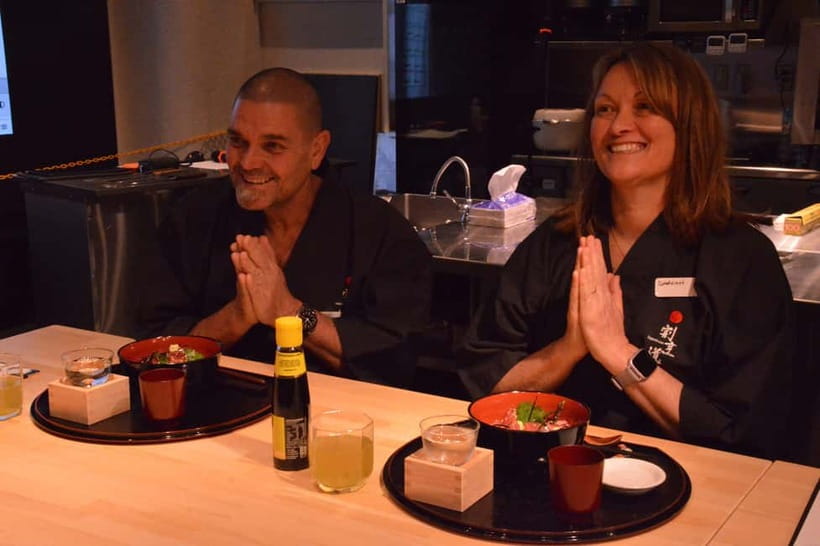
You don’t just stand around after cooking. You sit down and eat what you made: your handmade zuke-don or sushi, plus miso soup and a tasting of original sake. Green tea rounds out the meal.
This part is more than a bonus. It’s how the class locks in memory. When you taste your own cut and your own assembly right after practice, you learn faster. You notice texture, balance, and how the flavors come together.
Also, the sake and green tea add a comfortable social tone. The format is described as relaxed and friendly, which fits the way the class moves between learning and doing.
What You Take Home: Recipe, Certificate, and Knife Confidence
The workshop includes take-home value, not just a plate in front of you. You’ll receive a participation certificate, plus a way to recreate the dish later (a recipe to support what you made).
The “new set of knife skills” claim is basically the real promise: you’ll leave knowing what sharpening feels like, and you’ll have done sashimi slicing with your own hands. That matters if your goal is to make Japanese food at home. Most home cooks don’t need more ingredient lists. They need a safer, clearer process.
There’s also a small extra perk built in: participants get 10% off items at the 1F shop on the same day of their visit. If you’re eyeing Japanese kitchen tools, this is the time to ask questions and compare options.
Price and Value: Is $127 Fair for Two Hours?
At $127 per person for a 2-hour class, you’re paying for more than instruction. You’re paying for hands-on time with knives, plus the ingredients and tools, plus lunch and drinks.
Here’s what’s included that affects real value:
- instruction on Japanese knives and knife sharpening
- knife skills performance and sashimi slicing practice
- ingredients and tools for cooking
- lunch (your zuke-don or sushi) with miso soup
- sake tasting and green tea
- a participation certificate
- recipe for recreating the dish at home
- Kappodo costume rental
- same-day 10% shop discount at the 1F shop
The costume rental is not the main reason to book, but it signals a studio-style experience where you get a more “event” feeling. The bigger value drivers are the hands-on slicing plus sharpening guidance, and the fact you eat what you make as a full meal.
If you’re the type who hates paying for lessons that stay theoretical, this class is priced like it respects your time. If you’re only looking for a simple meal, you’ll probably find cheaper options. But if you want skills you can reuse, this sits in the “worth it” zone.
Who Should Book This Tokyo Workshop (and Who Might Skip It)
This workshop is a strong fit if you:
- want real knife practice in a guided setting
- like cooking with fish and want to understand Japanese technique
- are serious enough to learn sharpening, not just slice once
- enjoy small-group classes where you can ask questions
It’s not a good match if you:
- have food allergies (the class isn’t suitable for people with allergies)
- are traveling with kids under 12 (not suitable)
- want a long, leisurely food tour rather than a skill-focused session
And if you’re someone who gets intimidated by tools, the class’s step-by-step structure and small group size are exactly what you want. You’ll still be doing the cutting, but you’ll have instruction and correction while you do it.
Should You Book: My Decision Rule for This Class
Book this workshop if your top goal is skill. Specifically, you want to learn what makes Japanese slicing different, and you want to practice it with your own hands. The sharpness + sashimi + cooking chain is what makes it feel coherent.
Skip it if you mainly want a casual lunch or you’re allergic to fish, or you’re bringing young kids who can’t participate.
One practical tip for your decision: wear comfortable clothes and show up ready to work. This isn’t a show where you sit back. It’s a class where you actively handle tools, then eat your results. If that sounds like your kind of Tokyo day, this is a very solid choice.
FAQ
How long is the Japanese Knife Skills and Tuna Don/Sushi workshop?
It lasts 2 hours.
Where is the meeting point?
The meeting point is a building with samurai-style murals painted on it.
What is the price per person?
The price is $127 per person.
Is the class small group?
Yes. It’s limited to 8 participants.
Will I get to practice slicing sashimi myself?
Yes. You’ll watch a knife skills performance and then take part in cutting fresh sashimi yourself.
What will I cook during the class?
You’ll make either a tuna zuke-don rice bowl or a 10-piece sushi set, plus miso soup.
What drinks and lunch are included?
Your meal includes miso soup, sake, and green tea, and you eat what you cook.
Does fish vary during the workshop?
Yes. The fish used can vary depending on availability.
Is it suitable for children or people with allergies?
It’s not suitable for children under 12, and it’s not suitable for people with food allergies.