REVIEW · TOKYO
Private Workshop for Making Paper Last 1,000 years in Ueno
Book on GetYourGuide →Operated by Washi labo TOKYO · Bookable on GetYourGuide
Paper that lasts a thousand years starts with your hands. This private washi workshop in Ueno is hands-on from the first explanation, guiding you through the real steps of making traditional Japanese paper from a tree’s fibers. I like that you’re not just watching, you’re doing the core work like Hyouhitor (peeling outer bark) and Dakai (beating fibers). My only real heads-up is that there’s a cat in the workshop, so if you have allergies, tell the organizers first.
You also get enough structure to feel confident by the end: you’ll form a sheet in a paper-making mold with a deckle, then you’ll take home the results of what you made. For $130 per person and about 150 minutes, it’s a focused craft experience that fits well if you want something more personal than a typical sightseeing stop. The pace is fast enough to stay fun, but you still get to create multiple items instead of just one sample.
In This Review
- Key highlights worth your attention
- Washi that starts with kozo leaves in Ueno
- Step-by-step: peeling, beating, and forming your sheets
- Your finished products: 2 postcards, Rakusui paper, and A5
- Japanese paper tea and sweets while your sheet dries
- Private workshop feel: instructor guidance, pace, and Kami-chan
- Price and value for a 150-minute craft session at $130
- Who should book this hands-on washi experience
- Should you book this private paper workshop in Ueno?
- FAQ
- How long is the private workshop for making Japanese paper?
- What will I make during the session?
- Do I need to know Japanese?
- What is included with the price?
- Is it really private?
- Is there anything I should know about allergies?
Key highlights worth your attention
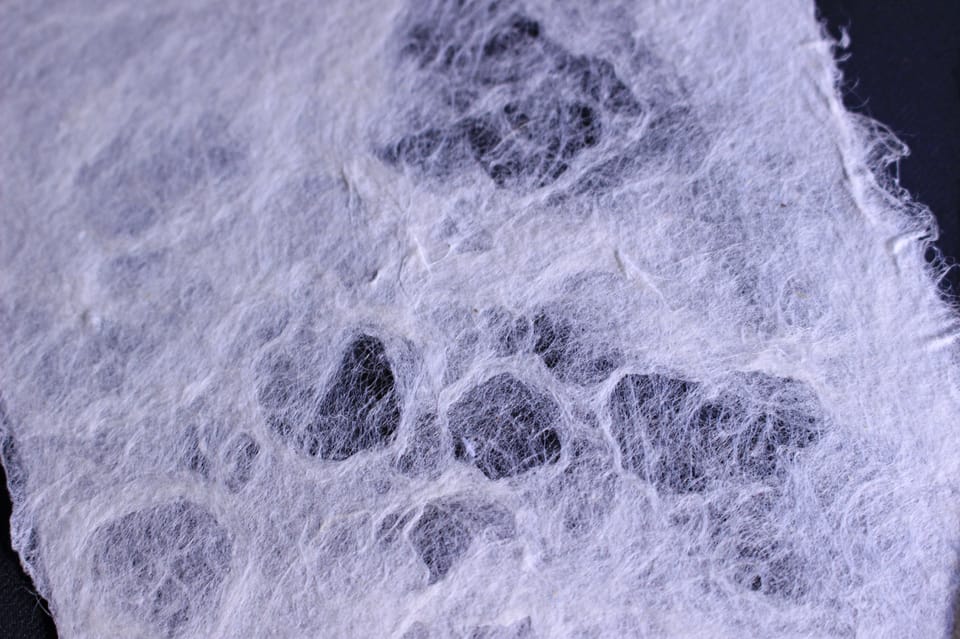
- Full papermaking process you can actually feel: from kozo-based fibers to a finished sheet
- Two postcard designs plus Rakusui and A5 paper, so you leave with four usable creations
- Hyouhitor and Dakai are part of what you do, not just what you hear about
- Kozo-leaf Japanese paper tea and local Japanese sweets during drying time
- Private group setting with an English-speaking (and Japanese) instructor for clear guidance
- Kami-chan the cat adds a cozy vibe, with an important allergy note
Washi that starts with kozo leaves in Ueno
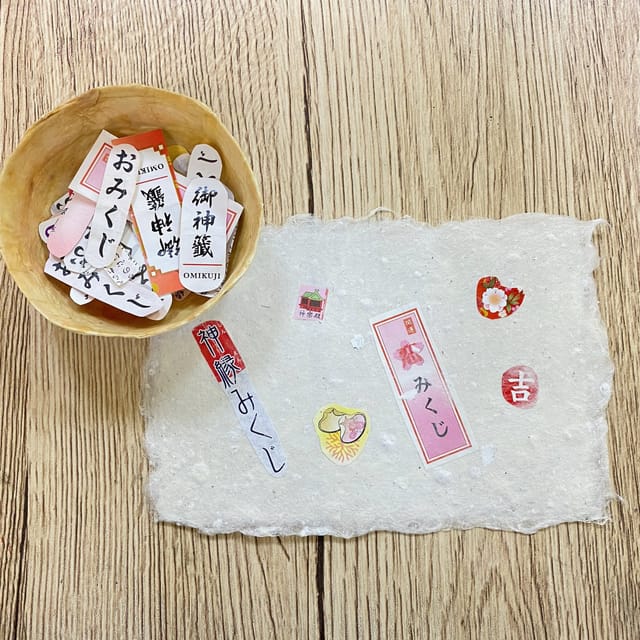
Ueno is a great base for Tokyo because it’s central and easy to reach, but it can also turn into a blur of museums and street scenes. This workshop gives you a break from the usual rhythm. The focus stays on paper—how it’s born, how it’s shaped, and why Japanese washi has a reputation for durability.
What I like most is that the experience isn’t treated like a quick craft demo. You begin with a general explanation, then you move into the actual production steps. That matters because papermaking is part science and part timing. You can’t fake it. Even if you’ve never held a deckle before, the instructor’s job is to translate the process into something you can do correctly.
The workshop also builds in a thoughtful sensory pause. While your sheet dries, you’re not stuck waiting in silence. Instead, you get Japanese paper tea made from kozo leaves, plus local sweets. It’s a small touch, but it ties the whole day together: kozo is the material behind the paper, and you get to taste it in a drink form.
You can also read our reviews of more private tours in Tokyo


Step-by-step: peeling, beating, and forming your sheets
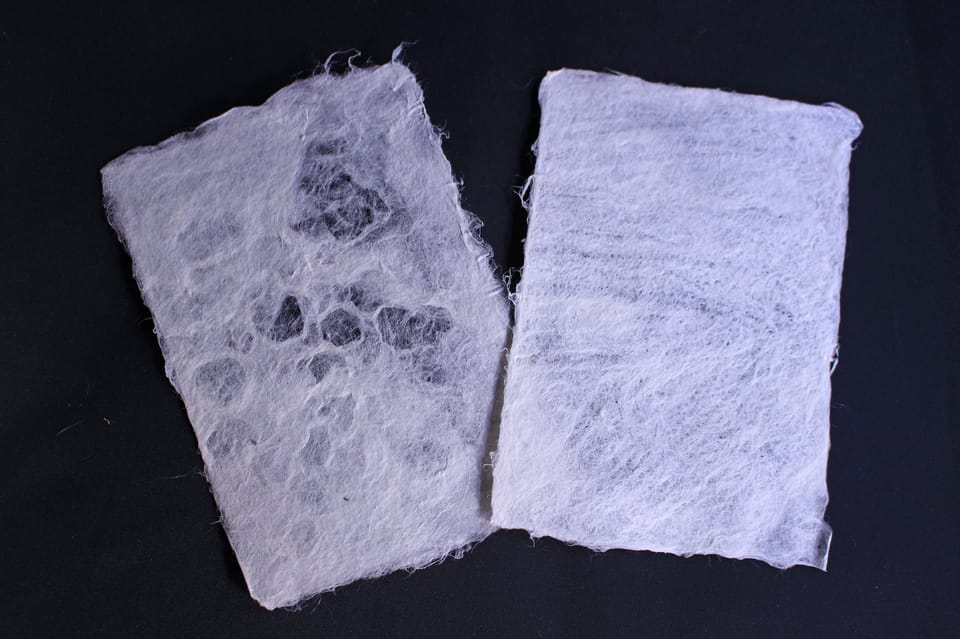
The workshop’s core is the sequence that turns raw plant material into a thin, even sheet. You start with an introduction that sets expectations for what you’ll handle and why each step matters. Then comes the more physical work, where the craft stops being abstract.
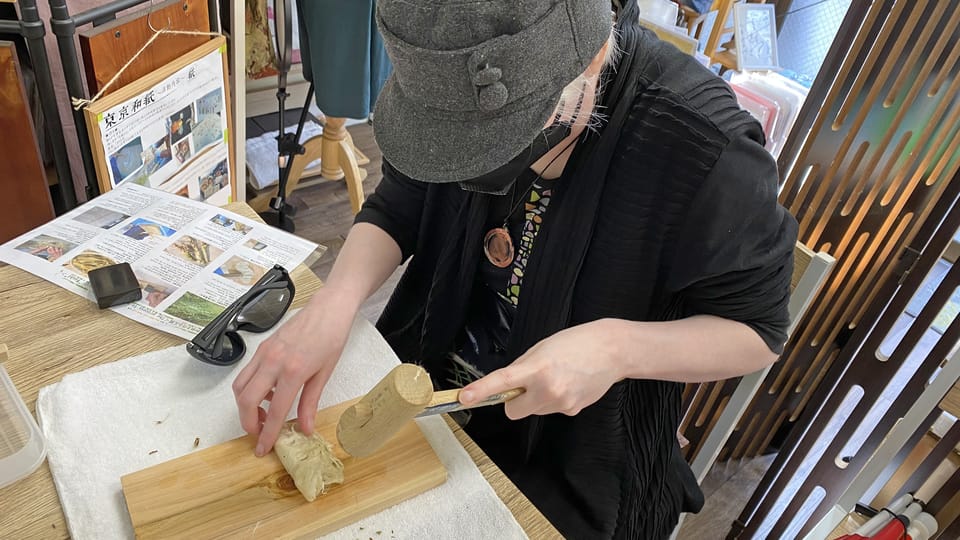
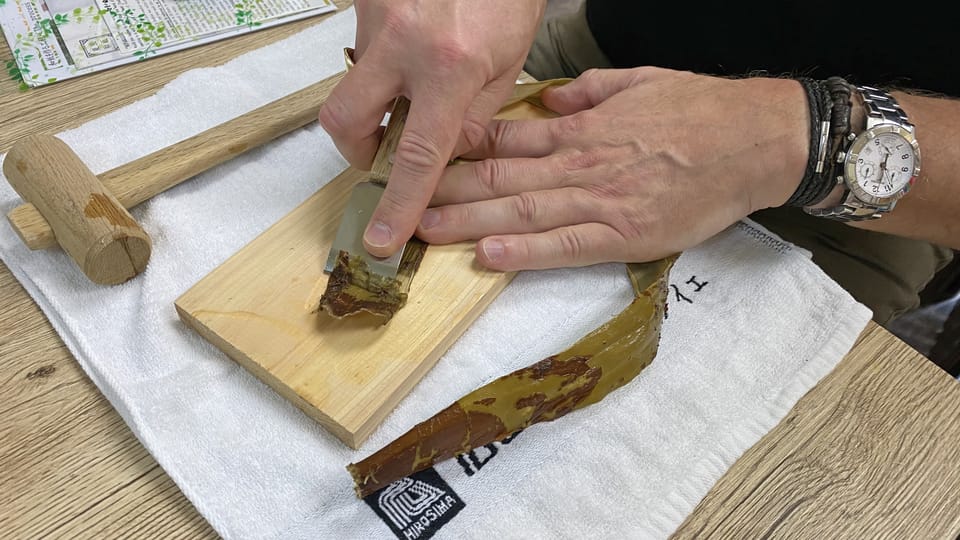
First, you do Hyouhitor, which means peeling off the outer bark. This is one of those steps that sounds simple until you’re standing there doing it. It’s also a useful lesson in why paper starts with preparation: if the right part of the plant fibers isn’t separated, the later forming can feel uneven.
Next is Dakai, beating the tree fibers. Beating matters because it helps refine the texture and makes the fibers act more evenly in water. If you’ve ever wondered why handmade paper can feel so different from machine-made paper, this is where you start seeing the difference. You’re basically coaxing fibers to behave the way the process needs them to.
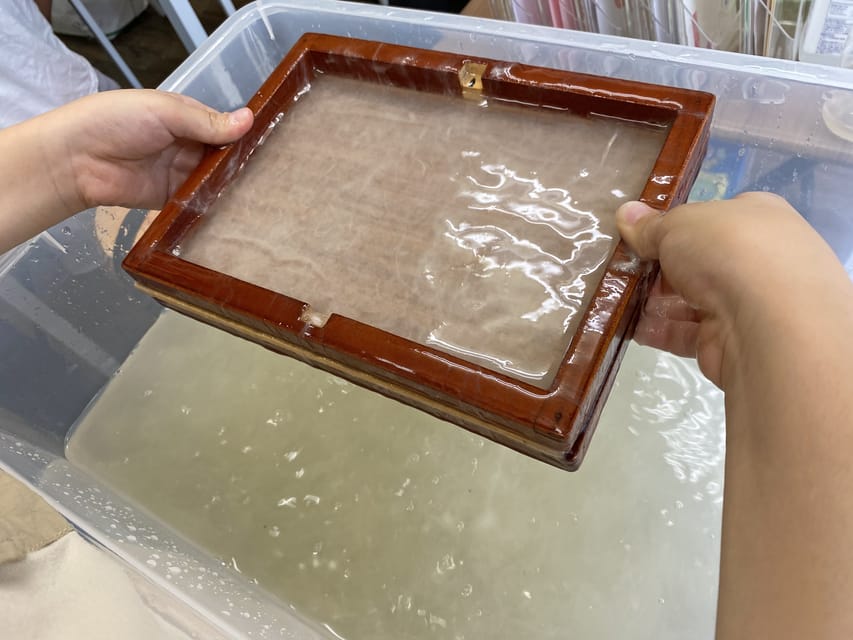
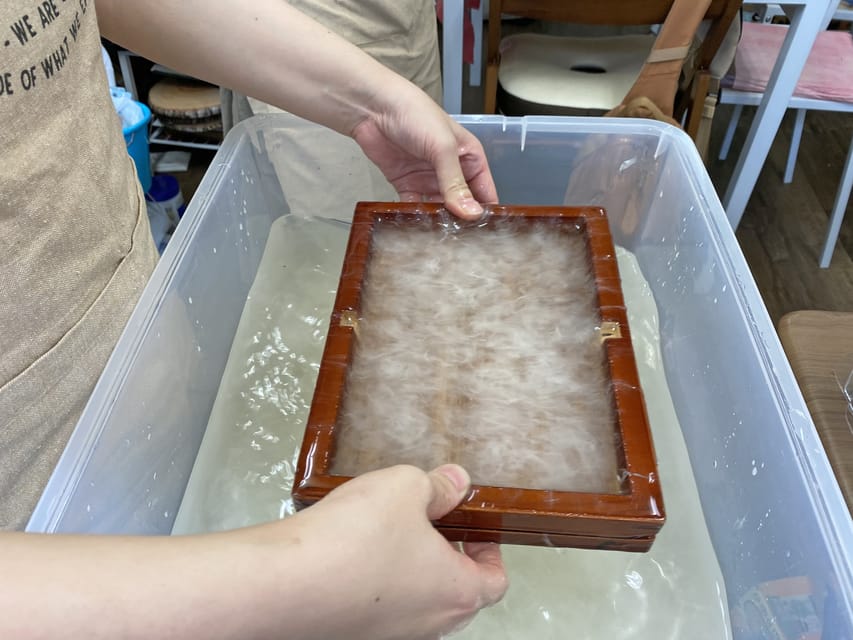
After that, you move into the forming stage. You pour the raw material solution into a paper-making mold and use a deckle. Then you sift the solution to create an even, flat sheet. This is the moment where your attention becomes everything: distribution, thickness, and smoothness all depend on how you manage the mold and mixture. Even with instruction, expect to focus. It’s not tedious, but it is hands-on.
Finally, you wait for drying. Drying is where you get to switch from production mode to appreciation mode. You’ll see how your work changes from wet and flexible to paper-like and firm.
Your finished products: 2 postcards, Rakusui paper, and A5
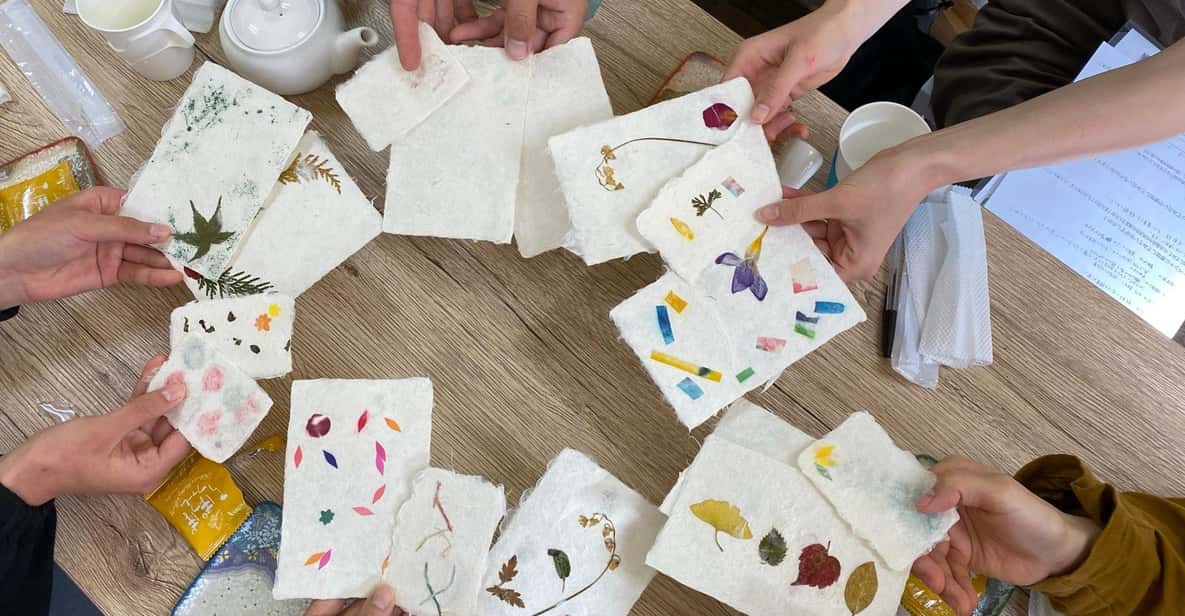
One of the best values here is that you leave with multiple completed items, not just one take-home souvenir. By the end, you create four outputs: two postcard designs, plus Rakusui paper and an A5 paper.
Those postcards are especially practical. A lot of craft souvenirs are decorative only. Postcards are functional. Even if you don’t mail them, you can use them as small notes, gifts, or keepsakes in a frame or scrapbook. And because they’re your designs, the payoff is personal.
The Rakusui paper is a nice add because it’s still in the traditional world, but it’s also more “paper for paper people,” the kind of material you’d use for writing or craft projects. An A5 sheet gives you a bigger canvas too—something you can write on, fold for a card, or experiment with for art.
Why this bundle matters for $130: you’re paying for an experience that includes the labor, the materials, and the guided steps required to actually finish several different paper formats. If you’ve only done one-off crafts before, you’ll notice the difference. This is structured like a mini workflow rather than a single demonstration.
You’ll also appreciate the workshop’s pacing. The activity is 150 minutes, which means you get enough time to do real work and still finish with usable paper in hand.
Japanese paper tea and sweets while your sheet dries
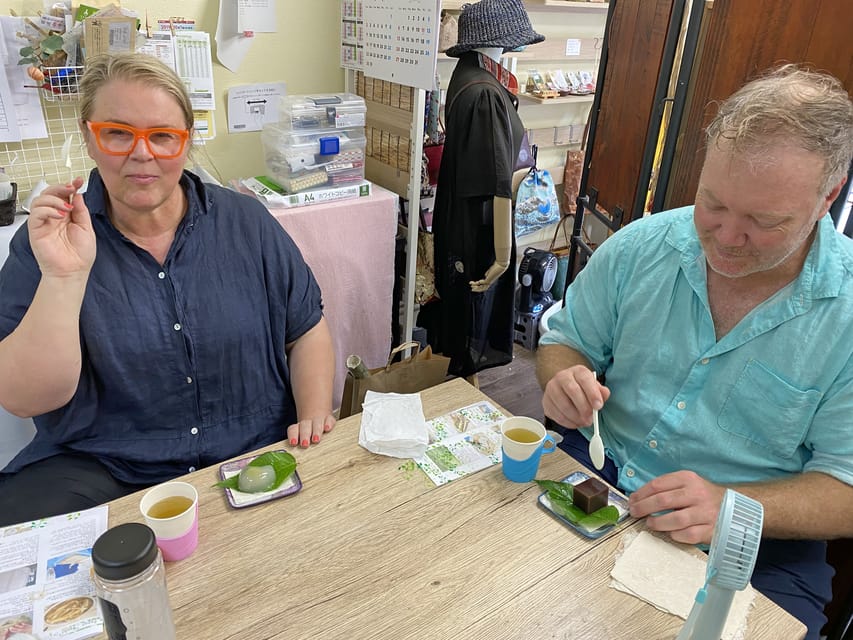
Drying time can make or break a hands-on workshop. Some experiences leave you waiting around. This one turns that waiting into part of the ritual.
While your paper dries, you’re served the workshop’s original Japanese paper tea, made using kozo leaves. If you only associate kozo with paper, tasting it as a drink helps you connect the dots. The tea supports the theme of the craft rather than acting like a random snack break.
You’ll also get local Japanese sweets from a beloved nearby shop. The key here is not the brand name—it’s that you get a pause that feels connected to the activity and the neighborhood.
For you, this is a comfortable reset. For the experience overall, it keeps the workshop from feeling like a factory line. You can step back, look at the process, and see how the paper is transforming.
Private workshop feel: instructor guidance, pace, and Kami-chan
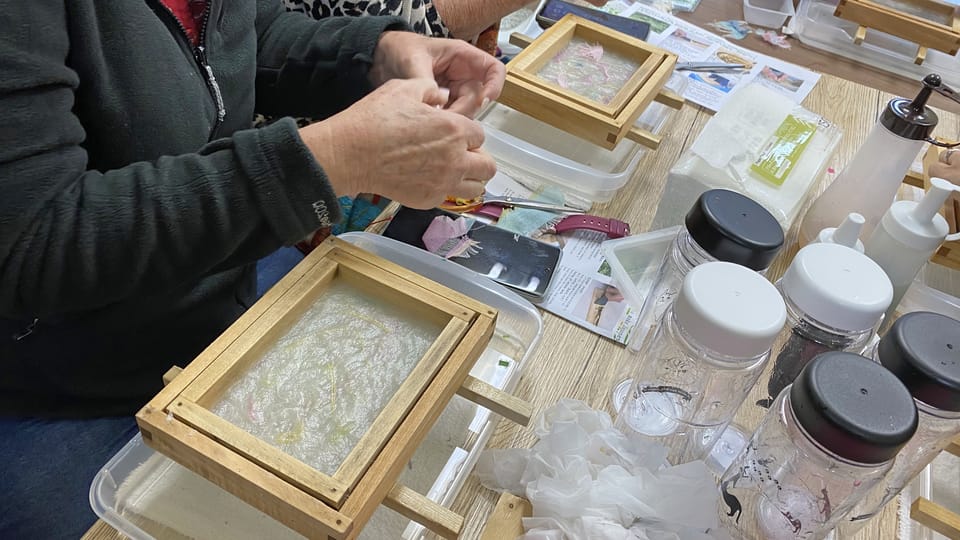
This is a private group workshop, which changes the tone. Instead of a larger class where you’re sharing attention, you get direct instruction and a calmer pace. That matters for a craft like papermaking because the technique depends on small motions.
The instructor is Japanese and English, and everything is demonstrated as well. Even if your Japanese isn’t perfect, you shouldn’t feel lost. The reviews suggest the teaching is very clear, and the workshop is organized enough that you can keep up without stress.
One practical note: the space can feel small and compact, but that’s usually a good sign. It means materials are prepared, your tools are ready, and you’re not wasting time hunting for supplies. One-on-one attention is a big reason people rate this so highly.
Then there’s the atmosphere factor: there’s a cat in the workshop named Kami-chan. In a craft setting, that kind of calm presence can make the room feel cozy rather than formal. But it comes with a real consideration. If you have allergies, let the organizers know ahead of time.
You can also read our reviews of more tours and experiences in Tokyo




Price and value for a 150-minute craft session at $130
Let’s talk money in plain terms. $130 per person sounds high compared with a basic souvenir, but the value is tied to what’s actually included.
You get:
- The papermaking materials needed for the workshop
- Guidance in Japanese and English
- Coffee or tea
- A hands-on session long enough to complete multiple paper items
- The results of your work: two postcard designs, Rakusui paper, and A5 paper
- Kozo-leaf paper tea and local sweets during drying
What you’re really paying for is time and process. A single step like beating fibers or forming a sheet isn’t hard in theory, but doing it right takes patience and technique. The instructor’s job is to help you produce paper that you can take home and use, not just fragile demonstrations.
Also, the private group format helps justify the cost. You’re not stretching a limited instructor schedule across a crowd.
If you’re deciding between this and another Ueno activity, I’d place it in the “high satisfaction” category: when you leave, you have objects you created yourself, and the paper has a story in the fibers.
Who should book this hands-on washi experience
This workshop is a strong match if you like making things with your hands, even if you consider yourself a beginner. You don’t need prior craft experience. The steps are taught, demonstrated, and structured.
It’s also ideal if you want an authentic Japan activity that isn’t about rushing from one photo spot to another. The craft is the point. The process gives you something to focus on for 150 minutes, and the final paper gives you a tangible memory.
You may especially enjoy it if:
- You like traditional materials and want to learn how they’re made
- You like workshops that produce multiple take-home items
- You’re traveling with someone and want a shared creative experience in a calm setting
- You enjoy tea culture and appreciate food pairings during activities
If you’re short on time, this may still work because 150 minutes is just enough for a full workflow. If you’re traveling with a strong allergy concern, remember the cat and plan accordingly.
Should you book this private paper workshop in Ueno?
Book it if you want a creative, guided activity with clear steps and real results. This isn’t a quick sampler. You’ll do meaningful parts of the papermaking process—peeling and beating fibers—then form and finish paper you can actually use. The inclusion of kozo paper tea and local sweets makes the downtime feel intentional, not wasted.
Skip or think carefully if you’re sensitive to cats, or if you get stressed by finding a specific meeting spot. One practical hint: give yourself buffer time to get to the nearest station, since there can be transit disruptions that affect how easy it feels to locate the workshop.
FAQ
How long is the private workshop for making Japanese paper?
The workshop lasts 150 minutes.
What will I make during the session?
You’ll make two designs of postcards, plus Rakusui paper and an A5 paper. The experience includes the full papermaking process from preparing fibers to forming sheets.
Do I need to know Japanese?
The instructor speaks Japanese and English, and the steps are demonstrated so you can follow along in either language.
What is included with the price?
Included are the required workshop materials, coffee or tea, and a friendly instructor. You also receive Japanese paper tea made from kozo leaves along with local Japanese sweets during the session.
Is it really private?
Yes. It’s listed as a private group workshop.
Is there anything I should know about allergies?
Yes. There is a cat in the workshop. Inform the organizers if you have allergies.