REVIEW · NIKKO
Nikko: Toshogu Shrine Ticket(Exchange at Tobu Nikko Station)
Book on GetYourGuide →Operated by LINKTIVITY Inc. · Bookable on GetYourGuide
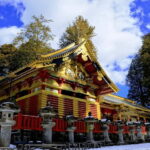
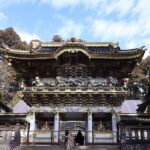
A trip to Nikko Toshogu feels like stepping into a jewel box in the woods. I especially love the sheer amount of wood carvings and gold leaf, and you’ll also notice how the shrine blends Shinto and Buddhist elements in the same complex. It’s one of those places where the details do the storytelling.
My one caution is practical: this is admission that requires you to exchange your digital voucher for a paper ticket at Tobu Nikko Station Tourist Center, and the process uses a smartphone screen link you have to show staff. If your phone has spotty service or you’re stuck before exchange hours, that can turn a smooth day into a headache.
In This Review
- Key things to know before you go
- Toshogu Shrine in Nikko: What makes it so special once you arrive
- The $10 admission and what it really buys you
- Ticket exchange at Tobu Nikko Station: The one step that can make or break your day
- Getting there from Asakusa to the shrine area: A practical route you can follow
- Walking the Toshogu grounds: How to see the carvings, gold, and buildings without rushing
- Shinto and Buddhist elements: What you can actually spot during your visit
- Timing your day: How long to plan around Toshogu
- Photo rules and small behavior tips that keep the experience smooth
- Accessibility notes you should double-check before you plan
- Should you book this Toshogu ticket exchange?
- FAQ
- Do I get into Toshogu Shrine directly with the digital ticket?
- Where do I exchange my voucher?
- What are the Tobu Nikko Station Tourist Center hours?
- What should I show staff after exchanging my voucher?
- Can I use screenshots or a printed ticket instead of the phone screen?
- How long is the ticket valid?
- Are flash photos allowed inside the shrine area?
- Is cancellation free if my plans change?
Key things to know before you go
- UNESCO complex in a forest setting with more than a dozen buildings you’ll walk between
- Gold leaf + carved detail on a scale you don’t usually see in Japanese shrines
- Tokugawa Ieyasu story as the centerpiece, with the enlargement under his grandson Iemitsu
- Shinto and Buddhist elements together inside the Toshogu grounds
- Ticket exchange required at Tobu Nikko Station Tourist Center (not at the shrine)
- Three “see no evil, hear no evil, speak no evil” monkey carvings are a strong must-spot
Toshogu Shrine in Nikko: What makes it so special once you arrive
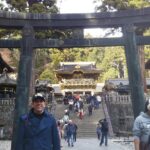
Toshogu Shrine is a memorial built for Tokugawa Ieyasu, the founder of the Tokugawa Shogunate, which ruled Japan for over 250 years until 1868. That basic fact matters, because once you’re inside the grounds, the details are not just decoration. They’re part of a political and spiritual message meant to project power, protection, and legitimacy.
The complex you’ll walk through isn’t small. You’re looking at more than a dozen buildings spread across the site, set in a forested area. The result is a place that feels calm on the surface, but visually intense up close. I love that contrast: quiet walking paths, then sudden bursts of ornate color, carvings, and metalwork.
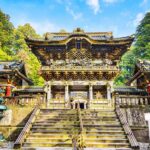
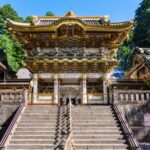
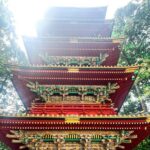
Two things you can count on seeing are wood carvings and gold leaf. The shrine is famous for the way those elements combine, including a level of gilding and craftsmanship that many visitors expect less to find in Japan’s usually simpler shrine architecture. If you like architecture, religious art, or just spotting craft you can’t stop staring at, this is a strong match.
And because Toshogu includes both Shinto and Buddhist elements, you’ll see symbols and design choices that don’t fit into just one category. That makes it more interesting than a “single-theme” shrine stop, especially if you’ve already learned the basics of Japan’s religious traditions and want to see how they overlap in real places.
You can also read our reviews of more tours and experiences in Nikko.

The $10 admission and what it really buys you
This ticket is priced around $10 per person and it covers admission to Toshogu Shrine. That’s good value if your goal is a focused, one-day visit centered on the main site.
What it doesn’t cover is also important: Toshogu isn’t the only thing around Nikko, and the shrine complex itself is just one major highlight in the area. So budget for transport (train + bus) and any optional extras you choose once you’re there. For example, an audio guide rental can be helpful if you want more context building-by-building, and you may want it because Toshogu’s details are dense.
In other words, think of this as a cost-effective entry ticket to the main attraction, not a full-day “everything included” tour.
Ticket exchange at Tobu Nikko Station: The one step that can make or break your day
The most important thing to understand is this: you cannot enter Nikko Toshogu Shrine with the digital ticket alone. Your job is to exchange it for a physical ticket at the Tobu Nikko Station Tourist Center.
That exchange counter is open 8:20 AM to 5:00 PM, year-round. This is the window you plan around. If you arrive late, you can lose time you planned for the shrine itself.
Here’s what to expect with the exchange process:
- You’ll go to Tobu Nikko Station Tourist Center.
- After exchanging your voucher for a ticket, you may be asked to show a web usage screen on your smartphone.
- The instructions specify that you should open the usage screen from the link in your voucher email, press “Use,” then show that screen to staff.
- Screenshots and printed versions can’t be used, so don’t rely on an offline copy.
I’d treat smartphone network reliability as part of your trip prep, not a minor detail. If your phone is your map, your ticket screen, and your communication tool, make sure it’s charged and you have a plan for connectivity.
One more helpful note from the on-the-ground experience: staff at the tourist center can be very practical. If you can’t click a link, or the flow on your phone isn’t cooperating, having your QR code and voucher ready still helps the counter staff find you and proceed.
Getting there from Asakusa to the shrine area: A practical route you can follow
You’ll start with transit from Tobu Railway Asakusa Station to Tobu Nikko Station, about 2 hours by express train. This part matters because it keeps your day simple. You’re not juggling multiple train changes, and you can build your schedule around the station exchange time.
From Tobu Nikko Station, take the Tobu Bus World Heritage Tour Route to Omotesando (around 15 minutes). Then it’s a 10-minute walk to the shrine area.
If you like using maps, the provided coordinates for Toshogu help you verify you’re headed the right way: 36.75808780000001, 139.5987466. Coordinates are handy when signage is in Japanese and you’re moving fast before the shrine grounds get crowded.
One timing reality: the shrine itself has changing closing hours depending on the period, and opening hours vary by day. So build in buffer time for the walk from the bus stop plus any lines at entry.
Walking the Toshogu grounds: How to see the carvings, gold, and buildings without rushing
Once you’re through entry, the biggest mistake is rushing. Toshogu rewards slow attention. Even if you’re not a detail-obsessed traveler, you’ll feel it: buildings keep appearing, and the carvings are so numerous that your eyes need time to recalibrate.
Think of it as three layers of seeing:
- Large shapes first: rooflines, building proportions, and how the complex is laid out.
- Materials second: where the gold leaf is used, and how it interacts with shadows in the forest.
- Micro details third: the woodwork and repeated motifs.
The complex developed from an earlier mausoleum into the spectacular Toshogu you see today. The enlargement was led by Ieyasu’s grandson Iemitsu during the first half of the 17th century. That historical arc is useful while you walk, because it helps you understand why the later-added elements feel so grand and why the site reads like a statement of power as much as a memorial.
And then there are the famous monkey carvings. If you only have one “icon” in your head before you go, make it the three figures representing see no evil, hear no evil, speak no evil. It’s the kind of detail that’s fun even if your Japanese is limited, because it’s easy to locate visually and it breaks up the heavier symbolism of the rest of the complex.
Shinto and Buddhist elements: What you can actually spot during your visit
Most visitors come in expecting a single religious style. Toshogu complicates that in a good way. The site contains both Shinto and Buddhist elements intermingled, so your job is to notice how the visual language shifts.
You don’t need to memorize terminology. Just look for:
- Religious motifs that feel more Shinto in spirit versus those that feel more Buddhist
- Architectural and decorative patterns that repeat across buildings, even when the meanings differ
Why this matters: when religions overlap, you stop treating each tradition as a separate museum. Toshogu becomes a real example of how people historically lived with mixed beliefs and blended practices.
If you like learning while walking, you might consider an audio guide rental. One option mentioned is an audio guide for 500 yens, which can help you understand each building and what you’re looking at. Even if you can’t get one for every stop, using it for the main buildings can turn a scenic walk into a clearer story.
Timing your day: How long to plan around Toshogu
This experience is described as valid for 1 day, which is accurate, but don’t assume you can “fit it in” without planning. Toshogu is a multi-building complex, and you’ll want enough time for slow looking plus bathroom breaks plus getting back to the station area before transport gets tricky.
A good strategy is to:
- Exchange your ticket early enough that you don’t feel rushed
- Allow extra minutes for entry checks and the initial walk between buildings
- Keep one flexible block for lingering on carvings and gold leaf
Also remember the shrine closing time can change by the season or period, so check the site’s haikan information page. That’s the kind of detail that can save your day if you’re traveling during a tighter schedule.
Photo rules and small behavior tips that keep the experience smooth
You can take photos, but flash photography isn’t allowed. Also, you’ll want to follow the basic site rules:
- No littering
- Don’t touch plants
These may sound obvious, but they matter in a place like Toshogu because the grounds are designed to protect materials and plants that can be damaged by contact. If you come prepared with a phone-friendly, low-light mindset (and your camera settings ready for no-flash), you’ll get better results without slowing down.
Accessibility notes you should double-check before you plan
The info you’re given includes a “wheelchair accessible” label, but it also lists “not suitable for” wheelchair users. That conflict is enough that you should verify accessibility details with the operator before you lock in your schedule and route.
If you’re traveling with mobility needs, your best move is to plan for an extra buffer day for slow movement and ask staff about the easiest path through the complex.
Should you book this Toshogu ticket exchange?
If your goal is a straightforward admission ticket to one of Nikko’s biggest icons, this is a strong buy. The value is in the simplicity: you’re paying for admission and handling the shrine entry without guessing whether you’ll find tickets on arrival.
Book it if:
- You want to prioritize Toshogu over a scattered itinerary
- You like structured, self-guided sightseeing where you control pace
- You can exchange your voucher during the 8:20 AM–5:00 PM window and you’ll have your smartphone ready for the usage screen
Skip or reconsider if:
- You’re likely to arrive after the exchange center closes
- Your phone setup is unreliable (because screenshots don’t work for the usage screen)
- You need guaranteed accessibility support and can’t confirm the site route ahead of time
If you’re going to Nikko for the shrine, this ticket exchange is the kind of small prep that pays off fast once you’re standing in front of the gold leaf and carvings.
FAQ
Do I get into Toshogu Shrine directly with the digital ticket?
No. You need to exchange the digital ticket for a physical ticket at the Tobu Nikko Station Tourist Center.
Where do I exchange my voucher?
Exchange it at the Tobu Nikko Station Tourist Center.
What are the Tobu Nikko Station Tourist Center hours?
It’s open from 8:20 AM to 5:00 PM, all year round.
What should I show staff after exchanging my voucher?
You may need to open the usage screen from the link in your voucher email, press the Use button, and show that screen to staff.
Can I use screenshots or a printed ticket instead of the phone screen?
No. The instructions say screenshots and printed versions can’t be used.
How long is the ticket valid?
It’s valid for 1 day.
Are flash photos allowed inside the shrine area?
No. Flash photography is not allowed.
Is cancellation free if my plans change?
Yes. Free cancellation is available up to 24 hours in advance for a full refund.