REVIEW · KAMAKURA
Introducing all the Famous Spots in Kamakura and Enoshima!
Book on Viator →Operated by OTOMO Travel Guide · Bookable on Viator
Kamakura and Enoshima in one smooth day. This private tour strings together famous shrines, temple views, and seaside stops with a guide who keeps you moving—including riding the train between areas so you don’t waste time figuring things out. I like that the day is built like a best-of hits tour, but still gives you real time to wander the places that matter.
What I really like is the efficient checklist of top sights: Tsurugaoka Hachimangu, Kotoku-in’s Great Buddha, Hasedera, Enoshima Shrine, and the Sea Candle deck. I also like that the route includes the food-and-shopping streets like Komachidori and Enoshima’s Nakamise-style street, where you can snack and browse at a human pace instead of only racing from gate to gate.
One drawback to plan for: you’ll have extra spending on the spot. Kotoku-in has an entrance fee (and not every stop is included), plus some places don’t accept credit cards—so bring cash and budget for meals.
In This Review
- Key points to know before you go
- Why Kamakura and Enoshima are a smart one-day combo
- Getting to Kamakura at 10:00 and meeting your guide
- Tsurugaoka Hachimangu Shrine: a Genji-linked power stop
- Komachidori: snack runs and souvenirs that feel local
- Kotoku-in and the Great Buddha: go inside the 11m giant
- Hasedera Temple: Flower Temple grounds for slow walking
- Enoshima Nakamise Dori: where snacks actually matter
- Enoshima Shrine: 1000+ years, marriage prayers, and the outdoor escalator
- Enoshima Sea Candle: your 360-degree finale with Mt. Fuji mentioned
- Timing and walking reality: a full day, not a slow stroll
- Price and value: what you’re paying for (and what you still pay)
- Guides who make it feel personal: Kiko, Higara, and Sandy
- Who this private Kamakura and Enoshima tour suits best
- Should you book it? My quick verdict
- FAQ
- FAQ
- How long is the Kamakura and Enoshima tour?
- What time does the tour start, and where do we meet?
- Where does the tour end?
- Is this a private tour?
- Will the guide travel with us on the train between sites?
- What costs are included in the price?
- What costs should I budget for entrance fees and meals?
- Do I need cash?
- What happens if weather is bad or a site is closed?
- Can I cancel for a full refund?
Key points to know before you go
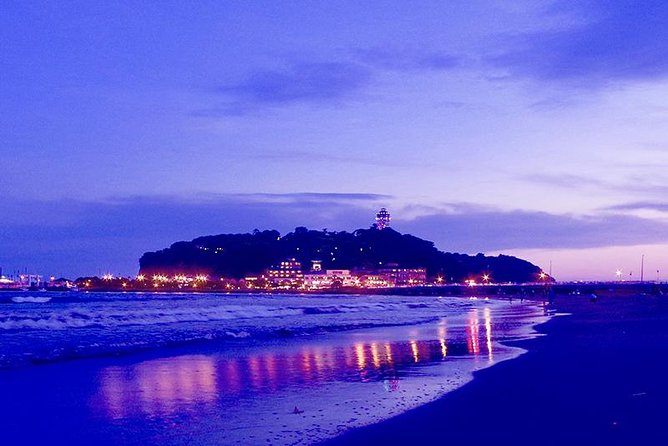
- Train navigation handled by your guide so you can focus on the sights, not schedules and transfers
- Prime power-spot shrines like Tsurugaoka Hachimangu and Enoshima Shrine, both described as over-1000-year sites
- Great Buddha time that actually feels close-up at Kotoku-in, including the chance to enter the statue
- Shopping + snacks built into the route at Komachidori and Enoshima’s Nakamise street
- Big seaside payoff at the end with the Sea Candle’s 360-degree panoramic view and Mt. Fuji mentioned in the experience
- Cash matters since some stops don’t take credit cards
Why Kamakura and Enoshima are a smart one-day combo
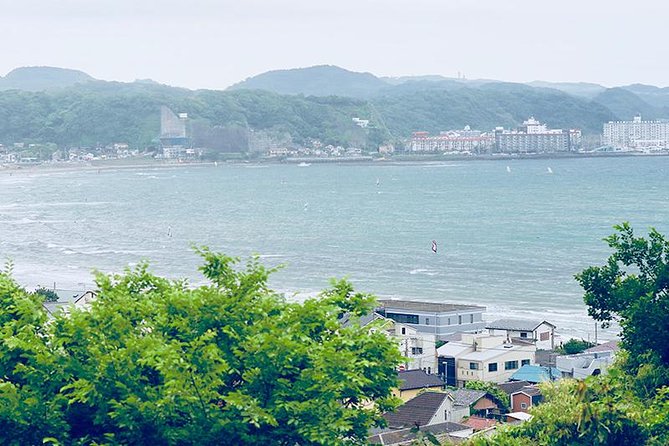
Kamakura is famous for old temples and shrine tradition, while Enoshima adds a coastal, cliff-and-view vibe. Put them together and you get a full day of contrasts: stone steps and prayer spaces, then sea air and wide angles toward the horizon.
The real value here is how the day is structured. You’re not just visiting places—you’re moving through them in an order that keeps the flow logical. You start inland/temple-side, then shift toward Enoshima’s seaside energy, finishing at the observatory deck.
You can also read our reviews of more tours and experiences in Kamakura.
Getting to Kamakura at 10:00 and meeting your guide
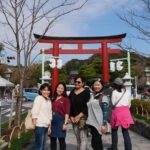
The tour starts at 10:00 am at Kamakura Station (1-chōme-1-15 Onarimachi, Kamakura). The meeting point matters because the day includes train travel between sites, and you want to be where your guide can grab you quickly.
Your guide stays with you and handles the on-the-train navigation, which is a big deal if you’ve ever tried to match your timing to Japan rail on a busy day. You’ll also end in a different place: Enoshima Station. If you’d rather finish somewhere else, the tour notes that you should tell your guide.
Tsurugaoka Hachimangu Shrine: a Genji-linked power stop
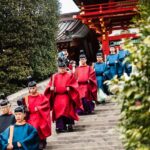
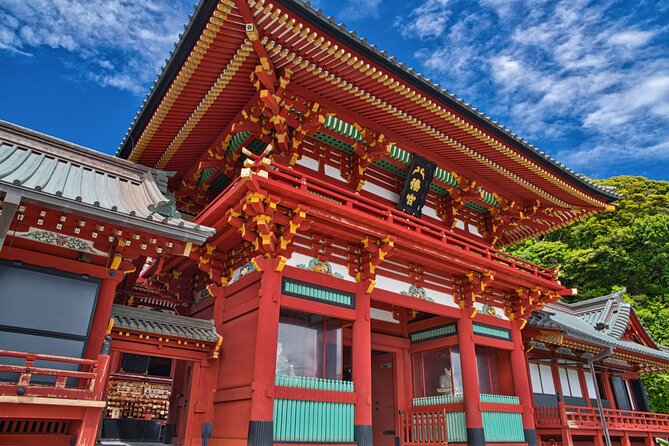
You’ll kick things off at Tsurugaoka Hachimangu Shrine for about 45 minutes. This is a shrine with a history of over 1000 years, and it’s described as a power spot worth visiting. It’s also connected to Genji, who ruled Japan during the Kamakura era—so this isn’t just a pretty stop. It’s one of the central anchors of Kamakura’s spiritual identity.
Since admission is free and you get a solid chunk of time, you can slow down and actually look around instead of doing a photo dash. I like the way this sets the tone: you start with a major shrine first, then move into the more casual streets and temple experiences.
Komachidori: snack runs and souvenirs that feel local
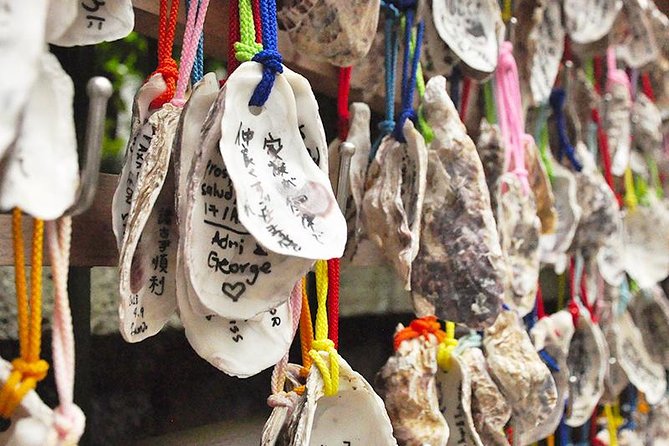
Next comes Kamakura Komachidori (about 55 minutes). This is the classic street walk running from Kamakura Station to Tsurugaoka Hachimangu, packed with restaurants and souvenir shops.
What makes it useful on a one-day plan is variety. You can grab local foods that are said to be things you can eat only in Kamakura, and you can also shop for items you might not see at random convenience stores. It’s also an easy place to pace yourself—long enough to wander, not so long that you lose time before the bigger sights.
Kotoku-in and the Great Buddha: go inside the 11m giant
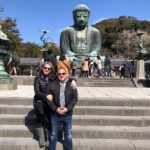
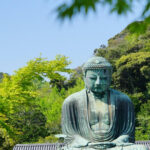
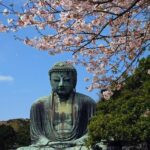
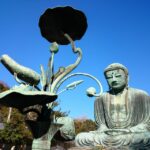
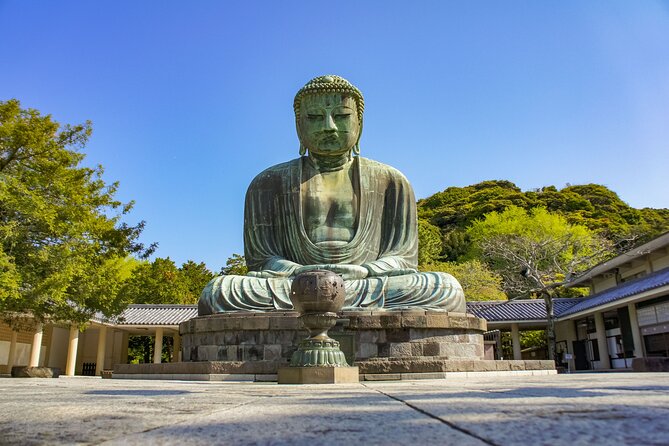
Then you’ll hit Kotoku-in (Kamakura Daibutsu) for around 25 minutes. This is where you’ll see the giant Buddha statue—taller than 11 meters—and the experience even mentions that you can go inside the statue. That’s a rare kind of access for a major monument, and it changes the way you experience it: you’re not only looking up from the ground.
Important cost note: Kotoku-in’s entrance fee is listed as ¥1,050 per person, and it’s not included in the tour price. If your day is tight budget-wise, this is the one fee I’d mentally flag first, because it’s the most explicitly called out.
Hasedera Temple: Flower Temple grounds for slow walking
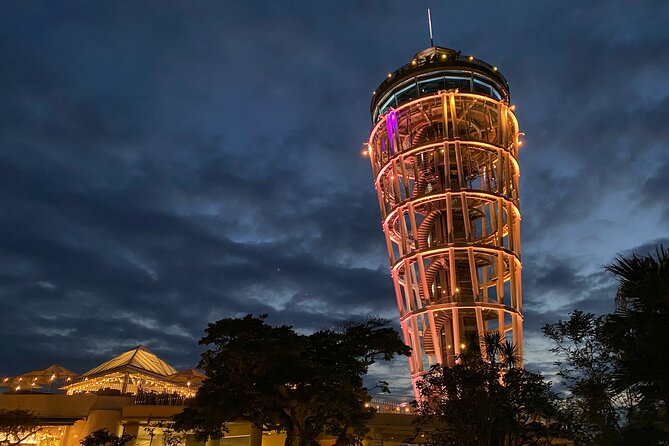
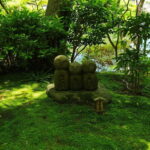
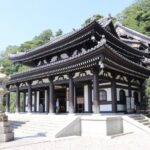
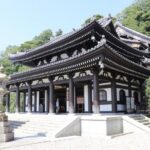
After that, you’ll spend about 50 minutes at Hasedera Temple, also known as the Flower Temple. The big idea here is seasonal plants: the experience description says you can enjoy plants of all four seasons. Even if you’re not traveling in a specific blooming peak, the temple grounds are the kind of place where your attention keeps shifting—paths, viewpoints, and temple details.
It’s a large area, and you’ll be walking. The description also mentions climbing while moving through the grounds, so wear shoes you don’t mind getting a little tested. This is a great stop if you like temples that reward a slower pace rather than a quick checkmark.
Enoshima Nakamise Dori: where snacks actually matter
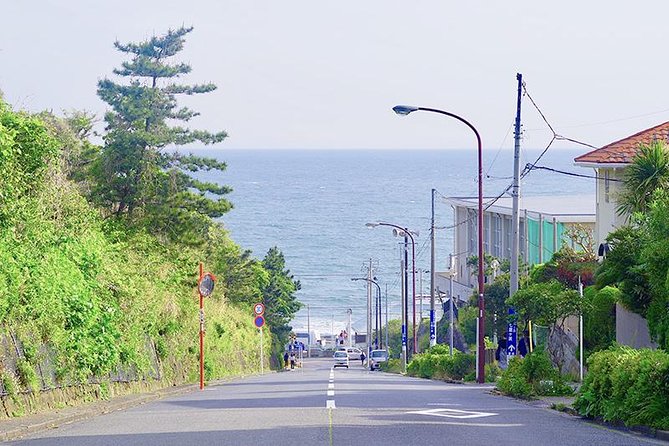
When you reach Enoshima, you start with Enoshima Benzaiten Nakamise Dori for about 20 minutes. This shopping street connects toward Enoshima Shrine and is where the experience points out specific local specialties like takosen and whitebait bowls.
I like this kind of mid-route food stop because it’s not a separate meal obligation. It’s a flexible window: you can grab something small, browse, and reset before the main shrine and viewpoint portion of the day.
Admission for this stop is listed as free, so it’s a low-pressure time sink—one of the reasons it fits neatly into a 7-hour schedule.
Enoshima Shrine: 1000+ years, marriage prayers, and the outdoor escalator
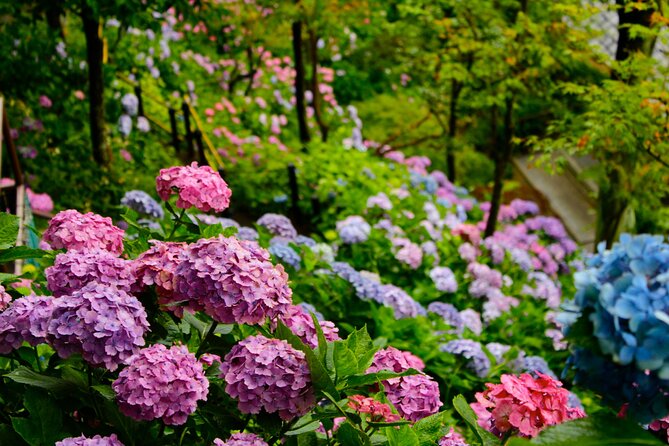
Next is Enoshima Shrine for about 40 minutes, also described as a power spot with over 1000 years of history. This is where the experience leans into Enoshima’s identity: it’s spiritual, scenic, and built for visitors who want both meaning and views.
Two stand-out details are included in the description:
- Japan’s first outdoor escalator that takes you up
- Prayer for the God of marriage
That escalator detail is genuinely practical. It’s a way to reduce the strain of getting higher on a day when you’ve already done temple steps in Kamakura. And if you’re curious about Japanese shrine culture, your guide should be able to point out what to do and how to do it respectfully.
Enoshima Sea Candle: your 360-degree finale with Mt. Fuji mentioned
To close the day, you’ll go to Enoshima Sea Candle (Observatory Deck) for about 20 minutes. This lighthouse is described as a symbol of the Shonan area, and the view is the payoff: 360-degree panoramic views, with Mt. Fuji mentioned as part of what you can see from Enoshima.
Admission for this stop isn’t included, so treat it like the final add-on you may want to budget for. I also like that it’s near the end. It gives your feet a breather after earlier walking and gives you an emotional last frame—sea, light, and a big horizon to take home.
Timing and walking reality: a full day, not a slow stroll
The tour is about 7 hours, and the stops are a mix of short and medium sessions. You’re looking at a lot of “short to medium” segments rather than one long sit-down break.
The experience advises comfortable clothing because you’ll be walking a lot. I’d take that seriously. Bring a small bag you can carry easily, wear shoes with grip, and keep water handy—especially in warmer months. One guide’s summertime note in past trips points to the reality that heat can be intense, so plan for it.
Also, the tour mentions that if weather is bad, transportation, destinations, and routes may change. If rain or wind hits, you’ll still get a version of the day, but don’t expect the exact same outdoor-view conditions at every stop.
Price and value: what you’re paying for (and what you still pay)
The listed price is $125.42 per person for a private tour (group discounts mentioned) with a tour guide. On average, it’s booked about 132 days in advance, which tells you something: this is a popular “best-of-the-day” itinerary.
Here’s how I’d think about value:
- You’re paying for time saved and confident navigation across multiple neighborhoods
- You’re paying for a guide to handle the train movement between sites
- You’re also paying for a curated hit-list that avoids hours of research and rerouting
What’s not included is key. The tour notes that you’ll bear costs incurred at spots, and it also gives a rough estimate of 2,510 JPY per person (transportation 460 JPY, admission fees 1,050 JPY, meal costs 1,000 JPY). Kotoku-in’s entrance fee is specifically listed at ¥1,050.
So you’re not paying everything up front. You’re paying for the guided structure, then spending while you enjoy the day.
Guides who make it feel personal: Kiko, Higara, and Sandy
One reason people rate this tour so highly is the guide experience. Past groups have been guided by people named Kiko, Higara, and Sandy, and the pattern in the feedback is consistent: the guide explains what’s coming, helps you make choices without stress, and shares customs in a patient way.
I like that the tour isn’t only about delivering a schedule. It’s about helping you hit the high points within limited time, and making sure you know what you’re looking at—especially at temples and shrines where small etiquette choices matter.
If you care about understanding how shrine traditions work, that guide-led context can turn a quick stop into a meaningful one.
Who this private Kamakura and Enoshima tour suits best
This is a strong choice if you:
- Want a one-day plan that covers the major sights without transport headaches
- Prefer a private format so you can ask questions and adjust your pace
- Like mixing big landmarks with food-and-street walking (Komachidori plus Enoshima’s Nakamise-style street)
It may be less ideal if you want a very slow, independent day. This itinerary is efficient by design. It’s built for action and variety, with walking baked in.
Should you book it? My quick verdict
I’d book this tour if you want the highlights of Kamakura + Enoshima without playing logistics roulette on a tight day. The combination of a guide staying with you (including on the train), major shrine-and-temple anchors, and a payoff seaside viewpoint makes it a good use of time.
If you’re the type who hates paying extra at the door, factor in that you’ll likely spend on entrance fees (Kotoku-in is the big named one), plus meals. And if you don’t carry cash, take the warning seriously—some stops don’t accept credit cards.
FAQ
FAQ
How long is the Kamakura and Enoshima tour?
The tour runs for about 7 hours.
What time does the tour start, and where do we meet?
It starts at 10:00 am. The meeting point is Kamakura Station (1-chōme-1-15 Onarimachi, Kamakura, Kanagawa 248-0012).
Where does the tour end?
The tour ends at Enoshima Station (Katasekaigan 1-chōme8, Fujisawa, Kanagawa 251-0035).
Is this a private tour?
Yes. It’s a private tour/activity, and only your group participates.
Will the guide travel with us on the train between sites?
Yes. The tour is described as having a guide accompany you on the train between destinations.
What costs are included in the price?
Included items are the tour guide, the private tour, and the necessary expenses for the guide during the tour.
What costs should I budget for entrance fees and meals?
The tour provides an estimated total of 2,510 JPY per person, with transportation 460 JPY, admission fees 1,050 JPY, and meal costs 1,000 JPY. Kotoku-in entrance fee is listed as ¥1,050 per person, and additional costs may apply at other spots.
Do I need cash?
Yes. The tour notes that some visited spots do not accept credit cards, so bring cash.
What happens if weather is bad or a site is closed?
If weather is bad, transportation and routes may change. Also, some spots might be switched to alternative spots in case of temporary closure.
Can I cancel for a full refund?
Yes. Cancellation is free up to 24 hours before the experience’s start time for a full refund.