REVIEW · TOKYO
Tokyo: Sanctuary Authentic Grand Sumo Experience & Training
Book on GetYourGuide →Operated by Amita Sumo Dojo · Bookable on GetYourGuide
Getting tossed onto a sumo idea is easy. Doing real keiko in a real dohyo is different. This 2-hour session at Amita Sumo Dojo in Honshu’s Tokyo area lets you train with a coach (including English support), learn the basics, and then wrestle for real in the ring using a real sumo belt and ring.
I love that it is truly participatory, not a museum-style viewing. You get the warm-ups, the rituals, and the rules you need to understand what you are doing, then you practice until it turns into actual sparring with friends. The second thing I like: the experience is guided by the program’s Japanese coach Takeshi, and he explains in both Japanese and English, so you are not left guessing.
One possible drawback: this is physical. You will sweat hard, and you should come ready to move, not just watch.
In This Review
- Key Things That Make This Sumo Session Worth It
- Why You’re Not Just Watching Sumo in Tokyo
- Your 2-Hour Keiko Flow: What Happens During Class
- Entering the Ring: Dohyo and Mawashi in Real Life
- The Ritual Part: Shinto Touchpoints You Actually Do
- Wrestling With Friends: How the Matches Feel
- What to Bring (And How to Handle the Sweat)
- Getting There: Heiwajima Station to Heiwanomori Park Sumo-jo
- Price and Value: Is $199 Worth 2 Hours?
- Who This Sumo Training Fits Best
- Photo and Video Rules Inside the Experience
- The Only Catch: Expectations and Physical Effort
- Should You Book This Tokyo Sumo Training?
- FAQ
- What is the duration of the Tokyo sumo experience?
- Where do we meet for the session?
- Do I need prior sumo experience?
- Is the mawashi provided?
- What should I bring?
- Is there a shower available?
- Are food or meals included?
- Can children participate?
Key Things That Make This Sumo Session Worth It
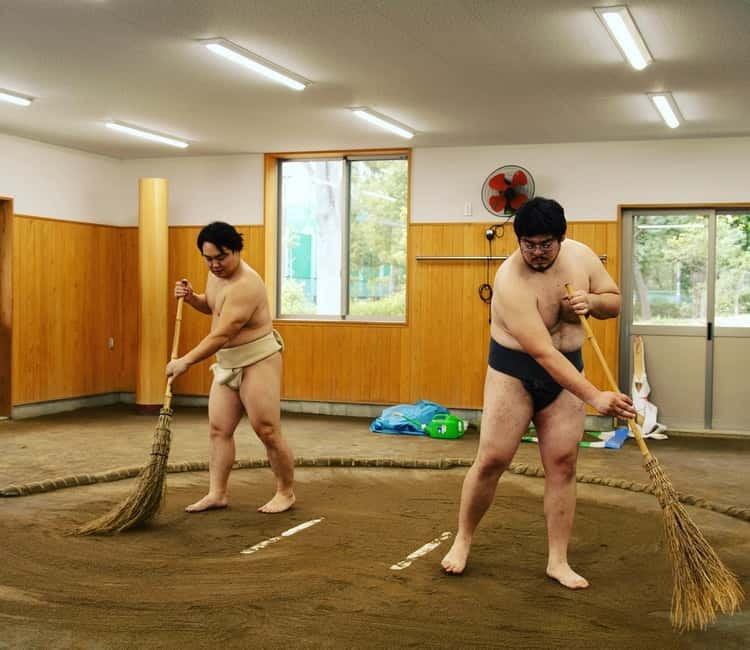
- Real training tools: You wrestle on a clay dohyo and wear a real mawashi belt.
- Coaching that you can understand: English and Japanese instruction, led by the dojo coach Takeshi.
- Rituals + fundamentals: Stretches, warm-ups, and traditional Shinto-style ritual practice are part of class.
- You don’t just shadow: You end with matches against friends and, if you want to be brave, possibly against the coaches.
- No gear stress: Mawashi is provided at no extra cost, and you can show up without sumo experience.
- Plan for sweat: Bring towels and drinks, and plan time for the nearby paid shower (¥100 for 5 minutes).
Why You’re Not Just Watching Sumo in Tokyo
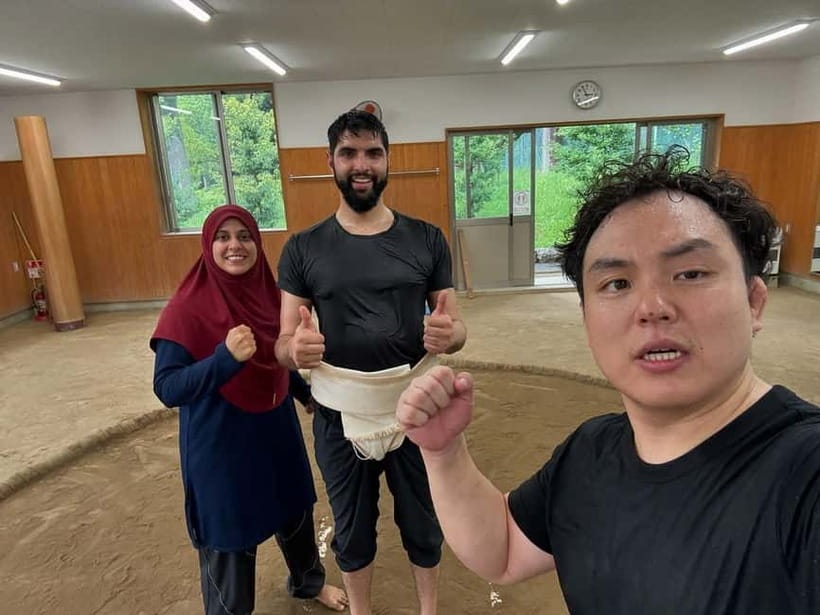
Tokyo is stacked with ways to see sumo—tournament tickets, talk-and-tour type experiences, and staged performances. This one is built differently. You train in the ring with the same kind of setup you see in sumo culture: a dedicated ring area and the belt you learn to wrestle with.
The value is simple: when you sweat through warm-ups, learn why the pre-bout rituals matter, and feel what it takes to get position, sumo stops being a “watch it later” sport. It becomes something you understand with your body.
This is also a rare match of “serious sport” and “approachable class.” There is no experience required, and the guidance is given with both Japanese and English. That means you can focus on doing the basics correctly instead of translating everything in your head.
You can also read our reviews of more tours and experiences in Tokyo.



Your 2-Hour Keiko Flow: What Happens During Class
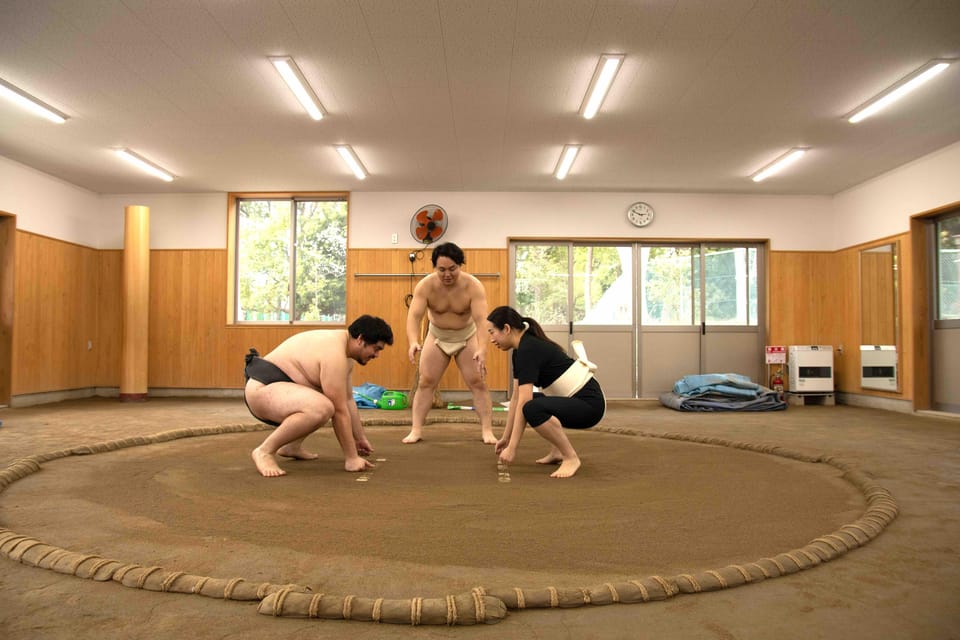
Even without fancy backstage theatrics, the structure of this session is where the learning happens. You can think of it as a guided progression: prepare the body, learn the rules and ring etiquette, then turn drills into grappling.
You start off at Heiwanomori Park Sumo-jo, meeting at the small office at the address in Ota City. From there, class centers on the fundamentals. You’ll do stretches and warm-ups first. This matters because sumo is not just pushing and hauling; it is controlled effort, balance, and timing.
Next come the traditional elements. You’ll practice rituals and learn the meaning behind key actions. After that, the coach covers the rules for wrestling in the dohyo and how the mawashi fits into the basics.
Finally, it turns practical. You’ll get rounds where you can wrestle with your friends, and the coaches may step in depending on the energy level of your group. One nice detail: the session is designed to be adaptable to the participants, so you are not trapped in a single intensity lane.
Entering the Ring: Dohyo and Mawashi in Real Life
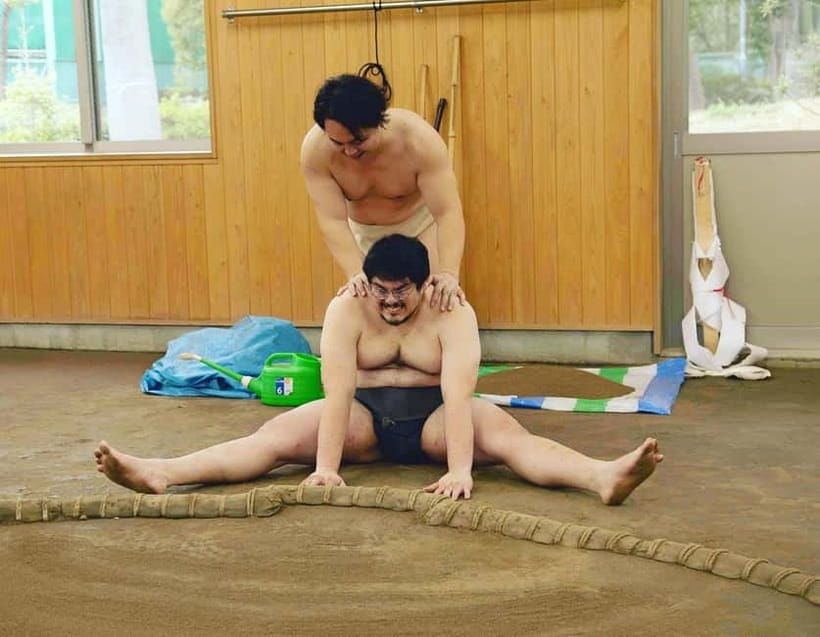
The big “wow” factor here is physical reality. A real sumo dohyo is a distinct space—clay underfoot, ring boundaries that change how you move, and a whole different feel than a gym mat. When you step in, you quickly understand why footwork and stance are so important.
Then there’s the mawashi. It is not a costume moment. It becomes your main tool in the bout. The coach teaches fundamentals with the belt in place, so you are not doing shadow training. And the best part for planning: you get the mawashi provided at no extra cost.
You also do not need special outfits beyond being comfortable. If you prefer, you can wear regular clothes. That lowers friction if your schedule is packed and you just want to get moving without hunting down a wardrobe first.
The Ritual Part: Shinto Touchpoints You Actually Do
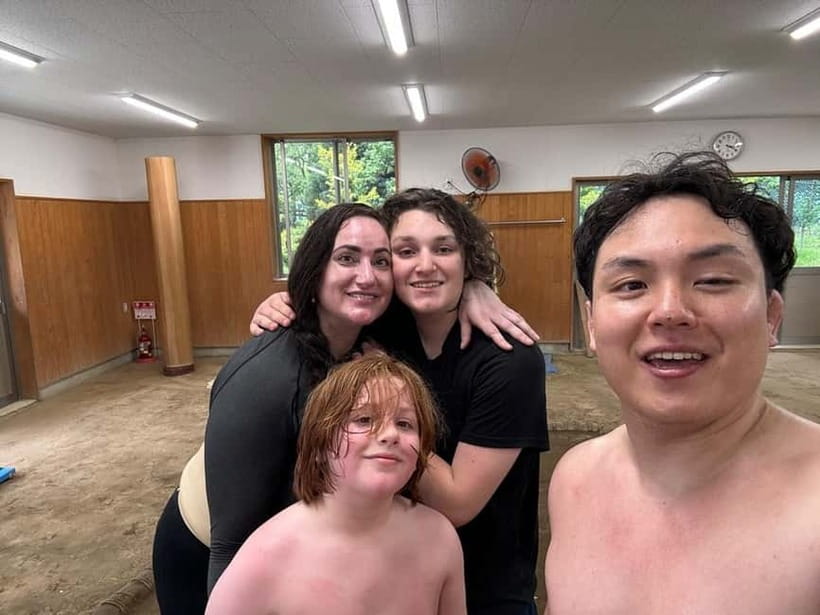
Sumo rituals can feel mysterious if you only watch from afar. Here, you do them as part of training. That is the difference between knowing what happens and actually understanding the sequence and intention.
You will be guided through traditional Sumo and Shinto rituals as part of the class flow. In practical terms, that means you learn when to focus, how to behave in the ring environment, and how the ceremonial side connects to the wrestling itself.
This is also why this experience works for more than one kind of traveler. If you like sports, you get technique and rules. If you like culture, you get a role in the tradition instead of just observing from the sidelines.
Wrestling With Friends: How the Matches Feel
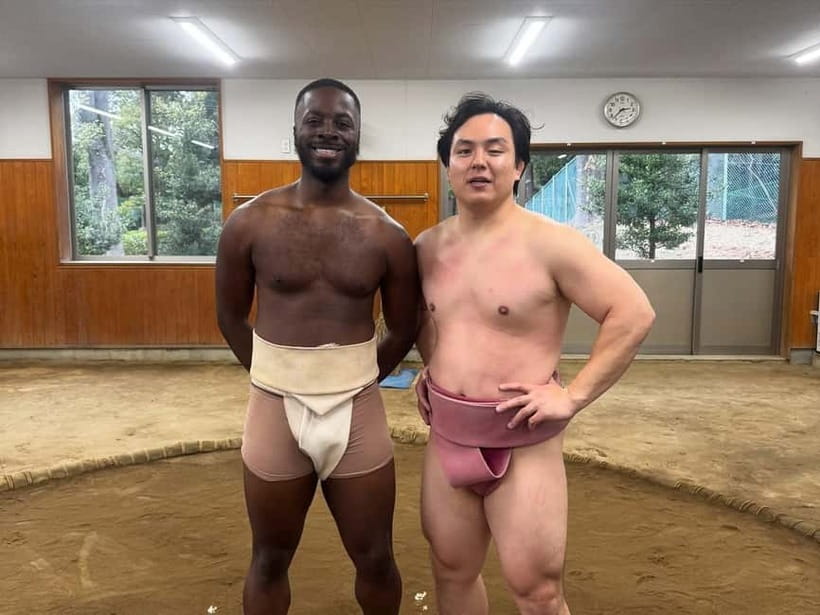
The end of class is where this stops being a lesson and starts being a test of what you just learned. After warm-ups and instruction, you get to wrestle with friends. The goal is not “go hard and get hurt.” It is to put the basics into motion in a way that feels fun and educational.
Depending on your bravery level, you may also wrestle against the coaches. In one account connected to the program, the intensity level surprised a family because they ended up matched against a very strong opponent coached through the session. Even if you never reach that kind of pairing, you can expect the coaches to push you toward real technique instead of flailing.
My practical advice: go in thinking of it as a mix of sport and skill-building. If you treat it like a casual shove match, it will feel harder than it should. If you treat it like learning how to stand, grab, and move within the rules, you’ll get more satisfaction from every round.



What to Bring (And How to Handle the Sweat)
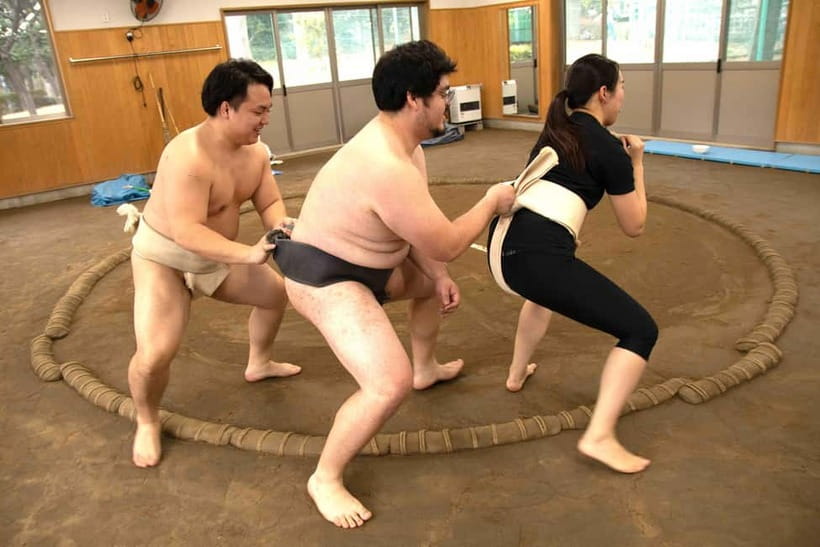
Plan for a workout. This session includes warm-ups and repeated wrestling rounds, so you will be sweaty. Come prepared so you can enjoy the experience instead of managing discomfort.
Bring:
- Towel (at least one; more is better)
- Drinks
The coach specifically recommends bringing extra water and two towels: one for sumo use and another for showering. There is a shower room nearby, and it costs ¥100 for 5 minutes. That short window is enough to rinse and feel human again, especially if you plan to head back to your hotel afterward.
One more planning tip: if you are coming from central Tokyo, give yourself time to get to Heiwajima Station and walk. The dojo is a short walk from the station, but it is easier when you are not rushed.
Getting There: Heiwajima Station to Heiwanomori Park Sumo-jo
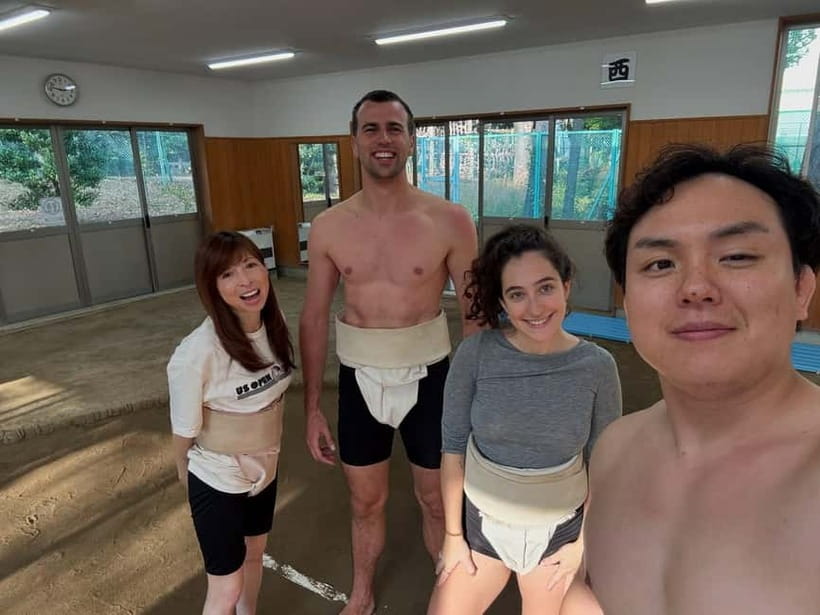
The meeting point is Heiwanomori Park Sumo-jo, 2-1 Heiwanomorikoen, Ota City, Tokyo, 143-0005. There is a small office at that address where you meet up.
If you walk, it is about a 10-minute walk from Heiwajima Station on the Keikyu Main Line. There is also a shortest-walk route provided on the map link the operator shares.
If you taxi, the fastest route is also mapped. One important consideration: taxis will not just find the location on their own. You may need to arrange a taxi yourself and show the address/route.
For context on transit from popular areas, the operator lists train times that range roughly from about 22 minutes (Shinagawa area) up to around the 50–55 minute mark (depending on starting point). If you are staying in places like Shimbashi, your commute tends to be easier than if you are on the far edge of the city.
Price and Value: Is $199 Worth 2 Hours?
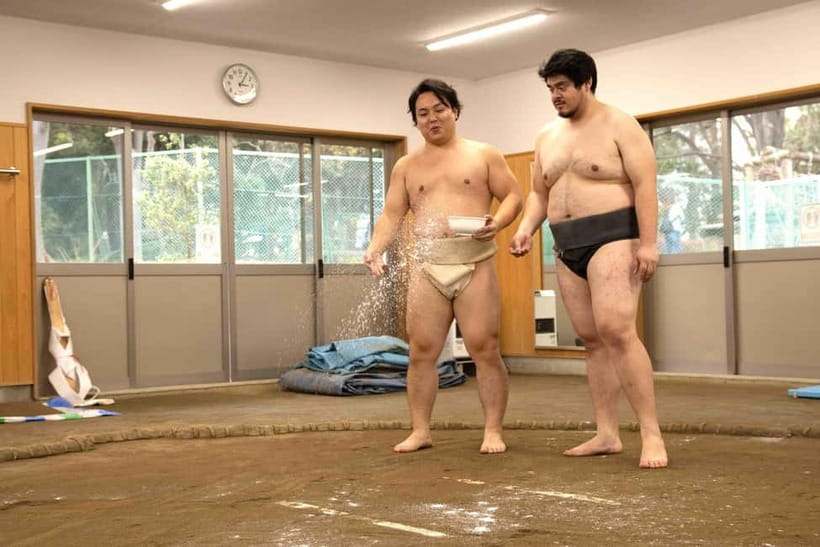
At $199 per person for 2 hours, this is not a cheap activity. But you are paying for three things that most sumo experiences only offer in pieces: real training equipment, real coaching, and real participation inside the ring setup.
You get:
- real sumo training time (not just viewing)
- real mawashi on your body
- a real clay dohyo
- a coach leading the session in Japanese and English
You also get the practical benefit of gear provided—no extra shopping for a belt. And because the class ends with wrestling rounds, the time does not disappear into lectures.
The one cost-side item to remember: no food is served. If you are hungry after, plan a meal stop before or after.
Is it worth it for everyone? If you want passive entertainment only, it might feel pricey. If you want a hands-on Tokyo story where you can say I learned and I wrestled, the value is strong.
Who This Sumo Training Fits Best
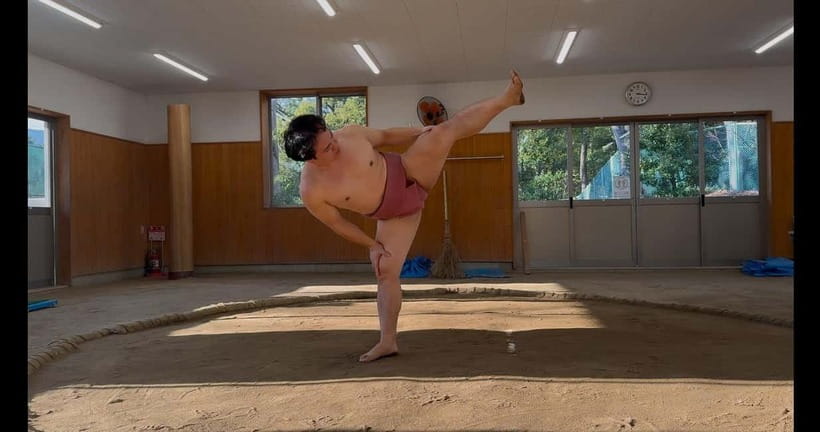
This class has the flexibility that makes it work for a lot of people. It is suitable for different ages and fitness levels, and there is no experience required.
You will likely enjoy it most if:
- you want a real sport experience, not just a performance
- you like learning how traditions connect to action
- you are traveling with family and want something everyone can participate in
- you want an activity that does not require special gear shopping
Family note: children under 4 can accompany but may only observe. For kids age 5 and older, observation is complimentary, and if they want to participate you need an order for each child taking part.
Photo and Video Rules Inside the Experience
If you want memories, you can take photographs and videos during the session. Just follow the rules so you do not get in the way of other participants.
The key etiquette points:
- don’t film in ways that interfere with the experience
- don’t record participants who have not given permission
- follow the provider’s restrictions on filming people who are not allowed to be recorded
A simple approach: film short clips at natural breaks, then put the phone down and focus on the ring moments. You’ll enjoy the session more, and you’ll also behave respectfully in a tight training space.
The Only Catch: Expectations and Physical Effort
The biggest consideration is that you are doing sumo training, not watching sumo from the best seat. That means:
- you’ll sweat
- you’ll need to listen and learn fast enough to apply it
- you should take it seriously enough to avoid careless injuries
The operator also notes they are not responsible for injuries or accidents. That is standard, but it is a good reminder to bring a towel, water, and a calm mindset.
If you have mobility issues, major injuries, or you hate workouts, this might not be your best match. If you are open to moving and learning, it is one of the most fun ways to experience sumo culture in Tokyo.
Should You Book This Tokyo Sumo Training?
Book it if you want a Tokyo activity that is genuinely participatory: real dohyo, real mawashi, coach instruction in Japanese and English, and wrestling rounds at the end. At 2 hours, it is long enough to learn, but short enough that you can still enjoy the rest of your day around Tokyo.
Skip it if you want a quiet viewing experience, you cannot handle physical activity, or you’re not comfortable sweating through a sport class.
If you do book: bring more water than you think you need, pack two towels, and treat the rituals and rules like part of the workout. That mindset turns it from a novelty into a skill you actually take home.
FAQ
What is the duration of the Tokyo sumo experience?
The experience runs for 2 hours. Starting times depend on availability.
Where do we meet for the session?
You meet at Heiwanomori Park Sumo-jo, 2-1 Heiwanomorikoen, Ota City, Tokyo, 143-0005, at the small office at the address.
Do I need prior sumo experience?
No experience is needed. The session welcomes everyone, and you’ll learn the fundamentals from the coach.
Is the mawashi provided?
Yes. You wear a real sumo belt called a mawashi, and it is provided at no extra cost.
What should I bring?
Bring a towel and drinks. The operator recommends bringing many bottles of water and two towels: one for sumo and one for showering.
Is there a shower available?
Yes. There is a shower room near the experience, and it costs ¥100 for 5 minutes.
Are food or meals included?
No food is served.
Can children participate?
Children under 4 may accompany but can only observe. For children aged 5 and older, observation is complimentary; if they want to participate, you need to place an order for each participating child.