REVIEW · TOKYO
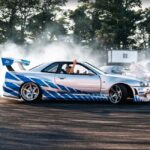
Tokyo Drift: Modfied Supra Night JDM Daikoku Experience
Book on GetYourGuide →Operated by COMPLEXCITYTOKYO · Bookable on GetYourGuide
Night driving in a tuned Supra sounds unreal.
What makes this one special is the fully guided run through Tokyo’s car-world stops, capped by time at Daikoku PA where the local scene feels close enough to touch. If you end up with guides like Mizuki (or Yuto in some groups), you’ll get English that lands fast, plus local context while you’re on the move.
My favorite part is the mix: real car-spotting time for JDM fans and big Tokyo-night scenery like Shibuya Crossing and Rainbow Bridge. One thing to plan around: Daikoku PA can close, and the backup is Umihotaru PA, which may come with an extra charge of 5,000 yen per person.
In This Review
- Key highlights you’ll actually care about
- How the Tokyo to Yokohama JDM night ride really works
- Autobacs Shinonome: the gear stop before you hit the car scene
- Shibuya at night: the perfect contrast to garage culture
- Daikoku PA: why this parking area is the headline
- Umihotaru PA backup: sea views and extra time on the water side
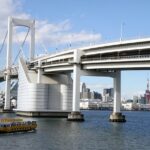
- Rainbow Bridge: the skyline payoff between car stops
- Getting in and out smoothly: drop-offs at key Tokyo spots
- Price and value: what $196 buys you in a 3–4 hour night
- Who should book this Tokyo Drift JDM Daikoku night run
- Practical tips before you go (so the night stays smooth)
- Should you book it: my straight answer
- FAQ
- What is included in the Tokyo Drift: Modified Supra Night JDM Daikoku Experience?
- How long does the experience take?
- Where will you pick me up and where do you drop me off?
- Is this a private tour, and what languages are offered?
- What happens if Daikoku PA is closed?
- Is there an extra fee to go to Umihotaru PA?
- What should I bring, and what is not allowed?
- Can I reserve now and cancel later?
Key highlights you’ll actually care about
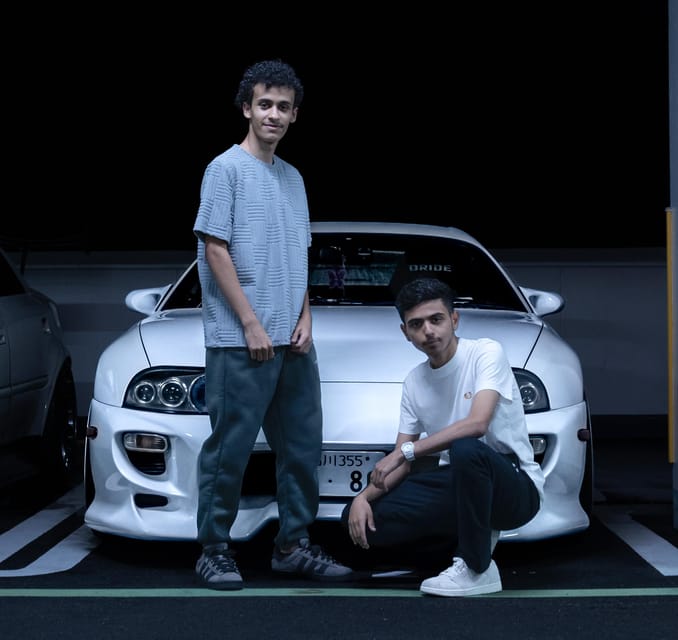
- Daikoku PA time with guided walkthrough, free time, and photo opportunities
- A76/A80-style Supra experience: you get a complimentary ride in a Toyota Supra A80
- English + Japanese guiding while you move between Tokyo and Yokohama car spots
- Autobacs Shinonome stop to browse a major car-related store before the night run
- Rainbow Bridge viewpoint with skyline views built into the schedule
- Umihotaru backup if Daikoku isn’t available, including sea-side parking views
How the Tokyo to Yokohama JDM night ride really works
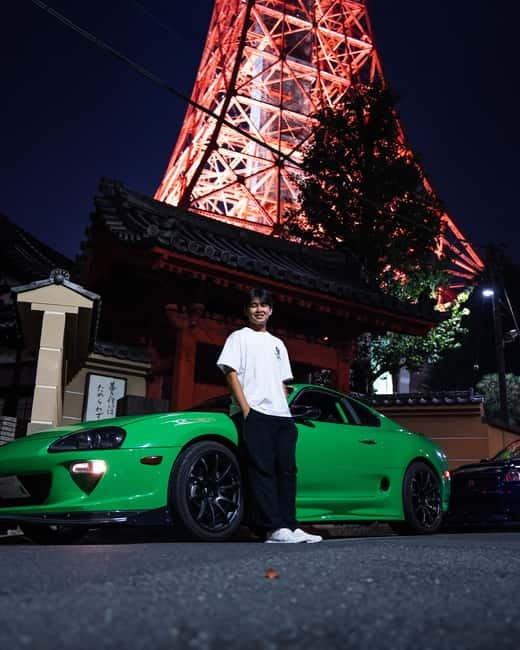
This is a 3–4 hour, private-group night experience built around one goal: getting you to the places where Japan’s modified car culture shows up in a big way. You’re not left to wander and guess. You move as a group with an English or Japanese live guide, and the drive itself includes commentary about car culture and the geography of where you’re going.
The logistics are also cleaner than you’d expect. Pickup is included, and you don’t get slapped with added taxi-style transportation fees. The “start” feels immediate too—your education begins as soon as you’re in the car, with the guide talking while you travel between stops.
One practical note: this is designed for professional-guided incidental transport under MLIT guidelines (No. 359). That’s not trivia. It generally means the whole operation is meant to run with a clear structure, not just a meet-and-hope plan.
You can also read our reviews of more evening experiences in Tokyo
Autobacs Shinonome: the gear stop before you hit the car scene
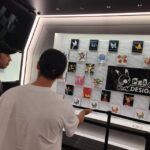
The first proper stop is Autobacs Shinonome, a big car-related shop area. You get about 30 minutes for shopping and sightseeing. For JDM fans, this is a good mental warm-up. Before you go to the heavyweight car spots, you can browse parts, accessories, and Tokyo-style car culture products.
Even if you don’t buy much, it helps you do two things fast:
- Get your bearings before the night drive gets busy.
- Spot what you’ll recognize later at Daikoku (brands, styles, and common “night scene” looks).
Time here is short on purpose. You’re not stuck in a mall. You’re stocking up on ideas, then rolling out for the main event.
Shibuya at night: the perfect contrast to garage culture
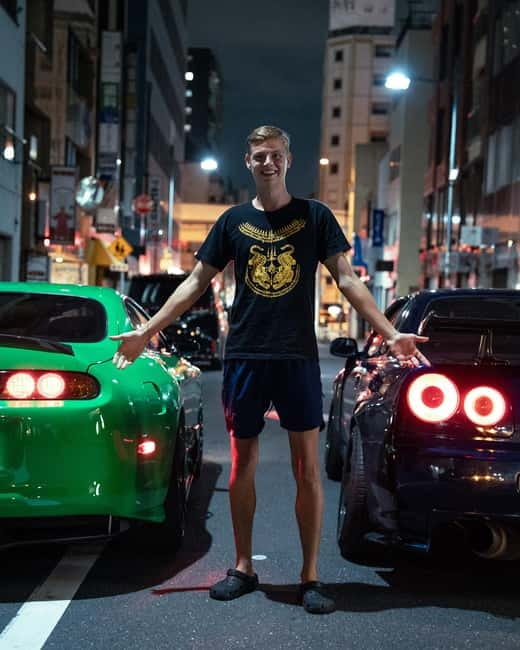
Next you roll into central Tokyo for the great Shibuya Crossing stop. You get around 30 minutes here, which is enough time to see the lights, cross a couple of streets with your guide, and take photos without turning the stop into a marathon.
Here’s why this stop matters for a car-themed tour: it shows you the contrast. Tokyo’s neon street life isn’t separate from car culture. It’s the same city, just different lanes of creativity—one on foot, one behind a wheel. You also get a smoother “from cars to city icons” flow rather than jumping straight from a parking area into more parking area time.
If you’re planning photos, bring a charged smartphone and set up your camera before you get surrounded by the crowd flow. Night light in Shibuya is gorgeous, but you don’t want to be troubleshooting at the worst possible moment.
Daikoku PA: why this parking area is the headline
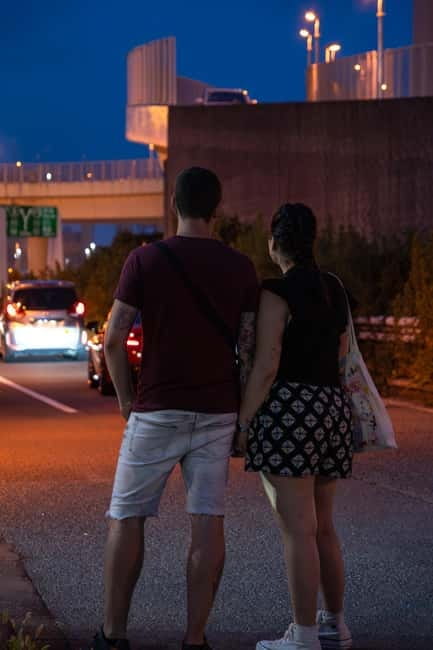
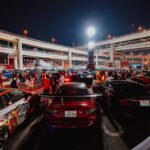
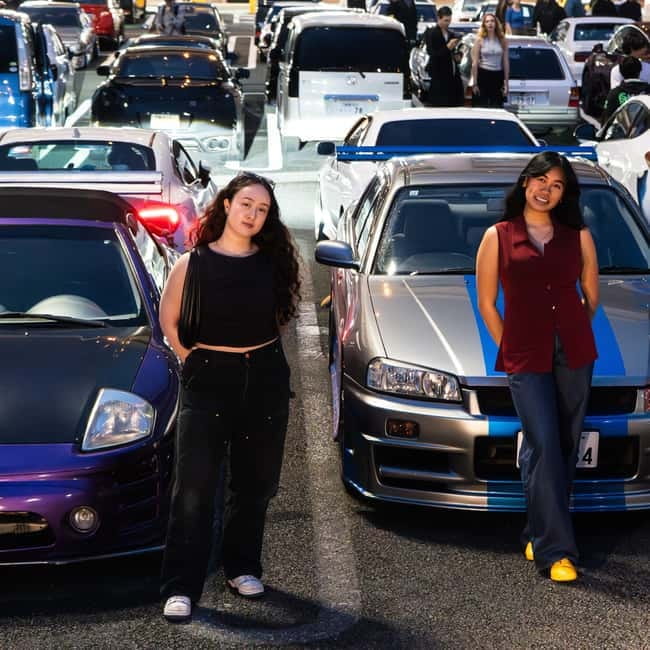
Daikoku PA is the reason most people book. You get about 1 hour here, with a guided tour plus free time for shopping, sightseeing, and photos.
What I like about this structure is that it balances two things:
- You get the guide’s “what you’re looking at” framing.
- You still get time to roam, watch, and take in the vibe at your own pace.
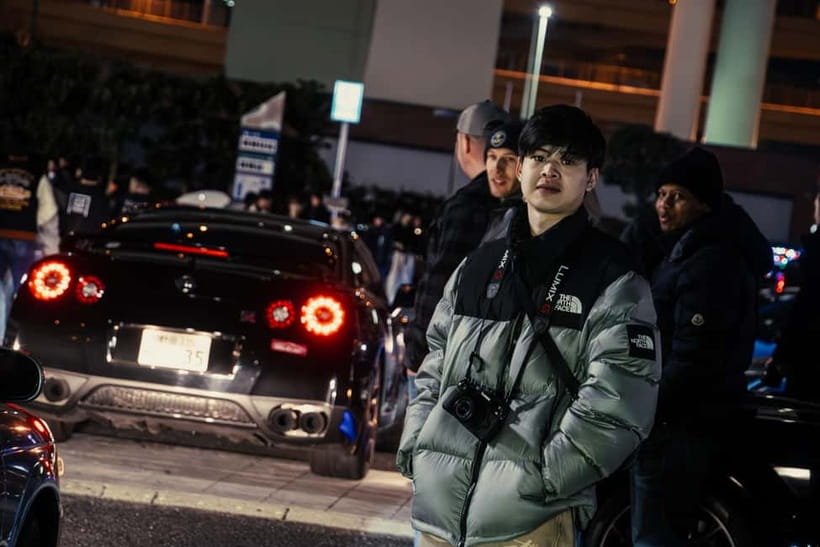
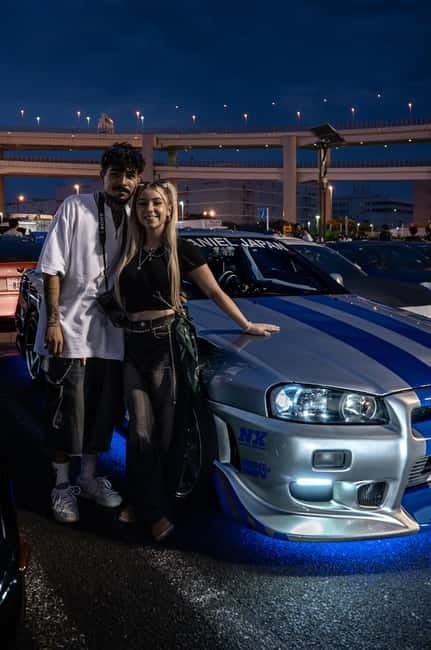
This is also where the tour’s JDM tone comes through. Daikoku is known for modified cars gathering in a way that feels unmistakably Japanese: clean fitments, recognizable brands, and the kinds of builds you don’t always see elsewhere. The experience is built around seeing and hearing cars up close, not just looking at a couple static photos.
From the tone of the experience, you can also expect the night atmosphere to feel social in a careful way. Guides often connect you with local car people during the stop, which turns the parking area from a viewing spot into an actual cultural moment.
Small consideration: parking areas can change based on conditions, and the tour’s plan accounts for that.
Umihotaru PA backup: sea views and extra time on the water side
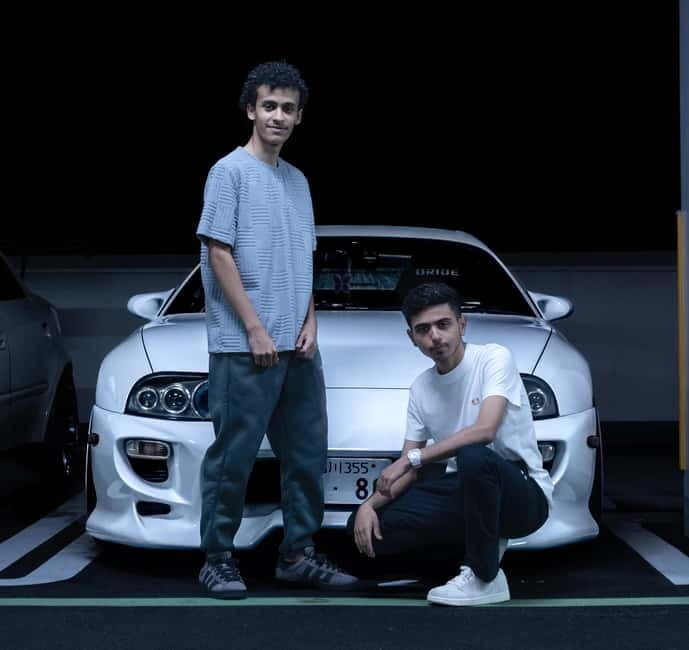
Daikoku PA closes frequently, so the tour uses a smart backup: Umihotaru PA, the sea-side parking area. If Daikoku isn’t available, you’ll go to Umihotaru instead, with about 1 hour of free time there.
Two things to know:
- It’s optional only in the sense of scheduling—if Daikoku is closed, Umihotaru becomes the replacement.
- There can be an extra charge of 5,000 yen per person because it involves tolls and a farther distance.
Why this backup still makes sense, even with the possible extra cost: sea-side parking gives you a different Tokyo-night look. Instead of only car lights and exhaust vibes, you also get the open-water setting that changes how everything feels in the photos and videos.
If your goal is strictly Daikoku, keep your expectations flexible. If you’re open to a second-style car night setting, this backup can feel like a bonus.
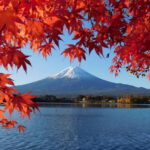
Rainbow Bridge: the skyline payoff between car stops
After the car-world time, you get a Rainbow Bridge stop with about 30 minutes for sightseeing, with spectacular views from the top.
This is one of those parts that quietly improves the whole experience. Car culture nights can blur together if every minute is “parking-lot time.” Rainbow Bridge resets your eyes and gives you an iconic Tokyo view that makes the evening feel bigger than a single gathering point.
Practical tip: go ready with your camera mode. Night bridge lighting can overexpose easily. If you know how to tap to focus and lock exposure on your phone, use that. Your photos will look cleaner.
Getting in and out smoothly: drop-offs at key Tokyo spots
At the end, you don’t get stuck miles from where you want to be. You’ll be dropped off at four possible locations: Tokyo, Shibuya City, 秋葉原UDX, and Akihabara Electric Town.
This matters more than it sounds. Tokyo neighborhoods are close, but crossing between them can eat time. Having drop-offs in Shibuya and Akihabara makes it easier to roll straight into your next plan—late dinner, arcade time, or a quick walk before the night ends.
Price and value: what $196 buys you in a 3–4 hour night
At $196 per person for a 3–4 hour window, this isn’t a “grab a ticket and wander” bargain. It’s priced more like a guided cultural experience with a vehicle-based run and a real emphasis on car-scene access.
So where does the value come from?
- Guidance and interpretation: You’re not just being transported. You’re getting context while you drive, plus guided time at Daikoku.
- Dedicated time at the main scene: One hour at Daikoku PA is meaningful. It’s enough time to see the variety of builds, walk around, and take photos without feeling rushed.
- Complimentary ride included: You get a ride in a Toyota Supra A80 as part of the experience, and the tour specifically notes it avoids extra taxi-style transportation fees.
- Backup planning: The Daikoku closure contingency is built in, which reduces the chance you end up with a half-empty experience.
Where to watch your wallet: if Daikoku is closed and you go to Umihotaru, there may be a 5,000 yen per person extra charge. That’s still reasonable for a plan that protects the experience, but it’s worth factoring in before you commit.
Who should book this Tokyo Drift JDM Daikoku night run
This tour fits best if you:
- Love JDM cars and want to see modified builds in a place where they’re actually gathered.
- Want a guided experience with English or Japanese so you don’t miss the meaning behind what you’re seeing.
- Like the idea of mixing car culture with Tokyo icons like Shibuya Crossing and Rainbow Bridge.
It’s not a fit if you:
- Have young kids. It’s not suitable for children under 11, babies under 1, or people over 95.
- Need a stroller. Baby strollers aren’t allowed.
- Want an alcohol-focused night. Alcohol and drugs aren’t allowed.
If you’re a first-time visitor to Tokyo and you only have a few nights for experiences, this is a strong candidate because it gives you both a cultural scene and major city sights in one block.
Practical tips before you go (so the night stays smooth)
Here’s what I’d prepare based on the tour rules and how these night stops work:
- Bring your passport (requested).
- Bring a camera if you use one, and keep a charged smartphone for night photos.
- Carry some cash.
- Leave the stroller at home.
- Don’t bring alcohol or drugs.
Also, after booking, you’ll be contacted by SMS or WhatsApp. If you’re the type who likes to plan every minute, keep an eye on your messages so pickup details don’t get missed.
Should you book it: my straight answer
Book this tour if you’re the type who gets excited by seeing modified cars up close, and you want the car night to come with explanation—not just transportation. The Daikoku time plus Shibuya and Rainbow Bridge gives you a full Tokyo-night storyline, not a short “look and leave” stop.
Skip it if you want total flexibility to wander on your own, or if you’re sensitive to a possible detour away from Daikoku due to closures (Umihotaru is the backup, and it can cost extra).
If you fit the first group, this is one of the better ways to experience Tokyo’s JDM scene without doing guesswork, bad timing, or long solo searching.
FAQ
What is included in the Tokyo Drift: Modified Supra Night JDM Daikoku Experience?
The tour includes pickup from your accommodation, a stop at a large car-related store (Autobacs Shinonome), time at Great Shibuya Crossing, guided time at Daikoku PA, and sightseeing with views from the top of Rainbow Bridge. If Daikoku PA closes, the tour goes to Umihotaru PA. The experience also includes a live English/Japanese guide and a complimentary ride in a Toyota Supra A80.
How long does the experience take?
The duration is listed as 3 to 4 hours. Starting times depend on availability.
Where will you pick me up and where do you drop me off?
Pickup location depends on the selected option. Drop-off locations are listed as Tokyo, Shibuya City, 秋葉原UDX, and Akihabara Electric Town.
Is this a private tour, and what languages are offered?
Yes, it’s a private group tour. The live guide is offered in English and Japanese.
What happens if Daikoku PA is closed?
Daikoku PA closes frequently, and in that case the plan switches to Umihotaru PA, the sea-side parking area.
Is there an extra fee to go to Umihotaru PA?
Yes, unless Daikoku PA is closed, there is an extra charge of 5,000 yen per person to go to Umihotaru due to tolls and the farther distance.
What should I bring, and what is not allowed?
You should bring your passport, camera, cash, and a charged smartphone. Not allowed items include baby strollers, and alcohol and drugs are not permitted.
Can I reserve now and cancel later?
Yes. You can reserve now and pay later. Free cancellation is available up to 24 hours in advance for a full refund.