REVIEW · TOKYO
Shibuya Meltdown Night Tour: All-You-Can-Drink Bar Hopping
Book on GetYourGuide →Operated by MagicalTrip · Bookable on GetYourGuide
Shibuya goes to work after dark. In three hours, you’ll hit Shibuya Crossing for photos, then follow your guide through small izakayas tucked in an indoor yokocho. I especially like the all-you-can-drink setup and the fact that you get reserved seating in places you’d never find on your own. One heads-up: menus and dishes can vary by venue, and allergy-free dining isn’t guaranteed.
This is a tight, English-led bar crawl (max 10 people) designed to keep you moving without losing the vibe. Guides such as Lam and Masa are repeatedly praised for keeping things organized, answering questions, and helping everyone feel comfortable—good if it’s your first night in Tokyo and you want to get your bearings fast. You’ll also get that Shibuya rhythm—locals unwinding after work, shared tables, and the kind of nightlife energy that doesn’t translate on a daytime map.
In This Review
- Key Things You Should Know Before You Go
- The Point of This Tour: Shibuya Nightlife in a Controlled Dose
- Where You Meet and How Not to Miss Your Guide
- Shibuya Crossing: The Photo Stop That Sets the Mood
- Yokocho Izakaya Culture: Why This Indoor Alley Matters
- Stop 1: First Venue Food and Two Drinks to Start Strong
- Stop 2: The All-You-Can-Drink Izakaya Inside the Alley
- Stop 3: Dogenzaka Energy and Your Last Drink (Plus Karaoke If You Want It)
- The Food Details: What to Expect, and Where Surprise Happens
- Drinks Reality Check: All-You-Can-Drink Without the Guesswork
- Vegan and Vegetarian Options: Helpful, But Not Perfectly Predictable
- Small Group Size: Why Max 10 People Changes the Feel
- English Guide Quality: What Good Hosting Looks Like
- Price and Value: Why $103 Can Make Sense for Shibuya
- Summer Tip: Don’t Let Humidity Spoil Your Night
- Who Should Book This Tour
- Who Might Want to Rethink It
- Should You Book the Shibuya Meltdown Night Tour
- FAQ
- How long is the Shibuya Meltdown Night Tour?
- What is included in the price?
- Is the tour all beer and sake, or are there other drink options?
- Are vegetarian or vegan options available?
- Where do we meet the guide?
- Is karaoke included?
- Do I need to cover the guide’s food or drinks?
Key Things You Should Know Before You Go
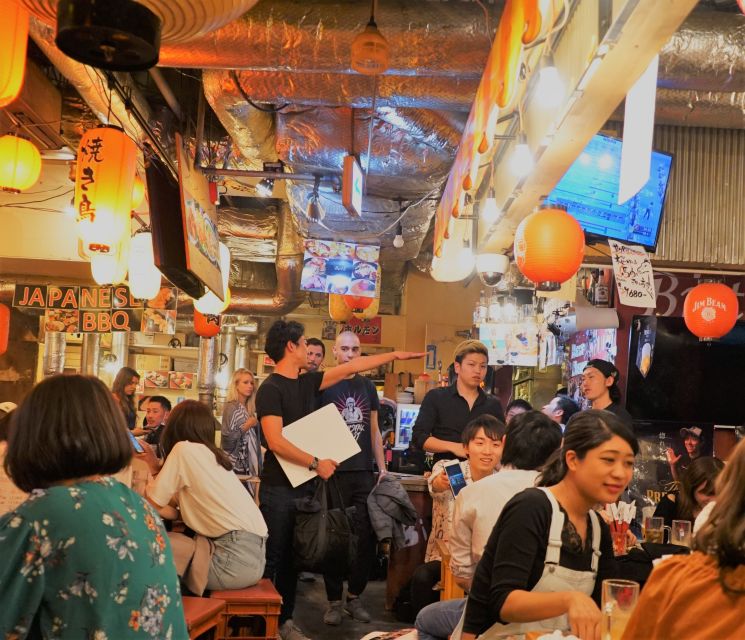
- Three izakaya stops in about three hours, with time set aside for food and drinks at each place
- A photo moment at Shibuya Crossing before the nightlife starts to feel fully real
- All-you-can-drink at the second bar, with beer, sake, and other Japanese drinks from the tour selections
- Reserved seating in tiny bars, so you’re not hunting for space in the middle of Shibuya
- Vegetarian/vegan options may be available, but strict allergies aren’t something you can rely on
- The last stop can be karaoke or a cozy bar, depending on what the night’s like
The Point of This Tour: Shibuya Nightlife in a Controlled Dose
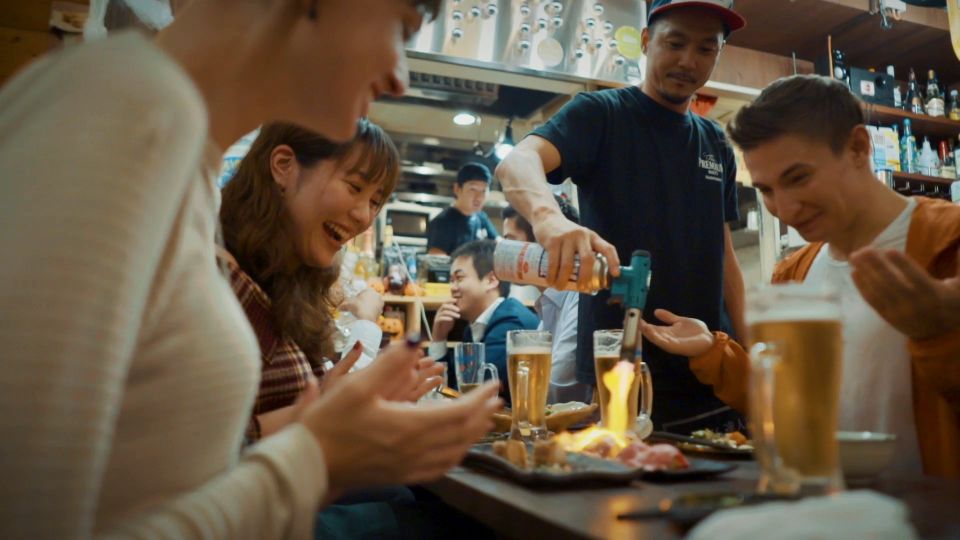
Tokyo nightlife can feel like a maze when you arrive hungry, jet-lagged, and staring at a wall of tiny doors. This tour keeps the structure simple: you get guided entry, pre-arranged tables, and a clear sequence of spots to enjoy. In other words, you can focus on food, drinks, and conversation instead of logistics.
The best part is the time window. Three hours is long enough to feel the shift from evening street scene to izakaya culture, but short enough that you don’t spend the whole night trying to keep track of everyone. That pacing is a big deal when you’re in Shibuya, where foot traffic can swallow you fast.
You can also read our reviews of more evening experiences in Tokyo
Where You Meet and How Not to Miss Your Guide
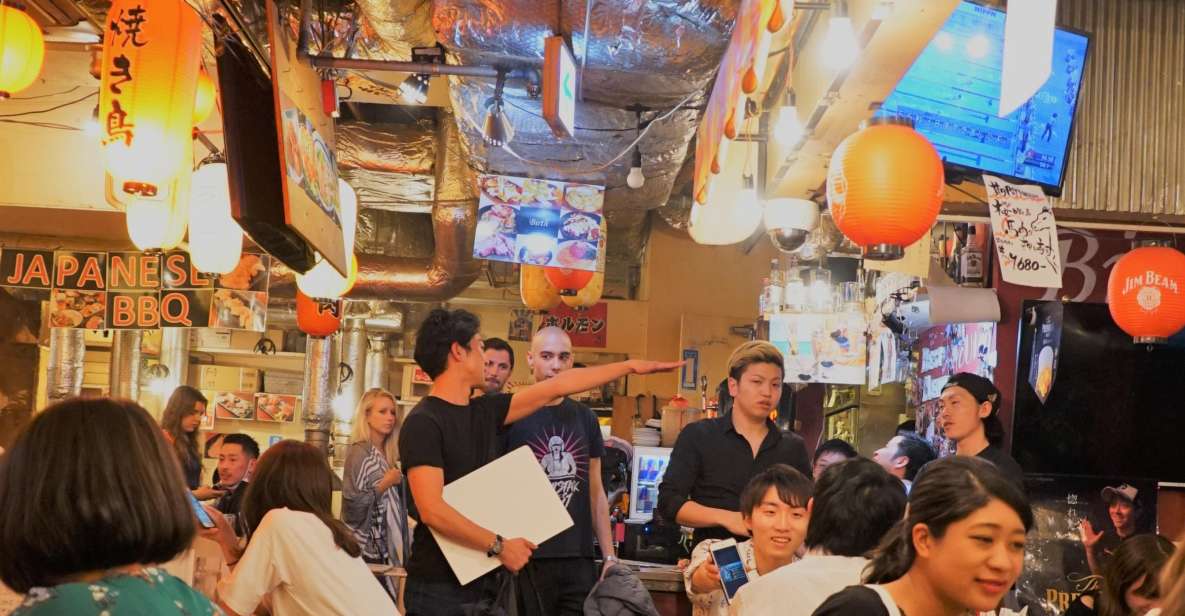
Your meeting spot is in front of the floor-to-ceiling windows under the SHIBUYA TSUTAYA sign. It’s about a three-minute walk from JR Shibuya Station, Hachiko Exit.
If you accidentally end up at the SEIBU building, just walk toward Shibuya Crossing, turn right before the intersection, and look for the same window front. Your guide will be holding a red/orange sign that says Magical Trip—easy to spot if you keep your eyes up as you approach.
Shibuya Crossing: The Photo Stop That Sets the Mood
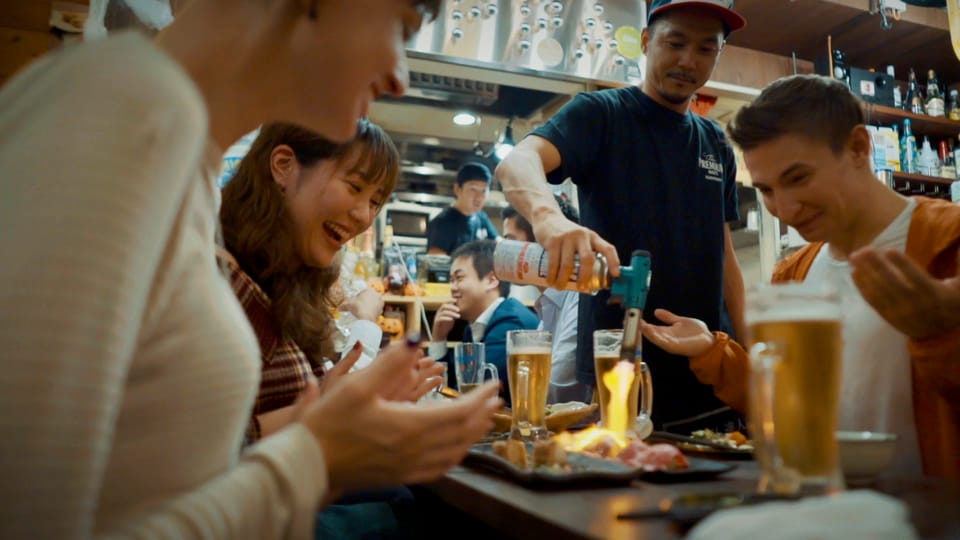
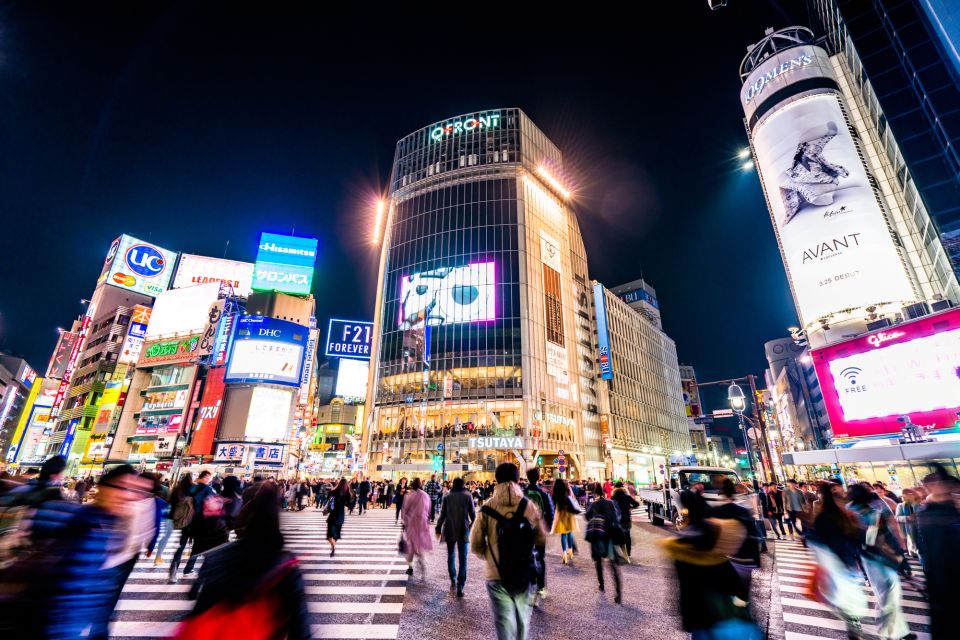
You start near one of Tokyo’s most iconic landmarks: Shibuya Crossing. The point here isn’t just to see it—it’s to see it at night with your guide in control of timing and direction. You’ll have a chance to grab photos while the crowd flows around the buildings.
This stop also works as a cultural warm-up. Shibuya Crossing can look chaotic, but it’s orderly in practice. Watching that contrast—controlled traffic choreography amid chaos—gives you a quick sense of how Tokyo nightlife can feel intense without being chaotic in the usual way.
Yokocho Izakaya Culture: Why This Indoor Alley Matters
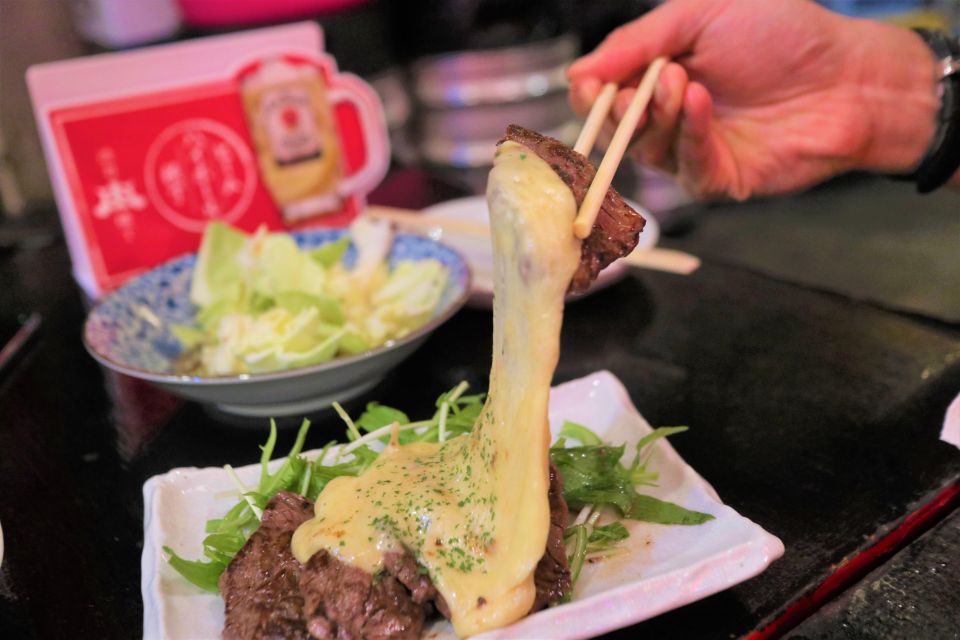
After your first area intro, you head toward a yokocho—an indoor alleyway packed with izakayas. The vibe is part street food energy, part after-work hangout. You’re surrounded by locals who are there to eat, drink, and reset after the day.
The value of doing this with a guide is simple: these places are small. Without local help, you’d probably walk past doors that look closed, too narrow, or too random. With a guide, you go where the energy is, and you’re expected—plus you get reserved seating.
Also, this is where Shibuya’s nightlife stops being a sightseeing checklist and starts feeling like real Tokyo.
Stop 1: First Venue Food and Two Drinks to Start Strong
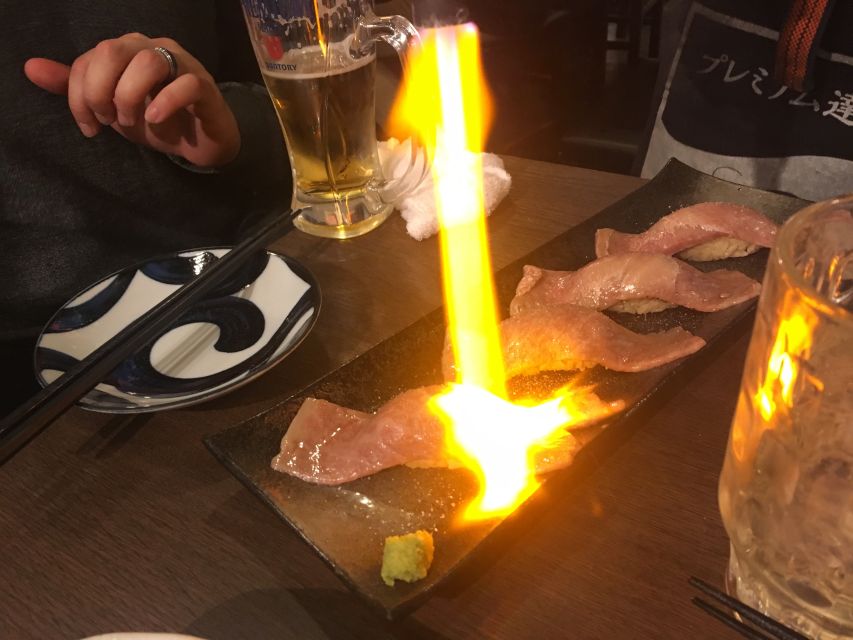
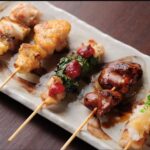
Your first substantive stop is a local restaurant setting where you’ll get a taste of Japanese beer paired with grilled delicacies. This is the part of the night that gets everyone settled—warm food, a drink in hand, and time to start talking with your group.
You’ll also have two drinks included at this first bar area, chosen from the tour’s selections. For many people, this is the sweet spot: enough alcohol to lower the nerves, but not enough to rush the conversation.
Timing-wise, you’ll spend about 50 minutes here. That’s intentional. You’re not expected to power through food like a race. It’s meant to feel like dinner, not a sip-and-run.
You can also read our reviews of more nightlife experiences in Tokyo
Stop 2: The All-You-Can-Drink Izakaya Inside the Alley
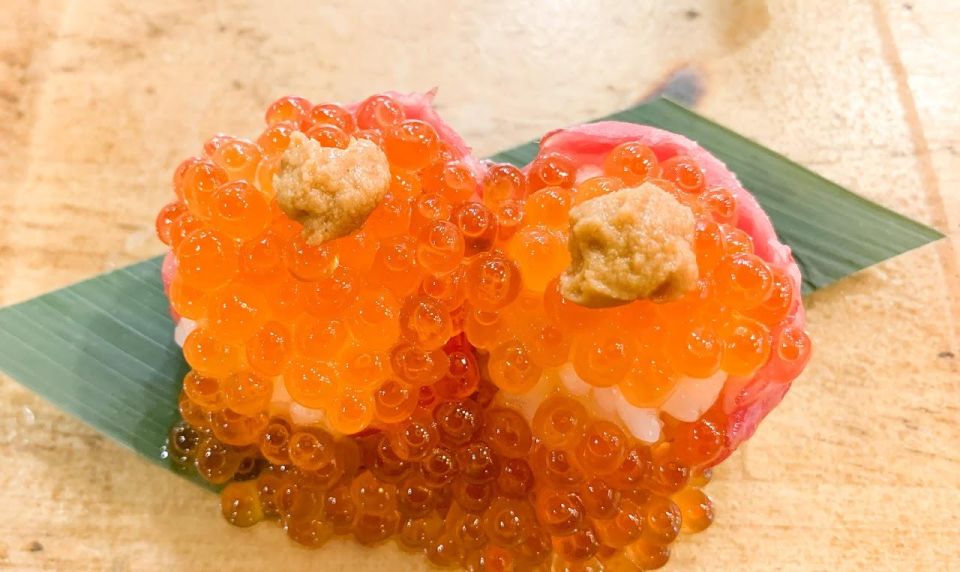
Then comes the center of gravity: the second izakaya stop, located in that cluster of indoor bars along the yokocho street. This is where you’ll have all-you-can-drink, again from tour selections.
What’s included can cover beer and sake, plus other Japanese drink options depending on what’s available in the bar’s lineup for the night. The format usually matters as much as the drinks. All-you-can-drink removes the moment-to-moment decision fatigue and keeps the group in sync.
Food-wise, you’re in small-plate territory—things meant to share. That’s one reason the reserved seating matters. These bars can be tiny, so sharing plates and chatting is the whole point. You’ll also have a full dinner component at the overall experience level, selected from the menu at included venues.
Vegetarian and vegan options are noted as available, which is great—but remember the other reality check: the tour can’t guarantee allergy-free meals or perfect accommodations for every dietary restriction.
Stop 3: Dogenzaka Energy and Your Last Drink (Plus Karaoke If You Want It)
You end up in the Dogenzaka area for the final leg. Dogenzaka is known for its nightlife pull, and this stop is where the evening often becomes the most fun.
The last stop gives you one included drink, chosen from tour selections. After that drink, the tour gives you a fork in the road: your final location is either a cozy local bar or a lively karaoke bar.
Karaoke is a classic Tokyo night move, and doing it in a guided setting removes the two biggest barriers: finding a place that fits your group size and figuring out the flow if the language isn’t your strength. If karaoke isn’t for you, the other option is a local bar that keeps things social and laid-back.
You’ll spend around 50 minutes here too, so it doesn’t feel like a rushed finish line.
The Food Details: What to Expect, and Where Surprise Happens
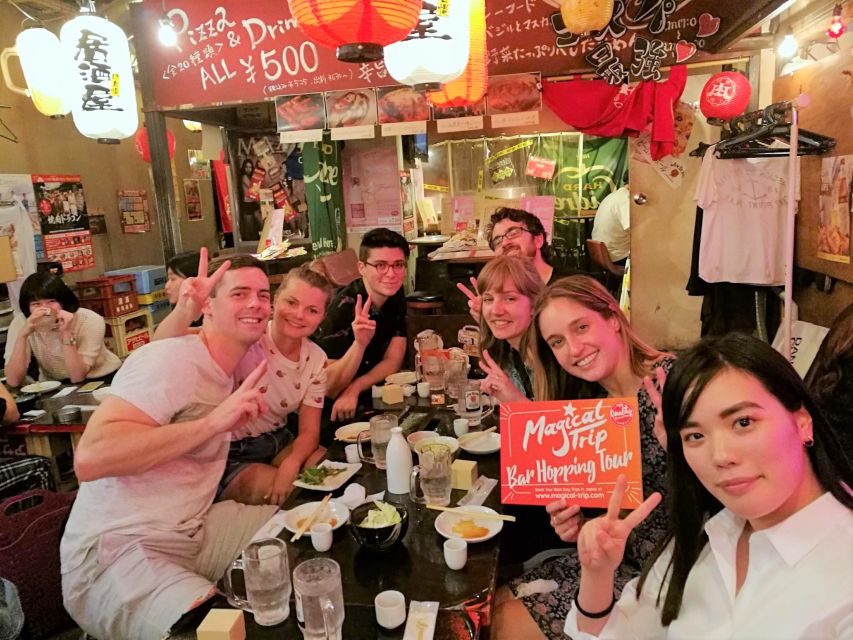
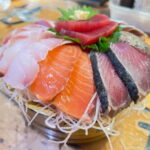
Here’s what you can count on: you’ll eat at included venues with a menu-based dinner component, and you’ll get small plates alongside drinks. You’re also pointed toward well-known Japanese flavors—sake, grilled items, and meat-forward dishes are commonly part of the lineup.
Where things can vary is the exact dish you end up with. One traveler noted that the food didn’t match the hoped-for meat style (for example, expecting melt-in-mouth Kobe-style but receiving different items like dumplings). That doesn’t mean the food is bad. It means you should treat the highlights as likely directions, not guaranteed named dishes.
In practical terms: go hungry, be flexible, and view this as a sampling night, not a precision dining menu.
Drinks Reality Check: All-You-Can-Drink Without the Guesswork
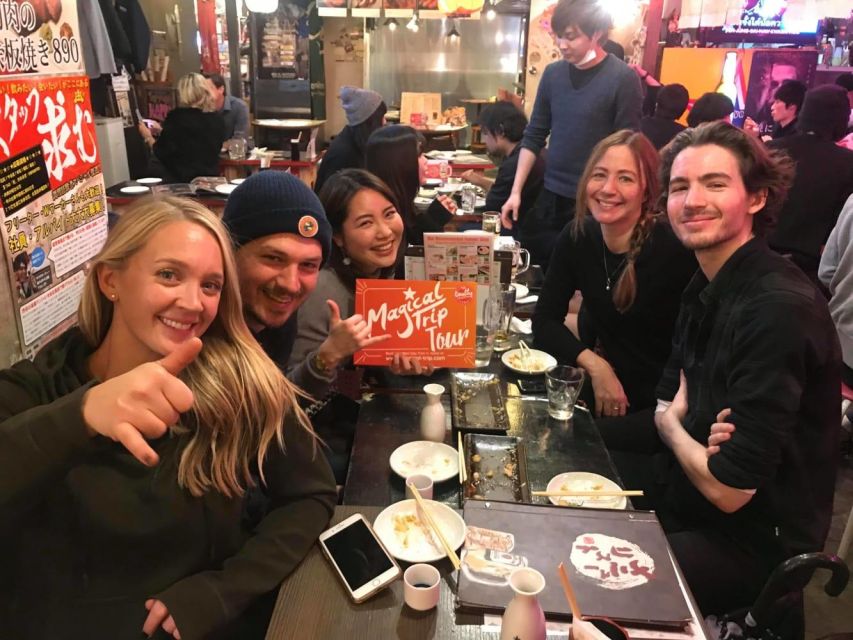
The drinks portion is the main reason this tour is priced where it is. You’re not paying only for walking and photos. You’re paying for a structured dinner-and-drink experience with included alcohol set at specific points.
- At the first stop, you get two drinks
- At the second stop, you get all-you-can-drink
- At the final stop, you get one drink
That structure matters because it controls the cost and reduces decision fatigue. Instead of doing the usual Tokyo bar math, you can relax and focus on tasting what each venue offers.
One additional practical note: some venues may allow smoking. If that affects you, pick this tour with your comfort level in mind and be ready for occasional venue-to-venue differences.
Vegan and Vegetarian Options: Helpful, But Not Perfectly Predictable
It’s good news that vegetarian/vegan menus are available. That means you won’t be stuck with only plain sides if that’s your preference.
But dietary restrictions still require a little caution. Allergy-free meals can’t be guaranteed, and substitutions may not always be possible. The best approach is to communicate clearly and have a backup mindset for what might appear on the table.
If your diet is strict for medical reasons, you’ll likely want to plan meals outside the tour too, so you aren’t relying entirely on included substitutions.
Small Group Size: Why Max 10 People Changes the Feel
A small group (limited to 10) makes the night work. You get the benefits of being social—sharing plates, chatting, learning from your guide—but you’re not trapped in a big crowd.
This also helps with table logistics. One of the most repeated praises is that the group typically doesn’t wait long to get seated. When you’re in tiny izakayas, seating delays can kill the mood. Here, the structure aims to keep you moving to the next experience without long pauses.
And there’s a social bonus: you’ll share a table with locals. That’s where the night becomes more than food and drink. It becomes a conversation. If you like meeting people and you’re okay with a little cultural awkwardness at first, this format tends to work well.
English Guide Quality: What Good Hosting Looks Like
You’ll have a live English-speaking guide. The biggest “quality marker” in the guide role is pacing: keeping the group together, getting you seated, and making sure you actually taste what you came for.
Several guides are mentioned by name in a way that signals consistent hosting styles—Lam, Masa, Yuki, Hide, and others. The common thread is not just friendliness. It’s patience and organization. That matters when you’re trying to learn while also enjoying a night out.
If you have questions about food, Japanese drink culture, or what you’re seeing in Shibuya, this is the time to ask.
Price and Value: Why $103 Can Make Sense for Shibuya
At $103 per person for about three hours, this tour isn’t a bargain in the “cheap nightlife” sense. But it can be good value because you’re buying multiple included components:
- A full dinner-level meal setup selected from menu items at included venues
- Two drinks at the first bar
- All-you-can-drink at the second bar
- A final included drink
- Guided bar hopping through multiple izakayas, including reserved seating
- Shibuya Crossing photo time
If you tried to recreate this yourself, you’d likely spend time and energy on finding places that can actually seat a group, plus you’d still end up ordering a similar amount of food and drinks. The guide and reserved seating are the “time-saving” part of the value, and the drink inclusions are the “cost control” part.
Is it worth it? If you want a first-night Shibuya experience with alcohol included, you’re paying for convenience and structure. If you hate drinking or you only want one place, you might prefer a shorter food-focused option instead.
Summer Tip: Don’t Let Humidity Spoil Your Night
Tokyo summers are hot and humid. Bring water and consider a hat. You’ll still walk between stops, and getting thirsty early can turn the whole night sour.
Also, keep an eye on your energy. You’ll be eating and drinking, so start hydrated rather than playing catch-up.
Who Should Book This Tour
I think this fits best if you:
- Want your first-night orientation in Shibuya without getting overwhelmed
- Like beer and sake and want to try more than one style across places
- Enjoy small-group social energy and table conversation
- Prefer a structured plan instead of wandering and hoping you find open seats
If you’re traveling solo, this can also be a strong choice because shared tables and guided pacing make it easier to connect.
Who Might Want to Rethink It
I’d be cautious if you:
- Need strict allergy-free guarantees (the tour can’t promise this)
- Hate the possibility of smoking in some venues
- Need wheelchair or stroller-friendly stops (some places may not be accessible)
- Expect one exact named dish every time (menu items can vary)
It’s not a flaw. It’s just how multi-venue food-and-drink experiences work. Go in flexible, and you’ll enjoy it more.
Should You Book the Shibuya Meltdown Night Tour
Book it if you want an efficient, well-paced Shibuya night built around reserved seating and included drinks, with a guide who helps you find the small places you’d skip or miss on your own. It’s also a smart move if you’d like a guided dose of Shibuya Crossing energy plus yokocho izakaya culture without spending your evening on trial-and-error.
Skip it or plan alternatives if you have serious dietary needs, strong sensitivity to smoking, or accessibility requirements that can’t flex with venue-by-venue limitations.
If your goal is a fun, social first night with food and sake that actually gets you into the mood, this tour is one of the easiest ways to make Shibuya feel like Tokyo, not just a street you walked through.
FAQ
How long is the Shibuya Meltdown Night Tour?
The tour lasts 3 hours.
What is included in the price?
You get a full dinner (enough for a full meal selected from a menu), plus drinks: 2 drinks at the first bar, all-you-can-drink at the second bar, and 1 drink at the last bar. You’ll also visit 3 local izakaya bars with a local English guide, and there are photos taken during the tour.
Is the tour all beer and sake, or are there other drink options?
The all-you-can-drink includes Japanese drinks from the tour selections. Beer and sake are specifically mentioned, along with other Japanese drink options.
Are vegetarian or vegan options available?
Vegetarian/vegan menus are available, but the tour cannot guarantee allergy-free meals or full accommodation of dietary restrictions.
Where do we meet the guide?
Meet in front of the floor-to-ceiling windows under the SHIBUYA TSUTAYA sign. It’s about a 3-minute walk from JR Shibuya Station Hachiko Exit. Your guide will be holding a red/orange Magical Trip sign.
Is karaoke included?
For the third stop, you’ll visit either a cozy local bar or a karaoke bar. Karaoke is an option as part of classic Japanese nightlife.
Do I need to cover the guide’s food or drinks?
No. Anyone over 20 can join, and you do not need to cover the guide’s food or drinks.