REVIEW · TOKYO
Tokyo: Asakusa Temple & Shrine Walking Tour with Local Guide
Book on GetYourGuide →Operated by Sunrise Adventure · Bookable on GetYourGuide
Asakusa feels different when you understand the rules of the place. This small-group walk pairs Senso-ji and Asakusa Shrine with hands-on temple rituals and smart photo stops that help you see more than the postcard crowd. One thing to plan for: it’s a real walking tour, so if you have mobility limits or tire quickly, you may find it tough.
I like that the guide keeps it friendly and practical, not just lecture mode. You can ask questions on etiquette, history, and even what to do next in Tokyo, and guides are often praised for staying relaxed—even in rain or heat—while keeping the group moving.
In This Review
- Key highlights to look for before you go
- Asakusa at human speed: what the small-group format changes
- Azumabashi Bridge to the SkyTree view: starting with the golden poop
- Tourist Information Center viewpoint: the quick way to understand Senso-ji
- Kaminarimon (Thunder Gate): the 700kg lantern story that makes it click
- Nakamise Shopping Street: snacks, souvenirs, and how to shop without stress
- Hōzōmon Gate and the side sites: the part most first-timers miss
- Senso-ji Temple: temizu, omikuji, incense smoke, and Buddhist praying steps
- Asakusa Shrine: switching gears from Buddhism to Shinto without confusion
- Photo timing, crowd management, and why the guide matters
- Price and logistics: does $30 buy real value?
- Who this Asakusa tour suits best
- Should you book this Asakusa Temple & Shrine walking tour?
- FAQ
- How long is the tour?
- How many people are in the group?
- Where do I meet the guide?
- What languages is the guide available in?
- What do I do during the tour’s rituals?
- Are there dress code rules or tattoo restrictions?
- What should I bring with me?
- Is it wheelchair accessible?
- What’s not allowed during the tour?
Key highlights to look for before you go
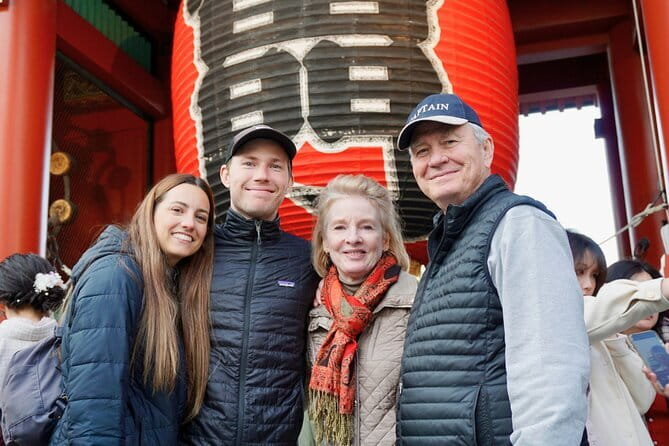
- A guide who explains Shinto and Buddhism in plain language, including how they coexist at Asakusa
- Photo stops you’d miss on your own, from riverside views to a high viewpoint over the temple area
- Hands-on ritual practice like temizu hand washing and omikuji fortune slips
- Kaminarimon’s Thunder Gate story, including what that huge red lantern means
- Small, quieter temple corners that add depth beyond the main gates
- Real guidance for praying and etiquette, so you don’t feel lost inside Senso-ji or at Asakusa Shrine
Asakusa at human speed: what the small-group format changes
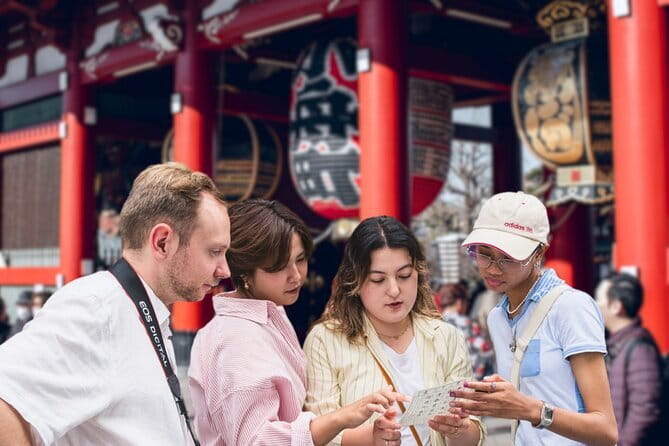
This is built for small groups, up to 8 participants. That matters in Asakusa because it’s crowded around the big sights, and you need flexibility: a quick question, a slower pause for photos, or a detour to avoid a dense knot of people.
I also like that the tour isn’t locked into one rigid script. Your guide can help with translations when you want it, and you can ask non-tour questions about Tokyo while you walk—so the tour becomes useful beyond the temple grounds.
You can also read our reviews of more walking tours in Tokyo
Azumabashi Bridge to the SkyTree view: starting with the golden poop
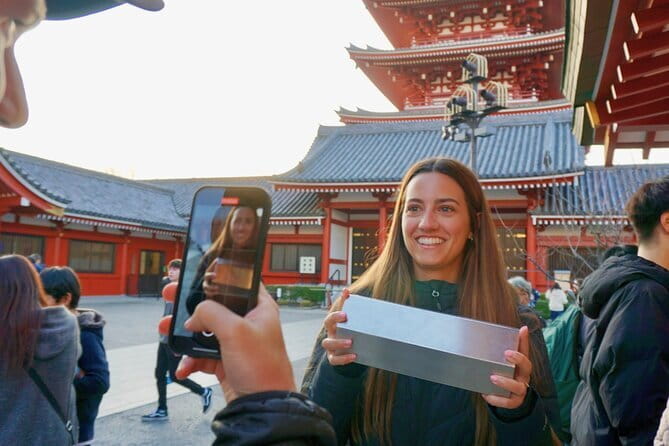
Most people arrive at Senso-ji from the main streets. This tour starts at Azumabashi Bridge, where you get riverside views and a clear look toward the Tokyo Skytree. It’s a great warm-up because you get bearings fast, and it sets the tone for a “slow Tokyo” morning where temples still feel tied to everyday life.
There’s also a fun photo target along the way: the golden poop—what locals call it. It’s the kind of quirky detail that makes the place feel human, not museum-still, and it gives you something memorable right away.
This first step is short (a quick stop and guided moment), but it makes the whole tour feel intentional instead of rushed.
Tourist Information Center viewpoint: the quick way to understand Senso-ji
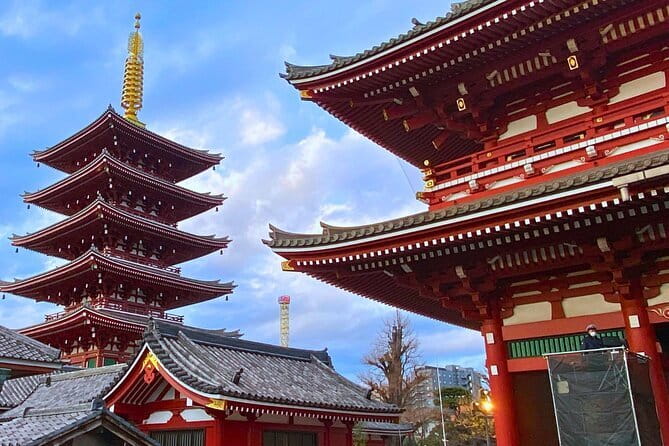
After the bridge, you head toward the Asakusa area’s main temple zone, with a photo pause at the Asakusa Culture Tourist Information Center. The key benefit here is the viewpoint: you’re not just walking toward Senso-ji—you’re getting a mental map of the whole grounds.
For first-time visitors, this is a big deal. When you later see gates, halls, and smaller shrines, you’ll understand what you’re looking at, and which direction the main flow actually goes.
The stop is brief, but it changes how you experience the rest of the walk.
Kaminarimon (Thunder Gate): the 700kg lantern story that makes it click
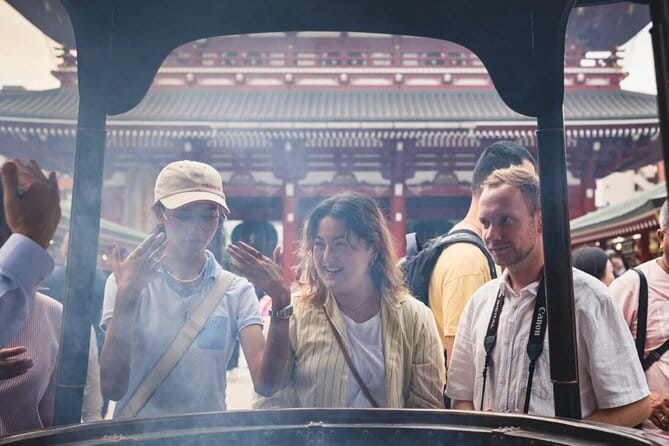
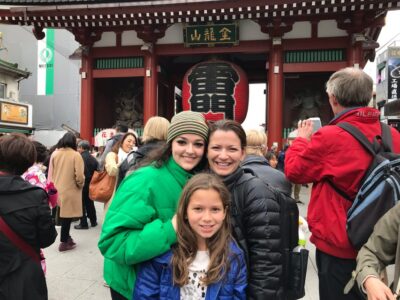
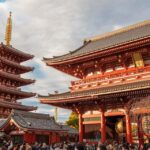
Then comes Kaminarimon, the Red Lantern Gate people instantly recognize. What makes it worth slowing down isn’t the photo—it’s the explanation behind it, including the meaning of the name Thunder Gate and the fact that the red lantern weighs 700 kilograms.
If you’ve ever stood in front of a huge landmark and thought, I guess that’s important, this kind of story flips the switch. You start looking at the details on purpose: where people line up, where to pause, and how the gate fits into the temple’s path.
Guides often do a great job turning this into a moment you’ll remember later when you’re inside.
Nakamise Shopping Street: snacks, souvenirs, and how to shop without stress
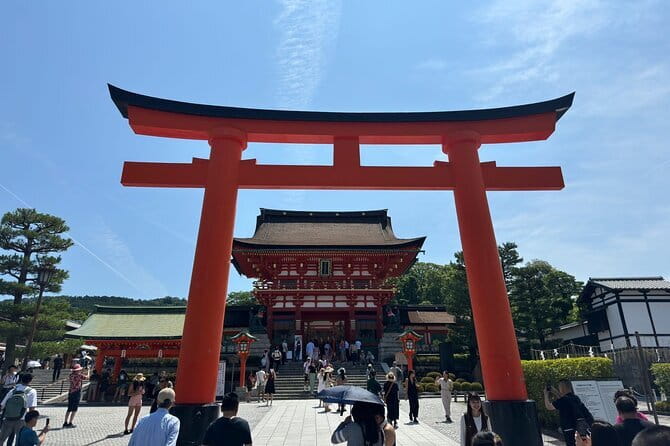
You’ll walk through Nakamise Shopping Street, one of the most famous lanes in the area. The benefit of having a local guide here is simple: you learn what the treats and souvenirs mean, and you get help finding good options rather than just browsing everything at random.
It’s also a practical zone for questions. If you want help with labels, pronunciation, or what to try first, this is the moment to ask. Even if you don’t buy much, understanding what you’re seeing makes the street more than just a souvenir conveyor.
Tip from the tour style: keep a little mental energy for later temple etiquette. Nakamise can be tempting, but the tour’s best value comes when you slow down again at the shrines.
You can also read our reviews of more guided tours in Tokyo
Hōzōmon Gate and the side sites: the part most first-timers miss
After Nakamise, you pass through Hōzōmon Gate and continue into the temple approach. This is where the tour shifts from “big famous gate” to “how the place actually works.”
The route includes stops at smaller temple sites and tucked-away areas that reveal the layered spiritual life of Japan. You learn that Asakusa isn’t one single religion working alone—it’s a real blend of traditions in daily practice.
This is also where the tour pacing helps. In busy areas, your guide can guide you to quieter corners so you’re not stuck watching over everyone’s shoulders. It doesn’t make the crowds disappear, but it makes the experience more comfortable.
Senso-ji Temple: temizu, omikuji, incense smoke, and Buddhist praying steps
Inside Senso-ji Temple, you’re not just sightseeing. You practice how to pray in a Buddhist style, and you get real instruction—things like how to bow correctly and how to move through the temple spaces appropriately.
The tour also includes ritual experiences:
- Temizu hand washing (the rinsing ritual)
- Omikuji fortune telling (the small paper fortune slips)
- Incense smoke for healing, framed in terms of physical and mental well-being
That last point matters because it’s easy to see incense as just atmosphere. Here, you get context for why incense shows up in daily ritual, and you’re encouraged to participate in the proper way.
Some guides also help with small, practical offering items. You may be taught how to be courteous with offerings, including guidance on how to hold yourself at key moments. Even if you’ve visited temples before, this kind of on-the-ground etiquette can save you from accidental awkwardness.
Time-wise, this is the longest single stop, and that’s a good sign. The guide has enough room to explain, answer questions, and let the rituals feel like part of the experience instead of a checklist.
Asakusa Shrine: switching gears from Buddhism to Shinto without confusion
A short walk later you reach Asakusa Shrine, where your guide explains how Shinto and Buddhism coexist in the same neighborhood. The goal isn’t to turn religion into a debate. It’s to help you see why people move between different ritual styles naturally.
This is where your instruction changes. You’ll practice correct behavior at shrine structures, including torii gate etiquette and the right kind of bowing. The tour emphasizes differences in the process—so you don’t carry Senso-ji assumptions into a Shinto space and feel unsure.
If you’re a first-time visitor, this part is often the real memory-maker. The names are familiar, but the “how” is what clicks: the pacing, the gestures, the flow of prayer, and what each ritual is trying to accomplish for the person doing it.
Photo timing, crowd management, and why the guide matters
This tour promises photo spots, but the better value is that the guide decides when to stop. You’ll get multiple short photo pauses, including:
- a start at Azumabashi Bridge
- a viewpoint from the tourist information center
- classic gates like Kaminarimon and Hōzōmon
- temple interior moments, where it’s easy to feel lost without guidance
In practice, this means fewer awkward moments where you’re trying to figure out where to stand while a line forms behind you. Many guides on this route are praised for being patient and for adjusting pace when it’s hot, crowded, or rainy.
If you care about photos but don’t want to spend your whole day stuck in photo-technique mode, this tour keeps you moving while still giving you time to capture the key angles.
Price and logistics: does $30 buy real value?
At $30 per person for a 2-hour guided walk in a small group, the value comes from three things you don’t get on a self-guided route:
- Ritual coaching (temizu, omikuji, incense smoke) so you do it correctly
- Clear explanations of what you’re seeing at Senso-ji vs Asakusa Shrine
- Photo and translation support, so you can actually enjoy the area instead of just reading signs
What’s not included is personal spending—snacks and souvenirs you buy on Nakamise are up to you. Also, the tour requires comfort with walking: it isn’t suitable for wheelchair users or for people with mobility impairments, and it’s not aimed at low-fitness needs.
For planning, pack comfortable shoes and water. There are vending machines nearby during the walk, but having your own water makes a hot day easier. The tour runs rain or shine, and guides are used to adjusting on tough weather days.
If you want kimono photos, there’s a kimono rental partner about 2 minutes from the meeting point, and you can ask about it during the tour setup.
And quick rules to remember: no smoking, no drones, and no alcohol or drugs during the experience.
Who this Asakusa tour suits best
This works especially well for:
- First-time Tokyo visitors who want temple etiquette explained without stress
- Couples who want something cultural but not stiff
- Families, including kids who can handle a short walking rhythm and like Q&A (guides are often praised for patience)
- Solo travelers who want a local voice and an easy way to meet Tokyo’s spiritual side
It may not be your best fit if you:
- have mobility limitations or need wheelchair access
- prefer slower, fully seated experiences with minimal walking
- get exhausted quickly in dense crowds
Still, for a standard sightseeing day, it’s a strong “culture + practical guidance” mix.
Should you book this Asakusa Temple & Shrine walking tour?
If you want Asakusa with more than gate photos, I’d book it. The standout reason is the combination of ritual participation and Shinto-vs-Buddhism explanations that make the experience feel logical, not confusing.
Choose this tour if you’ll appreciate hands-on etiquette, like practicing how to pray and what to do at temizu and omikuji. If your main goal is only to wander the streets at your own pace, you might feel boxed in by the structured stops. But if you want the best shot of understanding Asakusa in a tight window, this one is a solid pick.
FAQ
How long is the tour?
The tour lasts 2 hours.
How many people are in the group?
It’s a small group limited to 8 participants.
Where do I meet the guide?
The meeting point may vary depending on the option you book, with Burger King Asakusa Azumabashi listed as a starting location.
What languages is the guide available in?
The live guide speaks English and French.
What do I do during the tour’s rituals?
You’ll participate in temizu (hand washing), omikuji (fortune telling), and an incense smoke experience for physical and mental healing, guided by your local instructor.
Are there dress code rules or tattoo restrictions?
There is no dress code, and tattoos are welcome.
What should I bring with me?
Bring comfortable shoes and water.
Is it wheelchair accessible?
No. The tour is not suitable for people with mobility impairments or wheelchair users.
What’s not allowed during the tour?
Smoking, drones, and alcohol and drugs are not allowed.