REVIEW · TOKYO
Tokyo Castle & Imperial PalaceーShogun Walking Tour
Book on GetYourGuide →Operated by Local Guide Stars · Bookable on GetYourGuide
Tokyo’s old fort walls still run beneath your feet. This samurai-and-shogun walking tour connects the scale of Edo Castle to the Imperial Palace you see today, with stops at gates and gardens that you’d otherwise overlook. I love the small group size (up to 10) for real Q&A, and I love how the guide explains why the defenses mattered to everyday power in Edo-era Tokyo. The one possible drawback is the Imperial Palace security check plus plenty of outdoor walking, so it’s not the best choice for days when you feel like doing zero steps.
In just 2 hours, you’ll get a focused tour arc: fortress visuals, imperial tradition, and a garden moment with koi and trees that make the whole area feel lived-in. It’s English only, so if you prefer Japanese, you’ll want to plan accordingly before you arrive.
In This Review
- Key Things You’ll Notice on This Shogun Walk
- Edo Castle Still Shapes Tokyo: Start With the Big Picture
- Meeting at Kōkyo Gaien Starbucks: Easy Start, Small-Group Energy
- Sakurada Tatsumi Yagura: A Short Stop With Fort-Reality Payoff
- Ote-Mon Gate: Where Power Moves Through a Carefully Designed Entrance
- Tokyo Imperial Palace: Security Check and the 2,600-Year Context
- Ninomaru Garden: The Garden Moment That Changes the Mood
- Edo Castle Ruins: Seeing the Past Through “Traces,” Not Full Walls
- Imperial Palace East Gardens: Koi Fish, Trees From Across Japan, and Real Relax Time
- The Guide Makes It: Clear Explanations, Good Pace, and Great Q&A
- Price and Value: Why $23 Makes Sense for This Package
- Weather, Footwear, and the Imperial Security Check
- Who This Tour Is Best For (and Who Might Skip)
- Should You Book This Shogun Walking Tour?
- FAQ
- Is the tour conducted in English only?
- How long is the tour?
- What is the group size?
- Where do we meet the guide?
- Are there any rules for what I can bring?
- What’s included in the tour?
- Is the Imperial Palace area wheelchair-friendly?
Key Things You’ll Notice on This Shogun Walk
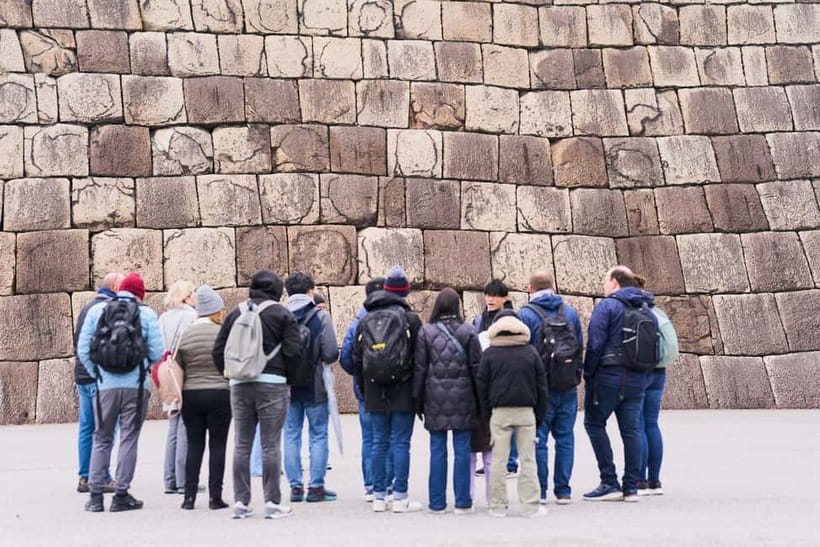
- Edo Castle’s size, explained with defense logic instead of just dates and names
- Photo stops at major gates and yagura that help you read the space like a fort layout
- The Imperial Palace East Gardens with koi fish encounters and garden details
- A miniature former-palace structure, handy for visualizing what used to stand where today’s grounds run
- Small-group flow that makes it easy to ask questions and slow down when something catches your eye
Edo Castle Still Shapes Tokyo: Start With the Big Picture
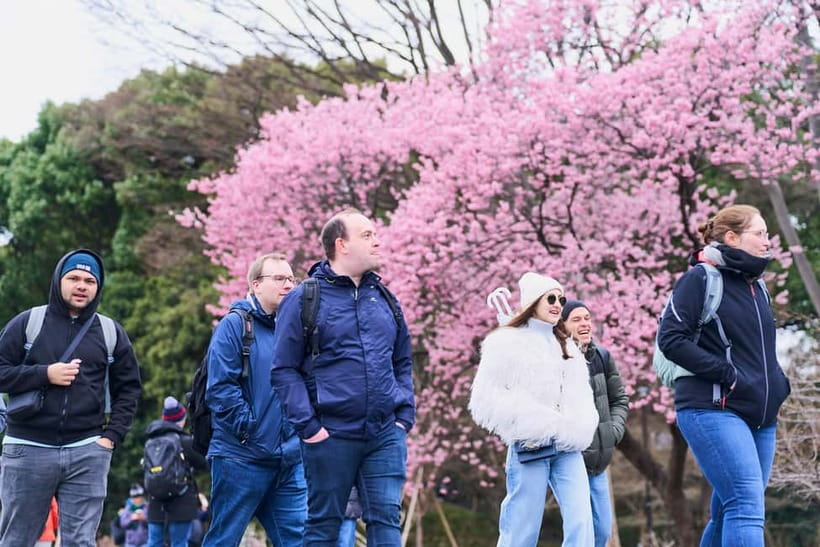
Edo Castle wasn’t just a place to live. It was a system. The tour frames it that way, starting with scale and moving into why it felt so hard to breach. Edo was the largest castle in Japan, and even now, you can find traces of its former layout around Tokyo. That’s what makes this walk more than a sightseeing loop. You’re learning how a city organized itself around one massive power center.
The guide’s style tends to work well because it’s not only “what this is.” It’s “why it worked.” When you understand how defenses were layered, you start noticing patterns in the grounds: where sightlines would matter, where movement would be slowed, and why gates weren’t treated like simple entrances.
Then the tour flips to the present. Edo Castle is now the Imperial Palace, and you get to connect those two worlds: samurai governance and Japan’s long-running imperial tradition. The imperial system is described as continuing for 2,600 years, and the point isn’t trivia. It’s how institutions survive through change in politics, architecture, and daily routines.
You can also read our reviews of more walking tours in Tokyo


Meeting at Kōkyo Gaien Starbucks: Easy Start, Small-Group Energy
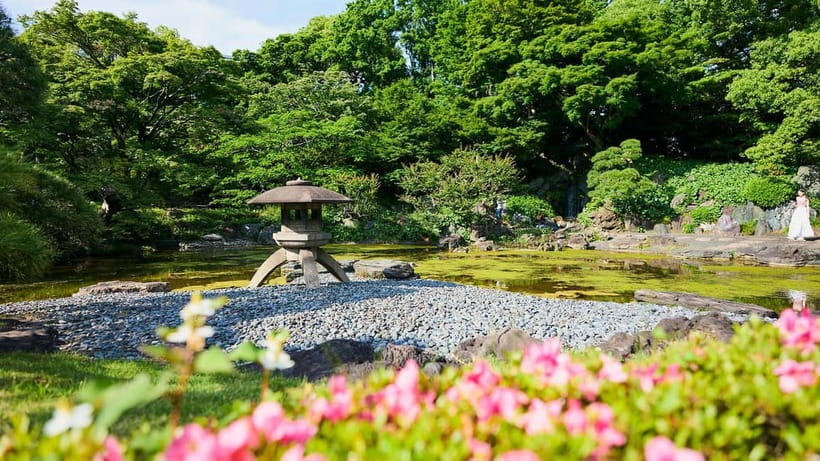
Your meeting point is simple: in front of Starbucks Coffee Kōkyo Gaien Wadakura Fountain Park Store (3-1 Kōkyo Gaien, Chiyoda City). You’ll spot the guide holding a sign that says Local Guide Stars.
This matters more than you’d think. A clear start helps you relax into the day, especially around the Imperial Palace area where streets and entrances can feel confusing. Also, because the group is limited to 10 people, you’re less likely to get lost in a crowd. You can hear the guide and you can ask follow-up questions without waiting for a break in the walking line.
The tour runs about 2 hours. That’s a good length for first-time visitors because you cover several high-impact sections without turning the day into a stamina test.
Sakurada Tatsumi Yagura: A Short Stop With Fort-Reality Payoff

You’ll begin with a quick photo-and-spotlight moment at Sakurada Tatsumi Yagura (about 5 minutes). A yagura is basically a corner watch structure. Even if you don’t know the term, the guide’s explanation helps you see it as part of a bigger security plan.
This kind of stop is useful because it sets your “lens” for the rest of the tour. Instead of seeing a building shape and moving on, you start asking: Why here? Why this angle? What would people be watching from this point?
If you love photography, this is also where you get your eyes adjusted to the garden-and-stone-wall textures of the area. You’ll be standing where the ground itself hints at old fort logic.
Ote-Mon Gate: Where Power Moves Through a Carefully Designed Entrance
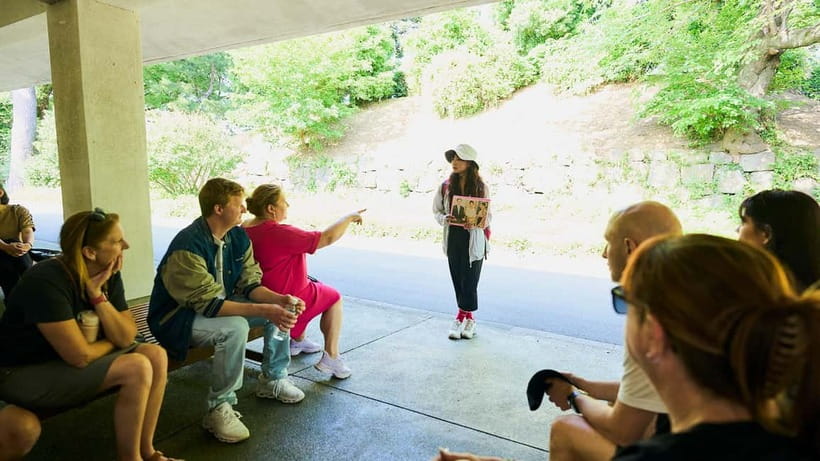
Next comes Ote-Mon Gate (about 15 minutes). Gates in Edo-era planning weren’t just ceremonial. They were choke points and control points. The guide uses the gate to explain how Edo Castle functioned as an operating fortress, not just a grand backdrop for rulers.
You’ll likely notice that the tour spends real time at places like this because they teach you how to “read” the space. Once you learn the idea of layered defenses, every gate, wall, and moat section becomes a clue. The Ote-Mon stop is where that learning starts clicking.
Practical note: this is a photo stop, but it’s also a listening stop. If you treat it like a quick snapshot, you’ll miss the best part—how the gate’s position fits the overall defensive strategy.
Tokyo Imperial Palace: Security Check and the 2,600-Year Context
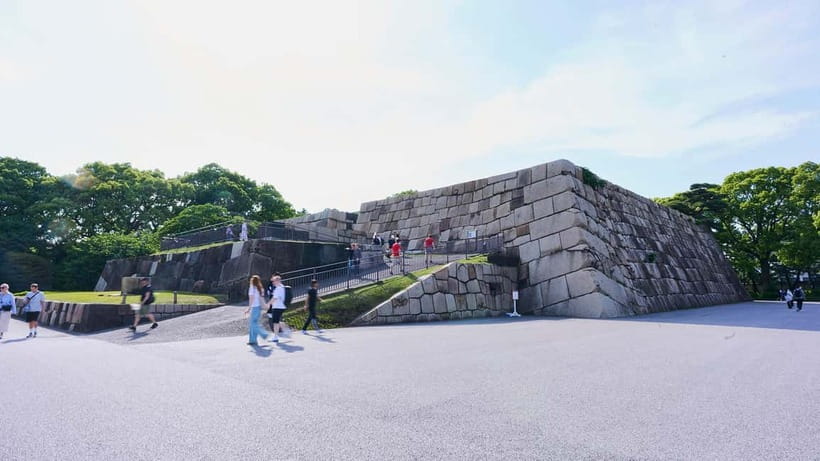
The heart of the tour is a visit around Tokyo Imperial Palace (photo stop, visit, guided tour; about 20 minutes). This is where the “shogun vs. emperor” storyline turns from concept into something you can walk through.
Before you go in, know that there is a security check. Keep your items simple. The tour guidance specifically says don’t bring knives or alcohol. If you’re carrying a lot of gear, it’s smart to pack light. This prevents a slow-down at the check and keeps your momentum.
Once inside the grounds, you’ll be looking at today’s Imperial Palace setting while the guide continuously connects it back to Edo Castle. The imperial system is framed as a tradition lasting 2,600 years. The guide’s job is to help you understand how that kind of continuity can survive political shifts—by adapting roles and maintaining symbolic presence even as power structures change.
One more useful point: photography is encouraged. So if you’re the type who likes to document architecture and gardens, bring your camera and plan to use it as you learn the story behind each view.





Ninomaru Garden: The Garden Moment That Changes the Mood
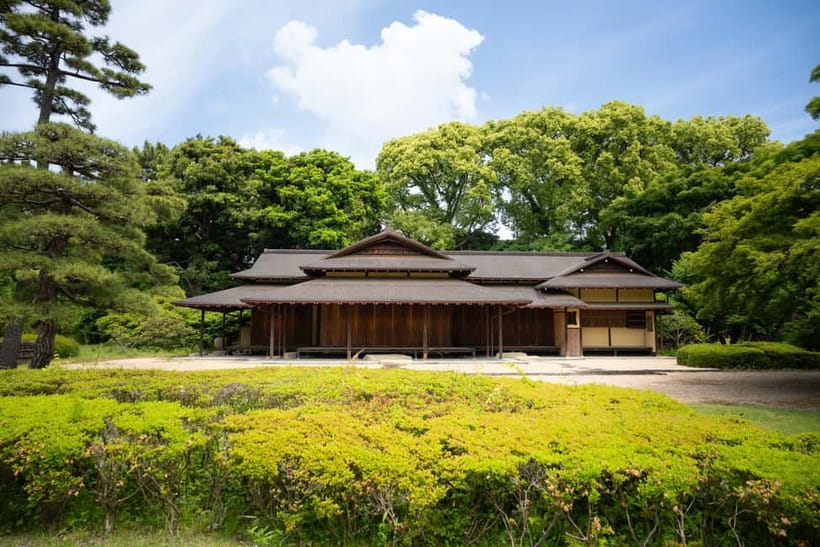
After the fortress and palace segments, you get a calmer scene at Ninomaru Garden (about 15 minutes). This is where the tour’s tone softens without stopping being educational.
The listing describes this area as a Japanese garden admired by the Emperor. Even if you don’t know garden terminology, you’ll understand the idea: gardens here aren’t random decoration. They’re planned spaces that reflect taste, control, and attention to seasonal beauty. The guide helps you look at details you might otherwise pass by.
This stop also makes a nice contrast to earlier defense-focused explanations. Edo Castle might be about barriers and control, but the imperial grounds show another kind of power—taste, order, and careful stewardship of nature.
If it’s a seasonal day, you’ll also get more color and better photo opportunities. The tour keeps the pace light here, so you can stop, look, and ask questions without feeling rushed.
Edo Castle Ruins: Seeing the Past Through “Traces,” Not Full Walls
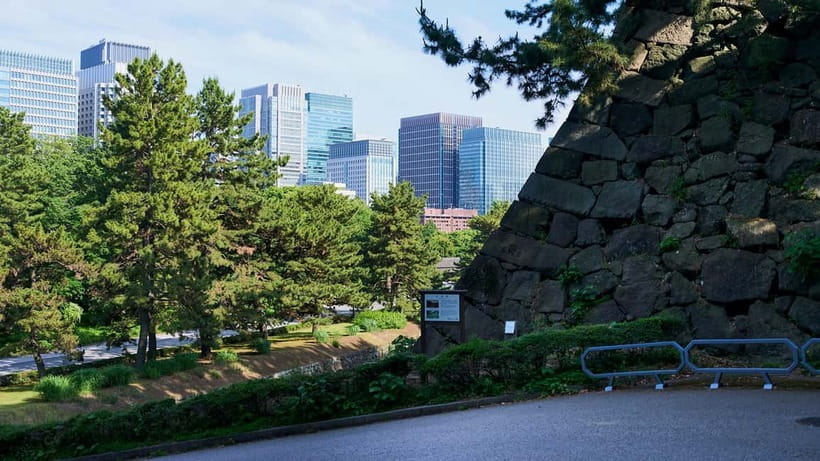
A short but important segment follows at Edo Castle Ruins (about 10 minutes). This part works because it trains your imagination. You won’t necessarily see a complete reconstruction of everything that once stood here. Instead, you see traces—stonework logic, spatial hints, and the way moats and gates shaped movement.
The guide highlights why Edo Castle’s defenses made it nearly impenetrable. That phrase can sound dramatic, but in this setting it becomes practical. You start understanding that “impenetrable” was created by design choices: layered approaches, controlled access points, and barriers that slow attackers down.
This is also one of the best moments to connect what you’ve seen earlier to what you’re about to see next. By the time you reach this stop, you should be thinking in layers: gate to path, path to barrier, barrier to view.
Imperial Palace East Gardens: Koi Fish, Trees From Across Japan, and Real Relax Time
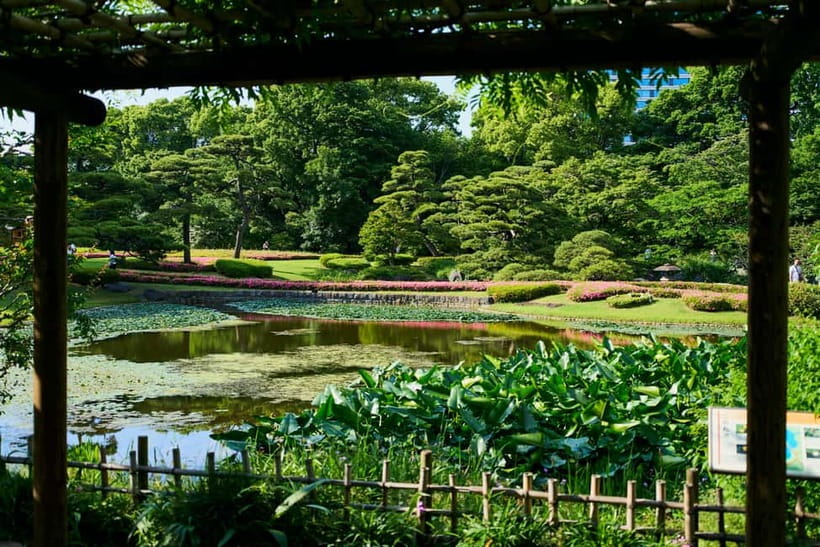
The final stretch is Imperial Palace East Gardens (about 20 minutes), including photo time, visit, and a guided walk through the grounds. This section is where the tour earns its calm reputation.
The tour includes encounters with special koi fish and diverse trees from across Japan. That detail is more than “cute animals.” Koi in a palace garden setting reinforces the idea of curated nature—controlled water, planned habitats, and a sense of elegance that matches the imperial setting.
You’ll also get panoramic views in this segment, plus seasonal gardens and ancient stone walls. Those are the kinds of visuals that make you stop automatically with your phone or camera. But the guide’s role is what makes them meaningful. You’re not just taking photos; you’re learning what you’re looking at and why it belongs in this story.
There’s also a mention of viewing a miniature structure of the former palace. I love this kind of stop because it gives your brain a “map.” When you later look at the gardens and gates, you can better imagine how the original palace layout connected everything.
The Guide Makes It: Clear Explanations, Good Pace, and Great Q&A
A lot of history tours fail because they rush. This one doesn’t feel rushed. With a small group capped at 10 people, the guide can keep a smooth pace while answering questions as they come up.
The feedback pattern on guides is strongly positive. Names like Anju, Yuuka, Tomo, Yuki, Fuma, and Mai show up repeatedly, and the consistent theme is that they explain structures and functions clearly and are willing to answer questions. More than that, some guides are noted for helping people spot small details you’d walk past—like how a particular gate section fits into the overall defensive story.
Even when you’re not asking questions, this matters. You’ll learn faster when you can hear the explanation and when the pace gives you time to look.
If you want a walk that’s not only facts but also storytelling, this is the right format. The setting makes it easy to imagine the Edo period and how the shogun’s world differed from the imperial era you see today.
Price and Value: Why $23 Makes Sense for This Package
At $23 per person for about 2 hours, this tour is priced like a budget-friendly history ticket—especially for central Tokyo.
Here’s the value logic: you’re not paying for a “generic walking tour.” You’re paying for access to guided context in some of Tokyo’s most meaningful grounds. The package includes English guidance plus time in the Imperial Palace grounds and eastern garden. It also includes specific guided elements like the miniature structure and the koi-and-tree garden encounters.
Does $23 cover everything like a museum admission? The data you provided doesn’t claim that. But what you do get is a structured, story-driven visit to multiple key points in one sweep, with a small group. That combination tends to be what makes the cost feel fair: you save time, you learn more per minute, and you avoid the “I saw it, but I don’t know what I’m looking at” problem.
Weather, Footwear, and the Imperial Security Check
Most of the walk is outdoors, so dress for the day you’re actually getting. Plan for sun, wind, rain, or cold, and bring the usual Tokyo basics (water, something to keep your hair from turning into a satellite dish if it’s breezy).
Also keep the security rules in mind. The tour asks you not to bring knives or alcohol. It’s a small detail, but it can ruin your morning if you show up unprepared.
Who This Tour Is Best For (and Who Might Skip)
This works best if you:
- like samurai and shogun-era history and want it explained in plain language
- enjoy structured walking tours with photo stops and short guided segments
- are curious about how Edo Castle connects to the Imperial Palace today
You might consider another option if you:
- want to spend most of your time inside buildings rather than outdoors in gardens and grounds
- prefer tours with Japanese language support (this one is English only)
- don’t like security checks or aren’t comfortable with outdoor walking
Should You Book This Shogun Walking Tour?
I’d book it if you want Tokyo history with real spatial context. The Edo Castle-to-Imperial Palace connection is the main reason this tour feels worthwhile. You’re not just visiting famous grounds—you’re learning how they were designed, why they matter, and how the story changes from samurai governance to imperial continuity.
Book it soon if you’re traveling in peak season because the group is intentionally small and it’s English only. And if you’re the kind of traveler who enjoys getting one great guide explanation before you move on to your next stop, this is a strong use of a couple of hours in the center of Tokyo.
FAQ
Is the tour conducted in English only?
Yes. The tour is English only, and Japanese language support is not available.
How long is the tour?
The tour lasts about 2 hours.
What is the group size?
The tour is a small group limited to up to 10 participants.
Where do we meet the guide?
Meet in front of Starbucks Coffee Kōkyo Gaien Wadakura Fountain Park Store (3-1 Kōkyo Gaien, Chiyoda City, Tokyo). The guide will hold a sign that says Local Guide Stars.
Are there any rules for what I can bring?
There is a security check when entering the Imperial Palace. Please do not bring knives or alcohol.
What’s included in the tour?
Included are an English guide, visits to the Imperial Palace grounds and the eastern garden, historical insights about the samurai and the development of Tokyo, a viewing of a miniature structure of the former palace, and encounters with koi fish and diverse trees from across Japan.
Is the Imperial Palace area wheelchair-friendly?
Wheelchairs are available and can be used within the Imperial Palace grounds, but there are some slopes and areas where you may need to walk or go down on foot.