REVIEW · TOKYO
Tokyo: Dark Side of Tokyo Shinjuku Red Light Walking Tour
Book on GetYourGuide →Operated by Localized Walking & Food Tours · Bookable on GetYourGuide
Tokyo turns darker after Shinjuku lights. This 2-hour walking tour focuses on the after-dark side of Shinjuku, with a route through Kabukicho and LGBTQ-friendly nightlife streets, plus stops that explain how the district changed over time. I like that it mixes big visual scenes with small, real details you would miss on your own.
Two things I particularly like are the food and drink recommendations and the guide’s way of turning street corners into clear context. In multiple bookings, guides like Dani, Gray, Loc, Huy, and Polina are described as funny and engaging, and the group often ends up with concrete ideas for what to eat right after the walk. One consideration: the meeting point is inside a maze of Shinjuku Station, and the operator says they do not wait for late arrivals.
In This Review
- Quick hits before you step into Shinjuku
- Tokyo’s Shinjuku after dark: what this tour is really about
- Price and value: why $29 feels fair for a 2-hour guide
- Meeting point reality check: Shinjuku Station can swallow you
- The first stretch: 10 minutes that set up your night vision
- Omoide Yokocho: the narrow alley feel that makes Tokyo hit different
- Kabukicho: neon intensity plus the story behind the reputation
- Golden Gai: tiny bars, personal vibe, and street-level character
- Hanazono Shrine: a quiet reset inside the neon zone
- 2 Chome: learning the neighborhood rhythm before you go off on your own
- Food and drink recommendations: the part you can use immediately
- Guides: what makes the walk feel fun instead of just informational
- Who should book this tour, and who might prefer a different night
- Should you book Dark Side of Tokyo: Shinjuku Red Light Walking Tour
- FAQ
- How long is the Shinjuku dark side walking tour?
- How much does the Tokyo: Dark Side of Tokyo Shinjuku Red Light Walking Tour cost?
- Where do I meet the guide?
- What stops are included during the walk?
- What languages are the guides available in?
- Is alcohol allowed on the tour?
- Is this tour suitable for children?
- Is the tour refundable if I need to cancel?
- Can I reserve without paying right away?
Quick hits before you step into Shinjuku
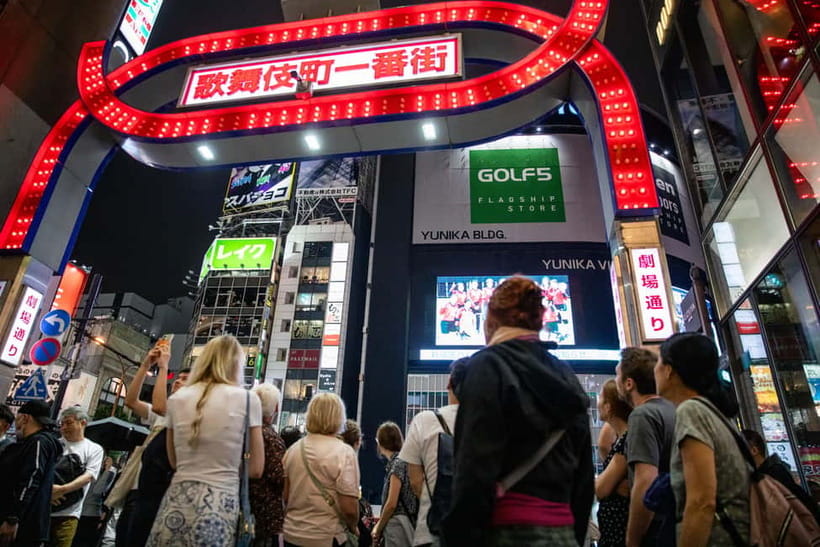
- Neon + stories: You’ll connect the lights you see to how Kabukicho evolved from a red-light area into a multi-purpose nightlife zone.
- Stop-by-stop variety: Alleys like Omoide Yokocho, tiny-bar streets in Golden Gai, then a quieter reset at Hanazono Shrine.
- Practical guidance: Guides point out where to go next for food and drinks, so the tour pays off immediately.
- English or Spanish: Live guiding is offered in Spanish and English.
- Respectful rules: Alcohol and drugs aren’t allowed on the tour.
- Time matters: You’ll want to find the meeting point fast and start on time.
Tokyo’s Shinjuku after dark: what this tour is really about
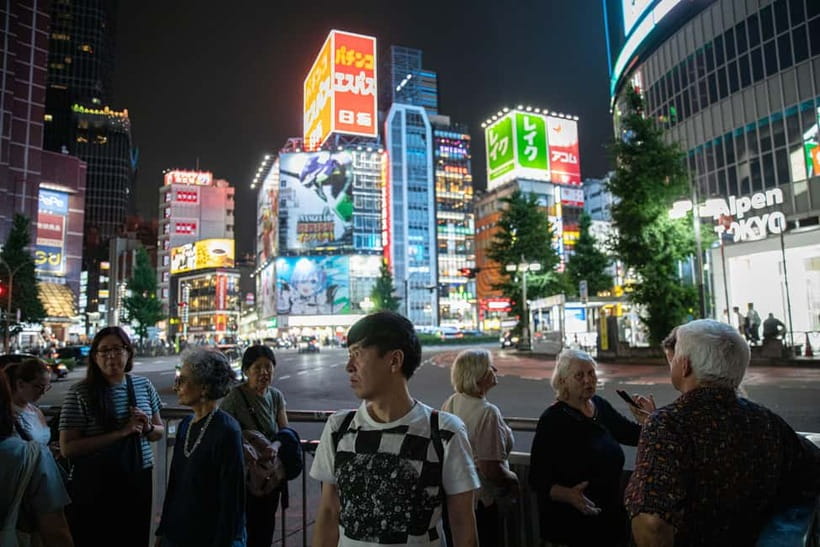
Shinjuku is one of those places where Tokyo feels extra loud, extra tall, and extra in-your-face. But the point here isn’t just to stare at neon screens. You’re also learning how the district functions at night—where people go for quick meals, where they go to socialize, and how nightlife districts develop their own logic.
What makes this tour worth your time is that it gives you a mental map. Once you understand where the major pockets are—Omoide Yokocho, Kabukicho, Golden Gai, and the nearby 2 Chome area—you’ll have an easier time returning on your own without wandering in circles. Think of it as night-navigation plus cultural context.
And yes, it includes the darker reputation of the area, but it keeps things grounded. The tour also uses the contrast between crowded streets and small pockets of calm to help you read what you’re seeing.
You can also read our reviews of more walking tours in Tokyo

Price and value: why $29 feels fair for a 2-hour guide
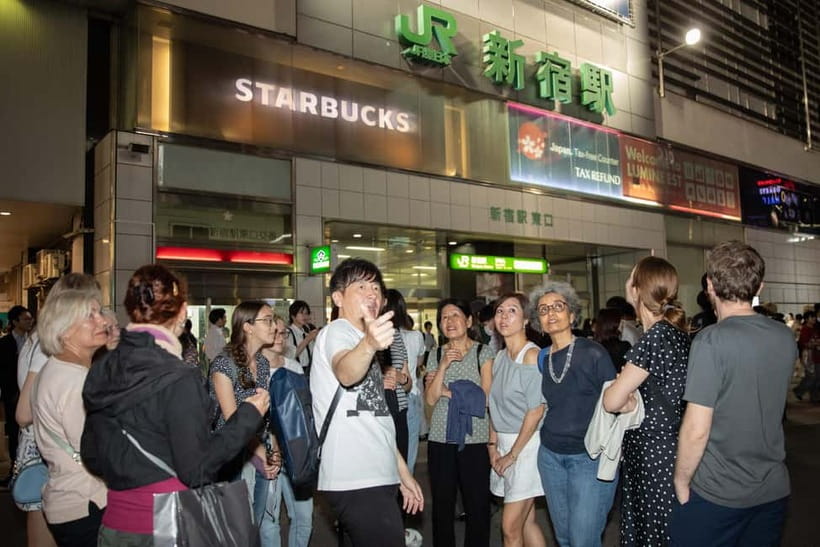
At $29 per person for about 2 hours with a live guide, you’re paying for orientation, context, and a guided route that gets you from one nightlife zone to the next efficiently. You’re not paying for entry tickets or scheduled tastings based on the info provided—this is primarily a guided walk and information session.
For me, the value test is simple: will the guide help you get more out of Shinjuku than you would with just your own phone and a loose plan? Based on the feedback patterns, the answer is usually yes. Many guests describe guides as not only informative but also generous with recommendations for places to eat and drink nearby—so the time doesn’t end when the tour ends.
It’s also a low-commitment way to sample one of Tokyo’s most complex neighborhoods on your first nights, before you decide where you want to spend extra time.
Meeting point reality check: Shinjuku Station can swallow you
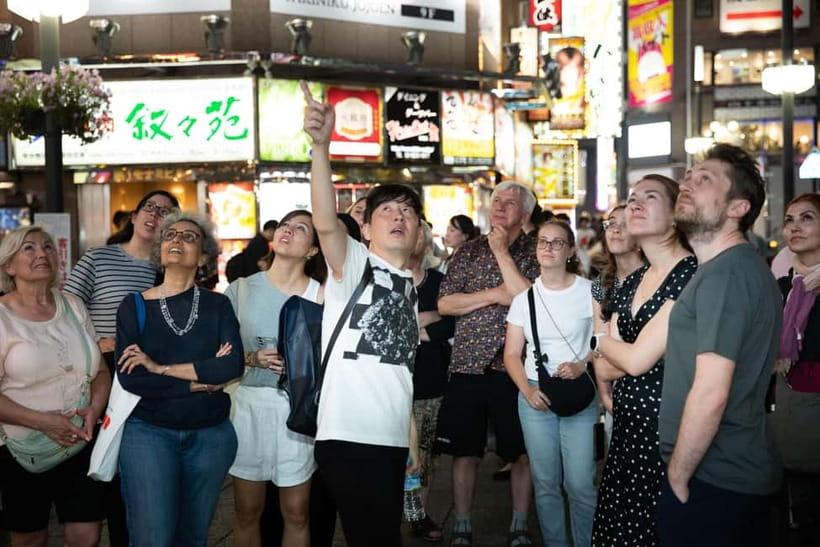
Shinjuku Station is huge, and the meeting point options include places like the Shinjuku Station East Exit Police Box and the Shinjuku Tourist Information Center. The operator notes that the meeting point can be difficult to find on a first day in Tokyo, and that they do not wait for late arrivals.
My practical advice: arrive a few minutes early and do a quick mental checklist before you set off—your exit, your landmark, and a backup path. If you’re already flustered by train crowds, this is not the time to rely on last-minute GPS accuracy.
Also, if you’re traveling with friends, agree on how you’ll reunite in case someone gets stuck behind a platform crowd. This tour is a walking route through busy areas, so being late can easily ruin your start.
The first stretch: 10 minutes that set up your night vision
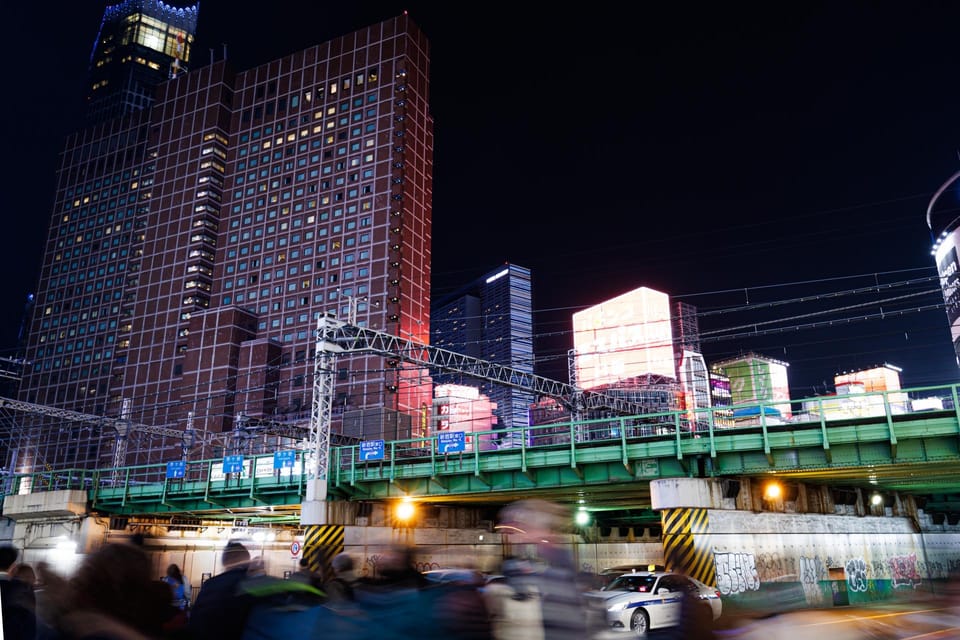
The tour begins with a brief guided orientation (about 10 minutes) near the starting point. Those minutes matter more than they sound. In a place like Shinjuku, it’s easy to feel overwhelmed, and orientation helps you spot what’s relevant: where the entertainment district begins, how the streets feed into each other, and what to look for as you move toward the main areas.
This early stage is also where you can ask baseline questions. If you’re unsure about etiquette around nightlife neighborhoods, this is the moment to check. The best guides will steer you toward simple, respectful behavior that keeps you comfortable as the crowds thicken.
Omoide Yokocho: the narrow alley feel that makes Tokyo hit different
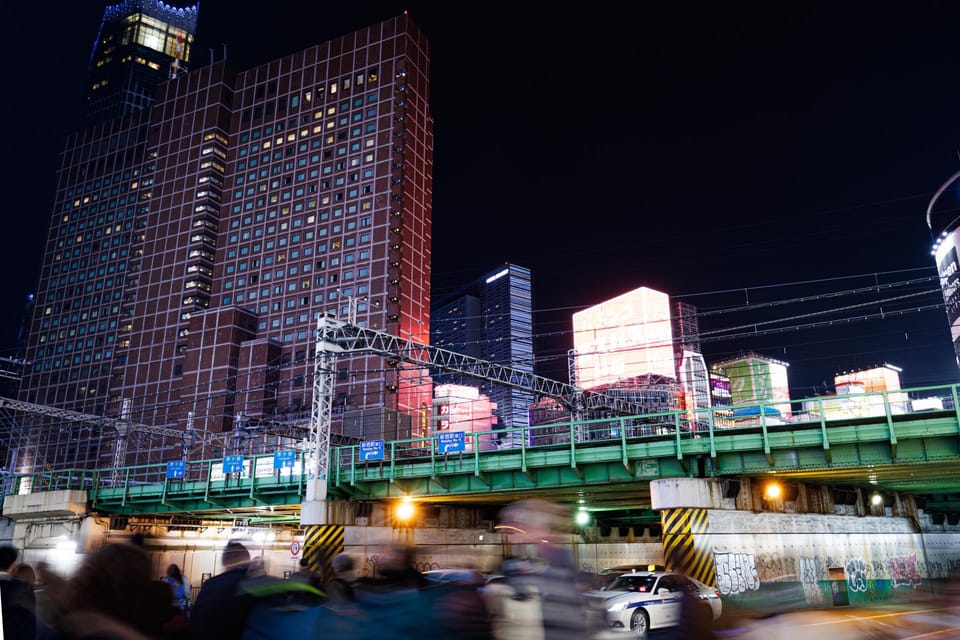
Next you’ll head to Omoide Yokocho for about 20 minutes. This is the kind of place where Tokyo’s modern energy and older alley traditions feel like they occupy the same frame. It’s not about big architecture here. It’s about small lanes, a sense of place, and a street-food and snack culture that’s easy to understand once you’re standing in it.
What you’ll likely appreciate in this stop is how it works as a social shortcut. People come here to eat quickly, wander between options, and keep the night moving without the formality of a full sit-down meal. Even if you don’t plan to order right away, the stop gives you the feel for how nightlife dining is structured.
A drawback to keep in mind: alleys can feel tight when crowds peak. If you’re uncomfortable in narrow spaces, stick close to your guide and move when the group moves.


Kabukicho: neon intensity plus the story behind the reputation
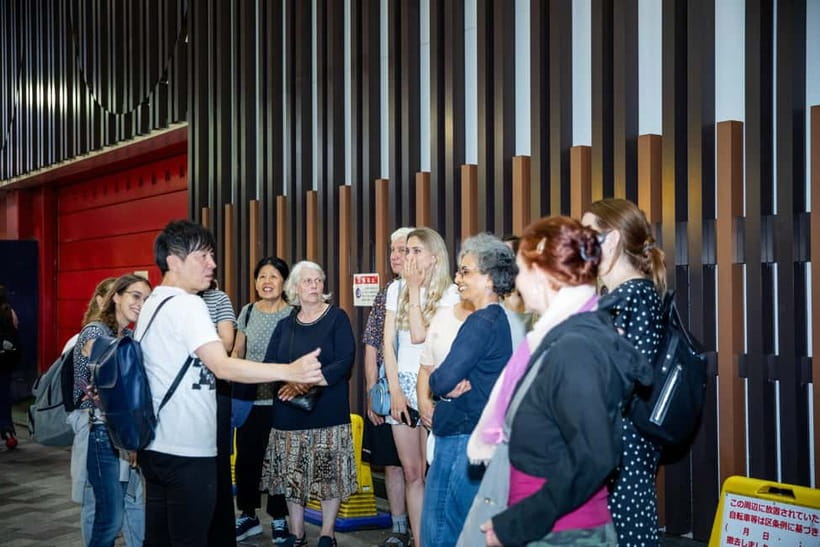
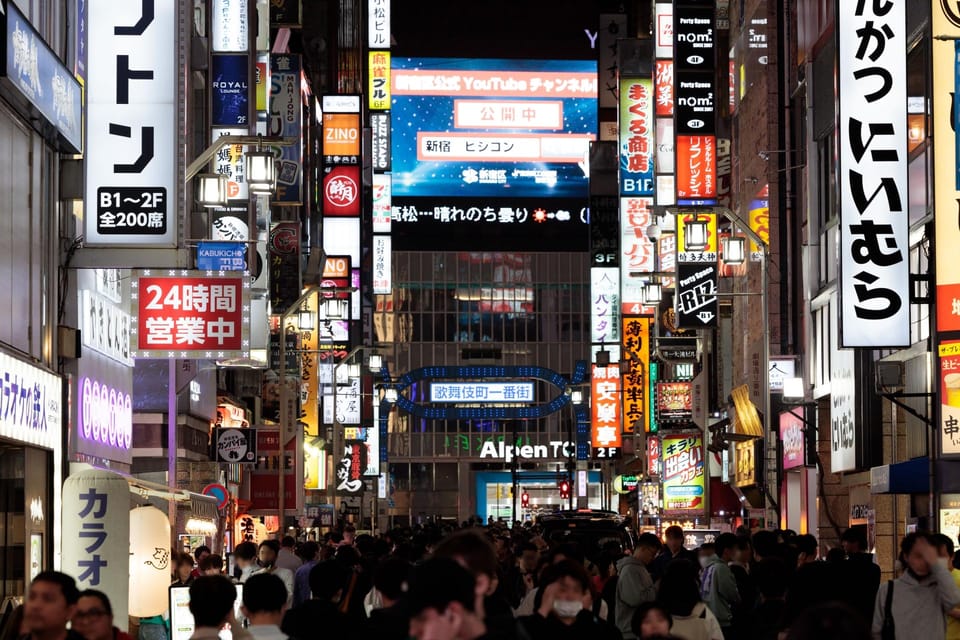
You’ll spend about 40 minutes in Kabukicho, Shinjuku’s main entertainment district. This is the core of the tour, the place you’ll remember later when you think about Tokyo at night.
Kabukicho is where you’ll see the visual extremes: bright signs, multi-story venues, and street scenes that make you feel like you’ve stepped into a separate city operating after dark. But the tour’s real trick is that it doesn’t treat Kabukicho as just a photo stop. You also learn about its cultural significance and how it shifted over the years—from roots as a red-light district to its current mix of entertainment.
Why that matters to you: if you just view the district as entertainment, you might miss why certain areas look the way they do today. The historical context helps you make sense of the streets rather than treating them like random chaos.
One more practical note: Kabukicho is busy. Plan for noise and crowds. Keep your attention on your guide, and use your breaks to read signage, not to drift off.
Golden Gai: tiny bars, personal vibe, and street-level character
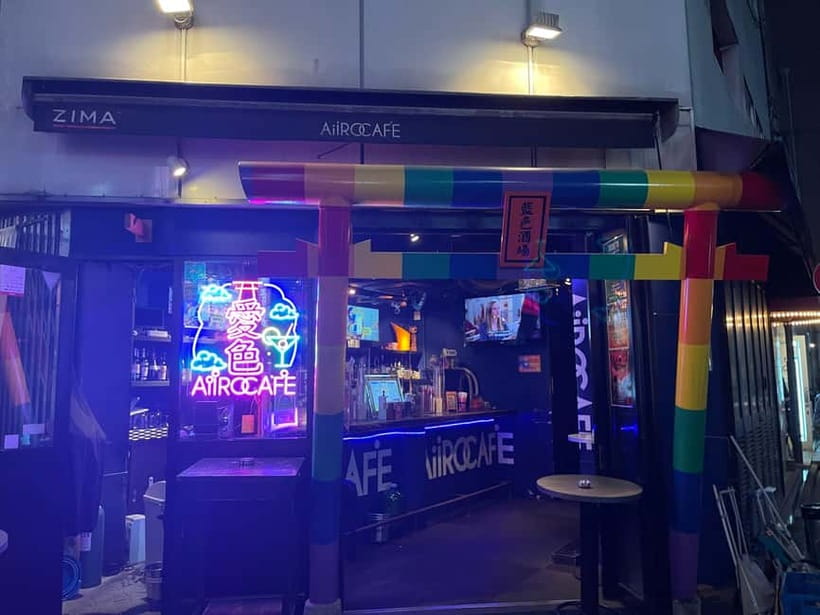
After Kabukicho, you’ll go to Golden Gai for about 20 minutes. This is where the tour shifts from big district energy to something more intimate. Golden Gai is known for small bar spaces packed close together, and you’ll see how the neighborhood layout shapes the whole experience—people socialize in tight spots, and the street becomes part of the entertainment.
This stop is valuable because it teaches you how nightlife districts can be organized at different scales. Kabukicho is broad and loud; Golden Gai is smaller, more textured, and easier to understand once you see how the street pattern supports that style of going-out.
If you’re the type who enjoys people-watching and small details, Golden Gai will likely feel like the tour’s most memorable “walking” moment. If you prefer wide open spaces and quick exits, take it in with the group and don’t linger at bottlenecks.
Hanazono Shrine: a quiet reset inside the neon zone
Then comes a change of pace: about 20 minutes at Hanazono Shrine. This stop is a good reminder that nightlife districts don’t exist in isolation. Even in the middle of entertainment-heavy Shinjuku, you still get a spiritual and cultural pause.
For you, it’s more than a break from crowds. It’s a chance to notice how Japanese urban spaces often layer functions. You can be in a loud entertainment area and still have a shrine nearby, and that contrast makes the surrounding streets feel even more real.
Practical tip: treat it like a calm moment in the middle of a loud night. Slow down your walking pace, give your eyes a rest, and take in the change.
2 Chome: learning the neighborhood rhythm before you go off on your own
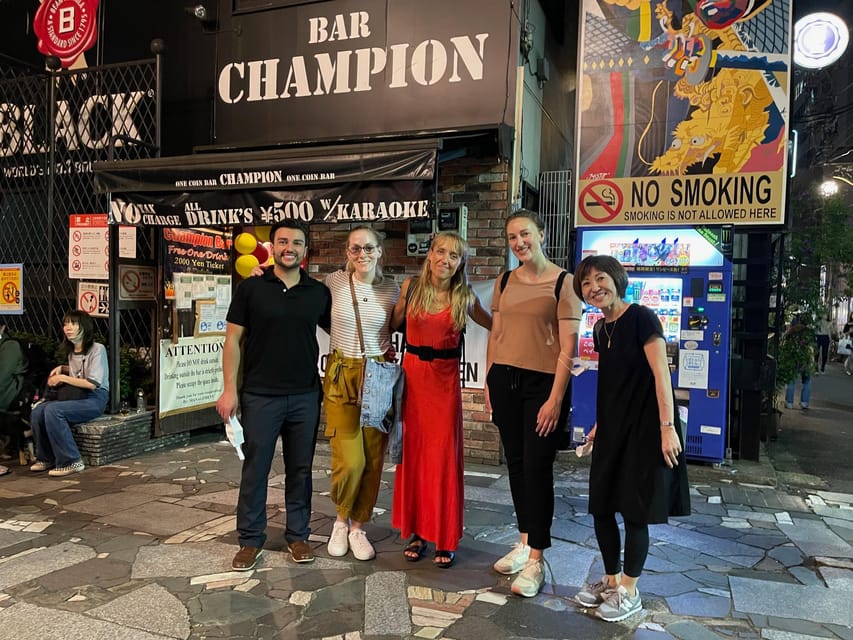
The tour also includes time in 2 Chome (about 20 minutes). This is where the tour helps you connect dots between the big nightlife icons and the everyday streets around them. Instead of only showing the headline spots, you’re shown how the district flows into neighboring streets and how entertainment spills into the surrounding blocks.
I like this kind of stop because it helps you plan your next move. When you know what’s nearby—and what kind of nightlife each area seems to support—you can choose where to return later, when you’re tired, hungry, or just want a specific vibe.
You’ll also end with drop-off points in areas like Shinjuku Golden-Gai and 3 Chome, which is smart. It positions you close to places you already learned how to read.
Food and drink recommendations: the part you can use immediately
Even though the tour itself doesn’t center on scheduled tastings, the guide focus on where to eat and drink is a big part of why guests rate it so highly. Several guides are specifically mentioned for offering good food recommendations after the walk.
For example, guests point out that recommendations led them to places like an okonomiyaki restaurant right after the tour, plus ramen spots that hit the post-walk craving. That matches what you want from a nightlife tour: useful next steps when you’re still in the district.
My advice for you: take notes mentally on any recommendation that includes a clear landmark or street direction. If you forget the name later, a “near this street corner” memory cue is often enough in Shinjuku.
One more rule you should keep in mind: alcohol and drugs aren’t allowed during the tour. That doesn’t stop you from enjoying the vibe—it just keeps the experience structured.
Guides: what makes the walk feel fun instead of just informational
The guides are often where this tour wins. Names that show up across bookings include Dani, Gray, Loc, Huy, Polina, Paulina, Daichi, Shota, Uta, and Danny. Common themes: they tell stories that make the district understandable, they keep the mood light with humor, and they answer questions in a way that feels personal rather than scripted.
Why that matters: a nightlife district can feel judgment-heavy if you only rely on stereotypes. A good guide helps you see patterns—where people go, what the spaces are for, and how the district’s identity developed.
If you’re trying to make the most of your two hours, come with 2–3 question ideas. For example:
- Where should I go for a quick dinner versus a longer night
- What areas are best if I’m worried about crowds
- What’s the difference between the big entertainment zones and the small bar streets
Who should book this tour, and who might prefer a different night
This experience is designed for adults: it’s not suitable for children under 18. If you’re traveling with teens, plan another activity.
It also fits best if you want a guided orientation to Shinjuku at night, with context about culture and nightlife behavior, and you’re comfortable walking through entertainment districts. If you feel uneasy about the reputations that come with red-light history, you may still appreciate the tour if you treat it as education and keep close to your guide.
On the plus side, multiple bookings mention the group size can be small—one guest notes a group of around seven people. Smaller groups usually mean more chances to ask questions and a smoother walk through crowded areas.
Should you book Dark Side of Tokyo: Shinjuku Red Light Walking Tour
Book it if you want three things from your first night (or first Shinjuku evening): a guided route, clear district context, and useful food and drink leads for after the walk. At $29 for a two-hour guided experience, it’s an efficient way to turn Shinjuku from confusing into readable.
Skip it if you strongly dislike crowds, don’t like tight alley environments, or you know you’ll struggle to find the meeting point on time. In that case, pick a tour that meets somewhere easier than Shinjuku Station’s East Exit area, or plan your navigation strategy ahead of time.
If you want a night in Tokyo that mixes neon photos with real understanding of how the district works, this is a solid choice. Just be on time, stay close, and let the guide do what you hired them to do: make the streets make sense.
FAQ
How long is the Shinjuku dark side walking tour?
The tour duration is 2 hours.
How much does the Tokyo: Dark Side of Tokyo Shinjuku Red Light Walking Tour cost?
The price is $29 per person.
Where do I meet the guide?
You can start from one of two meeting points: Shinjuku Tourist Information Center (Shinjuku Station East Exit Police Box is also listed). The exact meeting point may vary depending on the option booked.
What stops are included during the walk?
The tour includes visits to Omoide Yokocho, Kabukicho, Golden Gai, Hanazono Shrine, and 2 Chome, with drop-off locations at Golden-Gai and 3 Chome.
What languages are the guides available in?
The live guide is available in Spanish and English.
Is alcohol allowed on the tour?
No. Alcohol and drugs are not allowed.
Is this tour suitable for children?
No. It is not suitable for children under 18.
Is the tour refundable if I need to cancel?
Yes. There is free cancellation up to 24 hours in advance for a full refund.
Can I reserve without paying right away?
Yes. The tour offers a reserve now & pay later option, so you can book a spot and pay nothing today.