REVIEW · TOKYO
Tokyo: Discover the Art of Kintsugi in Ginza
Book on GetYourGuide →Operated by AGARTA Inc. · Bookable on GetYourGuide
Gold seams on broken things feel magical. This 90-minute Kintsugi workshop near Ginza Station turns a fragile moment into something artistic, practical, and very satisfying. I especially like the hands-on step-by-step guidance and the fact that you finish with a repaired ceramic you can actually bring home. One thing to consider: because the group is small but timed, you might need to share attention if someone runs behind, so plan to enjoy the process over getting every single second entirely solo.
In this class, you’re not waiting weeks for traditional curing. You’ll use synthetic lacquer and metallic powder (a gold stand-in) so you can complete your piece within the session. The format keeps things calm: a private room near Ginza, up to 8 participants, and an instructor who leads you through what to do and why—so you leave with both a souvenir and an aesthetic idea you can carry forward.
In This Review
- Key things to know before you go
- Where Ginza and Kintsugi meet (Cafe AOU Ginza Forest)
- The 90-minute flow and what you’ll do step by step
- How fast Kintsugi works here (and why it’s different)
- Your ceramic keepsake: what you repair and how personal it becomes
- The instructor vibe in a small group of 8
- Tools, materials, and the hands-on focus
- Packaging that actually makes travel sense
- Price and value: is $75 worth it?
- Timing, language support, and what to expect when you arrive
- Who this workshop is for (and who should skip it)
- Caring for your repaired ceramic (decorative rules that matter)
- Should you book this Ginza Kintsugi class?
- FAQ
- How long is the Kintsugi workshop?
- Where is the meeting point in Ginza?
- What’s included in the $75 price?
- Can I take my repaired ceramic home?
- Does this workshop use traditional lacquer and real gold?
- Is the repaired ceramic microwave-safe?
- What is the cancellation policy?
Key things to know before you go
- Near Ginza Station, easy to reach: the meeting spot is about a 3-minute walk from Ginza Station.
- A real make-and-take workshop: you repair a provided ceramic and leave with it packaged for travel.
- Fast Kintsugi method: synthetic lacquer + metallic powder means you can finish in 90 minutes.
- Small group size (8 max): this keeps the class personal without feeling like a factory line.
- Instructor support in English or Japanese: you’ll follow clear steps and get help if you struggle.
- Decorative-only care: it’s not microwave-safe, so treat it like an art piece, not dinnerware.
Where Ginza and Kintsugi meet (Cafe AOU Ginza Forest)
This workshop is built for convenience and comfort. You meet at Cafe AOU Ginza forest, located on the ground level of the Daiwa Ginza Building. That matters in Tokyo, because Ginza can be so easy to over-plan—you’ll want an activity that doesn’t turn into a treasure hunt.
What makes the location smart is the mix of calm and access. You’re close enough to Ginza Station that you can fit this between shopping and dining plans, but you’re working in a dedicated private room rather than a loud public space. In other words, it’s easy to get there, and the creative part stays focused.
One practical note: the workshop room may change depending on availability and number of reservations, and you’ll be emailed the updated location one day before. That’s normal for small operators, but it’s still worth checking your email the day before you go.
You can also read our reviews of more tours and experiences in Tokyo.



The 90-minute flow and what you’ll do step by step
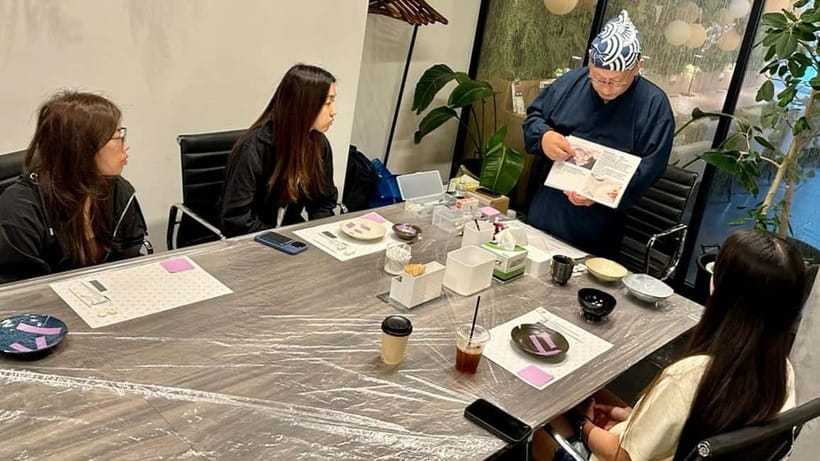
This isn’t a lecture that ends in a quick craft. The session is timed to let you actually complete your repair, from first alignment to final decoration.
Here’s how the pacing feels in practice:
- You start with an explanation of what Kintsugi is aiming for—repair as design, not cover-up.
- Then you move into the hands-on stage with tools and materials already ready.
- The instructor guides you through the key steps, so you’re not guessing about where lacquer goes or how to place the ceramic pieces.
- You finish with a repaired ceramic that’s ready to take home.
Because you’re using the faster materials version (synthetic lacquer and metallic powder), the session is designed to work inside a single visit. That’s a major value point for a traveler: you get the meaning, the technique, and the finished object without needing to plan a second trip for curing.
How fast Kintsugi works here (and why it’s different)
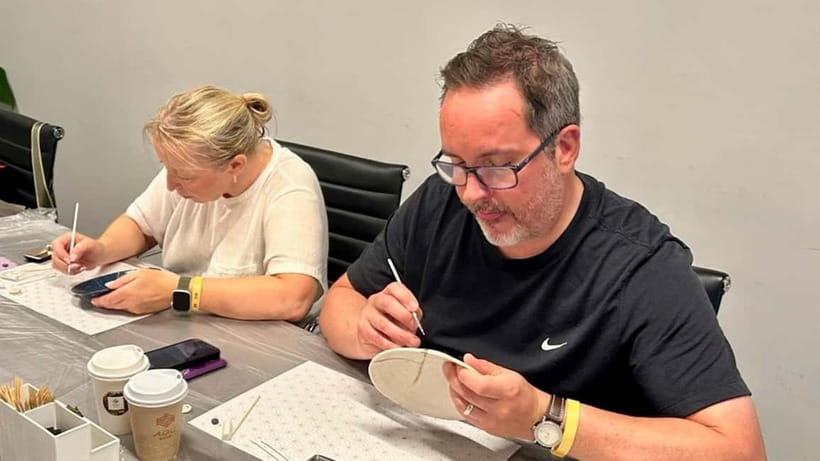
Traditional Kintsugi can take about a month. That’s part of the beauty—and part of why it’s intimidating if you’re on a tight Tokyo schedule.
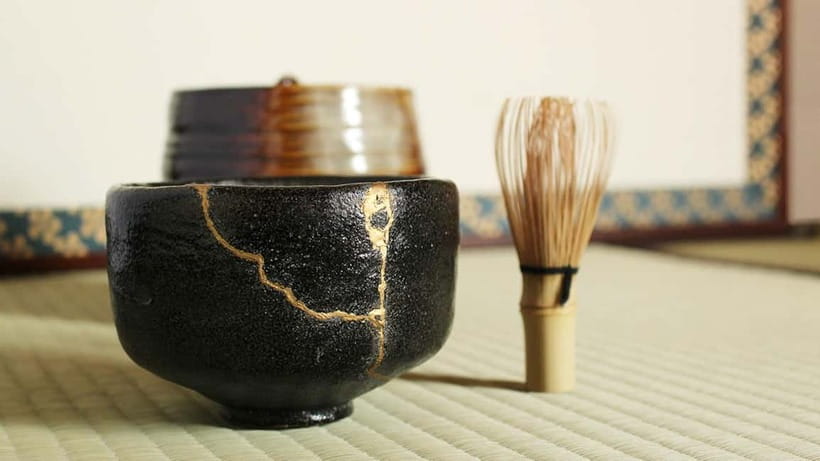
In this workshop, they use a synthetic lacquer instead of natural lacquer, and they substitute metallic powder for gold. The goal is still the same: visible lines that celebrate the break, not hide it. The difference is purely practical: you complete your piece during the workshop instead of waiting for full natural curing.
So if you’re coming with high expectations like real gold and a month-long process, adjust your mindset. This is a workshop version of the art, designed for participation and completion. You’re learning the logic of Kintsugi, not performing a multi-week tradition start to finish.
Your ceramic keepsake: what you repair and how personal it becomes
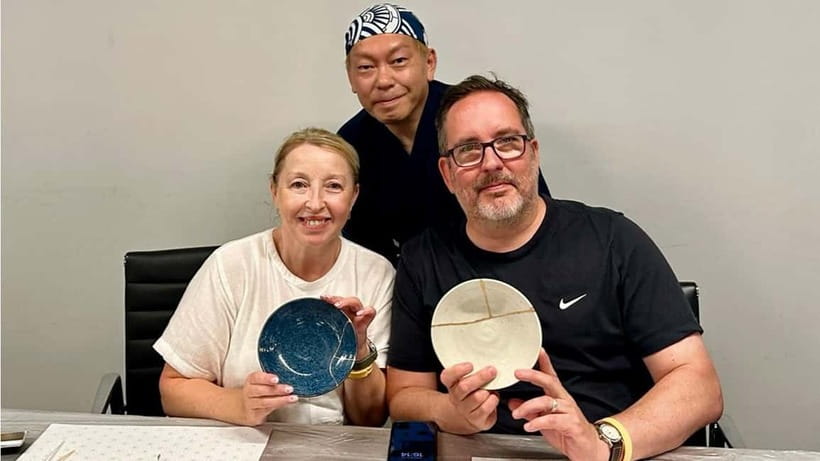
You’ll repair a ceramic piece provided by the workshop, and that’s a big comfort. You don’t need to bring anything fragile from home, and you don’t need to hunt for a broken item to practice on.
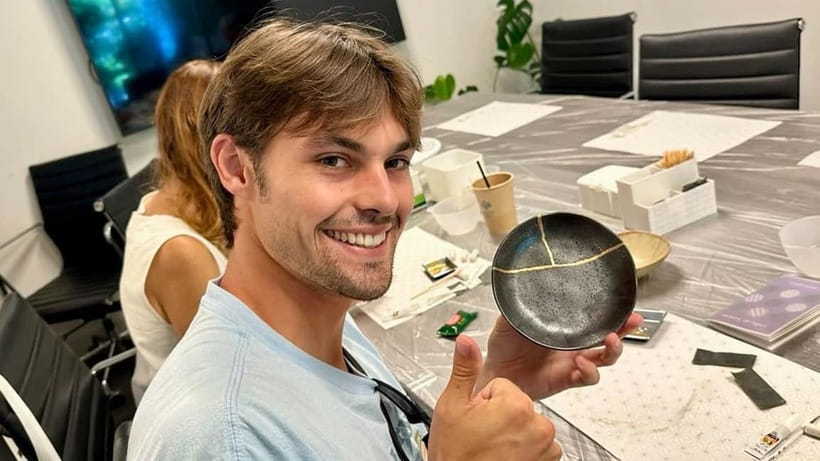
You’ll also get guidance on technique and placement, which is where Kintsugi becomes more than glue and glitter. It’s about alignment and intentional seam lines—so your final piece looks like it was meant to be this way from the start.
In some sessions, participants are offered a choice of two colored cracked plates, which is a fun way to add personality without making the process complicated. Even without choices, your outcome will still be one-of-a-kind because your seams and your exact placement will vary.
The instructor vibe in a small group of 8
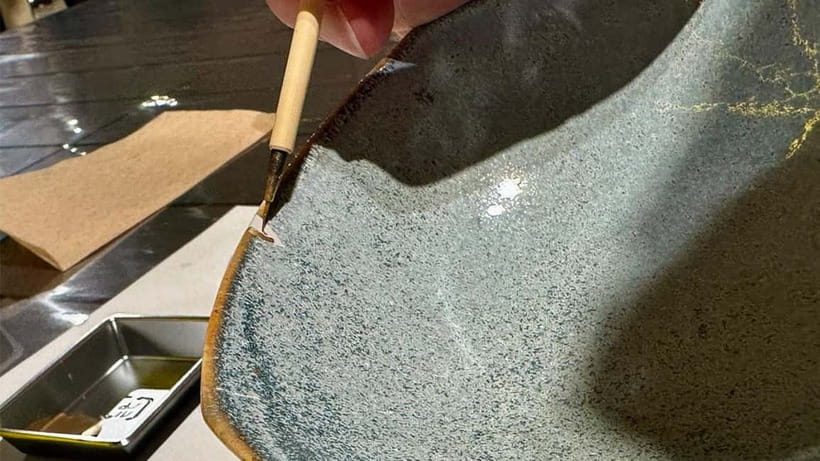
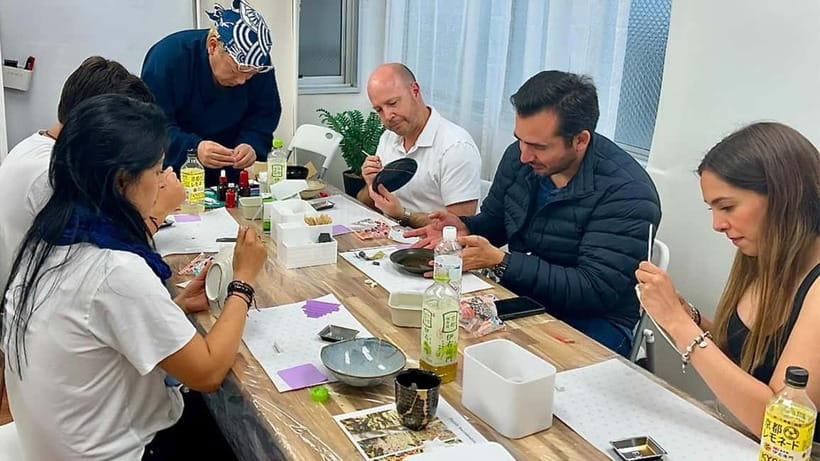
The class stays intimate for a reason. Small group size—limited to 8 participants—lets the instructor see what’s happening at your station, not just talk at you from the front.
The best part is how they manage the experience with a mix of instruction and conversation. In different sessions, instructors such as Tatsu and Teki Sensei are described as friendly and supportive, with stories that connect the technique to life in Ginza and the mindset behind repair.
Balanced expectation: the class is paced to keep everyone moving. If someone needs extra help, you may experience a slight slowdown in hands-on time. That’s not a flaw—it’s the tradeoff for a shared session with guidance. If you’re the kind of person who loves a guided flow, that’s actually a plus.





Tools, materials, and the hands-on focus
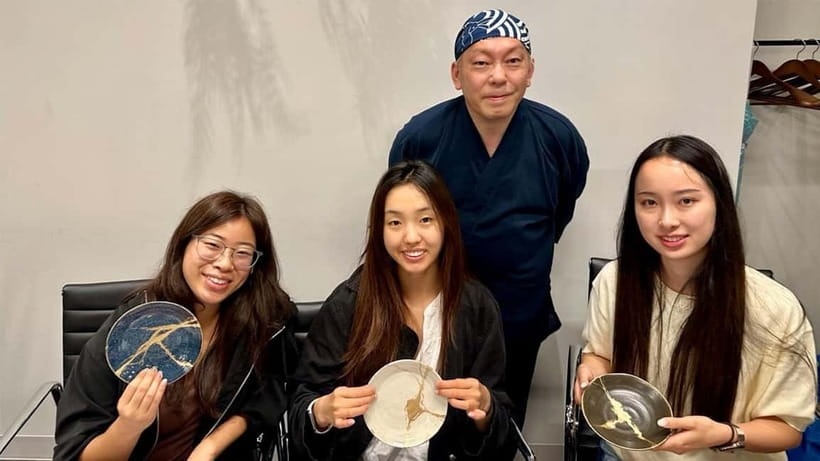
Everything you need is part of the workshop. That includes the tools and materials, plus the ceramic piece to restore. You’re not showing up and improvising with random craft supplies, which is a common way workshops disappoint people.
You also get a complimentary soft drink. It’s a small detail, but it fits the overall pace: you’re there to make, not to rush.
One more value point: since the class is structured, you can focus on creativity instead of logistics. You’ll still be making choices—how you apply lacquer, how carefully you align, how you create the final look—but you won’t waste time figuring out the basics.
Packaging that actually makes travel sense
Your souvenir has to survive the real world: backpacks, trains, and luggage. This matters more than people expect.
In this class, your repaired piece is packaged for safe transport. Participants have mentioned strong attention to how the item was packed so it could be carried home without stress. That’s huge value, because it turns the workshop from a fun afternoon into a take-home win.
If you plan to keep the piece as a gift, this packaging is even more important. It’s the difference between an art object you’re proud of and an object you have to worry about for the rest of your trip.
Price and value: is $75 worth it?
At $75 per person for 90 minutes, the price lands in the midrange for hands-on cultural activities in Tokyo. What makes it feel fair is what you get for it:
- A full session of instruction
- Tools and materials
- A ceramic piece to repair
- A take-home finished result
- Soft drink
- Packaging for transport
Many creative classes in big cities give you instructions, but you don’t always leave with the finished product. Here, the workshop method is specifically designed so you can complete it during your time slot. That means you pay for a complete experience, not just a portion of one.
Also, because it’s near Ginza Station, you’re not burning time and money on transportation that adds friction. In Tokyo, time is money in a very real way.
Timing, language support, and what to expect when you arrive
The session runs 90 minutes, and you’ll want to check available starting times. The instructor supports English and Japanese, which is a relief if your Japanese is limited. It also means you can ask questions without feeling like you’re stuck decoding everything.
When you arrive, look for the meeting point at Cafe AOU Ginza forest in the Daiwa Ginza Building. One described bonus is that the instructor can be easy to spot nearby, which helps when you’re navigating Tokyo with a schedule.
And remember: the venue details can change one day before. If you prefer a smooth experience, read that email promptly.
Who this workshop is for (and who should skip it)
This Kintsugi class is built for people who want a calm, hands-on cultural activity that produces an object you can keep.
It’s a great fit if you:
- Want a creative break from shopping-focused plans in Ginza
- Like detailed, step-by-step guidance
- Prefer small group instruction
- Appreciate Japanese aesthetic ideas like celebrating imperfections
It’s not suitable if you:
- Have mobility impairments
- Have a cold
- Need accommodations for hearing-impaired participants
- Are traveling with children under 10
- Are bringing babies under 1
That’s important because it affects comfort and safety in a craft setup. If you fall into one of these categories, you’ll probably have a better time with a different type of cultural stop.
Caring for your repaired ceramic (decorative rules that matter)
You’ll take your repaired ceramic home. That’s the fun part. The care rules are the part that protects your souvenir.
The key guidance: use the repaired item for decorative purposes only. It’s not microwave-safe, with a risk of ignition. In plain terms, treat it like art, not like everyday dinnerware.
If you’re gifting the piece, this is also worth mentioning so the recipient doesn’t accidentally use it the wrong way. A beautiful repair deserves safe handling after the workshop ends.
Should you book this Ginza Kintsugi class?
I think it’s a strong choice if you want something hands-on, meaningful, and finishable in one sitting. The combination of small group size, step-by-step instruction, and the ability to leave with a completed ceramic makes it feel like good value.
Book it if:
- You want a creative Tokyo experience that’s not a long tour
- You like the idea of repair as design philosophy
- You care about taking a tangible souvenir home
Skip it if:
- You’re hoping for slow traditional curing with real gold and a month-long process
- You need accessibility accommodations that this workshop setup can’t support
- You want functional everyday tableware (this is decorative, and it’s not microwave-safe)
If your ideal day includes a practical craft with a Japanese aesthetic mindset—and you want to keep the result in your suitcase—this Ginza Kintsugi workshop fits that bill nicely.
FAQ
How long is the Kintsugi workshop?
The workshop lasts 90 minutes.
Where is the meeting point in Ginza?
Meet at Cafe AOU Ginza forest, which is on the ground level of the Daiwa Ginza Building.
What’s included in the $75 price?
You get the 90-minute Kintsugi workshop, all tools and materials, an instructor, a ceramic piece to restore, and a complimentary soft drink.
Can I take my repaired ceramic home?
Yes. You take your repaired ceramic piece with you after the workshop.
Does this workshop use traditional lacquer and real gold?
It uses synthetic lacquer instead of natural lacquer, and metallic powder as a substitute for gold, so you can complete the piece within the 90-minute session.
Is the repaired ceramic microwave-safe?
No. The repaired item is not microwave-safe due to a risk of ignition.
What is the cancellation policy?
You can cancel up to 24 hours in advance for a full refund.