Tokyo at night feels like a puzzle. Put your feet on the right streets, and the pieces click into place fast. This private food-and-bar experience threads together three very different pockets of Shinjuku and makes it easy to sample what fits your tastes, thanks to a pre-tour questionnaire and Mr.Tokyo guiding you street-to-street without map stress.
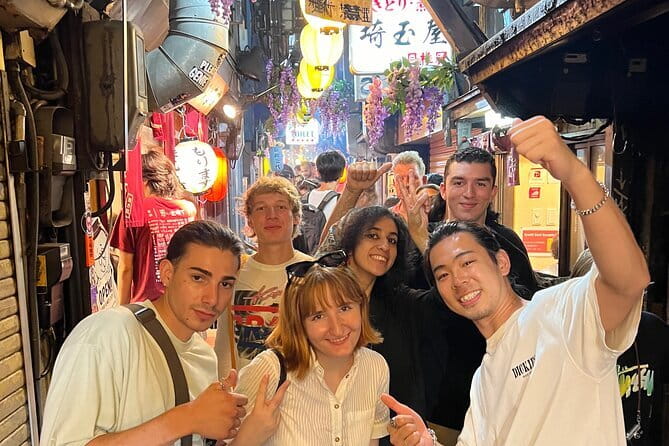
Two things I really like about this setup: you get a private, personalized route (not a one-size-fits-all night), and the guide actively helps you capture the moment by taking photos as you eat. The other big win is the mix of stops: tiny alley cooking at Omoide Yokocho, neon nightlife atmosphere in Kabukicho, and the super-character-filled bar scene at Shinjuku Golden Gai.
The one consideration: the tour includes the guidance and photo time, but meals and alcohol aren’t included. So you’ll still want to budget for what you order at each place, and you’ll get the best value if you speak up about what you do and don’t want to eat.
In This Review
- Key highlights you can plan around
- How a 3.5-hour Tokyo night tour actually works
- Price and value: what $254.30 buys you (and what it doesn’t)
- The pre-tour questionnaire: how you steer the night
- Stop 1: Omoide Yokocho Memory Lane and its showa-era izakaya glow
- Stop 2: Kabukicho nightlife energy you can actually navigate
- Stop 3: Shinjuku Golden Gai—small bars, big personality
- Photos and translations: the small services that change the night
- What you’ll likely spend during meals and drinks
- The biggest strength: a guide who knows how to match the night to you
- Who this Shinjuku food-and-bar night is best for
- Should you book this Tokyo VIP Hidden Food & Bar Night?
- FAQ
- What is the duration of the Tokyo VIP Hidden Food & Bar Night?
- How many food stops will I visit?
- Are meals included in the price?
- Are alcoholic beverages included?
- Where does the tour start and end?
- What if the weather is bad?
Key highlights you can plan around
- Private, taste-based route built from your questionnaire and budget preferences
- 2–3 food or bar stops instead of a single place, so you compare styles of Tokyo night eating
- Guide takes photos so you can focus on the food and not your phone
- Omoide Yokocho to Golden Gai for three distinct moods in about 3.5 hours
- No map needed because someone else navigates you through the lanes and alleys
How a 3.5-hour Tokyo night tour actually works
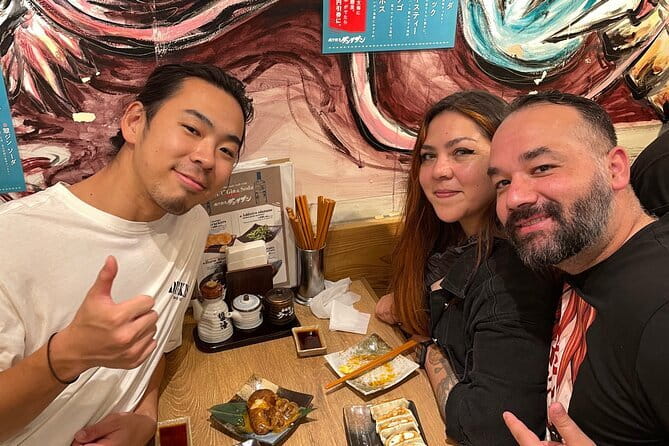
This experience is designed for people who want Tokyo food culture at night without doing the usual solo gymnastics. You meet near Shinjuku Station, then head out with a guide who handles navigation, recommendations, and helpful translation along the way. That matters in Tokyo, where the difference between a great stop and a disappointing one can come down to tiny details like what’s good right now, what to order, and how to ask.
The tour is timed at about 3 hours 30 minutes, with 45 minutes at the first stop and 1 hour each for the next two. That structure keeps the night from dragging. You get enough time to eat and look around, but you’re not stuck in any one place long enough to lose momentum.
You can also read our reviews of more food & drink experiences in Tokyo
Price and value: what $254.30 buys you (and what it doesn’t)
At $254.30 per person, this isn’t a budget street food crawl. You’re paying for private guide attention plus a route tailored to you, with a photo-taking component. In plain terms: you’re buying less confusion and better decision-making.
Here’s what’s included:
- Visits to 2 or 3 local restaurants/izakaya/bars with a local guide
- Photos taken during the tour
- Private, personalized experience based on your answers
- A pre-tour questionnaire to steer the stops toward your tastes and budget
Here’s what’s not included:
- Transportation to the meeting point
- Meals
- Alcoholic beverages
That last part is the key. Your “tour cost” is mostly the guide, the planning, and the structure. Your final night spending will depend on what you order. If you’re the type who likes to sample a bit of everything, you’ll likely feel good about the price because the guide helps you order smart. If you already know exactly where you want to eat and drink, you may prefer to self-guide.
The pre-tour questionnaire: how you steer the night
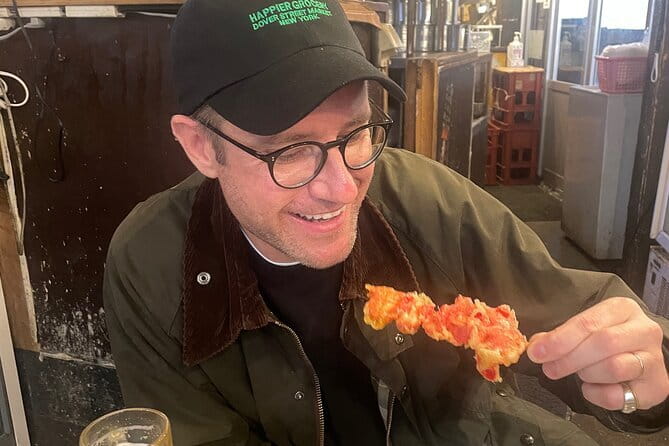
This is one of the strongest parts of the concept. Before you go, you answer questions so the route can match your preferences and budget. That can be as simple as telling the guide what you like (or avoid), and it can also influence the kind of places you end up in.
Why that matters: Tokyo food can vary wildly by neighborhood and even by the exact kind of bar/izakaya. With personalization, you’re less likely to end up somewhere that sounds interesting on paper but is wrong for your stomach. It also supports a calmer pace. You don’t have to constantly negotiate options because the night is already built around your answers.
Stop 1: Omoide Yokocho Memory Lane and its showa-era izakaya glow
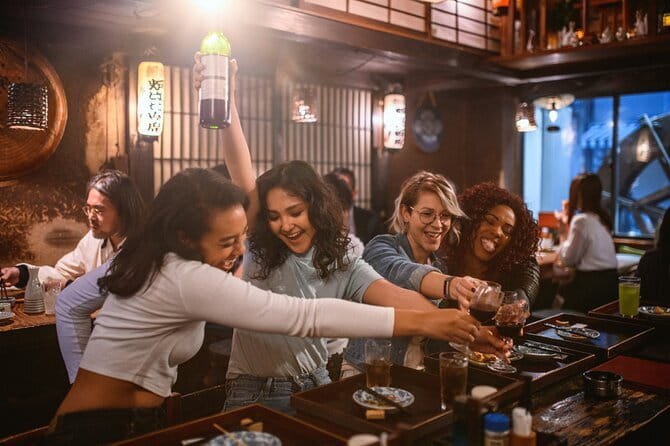
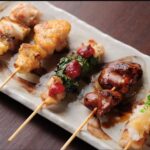
Your first stop is Omoide Yokocho, often called Memory Lane. Expect a narrow alley packed with tiny izakayas and yakitori spots. This is the kind of Tokyo lane where the setting itself is part of the experience: small spaces, lots of grill smoke, and that old-school atmosphere people associate with classic neighborhood nightlife.
You’ll have about 45 minutes here, so the goal isn’t slow wandering. It’s to get oriented, enjoy the vibe, and try food that fits the style of the alley. Often, the best strategy in Omoide Yokocho is ordering a few items you’re confident you’ll like, then letting the guide nudge you toward choices that match what you’re already enjoying.
A practical drawback: because the alley is compact and lively, it’s not the place to overthink menus. If you have strong dietary restrictions or very specific preferences, tell the guide early so the first stop matches you rather than forcing you to adapt on the fly.
Stop 2: Kabukicho nightlife energy you can actually navigate
After the alley, you move into Kabukicho, Japan’s major entertainment and nightlife district. This is where Tokyo’s neon intensity shows up in full force: bright signs, restaurants, bars, and a very “night out” atmosphere.
You’ll spend about 1 hour here. That hour is useful because it broadens the evening beyond one narrow alley setting. Instead of only going in and out of tiny places, you get to see a different layer of Tokyo night culture—more open, more people, and more variety in what you can do next.
The value of having a guide in Kabukicho is navigation and timing. With someone leading the way, you avoid the common solo problem of wandering until you’re hungry, then guessing based on the closest open door. Your guide can steer you toward a bar or food option that makes sense for the flow of the night, especially after Omoide Yokocho.
Possible consideration: Kabukicho can be intense—crowds and noise can be part of the experience. If you want a quiet, low-volume night, you might find this segment less relaxing than the alley stop.
You can also read our reviews of more tours and experiences in Tokyo

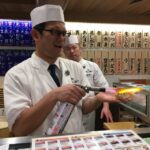
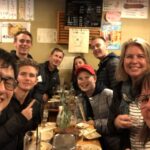
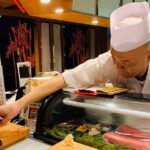
Stop 3: Shinjuku Golden Gai—small bars, big personality
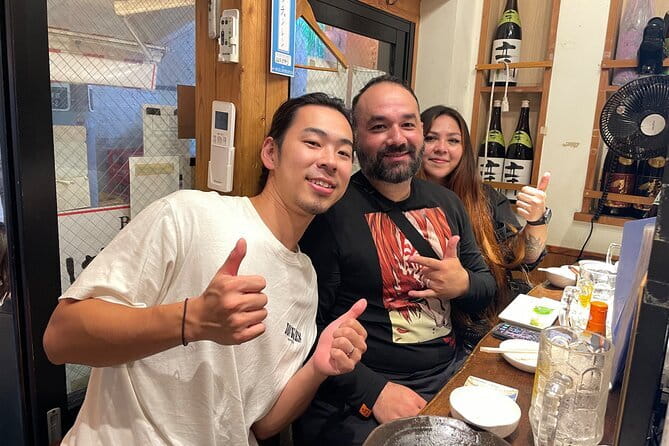
The final tasting-and-drinks stop is Shinjuku Golden Gai, famous for its maze-like alleyways and extremely small themed bars. Think narrow lanes, lots of doorways, and each bar with its own identity. This is where Tokyo feels quirky in a way that’s hard to find anywhere else.
You’ll have about 1 hour here, which is the right amount of time for Golden Gai. It’s enough to take in the atmosphere, sample what’s suggested, and still feel like you’re moving through the neighborhood rather than stuck waiting for one place to satisfy the whole night.
Why Golden Gai is worth the time in a guided tour: without local help, it can be easy to miss the right door for your vibe. With a guide, you’re more likely to land in a bar that matches what you want—whether you’re more interested in conversation, a whisky-style stop, or just soaking up the texture of the area.
Photos and translations: the small services that change the night
One of the most practical inclusions here is the guide taking photos. That might sound minor, but it’s a real quality-of-life upgrade. Food moments are easier when you’re not switching between eating and trying to frame shots. It also makes the night feel less like you’re speed-running a checklist and more like you’re documenting an experience.
The guide also offers help with translation. Tokyo neighborhoods can be straightforward if you already speak the language, but if you don’t, translation support helps you order confidently and ask questions without awkward back-and-forth. Even basic phrases can open doors to better choices, and it reduces the chance you’ll end up with something you didn’t mean to pick.
What you’ll likely spend during meals and drinks
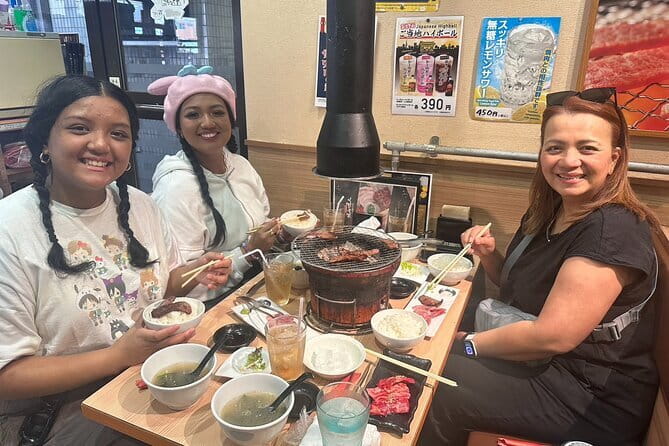
Because meals and alcoholic beverages are not included, your total evening cost will depend on:
- What you order at each stop
- Whether you include drinks (alcohol isn’t included, but the stops are the kind where it’s common to order)
- How many items you feel like sampling in each 2–3 stop portion
If you want the best value, come with a simple plan: decide how adventurous you want to be and how much you want to spend per stop. The guide’s recommendations and translations help you order more intentionally, but the money part still follows your preferences.
If you’re trying to keep costs down, tell your guide your budget clearly during the questionnaire stage. That way, the guide can align the stops with places where your spending range makes sense.
The biggest strength: a guide who knows how to match the night to you
The overall satisfaction signal here is very high, with people highlighting the guide quality. In particular, Mr.Tokyo is repeatedly described as offering an authentic, locals-frequented style of night, plus culture insight that makes the alleyways and bars feel more understandable than just scenic.
That’s not automatic on every tour. For this one, the strongest promise is that it’s private and based on your answers, so the guide has a reason to tailor what you do next. The better the guide’s food and area knowledge, the more the night feels like a guided conversation rather than a pre-set route.
A fair consideration: if a guide isn’t confident with food facts or neighborhood guidance, the experience can feel less helpful. My advice is simple—ask questions. If you’re paying for a guided food night, it’s okay to ask what’s best right now, what locals order, and why. A confident guide will love that.
Who this Shinjuku food-and-bar night is best for
This tour fits best if you:
- Want a private Tokyo night with structure and navigation help
- Plan to eat and drink at 2–3 places instead of committing to one long sit-down
- Like the idea of mixing settings: alley izakaya vibe, big neon nightlife, then tiny bar lanes
- Are new to Tokyo and want local favorites without guessing
It’s also a good first-night option in Shinjuku style districts because you’ll come away with a clearer sense of how the neighborhoods work and what each one feels like after dark.
It’s less ideal if you:
- Want a tour where meals are fully included
- Prefer very quiet sightseeing with minimal crowds
- Have very strict food needs and don’t communicate them up front
Should you book this Tokyo VIP Hidden Food & Bar Night?
If you want a guided Tokyo night where you can focus on eating, and you’re okay paying for guide time plus your own food and drinks, I’d say it’s a strong choice. The best reason to book is the combination of a tailored route, photo help, and the way the stops cover three distinct Shinjuku moods in one evening.
I’d pass or rethink if you’re hoping for a fully “turn-key” meal plan with zero extra spending, or if you don’t care about personalization at all. In that case, self-guiding might feel more cost-effective.
If you do book, do two things to get your money’s worth: fill out the questionnaire honestly, and during the night, ask the guide what to order and what to skip. That turns the tour from sightseeing into a genuinely satisfying food-and-bar evening.
FAQ
What is the duration of the Tokyo VIP Hidden Food & Bar Night?
It runs for about 3 hours 30 minutes.
How many food stops will I visit?
You’ll visit 2 or 3 places with a local guide.
Are meals included in the price?
No. Meals are not included.
Are alcoholic beverages included?
No. Alcoholic beverages are not included.
Where does the tour start and end?
It starts near UNIQLO Shinjuku West (Shinjuku City, Nishishinjuku) and ends in Shinjuku City.
What if the weather is bad?
The experience requires good weather. If it’s canceled due to poor weather, you’ll be offered a different date or a full refund. You can also cancel up to 24 hours in advance for a full refund.