REVIEW · TOKYO
Tokyo: Ramen Tasting Tour with 6 Mini Bowls of Ramen
Book on GetYourGuide →Operated by Tokyo Ramen Tours · Bookable on GetYourGuide
Ramen education—then you walk it off. This tour pairs six mini bowls (about 1/4 size each) with an English guide such as Sahori, so you learn the why behind styles like classic Hokkaido, tonkotsu, curry, tori paitan, tsukemen, and more. My only caution: expect about 3 kilometers of walking, which can feel like a lot if you have a low fitness level.
I also love the choice built into the tastings: you pick your six bowls from a set of 11–12 options, and each stop focuses on a distinct shop style. With a small group (up to 8) and tour-only bowls, the guide can slow down for questions and use slides and handouts to explain ramen origins and prep as you eat—plus you get 1 beverage along the way.
In This Review
- Key things that make this ramen tasting tour worth your time
- Six mini bowls: the smartest way to learn ramen in Tokyo
- What the guide actually teaches you (and why it sticks)
- Tokyo walking math: 3 hours, about 3 kilometers, and a full belly
- Shibuya route: from classic Hokkaido to curry comfort
- Shinjuku route: Tokyo classics and modern tori paitan
- Ueno route: Kyushu-style roots, then tsukemen dipping
- Your six bowls: how choosing from 11–12 keeps it personal
- About the broth: what’s inside, and how to handle vegan/vegetarian needs
- Where it starts and where you finish: Shibuya today, Ebisu or Shinjuku tomorrow
- Price and value: what you’re actually paying for
- Best for who? And who should skip it
- Practical tips so you finish the last bowl feeling happy
- Should you book this Tokyo ramen tasting tour?
- FAQ
- How many mini bowls of ramen do I get?
- Can I choose which ramen I eat?
- How long is the tour?
- How many ramen shops and neighborhoods are included?
- What’s included in the price?
- Is the ramen vegan or vegetarian?
- How much walking is involved?
- Where does the tour start and end?
- What’s the tour’s cancellation and booking flexibility?
Key things that make this ramen tasting tour worth your time
- Six mini bowls that add up to real variety without needing one huge meal
- Pick from 11–12 ramen options, so you control what you’re tasting
- Three ramen shops, three neighborhood settings, with routes tied to Shibuya, Shinjuku, or Ueno
- Ramen lessons as you eat, using visual slides/handouts to connect history to flavor
- Small group pacing (up to 8 people), which keeps the Q and A from feeling rushed
Six mini bowls: the smartest way to learn ramen in Tokyo
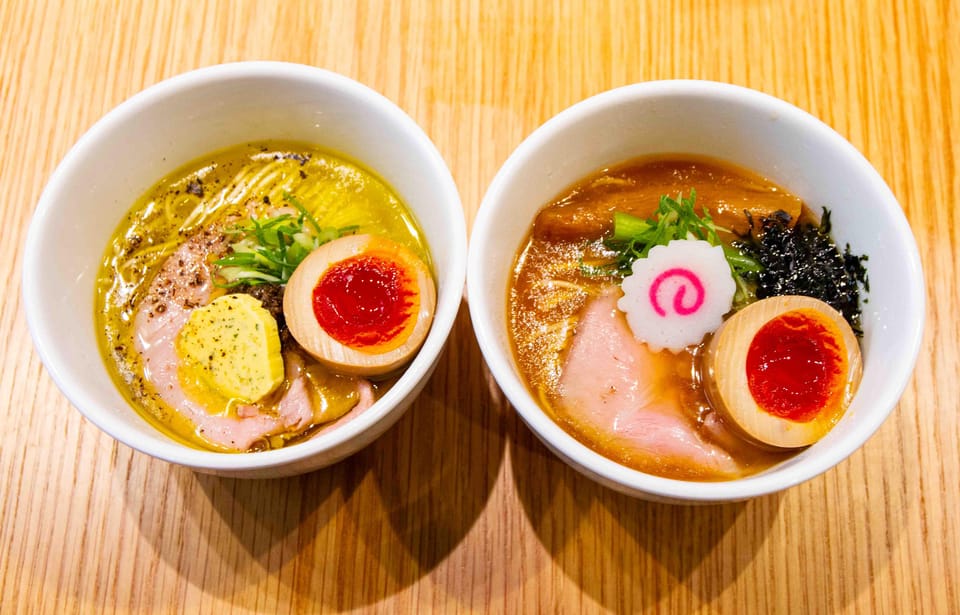
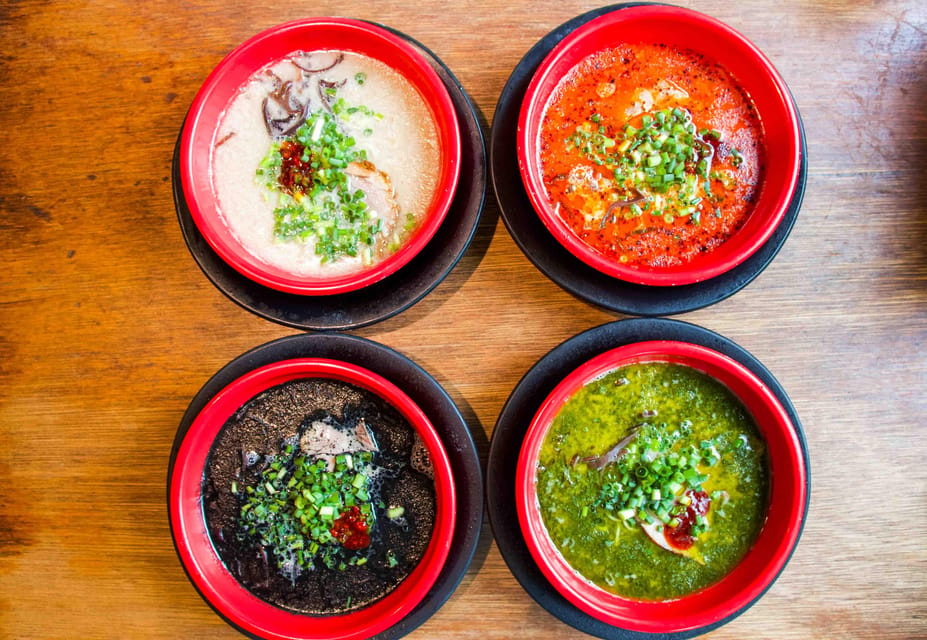
If ramen is your thing, you already know Tokyo can feel like a tasting maze. This tour solves that problem by serving six mini bowls, each about 1/4 the size of a full bowl, at three different award-winning shops. Instead of committing to one style and hoping it matches your mood, you’re tasting across categories while the guide explains what makes each style different.
The bigger advantage is how fast you start noticing patterns. When you’re not totally stuffed, you can actually compare things like broth character, noodle type, and overall balance from shop to shop. By the last stop, ramen stops being one flavor and becomes a whole set of choices—with a reason behind each one.
The tour also has an important practical detail: those mini bowls are only available on this tour. That means you’re not just picking random items off a menu. You’re getting a planned, teach-you-something lineup designed to show you range.
You can also read our reviews of more food & drink experiences in Tokyo

What the guide actually teaches you (and why it sticks)
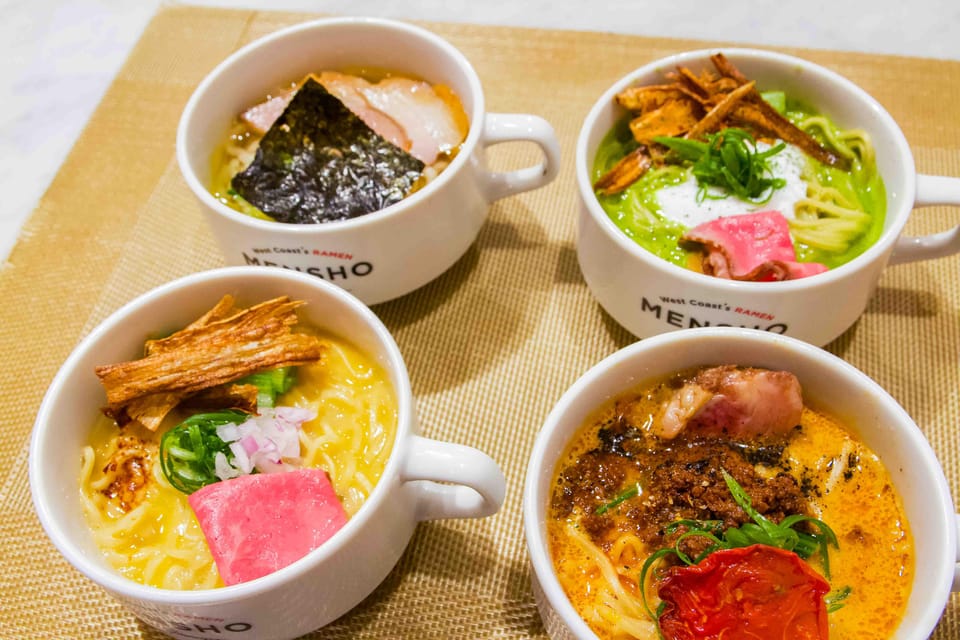
Ramen tastings are fun. Ramen tastings with context are the ones you remember later when you order on your own. This tour uses colorful slides and handouts to cover ramen history, types, and preparation, and it’s built for English-speaking visitors.
What stood out in people’s comments about the experience is the way the teaching stays practical. Guides like Bunga and Makayla (and others, like Michaela, Daisy, and Brian) were repeatedly praised for clear explanations and the ability to answer questions. Some guides also use visual tools like a tablet or iPad to make the timeline easier to follow.
You’ll also get help with how to look at ramen while you eat. The goal is that, afterward, you’re not guessing. You know what you’re tasting and how to ask for similar styles. That turns Tokyo ramen from a game of luck into a decision you can enjoy.
Tokyo walking math: 3 hours, about 3 kilometers, and a full belly
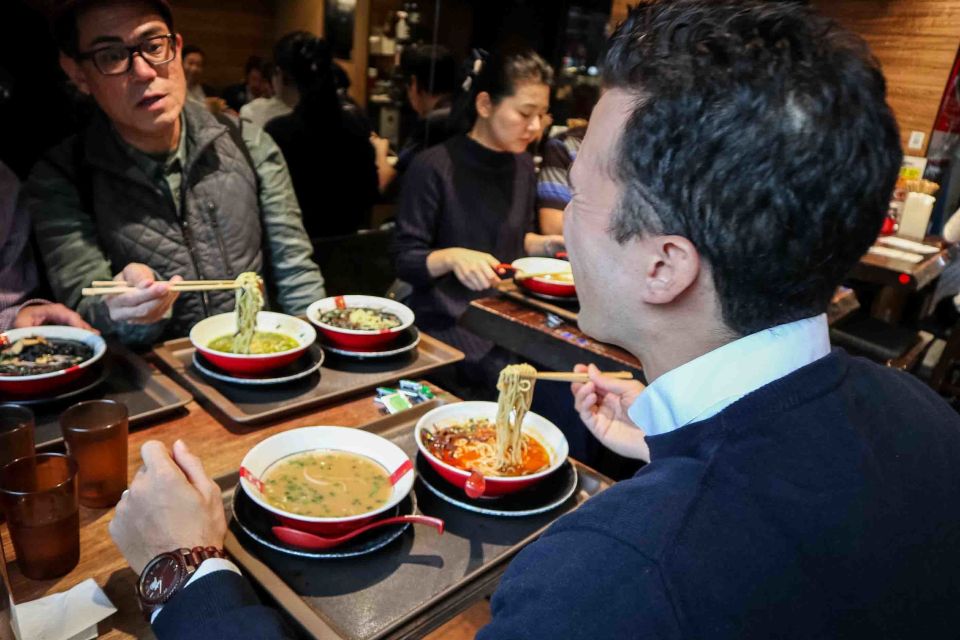
Let’s talk logistics in plain terms, because this is the one part that can surprise people. The tour lasts about 3 hours and includes around 3 km (1.86 miles) of walking. That adds up quickly if you’re sightseeing all day, or if you’re traveling with tired feet.
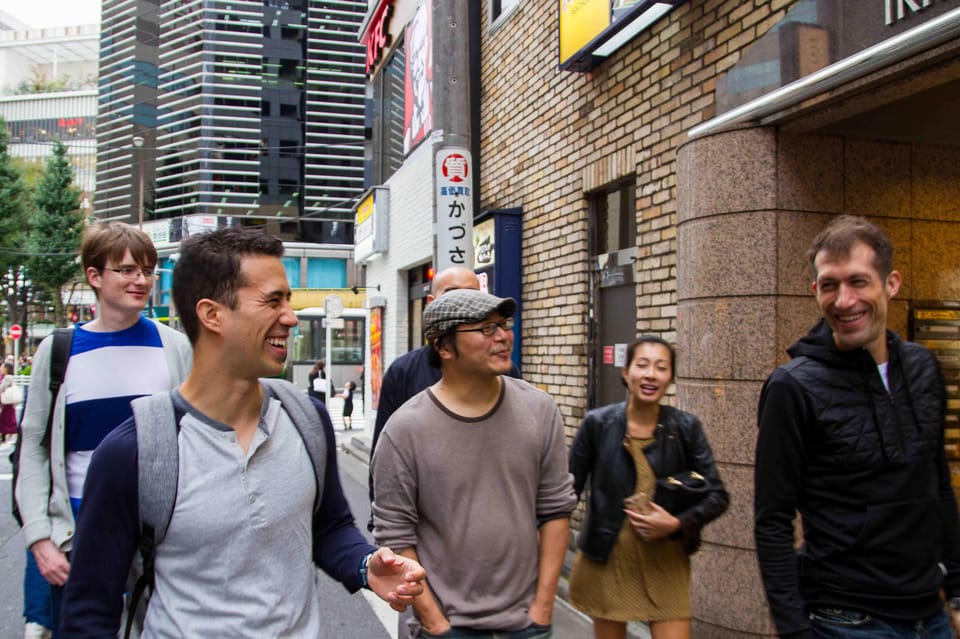
The good news: the walking is broken up by meal stops, and it’s part of the point. Between shops, you get to feel how each neighborhood looks and sounds—like you’re moving with Tokyo, not just eating in a parking lot of restaurants.
One more practical tip: don’t plan a big lunch right before. Even though the bowls are mini, you’ll end up feeling it by the end. Some people recommended skipping lunch and treating this as your main meal chunk.
And if the weather turns ugly, you’re not completely stuck waiting it out. In one case, a guide helped manage the final leg when it rained hard by arranging a taxi, which is the kind of calm, problem-solving you appreciate when you’re already dressed for the day.
Shibuya route: from classic Hokkaido to curry comfort
On the Shibuya route, your ramen lineup is focused on showing different broth styles and flavor directions across three shops.
Stop 1: Classic Hokkaido ramen
This is your warm start, a foundation style that gives you something classic to anchor your comparisons. You’ll be learning as you go, so take a moment at the first bowl to notice noodle texture and how the broth feels in the mouth.
Stop 2: Fusion tonkotsu (pork bone) ramen
Next comes tonkotsu, and the key word here is fusion. Even if you’ve had tonkotsu before, the guide’s framework helps you spot what’s changing—whether it’s toppings, balance, or how the broth is shaped to fit the shop’s style.
Stop 3: Savory curry ramen
By the third bowl, the tour makes sure you don’t get stuck in only one flavor family. Curry ramen shifts the whole mood from savory-creamy to spiced-comfort. It’s a strong finisher because it keeps your palate awake, especially after two richer styles.
A practical takeaway: this route makes sense if you want variety without feeling like you jumped straight to weird experimental flavors. You’re moving from classic to richer to spicy, in a path that teaches your taste buds how to adapt.
Shinjuku route: Tokyo classics and modern tori paitan
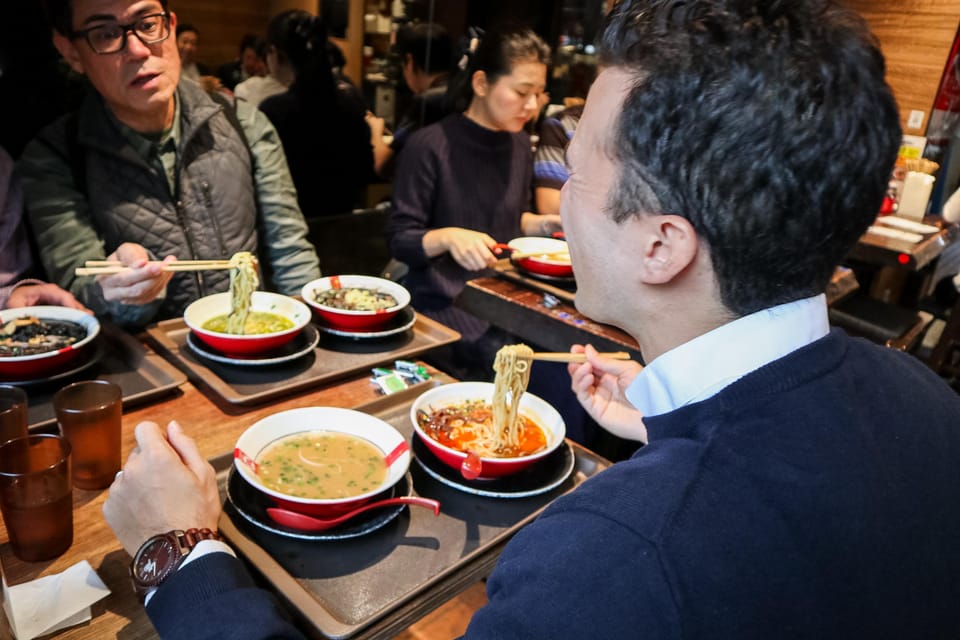
On the Shinjuku route, the shop lineup is geared toward showing how modern interpretations and different chicken-forward styles fit into the ramen world.
Stop 1: Classic Tokyo ramen
You start with a baseline that helps you understand what people often mean when they say Tokyo ramen. The point isn’t that it’s boring—it’s that it gives your palate a reference point.
Stop 2: Modern tori paitan (rich chicken ramen)
Then you get a chicken-rich direction with tori paitan. Guides tend to emphasize how preparation and broth character shape the overall feel. If you like chicken soups in general, this is often the bowl that makes you rethink what chicken broth can do in a ramen context.
Stop 3: Luxurious chicken or fish ramen
The last stop keeps the “premium” vibe, either chicken or fish depending on the day’s menu. The lesson here is that even when ramen sounds similar on the surface, the underlying building blocks can shift the final experience a lot.
This route is a great pick if you want the tour to feel a bit more “modern Tokyo,” with a smoother flow from classic to richer chicken complexity.





Ueno route: Kyushu-style roots, then tsukemen dipping
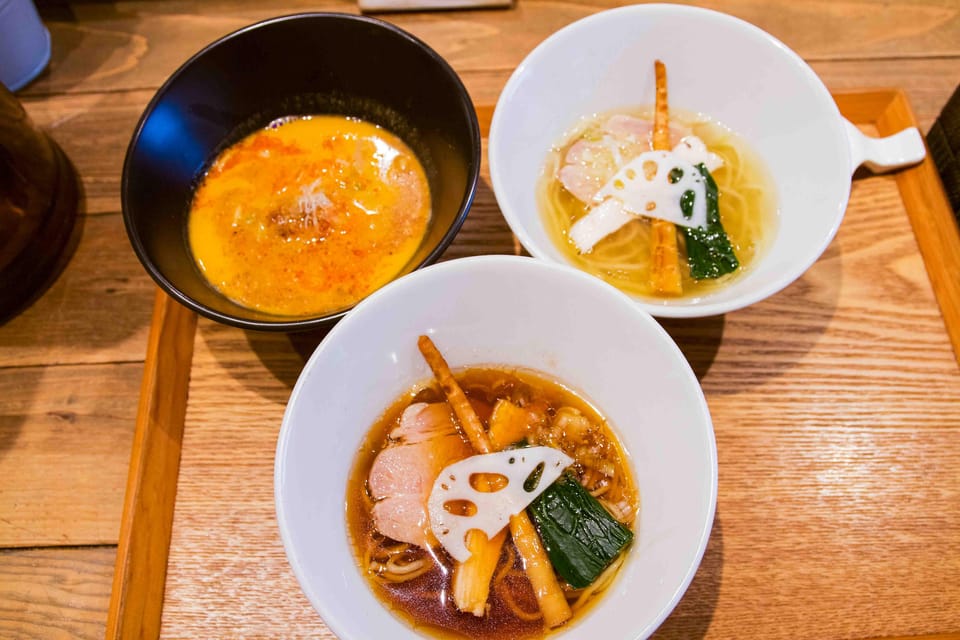
The Ueno route is built around showing ramen shapes and formats you might not order on your own the first night in Tokyo.
Stop 1: Classic Kyushu ramen
You begin with a “regional root” style. Even without memorizing every technical term, you’ll learn how regional identity shows up in what’s served and how the shop approaches its bowl.
Stop 2: Contemporary tsukemen (dipping)
Here’s the format shift: tsukemen is served for dipping, not slurping straight from the bowl. That alone changes your tasting rhythm. You’ll likely find yourself paying closer attention to how noodles and dipping broth interact.
Stop 3: Modern Tokyo ramen
To close, you go from the dipping format back into a more straightforward ramen bowl style—then you compare how the shop’s “modern Tokyo” approach plays with everything you learned earlier.
If you’re the type who likes food with a small twist in structure—different service styles—this route can feel especially rewarding.
Your six bowls: how choosing from 11–12 keeps it personal
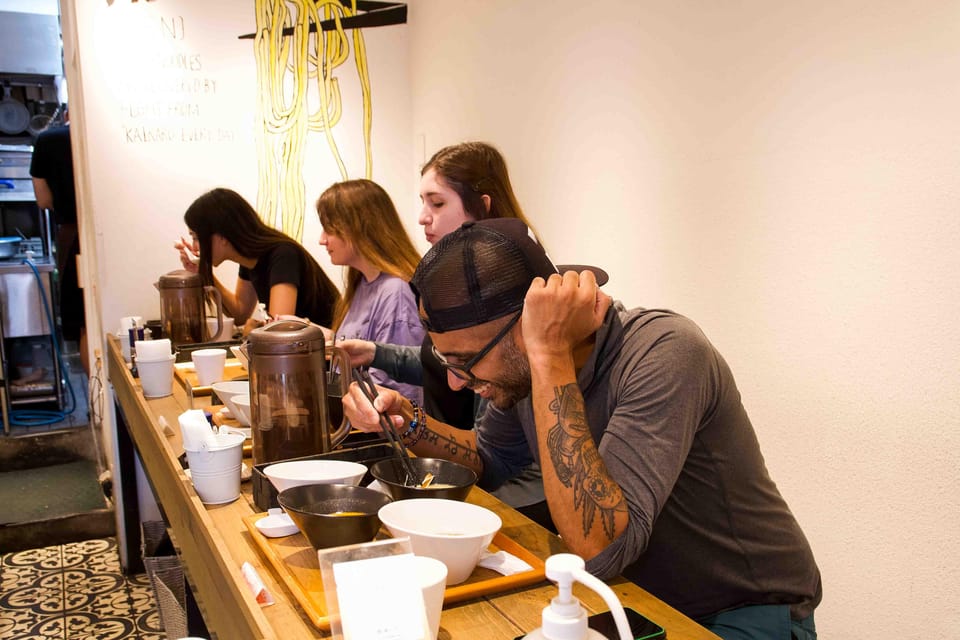
One of the smartest design choices here is the ability to choose. You’ll select your six mini bowls from 11–12 options, so you’re not locked into a lineup that might include something you’d rather skip.
That matters for two reasons:
- It increases satisfaction. Food tours work best when you feel some ownership over what you eat.
- It helps you learn. If you choose based on curiosity—like a curry option when you want something spiced—you’ll remember those choices better later.
Also, because they’re mini bowls, you’re less likely to feel like you’re “wasting” a selection you didn’t love. You can still taste it, learn what it is, and move on without the whole meal being a gamble.
About the broth: what’s inside, and how to handle vegan/vegetarian needs
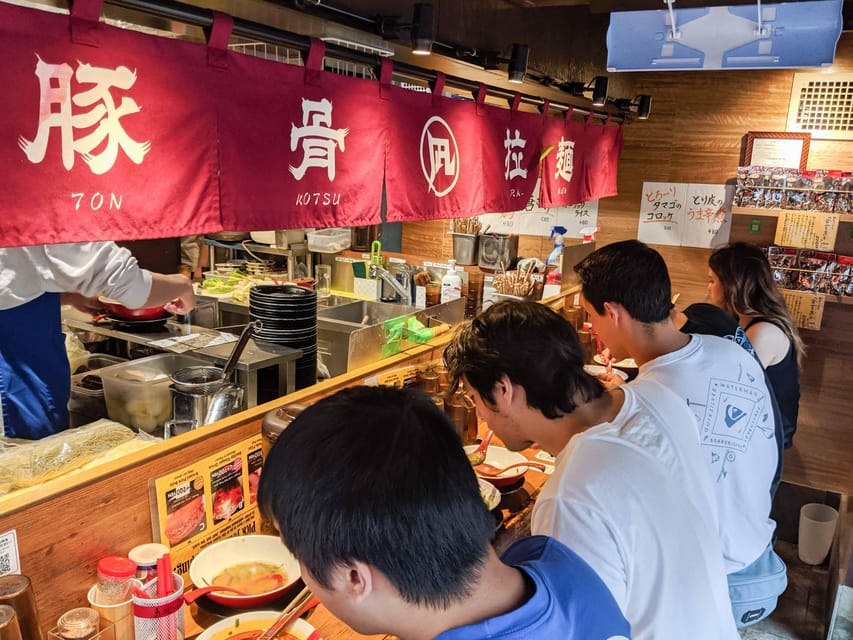
Here’s the key note you should plan around: all ramen broths contain chicken, pork, and fish. That includes the examples listed across routes. If you’re vegan or vegetarian, the right move is to pick the separate vegan/vegetarian ramen tasting tour instead of this one.
So for most people, this is straightforward. For anyone with dietary restrictions, don’t assume a menu item is safe just because it sounds simple. The tour is built around mainstream ramen broth blends, and the provider explicitly offers a different tour for plant-based needs.
Where it starts and where you finish: Shibuya today, Ebisu or Shinjuku tomorrow
The tour starts in Shibuya. It ends either in Ebisu or Shinjuku, depending on the day/route you book. Meeting point can vary by option, so expect the exact spot to depend on your schedule.
This routing is useful because it lines up with how Tokyo nights usually flow. Shibuya is a strong start area, and wrapping up in Ebisu or Shinjuku gives you plenty of options for what to do after you leave the last shop—without having to plan an extra complicated move.
Price and value: what you’re actually paying for
At $122 per person for a 3-hour experience, this isn’t a budget snack crawl. But you are buying three things at once:
- Six tour-only mini bowls (about 1.5 full bowl equivalents, since each mini is ~1/4 size)
- A live English guide who teaches ramen history, types, and preparation as you eat
- Access to a planned lineup across three ramen shops in different neighborhood settings
That combination is what makes the cost feel more reasonable. If you tried to recreate this on your own, you’d need to coordinate shops, guess which bowls to order for variety, and still find someone to explain the differences in a way that helps you learn quickly.
The small group size (up to 8) also matters for value. When the guide can manage questions and explain clearly, the tour becomes more than just food. It becomes a crash course you can use on your remaining Tokyo meals.
Best for who? And who should skip it
This tour is a strong match if you:
- Love ramen and want range, not just one style
- Prefer learning in real time while you taste
- Want a guided walk through Tokyo neighborhoods with a food-centered plan
- Are traveling with friends or solo and like meeting people in a small group setting
You might want to skip or at least think twice if you:
- Have low fitness and don’t want about 3 km of walking during a meal-heavy experience
- Need vegan/vegetarian options, since the broth in this tour includes chicken, pork, and fish
- Expect a fully relaxed pace with zero hustle between stops
If you’re on the fence, treat it like this: you’re signing up for food + education + walking. If all three sound like your kind of fun, you’ll likely enjoy it a lot.
Practical tips so you finish the last bowl feeling happy
I’d plan your day around this tour. Wear comfortable shoes, because the walking is part of the rhythm. Bring a light rain layer if the forecast looks iffy—Tokyo can switch moods fast, and one guide even arranged a taxi when rain got intense between stops.
Food-wise, keep the rest of your day simple. A lot of people suggested skipping lunch so the mini bowls land comfortably instead of painfully.
Also, come ready to ask questions. This tour is built for English questions and explanations, and you’ll get more out of it if you treat it like a guided lesson rather than just a meal line.
Should you book this Tokyo ramen tasting tour?
Book it if you want a ramen-focused Tokyo experience that teaches you the differences in a way you can use immediately. The six mini bowls, the option to choose from 11–12, and the guided explanation of ramen origins and preparation make it more than a food stop—it’s a way to become confident ordering ramen on your own.
Skip it if walking distance will be an issue for you, or if your dietary needs require a vegan/vegetarian broth option. If that’s you, choose the separate vegan/vegetarian version.
If ramen is on your Tokyo list, this one is hard to beat for value in learning per bite.
FAQ
How many mini bowls of ramen do I get?
You get 6 mini bowls of ramen, each about 1/4 the size of a full bowl.
Can I choose which ramen I eat?
Yes. You choose your 6 ramen from a selection of 11–12 options.
How long is the tour?
The tour duration is 3 hours.
How many ramen shops and neighborhoods are included?
You visit 3 ramen shops and move through 3 distinct Tokyo neighborhoods, including Shibuya or Shinjuku depending on the day.
What’s included in the price?
The tour includes 6 mini bowls of ramen and 1 beverage.
Is the ramen vegan or vegetarian?
No. The tour’s ramen broths contain chicken, pork, and fish. A separate vegan/vegetarian ramen tasting tour is offered.
How much walking is involved?
Plan for about 3 kilometers (1.86 miles) of walking.
Where does the tour start and end?
It starts in Shibuya and ends in Ebisu (or Shinjuku, depending on the day).
What’s the tour’s cancellation and booking flexibility?
You can cancel up to 24 hours in advance for a full refund, and you can reserve now and pay later.