REVIEW · TOKYO
Tokyo: Tsukiji Fish Market Food and Culture Walking Tour
Book on GetYourGuide →Operated by Japan Wonder Travel · Bookable on GetYourGuide
The smells at Tsukiji hit fast. This 3-hour Tsukiji Outer Market food walk pairs street-level tastings with context on why Japan’s top chefs shop here every day. You start at Tsukiji Honganji-Temple, then follow your guide through the maze-like market lanes with a small group.
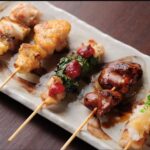
I especially loved the Wagyu beef skewers—the kind that makes you pause mid-walk and just keep eating. I also liked how the guide connects the bites to real Tokyo food culture, from what you’re tasting to how the market fits into daily life.
One real consideration: the tour is not set up for vegetarian, vegan, halal, or gluten-free needs, so dietary flexibility is basically out.
In This Review
- Key things to know before you go
- Tsukiji Honganji-Temple to the Outer Market maze
- The tastings that turn a crowded market into a plan
- Wagyu skewers, tamagoyaki, fish cake, and fruit: what each bite teaches
- Why a guide matters more at Tsukiji than anywhere else
- The final stop: sushi or a seafood bowl, plus (sometimes) fish prep
- Market day reality check: what changes on Wednesdays and Sundays
- Walking, crowds, and timing: how to make it smoother
- Price and value: is $96 worth it?
- Who should book this Tsukiji tour—and who should skip
- Should you book? My practical verdict
- FAQ
- Where do we meet for the Tokyo Tsukiji tour?
- How long is the tour?
- Is the tour in English?
- What do you get to eat during the tour?
- Do they serve sushi or a fish bowl?
- Are vegetarian, vegan, halal, or gluten-free options available?
- How much walking is involved?
- What is the minimum drinking age?
- Is the fish market open every day?
- What happens on closed market days to the menu?
Key things to know before you go
- Meet at Tsukiji Honganji-Temple so the experience starts with place and etiquette, not just food.
- Wagyu skewers and multiple tastings are a big part of the value, not a token sample.
- Your final meal is sushi or a seafood bowl depending on the day.
- Some menu items depend on market days like tamagoyaki, fish cake, and seasonal fruit.
- Small group (2 to 8) + moderate walking means you’ll actually hear your guide and get help ordering.
- Closed-day schedule matters: the wholesaler market shuts on Wednesdays, Sundays, and other closed days.
Tsukiji Honganji-Temple to the Outer Market maze
This tour kicks off at the main gate of Tsukiji Honganji-Temple (浄土真宗本願寺派 築地本願寺). It’s a smart way to begin because you’re in a place tied to the area’s long relationship with food and daily commerce. And in a market this intense, having a clear starting point helps you get oriented quickly.
From there, you’ll walk into the Tsukiji Outer Market area with your guide. The first stretch is about learning the rhythm of the market: where food is made in small batches, where lines form, and how vendors respond to crowd flow. Even if you’ve watched videos, Tsukiji’s layout feels different in person—narrow lanes, strong aromas, and constant motion.
One thing I like here is the pacing. The early part functions like a guided warm-up: your guide gets you comfortable with what’s around you, then you move into tasting mode. That structure makes it easier to come back later (if you want) and shop with more confidence.
You can also read our reviews of more walking tours in Tokyo

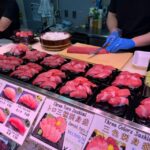
The tastings that turn a crowded market into a plan
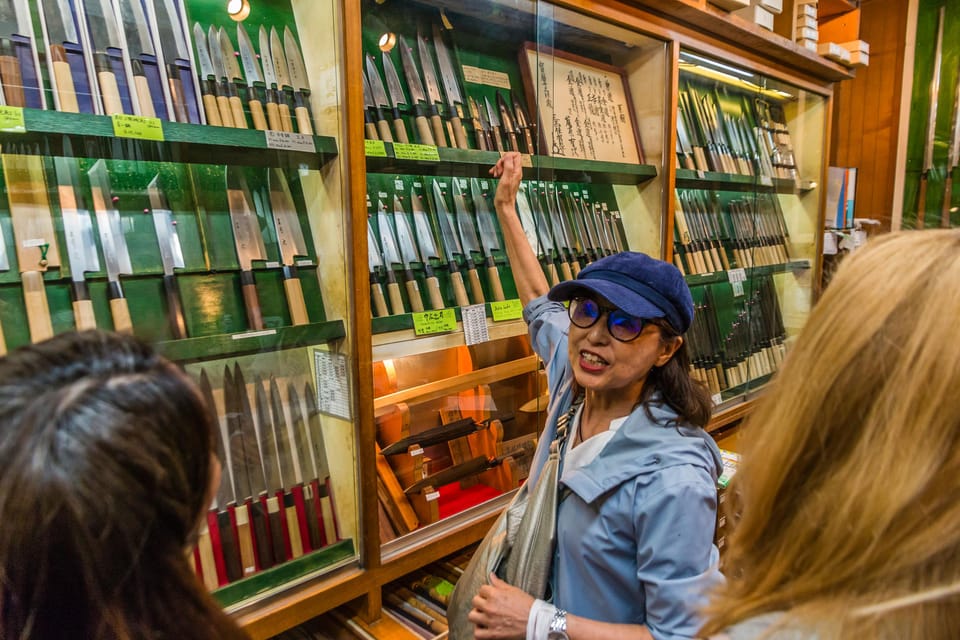
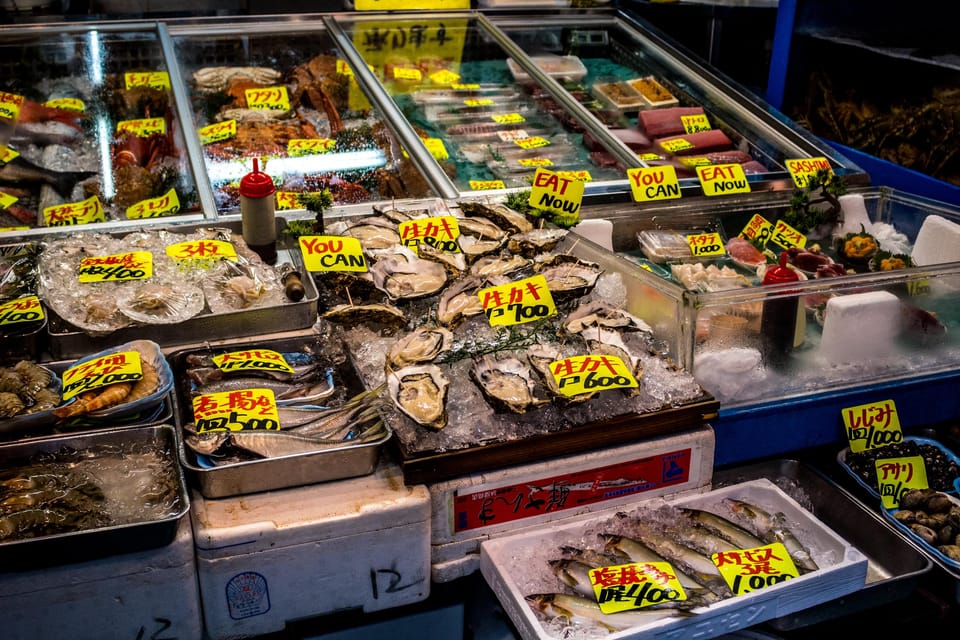
You don’t just wander and hope. You eat your way through the Outer Market with a set menu of “high-grade” stops. The included items can include Wagyu beef skewers, fresh fish bowl or sushi (day-dependent), Japanese omelet (tamagoyaki), seasonal fruits, and fried fish cake.
The Wagyu skewers are the headline for most people for a reason. Reviews repeatedly single them out as the best bite—rich, savory, and very much the kind of food you’d struggle to choose on your own when dozens of stalls are yelling for attention. With a guide steering, you spend your calories on winners rather than experiments.
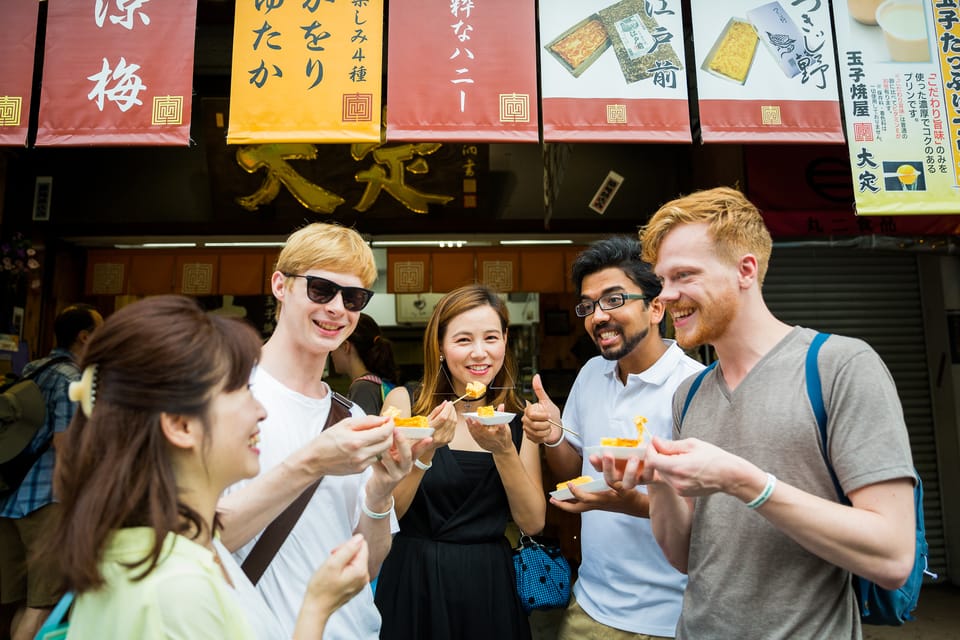
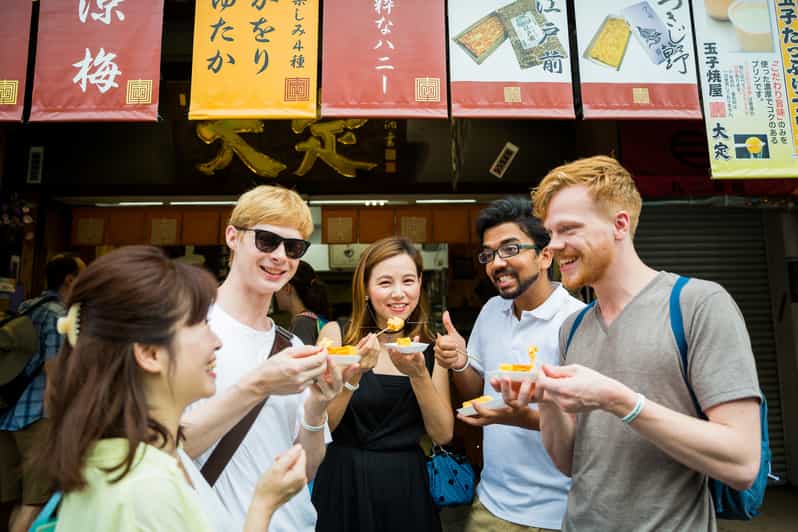
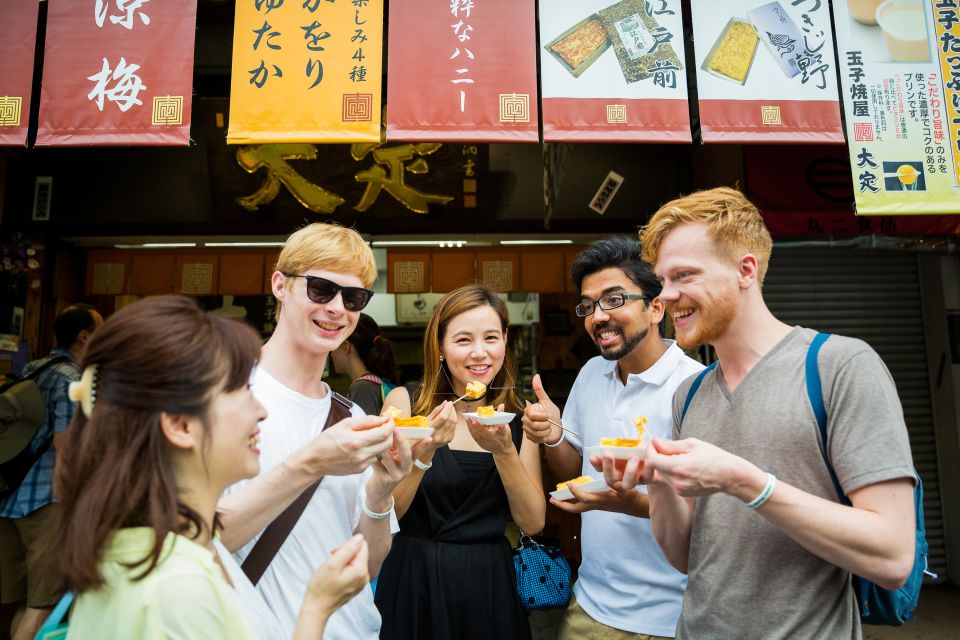
Then you’ll get other Japanese classics in bite-size formats: tamagoyaki and fish cake are both easy entry points into market food. Seasonal fruit is another nice break from seafood intensity, and it’s the kind of palate reset that makes the rest of the tour more enjoyable rather than tiring.
A small practical note: there’s a minimum drinking age of 20. If you’re tempted by sake or beer, understand that the tour focuses on the included tastings, so extra drinks may cost extra. One review even mentions being charged for sake or beer, which is a good reminder to check before you order.
Wagyu skewers, tamagoyaki, fish cake, and fruit: what each bite teaches
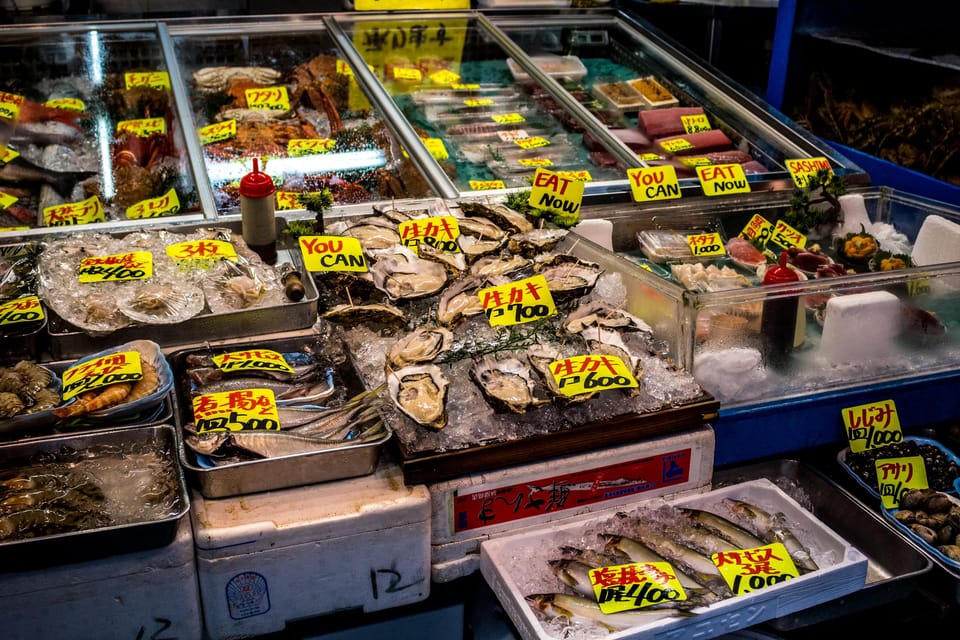
Each included item does more than fill your stomach—it helps you read the market like a local.
- Wagyu beef skewers show you the market’s “wow” factor and why chef sourcing matters. Wagyu isn’t casual street food; it’s a flex ingredient, and Tsukiji’s reputation makes sense when you taste it.
- Japanese omelet (tamagoyaki) is a working-class favorite made for quick consumption. It helps you understand that the market is not only about premium seafood.
- Fried fish cake is comfort food in a market wrapper. It’s also practical for people who want something warm while walking.
- Seasonal fruit gives you brightness and a change of texture. If you’re eating a lot of savory snacks back-to-back, this helps you keep enjoying the experience instead of feeling stuffed too early.
You’ll also get other samples along the route, which is where the real fun often happens: you start noticing patterns. For example, some stalls push grilled seafood flavors, others specialize in batter-based snacks, and others focus on fresh produce. Your guide helps connect those dots.
Why a guide matters more at Tsukiji than anywhere else
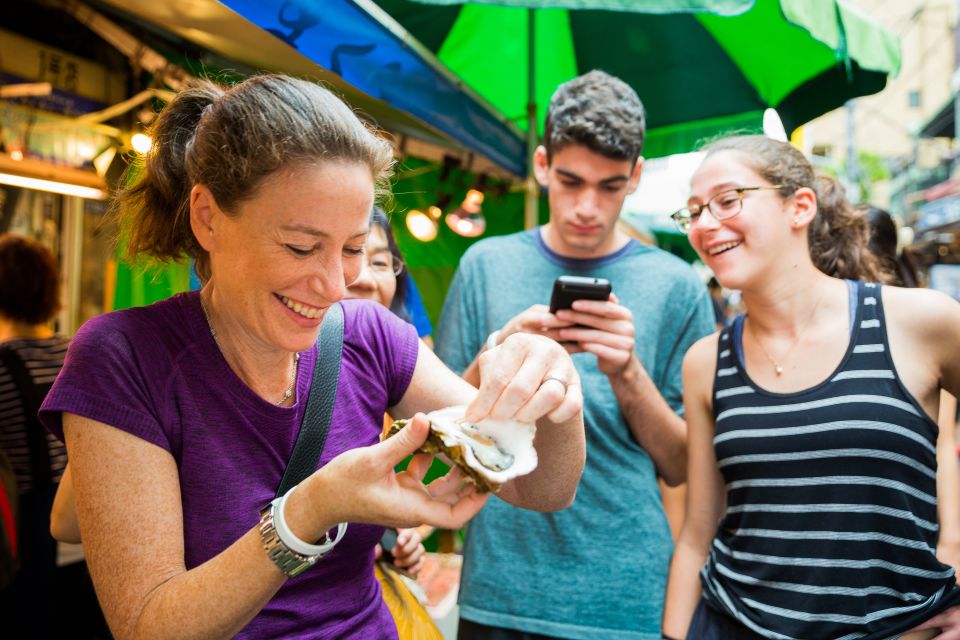
Tsukiji’s charm is also its problem. It’s crowded, loud, and filled with choices you might not recognize. A guide isn’t a luxury here—it’s the difference between spending the morning learning and spending it spinning in circles.
The tour is designed for small groups of 2 to 8 people, which usually means your guide can keep track of everyone. Reviews highlight that guides like Kenji, Miki, Nazu, Nori, Nazu (yes, again), and others were able to show the best places and make vendor interactions feel effortless. That matches what you’ll feel in the market: vendors move fast, and not every stall welcomes questions the same way.
If you’re the type who gets overwhelmed by too many options, this tour helps you “lock in” a plan. Your guide’s job is basically to turn chaos into a sequence of tastings and cultural notes you can follow.
Also, your guide isn’t only feeding you—they’re teaching you how to understand what you’re eating. Some tours include history lessons about how the Inner and Outer markets evolved and what top chefs come looking for. If shrine etiquette shows up in your session, even better. One review mentioned a cleansing ceremony and shrine etiquette guidance, which is a memorable way to add meaning before you hit the food lines.
The final stop: sushi or a seafood bowl, plus (sometimes) fish prep
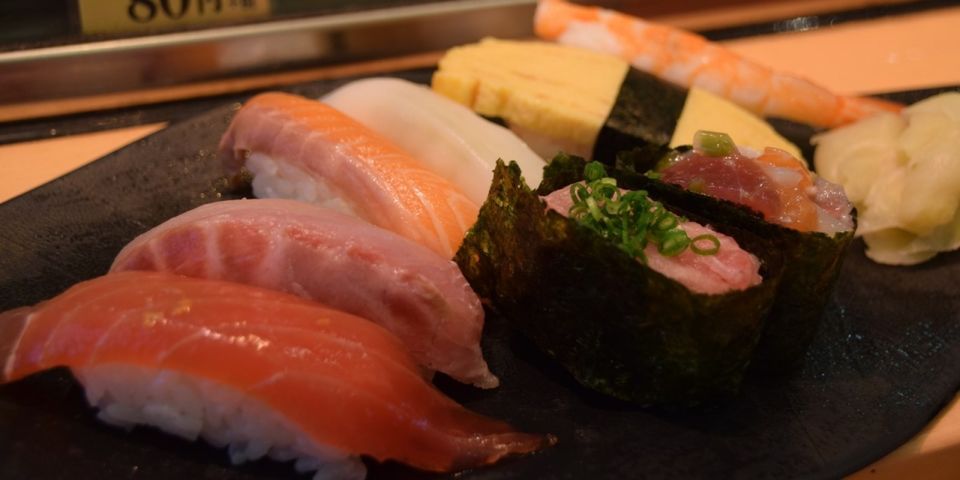
You’ll wrap up at Tsukiji Honganji-Temple after the last meal. The included final dish depends on the day: you either get a fish bowl or sushi.
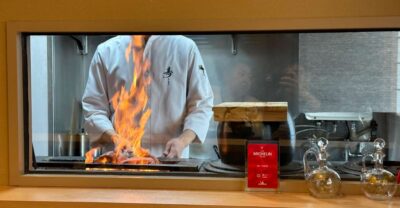
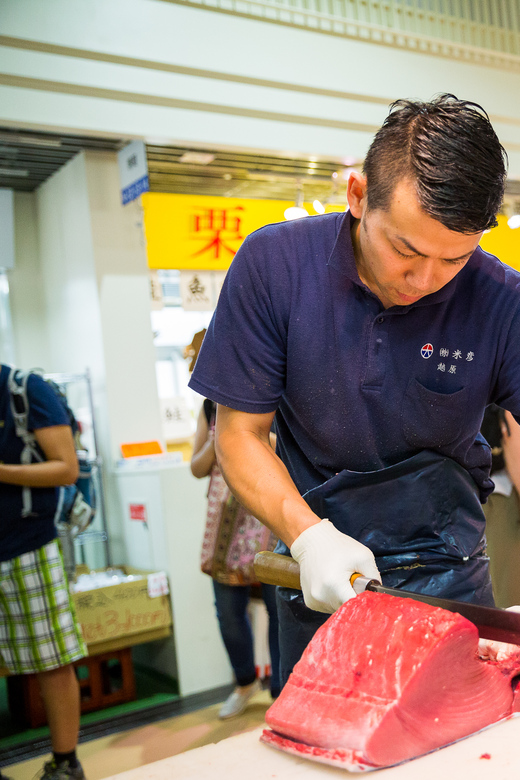
In many cases, the last stop is more than a plate—it’s part food, part show. Some reviews mention a sushi chef cutting and preparing fish for sashimi bowl service, and even the feeling that you’re watching the craftsmanship happen right in front of you. Even if your day looks slightly different, the structure is the same: you finish with a sit-down-or-counter meal that feels like the “collected” version of the snacks you’ve been tasting.
This ending matters because it gives you closure. You’ve been tasting small bites all along, so the final serving turns the morning into one coherent meal rather than a random pile of samples.
You can also read our reviews of more food & drink experiences in Tokyo

Market day reality check: what changes on Wednesdays and Sundays
Tsukiji isn’t one-size-fits-all. The fish market wholesaler (Uogashi wholesaler market) closes on Wednesdays, Sundays, and other closed market days. And this affects what you can be served.
On those closed days, the tour notes that Japanese omelet, fish cake, and fruits cannot be served because the shops are closed. That doesn’t mean you’ll leave empty-handed, but it does mean your included menu shifts.
If you’re planning around specific foods, you’ll want to sanity-check the day you’re going. A tour that’s perfect on a Tuesday can feel slightly different on a Sunday—not because the guide changes, but because the market ecosystem does.
One more safeguard: if a restaurant stop suddenly can’t provide the meal, the tour will offer an alternative. That’s not something you want to rely on, but it’s reassuring if closures or sudden changes happen.
Walking, crowds, and timing: how to make it smoother
This is a moderate walking tour, so comfortable shoes are non-negotiable. You’ll also be in a part of Tokyo where crowds move in waves—sometimes fast, sometimes slow, and often both at once.
Weather can add friction too. One review mentioned a Saturday morning with drizzle and heavy crowds, and the group found it harder to hear the guide. That’s not a dealbreaker, but it’s a reason to plan smart: if you can choose, aim for a mid-week day to potentially reduce crowd pressure.
For your own comfort, bring the basics: camera and comfortable clothes. If you’re sensitive to smells, know that fish markets have a strong scent profile. The upside is that the smell is part of the real experience, not something that disappears just because the tour is guided.
Price and value: is $96 worth it?
At $96 per person for 3 hours, you’re paying for more than food. You’re paying for a professional local guide, a small-group format, and a curated sequence of high-value tastings—especially the Wagyu skewers and the final sushi or seafood bowl.
Here’s how I think about the value for a trip like this:
- Market food can be cheap, but good market food is hard to pick when everything looks tempting.
- You’re not only sampling; you’re learning what to prioritize so you can shop smarter afterward.
- The included meal at the end gives you a proper finish, so the tour isn’t just snack-hopping.
If your goal is maximum convenience plus strong tastings, this price can feel reasonable. If your goal is only “eat anything anywhere,” you could skip a guided format and DIY—but you’d likely spend more time figuring things out and less time eating the best bites.
In short: for first-timers, this tour often feels like you’re buying time, guidance, and a safe path through a crowded sensory environment.
Who should book this Tsukiji tour—and who should skip
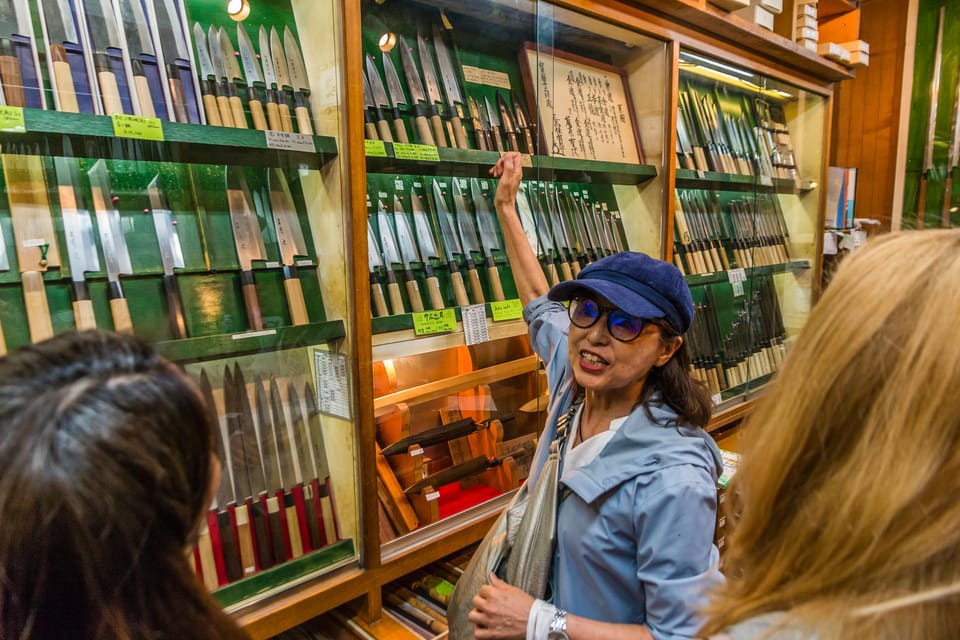
This tour is a great fit if you:
- Want an efficient first visit to Tsukiji with Wagyu skewers and a full ending meal (sushi or seafood bowl).
- Prefer small-group guidance over wandering alone.
- Like food culture explanations that connect ingredients to how Tokyo works day-to-day.
- Are comfortable with moderate walking and a dense, high-energy market setting.
It’s not a good fit if you:
- Need vegetarian, vegan, halal, or gluten-free accommodations (the tour unfortunately does not accommodate these requests).
- Have mobility impairments or use a wheelchair; the tour isn’t suitable.
Also, if you’re the type who loves “finding your own” stalls with no structure, you might find the guide-led route slightly limiting. Still, Tsukiji can be so overwhelming that having a plan is often the better kind of freedom.
Should you book? My practical verdict
Book this tour if it’s your first time in Tsukiji and you want the real food highlights without the stress. The standout is the combination of high-end tastings (Wagyu skewers and chef-level seafood at the end) plus guide-led context that makes the market feel less like a maze and more like a story you can follow.
Skip it (or at least look closely at your options) if your diet doesn’t match what’s included, because the menu isn’t flexible. And if you’re going on a day when the wholesaler is closed, expect fewer of the omelet/fish-cake/fruit items.
If you do book, show up with comfortable shoes, arrive ready to eat, and let the guide set the pace. Tsukiji rewards the people who surrender a bit to the plan—and then go back on your own afterward with sharper instincts.
FAQ
Where do we meet for the Tokyo Tsukiji tour?
Meet your guide at the main gate of Tsukiji Honganji-Temple when the tour starts.
How long is the tour?
The tour is 3 hours.
Is the tour in English?
Yes, the tour guide speaks English.
What do you get to eat during the tour?
You can include Wagyu beef skewers, fresh fish bowl or sushi (depending on the day), Japanese omelet, seasonal fruits, and fried fish cake, plus additional samples along the way.
Do they serve sushi or a fish bowl?
Depending on the day and time, you’ll be served either sushi or a seafood bowl as the final meal.
Are vegetarian, vegan, halal, or gluten-free options available?
No. The tour does not accommodate vegetarian, halal, or gluten-free requests.
How much walking is involved?
There is a moderate amount of walking during the tour.
What is the minimum drinking age?
The minimum drinking age is 20.
Is the fish market open every day?
No. The fish market (Uogashi wholesaler market) is closed on Wednesdays, Sundays, and other closed market days.
What happens on closed market days to the menu?
On Wednesdays, Sundays, and other closed market days, Japanese omelette, fish cake, and fruits cannot be served because shops are closed.