REVIEW · TOKYO
Tokyo: Calligraphy on Kanji Fan & Scroll with Drink
Book on GetYourGuide →Operated by Shodocafe7557 – Kanji & Calligraphy Tokyo · Bookable on GetYourGuide
Brushstrokes can calm a noisy day in Tokyo. At Shodo Cafe 7557 in Roppongi, I love the included matcha break and the hands-on way you make take-home art fast. You’ll be busy creating a kanji fan, a hanging scroll, and a personal hanko—but the class packs a lot into 80 minutes.
What makes it work is the teaching. In English, instructors guide you through basic strokes and help you pick a character or translated name that actually feels yours. One possible downside: if you want a slow, studio-style pace where you obsess over every tiny improvement, this format may feel brisk.
In This Review
- Key Points That Matter Before You Go
- Finding Shodo Cafe 7557 in Central Roppongi
- How the 80-Minute Shodō Class Really Flows
- Learning Basic Brush Strokes (and Why They Matter)
- Writing Your Kanji Name on the Fan and Hanging Scroll
- Making Your Personalized Hanko Stamp and Kanji Accessories
- Matcha Latte Included, Plus the Personal Touch
- Price and Value: Is $53 Worth It for Tokyo?
- Who This Workshop Suits Best (and Who Might Not)
- Smart Tips to Get Better Outcomes (Without Stress)
- Should You Book Shodo Cafe 7557?
- FAQ
- How long is the calligraphy workshop?
- Where is the meeting point in Roppongi?
- What drink is included?
- What will I create during the workshop?
- Can beginners join if they know no Japanese?
- Is instruction available in English?
- What souvenirs do I take home?
- Do I need to provide names in advance?
- Is the workshop wheelchair accessible?
- Is there anything about age limits?
Key Points That Matter Before You Go
- Roppongi location, easy train access: about 3 minutes from Roppongi Station, and you’re on the 2nd floor of Crest Roppongi.
- You create both a uchiwa fan and a kakejiku hanging scroll, not just one piece.
- Included drink with your lesson: choose matcha latte/green tea/coffee/soda/beer.
- Personal hanko stamp in hiragana, plus extra kanji accessories to take home.
- English instruction and patient coaching for beginners and kanji fans alike.
Finding Shodo Cafe 7557 in Central Roppongi
This workshop is set up for people who want culture without a half-day logistics headache. You’re in Roppongi, and the meeting point is close to the station: use the Toei Oedo Line, Exit 7, then cross toward FamilyMart and head right toward the National Art Center.
As you walk along Bijutsukan Dori, look for a large crane sign on your left. The studio is on the 2nd floor of the Crest Roppongi Building. If you like planning that takes the stress out of travel, you can also search Shodocafe7557 in Google Maps to route smoothly.
For taxi day, keep the address handy and show the driver: Shodocafe7557 in Crest Roppongi building, near the National Art Center Tokyo. The workshop address is 7-9-3 Roppongi, Minato-ku, Crest Roppongi Building 2F.
You can also read our reviews of more tours and experiences in Tokyo.


How the 80-Minute Shodō Class Really Flows
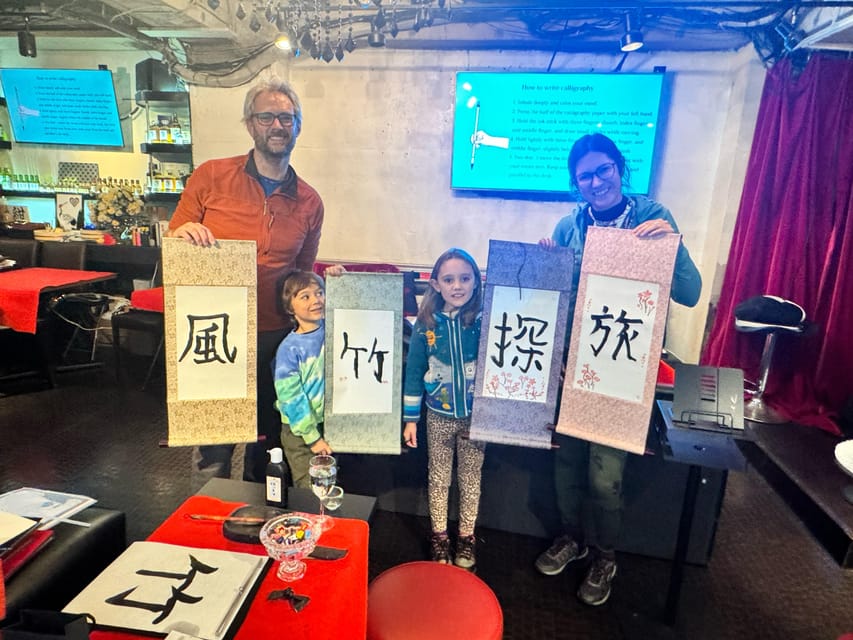
You’re booked for about 80 minutes, and that timing matters because calligraphy is part skill, part rhythm. Expect a guided lesson that starts with tools and basic brushwork, then moves quickly into writing your own character.
The core focus is shodō, Japanese calligraphy as a meditative art form—not just handwriting. The instructor explains the philosophy behind brushwork and what each stroke is meant to do. That matters for first-timers because kanji can feel impossible until someone breaks it into understandable moves.
A big theme you’ll feel in the room is practice with support. Even when you don’t get it right on the first try, the teaching style is patient and encouraging, with time for you to re-do strokes until they click. Several class experiences mention the difference between watching brushwork once and actually getting guided attempts yourself.
You also get English instruction, which is a comfort if you’re not familiar with Japanese writing systems. And since the class is wheelchair accessible, it’s designed to be easier to participate in than some cramped, traditional spaces (though you’ll still want to follow the venue’s comfort rules on the day).
Learning Basic Brush Strokes (and Why They Matter)
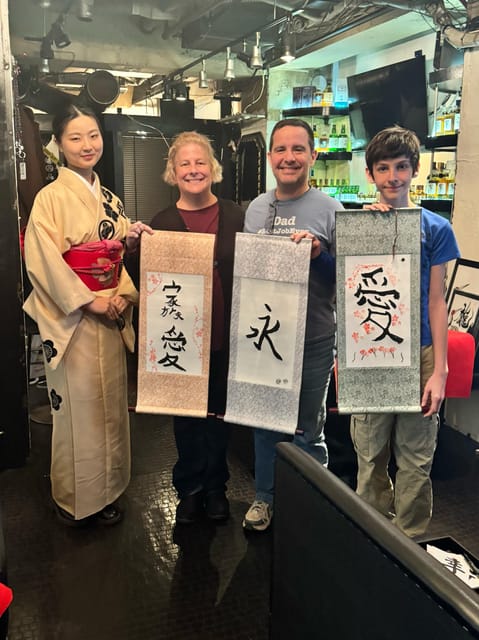
This is the part that turns calligraphy from intimidating to doable. You start learning basic brush strokes, then use that foundation immediately on your own piece(s).
The tools are provided, including a calligraphy board and either a folding fan setup or the hanging scroll format used in the class. The instructor also explains the meaning behind characters and the logic of brush directions—so you’re not just copying shapes, you’re building the right structure.
Here’s the practical value: once you understand how strokes connect, you can judge your own work faster. Instead of guessing what went wrong, you can see which part of the character needs more control. That’s also why the class goes beyond a single quick write. You’re meant to practice, adjust, and try again while the instructor is there to keep you on track.
If you’re worried about “I can’t write kanji,” this part is why you shouldn’t overthink it. The workshop is built for beginners, and your early attempts are part of the learning.
Writing Your Kanji Name on the Fan and Hanging Scroll
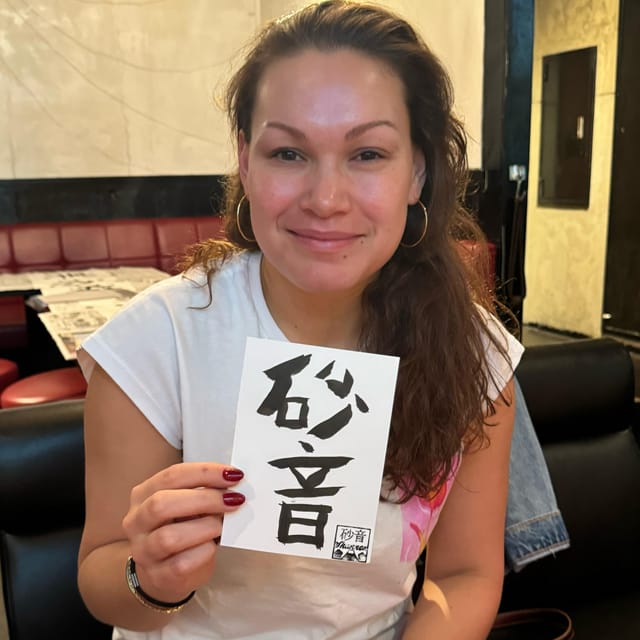
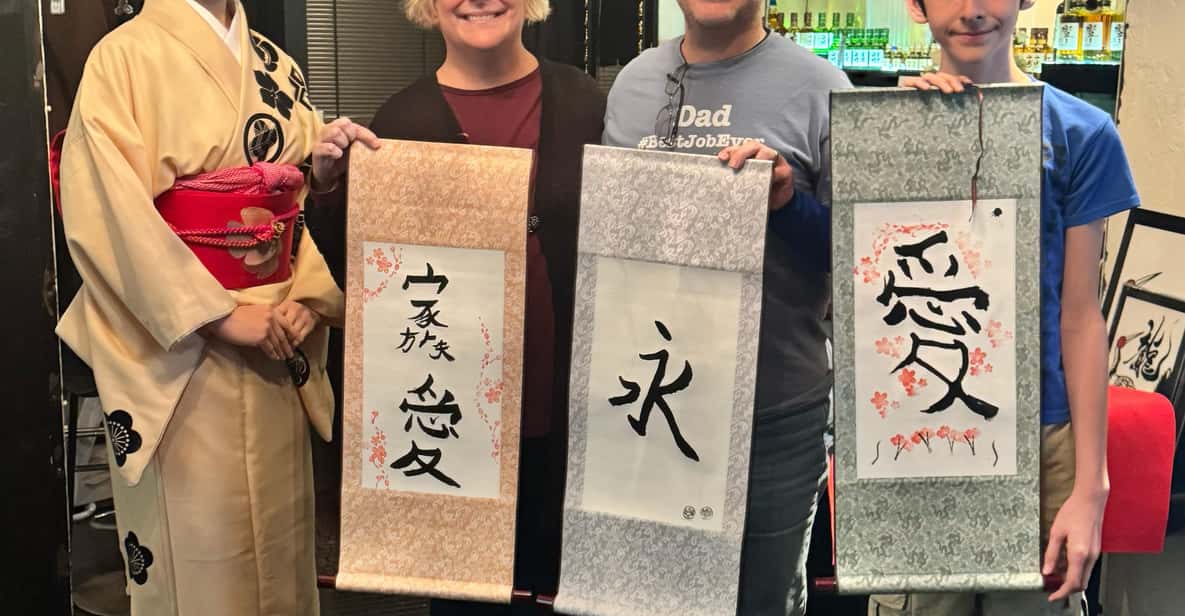
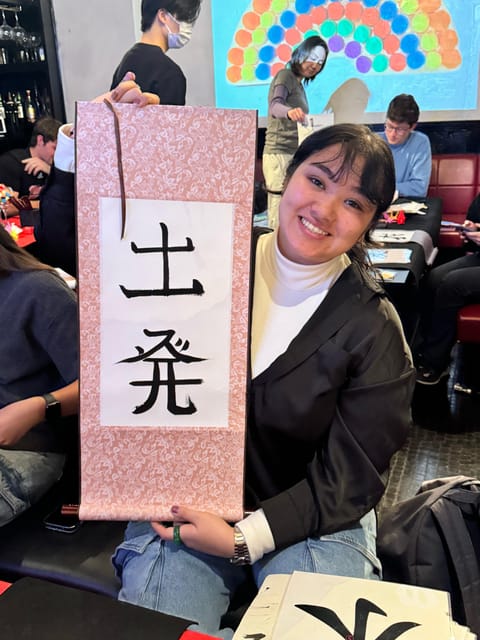
This workshop is not a one-and-done souvenir. You create two major items: a uchiwa (traditional paper fan) and a kakejiku (hanging scroll).
On the uchiwa, you’ll write your name or a favorite word in kanji. On the kakejiku, you’ll also produce your own hanging-scroll artwork. The instructor guides you through the character choice and the stroke order so your final pieces look intentional, not rushed.
A useful detail: if you provide your names in English when booking, the studio can prepare a special souvenir tied to your name in kanji—an animated video of your names in kanji. That same kind of personalization shows up in the teaching approach too, with instructors spending time explaining the meaning of your name and how it connects to the character.
Also, you’re not stuck with one single character. Some sessions include guidance on kanji options based on your chosen word or what your name translates to (within the workshop’s approach). If you care about the meaning and not just the shape, this is where the experience becomes extra rewarding.
Making Your Personalized Hanko Stamp and Kanji Accessories
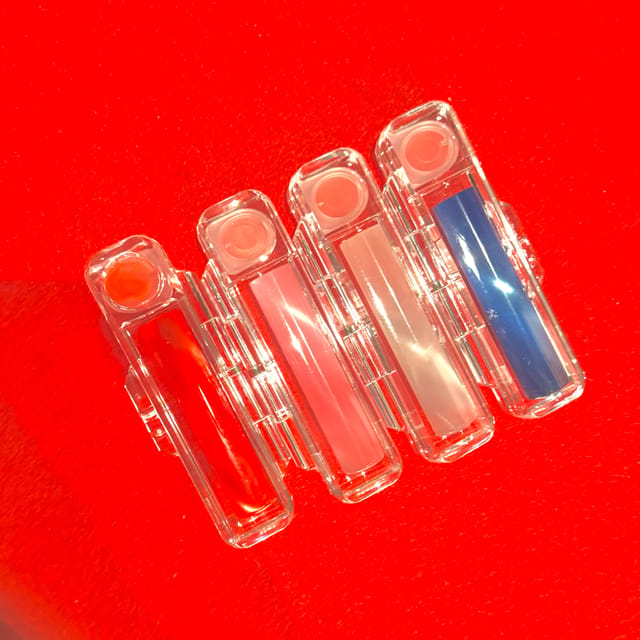
Your take-home souvenir set is a major part of the value. You’ll create a hanko stamp with your name in hiragana. That gives you something you can actually use as a small personal symbol, not just a decorative art piece.
Beyond the hanko, you also receive kanji items designed to keep your calligraphy with you long after the workshop ends. Included items list kanji tote bags, kanji keychains, a kanji coaster, and a kanji pouch. You’ll also take home your original kakejiku and uchiwa from class.
What I like about this setup is that it turns “one activity” into “a mini calligraphy collection.” For travel, that’s helpful. Instead of hunting for souvenirs after you’re tired, you leave with items that match the skill you practiced.
If you’re doing this as a family activity, the variety helps too. People who don’t want to focus on kanji can still feel ownership of the final objects. And if you are a kanji lover, you get the pleasure of writing the character multiple times across different formats.

Matcha Latte Included, Plus the Personal Touch
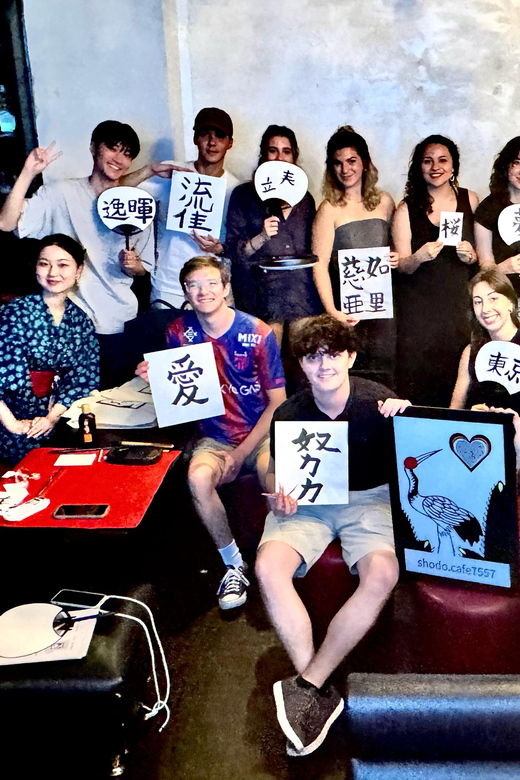
The workshop pairs the art with a drink, which keeps the experience from feeling like a classroom. You can choose a matcha latte, green tea, coffee, soda, or beer, and it’s included in the price.
This small detail changes the vibe. Calligraphy needs patience—your wrist and focus work better when you’re not also thinking about food or finding a nearby café. It’s the kind of break that makes the lesson feel like you’re stepping into a calmer pocket of Tokyo, right in the middle of the city.
The personal touch extends beyond what you write. In addition to the live instruction, some people receive an animated video tied to their names in kanji, either during the workshop or delivered afterward. Several experiences also describe instructors using slideshows to explain names and meanings, which helps you understand what you’re making—not just how to make it.
Price and Value: Is $53 Worth It for Tokyo?
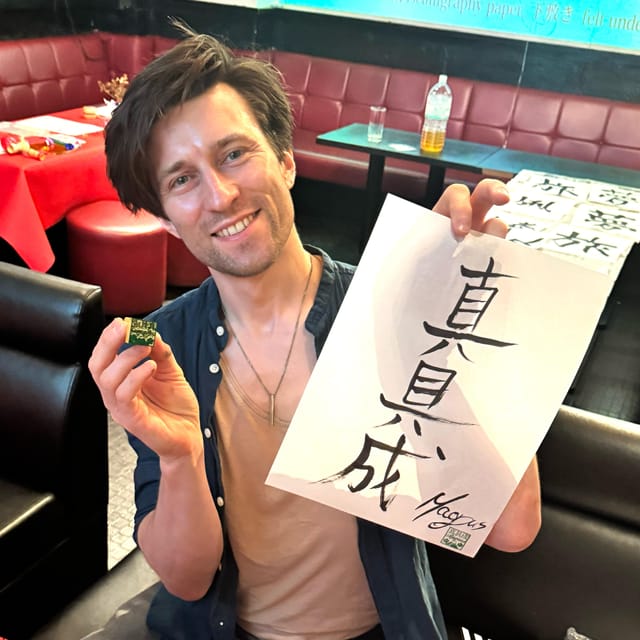
At $53 per person for about 80 minutes, the value comes from the mix of instruction plus materials plus multiple take-home items.
You’re not paying just for a single craft. You get:
- A guided calligraphy lesson in English
- Provided calligraphy tools and practice support
- A drink included
- Two crafted artworks (fan and hanging scroll)
- A personalized hanko stamp in hiragana
- Multiple included kanji accessories (tote, keychain, coaster, pouch)
If you price those separately, the totals add up fast—especially in a city like Tokyo where even simple souvenirs can cost more than expected. Here, the workshop bundles the cost around an actual learning experience, not only around objects.
The other value angle is time. At 80 minutes, it’s short enough to fit into a packed Tokyo itinerary, including travel days. It’s also long enough to feel like you gained something real: basic strokes, a character you wrote yourself, and a final set you can display.
Who This Workshop Suits Best (and Who Might Not)
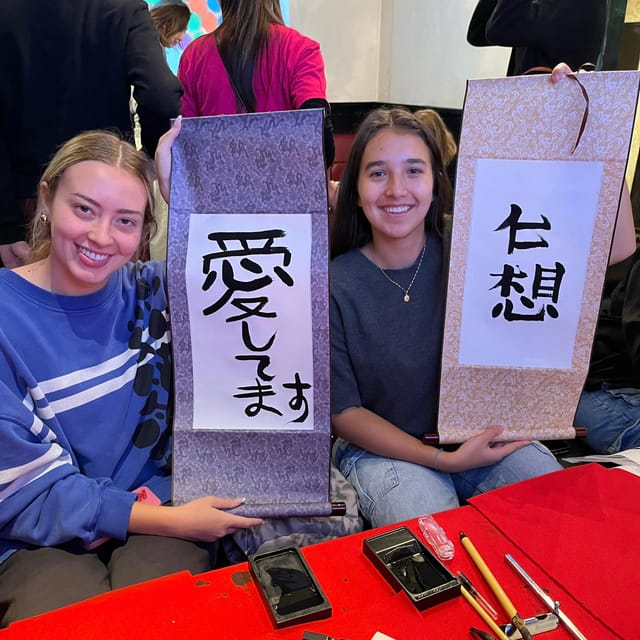
This is a good fit if you want a cultural activity that’s hands-on, not museum-only. Beginners are welcome because the lesson starts with basic strokes and guidance is provided throughout. If you already like kanji, you’ll enjoy the extra attention to meaning and the chance to write in multiple formats.
It’s also a solid family option because it welcomes all ages and skill levels, with participants able to choose a name or favorite word and work at their own pace. The instructor support is a big reason this works for mixed skill groups.
One caution: it is not suitable for people over 95 years. If anyone in your party is near that age range, you’ll want to confirm fit with the operator before booking.
Smart Tips to Get Better Outcomes (Without Stress)
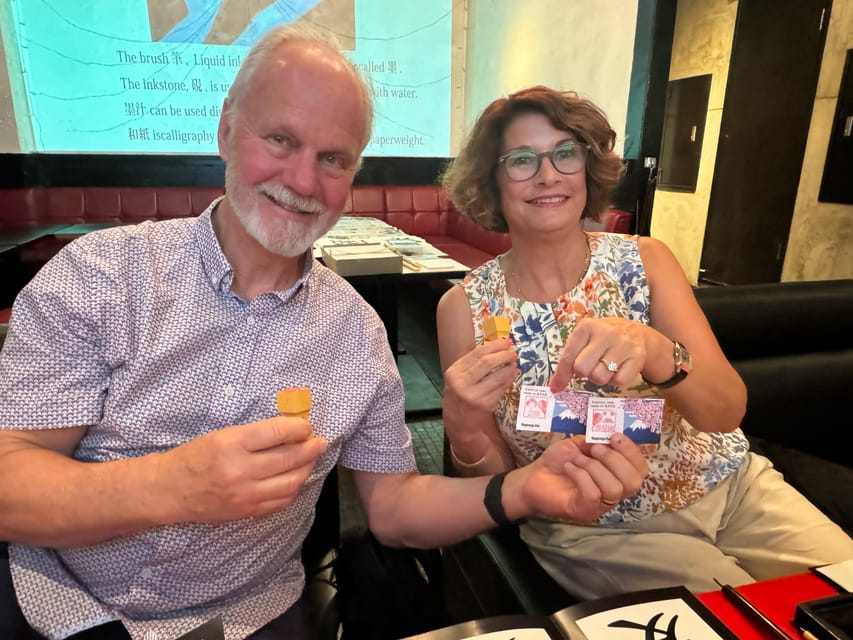
If you want the experience to feel personalized and easier to enjoy, do these things before you go.
First, when booking, provide participant names in English. If you share them in advance, the studio prepares a special animated video of your names in kanji, which can make the souvenirs feel more meaningful. It also helps the instructor prep the explanations around your name’s character and meaning.
Second, choose your kanji target before the class starts in your head. You can write your name or a favorite word, so decide what you want: something personal (name) or something symbolic (a word you like). That decision affects how emotionally satisfying the finished work feels.
Third, plan for practice attempts. The teaching style includes patient guidance and room to keep trying until you feel confident. If you treat the first strokes as part of the process instead of a test, the whole session becomes more relaxing.
Finally, consider what you’ll do with the finished pieces right after the workshop. You’ll take home a hanging scroll and a fan, plus several accessories. If you pack carefully for the day, you’ll have fewer worries about storing items in a busy Tokyo trip.
Should You Book Shodo Cafe 7557?
If you like practical culture—something you can touch, learn, and take home—this is a strong booking. The combination of English instruction, patient coaching from instructors like Kana and Tomi, and the structured basics of brush strokes makes it beginner-friendly without feeling watered down. You also get a lot for your money: a drink, a personalized hiragana hanko, a fan, a hanging scroll, and multiple kanji accessories.
Don’t book if you want a very long, slow art session where you refine one piece over hours. This class is designed to be efficient and productive in about 80 minutes.
If you’re in Tokyo and you want a calm activity that still delivers real results you can keep, Shodo Cafe 7557 is worth it.
FAQ
How long is the calligraphy workshop?
The experience lasts about 80 minutes, and the activity can range between 60 minutes and 2 hours depending on the session.
Where is the meeting point in Roppongi?
Meet at Shodo Cafe 7557 on the 2nd floor of the Crest Roppongi Building near the National Art Center. From Roppongi Station (Toei Oedo Line), use Exit 7, cross toward FamilyMart, turn right, then continue toward the National Art Center street and look for the crane sign on the left.
What drink is included?
You can choose a matcha latte, green tea, coffee, soda, or beer. The drink is included in the price.
What will I create during the workshop?
You’ll learn basic brush strokes and create a uchiwa (paper fan) and a kakejiku (hanging scroll). You also make a hanko stamp using your name in hiragana.
Can beginners join if they know no Japanese?
Yes. The workshop is designed for all skill levels, including beginners and kanji lovers.
Is instruction available in English?
Yes. Instruction is provided in English.
What souvenirs do I take home?
You take home your original kakejiku and uchiwa, plus a personalized hiragana hanko stamp and kanji accessories such as a kanji tote bag, kanji keychain, kanji coaster, and a kanji pouch.
Do I need to provide names in advance?
When you book, you need to provide the names of all participants in English. If you share names in advance, the studio prepares a special animated video of your names in kanji.
Is the workshop wheelchair accessible?
Yes, the experience is listed as wheelchair accessible.
Is there anything about age limits?
It is not suitable for people over 95 years.