REVIEW · TOKYO
Tokyo: Daikoku JDM Car Meet & Night Car Culture Tour
Book on GetYourGuide →Operated by MisiuJDMX · Bookable on GetYourGuide
Tokyo gets weirder at night. This 4-hour Daikoku JDM car meet tour turns movie-fuel locations into a real night with local context, and two things shine fast: Daikoku Parking Area in person and the chance to ride with a true auto-industry insider who explains what you’re seeing. One drawback to plan for: the exact lineup of cars isn’t guaranteed since meets can be open, partial, or adjusted.
I like that the vibe stays respectful and safe. Driving is handled responsibly and stays within local laws—so you’re there for the cars and community, not illegal drifting or reckless showmanship. The small group size (up to 10) also makes it easier to ask questions, and guides can run English by default with other language support like Japanese, German, Polish, or Italian depending on who’s on duty.
If you’re the type who cares about details, this is the tour where the names Mori, Michael, Karim, Jason, and Julian come up for a reason. The guides tend to focus on how Tokyo’s car culture works—why certain parking areas matter, what to look for, and how the style you see connects to the broader scene.
In This Review
- Key things I’d clock before you go
- Daikoku at Night: Tokyo JDM Culture Without the Chaos
- Who This Tour Fits (and Who It Doesn’t)
- Starting Points: How You Join the Night Drive
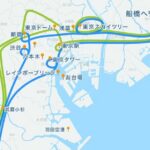
- The City Drive Part: Rainbow Bridge, Skytree Pass-By, Tokyo Tower Views
- APIT Autobacs Shinonome: A Shopping Stop That Actually Makes Sense
- Tatsumi (and Other PA Spots): Why the Pre-Daikoku Stops Matter
- Daikoku Parking Area: The 30+ Year Magnet for Tuned Machines
- Riding Comfort: Vans, Sedans, and What “Well-Maintained” Means in Practice
- The Guides: How Mori, Michael, Karim, Jason, and Julian Make It Click
- Weather, Closures, and the Real-World Car Spot Reality
- Price Value: What $98 Gets You in 4 Hours
- Should You Book MisiuJDMX’s Daikoku JDM Night Tour?
- FAQ
- How long is the Daikoku JDM night car culture tour?
- How much does the tour cost?
- Is Daikoku Parking Area guaranteed to be open?
- Where do we meet the group?
- What’s the biggest shopping stop during the tour?
- What should I bring?
- What items are not allowed during the tour?
- Is food included?
- Can I cancel and get a refund?
Key things I’d clock before you go
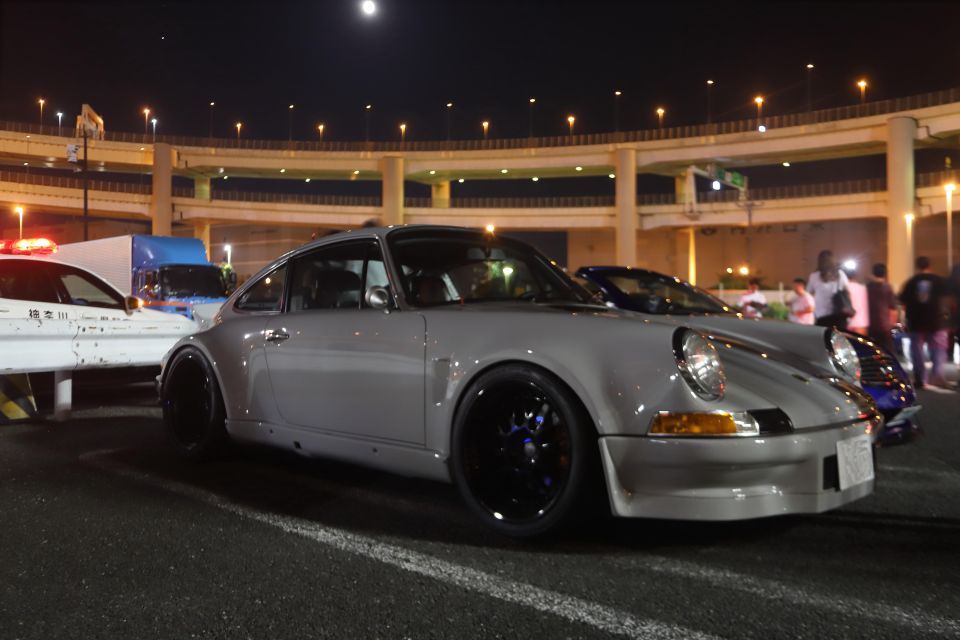
- Daikoku Parking Area: the main event, often around an hour when open
- APIT Autobacs Shinonome: a quick but serious stop for JDM merch and parts
- Night driving visuals: Rainbow Bridge and skyline views are a big part of the payoff
- Insider guide talk: you’ll hear the how-and-why behind Tokyo car culture
- Car lineup uncertainty: part of the experience, so don’t book expecting a specific brand
Daikoku at Night: Tokyo JDM Culture Without the Chaos
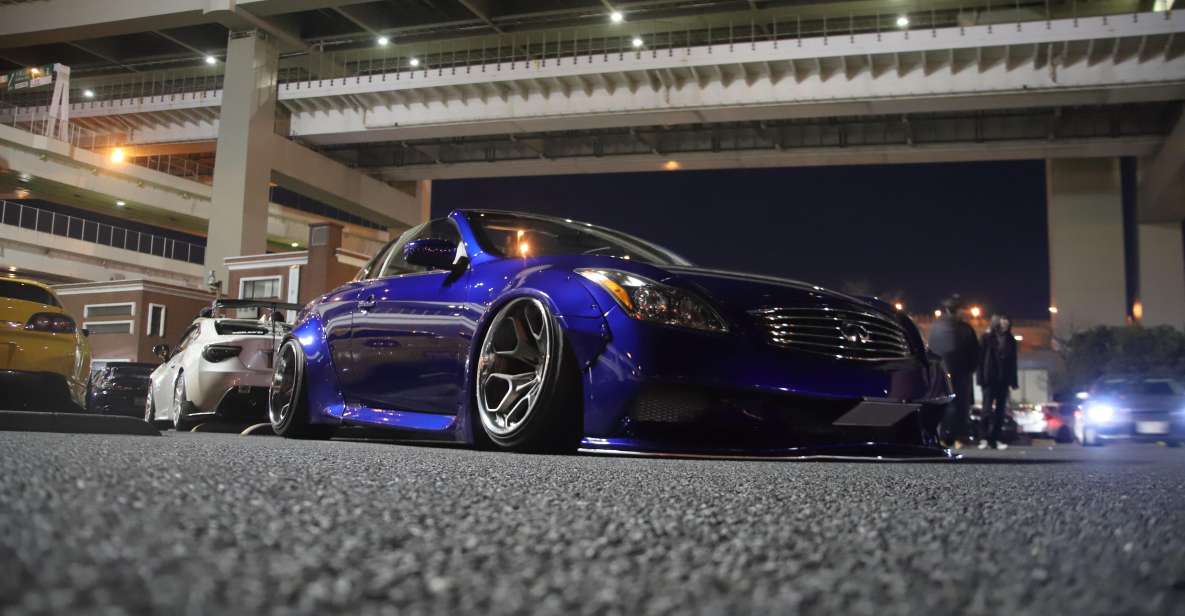
This tour is built for one purpose: help you see Tokyo’s JDM world the way locals experience it—style, machines, and conversation—without the nonsense. You start the night with a guided ride through iconic roads, then you end up at car-meet spaces where the atmosphere feels like a live version of what you’ve seen in games and on screens.
The magic is how fast the vibe changes once you’re off “regular sightseeing mode.” Tokyo at night already feels cinematic, but throw in a parking area packed with tuned cars and you get that rare mix of street culture and organized calm. That’s also why the timing matters: this works best at night, when the city lights match the scene.
And yes, you’ll hear context. Not generic “cool cars” talk—actual explanations about what you’re looking at and why places like Daikoku became magnets over decades.
You can also read our reviews of more evening experiences in Tokyo
Who This Tour Fits (and Who It Doesn’t)
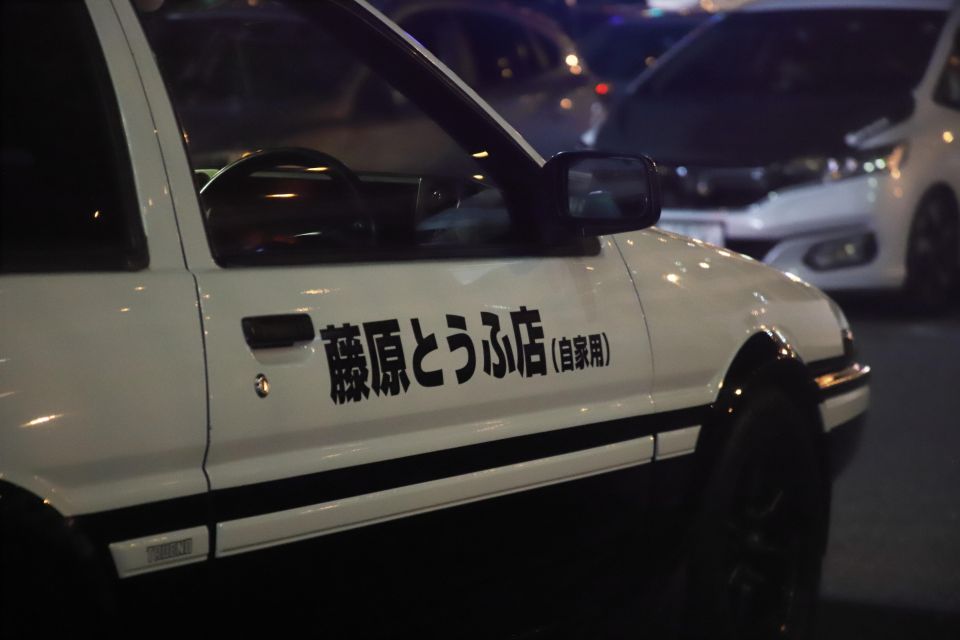
This is best for you if you’re any of these:
- A JDM fan who wants more than photos
- A car curious traveler who likes learning through stories
- Someone who enjoys night city views but also wants a real theme
It’s also good for people who like asking questions. Guides can run English, and depending on availability you may also get Japanese, German, Italian, or Polish. Small group size helps a lot here.
It’s not for everyone. The experience is not suitable for wheelchair users, and it’s not meant for kids under 5. If you’re traveling with children who need a booster seat (age 5–7), contact the operator ahead of time so the team can plan appropriately.
Starting Points: How You Join the Night Drive
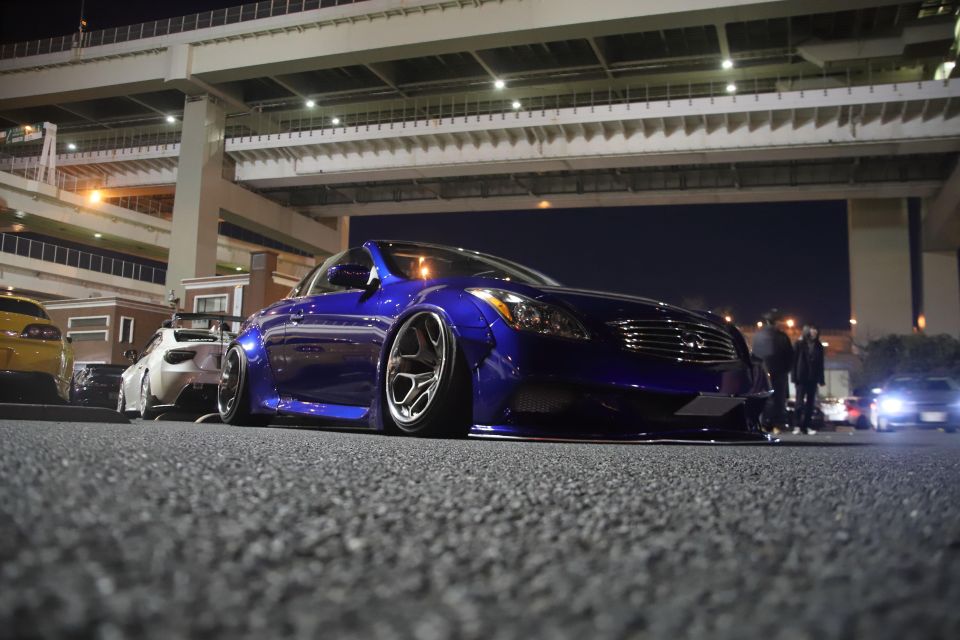
You meet at one of two starting options. Your pick depends on booking:
- Dōgenzaka area (2-chōme-29-8 Dōgenzaka, 東叡堂ビル)
- Roppongi Hills (you pass by on the way depending on the route)
Because the meeting point can vary, you’ll want to double-check confirmation details before you leave your hotel. The night stays smooth when you’re early and settled.
Drop-off is also handled at a set location after the tour. Some routes may feel like they extend beyond central Tokyo, including toward the Yokohama side, so it can be a nice way to end the evening without needing to re-plan transit.
The City Drive Part: Rainbow Bridge, Skytree Pass-By, Tokyo Tower Views
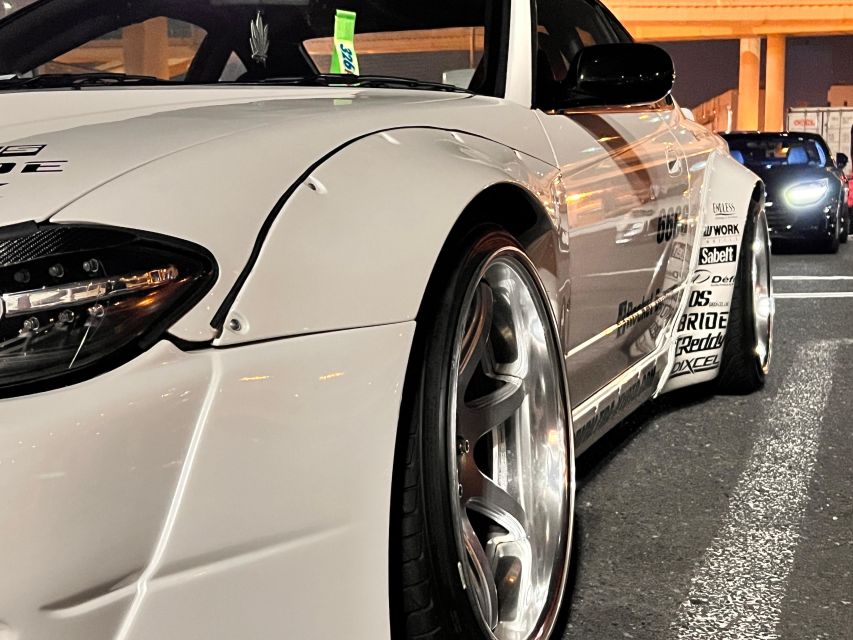
The driving segment isn’t filler. It’s how you connect the car culture to Tokyo itself.
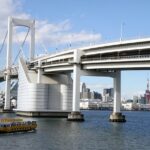
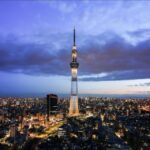
You’ll pass major viewpoints and iconic city sights—think Tokyo Skytree and multiple skyline angles—then you’ll get specific night highlights like Rainbow Bridge. That’s a big deal because it frames the whole trip: cars are the focus, but Tokyo at night is the backdrop that makes the scenes feel larger than life.
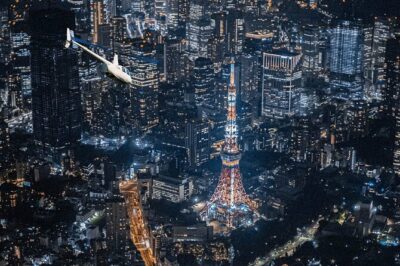
Tokyo Tower also shows up as a possible end-point on some nights. If you’re imagining the classic lit-up Tokyo look, this is where that usually happens.
One practical note: you’ll be in the vehicle most of the time between stops, so if you get motion-sick easily, you’ll want to plan for that just like any night tour in a city.
APIT Autobacs Shinonome: A Shopping Stop That Actually Makes Sense
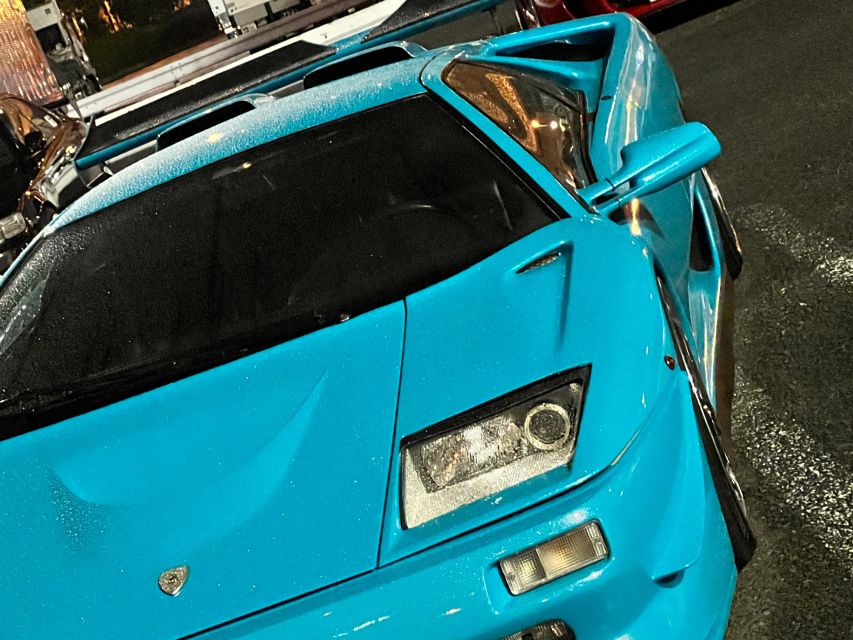
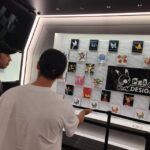
Autobacs Shinonome is where the trip takes a turn from “look at cars” to “touch the culture.” You’ll visit the store for about 25 minutes, which sounds short until you realize Japanese car parts and merch stores move fast.
This stop is valuable for you if:
- You want souvenirs that aren’t just random keychains
- You’re curious about tuning culture and want to see the scale of it
- You like browsing parts, models, and themed items in a way normal tourist shopping never offers
Big picture: even if you spend money you didn’t plan to, it’s still a real cultural stop. You’re seeing the commercial side of the same passion you’ll later witness at the meets.
Food and drinks are not part of this tour, so it helps if you eat beforehand. The store stop is for shopping, not a sit-down break.
Tatsumi (and Other PA Spots): Why the Pre-Daikoku Stops Matter
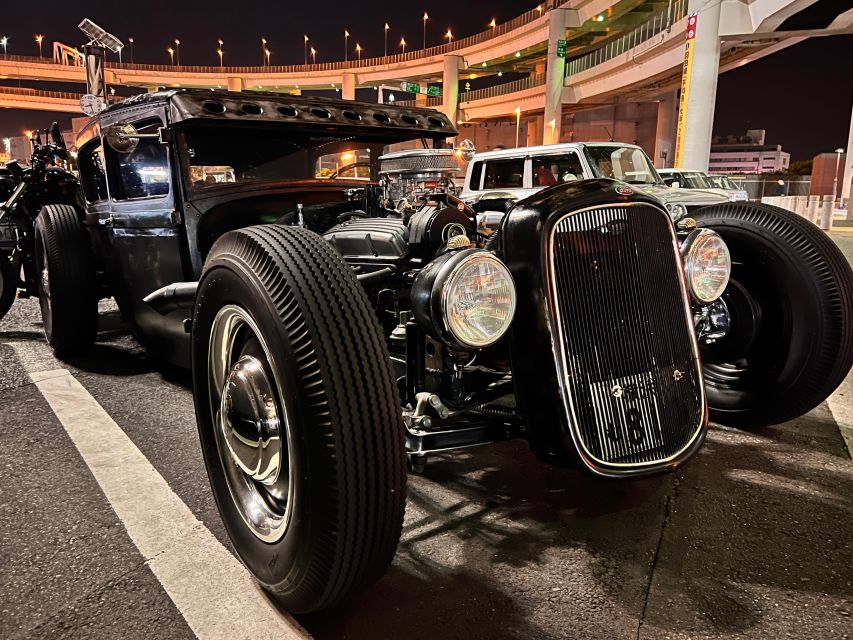
Daikoku is the headline, but you don’t go straight there and then leave. You’ll usually stop at another car-meet location first—commonly Tatsumi 1st PA for around 15 minutes.
These earlier stops matter because:
- They warm up the scene before the big moment
- They increase the odds of seeing a wider range of builds
- They give you extra time to talk with the guide about what you’re seeing
Depending on the day, the operator may swap or adjust the two “experience location” stops from a set that can include Tatsumi, Umihotaru, Autobacs, or Gaienmae. The operator keeps at least three stops along the way on typical days, and Daikoku remains included when it’s open.
One expectation to keep realistic: the exact cars you’ll see at each stop can’t be guaranteed. The scene is alive, and what’s present changes day to day.
Daikoku Parking Area: The 30+ Year Magnet for Tuned Machines
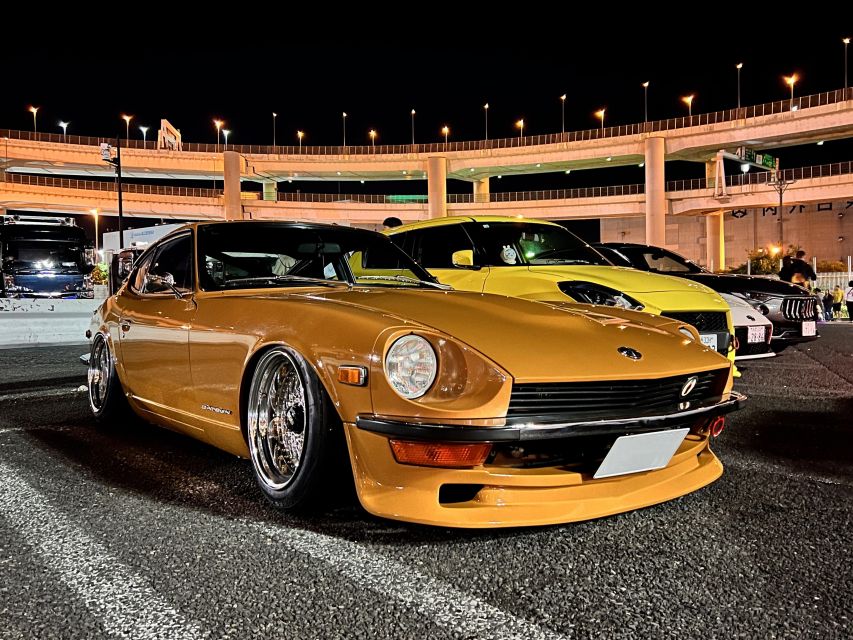
Daikoku Parking Area is the heart of the tour, and it’s famous for a reason. It’s a public rest stop that can function like a rolling, overnight car show—one that attracts enthusiasts from around the world.
When Daikoku is open, you get about an hour there. That hour is the right amount of time because it lets you:
- Walk the lot and spot different builds
- Take photos without feeling rushed into a sprint
- Linger long enough to notice details on cars you’d otherwise miss
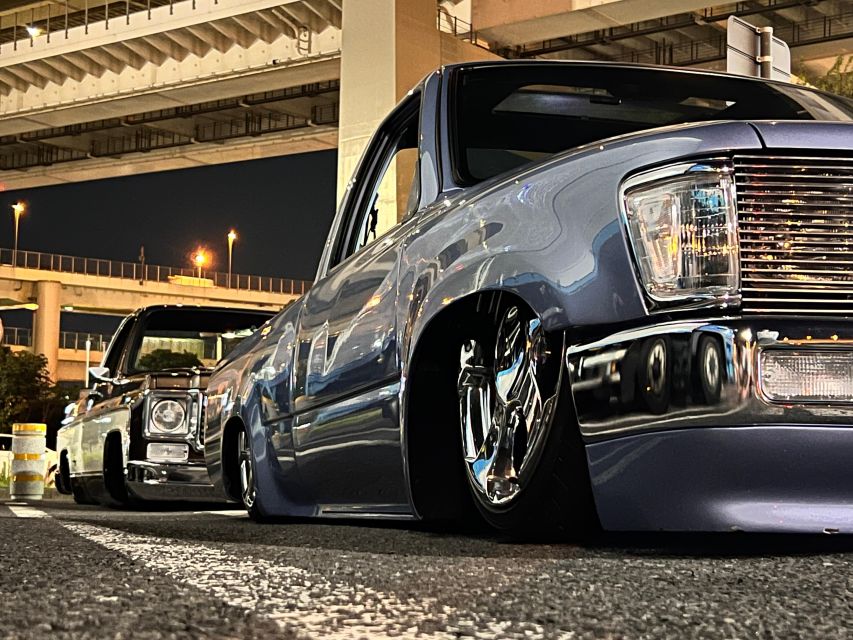
The standout is variety. On different nights you might see everything from long-time icons to modern performance cars—and you may notice more than JDM: European and luxury machines can show up too.
Keep this grounded: you’re not going there to watch illegal racing. This tour doesn’t promise drifting, street racing, or loud rev battles. You’re there to enjoy cars and the community around them, in a setting designed to stay public and controlled.
Riding Comfort: Vans, Sedans, and What “Well-Maintained” Means in Practice
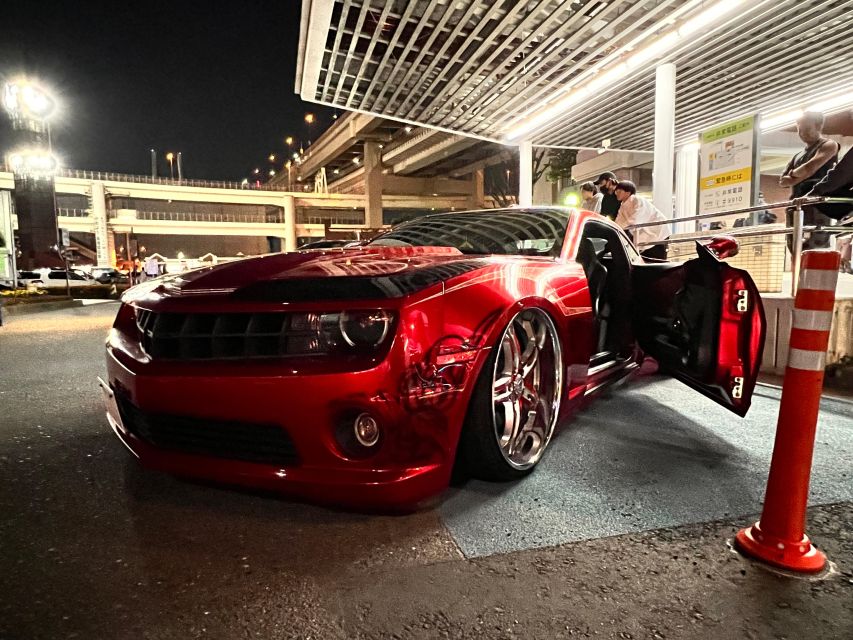
You ride in a selection of clean, well-maintained vehicles chosen for comfort and group needs. Options can include:
- Spacious vans
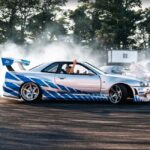
- JDM, European, or luxury cars
- Performance-oriented models when available
Some vehicles may be customized, while others are factory high-performance models. What stays consistent is the standard: vehicles are clean and cared for.
If you book the van option, your group may be split between two vans depending on your party size and remaining seats. That’s worth knowing because it affects how you stay together for conversation.
Also, there are clear rules in the vehicle: no smoking, no alcohol, and no food/drinks inside. Bring water beforehand if you need it, but plan around the fact that snacks aren’t part of the tour plan.
The Guides: How Mori, Michael, Karim, Jason, and Julian Make It Click
The guides are a major reason this tour gets high marks. They bring two things that matter on a car-themed night tour: practical driving skill and a solid, grounded story for what you’re seeing.
You’ll usually get explanations tied to:
- The significance of car-meet locations in Tokyo
- What different builds and styles tend to represent
- How the car culture connects to the wider Japanese scene (and yes, the pop culture versions too)
On the road, hosts tend to keep conversation going in a way that feels like learning from a fan who also knows the technical side. Names you may see associated with the experience include Mori, Michael, Karim, Jason, and Julian. Even if you don’t get the exact same guide, the goal stays the same: make sure you leave with more than “I saw cool cars.”
Weather, Closures, and the Real-World Car Spot Reality
Here’s the honest part: this is a public-meet style tour, so conditions can change.
- Daikoku Parking Area is a public rest stop and may close without notice. If that happens, the operator adjusts the route to still give you a great evening.
- Tours usually run in most weather, but heavy rain can lead to cancellation for safety and enjoyment.
- Your overall stop mix can shift based on traffic and weather, since the host is steering the night in real time.
Also, the cars you see aren’t guaranteed. That’s not a flaw—it’s how the scene works. If you can flex your expectations and focus on the atmosphere, the whole night feels more real.
Timing affects turnout too. Weekends can be fuller, and weekdays can still be solid. The main point: your job is to show up ready to enjoy whatever the night brings.
Price Value: What $98 Gets You in 4 Hours
At about $98 per person for a 4-hour experience, you’re paying for more than transportation. You’re buying:
- A guided night drive through iconic parts of Tokyo
- Access to key car-meet areas (with time built in to actually enjoy them)
- A small group setting, limited to around 10 people
- Multi-language hosting, with English by default
For many car lovers, the value is the combination. If you tried to plan this yourself, you’d still need to figure out timing, meet spots, and the human context that makes Daikoku mean more than a parking lot full of cars.
At the same time, it’s not a “guaranteed car show” in the sense of fixed performances. You’re paying for access and guidance, not a roster of specific supercars on demand. If you’re okay with that, the price makes sense quickly.
Should You Book MisiuJDMX’s Daikoku JDM Night Tour?
Book this if:
- Daikoku Parking Area is on your must-see list
- You want a night tour with city views plus a car-focused reason to be out
- You like learning from an insider rather than just following a pin on a map
- You appreciate safety-first driving and a respectful scene
Skip it if:
- You need wheelchair access
- You’re traveling with a child who needs special seating and haven’t checked the booster-seat planning
- You only care about seeing a specific make/model and can’t handle lineup uncertainty
- You prefer daytime sightseeing or car culture that doesn’t revolve around night meets
If you’re even a little curious about the real Tokyo car community, this is one of the most direct ways to experience it without getting lost in planning.
FAQ
How long is the Daikoku JDM night car culture tour?
It runs for about 4 hours.
How much does the tour cost?
The price is $98 per person.
Is Daikoku Parking Area guaranteed to be open?
No. Daikoku Parking Area is a public rest stop and may close without notice, but the host adjusts the route if that happens.
Where do we meet the group?
Meeting point can vary depending on which starting option you book (either the Dōgenzaka building area or Roppongi Hills).
What’s the biggest shopping stop during the tour?
APIT Autobacs Shinonome, with about 25 minutes for shopping.
What should I bring?
Bring a passport or an ID card.
What items are not allowed during the tour?
Smoking in the vehicle, alcoholic drinks in the vehicle, and food/drinks in the vehicle are not allowed.
Is food included?
No. Food, drinks, and souvenirs are not included.
Can I cancel and get a refund?
Yes. Free cancellation is available up to 24 hours in advance for a full refund.