REVIEW · TOKYO PREFECTURE
Tokyo: Samurai Sword Academy in the Hometown of the Last Samurai
Book on Viator →Operated by Samurai Sword Academy in the Hometown of the Last Samurai · Bookable on Viator
Sword training in Tokyo, but not touristy.
This kenjutsu experience takes place at an authentic dojo in Hino City, tied to the Shinsengumi story and the so-called Last Samurai. I like that you learn the essence of Tennen Rishin-ryu through direct instruction, not a performance-style demo, and you get hands-on time with a Japanese sword.
I also like the small-group setup (max 4 travelers), which matters when you’re learning stances and basic forms and need corrections. And the session is led by Masao Inoue, a descendant connected to Shinsengumi leadership, with English support during the program.
One drawback to consider: this is serious training, and you should plan on a moderate physical fitness level and focus for a full 2 hours. If you’re expecting casual sightseeing, you may feel underused.
In This Review
- Key highlights before you go
- Hino City and the Shinsengumi connection you can actually feel
- Your 2-hour kenjutsu session, starting at Genzaburo Inoue Shiryokan
- Tennen Rishin-ryu basics: etiquette, kamae, and kata
- Handling a Japanese sword with Masao Inoue (and support from Yu Ma)
- The Last Samurai feeling: why this isn’t just a technique class
- Do you try test-cutting with a real sword?
- Price and value: is $118.60 a fair deal?
- Who this experience suits best (and who might prefer another plan)
- Practical tips so your afternoon goes smoothly
- Should you book Samurai Sword Academy in the Hometown of the Last Samurai?
- FAQ
- How long is the Samurai Sword Academy experience?
- Where do I meet for the experience?
- Is there a limit on group size?
- Can I handle a Japanese sword during the experience?
- Do I need prior experience with swordsmanship?
- Is there English support?
- What physical condition do I need?
- Can I cancel for free?
Key highlights before you go
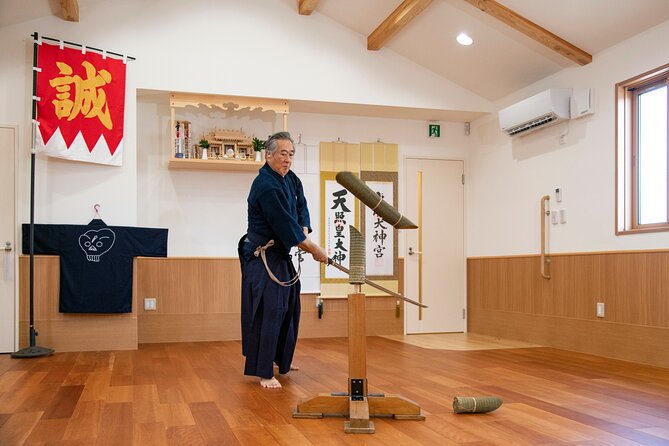
- Authentic dojo training in the Tennen Rishin-ryu Hino Dojo setting
- Shinsengumi and Last Samurai context tied to Hino City
- Close coaching in a group capped at 4 travelers
- Hands-on Japanese sword handling as part of the lesson
- Learning etiquette, stance, and forms before more advanced practice elements
- English support during the experience via Yu Ma
Hino City and the Shinsengumi connection you can actually feel
Hino City is presented as the hometown of the Shinsengumi, described as the strongest group of swordsmen at the end of the Edo period. That framing changes the mood. Instead of treating swords as an attraction, you’re learning within a place that’s trying to preserve the tradition.
The core style you practice is Tennen Rishin-ryu, said to have roots in the Edo period and carried on to today. You’re not just hearing about history either. You’re doing the movement and building the discipline that the tradition is known for.
You can also read our reviews of more tours and experiences in Tokyo Prefecture.

Your 2-hour kenjutsu session, starting at Genzaburo Inoue Shiryokan
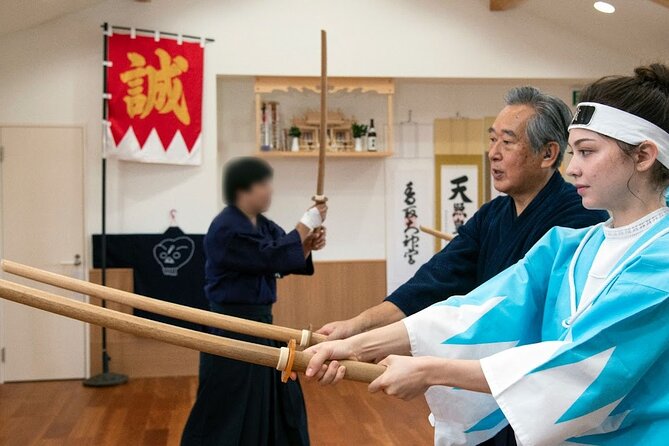
The experience runs about 2 hours and starts at 1:00 pm. You meet at Genzaburo Inoue Shiryokan in Hino, Tokyo, and the activity ends back at the meeting point. For me, that round-trip structure is a plus because it keeps the logistics simple.
This is also a short window compared with day trips, which is part of the value. You get a full training-style session without turning your afternoon into an all-day mission.
And because the group is limited to 4 travelers, you should expect more direct feedback than you’d get in a larger class. In a sword lesson, that difference is huge since posture and timing are everything.
Tennen Rishin-ryu basics: etiquette, kamae, and kata
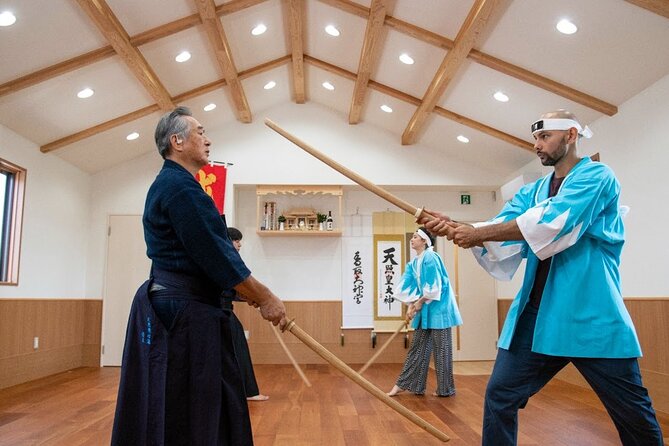
This is not pitched as a leisure “try a sword” activity. The emphasis is on learning the basics of Tennen Rishin-ryu in a real dojo environment. The lesson includes礼儀作法 (etiquette and respectful procedure), sword stance, and forms (kata).
That matters because kenjutsu is more than swinging metal. You’re being taught how to hold yourself, how to set your body, and how to move with intention. If you’ve ever watched sword demonstrations and wondered why the calm parts look so strict, this is where it starts.
Also, even if you’ve never handled a Japanese sword before, the program is framed as something anyone can learn in the dojo setting. The key is that you’re learning steps in order, not improvising.
Handling a Japanese sword with Masao Inoue (and support from Yu Ma)
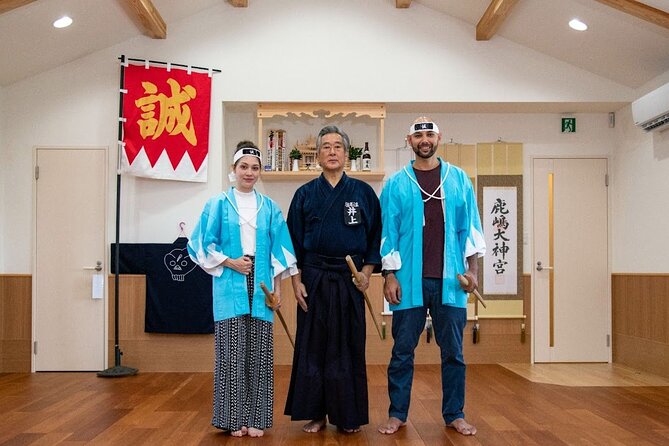
A big promise here is that you can actually handle a Japanese sword, described as the soul of the samurai. You’re not just standing nearby. You’re learning through physical contact and guided positioning.
The instructor lead is Masao Inoue, who is the chairman of the Tennen Rishin-ryu Hino Dojo. The program also highlights a family connection: he is a descendant of Shinsengumi executive Genzaburo Inoue. Even without deep prior knowledge, that personal link gives the training an extra layer of seriousness.
English support is part of the experience as well, including help from Yu Ma. That can make a difference when you’re learning terms for stance and form, since those instructions rely on clear communication.
The Last Samurai feeling: why this isn’t just a technique class
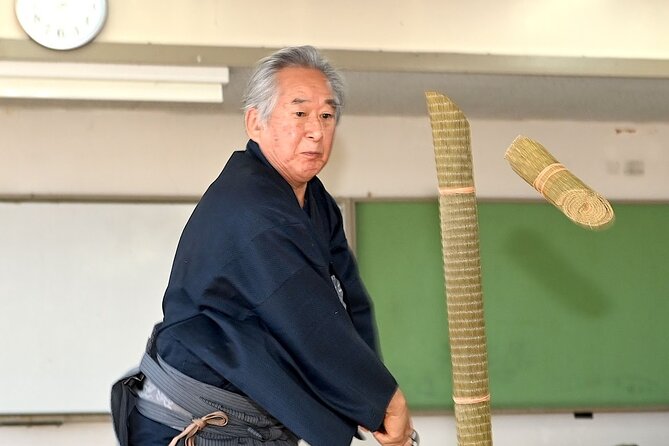
The story angle is the Shinsengumi and their link to the swordsmen who practiced Tennen Rishin-ryu in Hino City. The tour materials connect those swordsmen to the Shinsengumi and describe them as the Last Samurai.
You’ll get this context alongside the practice itself, so it doesn’t feel like a lecture before class. Instead, the history and the technique are braided together. You’re learning what the tradition wants you to do, and you’re also being told why it matters in this specific place.
If you love history, it’s satisfying. If you’re more of a hands-on learner, it still works because the context stays tied to what you’re doing in the dojo.


Do you try test-cutting with a real sword?
One review highlights that the instruction includes 真剣の試し斬り (test-cutting with a real sword), along with detailed teaching of stance, kata, and etiquette. That suggests the program can go beyond basic handling into a more advanced practical element within the 2-hour window.
If you book, go in with the right mindset: follow the instructor’s pace and instructions closely. In training like this, the most important “skill” is attention. Even if your sword experience is zero, you’ll get more out of the session if you stay focused and ready to practice what they tell you.
Price and value: is $118.60 a fair deal?
At $118.60 per person, this is not a budget activity. But it also isn’t trying to sell you a photo op. You’re paying for a real dojo setting, instruction tied to Tennen Rishin-ryu, and the chance to handle a Japanese sword in a small group of 4.
What makes the value hold up is the combination:
- A relatively short 2-hour session (so you’re not spending a whole day)
- Master-led training through a named dojo leader (Masao Inoue)
- Hands-on practice instead of passive watching
- English support (Yu Ma) so you can actually understand what you’re doing
Where the price can feel steep is if you’re mainly looking for casual culture shopping. This is training time. You’ll get the most value if you want a skill-based experience, even if you only learn the basics.
A practical tip: since the experience is commonly booked about 31 days in advance, I’d plan ahead rather than waiting for the last week. Sword sessions with limited group size tend to fill.
Who this experience suits best (and who might prefer another plan)
This is a great match if you:
- Want a hands-on kenjutsu experience in Tokyo that feels authentic
- Like structured training where etiquette and forms matter
- Prefer small group attention over large tours
- Enjoy learning the story behind the skill, not just the technique
You might want to reconsider if:
- You’re looking for something light and purely sightseeing
- You don’t want a moderate physical effort component
- You prefer learning through watching only, not doing
And one more thing: because this is set in a dojo environment, your mindset should be respectful and ready to follow guidance. That’s part of the experience, not extra.
Practical tips so your afternoon goes smoothly
The program is near public transportation, so you should be able to plan your way in without stress. Still, since you meet at a specific address, I’d build in a little buffer and arrive early enough to settle.
Wear clothes that let you move comfortably. You’ll be practicing stance and forms, so restrictive clothing can make learning feel harder than it needs to.
Also, keep your expectations aligned with the format. You’re learning fundamentals in an authentic dojo setting, not becoming a swordsman in one lesson. If you treat it like training, you’ll walk away with a real sense of how the tradition is taught and why it’s respected.
Should you book Samurai Sword Academy in the Hometown of the Last Samurai?
Book this if you want a Tokyo experience that feels real—not just a story you hear, but a discipline you physically try. The strengths here are clear: an authentic dojo atmosphere, Tennen Rishin-ryu training tied to the Shinsengumi narrative, small-group instruction, and the chance to handle a Japanese sword with clear guidance from Masao Inoue and English support from Yu Ma.
Skip it (or look for something lighter) if you’re only in it for casual sightseeing or you’re not comfortable with a training-style session that asks for a moderate fitness level and focus.
If you want one memorable, skill-based afternoon in Tokyo, this is one of the better ways to spend it.
FAQ
How long is the Samurai Sword Academy experience?
It lasts about 2 hours.
Where do I meet for the experience?
You meet at Genzaburo Inoue Shiryokan, 4-chōme1112, Hinohonmachi, Hino, Tokyo 191-0011, Japan.
Is there a limit on group size?
Yes. The maximum group size is 4 travelers.
Can I handle a Japanese sword during the experience?
Yes. The program includes handling a Japanese sword.
Do I need prior experience with swordsmanship?
No. The experience is presented as something anyone can learn in a true dojo setting.
Is there English support?
English support is included during the program, including help from Yu Ma.
What physical condition do I need?
The experience notes a moderate physical fitness level is required.
Can I cancel for free?
Yes. Free cancellation is available up to 24 hours before the experience start time for a full refund.