REVIEW · FUJISAWA
Kamakura & Enoshima: Great Buddha, Shrines and Ocean Views
Book on GetYourGuide →Operated by Cornwall Ltd · Bookable on GetYourGuide
Morning temples and ocean air. That mix is exactly why this Kamakura and Enoshima outing feels so different from the usual box-checking day. I love how it pairs Kamakura’s spiritual core with an island stroll in Enoshima, plus the views that come from actually moving along the coast on the Enoden train. I also like that you get a real guided rhythm: you’re not just standing in front of statues, you’re learning what to notice. One thing to consider is the walking pace; it’s a culture walk with train hops, so you’ll want solid shoes and a willingness to keep moving for a few hours.
The result is a half-day that feels balanced: temples early, ocean mid-morning, then back through Kamakura for the Great Buddha at Kōtoku-in. Guides like Yoko and Yuya have been praised for strong English and for answering lots of questions without rushing the group. The main drawback for some people is simply suitability: it’s not designed for kids under 7, strollers, or anyone who needs mobility accommodations.
In This Review
- Key points you’ll care about
- Tsurugaoka Hachimangu: Kamakura’s samurai-and-spirit starting line
- The Enoden train ride: the easiest way to get real coastal views
- Enoshima Island: sea air, small streets, and shrine-and-shop variety
- Hase-dera Temple: gardens that make the Kannon statue hit harder
- Kōtoku-in Great Buddha: why this bronze icon keeps its power
- Food market moments and timing on a 5-hour half-day
- Price and value: what $50 covers (and why it’s not just a bargain tour)
- Who should book this (and who should skip it)
- Practical tips that make the day feel easy
- Should you book Kamakura & Enoshima with a local guide?
- FAQ
- How long is the Kamakura & Enoshima tour?
- What is the starting point for the tour?
- Where does the tour end?
- What’s included in the price?
- What should I bring?
- Does the tour run in rain?
Key points you’ll care about
- Enoden train ride: a scenic, nostalgic way to connect Kamakura to Enoshima without bus stress
- Tsurugaoka Hachimangu: start at Kamakura’s spiritual and samurai-era center
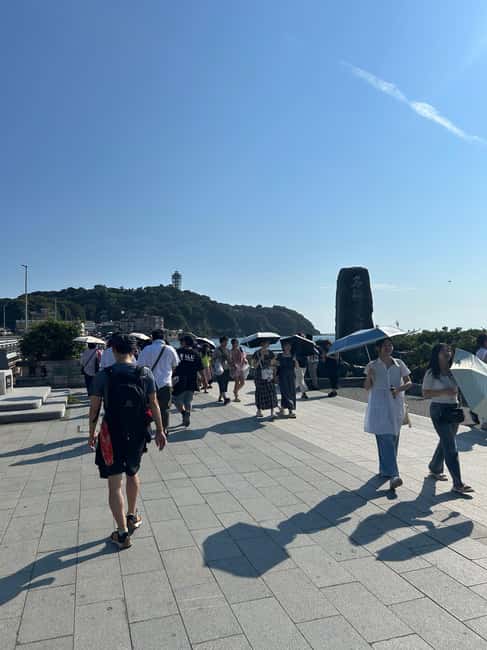
- Enoshima island streets: sea views plus shrines and snack time
- Hase-dera’s Kannon statue: one of the area’s most moving temple sights
- Kōtoku-in Great Buddha: the bronze landmark you’ll remember long after the photos
Tsurugaoka Hachimangu: Kamakura’s samurai-and-spirit starting line
Most days in Japan start with a station. This one starts with meaning. The tour begins at Tsurugaoka Hachimangu, Kamakura’s spiritual hub, and that matters because it gives you a framework for everything you’ll see next. Before you hit more famous photo stops, your guide helps you understand why this place is tied to samurai culture and how religious life shaped the city’s identity.
At a practical level, starting here also helps you avoid a common sightseeing problem: drifting between temples with no mental map. With a guided flow, you notice details faster—things like how the architecture and grounds guide your movement, and how the site’s atmosphere shifts depending on the path you take.
You’ll have time for a photo stop and guided visit, so it’s not just a quick check-and-go. It’s a good primer for the day, and it sets a tone that’s calm but focused.
If crowds are heavy, this is still an outdoor area and you can usually find a spot to pause. Just remember you’re in a temple complex, so keep your pace steady and your head on a swivel for foot traffic.
You can also read our reviews of more tours and experiences in Fujisawa.
The Enoden train ride: the easiest way to get real coastal views
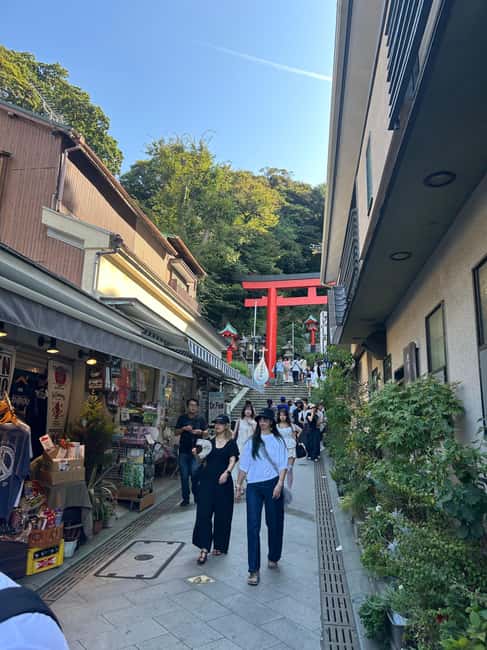
One of the smartest parts of this half-day plan is the decision to include the Enoden railway. It’s not just transport. It’s part of the experience. The guide adds context for what you’re seeing as you head toward Enoshima, and the ride itself breaks up the walking so your body stays fresh.
Why this works for you:
- Train time is sightseeing time. You’re not stuck staring out a window on a fast commuter route; you’re on a line associated with scenic coastal travel.
- It changes the tempo. You go from shrine grounds to city streets to sea air. That flow keeps the day from feeling like one long museum hallway.
- It feels local without being complicated. You’re not planning transfers or guessing schedules—your guide handles the logistics.
From a comfort standpoint, plan for a short boarding and a short walk when you get off. The tour includes those transitions built into the schedule, so you’re not sprinting between stops.
If you’re a first-timer in Kamakura, the Enoden ride gives you that immediate sense of place—Japan’s coast as a lived-in route, not only a view.
Enoshima Island: sea air, small streets, and shrine-and-shop variety
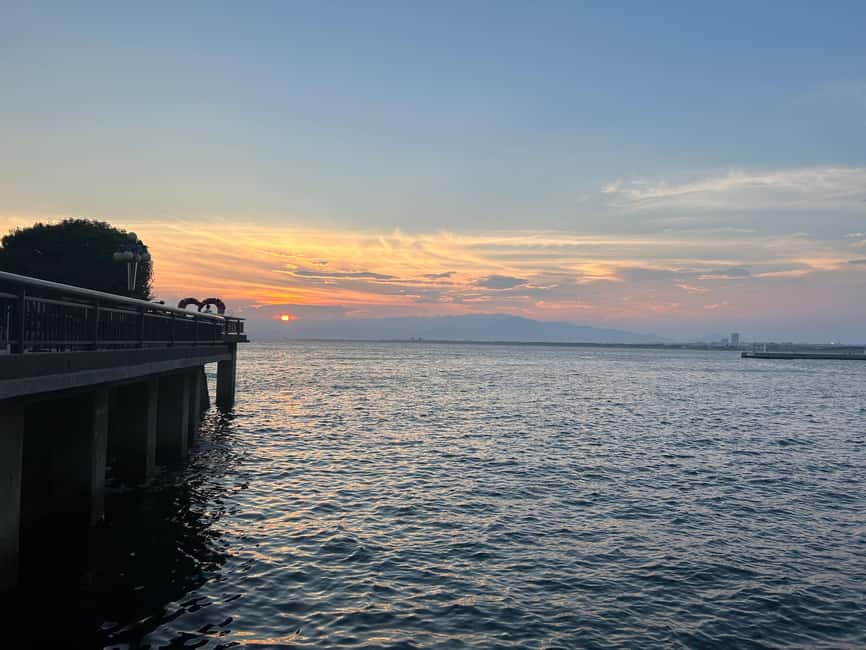
Enoshima is where the tour shifts from sacred sites to coastal everyday life. You step onto the island for about an hour of guided time, which is enough to get the flavor without rushing you through it like a checklist.
Expect:
- Island streets with a mix of visitors, shops, and casual seaside energy
- Photo opportunities focused on ocean views
- A blend of sightseeing and light food tasting during the visit
What I like here is the contrast. Kamakura can feel orderly and spiritually grounded. Enoshima adds texture—snacks, street scenes, and the sense that this is a place people come for an easy day out, not only for a bucket-list stop.
Enoshima also fits travelers who like variety. You’re not doing one thing the whole time. You’re walking, pausing for viewpoints, and seeing the island’s spiritual landmarks along the way.
The main consideration is crowds. Enoshima’s popularity means you’ll likely share space with other visitors, especially around peak hours. This tour gives you guided pacing, but you still need patience when lines and walking traffic build.
If you hate being rushed, you’ll appreciate that the Enoshima time is longer than a simple photo stop. You get enough room to slow down.
Hase-dera Temple: gardens that make the Kannon statue hit harder
After the island, you head to Hase-dera, one of the area’s most well-known temples, and the focus here is not just a landmark sight—it’s the feeling of the place. You’ll have a guided visit with time for photos and a temple walk that centers on the statue of Kannon, the goddess of compassion.
This is where a good guide earns their fee. Kannon is a familiar name in Buddhist contexts, but understanding why this specific temple matters changes how you experience it. The statue isn’t just impressive in size—it’s emotional in meaning, and Hase-dera’s layout and gardens help set the mood.
You also get a relatively short, focused block of time here (about half an hour guided), which is ideal for many people. It keeps momentum without turning the temple visit into a marathon. You can enjoy the gardens and the view moments without feeling like you have to memorize every stone.
Possible drawback: if you’re the type who loves to linger 60–90 minutes in one site, the schedule might feel a bit tight. The trade-off is that you still reach Kōtoku-in, the Great Buddha, later—so you get the best pair of classic sights.
Kōtoku-in Great Buddha: why this bronze icon keeps its power
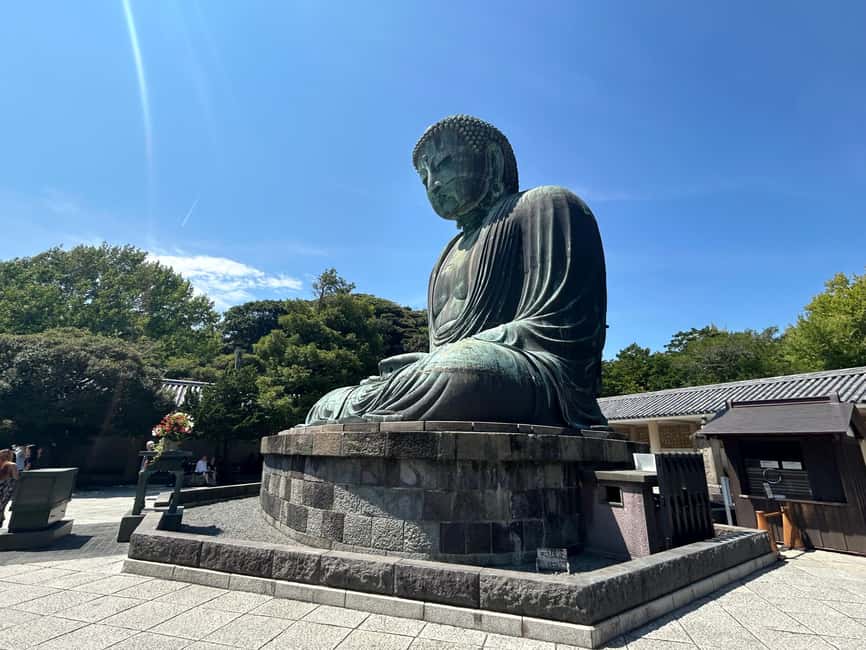
Then comes the stop that most people plan the day around: Kōtoku-in Temple and its Great Buddha. Seeing it in person is different from seeing it in pictures. The bronze presence has scale, and the temple setting frames it so your eyes naturally follow the surrounding details too.
This tour includes a guided visit and a photo stop here with enough time to take it in properly (around forty minutes). That’s a sweet spot: long enough to understand what you’re looking at, and short enough that you’re not stuck waiting while your feet go numb.
What makes Kōtoku-in especially worth your time:
- It’s one of Kamakura’s most iconic sights, so it’s a high-impact use of limited time
- The guided context helps you recognize significance beyond the visual
- The day’s earlier stops prime your understanding, so this doesn’t feel random
If crowds are heavy, you’ll still be able to see the Great Buddha, but your angles for photos may be limited. Use the guidance to choose moments when your view isn’t blocked, and don’t rush just because other people are holding up their phones.
This is the kind of place where you finish your photos faster than you expect—because the statue pulls your attention toward the meaning.
Food market moments and timing on a 5-hour half-day
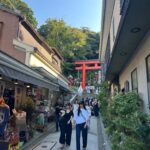
Food is not the main course on this tour, but it’s woven in at the right moments. Early on, you’ll make time for a market-style stop (around twenty minutes), which gives you a chance to pick up small snacks or just browse.
Later, during the Enoshima visit, you’ll get food tasting. That’s the best kind of tasting: a light, guided introduction rather than a full meal that slows you down.
The timing overall works for a short day. With a total duration of about five hours, you can fit it between a morning arrival and an afternoon plan—or even use it to anchor a day in Tokyo by escaping to the coast.
A practical tip: because the tour is rain or shine, you’ll want to be ready for weather shifts. Temple areas and outdoor viewpoints mean you might feel the wind. Plan clothes you can layer and shoes that handle slick stone.
Also, some shops don’t take cards, and cash is requested. So if you want to buy snacks or small souvenirs without stress, bring bills and coins. It’s a simple move that saves time.
Price and value: what $50 covers (and why it’s not just a bargain tour)
The price—about $50 per person—is, in my view, fair for what you get: an English-speaking guide, entrance fees, and a structured route that uses both walking and train segments.
Here’s why that matters for value:
- Entrance fees are included, so you’re not doing last-minute math mid-day
- A live guide helps you interpret the sites, which is what turns photos into understanding
- The route design is efficient. Combining Kamakura and Enoshima means you see two iconic areas in one go
This isn’t the cheapest option you’ll find, but it’s not overpriced either. For many people, the real cost is not money—it’s time and decision-making. This tour reduces both. You don’t have to figure out how to stitch together temples, viewpoints, and that special coastline train.
If you’re visiting with limited time, the guided structure is the value driver. If you have unlimited time and love self-guided wandering, you could build a similar day on your own. But if you want a smooth half-day that still feels authentic, this style of guided route is exactly the sweet spot.
Who should book this (and who should skip it)
This tour is a strong fit if you:
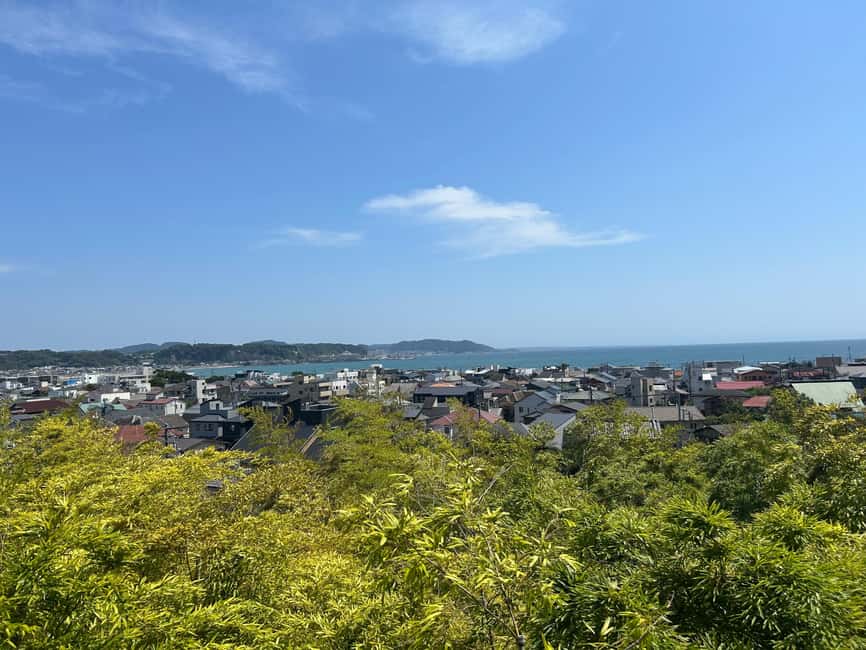
- Want classic Kamakura sights paired with Enoshima coastal atmosphere
- Like the combo of shrines, gardens, and ocean views
- Prefer a guide who can answer lots of questions in clear English (both Yoko and Yuya have been specifically praised for that)
It may not fit you if:
- You’re traveling with children under 7
- You need wheelchair access or are traveling with mobility impairments (the tour specifies it isn’t suitable)
- You rely on strollers or need to travel with luggage/large bags (those are not allowed)
One more “real world” note: the tour runs rain or shine, so it’s best for travelers who are comfortable adjusting their expectations and pace when weather changes.
Practical tips that make the day feel easy
A few small moves help you enjoy the tour instead of just surviving it.
Wear walking shoes. You’ll be on your feet for multiple segments, plus short strolls at station transfers and temple complexes.
Bring cash. It’s needed for small purchases since some shops don’t accept cards.
Arrive early. Plan to get to the meeting point at least ten minutes before the start time. That buffer matters when you’re coordinating with a group and a guide.
Choose your start option. Depending on what you book, the meeting point may be at Kamakura Station near the midori no madoguchi window, with an on-foot start included (about ten minutes). Other options may vary, so check the specific meeting details you receive.
Expect crowds at peak hours. This area is popular. Use your guide’s pacing and timing so you spend your best moments seeing rather than searching.
Finally: don’t treat this as a photo race. If you keep your pace steady, you’ll get the best views without feeling like you’re constantly stepping aside.
Should you book Kamakura & Enoshima with a local guide?
I’d book it if you want a half-day that hits the classics—Tsurugaoka Hachimangu, Hase-dera, Kōtoku-in, plus the Enoden ride—while still leaving room for Enoshima’s casual seaside vibe. The strongest reasons are the practical route efficiency and the guided interpretation that makes the Great Buddha and Kannon statue mean more than a snapshot.
Skip it if you’re looking for a low-effort, minimal-walking outing, or if you need stroller or wheelchair-friendly logistics. Also, if you hate any rain risk, remember the tour runs in all weather.
If your goal is to see the best of Kamakura and Enoshima without wasting time planning, this is a solid choice.
FAQ
How long is the Kamakura & Enoshima tour?
The tour runs for about 5 hours.
What is the starting point for the tour?
The meeting point may vary depending on the option booked. One option includes Kamakura Station (鎌倉駅 みどりの窓口), with an on-foot start that’s about 10 minutes.
Where does the tour end?
There are two possible drop-off locations, and one of them is Kamakura Station (鎌倉駅 みどりの窓口).
What’s included in the price?
The tour includes an English-speaking guide, a walking tour of Kamakura & Enoshima, and entrance fees to attractions.
What should I bring?
You should bring cash for small purchases, since some shops may not accept cards.
Does the tour run in rain?
Yes, the tour runs rain or shine, so dress accordingly.