REVIEW · TOKYO
Official Japan Go-Kart Through Tokyo Bay / Ginza (IDP Required)
Book on Viator →Operated by JAPANKART · Bookable on Viator
Tokyo by kart is a weirdly perfect fix. You get public-road driving, a costume, and a guided loop through classic neighborhoods like Ginza and Asakusa—all in about two and a half hours.
I like that JapanKart runs this with a clear safety briefing before you go, plus lead-and-follow vans to keep the group together. I also like the included extras—go-karts, gas, costumes, and photo coverage—so you’re not hunting for rentals or extras afterward.
The big drawback is the one you can’t ignore: you must have an International Driving Permit (IDP) in the accepted format, or you can lose your spot with no easy do-over.
In This Review
- Key things to know before you drive
- Tokyo by go-kart: why it beats another bus or walking tour
- Price and what $85.89 buys you (and what it doesn’t)
- The IDP rules that can stop you before you even start
- Where you meet JapanKart (and how not to lose your ride)
- Safety setup: briefing, pace control, and driving on left-side streets
- The route through Tokyo: Toyosu to Ginza, then the culture stops
- Toyosu waterfront: modern Tokyo with a seafood pulse
- Ginza: luxury lights and street energy
- Nihonbashi Bridge: the old road origin you can feel
- Akihabara: anime, games, and tech chaos
- Ueno: park air and museum-level Tokyo
- Asakusa and Senso-ji area: the past you can smell
- Tokyo Skytree: the bonus view as you drive nearby
- Costumes, photos, and what you should wear
- Who should book this JapanKart go-kart route
- Should you book JapanKart through Tokyo Bay and Ginza?
- FAQ
- Do I need an International Driving Permit to do this tour?
- What kind of IDP is accepted in Japan for this tour?
- Are there exceptions if my license is from certain countries?
- How early should I arrive at the meeting point?
- What’s included in the tour price?
- How long does the experience last?
- Is alcohol allowed before the tour?
- What shoes and clothing are not allowed?
- Where do I meet for the tour?
- What happens if the tour is canceled due to bad weather?
Key things to know before you drive
- IDP required for participation: you need a 1949 Geneva Convention-format IDP in booklet form (Vienna 1968 IDPs are not accepted).
- Public roads, not a closed track: you’ll see Tokyo up close while staff control the pace and spacing.
- Lead and rear support: multiple vans (front and back) help guide and marshal you through traffic.
- Costume + photos included: you’ll pick a costume and get photo moments along the route.
- Stops for breaks and pictures: you’ll pause en route so you can actually look at what you’re riding past.
- Small group size: the tour caps at 20 people, which keeps it more controlled than big buses.
Tokyo by go-kart: why it beats another bus or walking tour
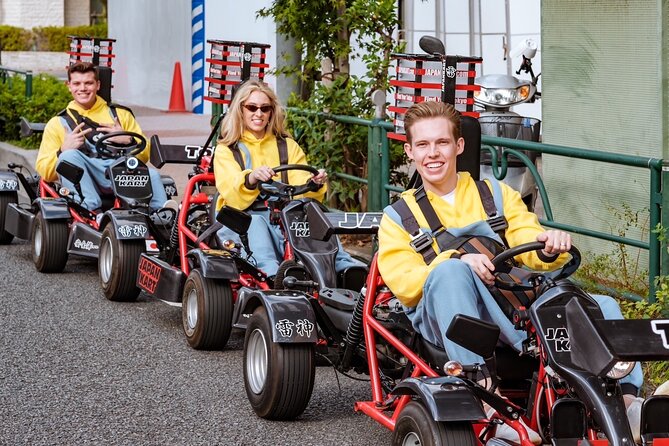
A guided walk shows you Tokyo at human speed. A kart shows you Tokyo at street speed, with your hands on the wheel and your eyes on everything at once. That small shift makes neighborhoods feel more lived-in—especially around busy, photo-ready districts.
This is also the kind of activity that turns the city into a story you can drive through. One minute you’re rolling past modern glass and waterfront views, then you’re in areas that scream Edo-era Tokyo (Nihonbashi) and pop-culture Tokyo (Akihabara). The result is variety without the usual “transfer time” you get on many half-day tours.
There’s still a “guided” layer, though. You don’t have to figure out the route or worry about getting split up for hours—staff keep you moving in sequence.
You can also read our reviews of more tours and experiences in Tokyo.



Price and what $85.89 buys you (and what it doesn’t)
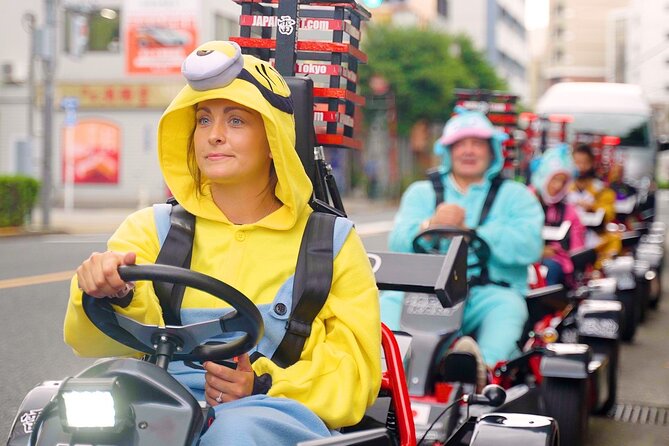
At $85.89 per person for an approximately 2 hours 30 minutes experience, you’re paying for more than driving. What you get bundled in is the big part: go-karts, gas, a costume, and photos.
That matters in Tokyo, where a lot of activities charge separately for equipment. Here, the kart itself is the product—and you’re also getting the “Tokyo route” and photo stops that would be hard to recreate on your own.
What you might need to budget for (not included in the price) is the most important item: getting the correct IDP before you arrive. If you show up without the accepted paperwork, the whole experience can fall apart, and that’s the real hidden cost.
The IDP rules that can stop you before you even start
This tour’s rule is simple and strict: you must present both your driver’s license and a valid International Driving Permit. If you don’t, you may be denied participation.
Here are the points you should take seriously:
- The IDP must be issued in the format of the 1949 Geneva Convention.
- Your IDP must be in booklet form, not a paper sheet or A4-style document.
- Vienna Convention 1968 IDPs are not accepted in Japan.
- Your IDP must be issued by an approved issuer in your home country (common AAA, RAC, CAA-type issuers are referenced in the rules).
- If your license comes from specific places (Switzerland, Germany, France, Taiwan, Belgium, Monaco), the route is different: you need a Japanese translation of your license via Japan Automobile Federation (JAF), using their translation process.
One more practical caution: your IDP needs to be valid for the time you’ll drive. This is the kind of activity where it’s worth double-checking dates before you pack.
Where you meet JapanKart (and how not to lose your ride)
You’ll start at JapanKart near Azumabashi in Sumida City: JapanKart2-chōme-18-15 Azumabashi, Sumida City, Tokyo 130-0001.
The schedule is time-sensitive. Arrive 15 minutes before your booking time. The team can wait up to 10 minutes after the reserved time, so plan for walking time from the nearest transit stop and for any Tokyo sidewalk surprises.
Also check the “how to get there” details on your confirmation email and watch the instructional video they send. It’s not just paperwork; it’s where you learn how the kart works and how they want you to handle the route.
Safety setup: briefing, pace control, and driving on left-side streets
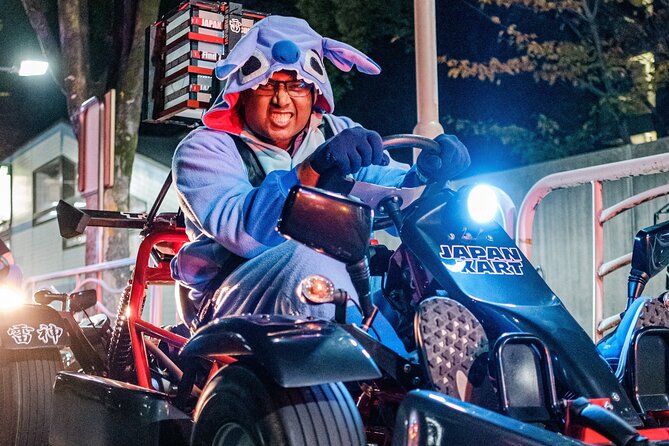
This is a go-kart experience on public roads, so you should treat it like driving practice with fun added—not like a casual arcade ride.
Before you set off, you get a thorough safety briefing. It’s the part that makes many first-time drivers relax quickly, because you learn how to operate the kart and how traffic works for this type of group ride.
During the ride, you’re not left alone in the chaos. Staff guide you with a lead van in front and a van behind. That push-pull system helps keep riders together and reduces the chance you’ll get separated at intersections or stops.
A nice detail: the route feels intentionally paced. Even when traffic splits groups at lights, the operation aims to keep you with the same moving pack so you don’t spend the whole time waiting alone.



The route through Tokyo: Toyosu to Ginza, then the culture stops
Think of this as a “greatest hits” loop across different Tokyo flavors—modern waterfront, high-end shopping, old road origins, tech culture, classic parks and temples—all stitched together by time behind the wheel.
Toyosu waterfront: modern Tokyo with a seafood pulse
The tour starts at Toyosu, a sleek waterfront area tied to the Toyosu Fish Market. Even if you’re not going at dawn, the whole district has that modern Tokyo feel—clean lines, big-water views, and a sense of place that’s different from the older neighborhoods you’ll hit later.
Because the tour is driving-based, you’re not lingering like a museum stop. You’re more looking, snapping a few photos at a safe moment, and then moving on.
Ginza: luxury lights and street energy
Next comes Ginza, Tokyo’s glossy center of fashion and dining. This is where the city looks like it belongs in commercials—wide streets, major storefronts, and that feeling of being near something important.
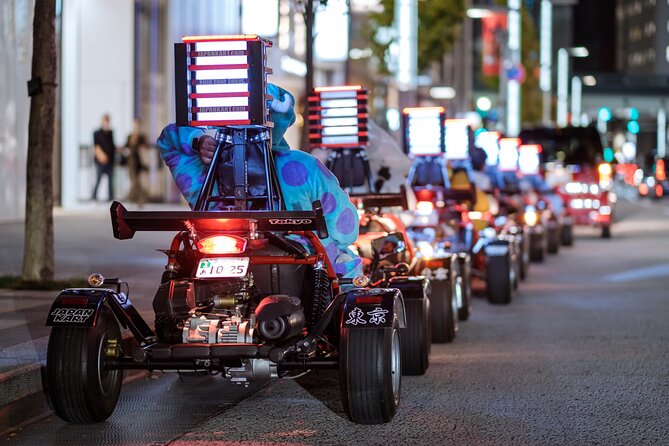
A kart ride through Ginza is especially memorable at the right time of day because the neighborhood’s visual style holds up well whether you’re seeing it in daylight or catching city lights.
Nihonbashi Bridge: the old road origin you can feel
Nihonbashi Bridge is a classic historic reference point in Tokyo—once the start of Japan’s major roads. On a map, it’s a bridge. On the ground, it’s a reminder that Tokyo’s movement and trade routes shaped the city.
In a kart tour, this kind of stop works well because you get a quick landmark moment without needing to plan an entire separate sightseeing block.
Akihabara: anime, games, and tech chaos
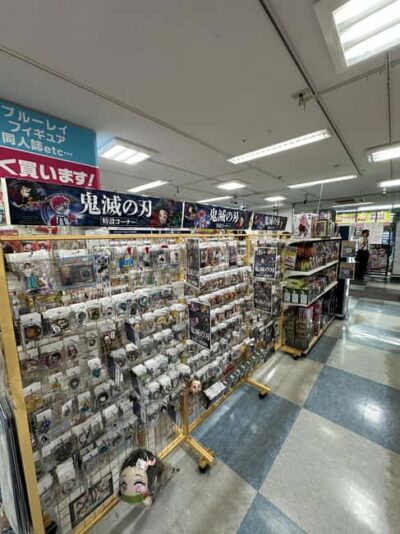
Then you hit Akihabara, the famous hub for anime, gaming, and electronics. This is a neighborhood where people-watching is part of the fun, but it’s also visually loud—signs, storefront displays, and the constant flow of street energy.
Again, don’t expect a long lecture at each stop. The value here is motion: you’re seeing how Tokyo changes block by block.
Ueno: park air and museum-level Tokyo
Ueno brings a different mood. It’s known for Ueno Park and museum options, plus the sense that you’re near a major cultural area. Even during the kart loop, you can feel the shift from shopping-and-tech intensity to a more open, community park vibe.
If you’re the type who likes to later return and explore one specific museum or temple area, this stop is a good “taste” that helps you decide what to prioritize.
Asakusa and Senso-ji area: the past you can smell
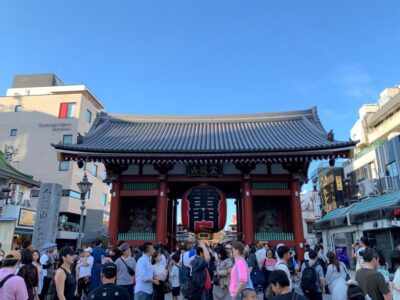
Finish up around Asakusa, the gateway to Tokyo’s past. The big star is Senso-ji Temple, and the surrounding Nakamise Street area is all about food stalls, crafts, and that classic tourist-meets-local street atmosphere.
This is also one of the most satisfying segments because it feels like Tokyo’s identity compresses into one area: tradition, crowds, snacks, and photo ops.
Tokyo Skytree: the bonus view as you drive nearby
You also drive nearby the Tokyo Skytree, which is worth noting because it’s one of the easiest ways to “read” Tokyo from inside a moving vehicle. You might catch it as the route passes—close enough to register instantly, without needing an extra ticket or a whole extra outing.
Costumes, photos, and what you should wear
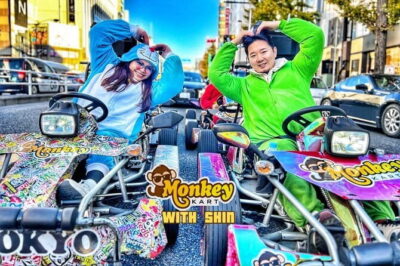
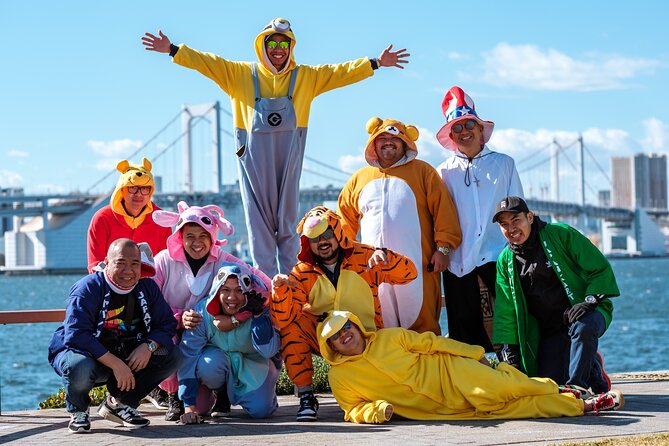
The included costume is part of the fun formula. You’ll get an eye-catching outfit to wear during the ride, and the photo moments are designed around that.
Just don’t show up dressed like a festival extra from the wrong decade. The rules ask you not to wear long skirts, high heels, or sandals. Comfort matters here because you’ll be seated and moving with the kart, and you want stable footing.
On photos: the tour includes photos from the tour, and there are also mentions of helpful extras like phone mounts being provided. Still, don’t treat this as a free-for-all for filming. Keep your phone handling simple and follow the staff guidance for when you can take photos safely.
Who should book this JapanKart go-kart route
This tour fits you best if:
- you want an active, driving-based way to see Tokyo neighborhoods in a short time
- you’re comfortable following instructions and riding with a group pace
- you like photo stops but you also want street-level variety fast
You might skip it if:
- you don’t have the correct IDP format already lined up
- you’re worried about driving rules on public roads (even with a briefing and lead/follow vans)
- you want deep narration at every landmark; this is more about the ride than a slow sightseeing lesson
Also, if you’re planning your first day in Tokyo, build in margin. Being late or missing the ID check can ruin the day’s plan in a way a missed museum timed entry usually doesn’t.
Should you book JapanKart through Tokyo Bay and Ginza?
Yes, if you’ve already got the right IDP in hand and you want a high-fun, structured way to see Tokyo without getting stuck in transit loops. The mix of Ginza glamour, Akihabara tech chaos, and Asakusa old-Tokyo vibes is hard to copy in a self-guided day—and the included kart + costume + photo setup keeps the value strong.
No, if your paperwork is uncertain or you’re the type who hates time cutoffs. This tour runs on a tight participation requirement: the whole experience depends on you being legally cleared to drive.
If your driving documents are sorted, though, this is one of those Tokyo activities that feels more like living inside the city than just looking at it.
FAQ
Do I need an International Driving Permit to do this tour?
Yes. You must present both your driver’s license and an International Driving Permit (IDP) to participate.
What kind of IDP is accepted in Japan for this tour?
The IDP must be issued in the format of the 1949 Geneva Convention and be in booklet form (not paper or A4 form). Vienna Convention 1968 IDPs are not accepted.
Are there exceptions if my license is from certain countries?
Yes. If your license is issued in Switzerland, Germany, France, Taiwan, Belgium, or Monaco, you need a Japanese translation of your license from JAF, along with your own driving license.
How early should I arrive at the meeting point?
Arrive 15 minutes before your booking time. The team can wait a maximum of 10 minutes after the reserved time.
What’s included in the tour price?
The tour includes go-karts, gas, costumes, and photos from the tour.
How long does the experience last?
The duration is approximately 2 hours 30 minutes.
Is alcohol allowed before the tour?
No. Alcohol consumption before the tour is prohibited.
What shoes and clothing are not allowed?
Please do not wear long skirts, high heel shoes, or sandals.
Where do I meet for the tour?
The start location is JapanKart2-chōme-18-15 Azumabashi, Sumida City, Tokyo 130-0001, Japan.
What happens if the tour is canceled due to bad weather?
If canceled due to poor weather, you’ll be eligible for a full refund or the opportunity to reschedule depending on availability.