REVIEW · TOKYO
Official Japan Go-Kart Shibuya / Tokyo Tower (IDP Required)
Book on Viator →Operated by JAPANKART · Bookable on Viator
Tokyo by go-kart beats the sightseeing bus. I love how this ride strings together big-name stops like Shibuya Crossing and Tokyo Tower, without making you memorize a map. It’s guided, outdoors, and designed for real street time, not just a photo stop-and-go shuffle.
My second favorite part is the pacing with a small crew. The tour keeps numbers low (with a cap mentioned at 10, and an overall maximum of 15), and the staff run it like a tight convoy so you can focus on driving and snapping pics.
One thing to plan for: the IDP paperwork is strict. You need the right International Driving Permit format in booklet form, and you must carry the physical documents at check-in or you could be turned back with no refund.
In This Review
- Key things I’d bet on with this Tokyo go-kart tour
- Price and time: what $145.35 buys you in Tokyo
- Your IDP reality check before you get excited
- Starting at JAPANKART Kanda: where the tour begins
- What the convoy style feels like in Tokyo traffic
- Imperial Palace area: calm start, big-photo energy
- Shibuya Crossing by go-kart: the moment Tokyo clicks
- Roppongi: ride-by Tokyo at night or daytime flavors
- Tokyo Tower stop: iconic skyline views, admission not included
- Tokyo Station: red-brick landmark energy
- The best parts according to rider feedback (and why they matter)
- Who this tour is perfect for (and who should reconsider)
- Should you book Japan Go-Kart Shibuya / Tokyo Tower?
- FAQ
- Do I need an International Driving Permit (IDP) for this go-kart tour?
- What type of IDP is accepted in Japan for this tour?
- Are unofficial IDPs accepted?
- Are there exceptions for certain countries’ driving licenses?
- How long is the tour?
- What are the footwear and clothing rules?
- How many people are in the group?
- Is Tokyo Tower admission included?
- What happens if bad weather cancels the activity?
Key things I’d bet on with this Tokyo go-kart tour
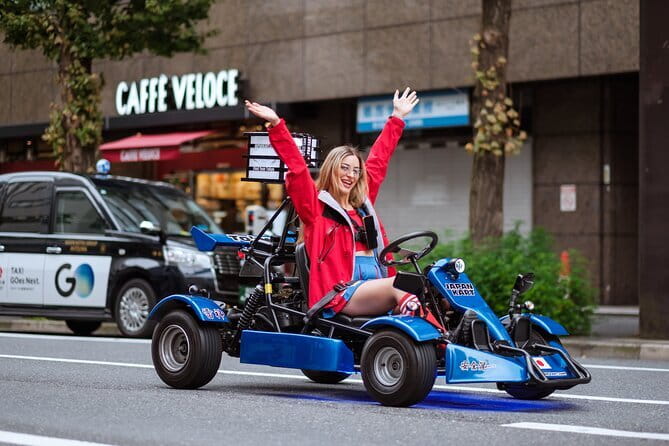
- Guided street driving, not a race: you’re cruising through major areas under staff direction.
- Shibuya Crossing is part of the route: you actually pass through the famous crossing area on your karts.
- Tokyo Tower + other icons in one loop: Imperial Palace area, Tokyo Station, and Roppongi all fit in.
- Small-group feel: cap at 10 is stated, with a maximum of 15 travelers total.
- Free photo coverage is a real bonus: staff take lots of photos during the ride.
- Bring the correct IDP: 1949 Geneva Convention booklet only; Vienna 1968 IDPs aren’t accepted.
Price and time: what $145.35 buys you in Tokyo
At $145.35 per person, this isn’t a “cheap thrill.” You are paying for a full guided experience that includes the go-kart rental, staff handling, and time on the road across multiple landmark zones. The duration is about 2 hours 30 minutes to 3 hours, which is long enough to feel like you saw Tokyo from the inside lane, not just the sidewalk.
It also helps that the tour is structured around major sights in one run. If you’re trying to cover Shibuya, Tokyo Tower, and Tokyo Station in a single day without hopping between separate transport plans, the value starts to make sense. You’re basically buying one organized circuit with the cart already sorted.
You can also read our reviews of more tours and experiences in Tokyo.
Your IDP reality check before you get excited
This tour is explicitly IDP required, and the requirements are the biggest practical hurdle. You must present both your home country driving license and an International Driving Permit (IDP). The IDP must be issued in the format of the 1949 Geneva Convention by a government-authorized association.
Two key points to keep you from getting stuck:
- Vienna Convention 1968 IDPs are not accepted in Japan.
- Some online “unofficial” IDPs exist. Don’t risk it—only get one through an authorized source.
There’s also a special-case clause for people whose licenses come from Switzerland, Germany, France, Taiwan, Belgium, or Monaco. In those situations, you’d need a Japanese translation of your license from the Japan Automobile Federation (JAF), plus your own driving license.
Finally, carry the documents physically. One common problem is showing photos or digital copies instead of the real documents. Japan road law requires the physical copy of your valid IDP or qualifying license at the time of driving.
Starting at JAPANKART Kanda: where the tour begins
The meeting point is JAPANKART Kanda Branch, Tokyo 101-0042, Chiyoda City, Kanda Higash Matsushitachō, 42, 2階. The tour ends back at the meeting point.
Plan to arrive 15 minutes early. You’ll likely do check-in and get instructions before you ride, and the operator asks you to watch the instructional video sent with your confirmation email. That matters because the tour works like a convoy: you’re not wandering off on your own.
You should also dress for the rules. Alcohol consumption before the tour is prohibited. You’ll want to avoid long skirts, high heels, and sandals, since they can make driving and safety gear less practical.
What the convoy style feels like in Tokyo traffic
The tour is guided and organized so you don’t have to play navigation games. You’ll follow staff direction with the group moving together, which helps in a city like Tokyo where street patterns and one-way routes can be easy to misread.
The go-kart format also changes how you experience the streets. You’re low to the ground and moving at an approachable pace. That’s why multiple riders describe it as thrilling yet clearly not a race—more like a high-energy sightseeing drive with a steering wheel in your hands.
Staff also tend to handle the little moments that make the experience smoother. In the feedback I saw, the team is attentive about safety and takes pictures along the way, so you’re not stuck juggling your camera while trying not to drift into the next kart’s orbit.
Imperial Palace area: calm start, big-photo energy
The route begins with a stop at the Imperial Palace in Tokyo, the primary residence of the Emperor. This area sits on the former site of Edo Castle, and you’ll get views framed by traditional-style architecture, gardens, and the surrounding moat and stone walls.
What I like about starting here is tone. After you check in and get used to the kart controls, this is a place where you can slow your brain down. You’re still riding through the city, but the atmosphere makes it feel less like a frantic tourist sprint.
A potential drawback: if you’re expecting a long visit inside buildings, don’t. This is a ride-and-view stop in a driving tour. You’re getting the sights from the route and likely quick photo time, not an in-depth museum day.
Shibuya Crossing by go-kart: the moment Tokyo clicks
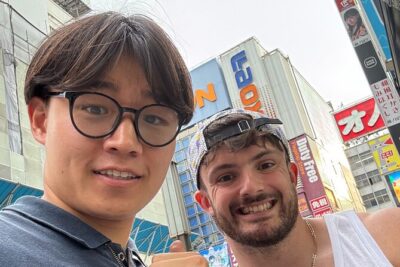
Then comes the heart of the experience: Shibuya Crossing. It’s famous for its neon signage and the huge pedestrian scramble when the signals change. From a car, you mostly watch it from behind glass. From a go-kart, you experience it differently: you’re part of the scene.
Multiple rider accounts point out that it’s more than an off-to-the-side viewpoint. You can pass through the crossing area as part of the route, and that’s where the whole thing feels like a Tokyo movie set—except you’re driving. It’s also why the tour works so well for first-timers: it hits the city’s most recognizable visual rhythm early enough that you feel like you really arrived.
One consideration: the crossing is busy. The convoy approach helps, but you’ll still want to stay focused and follow the staff instructions closely. If you’re easily distracted by crowds or signs, give your attention to the road first, photos second.
Roppongi: ride-by Tokyo at night or daytime flavors

Next up is Roppongi, Tokyo’s nightlife district—known for bars, clubs, and international cuisine. The stop description also notes daytime options like the Mori Art Museum and stylish shops, though your actual experience depends on the time slot you’re on and what’s feasible during your drive.
From a kart tour perspective, Roppongi is a “see it in motion” stop. You’ll likely enjoy the area’s changing vibe as you pass through rather than treating it like a full shopping break.
If you’re the kind of traveler who loves Tokyo lights, you might catch especially good views here. Some feedback highlights night-time scenery and the energy around Tokyo Tower, so your timing can make this feel like the best part of the evening.
Tokyo Tower stop: iconic skyline views, admission not included
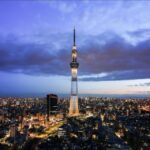
A major highlight is Tokyo Tower. It’s 333 meters tall and designed to resemble the Eiffel Tower, with bright orange-and-white coloring. During the tour, Tokyo Tower is listed as a stop with 10 minutes and a note that the observation deck admission ticket is not included.
So here’s the practical way to think about it:
- You’ll get close enough for a classic Tokyo photo moment.
- You may have a short window for outside views.
- If you want observation deck time, you’d need to plan that separately.
This short stop is a trade-off. You gain coverage of more sights in one circuit, but you don’t get a full tower visit. For most people, that’s a fair bargain, especially since you’re already doing a multi-sight drive.
Tokyo Station: red-brick landmark energy
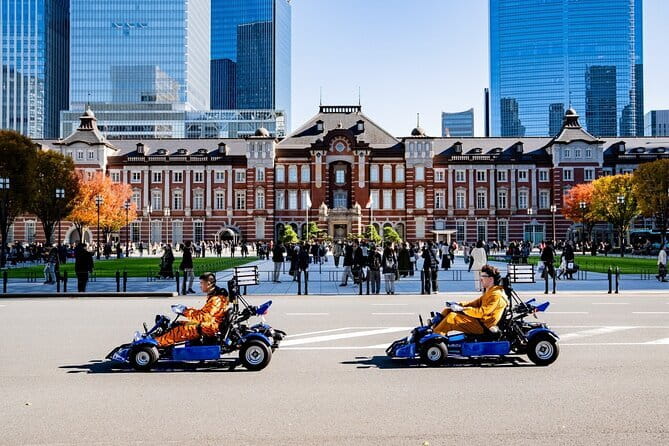
The last named sight in the route is Tokyo Station. It’s a historic railway hub with a striking red-brick facade that opened in 1914, and it contrasts sharply with the modern skyline around it. Inside, it’s known for lots of shops and restaurants.
In a go-kart tour, Tokyo Station is typically about the exterior vibe and quick visual moments. You’re going to feel that sense of scale—this is one of the central anchors of Japan’s rail system—while still keeping your day from turning into a maze of transfers.
If you’re a “walk around and snack” type of visitor, Tokyo Station can tempt you to linger. Just remember the tour ends back where it began, so save extra exploring for after your ride.
The best parts according to rider feedback (and why they matter)
The highest praise centers on three themes that you should pay attention to before you book.
First: the staff experience. People specifically call out friendly, helpful staff who explain things clearly and keep the ride organized. In a driving experience, that’s not fluff. Good instructions reduce stress, especially if it’s your first time driving a kart on city streets.
Second: the “thrill without chaos” balance. Several riders describe it as exciting and adventurous, like a movie-style ride, but still safe and controlled. That comes from the convoy method and the fact that it’s guided—so you’re not white-knuckling your way through Tokyo.
Third: photo support. One rider mentioned that staff took pictures along the way and provided the photos after the tour. That’s a value add because you get souvenir-quality images without trying to operate your phone one-handed while keeping pace.
Who this tour is perfect for (and who should reconsider)
This works best if you:
- Want a unique Tokyo experience that feels active, not passive
- Like hitting multiple famous sights in one outing
- Are comfortable driving and following instructions closely
- Want a small-group vibe with staff guidance
It may be less ideal if you:
- Don’t already have the correct IDP paperwork ready (it’s strict and physically required)
- Prefer a slower sightseeing format with longer stops
- Don’t want to drive on busy-city streets, even with staff direction
Also, check your footwear. The tour rules are clear about what not to wear—so if you usually travel in slip-ons and sandals, bring something better for driving.
Should you book Japan Go-Kart Shibuya / Tokyo Tower?
I’d book it if your priority is a Tokyo experience that feels like Tokyo—big icons, real street time, and a guided plan that avoids wandering. The combination of Shibuya Crossing, Tokyo Tower, and the Imperial Palace/Tokyo Station areas in one go-kart loop is hard to replicate any other way.
I’d hesitate only if you’re not 100 percent confident in your documents. The tour can be canceled with no refund if you forget required items, and Japan requires physical proof for driving. If your IDP is already sorted (correct 1949 Geneva format, in booklet form, plus your license), then this is one of those tours that turns your day into a story you’ll actually remember.
FAQ
Do I need an International Driving Permit (IDP) for this go-kart tour?
Yes. You must present both your driver’s license and an International Driving Permit to participate.
What type of IDP is accepted in Japan for this tour?
The IDP must be issued in the format of the 1949 Geneva Convention and it must be in booklet form (not paper or A4). IDPs issued under the Vienna Convention 1968 are not accepted.
Are unofficial IDPs accepted?
No. The instructions warn not to purchase unofficial IDPs from online companies.
Are there exceptions for certain countries’ driving licenses?
Yes. If your license is issued in Switzerland, Germany, France, Taiwan, Belgium, or Monaco, you still need a Japanese translation of your license from the Japan Automobile Federation (JAF) along with your own driving license.
How long is the tour?
It runs for approximately 2 hours 30 minutes to 3 hours.
What are the footwear and clothing rules?
You should not wear long skirts, high heels, or sandals. Alcohol consumption before the tour is prohibited.
How many people are in the group?
The experience is described as capped at 10 people, and it also lists a maximum of 15 travelers.
Is Tokyo Tower admission included?
No. The Tokyo Tower stop notes that the admission ticket is not included.
What happens if bad weather cancels the activity?
If canceled due to poor weather, you will be offered a different date or a full refund.