REVIEW · TOKYO
Sushi Cooking Class: AKEMI’s SUSHiKiTCHEN in Tokyo
Book on Viator →Operated by Akemi's Sushikitchen · Bookable on Viator
A sushi lesson at home beats another night out. In Akemi’s SUSHiKiTCHEN, you learn how to make sushi in a quiet residential Tokyo setting, with small-group attention and expert Edomae technique. Two things I especially like are the hands-on pacing and the way the chef explains sushi terms and etiquette as you cook. One drawback to consider: this is a home kitchen and the class is hands-on, so if you want a super formal, restaurant-style setup, you may feel the difference.
You also get value in ingredients and context, not just a roll-making demo. Fresh neta comes from major Tokyo markets (Toyosu and Tsukiji), and the rice is a special blended supply ordered from Hachidaime Gihey in Kyoto (est. 1787). With a maximum of five students in the lesson (and up to six total travelers for the activity), you’re set up for real conversation instead of feeling lost in a crowd.
In This Review
- Key highlights to look for
- Meet Akemi in a Shibuya home kitchen (not a restaurant)
- Your 2.5-hour flow: what happens during the cooking lesson
- Edomae-style sushi technique: the training you’re getting
- Ingredients that taste like the real deal: Kyoto rice + Tokyo neta
- Learning sushi terms and etiquette as you cook
- Four kinds of sushi: why making all of them helps
- Small-group attention: the real advantage for beginners
- Price and value: is $105.68 a good deal in Tokyo?
- Practical tips before you go to SUSHiKiTCHEN
- Who should book this sushi cooking class?
- Should you book? My honest take
- FAQ
- How long is the sushi cooking class?
- What’s the price per person?
- Where do you meet, and where does it end?
- How many people are in the class?
- What will I make during the lesson?
- Is there flexibility if I need to cancel?
Key highlights to look for
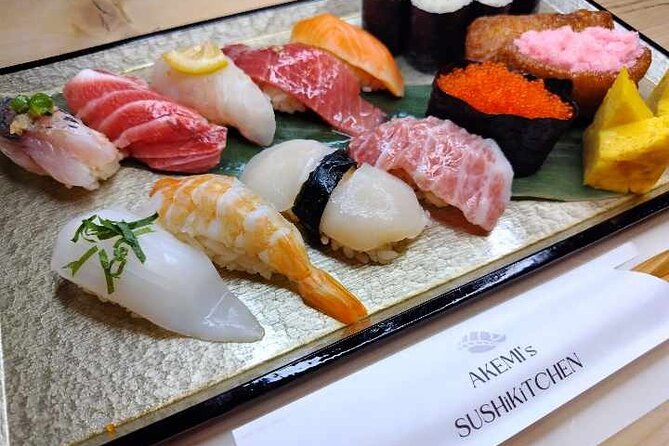
- Home-kitchen teaching in a quiet, local neighborhood near Shibuya (Sasazuka area)
- Edomae training from the Tokyo Sushi School, guided in English by Akemi
- Kyoto rice blend ordered from Hachidaime Gihey (est. 1787) for classic sushi texture
- Fresh fish sources from Toyosu and Tsukiji markets for neta
- Four types of sushi made by you, ending with a meal you prepared
Meet Akemi in a Shibuya home kitchen (not a restaurant)
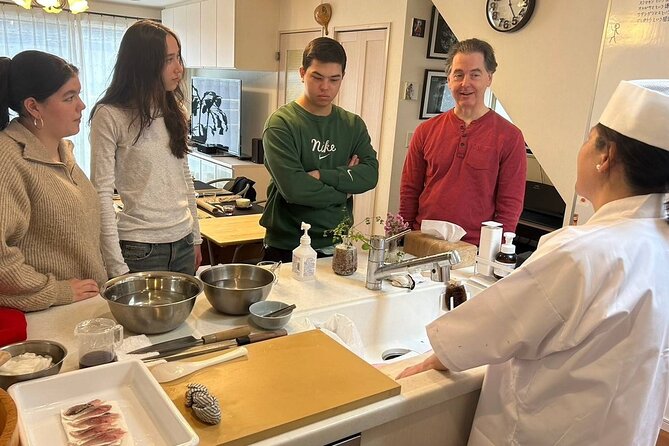
This class is set up like you’re stepping into a real Tokyo home for a cooking lesson, not walking into a polished show kitchen. The meeting point is in the Sasazuka/Shibuya area (Tamanosato Sasazukaten1-chōme-56-18 Sasazuka), and you’ll return there after the lesson ends.
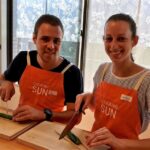
I like this format because it changes the feel of learning. In a restaurant, you can watch. Here, you have a chance to ask quick questions, compare your technique, and get immediate feedback while you’re holding the sushi materials.
The hosts matter too. The experience is led by Akemi, and Dan is part of the welcoming team, helping keep things friendly and flowing. If you’re the type who relaxes more when the room feels warm, that home setting will do a lot of work for you.
You can also read our reviews of more cooking classes in Tokyo



Your 2.5-hour flow: what happens during the cooking lesson
The session runs about 2 hours 30 minutes, and the whole point is a guided, hands-on learning arc. You’re not just learning a recipe—you’re learning the why behind sushi-making.
Here’s the rhythm you can expect:
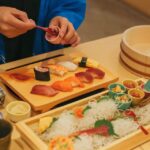
- You’ll start with sushi fundamentals and cooking technique, then move into building sushi step by step.
- You’ll make four types of sushi, with guidance tailored to what you’re doing in the moment.
- The lesson culminates in a meal made by the group, so the class ends with something satisfying and practical—food you understand because you made it.
Because the class is capped at a maximum of five students for the lesson (with up to six travelers for the activity), you get enough time with the instructor. That’s the difference between a class that feels like a lecture and one that feels like real coaching.
Edomae-style sushi technique: the training you’re getting
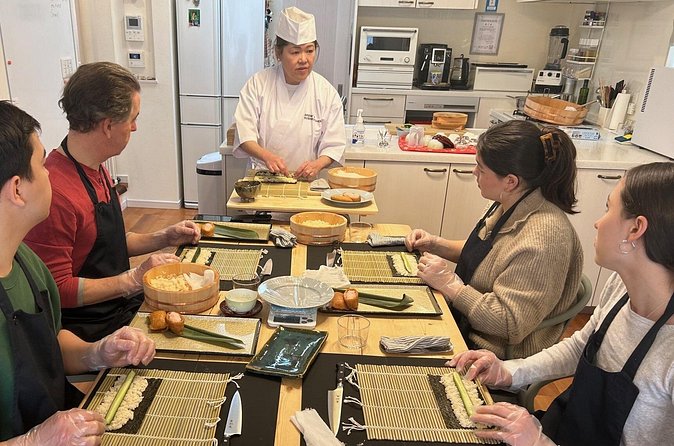
Akemi brings real restaurant experience from Japan—7 years in the restaurant industry. She also completed the Edomae Sushi Technique Acquisition Course at the Tokyo Sushi School, which matters more than it sounds.
“Edomae” isn’t just a word. It’s a style tied to technique, balance, and the idea that sushi should feel precise without being fussy. In a good class, that shows up as feedback on how you handle rice, how you set up neta, and how you think about portions and structure.
Even if you don’t know the vocabulary yet, you’re in good hands. The lesson is taught in English, so you’re not forced to figure out explanations through gestures and guesswork.
Ingredients that taste like the real deal: Kyoto rice + Tokyo neta
A lot of cooking classes use “tour-friendly” ingredients. This one puts the focus on what sushi people actually care about.
The rice is a blended supply specially ordered from Hachidaime Gihey in Kyoto (est. 1787). That detail isn’t trivia. Sushi rice is the foundation for the final bite—texture, stickiness, and how it holds together all depend on the rice and how it’s prepared. When a class sources a specific rice blend, you’re learning a more accurate version of sushi structure.
For fish, neta comes from fresh markets in Tokyo—specifically Toyosu and Tsukiji. Again, this is part of learning, not just flavor. If you practice with the right fish quality, your technique has a fair shot at matching what you’re aiming for.
If you love food sourcing—how things connect from market to plate—this class gives you more to think about than the usual “we bought good ingredients” line.
Learning sushi terms and etiquette as you cook
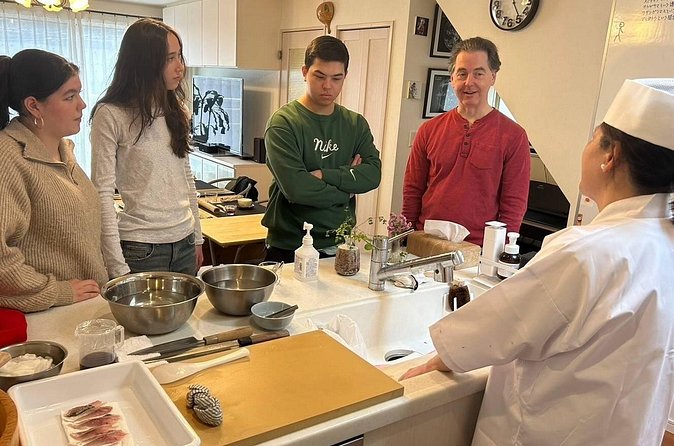
One reason I think this class is worth it is that it doesn’t treat sushi as a mystery snack. You learn:
- key sushi terminology
- Japanese food culture context
- essential sushi eating etiquette
- the history of sushi
The etiquette part is practical. Sushi is one of those foods where a little awareness makes the experience smoother, whether you’re ordering in Tokyo or trying to replicate the vibe elsewhere. You’ll walk away with more than “how to roll”—you’ll know how to talk about what you made and how to approach it thoughtfully.
The history and terminology also make everything stick. When you understand what a term means and where the style came from, your hands-on practice gets a second layer of learning.
You can also read our reviews of more tours and experiences in Tokyo


Four kinds of sushi: why making all of them helps
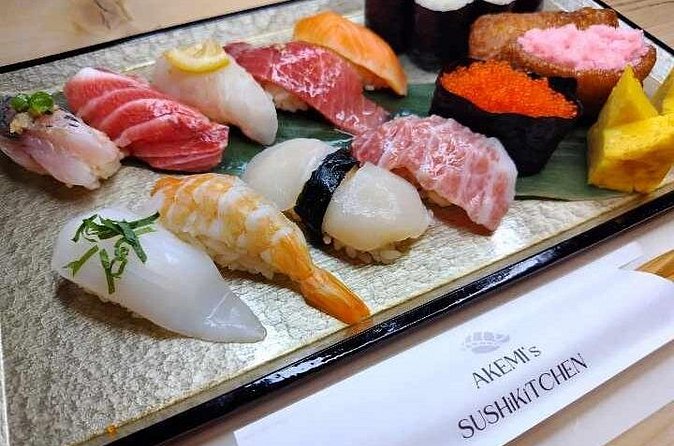
You’re making sushi in four types, which is a smart choice for a class like this. If you only learn one style, you can finish the lesson thinking you mastered it—then freeze the next time you see a different shape or topping at a restaurant.
Here, you practice variety. You learn the same core principles—rice handling, balance, assembly style—then apply them across different sushi formats. It’s the kind of training that makes you more confident when you’re eating later, because you can identify what’s happening instead of guessing.
I also like that you end with the meal you created. It’s not just a cooking exercise. You get to taste your work in a setting where you can actually connect flavor to technique.
Small-group attention: the real advantage for beginners
This is where the class earns its strong reputation. With a maximum of five students in the lesson, you’re not competing for time with the instructor. If you’re brand-new to sushi, that matters. You’ll get help early, before one mistake compounds into frustration.
The class also is designed to work even if you’ve never tried sushi before. The ingredient quality and the structured teaching reduce the “I’m lost” feeling that can happen in cooking classes with complicated steps.
If you’ve cooked before, you’ll still benefit from corrections. Sushi is precision-based. A small change in technique changes the bite.
Price and value: is $105.68 a good deal in Tokyo?
At $105.68 per person for about 2.5 hours, this sits in the mid-range for Tokyo food experiences. The key is what you’re paying for: guided instruction in an English-friendly, technique-based class, plus a meal you made, using ingredient sources that don’t feel like substitutes.
In other words, you’re not just paying for a portion of sushi. You’re paying for:
- a trained instructor with Edomae coursework
- small-group coaching (max five students)
- access to quality rice and fresh neta used in the lesson
- cultural context (history, terminology, and etiquette)
Also, this is a session that people book ahead. On average, it’s reserved about 49 days in advance, which tells me it’s not the kind of experience you can confidently plan last-minute if you want a specific date.
Practical tips before you go to SUSHiKiTCHEN
- Aim to arrive with a calm pace. You’re walking into a residential neighborhood and the lesson timing matters.
- Wear comfortable clothes. You’ll be working in a home-kitchen setting, and cooking time isn’t the moment for stiff shoes.
- If you’re new to sushi, keep your questions simple. You’ll get more value asking about fundamentals (rice texture, assembly, etiquette) than trying to master everything at once.
- Consider bringing a phone for photos if that’s your style, but keep in mind you’re there to cook and listen. The best parts are the technique notes you’ll want to remember later.
The mobile ticket is the last small convenience point: you don’t need to chase paper.
Who should book this sushi cooking class?
This class is a strong match if you want:
- a hands-on sushi lesson (not just tasting)
- teaching in English with real technique behind it
- a small-group setting where you can get questions answered
- a deeper understanding of sushi culture, including etiquette and terminology
- ingredients that feel like they belong to the real Tokyo sushi conversation
If you’re traveling with a tight schedule and you only want one food experience, this can work because it’s both educational and satisfying at the same time.
If you’re the type who hates group learning, you might find the small-group format a little too interactive. But with the small cap, it’s generally more supportive than chaotic.
Should you book? My honest take
I’d book it if you want sushi skills you can actually carry into future meals. The combination of Akemi’s Edomae training, high-quality sourcing (Kyoto rice blend and Tokyo market fish), and the way etiquette and terminology are taught makes this feel like more than a “fun class.”
I wouldn’t book it if you’re only looking for a casual, no-pressure food moment. This experience is cooking-focused, and part of the value is learning how sushi is built and eaten correctly.
If you fall somewhere in the middle—curious, hungry, and willing to learn by doing—this is a smart Tokyo pick.
FAQ
How long is the sushi cooking class?
It lasts about 2 hours 30 minutes.
What’s the price per person?
The price is $105.68 per person.
Where do you meet, and where does it end?
You start at Tamanosato Sasazukaten1-chōme-56-18 Sasazuka, Shibuya, Tokyo 151-0073, Japan, and the activity ends back at the meeting point.
How many people are in the class?
The lesson is limited to a maximum of five students, and the overall activity has a maximum of six travelers.
What will I make during the lesson?
You’ll learn to make four types of sushi, and the lesson ends with a meal you prepare yourself.
Is there flexibility if I need to cancel?
Yes. You can cancel for a full refund if you cancel at least 24 hours before the experience’s start time, and cancellation is free.