REVIEW · FUJISAWA
Tokyo Yokohama Night View Tour With Kamakura And Enoshima
Book on GetYourGuide →Operated by Tour Easy · Bookable on GetYourGuide
Slam Dunk scenes meet ocean trains. This 10-hour Tokyo–Yokohama tour strings together Enoden rail nostalgia with the real-life railroad crossing made famous by Slam Dunk, plus big coastal walking on the way to a harbor-night finish.
I especially like the Enoshima portion: you get myth, shrines, and that very specific Money-Washing Water Dragon Shrine stop that people pray for good fortune and creativity. I also like that Kamakura is handled with actual sacred-site time, including Tsurugaoka Hachimangu with a guided component.
The main thing to consider is pace. Between transit and multiple stops, you’re likely to feel a bit tight on time in Yokohama unless your free-time choices are already clear in your head.
In This Review
- Key things you’ll remember from this Tokyo–Yokohama day
- Starting in Shinjuku: meeting point, timing, and how the day begins
- Kamakura Koko-mae and the Slam Dunk railroad crossing
- Enoshima Island: myth-by-the-sea, shrine visits, and the Money-Washing ritual
- Riding the Enoden Line again: ocean views and old-Japan rhythm
- A quick Kamakura High School photo stop
- Tsurugaoka Hachimangu: samurai-era shrine time that feels worth the detour
- Komachi Street: snacks, souvenirs, and a softer pace break
- The long coach ride to Yokohama (and how to use it)
- Yokohama at night: Red Brick Warehouse and harbor-view energy
- Price and what you really get for $82
- Group size, guide style, and why your experience may vary
- What to pack and how to avoid common problems
- Who this tour is best for (and who should skip it)
- Should you book this Tokyo–Yokohama night view tour?
- FAQ
- What is the price and duration of the Tokyo Yokohama Night View Tour with Kamakura and Enoshima?
- Where do I meet the tour, and what time does it depart?
- What’s included in the tour price?
- Are meals included?
- How much walking should I expect?
- What languages are offered by the tour guide?
- Is this tour wheelchair accessible?
- Is cash needed during the tour?
- What happens if weather or traffic causes delays?
Key things you’ll remember from this Tokyo–Yokohama day
- The Enoden train ride and Slam Dunk crossing photo moment you can see in person at Kamakura Koko-mae
- Enoshima Island shrines, including Enoshima Shrine founded in 552 AD
- Money-Washing Water Dragon Shrine for the wish-making ritual tied to prosperity
- Tsurugaoka Hachimangu Shrine with a guided tour and a samurai-era feel
- Komachi Street time for snacks, souvenir browsing, and easy people-watching
- Night-view options in Yokohama during free time, like the Air Cabin and Red Brick Warehouse
Starting in Shinjuku: meeting point, timing, and how the day begins
You’ll meet at Tokyo MODE GAKUEN (1-7-3 Nishi-shinjuku, Shinjuku-ku). The departure time is 11:00am, and then you roll out by coach/bus for about 1.5 hours before the day’s sightseeing starts.
That start matters. You’re not easing in with a slow first stop—you’re going straight into a packed coastal-and-shrine schedule. If you’re the type who likes a calm start, bring water and a snack plan for later, because meals are not included and you can’t eat in the vehicle.
Also, the vehicle type depends on group size and can’t be picked in advance. That’s normal for shared tours, but it does mean your comfort can vary a little.
You can also read our reviews of more tours and experiences in Fujisawa.
Kamakura Koko-mae and the Slam Dunk railroad crossing
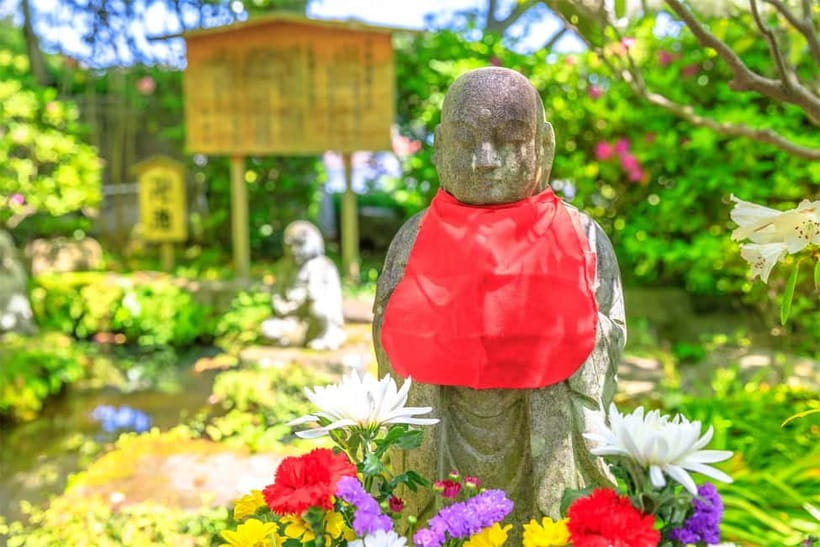
Kamakura shows up early. You’ll spend time around Kamakura Koko-mae Station, including free time and sightseeing, plus time for a panoramic ride segment of about 15 minutes.
This is where the tour turns from Japan travel to anime pilgrimage. At Kamakura Koko-mae, you step off to visit the railroad crossing tied to Slam Dunk—one of those places that feels like a still frame you can walk around. Even if you’re not an anime superfan, the setting is genuinely good for photos: compact streets, the rhythm of local life, and the sense of being near the sea even before you reach it.
Important practical note: you will walk. Bring comfortable shoes, and don’t assume the crossing area is “a quick stop and you’re done.” Build in a little time for photos and for regrouping with the group.
Enoshima Island: myth-by-the-sea, shrine visits, and the Money-Washing ritual
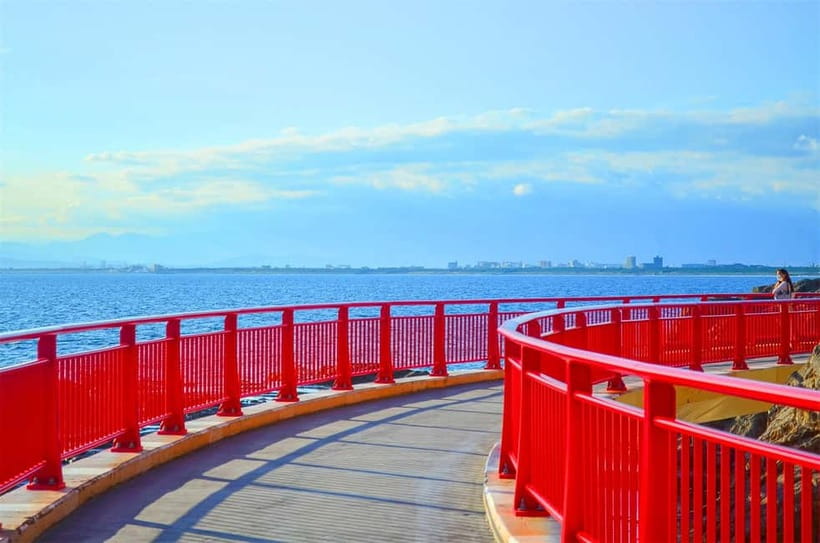
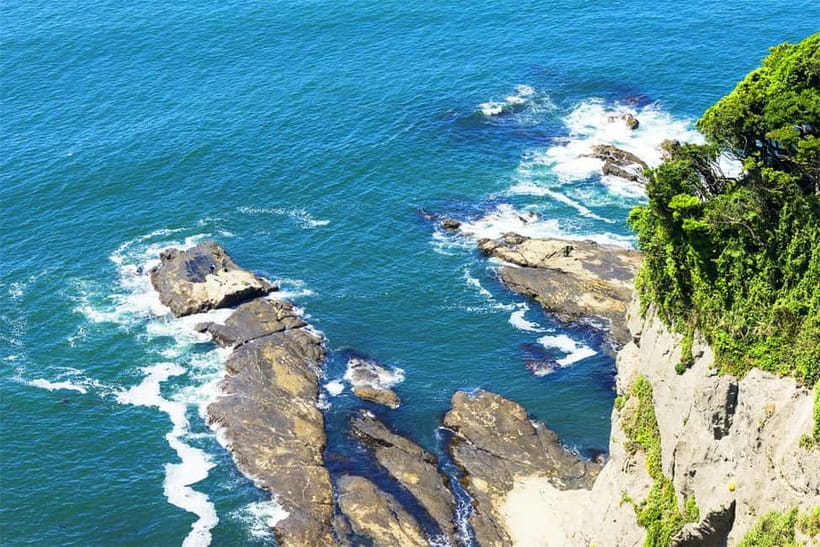
Next comes Enoshima Island for about 100 minutes of photo stops and sightseeing, and this is one of the best stretches of the day if you want coastal atmosphere.
Here’s what makes Enoshima more than a view stop. You cross a bridge to reach the island, and the place is wrapped in local legend. The tour frames the mythology around a five-headed dragon and a goddess who transformed the area—an origin story you’ll feel as you move between shrine spaces and ocean-facing paths.
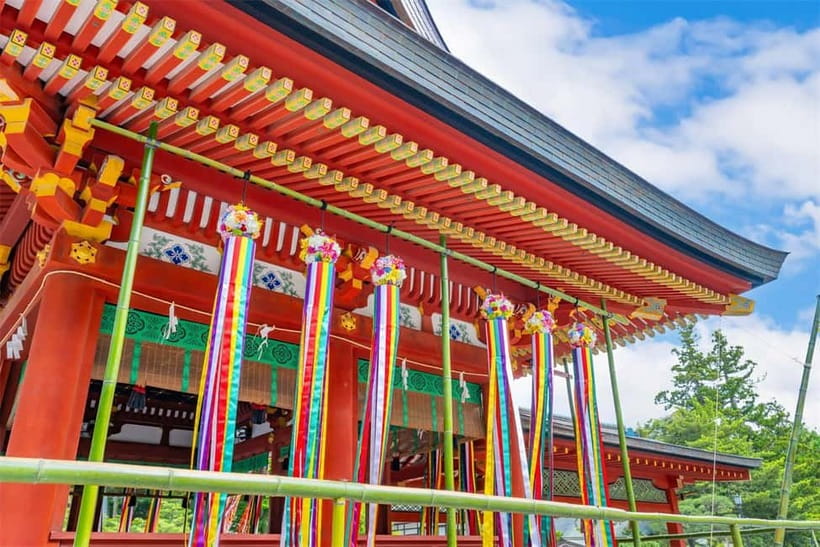
The key shrine stop is Enoshima Shrine, founded in 552 AD. You can see why people come here: it’s a practical prayer location as much as a historical one, with visitors seeking good fortune and even creativity and wealth.
Then you’ll get to the signature ritual area: the Money-Washing Water Dragon Shrine. The idea is simple and memorable—people wash coins as part of the wishing/prosperity belief. If you want souvenirs that feel like an experience, this is the kind of stop that gives you a story you can retell.
Timing reality: 100 minutes goes fast once you’re walking, taking photos, and wanting a slow look at shrine details. If the dragon/coin ritual matters to you, don’t wait until the last five minutes—go there earlier so you’re not rushing through it.
Riding the Enoden Line again: ocean views and old-Japan rhythm
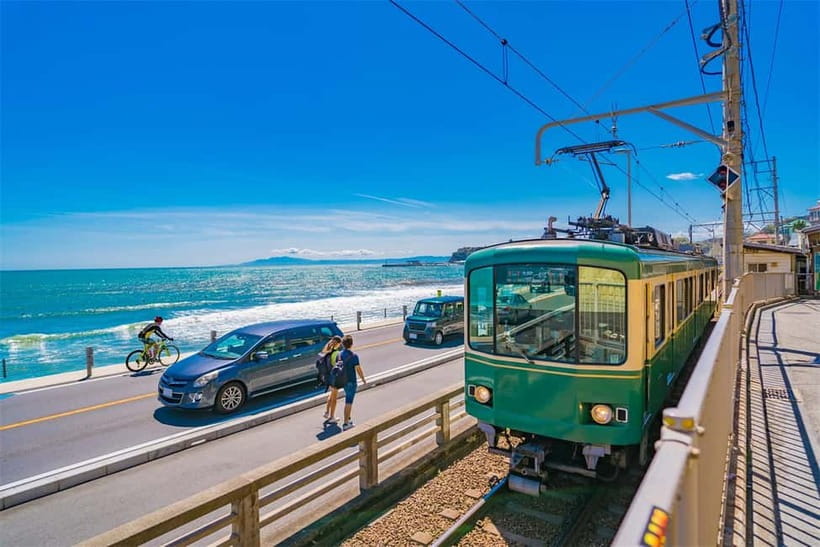
After Enoshima, the plan includes another train segment (about 20 minutes) and riding the Enoden Line through Enoshima Station toward Kamakura Koko-mae and on to Kamakura Station.
This isn’t “just transport.” It’s one of the reasons the day works. The Enoden has that old-line feel: smaller stations, sea-adjacent glimpses, and a slower pace than Japan’s faster commuter lines. Even if you’re not chasing anime references, this ride gives your day a different texture.
Also, it breaks up the walking load. You still have steps and regrouping time later, but the train segment lets your legs reset.
A quick Kamakura High School photo stop
You’ll also have a stop for Kamakura High School (about 20 minutes total, including photo stop and free time). This is framed as a photo moment tied to the same pop-culture world that brings people to the crossing.
Treat it as exactly what it is: a short, camera-friendly stop. If you want to hang out and wander for a long time, you’ll need to be selective, because the larger plan is headed toward Tsurugaoka Hachimangu next.
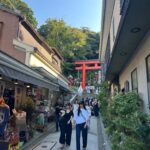
Tsurugaoka Hachimangu: samurai-era shrine time that feels worth the detour
After the earlier Kamakura moments, you’ll head toward Tsurugaoka Hachimangu Shrine by coach (about 40 minutes), then spend about 80 minutes on the shrine with a guided tour component.
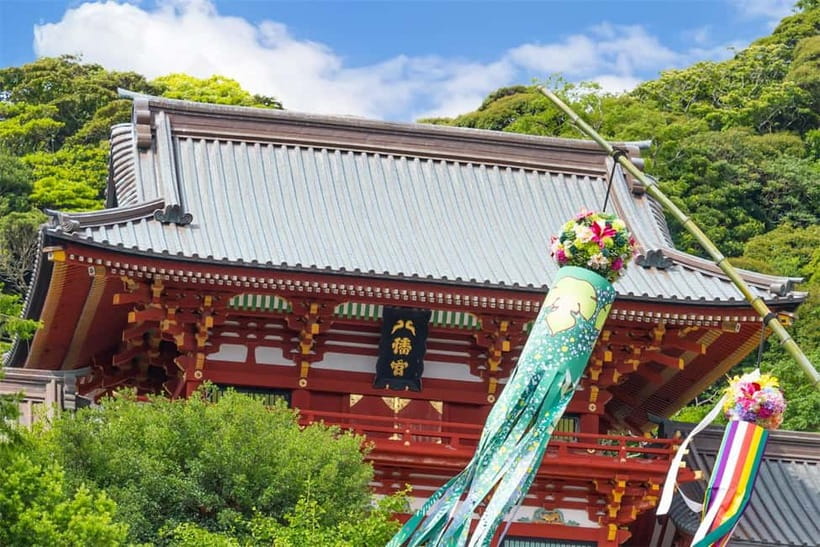
This is the stop that gives the day its “real Japan” backbone. Tsurugaoka Hachimangu is described as having deep roots in samurai history and is known as one of Japan’s Three Great Hachiman Shrines.
Even if you don’t care about ranks and classifications, the takeaway for you is time quality. You’re not just being dropped at a gate and hustled away. You have a guided element here, which helps you read what you’re looking at and not just photograph rocks and wooden beams.
Practical tip: wear shoes you can walk in comfortably for shrine approaches and paths. There’s no wheelchair suitability noted for this tour, so assume you’ll be on your feet for most of the day.
Komachi Street: snacks, souvenirs, and a softer pace break
From the shrine area, you’ll get Komachi Street time for break and free sightseeing. This part is designed as your reset zone—shops, snacks, and that lively old-town lane vibe.
This is where you can choose your own rhythm. If you want a quick snack and a couple of photos, you’ll have time to do that. If you want to slow down, browse, and buy a few edible souvenirs, Komachi Street is one of the easiest places to do it in the schedule.
Just remember two rules of this tour style:
- food isn’t included, and
- you can’t eat on the vehicle, so plan snacks for walking time.
The long coach ride to Yokohama (and how to use it)
Getting to Yokohama is about 75 minutes by coach. After all those stops, this ride is your recovery period. Use it to regroup mentally. Yokohama is where the evening night-view payoff happens, and your choices there depend on what you want to see.
Your guided tour component in Yokohama lasts 2.5 hours, and then you also get photo stops and extra time near Yokohama Red Brick Warehouse.
Because return timing can shift due to bad weather, holiday congestion, or traffic, it’s smart to keep some flexibility in your head. If you have a strict next-day plan, it’s worth planning a buffer.
Yokohama at night: Red Brick Warehouse and harbor-view energy
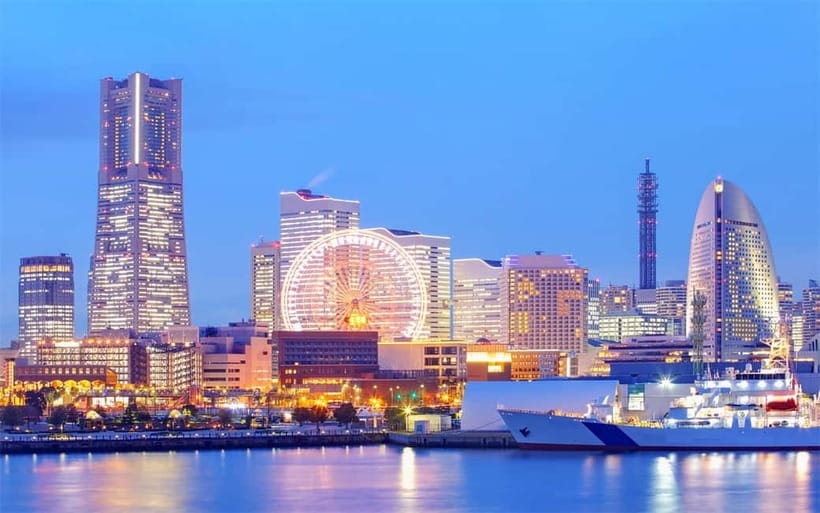
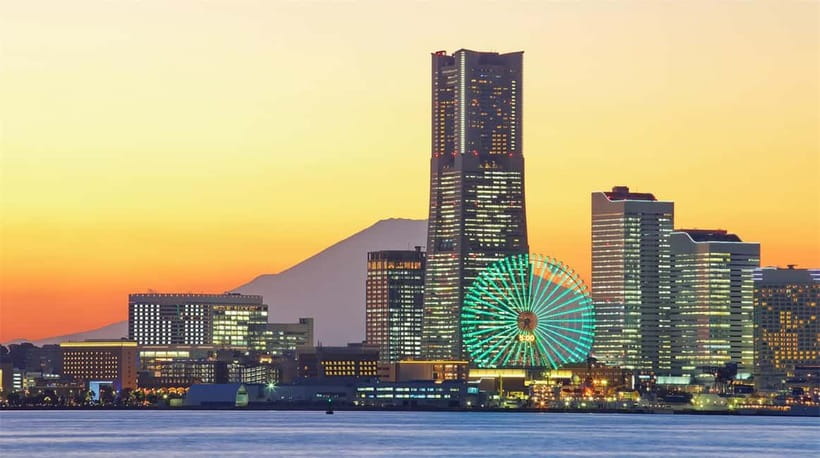
Yokohama is a different mood than Kamakura and Enoshima. You get modern city life mixed with open sea energy—and that’s exactly why this ending works as a contrast.
During the Yokohama portion, you’ll have a guided tour and sightseeing time, plus a photo stop at Yokohama Red Brick Warehouse. The Red Brick Warehouse area is described as a European-style cultural hub with shops and cafés and seasonal events.
This is also where your “choose your own night view” options come in. The tour information points you to places you can pick based on your interests, like:
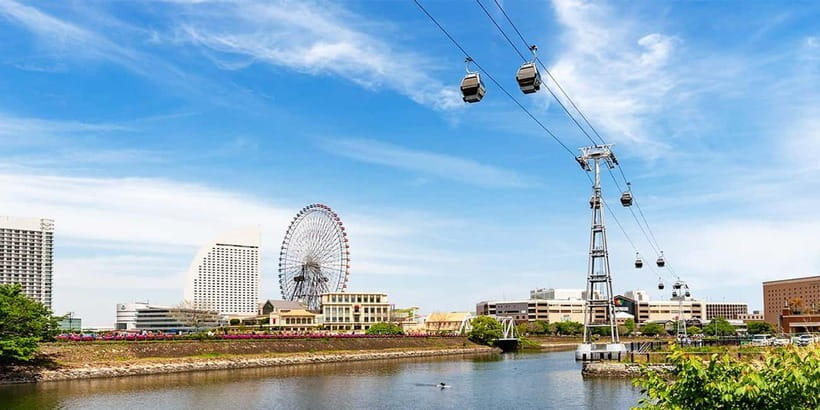
- Yokohama Air Cabin access from Sakuragicho Station to Red Brick Warehouse (with great city/harbor angles)
- a ferris wheel for panoramic night views
- Red Brick Warehouse itself for atmosphere and photos
One key point: these night activities are not included, so budget extra if you plan to go beyond the main Red Brick Warehouse photo time.
Price and what you really get for $82
At $82 per person for a 10-hour day, this is aiming at a very specific value: covering two iconic cities (Kamakura/Enoshima plus Yokohama), including the Enoden train ride, and building in guided elements at the temple/shrine moments.
Whether it feels like a bargain depends on what you want most:
- If you care about the exact Slam Dunk crossing, the Enoden ride, and the Enoshima shrine stops, the included transit and admissions add up.
- If you’re expecting a slower, deep-dive style day with lots of free wandering in Yokohama, the schedule may feel tighter. The tour’s structure is built around hitting several major locations rather than letting one area stretch.
The most important value filter: ask yourself if you want a guided route that moves you city-to-city, or if you’d rather take your time on your own. This tour is for people who like “see a lot” days with guided context at key points.
Group size, guide style, and why your experience may vary
This is a shared group tour with participants from multiple countries, and the guide offers explanations in English, Japanese, and Chinese.
Here’s the practical nuance that can change your day: if the group is under 13 people, the tour guide will also act as the driver and you’ll only get basic commentary. If you’re the type who loves context—why something matters, what to notice, little stories along the way—that matters.
On the other hand, when the guide role is fully focused on guiding, the experience tends to feel smoother because they can keep everyone aligned and explain as you go.
A real example from the tour’s guide names that you might run into: KO. People have specifically described KO as both informative and caring, which is exactly the kind of guiding style that makes shrine and street stops feel more alive.
What to pack and how to avoid common problems
For a day like this, your packing list is simple:
- Comfortable shoes (you’ll walk)
- Camera (you’ll want it for the Enoden crossing and night shots)
- Sunscreen (even in shoulder seasons, you’ll be out)
- Water
Two more smart moves:
- Bring some cash, since credit cards may not work at certain places.
- Don’t plan on eating in the vehicle.
If weather turns, don’t panic. Bad weather, traffic, or holiday congestion can cause later returns and changes to how much time you get at stops. The best tactic is to leave your schedule open after the tour, as suggested by the tour information.
Who this tour is best for (and who should skip it)
This tour fits you if:
- you want Kamakura and Enoshima in one go without sorting trains and timing yourself
- anime/film fans want the Slam Dunk crossing moment plus nearby context
- you like shrine visits with guided explanation rather than only viewing from afar
- you want a night payoff in Yokohama, with free time to choose your own night-view add-ons
It’s probably not your best match if:
- you hate walking (the day includes a fair amount of it)
- you’re wheelchair dependent (the tour is not suitable for wheelchair users)
- you want lots of unstructured free time in just one city (the schedule is built to cover multiple locations)
Should you book this Tokyo–Yokohama night view tour?
If your dream day looks like Enoden nostalgia, Enoshima shrines, Kamakura temple time, then Yokohama harbor-night photos, this tour makes sense. The inclusion of the Enoden ride and the structured stops at Tsurugaoka Hachimangu and Enoshima Shrine are the anchors.
I’d book it if you’re comfortable with a packed schedule and you’re okay with “guided context at big points” rather than long wandering. If you’re mainly hunting for the most relaxed Yokohama night possible, consider using Yokohama as your base on another day, or plan to arrive with a clear plan for which extra paid sights you’ll do around Red Brick Warehouse.
In short: this is a great value for a one-day hit of Kamakura + Enoshima + Yokohama night views, as long as you treat it like a full-day outing with firm pacing.
FAQ
What is the price and duration of the Tokyo Yokohama Night View Tour with Kamakura and Enoshima?
The tour costs $82 per person and lasts 10 hours.
Where do I meet the tour, and what time does it depart?
You’ll meet your guide at Tokyo MODE GAKUEN, 1-7-3 Nishi-shinjuku, Shinjuku-ku, Tokyo 160-0023. Departure time is 11:00am.
What’s included in the tour price?
The tour includes a tour guide, driver, pick up and drop off at the designated point, and admission to the Enoden train ride.
Are meals included?
No. Meals are not included.
How much walking should I expect?
The tour involves a fair amount of walking, so wear comfortable shoes.
What languages are offered by the tour guide?
The tour guide offers live explanations in English, Japanese, and Chinese.
Is this tour wheelchair accessible?
No. It is not suitable for wheelchair users.
Is cash needed during the tour?
It’s recommended to bring some cash, because credit cards may not be accepted at certain locations.
What happens if weather or traffic causes delays?
If there is bad weather, traffic, or holiday congestion, the return time might be later than planned, which can mean less time at attractions or changes to the itinerary. Leaving your schedule open after the tour is advised.