REVIEW · TOKYO
Official Japan Go-Kart Through Shibuya / Shinjuku
Book on GetYourGuide →Operated by JAPANKART · Bookable on GetYourGuide
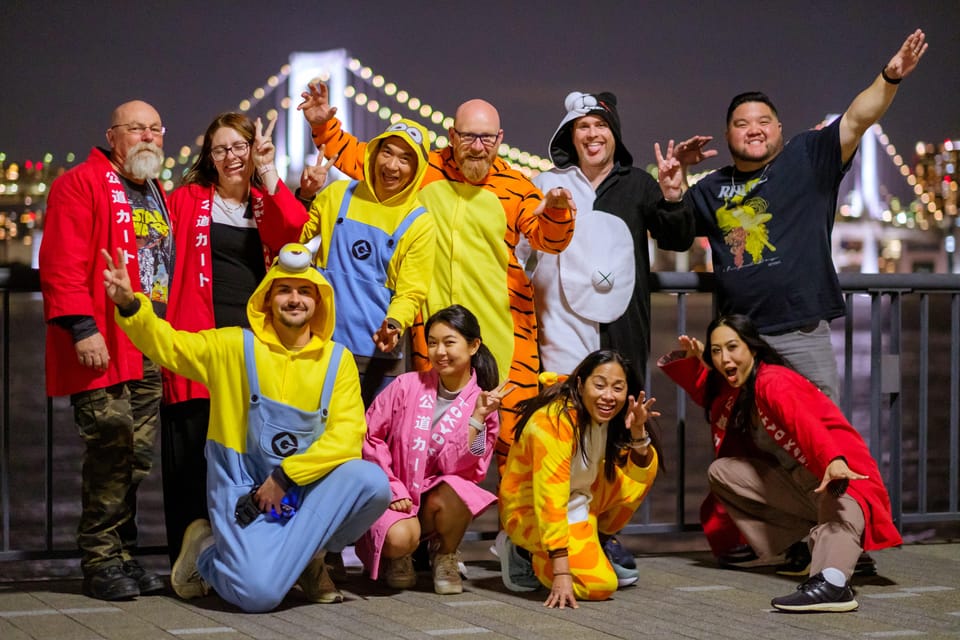
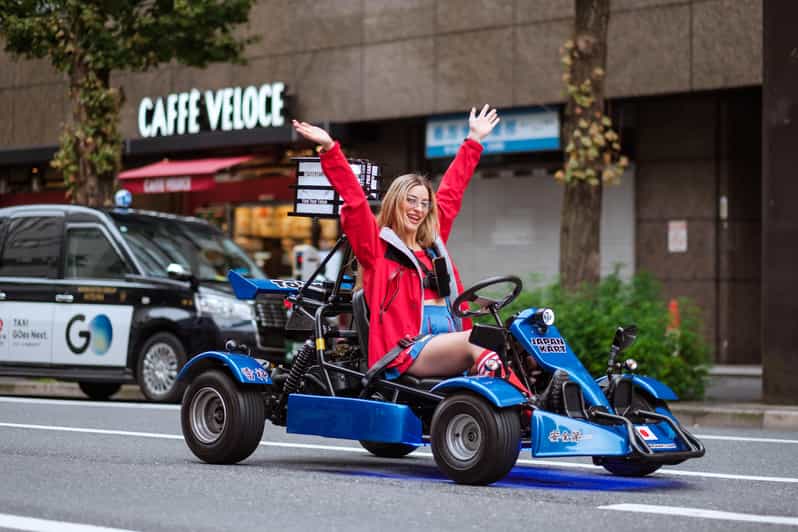
Go-karts in Tokyo feel unreal. I love the chance to drive through Shibuya Scramble at street level, and I also like the costumes that turn the ride into a proper memory. You’re not just watching Tokyo from a bus window—you’re threading through it like a local, with the wind in your face.
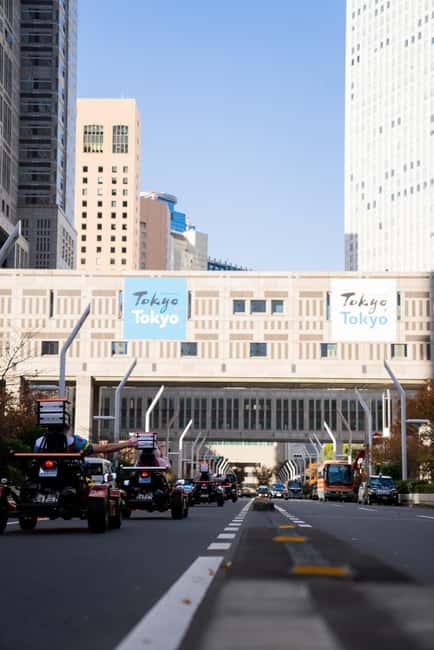
This is a small-group, English-guided Tokyo go-kart tour that keeps things organized. The team role-plays safety in a practical way: one car up front, a motorcycle watching from behind, and guides who stay nearby if the group stretches at traffic lights. When guides like Maui, Mandy, and Adele are leading your ride, the vibe tends to feel playful but controlled.
One real consideration: driving paperwork. If your international permit or translation is wrong, you can be turned away on the day, with no refund.
In This Review
- Key things that make this ride different
- Road-Ready Karts and a Tour That Moves Through Real Tokyo
- Shibuya Scramble, Omotesando, Harajuku, and the Central-Action Route
- Tokyo Tower, Imperial Palace, and Tokyo Station Photo Stops
- How the Ride Stays Safe (Even When Tokyo Traffic Gets Messy)
- What to Wear, What to Bring, and What Not to Do
- Documents for Driving in Japan: This Is the Make-or-Break Item
- Price: Is $122 Worth It for a Tokyo Go-Kart Tour?
- Who This Is Best For (and Who Should Skip It)
- Should You Book JapanKart Through Shibuya / Shinjuku?
- FAQ
- What documents do I need to drive on this tour?
- Is a Vienna Convention international driving permit accepted?
- Does my international driving permit need to be in booklet form?
- If my license is from certain countries, do I need a Japanese translation?
- Are sandals or flip-flops allowed?
- Can I bring alcohol or drugs?
- How long is the tour?
- Where do I meet?
- What if the tour is canceled due to bad weather?
Key things that make this ride different
- Shibuya Scramble in a go-kart: you get a photo moment and a true street-level crossing experience.
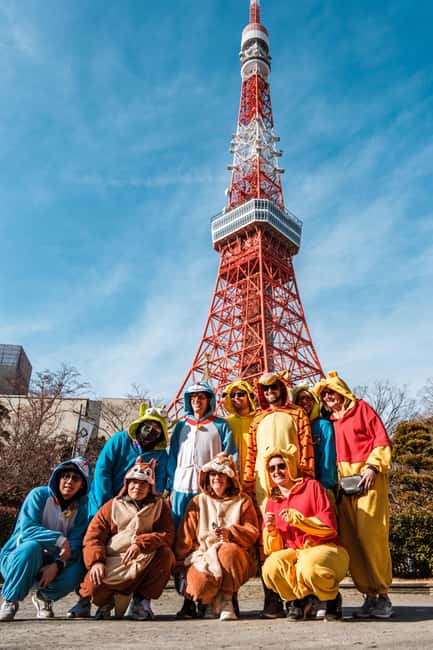
- Costumes built in: you’ll likely dress up with the other riders, and it draws smiles and waves.
- Lead car + motorcycle backup: the route is managed so you don’t get lost, even when traffic messes with spacing.
- Lots of photos and videos: they take video/photo during the tour, and you can get them at the end via air-drop.
- Road-driving rules start at check-in: IDP details matter, and they’ll check hard-copy documents.
Road-Ready Karts and a Tour That Moves Through Real Tokyo
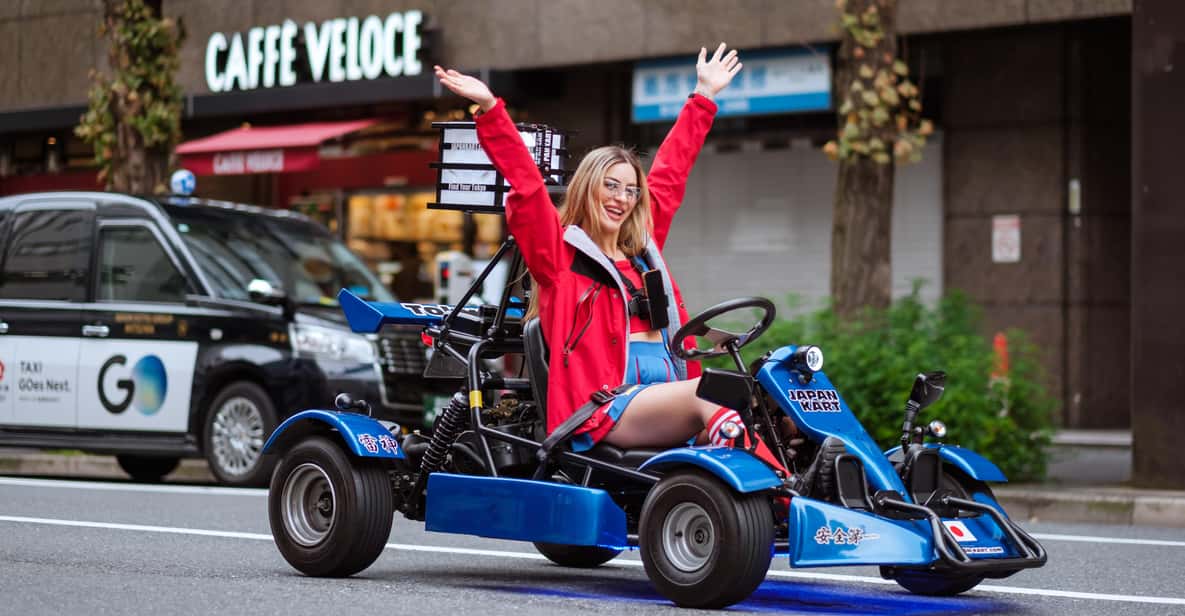
What you’re signing up for is a street-driving go-kart experience, not a theme-park lap. The karts are described as originally designed for road driving, and that difference shows in how the ride feels: you’re dealing with normal city traffic patterns, intersections, and the constant choreography of Tokyo streets.
Before you roll, you get a full safety briefing. It’s not just a formality. The instruction tends to be very clear about how the karts work and how to follow the group, which is a big deal if you’re nervous. More than one rider described feeling safe quickly once the team explained the basics.
The ride also includes practical extras that make it more comfortable than you’d expect for a go-kart tour:
- Gas fee included
- Jackets in colder months
- Costumes included
These may sound like “fun add-ons,” but they change the whole experience. Costumes add social energy, and jackets help you stay outside long enough to enjoy the city instead of shivering through it.
Group size is kept small, and you’ll follow guided procedures from start to finish. That matters in Tokyo, where a route can feel simple on a map but chaotic in real life.
You can also read our reviews of more tours and experiences in Tokyo.

Shibuya Scramble, Omotesando, Harajuku, and the Central-Action Route
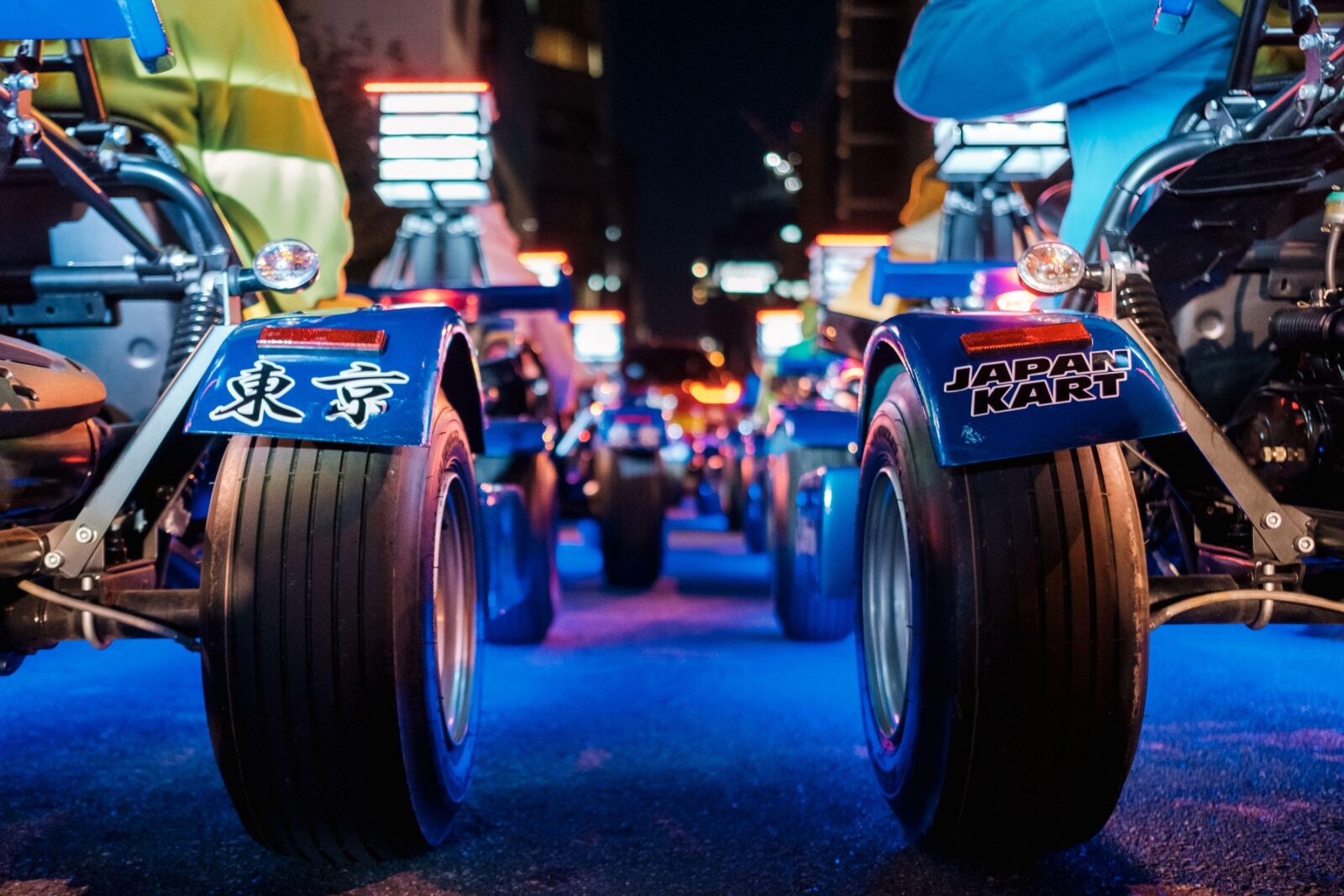
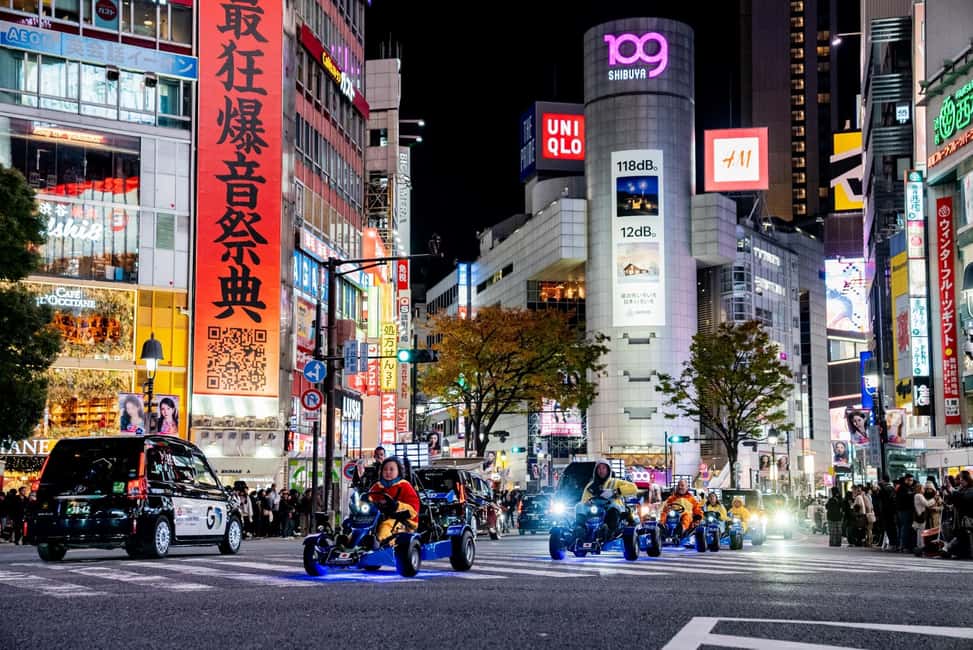
Most people book this because Tokyo’s icons look different at walking height. A street-level go-kart puts you right in the flow—wind, noise, traffic signals, and all. The highlight list specifically calls out Shibuya Scramble Crossing, and multiple departures are built around that kind of intersection drama.
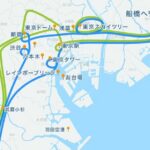
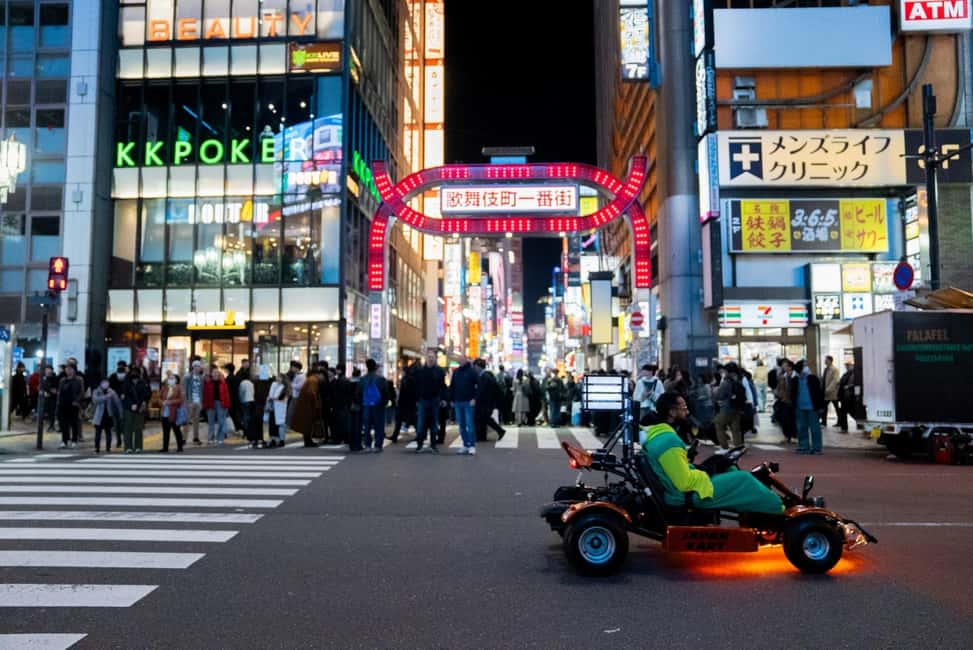
Depending on the option you book, your tour can focus on West Tokyo landmarks in a tight arc. For a shorter 90-minute experience, the route may include Shibuya, Harajuku, Omotesando, and Shinjuku Kabukicho. The point is to give you a concentrated taste of the neighborhoods people talk about, without spending your whole day commuting between them.
One more note that can affect what you see: the ride descriptions mention a mix that includes Ginza (shopping district energy) in the highlights, plus the famous intersections and photo moments in the core route. If you’re hoping for a specific district, check the departure details tied to your pickup option so you’re not guessing.
What you’ll feel in Shibuya is the real Tokyo effect: crowds, bright storefronts, and a crossing that’s more theater than crossing. You won’t be sprinting like a video game character, but you’ll get the key moment of being right there where everyone takes photos—only you’ll be doing it from behind the wheel.
A practical tip: plan to stay alert at photo stops and intersections. The karts can be slow in heavy traffic, and that’s normal here. The team’s job is to keep you moving safely, so you’ll often be stopping when the city stops.
Tokyo Tower, Imperial Palace, and Tokyo Station Photo Stops
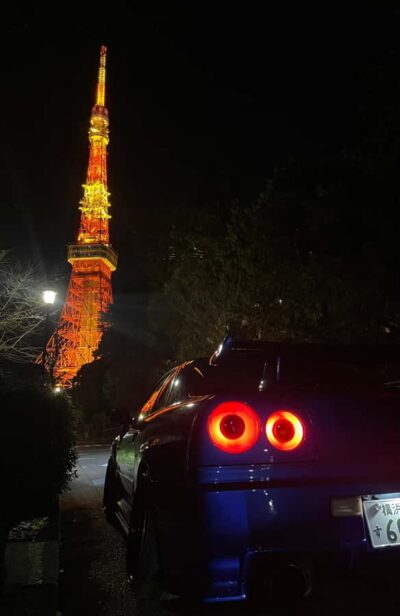
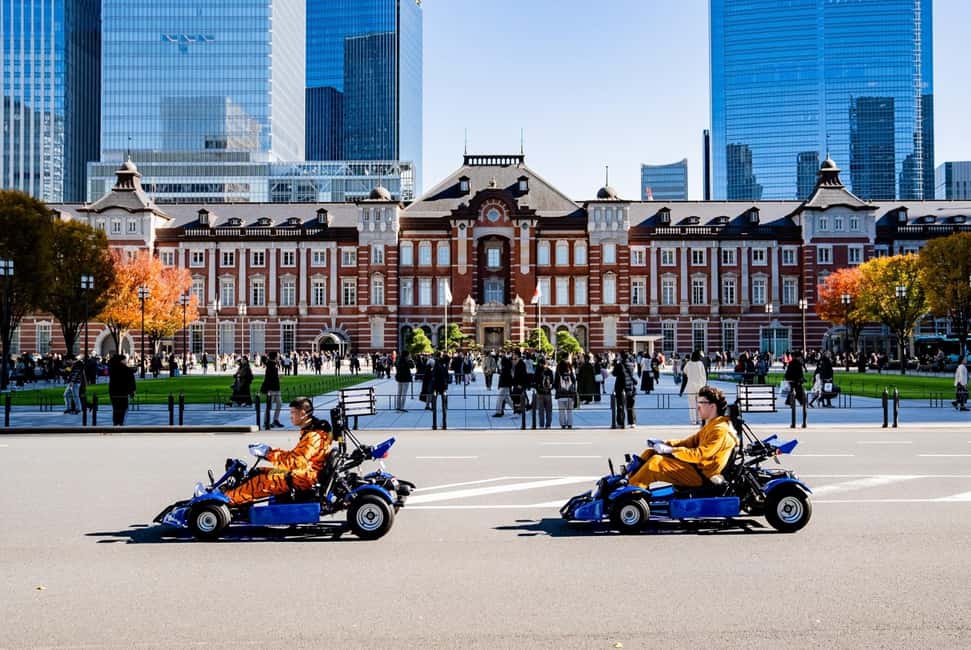
If you choose the longer option, the itinerary adds some of Tokyo’s most recognizable landmarks. You can expect a pass by Tokyo Imperial Palace, then a major focus on Shibuya Crossing, Tokyo Tower, and Tokyo Station with photo opportunities built in.
Here’s why those stops are worth it, even when you’re eager to drive:
- Tokyo Imperial Palace area (pass by): it’s the classic contrast to the loud shopping districts. You get a sense of scale and formality without sacrificing driving time.
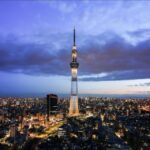
- Tokyo Tower (photo stop + break time): the team builds in a pause, so your hands and feet can reset. It’s a nice “breather” moment before you head back into street flow.
- Tokyo Station (photo stop): this is one of the easiest places in Tokyo to recognize immediately. Even if you don’t spend time inside, the station area gives you that big-city anchor feeling.
Also, guides tend to handle picture-taking seriously. Riders described the staff capturing lots of video and photos during the route and then sharing them afterward via air-drop with no extra cost. That’s not just convenience—it’s a value boost, because coordinating photos in Tokyo traffic is hard on your own.
The tour’s “pass by” sections are also more useful than they sound. You’re moving along in the same direction and speed as the city, which gives you a better sense of distance and orientation than simply getting dropped off at one landmark.
How the Ride Stays Safe (Even When Tokyo Traffic Gets Messy)
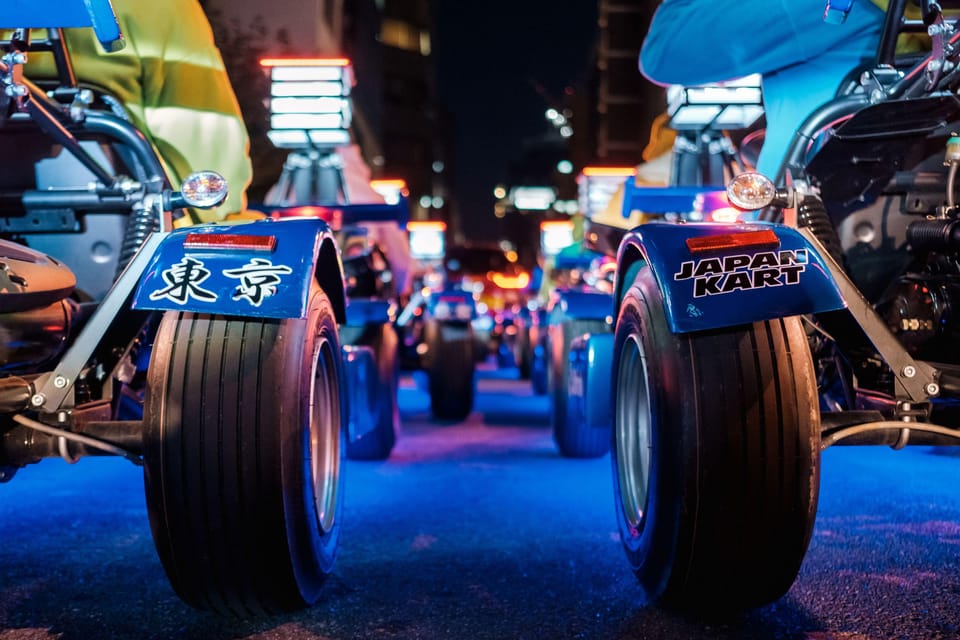
This is the part I’d call out if you’re thinking, I’m nervous. The route management is built around a system that keeps you from falling out of sync.
From the ride experiences:
- There’s typically a lead car in front.
- There’s often a motorcycle in the rear to help with safety and guidance.
- If traffic causes spacing gaps, staff help you regroup using nearby support (including vans/motorcycles when needed).
You might also find you don’t always stay perfectly bunched together. Street lights, cars cutting in, and normal Tokyo chaos can stretch a group. The key is that the team doesn’t treat that as a problem to ignore—they actively guide riders back to the main pack.
That’s why the safety briefing and the follow-the-leader instructions are such a big deal. One rider specifically mentioned being patient while they built confidence. Another noted the instructions were clear enough that a go-kart novice could get comfortable fast.
One downside you should assume: you’ll spend some time stopped at traffic lights. That’s not a failure of the tour; it’s the city. Some riders even described heavy traffic at a mid-afternoon departure causing more time at red lights than they expected. Still, they called it amazing.
Bottom line: you’re buying the experience of driving Tokyo from the road, and Tokyo is Tokyo. If you want nonstop speed, this won’t be that. If you want the thrill of being out there in real neighborhoods, it works.
What to Wear, What to Bring, and What Not to Do
This is a practical ride, and the rules are clear. Before you go, make sure you can answer yes to these:
What to bring
- Passport
- Your driver’s license from your home country
- International driving permit (hard copy, in booklet form) issued under the Geneva Convention 1949
What you should not wear
- Sandals or flip-flops are not allowed
Also:
- Alcohol and drugs are not allowed.
- Alcoholic drinks are not allowed in the vehicle.
Comfort-wise, plan for wind. Even with jackets in colder months, you’ll feel the open-air sensation. A ride in warm weather can still feel cool when you’re moving, so bring the right layers for the season.
If it’s hot, the team may provide ice water. At least one rider noted they were given ice water during a very warm day, which is a small thing that can make a big difference mid-tour.
Documents for Driving in Japan: This Is the Make-or-Break Item
Let’s talk about the part that can ruin your day if you ignore it: driving documentation.
For participation, you must have all three:
- Driver’s license from your country of origin
- International driving permit under the Geneva Convention 1949
- Passport
There are strict details here:
- The international driving permit must be issued by your local issuing authority in your own country. They explicitly say not to buy from online companies.
- International driving permits issued under the Vienna Convention 1968 are not accepted in Japan.
- You must present the hard copy of the IDP on the day. If you can’t show it, you won’t be able to participate, and reimbursement isn’t part of the promise.
Now check the “special translation” group. If your driving license is from Switzerland, Germany, France, Taiwan, Belgium, Estonia, or Monaco, you also need:
- an original driving license, and
- an official Japanese translation done by the authorized organization (JAF is named), and
- your passport.
There’s also a separate category mentioned for US military:
- US military SOFA License: a combination of Active Military ID and the State Side Driver’s License.
My advice: before you leave home, do a quick checklist with the exact country-based rules. Don’t assume your IDP is “basically fine.” Japan treats these differently than many people expect.
Price: Is $122 Worth It for a Tokyo Go-Kart Tour?
At about $122 per person for a 2–3 hour experience, the value depends on what you want from Tokyo.
You’re not just paying for the kart. You’re paying for:
- a full safety briefing
- costumes
- jackets in colder months
- gas fee included
- and, in real life, the team handling photos/videos so you don’t spend your time fiddling with a phone at intersections
If you’re comparing this to other “only in Tokyo” activities, the math often works because you’re getting a hands-on, high-memory experience with minimal effort beyond showing up and following instructions.
This also tends to be a strong option when you only have limited time. A single tour window can hit iconic areas like Shibuya, Tokyo Tower, and Tokyo Station, with photo stops built in.
The one “cost” you should plan for is attention and readiness. You’ll need to care about your documents, your footwear, and the safety rules. If you’re comfortable with that, the price feels fair for what’s delivered.
Who This Is Best For (and Who Should Skip It)
This tour is a great fit if you:
- want a fun, hands-on way to see Tokyo
- like street-level photography and want the intersection moments
- prefer a small-group format with clear guidance
- can follow rules and show up with the correct driving documents
It may not be a fit if:
- you don’t have the correct paperwork (you can’t “talk your way in” if documents don’t match the requirements)
- you’re expecting a fast, open-track ride (Tokyo traffic means lots of stops at lights)
- you’re not comfortable driving in a guided city environment
Age note: it’s not suitable for drivers under 18, based on the tour info you provided.
Should You Book JapanKart Through Shibuya / Shinjuku?
If you can meet the document requirements and you want a memorable Tokyo experience that feels more like doing than watching, I’d book it. The combination of Shibuya Scramble, guided traffic-smart driving, and built-in costumes/photos is exactly the kind of activity that turns a trip into a story you’ll tell later.
But if you’re missing the right IDP convention type, the right translation, or you’re relying on digital copies, don’t gamble. This ride is strict by design—so be strict back.
If you’re in the sweet spot—ready to drive, ready to follow the lead, and ready for street-level energy—JapanKart is a high-impact choice.
FAQ
What documents do I need to drive on this tour?
You must bring your passport, your driver’s license from your home country, and an international driving permit issued under the Geneva Convention 1949.
Is a Vienna Convention international driving permit accepted?
No. International driving permits issued under the Vienna Convention 1968 are not accepted in Japan for this activity.
Does my international driving permit need to be in booklet form?
Yes. The international driving permit should be in booklet form, not paper form, and you must show a hard copy on the day of the activity.
If my license is from certain countries, do I need a Japanese translation?
Yes. If your license is from Switzerland, Germany, France, Taiwan, Belgium, Estonia, or Monaco, you also need an original license plus an official Japanese translation by the authorized organization, along with your passport.
Are sandals or flip-flops allowed?
No. Sandals and flip-flops are not allowed.
Can I bring alcohol or drugs?
No. Alcohol and drugs are not allowed, and alcoholic drinks are not allowed in the vehicle.
How long is the tour?
It’s listed as 2–3 hours, and the activity description also mentions options like a 90-minute tour and a 2-hour tour depending on the departure.
Where do I meet?
You can choose between the JAPANKART Kanda Branch and the JAPANKART Shinjuku Branch. The exact meeting point may vary depending on the option booked.
What if the tour is canceled due to bad weather?
If the tour is canceled due to bad weather, you’re eligible for a full refund, or you can reschedule depending on availability.