REVIEW · SAITAMA PREFECTURE
Gyoda Tabi Shoes Cultural Walking Tour
Book on Viator →Operated by Gyoda Oneday Trip · Bookable on Viator
Gyoda feels like a small detour that lands big. This tabi shoes walking tour turns “footwear culture” into something you can wear, taste, and watch being made. You’ll head from traditional warehouse streets to a working factory area, then finish with a shrine stop that’s tied to local worship and seasonal flowers.
Two things I like about this experience are the hands-on footwear moment and the factory focus. You choose your tabi socks and get zori sandals, then you actually walk around the warehouse district like it’s part of the story, not just a photo backdrop. And the best part for many people is seeing craftsmen at the Isami factory area and walking through the production process with a guide.
One consideration: the tour guide is explicitly listed as not licensed or certified, so if you’re the type who wants a formally credentialed guide, you may want to adjust expectations. Also, you’re on your feet for a few hours in split-toe tabi, so comfort matters.
In This Review
- Key things that make this tour work
- Gyoda, Saitama: the tabi town feel you don’t get in Tokyo
- Your Tour Kit: wearing tabi socks and zori sandals
- Stop 1-3: warehouse streets, jelly fries, and manju in protected buildings
- Gyodahachiman Shrine and the hanachozu flower moment
- Isami factory visits: saw-toothed roof exterior and guided making
- Snacks that actually taste local: jelly fries and manju
- Price and value: what $45.61 buys in 3 hours
- Pacing, walking, and how to make it comfortable
- Who should book this tabi shoes walking tour
- Should you book? My take
- FAQ
- How long is the Gyoda Tabi Shoes Cultural Walking Tour?
- Where does the tour start and end?
- What’s included in the tour price?
- What food will I try during the tour?
- Is admission included for the stops?
- What time does the tour begin?
- What’s the group size limit?
Key things that make this tour work
You choose your own tabi socks and wear zori sandals for the walk so the culture is literal on your feet.
Jelly fries and manju are built into the route, not tacked on at the end.
Stop in old, protected buildings like storehouses designated as national tangible cultural properties.
The shrine visit includes hanachozu flowers and a chance for slower, self-paced looking.
Factory time is the highlight with a guided look at how tabi shoes are made.
Small group size (max 15) keeps the walking tour from feeling rushed.
Gyoda, Saitama: the tabi town feel you don’t get in Tokyo
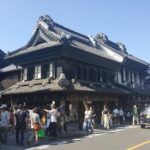
If you think of Japan and imagine endless neighborhoods and big-city crowds, Gyoda is a refreshing change of pace. This city in Saitama Prefecture sits about an hour from central Tokyo, and it’s known as Japan’s largest producer of tabi shoes. It’s also recognized as a Japan Heritage site tied to the warehouses that supported Japan’s footwear culture.
What makes this tour especially interesting is that it’s not only about history behind tabi. It uses that setting—old storehouses and factory buildings—to help you understand how the craft became local identity. You’ll walk the same kinds of streets where the industry grew, and the stops are spaced so you get stories, food, and real-world making.
You can also read our reviews of more walking tours in Saitama Prefecture

Your Tour Kit: wearing tabi socks and zori sandals
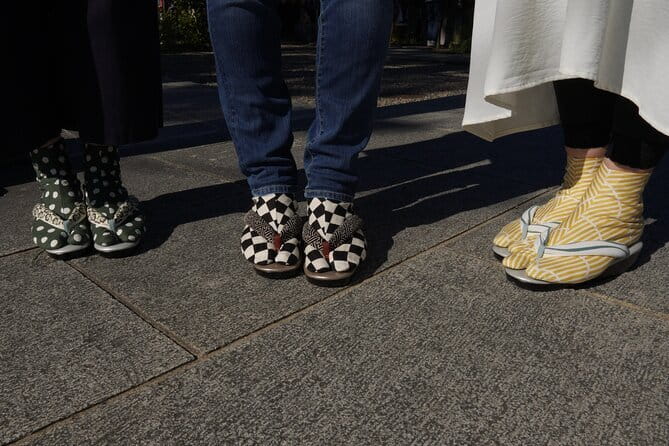
Before you even start walking, you’re given the core of the experience: tabi socks with the split toe plus zori sandals. The idea is simple, but it works. When your feet are in tabi, the cultural meaning of the footwear shows up fast, and it stops being abstract.
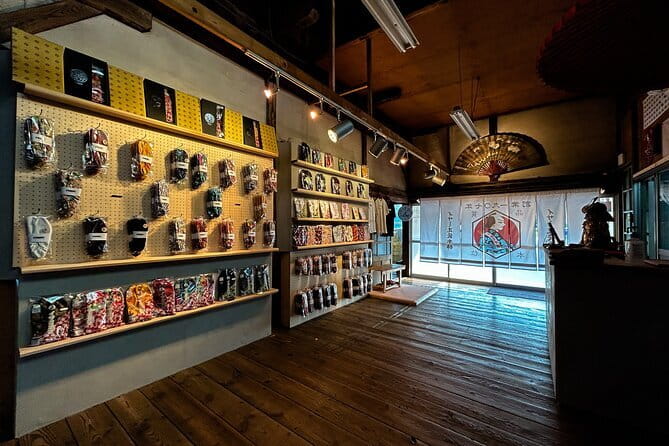
At the first stop (the Kanko Bussankan Buratto Gyoda area), you choose the tabi socks you’ll wear on tour. This is also where you pick up free Gyoda City sightseeing maps and browse souvenir shops if you want. That’s a smart touch, because it helps you keep exploring after the tour ends back at the meeting point.
The walking part is a real part of the design. You’re moving through the warehouse town, so your sense of place builds step by step—literally from the first stop to the shrine and then onward to the factory zone.
Stop 1-3: warehouse streets, jelly fries, and manju in protected buildings
The middle of this tour is built around the town’s “warehouse culture” side—old structures that helped store and support the industry. You start with a map-and-socks kickoff, then shift into food and heritage buildings.
Kanko Bussankan Buratto Gyoda (start point area)
You’ll choose your tabi socks here, and admission is listed as free. You also get access to free sightseeing maps and the chance to browse local stores right away, which is useful if you want something to bring home that’s tied to Gyoda specifically.
忠次郎蔵 (Chujirou warehouse) for jelly fries
This short stop packs in two things: a local snack and a heritage building connection. Admission is listed as free, and the Chujirou warehouse is described as a Japan Heritage component cultural property and a nationally registered tangible cultural property. You eat jelly fries here, a local food that’s very much part of the “taste the place” angle.
Jumangokufukusaya Gyoda Honten for a manju tasting in an 1836 storehouse
Next you visit Jumangokufukusaya Gyoda Honten, where you tour historical buildings and sample manju. The storehouse was built in 1836, and it’s designated as a national tangible cultural property. This is one of the stops where you slow down a bit and see how old commercial buildings shaped the area’s identity.
A small practical note: these heritage stops move quickly by design. If you’re the type who loves lingering for photos, keep your phone handy and expect that the group schedule will keep you moving.
Gyodahachiman Shrine and the hanachozu flower moment
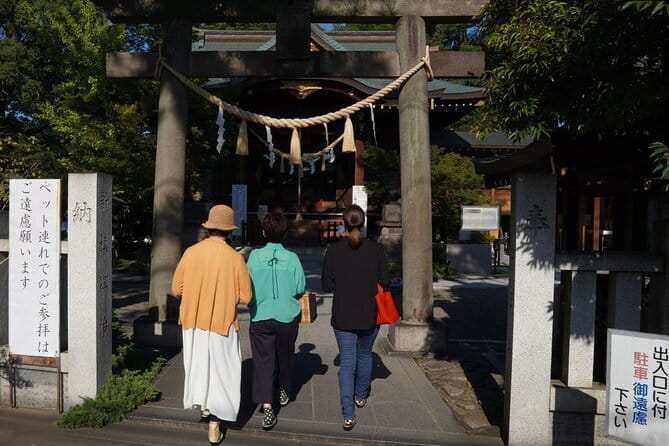
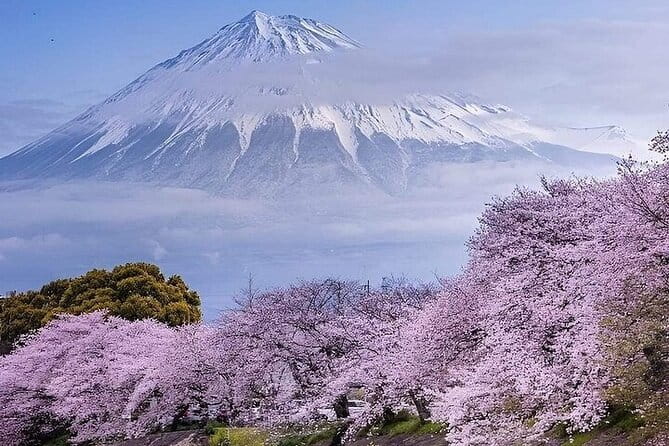
After the warehouse-and-food portion, the tour hits a calmer, more spiritual stop at Gyoda Hachiman Shrine. This is also where you’ll see the hanachozu—the tour specifically highlights the beauty of the flowers.
The shrine itself is described as famous for blessings for cancer. It’s visited by local residents and people from all over the country. That gives the visit a weight beyond sightseeing, even though you’re still very much in a tourist-friendly, guided route.
Timing here is about 25 minutes, and the tour notes that participants may visit the shrine on their own. That’s a good setup: you get group context, then you can step aside, look closely, and take your time without feeling like you’re always being ushered forward.
Isami factory visits: saw-toothed roof exterior and guided making
The factory area is the part most people remember, and for good reason: it connects what you’ve learned about tabi culture to how the craft actually happens. This isn’t just a storefront talk. It’s tied to buildings that are part of the local manufacturing story.
Isami Corporation School Factory (exterior visit)
You’ll get a short look at the exterior of the School Factory building. It was built in 1917, is described as Gyoda’s largest saw-toothed-roof tabi shoes factory, and is registered as a component cultural property. The stop is brief (around 5 minutes), but the architectural cue matters. You’re not only seeing a process—you’re seeing the kind of industrial building that let production thrive.
Isami Corporation Headquarters (guided manufacturing process)
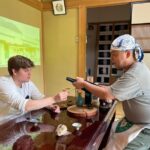
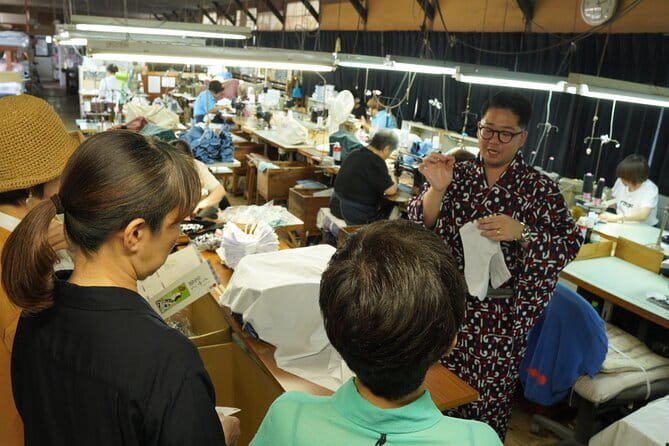
Then you move into the bigger experience: a guided tour of the manufacturing factory at the Isami Corporation headquarters. This portion is about 45 minutes, and the tour is designed to walk you through the tabi production process with a guide.
The most valuable thing here is the mix: you already wore tabi socks on the walk, you’ve eaten local foods tied to the area, and now you watch how the product is made. That gives the craft a context you can feel, not just read about.
If you’re lucky, your guide can make the production story click. One guide name that stands out from past tour experiences is Mitch-San, described as explaining the history of Gyoda and tabi and making the factory experience enjoyable and clear.


Snacks that actually taste local: jelly fries and manju
Food stops can either feel random or feel earned. Here, the snacks follow the route’s theme: warehouse town + local specialties.
Jelly fries show up at the Chujirou warehouse stop.
Jumangoku manju is tasted at the Jumangokufukusaya Gyoda Honten stop.
The tour includes these snacks in the price, and both are tied to specific stops rather than a generic “snack break.” If you’re trying to travel lighter and skip long restaurant searches, this is a smart way to eat well without losing half your day.
Also, don’t underestimate the value of tasting as you learn. Eating while you’re in the heritage buildings helps the whole area feel more real, not like you’re passing through a theme park.
Price and value: what $45.61 buys in 3 hours
At $45.61 per person, the value here comes from three things you normally pay separately or skip on short tours.
First, you’re getting gear: tabi socks (split-toe) and zori sandals. Second, you’re getting food included: jelly fries and manju. Third, you’re getting structured access to both the warehouse/heritage setting and the factory process.
The tour is about 3 hours (approx.) and capped at 15 travelers, which usually helps keep questions from getting swallowed by a big group. It also means you can get a clearer explanation during factory time, which is usually the highest-information segment.
One more value note: admission for the stops is listed as ticket-free in the itinerary for each stop. Even if you’d rather not think about logistics, it makes the experience feel smoother and less “add-on cost” heavy.
Pacing, walking, and how to make it comfortable
This is a walking tour built around multiple stops, so comfort is the whole game.
You’ll start at 1:00 pm at 観光物産館ぶらっとぎょうだ, and the tour ends back at the meeting point. That loop is convenient if you want to pop into shops or grab a meal nearby afterward. The route also includes a part where you can wander on your own at the shrine, which gives your legs a small breather from constant movement.
Because you’re wearing tabi socks and zori sandals, you’ll probably want to wear simple layers. It’s a winter-friendly idea in a way, since tabi are designed for traditional footwear, but your comfort still matters. If you’ve never worn split-toe tabi socks, plan for a short adjustment period.
Also, the group maximum is 15, so it’s not a huge production. Still, it’s organized, so if you love slow wandering, leave extra time before or after the tour for your own exploration of Gyoda.
Who should book this tabi shoes walking tour
This tour is a great fit if you want an authentic day in Japan’s industrial heritage, not just a cultural “walk and photos” route.
It’s especially good for:
- People who enjoy craft and manufacturing and want to see production, not just souvenirs.
- Travelers interested in kimono-adjacent culture and how footwear ties to daily life.
- Anyone who likes eating local snacks in situ, inside historic places.
- Families or pairs who want a focused 3-hour plan with a small group.
If you’re only in Gyoda for a quick stop and your focus is only shopping for shoes, you might feel there’s less free time than you’d like. But if you want understanding and context alongside purchases, this route gives you both.
Should you book? My take
Book it if you want a day that connects tabi culture to real manufacturing and real local food, all in a small-group format. The factory portion and the protected warehouse buildings make this more than a casual stroll, and the included snacks keep the experience grounded.
Skip it—or at least temper expectations—if you’re very strict about guide credentials, since the tour notes the in-person guide is not licensed or certified. Also, if you hate any walking in special footwear, the tabi experience might not be worth the effort.
FAQ
How long is the Gyoda Tabi Shoes Cultural Walking Tour?
It runs for about 3 hours.
Where does the tour start and end?
The tour starts at 観光物産館ぶらっとぎょうだ (2-chōme-1-8 Oshi, Gyoda, Saitama 361-0077, Japan) and ends back at the same meeting point.
What’s included in the tour price?
You get tabi socks (split-toe Japanese socks), zori sandals, and included snacks: jelly fries and jumangoku manju.
What food will I try during the tour?
You’ll eat jelly fries at the Chujirou warehouse stop and have jumangoku manju tasting at the Jumangokufukusaya Gyoda Honten stop.
Is admission included for the stops?
For the listed stops, the itinerary marks admission ticket free at each location.
What time does the tour begin?
The start time is 1:00 pm.
What’s the group size limit?
The tour has a maximum of 15 travelers.