REVIEW · SAITAMA PREFECTURE
Let’s enjoy Japanese Festival Music- Chichibu Yatai Bayashi
Book on Viator →Operated by Sachiko · Bookable on Viator
Chichibu’s festival beat is contagious. This tour pairs 3D theater and English projection mapping with a close look at Chichibu Night Festival music, plus a live performance centered on Chichibu Yatai Bayashi. I love that you get the story first and then the sound. One catch: it runs only on Oct 6, 14, and 20, so you need the right dates.
The walking portion is guided and practical, not just sightseeing. You’ll move through Chichibu Shrine and the downtown area around Suwa Shrine and Otabisho with Sachiko leading the show, including her ability to play the instruments. With a maximum group size of 8, questions are easy and the pace stays comfortable.
Plan on about 4 hours, and lunch is not included. The upside is that museum admission is covered, and the shrine time itself is free to enter, so your money goes toward the experience rather than extra tickets.
In This Review
- Key highlights you should care about
- Chichibu Yatai Bayashi: festival music you can actually follow
- Chichibu Festival Museum: English 3D and projection mapping that set the stage
- The music part: watching traditional players with the right context
- Chichibu Shrine: Myoken-sama, the northern star, and Hidari Jingoro carvings
- Suwa Shrine and Otabisho: the downtown stops with a religious purpose
- Chichibu Station to Seibu-Chichibu: a route designed for easy timing
- Price and value: what $26.06 really buys you
- Who this tour is best for (and who may want to skip it)
- Should you book Chichibu Yatai Bayashi with Sachiko?
- FAQ
- What is the duration of the tour?
- How much does the tour cost?
- On which dates does this experience run?
- Where is the tour meeting point and start time?
- Where does the tour end?
- What’s included in the price?
- Is lunch included?
- What do you do at the Chichibu Festival Museum?
- Are there any paid admissions during the shrine visit?
- Is a mobile ticket used?
- Is it possible to travel with a service animal?
Key highlights you should care about
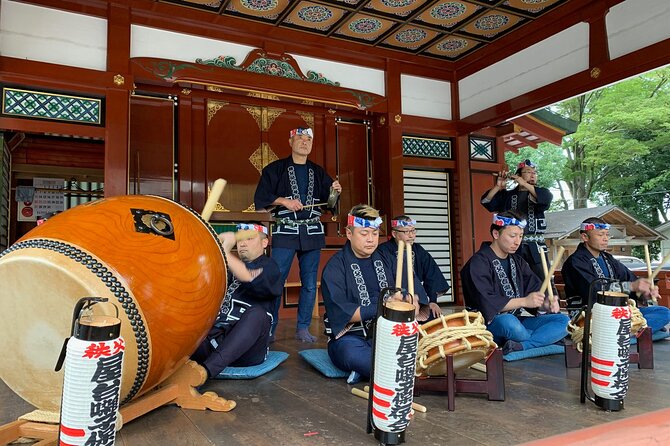
- English 3D theater and projection mapping at Chichibu Festival Museum, focused on the Chichibu Night Festival
- Live traditional festival music tied to Chichibu Yatai Bayashi, not just a talk about it
- Chichibu Shrine context with specific stories like Myoken-sama and the Dragon God’s once-a-year visit
- Hidari Jingoro carvings at the shrine, plus guidance for what you’re looking at
- Downtown stroll with sacred waypoints around Suwa Shrine and Otabisho
- Small group feel (up to 8 people), with an instrument-playing guide
Chichibu Yatai Bayashi: festival music you can actually follow
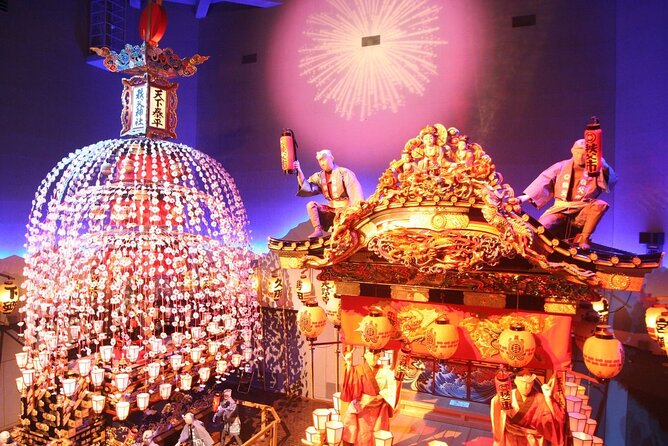
This is a music-focused tour with a big difference: you’re not left staring at buildings while the guide talks in the background. The plan is built so you learn what you’re hearing, then you hear it.
Chichibu Yatai Bayashi is the kind of traditional festival music that can feel like noise if you don’t know what’s going on. Here, the tour tees you up with background at the museum before the performance part. That order matters. You start recognizing how the rhythm and instruments fit the festival mood, not just the fact that there is music.
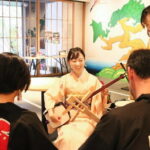
I also like that the guide does more than explain. Sachiko can play the instruments, and the tour experience feels closer to watching a craft than attending a lecture. Some people even get a chance to try taiko-style drums during the experience, which turns the music from something you hear into something you feel in your body.
One more reason this tour works: the itinerary doesn’t try to cram in every famous stop in town. Instead, it stays anchored to the festival world around Chichibu Shrine and the key related places.
You can also read our reviews of more tours and experiences in Saitama Prefecture.

Chichibu Festival Museum: English 3D and projection mapping that set the stage
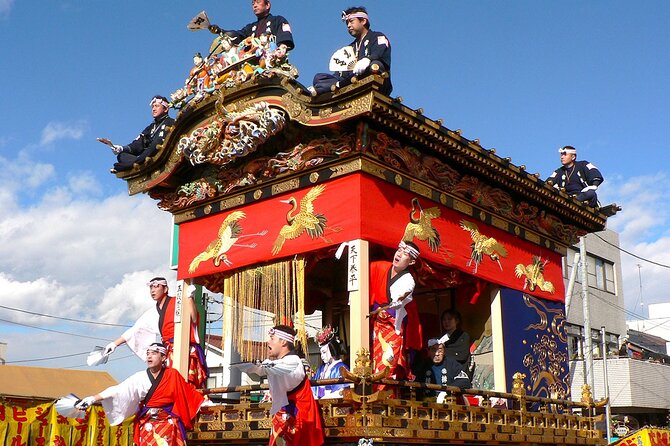
The first stop is the Chichibu Festival Museum, and it’s a smart opener if you want to understand Chichibu Night Festival instead of just visiting it later.
You’ll spend about 1 hour 30 minutes with two main elements: a 3D theater show in English and projection mapping that shows the Chichibu Night Festival atmosphere. Projection mapping sounds modern, but the effect is traditional storytelling. You’re basically shown how the festival moves, how the night feels, and how the music ties into the action.
Why I think this is a good value: you’re paying for time with professional presentation. Even if you’re comfortable with Japanese, 3D theater in English is an instant shortcut to meaning. You don’t have to piece together details from signage while everyone around you moves on.
Possible drawback: you’ll spend a full chunk indoors first. If you prefer to start outdoors and want immediate street views, this museum start can feel a bit like a warm-up rather than the main event. In practice, it’s worth it because it makes the next stops easier to read.
The music part: watching traditional players with the right context
After the museum setup, the tour shifts into festival music mode. This is where the heart of the experience is: watching traditional powerful festival music performed by local players tied to Chichibu Yatai Bayashi.
The important detail here is that you’re not just told that the festival is special. You get to see it as a living performance. When the guide can also play instruments, the explanations don’t float away from what you’re seeing. You can connect the story about rhythm, role, and sound to what’s actually happening in front of you.
From the experience descriptions, it sounds like the guide actively supports the session, not a hands-off approach. That’s exactly what you want if you’re visiting from abroad. Traditional music can be intimidating, but having an instrument-playing guide makes it less mysterious.
And yes, there’s a bonus type of moment for many people: hands-on taiko drumming. If you’ve ever wanted to try Japanese drums without needing prior skills, this is the sort of situation you should look for. You may find yourself laughing while your arms burn a little.
Chichibu Shrine: Myoken-sama, the northern star, and Hidari Jingoro carvings
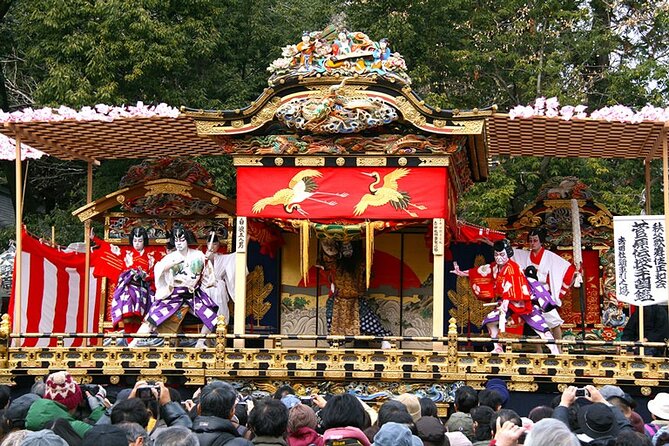
Next comes Chichibu Shrine, about 50 minutes on the schedule. This stop is the spiritual spine of the tour, and it’s not vague. You’re given specific story threads to guide your eyes.
Start with age and significance. The shrine is described as having a history of 2111 years, which immediately gives weight to the place. From there, the tour focuses on the female deity Myoken-sama, said to live at the shrine and positioned in the direction of the northern star.
Then there’s the story that makes the night festival feel like more than a one-day show. The Dragon God lives on Mt. Buko and is said to come to Otabisho to meet Myoken-sama once a year on the day of the Night Festival. So when you stand on the shrine grounds later, you’re not just thinking pretty thoughts. You understand why people connect these locations on a sacred calendar.
The shrine also includes magnificent carved sculptures by Hidari Jingoro, known as a famous carving artist from the Edo era. This is one of those details that can be easy to miss if you don’t know where to look. The guide’s job here is to make the carvings readable, not just decorative.
Possible consideration: shrines can feel similar to tourists who don’t know the story. If you’re expecting purely scenic strolling, you may want to lean into the narration. This tour is more meaningful when you treat the explanation as part of the sightseeing.
Suwa Shrine and Otabisho: the downtown stops with a religious purpose
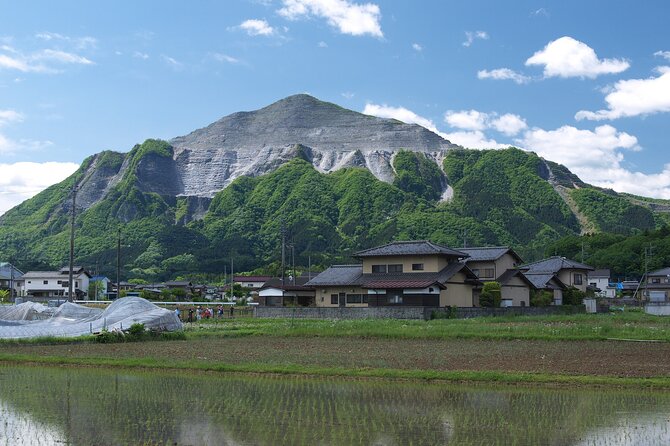
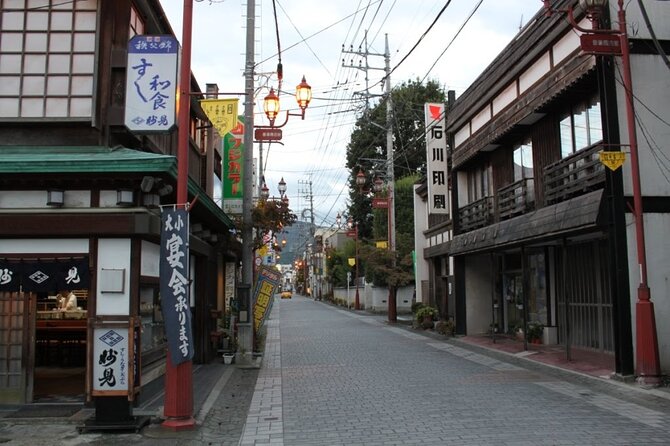
After the shrine portion, you’ll head into Chichibu’s downtown area with time set aside for a stroll. This is where the tour blends practical walking with meaning.
You’ll visit Suwa Shrine, described as the house of the wife of the Dragon God who lives on Mt. Buko. Then you move toward Otabisho, connected directly to the annual meeting between Myoken-sama and the Dragon God.
Here’s why this matters: Chichibu’s festival world isn’t confined to one building. It’s distributed across points in town. When you connect Suwa Shrine and Otabisho to the Dragon God story, the downtown feels like part of a sacred route, not random streets with shops.
The walking time also gives you room for real-life choices. You can browse quaint shops and cafes and pick up local gourmet food. Lunch isn’t included, so this is your chance to handle your own snack or light meal. If you enjoy casual eating while you walk, you’ll get more out of this section than if you’re trying to do everything formally.

Chichibu Station to Seibu-Chichibu: a route designed for easy timing
The tour starts at Chichibu Station at 12:30 pm and ends at Seibu-Chichibu Station. The location pairing is practical. You aren’t stuck far from transit when you’re done.
At the end near Seibu-Chichibu Station, there’s a local food court and souvenir shops. That’s a nice buffer. You can grab a post-tour bite, pick up something small for later, and head to your next train without hunting around.
Group size is limited to a maximum of 8 people. That small number changes the feel of the day. You’re not lost in a crowd, and the guide has room to adjust if you need a slower pace or want a question answered right then.
Also, the tour uses a mobile ticket. That’s convenient if you’re traveling light and trying to reduce paper tickets and last-minute printing.
Price and value: what $26.06 really buys you
The listed price is $26.06 per person for about 4 hours. That might look modest until you break down what’s included.
Museum admission is included, with the adult ticket stated at 500 yen (children 6 to 12 at 250 yen). But the value isn’t only the entrance fee. You’re also paying for guided storytelling, the English-language 3D theater and projection mapping experience, and live traditional festival music performance by local players.
So what are you really buying? A guided path through Chichibu’s festival meaning in a short time block. Instead of piecing the festival together on your own, you get an organized sequence: museum context, shrine significance, and festival-related downtown waypoints.
If you’re the kind of traveler who likes structure (and you want to understand why things matter), this price feels fair. If you prefer independent exploring with minimal guided time, you might feel the cost is less justified. In that case, you’d want either a longer free day in Chichibu or a different style of tour.
One more practical note: lunch is not included. That’s not a deal breaker, but it does mean you should budget for your own food during the downtown walk or before/after the tour.
Who this tour is best for (and who may want to skip it)
This experience is a strong match if you care about festival culture and you like learning what you’re seeing and hearing. It’s especially good for music fans who want more than a surface performance.
It’s also a great fit for people who like small-group dynamics. With a maximum of 8 people, you’ll likely feel more personally attended to. And because the guide can play instruments, you’re not stuck in a purely listening-only format.
If you’re visiting during the specific dates in October (Oct 6, 14, 20), this can be one of your best chances to connect Chichibu Yatai Bayashi with the shrine-centered festival worldview.
You might not love it if you want a long outdoor day with lots of unrelated sights. This tour is intentionally focused. The trade-off is depth over breadth.
Should you book Chichibu Yatai Bayashi with Sachiko?
I’d book it if you want the festival story in plain language, the music in real form, and a sequence that makes Chichibu Night Festival easier to understand fast. The included museum show in English is a real perk, and the shrine stops are built around specific named traditions like Myoken-sama, plus Hidari Jingoro carvings that you’ll actually know how to notice.
Book if:
- you want Chichibu Night Festival context before you see festival music up close
- you enjoy guided walks that connect places to stories
- you like small-group tours and you don’t mind a short day plan that moves steadily
Consider booking another option if:
- your dates don’t match Oct 6, 14, or 20
- you want mostly casual strolling with minimal explanation
- you’re not interested in festival music or shrine-based storytelling
If you can make the dates, this tour is a smart way to spend half a day in Chichibu with real cultural attention, not just a list of stops.
FAQ
What is the duration of the tour?
The tour lasts about 4 hours.
How much does the tour cost?
The price is $26.06 per person.
On which dates does this experience run?
It is held on Oct 6, Oct 14, and Oct 20 this year.
Where is the tour meeting point and start time?
You meet at Chichibu Station at 12:30 pm.
Where does the tour end?
The tour ends at Seibu-Chichibu Station.
What’s included in the price?
All fees and taxes are included, and the Chichibu Festival Museum admission fee is included.
Is lunch included?
No. Lunch is not included.
What do you do at the Chichibu Festival Museum?
You watch a 3D theater in English and a projection mapping presentation related to the Chichibu Night Festival.
Are there any paid admissions during the shrine visit?
Chichibu Shrine admission is described as free.
Is a mobile ticket used?
Yes, the tour uses a mobile ticket.
Is it possible to travel with a service animal?
Yes, service animals are allowed.