REVIEW · SAITAMA PREFECTURE
Ecotourism and Woodcraft with a Mountain Artist Near Tokyo
Book on Viator →Operated by 奧むさし飯能観光協会 · Bookable on Viator
A quiet forest lesson can change your pace. Near Tokyo in Hanno, this 2.5-hour experience lets you learn about Nishikawa timber and how thinning keeps forests healthy, then finish with pyrography where you write a kanji of your choice on a wood piece shaped like an Edo Castle.
What I like most is the mix of meaning and hands-on work: you’re not just watching—you get to cut logs yourself and make a souvenir that actually feels personal.
One thing to consider: this tour depends on good weather, so plan to stay flexible if conditions are poor.
In This Review
- Key things I’d circle before you book
- Hanno, Saitama: the easy nature escape from Tokyo
- From Higashi-Agano Station to the Kirari studio: the day starts simple
- Kirari (木楽里): learning Nishikawa timber from a mountain artist
- Inside a normally closed forest: aromas, thinning, and quiet time
- Log cutting workshop: what you’ll do and how it’s handled
- Pyrography on Edo Castle wood: your kanji becomes a smartphone stand
- Timing, lunch, and where to go after your forest day
- Who this tour fits best (and who should reconsider)
- Should you book the Mountain Artist woodcraft experience?
- FAQ
- Where does the tour start and end?
- How long is the experience?
- What is the price per person?
- What’s included, and what isn’t?
- What do I make during the craft session?
- How big is the group?
- Is lunch included?
- Do I need good weather?
- Can I cancel for free?
Key things I’d circle before you book
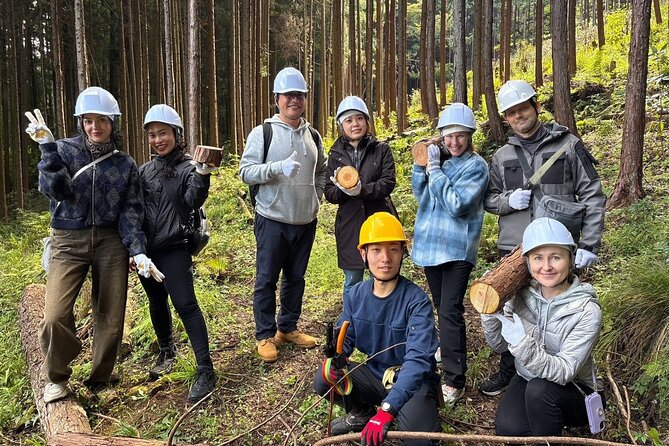
- A private, internationally certified forest that’s usually closed to the public
- Hands-on log cutting plus a short nature reset that feels like real forest bathing
- Nishikawa timber education tied to 300+ years of local forestry practice
- A pyrography souvenir that becomes useful: your kanji turns into a smartphone stand
- Small group size (up to 8), so questions don’t get lost in a crowd
Hanno, Saitama: the easy nature escape from Tokyo
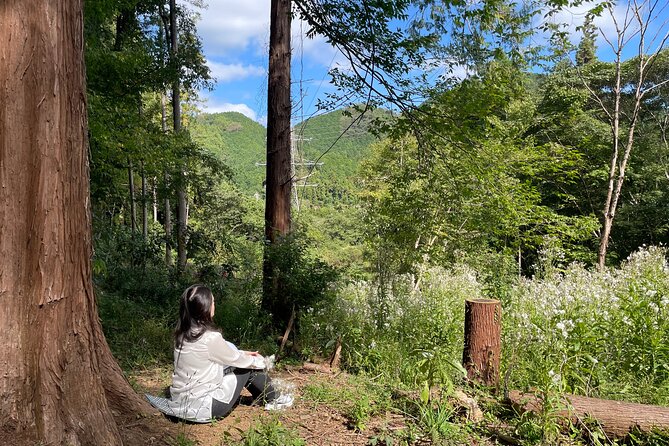
This tour is based in Hanno (in Saitama Prefecture), about an hour by train from Tokyo. That distance matters. You get a real break from the city without sacrificing a whole day just getting there.
Hanno is also a practical staging point. If your travel days include Tokyo, it’s a smart way to add quiet time in the trees. And because you’re close to other day-trip areas like Chichibu, Kawagoe, and Moomin Valley Park, you can build a flexible mini-itinerary around your mood.
I also like that this isn’t a theme-park version of “nature.” You’re in a working forest context—managed with the goal of keeping the woods healthy for the long term.
You can also read our reviews of more tours and experiences in Saitama Prefecture.


From Higashi-Agano Station to the Kirari studio: the day starts simple
You meet at Higashi-Agano Station, where you’ll spot your guide holding a tour placard. That’s your cue to gather, get briefed, and meet the small group. Admission is free at the meeting stop, and the tour itself is designed to be straightforward: you go out, do the activities, then return to the same meeting point.
You’ll ride in an air-conditioned vehicle to the activity site. That’s a small detail, but it helps a lot—especially in hot or humid seasons when you’d rather not slog between station and forest on foot.
The tour runs about 2 hours 30 minutes (approx.), so you won’t feel like you’re “commuting all day.” You’ll feel the rhythm of a half-day excursion: one guided forest section, one craft section, then back toward lunch.
Kirari (木楽里): learning Nishikawa timber from a mountain artist

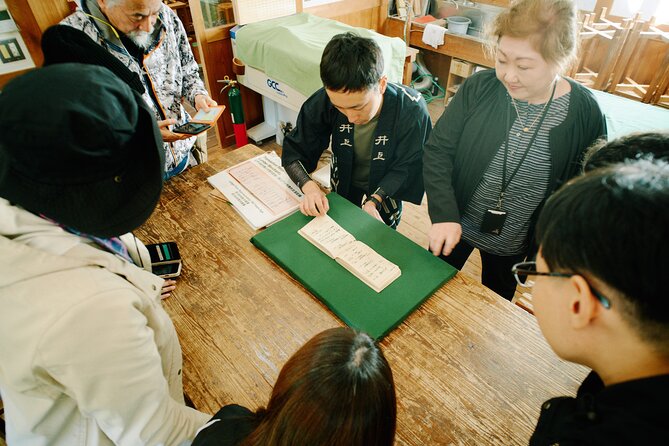
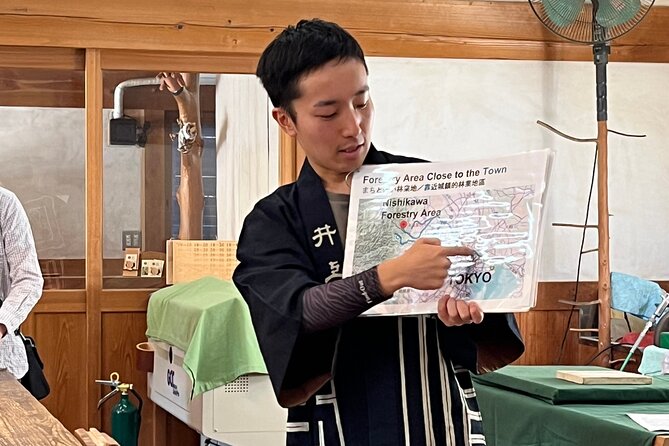
The woodworking studio Kirari is where the day’s theme snaps into focus. You’ll get a lecture from a forestry master—often described as a mountain artist—about Nishikawa timber and the history of local forestry.
This part is valuable because it explains the forest in practical terms, not vague “nature appreciation.” You learn how long-term forest management actually works, including why thinning matters. Thinning is not glamorous, but it’s the kind of behind-the-scenes practice that keeps trees healthy and supports sustainable wood production.
In reviews, the teaching often comes directly from the family side of the business, including a 15th-generation leader at Kirari Millwork Shop. Even if your guide isn’t that exact person, you can expect a similar tone: careful, family-rooted knowledge, plus respect for the trees.
You’ll also smell and handle wood along the way. That sensory angle isn’t a gimmick—it helps you remember the differences between wood types later when you’re doing the hands-on portion.
Inside a normally closed forest: aromas, thinning, and quiet time
After Kirari, you move into an internationally certified private forest that’s typically closed to the public. That access is one of the biggest value points of the whole experience. You’re getting a guided look at a working ecosystem, not just a scenic walk on a public path.
You’ll learn about thinning and why it’s essential for forest health. Then comes a more personal section: you get to relax beneath the canopy and take a quiet moment, the kind of pause that makes “forest bathing” feel like more than a marketing phrase.
One neat detail: you’ll enjoy the aromas of three types of wood. Even if you think you’ll forget the “which wood smelled like what” part, your brain remembers smells fast once you connect them to real trees and real use.
You’ll also be encouraged to find a tree that speaks to you. It’s a simple prompt, but it changes the walk. Instead of passing trees like scenery, you start treating them like living sources of material and knowledge.
Log cutting workshop: what you’ll do and how it’s handled
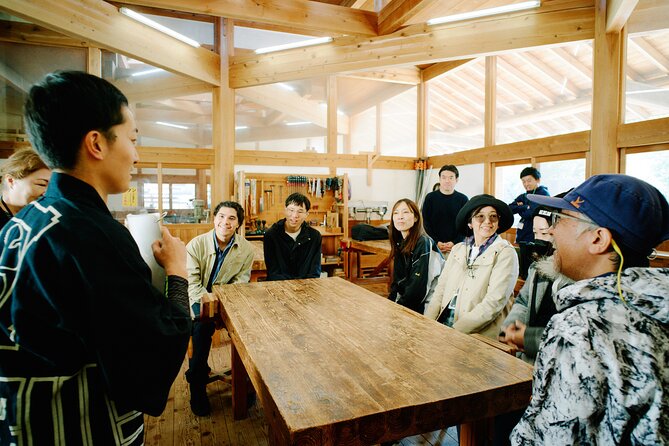
The highlight for many people is the log cutting itself. You’ll learn the basics of cutting, then try it yourself. Expect it to feel physical and a little technical. The saw won’t automatically do everything for you, and that’s part of the learning curve.
Safety is taken seriously. In reviews, participants noted that they were provided helmets and gloves. That matters because log cutting is not just a photo moment—it’s real tool use, and you’ll want to feel protected while you focus on control.
Why this section is worth your time: it connects the lecture to muscle memory. You can read about thinning and forestry practices, but your understanding becomes real when you’re holding the tool and making controlled cuts.
If you’re nervous about coordination or hand strength, don’t overthink it beforehand. The point isn’t to become a lumberjack. It’s to understand how much effort and technique go into working with wood responsibly, with guidance in place.


Pyrography on Edo Castle wood: your kanji becomes a smartphone stand
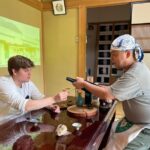
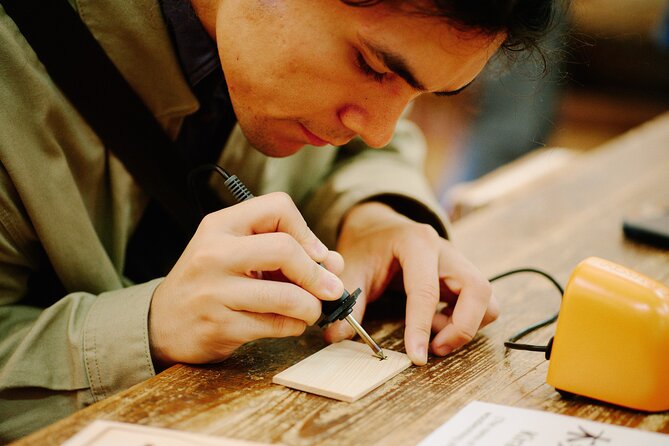
After the forest work, you switch gears to a craft that feels calm and creative. You’ll use a pyrography pen to inscribe a kanji of your choice on a wooden piece shaped like an Edo Castle.
This is one of those souvenirs that doesn’t just sit on a shelf. You’ll end up with a smartphone stand, which gives the gift a practical job in your everyday life. And because you choose the kanji, it tends to feel more meaningful than a pre-made item.
I like that the craft is paired with the earlier forestry learning. The day moves from “trees as living ecosystems” to “wood as material,” then ends with “wood as something you designed.” That arc makes the end product feel earned.
Also, because the pyrography is done after you’ve had time in the forest, the energy shift works. Your hands are busy, your mind slows down, and you’re not rushing between different kinds of activities.
Timing, lunch, and where to go after your forest day
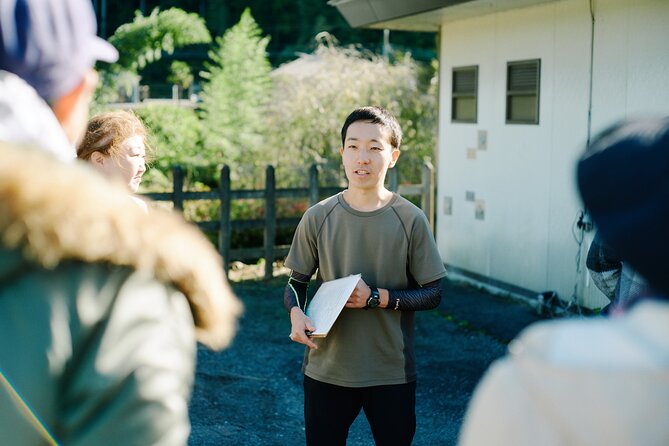
The tour is about 2 hours 30 minutes long and ends back at Higashi-Agano Station. Around lunchtime, you’ll return to the city area, and the guide can point you toward local restaurant options. Lunch is not included, so you’ll want to plan food for yourself.
Because this is near Tokyo, you can structure your day in a few ways:
- If you want a full Tokyo day, do this earlier and return before evening plans.
- If you’re doing multiple stops in the Saitama area, this can anchor your itinerary so you’re not only moving from one location to the next.
If the day goes smoothly, you’ll feel like you got both: a real nature reset plus an actual handmade item to take home.
Who this tour fits best (and who should reconsider)
This is a great match if you want value that’s more than entertainment. You’ll enjoy it most if you like hands-on learning, and if you’re curious about wood as both a living resource and a craft material.
It’s especially good for:
- People who care about sustainable forestry practices
- Architecture and design-minded travelers (the wood material angle can be very interesting)
- Anyone who wants a small-group, calm, guided day near Tokyo
Who might reconsider:
- You’re extremely sensitive to outdoor conditions, since the tour requires good weather
- You don’t want to use tools at all; log cutting is part of the core experience
- You prefer long, unstructured hikes. This tour is short and focused by design
Should you book the Mountain Artist woodcraft experience?
I’d book it if you want a near-Tokyo day that feels grounded in real work: forestry, tool use, and a take-home craft with meaning. The small group limit (up to 8) helps, and the access to a normally closed, sustainably managed forest is a big plus for anyone tired of tourist-only shortcuts.
If you’re deciding last-minute, make your call based on one factor: weather. When conditions are good, this kind of forest-and-craft flow can be surprisingly calming. When conditions are bad, you might be rescheduled.
FAQ
Where does the tour start and end?
It starts at Higashi-Agano Station in Saitama and ends back at the same meeting point.
How long is the experience?
The tour lasts about 2 hours 30 minutes (approx.).
What is the price per person?
The price is $93.93 per person.
What’s included, and what isn’t?
The tour includes air-conditioned vehicle transportation from Higashi-Agano Station to the activity site. Lunch is not included.
What do I make during the craft session?
You’ll use a pyrography pen to inscribe a kanji of your choice on a wooden piece shaped like an Edo Castle. The finished piece becomes a smartphone stand.
How big is the group?
The experience has a maximum of 8 travelers.
Is lunch included?
No. You’ll return around lunchtime and can eat at one of the guide’s recommended local spots.
Do I need good weather?
Yes. The tour requires good weather, and if it’s canceled due to poor weather, you’ll be offered a different date or a full refund.
Can I cancel for free?
Yes. You can cancel for free up to 24 hours in advance for a full refund.