REVIEW · FUJIKAWAGUCHIKO MACHI
Mt. Fuji Five Lakes Tour with Guide & Vehicle (Kawaguchiko Dep)
Book on Viator →Operated by Japan Guide Agency · Bookable on Viator
Fuji day plans can go wrong fast. This tour keeps things smooth with a private guide and hotel pickup, then lets you choose the stops that matter most. You get a guided day around the Fuji Five Lakes area, plus famous viewpoints and a traditional village, all in about six hours.
Two things I really like about this setup: first, the guide-led flow means you spend less time figuring out routes and more time understanding what you’re looking at. Second, the experience is built to stay engaging, even for a 15-year-old, thanks to guides like K (and others such as Reiko and Kei) who were praised for being thoughtful and keeping the pace interesting.
One drawback to consider is cost add-ons. Several stops list tickets as not included, and lunch is also on you, so the final spend can creep up if you add more paid attractions than you planned.
In This Review
- Key reasons this Fuji Five Lakes tour works so well
- Price and what you really get for $731.65 per group
- How the private guide changes the whole day
- Lake Kawaguchiko: the easy start that sets the mood
- Mt. Fuji Panoramic Ropeway: a summit view shortcut
- Oshino Hakkai: eight ponds fed by Fuji snowmelt
- Chureito Pagoda at Arakurayama Sengen Shrine: the photo stop
- Two shrines that explain why Fuji is sacred
- Kitaguchi Hongu Fuji Sengen Jinja (north side of Mt. Fuji)
- Kawaguchi Asama Shrine: built after the 864 eruption
- Narusawa Ice Cave and Mt. Fuji’s 5th Station: two very different thrills
- Narusawa Ice Cave (153m lava cave you can walk through)
- Mt. Fuji Subaru Line 5th Station (with admission included)
- Choosing your 3–4 stops: a simple way to decide
- Transportation comfort and practical notes that matter
- A real look at reviews: what stands out most
- Should you book this Mt. Fuji Five Lakes private tour?
- FAQ
- How long is the Mt. Fuji Five Lakes tour?
- How many stops can we choose?
- Does the guide pick you up from your hotel?
- Is this a private tour or shared group?
- Are the entrance fees included?
- Do we need to bring paper tickets?
- Is lunch included?
- Can I bring a service animal?
- Are child seats available?
- Can I cancel for a full refund?
Key reasons this Fuji Five Lakes tour works so well
- Hotel pickup, no meeting place stress. Your guide comes to you, so you can start the day on local time instead of chasing a rendezvous point.
- You pick 3–4 sites from the best-of list. This is ideal if you want the highlights without racing through all eight possibilities.
- Licensed English-speaking guidance, not just driving. The best part is explanations and smart stop choices, not merely sightseeing from a car window.
- Classic Fuji photo and culture stops in one loop. You can pair big-name viewpoints with shrines and Edo-era style water culture.
- A mix of views and variety. Lakes, ropeway summit views, ice cave walking, and a 5th station all land in one day.
- Private vehicle keeps your timing flexible. Since it’s only your group, you’re less likely to get stuck waiting around for strangers.
Price and what you really get for $731.65 per group
This costs $731.65 per group (up to 2), which makes it feel expensive until you break down the value. You’re paying for four big things at once: a licensed local English-speaking guide, a private vehicle, a route you don’t have to plan, and a day that can be customized to 3–4 stops.
If you’re traveling solo, it’s still a premium. If you’re two people, it can start to feel like good math because you’re splitting the vehicle and guide cost. Also, the guide is part of the product, not a free extra. The shrines and Fuji Five Lakes area are the kind of places where context matters, and that’s where the guide time earns its keep.
Where the price can surprise you is add-ons. Entrance fees are not included for many stops. In other words: you’re buying a guided day plus transportation; you still pay for some ticketed attractions and your own meals.
You can also read our reviews of more guided tours in Fujikawaguchiko machi

How the private guide changes the whole day
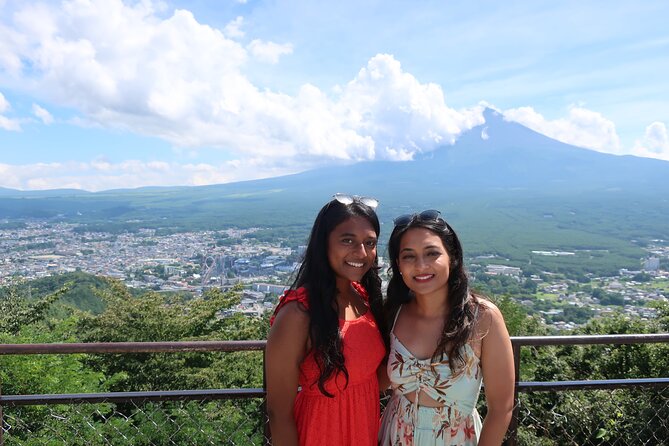
This is a private experience, meaning only your group participates. That matters more than it sounds. In a region like the Fuji Five Lakes area, timing is everything, and a private guide can adjust how long you linger at viewpoints, how you sequence the stops, and how you handle short photo breaks without the awkward herd mentality.
You also skip the usual hassle of finding a meeting point. The guide comes to your hotel. That one detail saves energy, and on a six-hour day, energy is everything.
What I like most is that you’re not locked into one fixed schedule. You choose from a list of must-see landmarks, then the guide builds the day around those picks. This is ideal if you want to emphasize nature views one day and cultural sites another day—or if your group includes someone who needs a slower pace.
Lake Kawaguchiko: the easy start that sets the mood
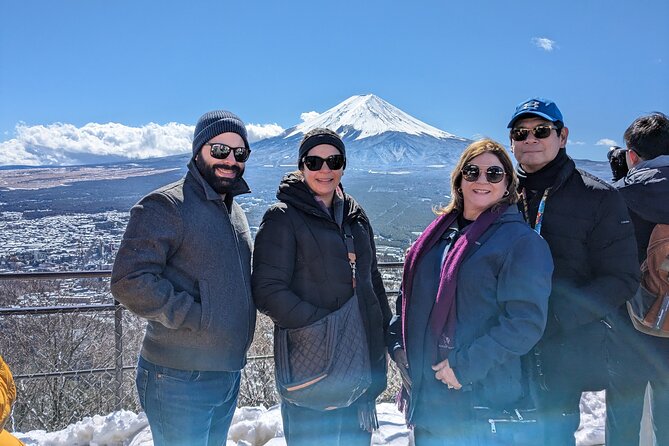
A smart way to begin is with Lake Kawaguchiko, one of the five resorts/lake areas at the foot of Mt. Fuji. This stop is designed as your early orientation, so you can get that immediate sense of how Fuji sits in the wider area.
Plan for about an hour. Since the visit is guided, you’re not just standing around looking at water. You can expect the guide to connect what you see—Fuji Five Lakes geography and the local culture of the Fuji region—to what comes next.
Drawback? One hour can feel short if you want extended strolling. If your main goal is long lakeside walking, make that clear when choosing your 3–4 sites so you don’t end up with too many quick-hit stops.
Mt. Fuji Panoramic Ropeway: a summit view shortcut
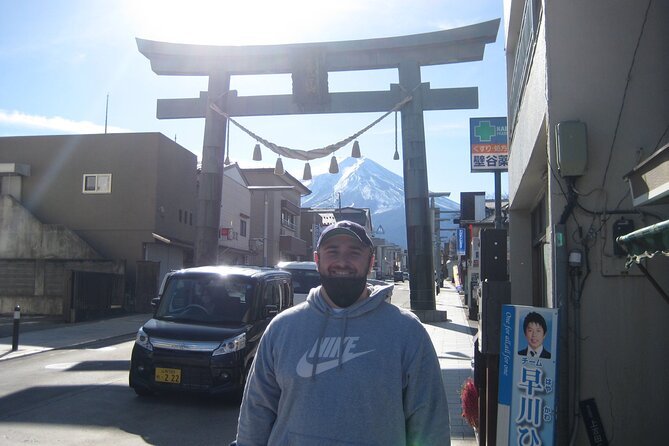
Next on the common highlight list is the Mt. Fuji Panoramic Ropeway (run by Mt. Kachi Kachi Ropeway). It’s located next to Lake Kawaguchiko and runs up to the summit of Mt. Tenjo.
The ticket isn’t included, but the payoff is a classic high-view look over Mt. Fuji and the surrounding area, with Lake Kawaguchiko in the mix. This is the kind of stop that can work even if you’re not a big hiker. It gives you elevation without the hours of trail work.
For timing, the planned visit is around 30 minutes. That’s enough for a look, photos, and a quick reset before you move on to the more cultural stops.
Oshino Hakkai: eight ponds fed by Fuji snowmelt
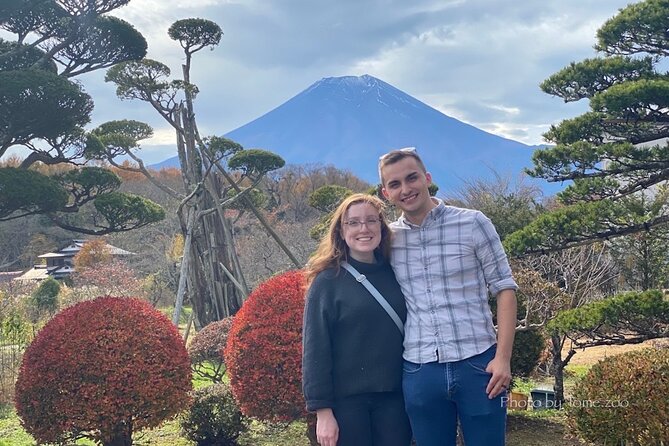
If you like traditional Japan scenes that still feel real, Oshino Hakkai is a strong pick. It’s a traditional village near the Fuji Five Lakes area and it’s known for its eight ponds formed from spring water coming from Mt. Fuji’s snowmelt.
Admission is free here, and you get about an hour. This is usually a great place to slow down a bit. You’ll have time to take in the water, the village feel, and the way locals have shaped the area around these ponds for generations.
What to watch: like many popular cultural stops, it can involve casual walking in a compact area. If you’re traveling with someone who needs minimal walking, you can ask the guide to keep your time practical while still seeing the key pond points.

Chureito Pagoda at Arakurayama Sengen Shrine: the photo stop
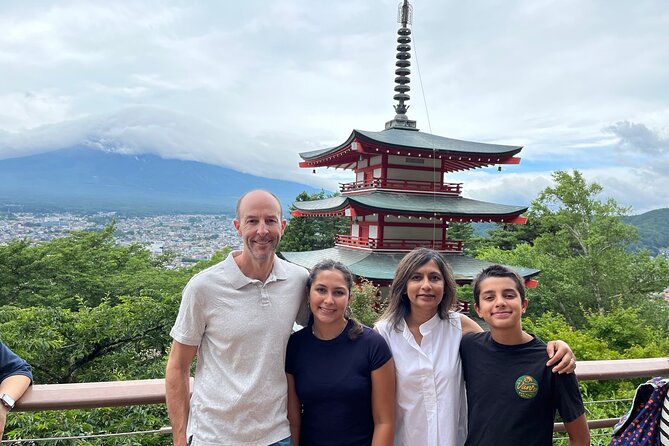
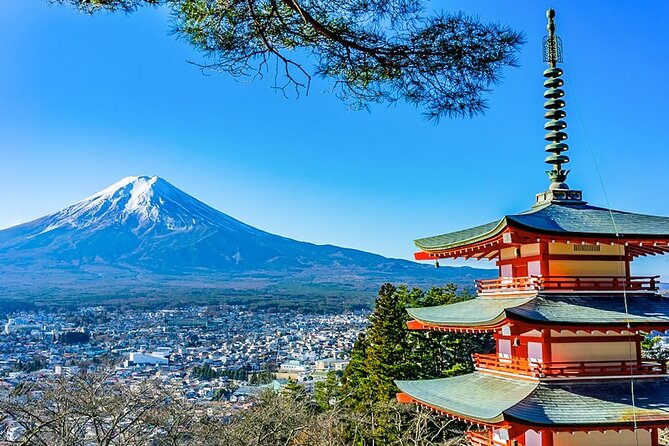
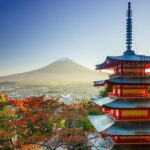
The Chureito Pagoda is part of the Arakurayama Sengen Shrine in Fujiyoshida City, and it’s one of the region’s best-known photo angles. This stop is famous for the view of Mt. Fuji framed with a five-storied red pagoda, often photographed with cherry blossoms.
You’ll typically spend about 30 minutes. That’s just enough for photos and a calm walk through the shrine area before you continue.
Consideration: this is a high-demand viewpoint in general, so you’ll want your guide to help you find the best spot based on the light and your timing. The short visit works best when you treat it as a priority photo moment, not a long meditation walk.
Two shrines that explain why Fuji is sacred
The tour can include a pair of shrine stops that add a lot of meaning to the day.
Kitaguchi Hongu Fuji Sengen Jinja (north side of Mt. Fuji)
At Kitaguchi Hongu Fuji Sengen Jinja, you’re on the north side of Mt. Fuji between Lake Kawaguchi and Lake Yamanaka. This stop is free, with about 30 minutes planned.
This is the kind of place where the guide’s storytelling matters. Fuji isn’t just a mountain here—it’s described as a sacred symbol of Japan in the tour overview, and shrines like this help you understand how locals relate to it.
Kawaguchi Asama Shrine: built after the 864 eruption
Then there’s Kawaguchi Asama Shrine (also called Sengen Shrine). It’s registered as a world cultural heritage site and was built to calm the eruption of Mt. Fuji in 864.
This stop is also free, around 30 minutes. You can see the shrine’s “Shichi-hon Sugi,” the sacred tree of seven cedars. Even if you’re not the type to read every plaque, a good guide will translate what you’re seeing into something you can actually picture.
A small practical note: shrines often mean quiet respect and some walking on uneven ground. The 30-minute windows are usually manageable, but it’s worth wearing shoes you can trust.
Narusawa Ice Cave and Mt. Fuji’s 5th Station: two very different thrills
This is where the day gets fun in a different way. You can choose both on a tour day, or pick one depending on your interests.
Narusawa Ice Cave (153m lava cave you can walk through)
Narusawa Ice Cave is a 153-meter lava cave in the Aokigahara Forest. Visitors can walk through inside the cave and see ice pillars and an ice wall that can be seen all year round.
Admission isn’t included, and the stop is about 30 minutes. This is a great contrast to the lakes and shrines. Also, since it’s a cave with ice features, you might find it cooler than outside—bring a light layer so you don’t regret it.
Mt. Fuji Subaru Line 5th Station (with admission included)
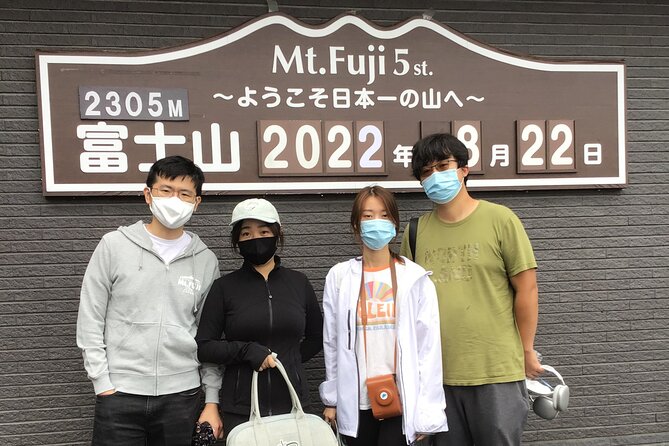
The Mt. Fuji Subaru Line 5th Station is around the halfway point of the Yoshida Trail, also known as Yoshidaguchi 5th Station or Kawaguchiko 5th Station. Admission is included for this stop, and you get about an hour.
This is a payoff moment for travelers who want the feeling of being higher up without committing to the full climb. It’s also a great photography stop since you’ll be dealing with mountain-scale views rather than pond and shrine details.
One consideration: if you want maximum time at lower viewpoints, don’t choose too many “high” stops. You only have 3–4 sites to work with, so choose based on what your group will remember most.
Choosing your 3–4 stops: a simple way to decide
Because you’re limited to 3–4 sites from the highlights list, planning your selection is the whole game. Here are a few styles that usually work.
- If you want classic Fuji visuals: Lake Kawaguchiko + Ropeway + Chureito Pagoda.
- If you want traditional water and culture: Oshino Hakkai + a shrine combo (Kitaguchi Hongu Fuji Sengen Jinja and/or Kawaguchi Asama Shrine).
- If your group likes variety and unique experiences: Ropeway + Ice Cave + 5th Station.
- If you have limited energy: pick fewer “quick photo” stops and prioritize one place that gets you the best views.
Also, think about your group’s attention span. In the feedback this tour has gotten, guides like K and Reiko were praised for keeping the day engaging and adapting to the interests of different people. That’s your best bet if you’re traveling with kids or teenagers.
Transportation comfort and practical notes that matter
This tour uses a private vehicle, and you get pickup offered with no meeting place needed. That’s ideal in the Fuji area, where you don’t want to fight transfers and walking between attractions.
A detail worth paying attention to is child seats. There are only limited car seats and booster seats available, rear-facing car seats are not available, and you need to contact the provider directly if your child requires specific seating.
Service animals are allowed, and the tour says most travelers can participate. If you have mobility concerns, the best move is to tell the guide early so they can adjust pacing within your chosen stops.
Finally, your phone gets involved: you’ll receive a mobile ticket. That helps on a day with multiple sites, where paper tickets can get lost in a bag.
A real look at reviews: what stands out most
The most praised aspect is the guides. The feedback specifically calls out guides like K for being knowledgeable, helpful, and accommodating, with one family emphasizing that a 15-year-old stayed engaged because the guide made it interesting. Another high score mentions Reiko as amazing and thoughtful in planning, with strong teaching along the way.
There’s also an example of a short-notice disruption: a tour was canceled because the guide was diagnosed with COVID-19, and the booking was refunded. It’s rare, but it does show the practical reality of private guiding—if the guide can’t work, the schedule can’t run.
So if you book, I’d treat it like any other single-day plan built around clear access to one person: have a realistic expectation that illness happens, and consider choosing a date with a little flexibility.
Should you book this Mt. Fuji Five Lakes private tour?
Book it if you want a guided, efficient day with hotel pickup, English explanations, and a flexible selection of the best Fuji Five Lakes highlights. This is especially good value if you’re two people splitting the guide and vehicle cost, and if your goal is to see multiple “must-do” sites without stressful logistics.
Skip it or reconsider if you hate ticket add-ons, because several stops list admission as not included (including the ropeway and ice cave). Also, if you want to check off every single lake-area viewpoint and every paid attraction in one day, the 3–4 stop limit will feel restrictive.
If you can pick your priorities, this tour is a solid way to make Mt. Fuji’s area feel coherent instead of random.
FAQ
How long is the Mt. Fuji Five Lakes tour?
It’s approximately 6 hours.
How many stops can we choose?
The tour is customizable with 3–4 sites chosen from the available landmark list.
Does the guide pick you up from your hotel?
Yes. Pickup is offered, and you don’t need to go to a meeting place because the guide comes to your hotel.
Is this a private tour or shared group?
It’s private. Only your group will participate.
Are the entrance fees included?
Entrance fees are not included in general. Some stops are free, and Mt. Fuji Subaru Line 5th Station is listed as admission included. Other stops (like the ropeway and Narusawa Ice Cave) are not included.
Do we need to bring paper tickets?
No. A mobile ticket is provided.
Is lunch included?
No. Lunch is not included.
Can I bring a service animal?
Yes, service animals are allowed.
Are child seats available?
There are limited car seats and booster seats. Rear-facing car seats are not available, and you must contact the provider if you need them.
Can I cancel for a full refund?
Yes. You can cancel up to 24 hours in advance for a full refund. Cancellation within 24 hours isn’t refundable.