REVIEW · FUJIKAWAGUCHIKO MACHI
Mt. Fuji Five Lakes Area Private Tour with Licensed Guide(Kawaguchiko area Dep)
Book on Viator →Operated by Japan Guide Agency · Bookable on Viator
Mt. Fuji looks different from every angle. This private tour is built for maximum variety in a tight 6-hour day, with a licensed multilingual guide handling the flow. You get an efficient mix of iconic viewpoints and a few real “only in this area” stops, like Narusawa Ice Cave and Oshino Hakkai.
I like that it’s genuinely customizable: you pick 2–3 sites from the area options, so you can bias the day toward photos, culture, or nature. The guide also makes it feel practical, not scripted—one-on-one attention in a place where timing matters. The main drawback is also simple: because it runs on public transport and some visits are short (some are listed around five minutes), you need to choose your priorities before the day starts.
In This Review
- Key things I’d plan around
- A 6-hour Mt. Fuji day designed around Kawaguchiko
- What you’re paying for (and what you’re not)
- How to choose 2–3 stops so the day feels good
- Mt. Fuji ropeway, pagoda, and shrines: the quick wins
- Mt. Kachi Kachi Ropeway (Mt. Tenjo) by Lake Kawaguchiko
- Chureito Pagoda at Arakurayama Sengen Shrine
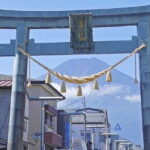
- Kitaguchi Hongu Fuji Sengen Jinja Shrine
- Kawaguchi Asama Shrine (Sengen Shrine)
- Oshino Hakkai and Narusawa Ice Cave for that extra special feeling
- Oshino Hakkai: eight ponds fed by snowmelt
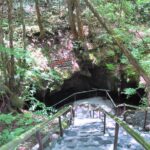
- Narusawa Ice Cave in the Aokigahara forest
- Subaru Line 5th Station and the lakes: where the timeline matters
- Mt. Fuji Subaru Line 5th Station
- Lake Kawaguchiko: quick waterside views
- Lake Yamanaka for slower lakeside time
- Getting the most from your guide: how Cindy, Yoshi, and Moto affect the day
- Is this worth it for your trip style?
- Should you book this Mt. Fuji Five Lakes private tour?
- FAQ
- How long is the Mt. Fuji Five Lakes private tour?
- Can I choose which places to visit?
- Where do we meet, and where does the guide drop us off?
- Is this tour private?
- What’s included in the price?
- Can I cancel for a refund?
Key things I’d plan around
- 2–3 stop customization keeps your day realistic instead of a rushed checklist
- Licensed multilingual guides (people like Yoshi, Chinami/Cindy, and Moto) are repeatedly praised for pacing and clarity
- Ropeway + viewpoints near Lake Kawaguchiko give you big Mt. Fuji moments without hiking all day
- Narusawa Ice Cave is the standout longer stop, with a longer block of time than most photo spots
- Short shrine and pagoda stops are built into the schedule, so pick these if you care about iconic photos
- Public transit focus means you save money, but you also give up the convenience of a private vehicle
A 6-hour Mt. Fuji day designed around Kawaguchiko
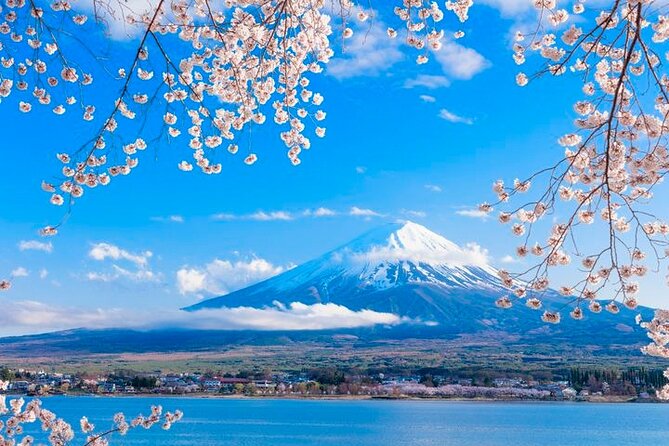
This is a private, half-day-style outing in the Fuji Five Lakes area. You meet near Kawaguchiko Station (Funatsu address area), then your guide starts with a walking pickup in the designated area. Your guide drops you off back around Kawaguchiko Lake—at your hotel or another spot you choose nearby.
The “why this works” part is the structure. The tour is not trying to cram every single famous site into one day. Instead, you select 2–3 places from a menu of options, and the guide builds the route around that. That choice is what keeps the day from turning into a hop-on, hop-off suffering contest.
Also, you’re not just getting an audio guide. This runs with a government licensed local guide speaking English (and other languages depending on the guide). In the experience feedback, names like Yoshi, Chinami (Cindy), and Moto come up with the same theme: friendly communication plus clear timing.
You can also read our reviews of more guided tours in Fujikawaguchiko machi

What you’re paying for (and what you’re not)
The price is listed at $155.22 per person for this private tour. For that money, you’re buying three things:
- a licensed local guide who can explain what you’re seeing (not just point),
- a custom route based on the sites you choose,
- and a simple start/end plan that’s centered on Kawaguchiko.
What you are not paying for: entrance fees, transportation fees, and lunch, plus other personal expenses. A few stops in the plan also specify admission ticket not included, so you should expect to pay on the ground.
If you hate surprise line items, this tour can still be a good value—you just need to budget for entry tickets at the specific sites you choose, plus the local trains/buses between them.
How to choose 2–3 stops so the day feels good
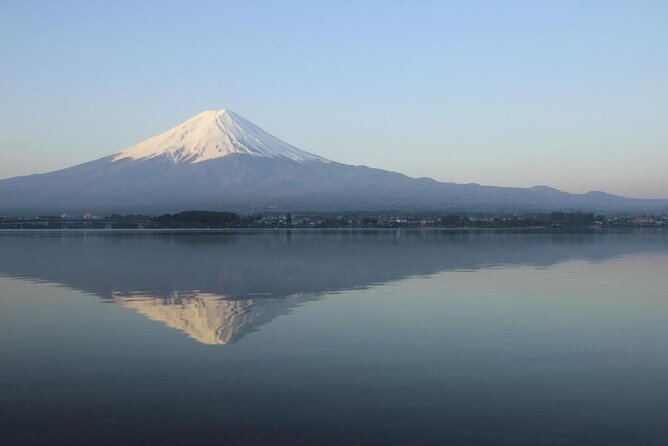
This tour’s schedule includes time blocks that vary a lot. Some places are listed as quick stops (about five minutes). Others get breathing room: 30 minutes at Narusawa Ice Cave, 1 hour at Mt. Fuji Subaru Line 5th Station, and about 1 hour at Lake Yamanaka.
So here’s the practical strategy I’d use:
- If you want iconic photo hits fast: choose Chureito Pagoda and a shrine, then add either Mt. Kachi Kachi Ropeway or Subaru Line 5th Station.
- If you want a more “Fuji ecology” vibe: pair Oshino Hakkai with Narusawa Ice Cave, then add a viewpoint like the ropeway or a lakeside stop.
- If you care about the feeling of altitude and the pilgrimage road: make Subaru Line 5th Station one of your picks, because it’s the longest single “highpoint” block listed.
And one more smart move: decide which type of stop you want to spend your time on before you book. Short photo spots are fine—just don’t pick too many of them and then expect the day to feel slow.
Mt. Fuji ropeway, pagoda, and shrines: the quick wins
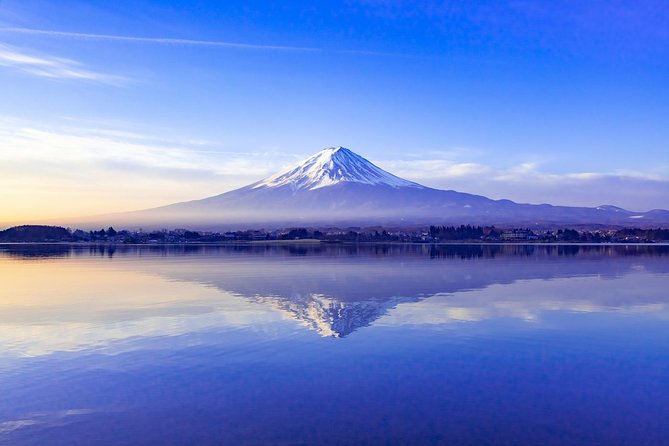
A big chunk of the Five Lakes area magic is seeing Mt. Fuji cleanly from a viewpoint that’s reachable without a major hike. This tour offers several of those.
Mt. Kachi Kachi Ropeway (Mt. Tenjo) by Lake Kawaguchiko
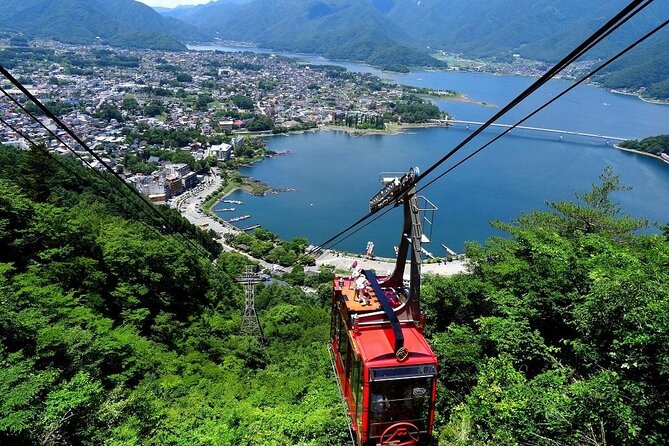
Your day can start with the Mt. Kachi Kachi Ropeway, next to Lake Kawaguchiko. It runs up to the summit area of Mt. Tenjo. The payoff is a sweeping view over Mt. Fuji, Lake Kawaguchiko, and the surrounding region.
The trade-off is time and cost. The listed stop time is short, and the admission ticket is not included. If you want maximum value here, treat the ropeway as the main “view moment” of your route rather than a quick accessory.
You can also read our reviews of more private tours in Fujikawaguchiko machi
Chureito Pagoda at Arakurayama Sengen Shrine
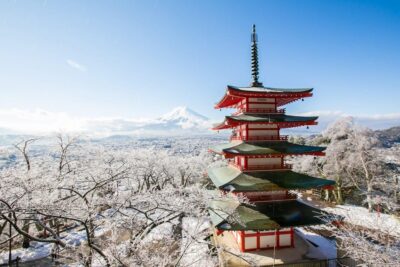
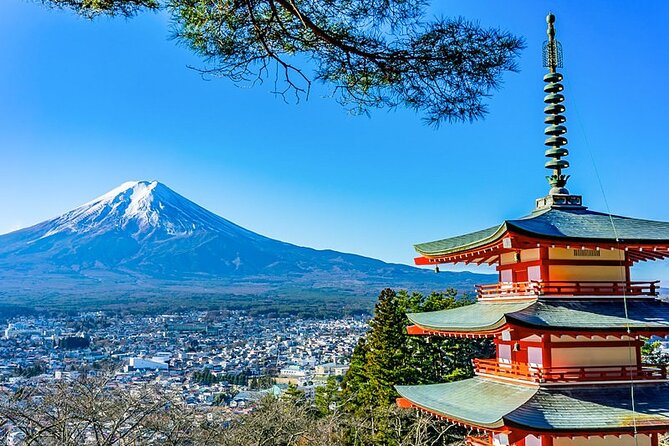
Next up is Chureito Pagoda, part of Arakurayama Sengen Shrine in Fujiyoshida City. This is one of the most famous Mt. Fuji photo compositions in the area: a five-storied red pagoda with Mt. Fuji in the background, often paired with cherry blossoms when in season.
The listed visit time is about five minutes, which matches how people usually shoot photos there. One review-specific note I took seriously: it can be crowded around photo angles, and you may not always get the exact picture you imagined. Still, if you want the classic shot, this is the stop.
Kitaguchi Hongu Fuji Sengen Jinja Shrine
If you want a more grounded cultural stop, add Kitaguchi Hongu Fuji Sengen Jinja (North-side Fuji Sengen Shrine). It sits on the north side of Mt. Fuji between Lake Kawaguchi and Lake Yamanaka.
Expect a short, focused visit in the schedule (about five minutes). That makes it a good choice when you want to balance “icons” (like pagodas) with “place” (actual shrine setting).
Kawaguchi Asama Shrine (Sengen Shrine)
Another shrine option is Kawaguchi Asama Shrine, also called Sengen Shrine. This site is tied to world cultural heritage status, built to calm an eruption of Mt. Fuji that occurred in 864. It’s also known for a sacred tree of seven cedars called Shichi-hon Sugi.
This one has a listed time block of about 30 minutes, and the shrine entry is noted as free. For me, that free + longer time combination makes it a smart pick, especially if you’re choosing just one shrine for the day.
Oshino Hakkai and Narusawa Ice Cave for that extra special feeling
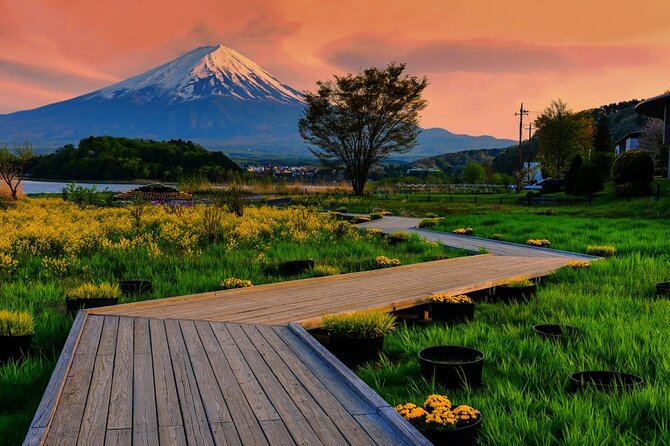
These two stops are where the day stops being only about views and becomes about the local environment around Mt. Fuji.
Oshino Hakkai: eight ponds fed by snowmelt
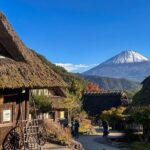
Oshino Hakkai is a traditional village near the Fuji Five Lakes area. What makes it stand out is the story of the water: the area consists of eight ponds formed from the spring water created by Mt. Fuji snowmelt.
It’s listed as a short visit (about five minutes). That might sound fast, but that time block usually works if you’re doing a quick walk-through for the pond scene and the local atmosphere. I’d pair it with at least one longer stop (like the ice cave or Subaru station) so your day doesn’t feel all walk-by.
Narusawa Ice Cave in the Aokigahara forest
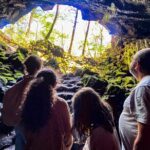
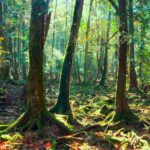
The star nature stop here is Narusawa Ice Cave. It’s described as a 153-meter lava cave in the Aokigahara Forest. The key detail is that you can walk inside, and you’ll see ice pillars and ice walls that are present year-round.
This stop is listed at 30 minutes, which is comfortably longer than most other options. Also, the vibe is different: instead of standing outside for a view, you’re inside a winter-like pocket that stays cold through the seasons. This is the kind of stop that makes the tour feel worth doing even if the exact photo angle elsewhere isn’t perfect.
Subaru Line 5th Station and the lakes: where the timeline matters
These are the stops that can change how your day feels—more time with the mountain’s world, or more time sitting by water.
Mt. Fuji Subaru Line 5th Station
Mt. Fuji Subaru Line 5th Station sits around the halfway point of the Yoshida Trail. It’s often known as Yoshidaguchi 5th Station or Kawaguchiko 5th Station.
This is the single longest “high altitude” block listed, at about 1 hour. Admission is noted as not included. If you want one place to feel like a true Mt. Fuji experience (even without climbing), this is the choice.
Lake Kawaguchiko: quick waterside views
Lake Kawaguchiko appears as a short stop in the schedule (about five minutes). It’s still worth considering because it’s the lake most closely linked to the ropeway option and a major base area for the Five Lakes region.
If your day already includes the ropeway, you might not need to spend much extra time here. But if you’re prioritizing easy scenery and photos over “deep” walking, the short stop can be fine.
Lake Yamanaka for slower lakeside time
Lake Yamanaka is listed with a much longer block: about 1 hour. If you want your day to cool down a bit after pagodas and stations, this is the easiest way to do it without adding complicated logistics.
Also, Lake Yamanaka pairs naturally with shrine choices like Kitaguchi Hongu Fuji Sengen Jinja, since both appear in the Fuji area geography.
Getting the most from your guide: how Cindy, Yoshi, and Moto affect the day
This type of tour lives and dies on pacing. The good news: the experience feedback highlights guides who actively manage that.
- Chinami (Cindy) is praised for keeping people on timetable and for thoughtful advice about which locations make sense for the day. One highlight from the feedback: she helped a group choose between locations effectively, then kept the day moving so they didn’t miss buses.
- Yoshi is described as friendly and knowledgeable, with energy that makes the tour feel like more than a transfer day.
- Moto is described as passionate and scenic-focused, especially when the route includes Aokigahara Forest and the ice cave.
Here’s how you can make that work for you, regardless of which guide you get:
- Pick your 2–3 stops with your personal energy in mind. If you want photos, include the short-time photo icons. If you want something physical or different, include the ice cave or Subaru station.
- Ask the guide, during the day, what order makes the most sense for the timing you have. That’s where a local licensed guide can really help.
- Be ready for public transit legs. The tour avoids a private vehicle, so your day will follow Japan’s bus and train rhythm.
Is this worth it for your trip style?
This tour is best for you if you:
- want a guided, private day in the Mt. Fuji Five Lakes area without renting a car,
- like the idea of picking 2–3 major stops rather than trying to do everything,
- want a mix of iconic photo sites and one or two more distinctive experiences like ice cave or Oshino water ponds.
It may be less ideal if you:
- hate short stops and photo-speed schedules,
- plan to change priorities mid-day without communicating them,
- or you expect every stop to get a long, unhurried visit time (some are listed at about five minutes).
Should you book this Mt. Fuji Five Lakes private tour?
I’d book it if you want a practical, guide-led way to see the “greatest hits” of Kawaguchiko and the surrounding area, while still getting at least one distinctive stop such as Narusawa Ice Cave or a real time block at Subaru Line 5th Station. The private format, the licensed English guide, and the simple meet/drop-off structure make it feel like good value—even with entrance fees and transport costs added on top.
I wouldn’t book it if your dream is a slow, single-location day (like only soaking in one lake viewpoint for hours). This tour is designed to mix different places inside a set time window. Pick your 2–3 stops carefully, and you’ll feel like you spent your time well.
FAQ
How long is the Mt. Fuji Five Lakes private tour?
It runs about 6 hours.
Can I choose which places to visit?
Yes. You can customize the day by selecting 2–3 sites from the available options.
Where do we meet, and where does the guide drop us off?
You meet near Kawaguchiko Station (Funatsu area). Pickup is on foot within a designated area, and the guide drops you off at your hotel or anywhere else you want around Kawaguchiko Lake.
Is this tour private?
Yes. It’s a private tour/activity, so only your group participates.
What’s included in the price?
Included are a licensed local English speaking guide and a customizable tour plan based on the sites you choose. Not included are transportation fees, entrance fees, lunch, and other personal expenses.
Can I cancel for a refund?
Yes. You can cancel up to 24 hours in advance for a full refund.
If you tell me which 2–3 stops you’re leaning toward (ropeway, pagoda, ice cave, Subaru 5th station, Oshino, and which lake), I can suggest a tight route that matches your priorities and the 6-hour timing.