REVIEW · FUJIKAWAGUCHIKO MACHI
Johnny’s Exclusive: Mt. Fuji Adventure from Kawaguchiko
Book on Viator →Operated by Johnny's Fuji Kawaguchiko Tours · Bookable on Viator
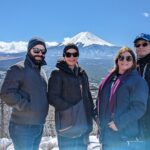
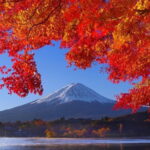
Mt Fuji is the star, but the timing matters. This private Mt. Fuji adventure from Kawaguchiko is built around views that open up at the right moments, plus easy local pickup and a native English guide who helps you get great photos.
What I like most is the small-group, private-vehicle feel: you skip the crush and move fast between lookouts without feeling rushed. You’ll also get a thoughtful mix of famous spots and quieter countryside stops. One possible drawback: it is a full day of getting out and walking, plus some meals and some cave/village admissions cost extra.
In This Review
- Key highlights you’ll care about
- Why this Mt Fuji day works better than the bus-tour version
- Price and what $561.44 per group really buys you
- Getting started in Fujikawaguchiko: pickup, pacing, and the private-car advantage
- Chureito Pagoda: the 398-step photo moment
- Oshino Hakkai: eight ponds and Fuji reflections
- Kitaguchi Hongu Fuji Sengen Jinja: UNESCO shrine calm with real significance
- Noodles in town: Houtou Fudou as an optional fuel stop
- Yagizaki Park and Oishi Park: quick photo wins near Lake Kawaguchiko
- Lake Kawaguchiko: the drive-around that actually shows you more
- Haha-no-Shirataki Waterfall: optional nature reset
- Motosuko Lake: calmer Fuji Five Lakes time
- Saiko Iyashi no Sato Nenba: optional traditional village atmosphere
- Aokigahara lava tubes: the caves that make this tour feel different
- Dragon Cave (optional)
- Fugaku Wind Cave (optional)
- Saiko Bat Cave (optional)
- Narusawa Ice Cave (optional)
- Optional stops are the whole point: how to tailor the day
- Lunch and timing: what to expect when food is on you
- Who this tour suits best (and who should reconsider)
- Should you book Johnny’s Mt Fuji Adventure from Kawaguchiko?
- FAQ
- How long is the Mt. Fuji adventure tour?
- Is pickup included?
- Is this a private tour?
- What group size is this tour for?
- Is there a mobile ticket?
- Are tickets and entry fees included?
- Which stops are optional?
- Is lunch included?
- Is the guide an English speaker?
- What is the cancellation policy?
Key highlights you’ll care about
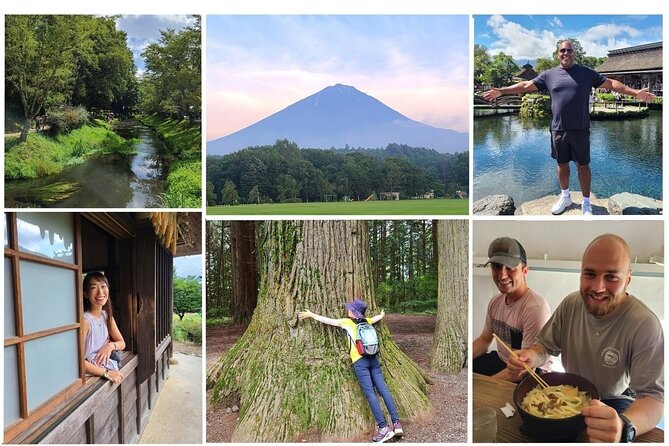
- Hotel pickup + private, air-conditioned car for a smoother day than bus tours
- Johnny’s photo help so you’re not wrestling your camera at every viewpoint
- Famous Fuji views first, crowds managed with earlier timing and smarter stop selection
- UNESCO shrine stop at Kitaguchi Hongu Fuji Sengen Jinja with time to stroll
- Aokigahara lava-tube caves option adds a rare, volcanic side of Fuji
- Up to 4 people per group, making it feel personal without ballooning the cost
Why this Mt Fuji day works better than the bus-tour version
Mt Fuji days are famous for one thing: trying to see the mountain while a crowd tries to see the mountain too. This tour tackles that problem in a simple way. You’re in a private vehicle with Johnny, and you’re not stuck in the big-group schedule where you spend half your time waiting and the other half rushing.
Because it’s private, Johnny can also shift the plan based on what you actually want: more photo stops, a quicker loop around Lake Kawaguchiko, extra time for the forest caves, or less walking if your group has mobility limits. In other words, you get Fuji with less stress.
The other big win is the guide’s role in the day’s “photo math.” If you’ve ever tried to take a clean Fuji shot while someone bumps you mid-frame, you’ll appreciate the fact that someone is specifically helping you take pictures throughout the tour. That means you spend more time enjoying the views and less time guessing settings or chasing the perfect angle.
You can also read our reviews of more tours and experiences in Fujikawaguchiko machi.
Price and what $561.44 per group really buys you
The price is listed as $561.44 per group (up to 4). That can sound high if you compare it to a per-person bus ticket. But this is not a bus tour. You’re paying for private transport in an air-conditioned vehicle, a native English guide, photo assistance, and included admission for some stops.
A useful way to think about value here:
- If you have 3–4 people, the cost per person drops fast, and private driving starts to feel like a smart deal.
- You also save time. The Fuji area is spread out, and a normal group tour can waste a lot of your energy on logistics.
- You get flexibility. If visibility is hit-or-miss, you’re not stuck watching the same spot with everyone else.
The only cost surprise to plan for is meals (not included) and certain attractions where admission is not included, especially some of the cave options. If you budget for those, the day stays straightforward.
Also, this is booked fairly far ahead on average (about 67 days), so if you’re traveling in peak seasons, don’t treat this like a last-minute “maybe.”
Getting started in Fujikawaguchiko: pickup, pacing, and the private-car advantage
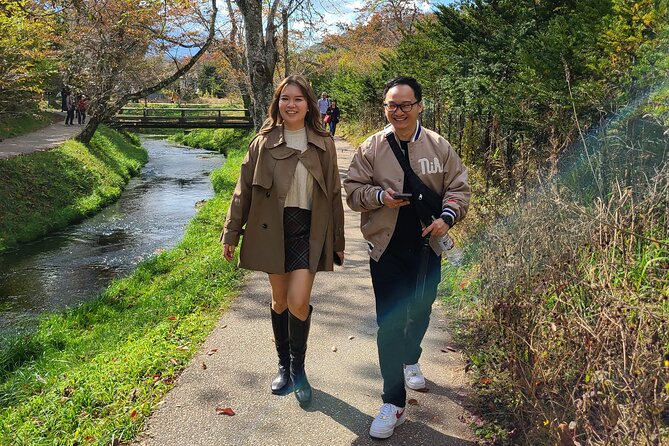
The tour runs about 6–7 hours. That’s the right length for the Fuji Five Lakes region when you’re trying to see multiple areas without your feet giving up halfway through.
You’ll get pickup in the Fujikawaguchiko area (local hotel pickup is part of the experience). You’ll ride in an air-conditioned private vehicle, and since it’s only your group, you’re not waiting for slow walkers or late arrivals from a larger bus.
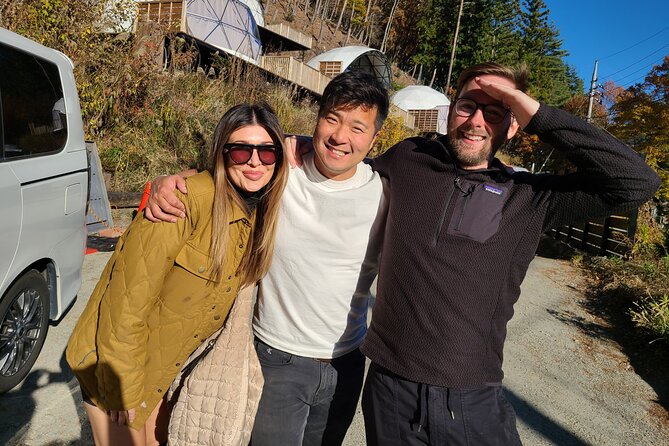
Johnny is a native English speaker and lives in the area. That matters because he’s not just reading a script. He can help explain what you’re looking at in real time, and he can point out where the best angles usually are. The tour also includes “someone to take your photos,” and the guide can help you take pictures throughout the day, so you’re set up for both iconic and more personal shots.
Chureito Pagoda: the 398-step photo moment
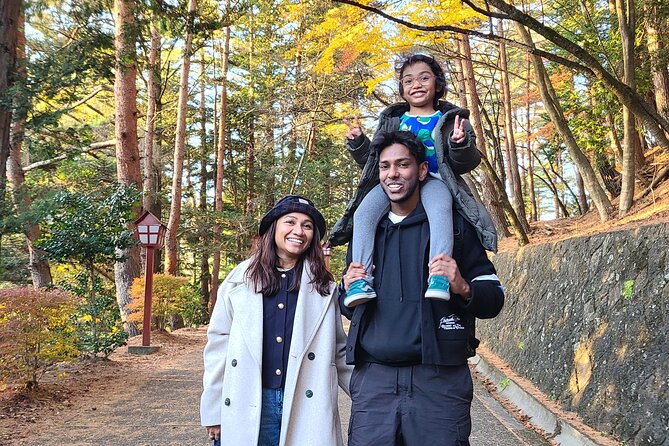
Stop 1 is Chureito Pagoda, an optional stop that many people go out of their way to see. The big detail here is the walk up: 398 steps to get the famous composition with the pagoda in the foreground and Mt Fuji in the distance.
Why this stop is worth your attention:
- It’s one of the most recognizable Mt Fuji views in the area.
- The steps give you a little workout, but you’re earning that viewpoint.
Potential drawback: if your group doesn’t want stairs, keep this one optional and let Johnny tailor the plan. The good news is that the rest of the itinerary still gives you plenty of Fuji sightlines even if you skip this climb.
Oshino Hakkai: eight ponds and Fuji reflections
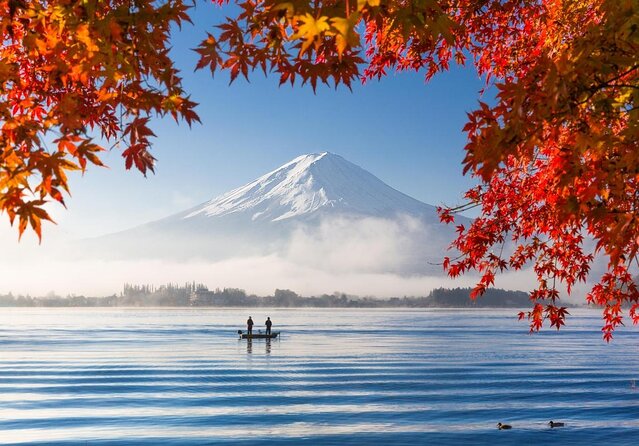
Stop 2 is Ōshino Hakkai, also optional, with about 30 minutes here. The attraction is the set of spring ponds near Mt Fuji that reflect the mountain when the weather cooperates.
This is the part of the day where the scenery feels more local and less “postcard.” You’re not just looking at one view; you’re walking through a small area where the water and the Fuji backdrop work together.
Admission is listed as free for this stop, which helps. The only thing to watch is your timing. If the weather clears briefly, you’ll want to be ready to point your camera and move quickly, since clouds can roll in faster than you’d expect.


Kitaguchi Hongu Fuji Sengen Jinja: UNESCO shrine calm with real significance
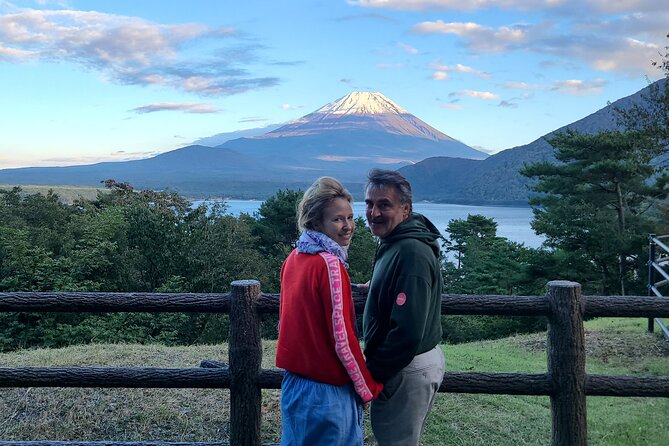
Stop 3 is Kitaguchi Hongu Fuji Sengen Jinja Shrine, with about 20 minutes and admission free. The site is part of a UNESCO World Heritage designation, and the experience includes walking a tree-lined path toward the shrine.
Why I like this stop in a Fuji day itinerary:
- It adds culture and meaning, not just scenery.
- The time is long enough for a calm stroll, but short enough to keep the day moving.
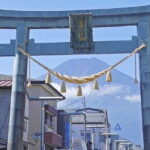
You’ll pass through torii gates, which makes this feel more like a journey than a quick photo stop. It’s also a nice break from pure “lookouts only,” especially for families and groups that want something beyond pictures.
Noodles in town: Houtou Fudou as an optional fuel stop
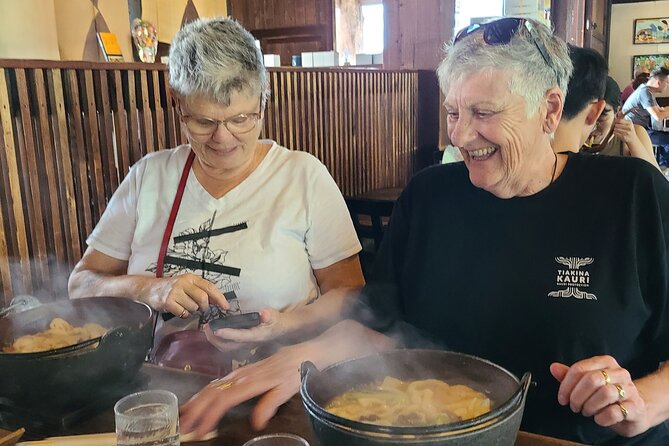
Stop 4 is Houtou Fudou, optional, for about 35 minutes. Houtou is a noodle dish served in a vegetable/miso-based broth, and this is one of the local specialties.
This stop is where the tour stops being purely about sightseeing and becomes about eating like you’re in the area. Admission is not included, which makes sense because you’re paying for your meal.
If you’re hungry, this is a good time to take care of it before the cave section. If you’re not into noodles, you can still treat this as a break and let Johnny steer you toward something that fits your group.
Yagizaki Park and Oishi Park: quick photo wins near Lake Kawaguchiko
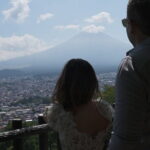
Stop 5 is Yagizaki Park, a 10-minute photo stop. It’s a small hilltop viewpoint with Mt Fuji views. It’s short on purpose, which I appreciate: you get a clean shot opportunity without eating up the day.
Stop 7 is Oishi Park, with about 20 minutes. This one blends gardens and views. It’s also a spot with shops and ice cream options, which can be a fun, low-stress way to keep energy up.
Both stops are worth it because they’re designed like “view snacks.” Quick, effective, and easy to adjust if the sky is changing.
Lake Kawaguchiko: the drive-around that actually shows you more
Stop 6 is Lake Kawaguchiko, with about 20 minutes. The tour doesn’t just park and wait. It’s a drive around the lake with a few viewing stops along the way.
The value of a drive-around is simple: the lake’s best angles show up from different roads. If you try to do this on your own, you can spend time figuring out where to go. In the private-car format, Johnny handles the sequencing.
This is also a stop where weather matters. If clouds lift and Fuji appears, you’ll often get multiple chances to catch it. If the mountain is hidden, you’ll still get a pleasant lake walk vibe and a sense of place.
Haha-no-Shirataki Waterfall: optional nature reset
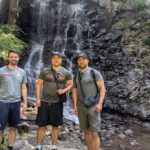
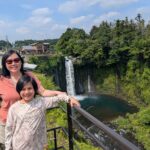
Stop 8 is Haha-no-Shirataki Waterfall, optional, for about 45 minutes with free admission. It’s described as a serene natural spot in lush greenery, and that’s exactly what this stop feels like: a quieter pause before more volcanic geology later.
If you have limited time or your group’s energy is low, you can treat this as the flexible part of the day. But if everyone wants fresh air and a slower pace, the extra time here can be a relief.
Motosuko Lake: calmer Fuji Five Lakes time
Stop 9 is Motosuko Lake, about 35 minutes and free admission. It’s one of the Fuji Five Lakes and is known for its peaceful feel and clear views when conditions are right.
This stop works well because it gives you a different kind of lake experience from Kawaguchiko. You get more of that quiet, reflective mood that people hope to find in the Fuji area, especially if you’ve already seen the more famous viewpoints earlier.
Saiko Iyashi no Sato Nenba: optional traditional village atmosphere
Stop 10 is Saiko Iyashi no Sato Nenba, optional, for about 30 minutes. It’s a traditional village preserved and presented for visitors, with admission not included.
This is a good add-on if your group likes cultural stops and “how people lived here” context. If you’re mostly in Fuji-view mode, you might skip it to protect time for the caves, which are the most distinctive part of this route.
Aokigahara lava tubes: the caves that make this tour feel different
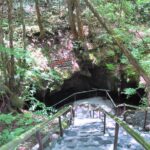
Stops 11–14 are where the tour earns its extra points. This is the volcanic side of the Fuji region, in the Aokigahara forest, with caves formed by lava activity.
Dragon Cave (optional)
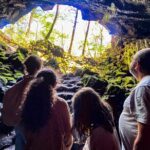
Stop 11 is the Dragon Cave for about 25 minutes, free admission. It’s a short walk into the forest area, with explanations about geological history and ties to Fuji’s volcanic activity. The idea here is not just to look at a cave, but to understand how the volcanic landscape shaped what you’re seeing.
Fugaku Wind Cave (optional)
Stop 12 is Fugaku Wind Cave, about 15 minutes, admission not included. The inside is described as illuminated with ice-like elements, with impressive stalactites and ice pillars.
Saiko Bat Cave (optional)
Stop 13 is Saiko Bat Cave, about 15 minutes, admission not included. It’s described as the largest of lava tubes near Lake Sai.
Narusawa Ice Cave (optional)
Stop 14 is Narusawa Ice Cave, about 15 minutes, admission not included. It’s another lava tube, with a focus on cold, ice-formed features (like frozen iceicles).
Why these caves are a big deal:
- They’re not the typical “check the big pagoda and leave” style of Fuji trip.
- The short time at each site makes it manageable even in a 6–7 hour day.
- If you like geology, photography with dramatic lighting, or just unusual nature, this section is the payoff.
Trade-offs to consider: these cave stops are listed as optional and have extra admission for some. Also, caves mean changing temperatures. Plan for cooler air, even on a mild day outside.
Optional stops are the whole point: how to tailor the day
The itinerary includes multiple optional stops: Chureito Pagoda, Oshino Hakkai, Houtou Fudou, Haha-no-Shirataki, Saiko Iyashi no Sato Nenba, and several of the cave experiences.
That flexibility matters because Fuji visibility can change fast. In the area, clouds can roll in without warning. Johnny’s approach (based on client experiences) includes having backup ideas when weather messes with a plan, so you’re not left with only one option.
How I’d plan your choices:
- If you want maximum classic Fuji photos, keep Chureito and Oshino Hakkai.
- If your group prefers calmer pacing, focus on Lake Kawaguchiko, Oishi Park, and skip one or two optional extras.
- If you want something uncommon, make sure you include the caves, because that’s the part many standard Fuji tours don’t cover.
Lunch and timing: what to expect when food is on you
Lunch or dinner is optional, and you pay your own. The tour includes food time as a concept (with Houtou available), but the actual meal cost is not included.
Practical tip: since you’ll be out for 6–7 hours, don’t wait too long to eat if your group gets cranky. That noodle stop can keep you energized for the caves, especially if you do multiple walking segments.
Who this tour suits best (and who should reconsider)
This tour fits best for:
- Couples or small families who want a private car and fewer crowd hassles
- Photo-focused travelers who want help getting good shots
- People who like a mix of classic Fuji viewpoints plus unusual volcanic features
You might reconsider if:
- Your group strongly prefers fully structured shopping-style stops with no walking at all (there are stairs at Chureito and multiple “walk in and around” moments)
- You want a cheap, bare-bones tour where everything is included and you never pay extra for meals or ticketed attractions
If your group likes flexibility and wants the day to feel personal, this is a strong match.
Should you book Johnny’s Mt Fuji Adventure from Kawaguchiko?
Yes, if you want a private Mt Fuji day that balances famous sights with quieter, more unusual stops. The best reason to book is simple: you’re buying time savings, local driving, and photo help, all in a group that stays small enough to feel like your day.
Book it especially if you’re the kind of traveler who cares about:
- Getting good Fuji photos without chaos
- Seeing more than one lake and more than one “iconic postcard” spot
- Adding Aokigahara lava-tube caves for a rare side of the region
If you’re on a tight budget or hate walking, you may feel the cost and optional ticket add-ons. But if you plan for lunch and the cave/village admissions you choose, this is the kind of day that feels worth it the moment you start seeing Fuji from multiple angles.
FAQ
How long is the Mt. Fuji adventure tour?
It runs about 6 to 7 hours.
Is pickup included?
Yes, local hotel pickup is offered.
Is this a private tour?
Yes. It’s a private tour/activity, and only your group participates.
What group size is this tour for?
The price is per group for up to 4 people.
Is there a mobile ticket?
Yes, the tour uses a mobile ticket.
Are tickets and entry fees included?
Tickets to some attractions are included. Some stops list admission as free, while others list admission ticket not included.
Which stops are optional?
Chureito Pagoda, Oshino Hakkai, Houtou Fudou, Haha-no-Shirataki Waterfall, Saiko Iyashi no Sato Nenba, and several cave stops are optional.
Is lunch included?
No. Lunch or dinner is optional, and you pay your own fare.
Is the guide an English speaker?
Yes. The guide is a native English speaking guide (Johnny).
What is the cancellation policy?
You can cancel for a full refund up to 24 hours in advance of the experience’s start time. If you cancel less than 24 hours before, the amount you paid is not refunded.