REVIEW · FUJIKAWAGUCHIKO MACHI
Lake Kawaguchi Explorer: E-Bike Guided Tour
Book on Viator →Operated by Lake Kawaguchi explorer : e-Bike Guided Tour · Bookable on Viator
Mt. Fuji views, minus the sweat. This Lake Kawaguchiko e-bike tour keeps you moving at an easy pace while a guide born and raised at the foot of Mt. Fuji adds clear, on-the-ground context for each stop. I especially like how the ride is built around what you can see and feel in the moment, not just checkboxes, and I also love that you get a local perspective on why places matter.
You’ll spend about 2 to 3 hours cruising the shore area, then pause for key viewpoints like the lake bridge and shrine grounds. If you’re hoping for a super-simple budget, one consideration: a couple shrine entrances cost extra (including a 100 yen fee for the Tenku-no-torii of Kawaguchi Sengen Shrine and the Kawaguchi Sengen Shrine entrance), so plan a little cash on top of the tour price.
In This Review
- Key Highlights You’ll Actually Notice
- Why an E-Bike Works So Well at the Foot of Mt. Fuji
- Meeting at Kawaguchiko Station: Easy Start, Clear Plan
- Stop 1: Lake Kawaguchiko Shore Cycling Road for First Big Views
- Stop 2: Ubuyagasaki for the Upside-Down Fuji Moment
- Stop 3: Kawaguchi Ohashi Bridge for a Photo Window in the Middle
- Stop 4: Kawaguchi Asama Shrine Under 1000+ Year Trees
- The Guide Factor: What Makes This Feel Like More Than a Ride
- E-Bike Comfort and Safety: What You Should Know Before You Go
- How Much Is It Worth at $84.92?
- Best Day to Take It: Timing and Weather Reality
- Who Should Book This Tour (and Who Might Skip It)
- Quick Practical Tips Before You Meet at the Station
- Should You Book Lake Kawaguchiko Explorer: E-Bike Guided Tour?
- FAQ
- How long is the Lake Kawaguchiko e-bike guided tour?
- Where do I meet for the tour?
- What’s included in the price?
- Are the stops free to enter?
- What entrance fees might I need to pay separately?
- What should I do if the weather is bad?
- Is this tour private or shared?
Key Highlights You’ll Actually Notice
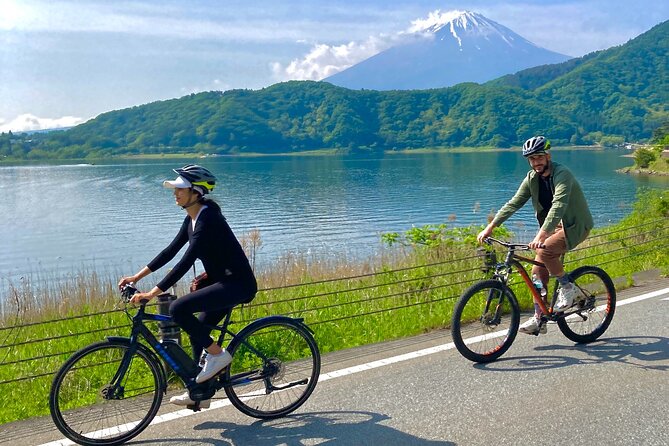
- E-bike help on a scenic cycling road so the ride stays comfortable.
- A guide who grew up locally and explains the background behind each viewpoint.
- Ubuyagasaki for the famous upside-down Mt. Fuji-style view (conditions can vary).
- Kawaguchi Ohashi Bridge where you can photograph Mt. Fuji and the lake from the middle.
- Kawaguchi Asama Shrine with very old cedar and cypress trees and a story tied to Fuji’s eruptions.
- Helmet, bottled water, and an English guide are included, so you arrive ready to go.
Why an E-Bike Works So Well at the Foot of Mt. Fuji
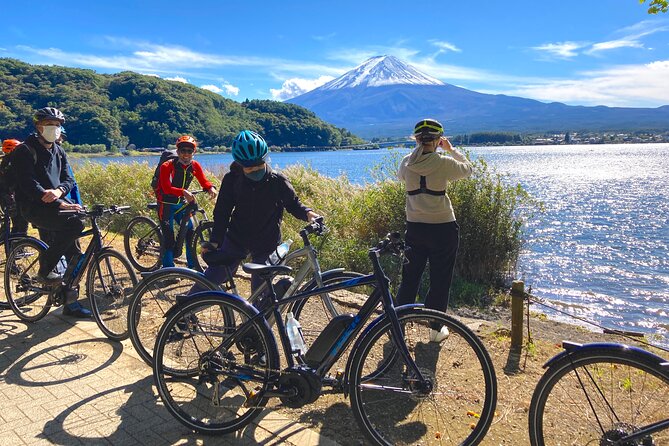
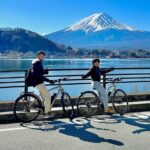
This tour is designed for people who want the best views without turning it into a workout. The Trek Verve+ pedal-assist bikes do the heavy lifting, so you can focus on steering, spotting Fuji through the trees, and listening to the guide’s explanation at each stop.
That matters here because the Kawaguchiko area rewards slow looking. You’ll be moving, but not rushing. The guide adjusts the ride depending on the group and how you’re feeling, which is a big deal if some people are more comfortable on a bike than others.
Also, it’s not a cookie-cutter sightseeing drive. The whole point is that the guide connects what you’re seeing to local place meaning—why that shrine is there, what the viewpoints represent, and how people read the lake and mountain together.
You can also read our reviews of more tours and experiences in Fujikawaguchiko machi.
Meeting at Kawaguchiko Station: Easy Start, Clear Plan
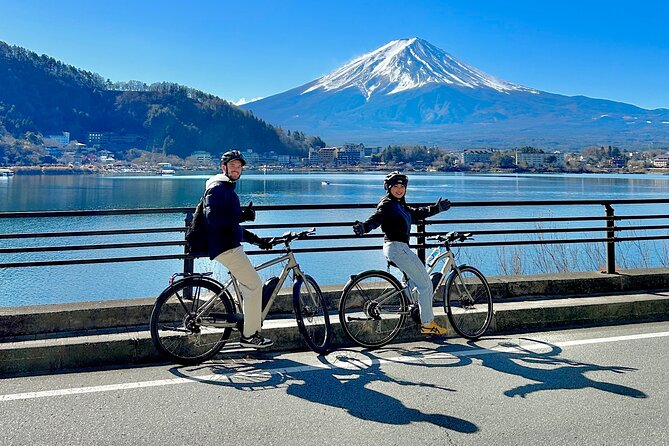
You meet at Kawaguchiko Station (3641 Funatsu, Fujikawaguchiko). The tour then ends back at the same meeting point, which keeps the logistics painless.
The tour runs about 2 to 3 hours, with short stops that add up to a satisfying loop. It’s long enough to feel like you left with memories, not just photos, but short enough to fit well on a busy Fuji day.
You also get a mobile ticket, which helps on the day. And because it’s described as private for your group, it tends to feel more personal than a crowded multi-language bus stop.
Stop 1: Lake Kawaguchiko Shore Cycling Road for First Big Views
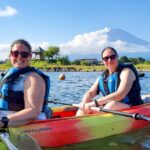
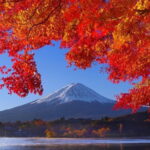
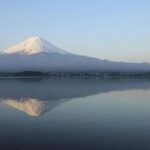
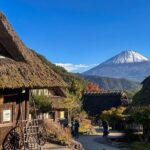
The ride begins along the cycling road by the shore of Lake Kawaguchiko. This is where the experience clicks: you’re close to the water, the mountain comes in and out depending on where the trees open, and the whole area feels made for lingering.
About an hour here is perfect. Long enough to settle in, short enough that you don’t start feeling bored or stuck in one spot. I like that you’re not just parked at a single viewpoint—you actually get motion, which changes what you see.
The guide also sets expectations early so you know what to watch for. Think: where Fuji might appear, how the lake reflection can look different throughout the ride, and what the surrounding mountains generally signal about the day’s weather.
Stop 2: Ubuyagasaki for the Upside-Down Fuji Moment
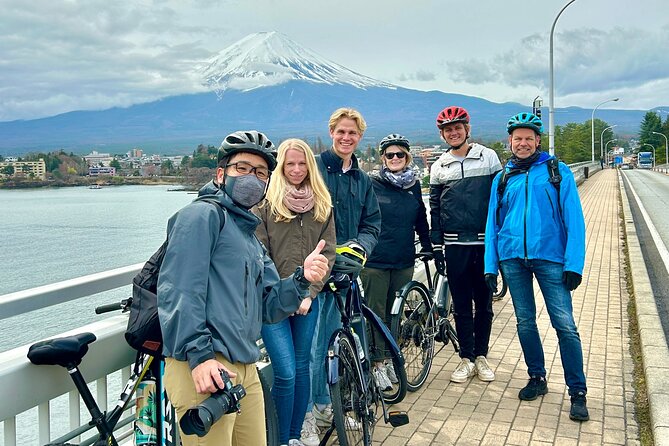
Next comes Ubuyagasaki, known for a viewpoint that can give the impression of an upside-down Mount Fuji over the water. This is one of those spots where luck and conditions matter, but even when the exact look changes, it’s still a striking, symmetrical-feeling view across the lake.
Your stop is brief—around 5 minutes—so treat it like a quick photo and looking sprint. Come ready to pause, shoot, and then move, because the real value here is capturing the scene while the guide points out what makes the effect work.
Tip: if visibility is spotty, don’t despair. The guide’s job is to help you aim your attention where the view is most likely to show a strong shape at that moment.
Stop 3: Kawaguchi Ohashi Bridge for a Photo Window in the Middle
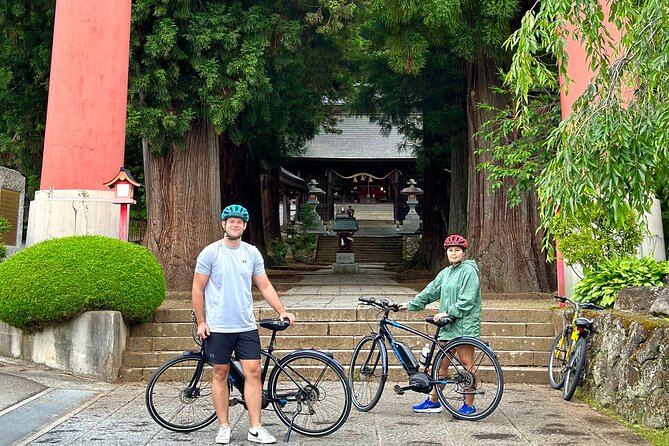
Then you ride to Kawaguchi Ohashi Bridge, the only bridge built over Lake Kawaguchiko. The big reason to come here is simple: you can look toward both the water and Mt. Fuji while you’re standing in a spot that changes your perspective.
You’ll have about 10 minutes on the bridge, which is just enough time to take photos from a couple angles and let the view settle in. I love bridge stops because the lake feels different from the center—you get a stronger sense of the scale, and Fuji can look more framed depending on where the light is.
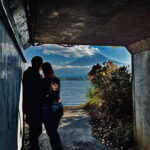
If you’re traveling with someone, this is a great shared-photo stop. Even if you’re not an obsessive camera person, you’ll still want at least a few shots because it’s one of the cleanest “Mt. Fuji + water” compositions in the loop.
You can also read our reviews of more guided tours in Fujikawaguchiko machi

Stop 4: Kawaguchi Asama Shrine Under 1000+ Year Trees
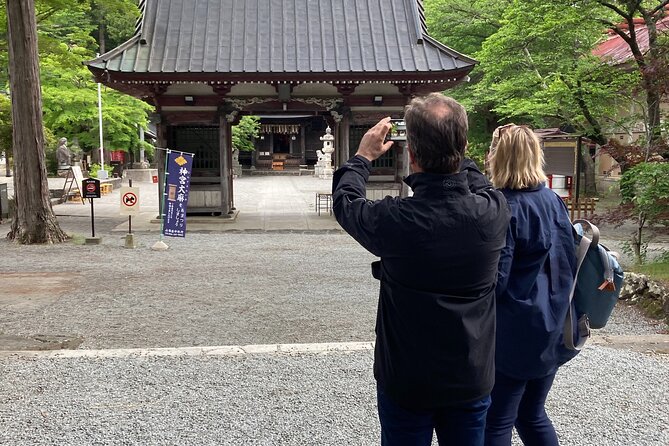
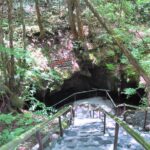
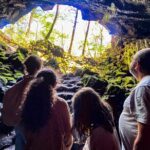
After the bridge, you finish with Kawaguchi Asama Shrine, where the mood shifts from scenery to culture. You’ll spend about 30 minutes in the precincts, surrounded by large cedar and cypress trees that are said to be over 1000 years old.
The guide explains the shrine’s purpose, including how it was built to help calm and pacify Mt. Fuji’s eruptions. That context is what turns a shrine stop from scenery into understanding. You’re not just walking through old trees—you’re learning the reason the area matters to the people who live here.
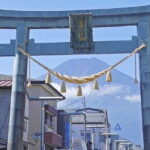
A practical note: this part includes extra costs not covered in the tour price. The Tenku-no-torii of Kawaguchi Sengen Shrine has an entrance fee (100 yen listed), and the Kawaguchi Sengen Shrine entrance fee is not included. If you’re budgeting tightly, plan for it so you’re not caught off guard at the gate.
The Guide Factor: What Makes This Feel Like More Than a Ride
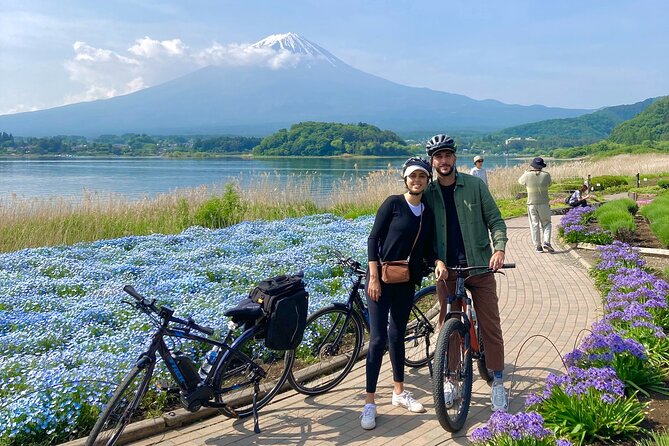
A big theme in the experience is the guide’s role. Names you may hear include Shunji, and the feedback pattern is consistent: the guide is patient, keeps the ride easy to understand, and balances information so it doesn’t turn into a lecture.
What I like most is that the explanations are connected to what you’re seeing right then. That’s why the tour isn’t just moving you between famous corners. It gives meaning to those corners.
There’s also a social side. In one case, after the tour, the guide suggested time for local food and even helped with a stop at ice cream and a local udon place (the kind of place you’d struggle to find without local guidance). If you like that extra layer, it’s worth asking your guide what to do next while you’re still in the neighborhood.
And if you’re nervous about biking, you’ll likely appreciate how the guide helps with getting comfortable. One key point from the experience is that the ride is designed to be manageable, and the guide adjusts pace and explanations for the group’s comfort level.
E-Bike Comfort and Safety: What You Should Know Before You Go
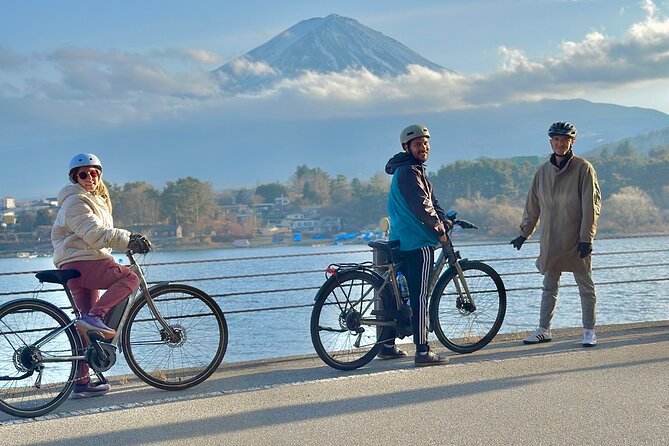
The whole tour depends on you feeling confident enough to ride in a traffic-adjacent setting. You’ll be on a road by the shore, so you will share space with vehicles at times. Some people find that a little intimidating at first—even with pedal assist—so it helps to start relaxed and let the guide set the rhythm.
Also, you get a helmet included, along with bottled water. Those simple inclusions matter on a Fuji day because you’ll likely be stopping for photos and then riding again quickly.
If you’re worried about biking at all, ask the guide early about how they handle slower riders. The tour is specifically described as adjustable based on participant preferences and physical condition.
One clear limitation: it’s not recommended for individuals with paralysis. If that applies, check with the operator before booking so you don’t risk an unsafe or uncomfortable experience.
How Much Is It Worth at $84.92?
At $84.92 per person, this isn’t a budget “walk-and-take-a-photo” add-on. It’s priced more like a guided activity: English guide time, a provided e-bike (Trek Verve+), and the structured route.
Here’s how I judge value on this kind of tour:
- You save energy because the bike does the work.
- You save time because you hit multiple key places in a short loop.
- You gain understanding because the guide explains why each spot matters.
The potential downside is that a couple shrine entrance fees can add a small amount later. But the overall experience is still focused and efficient, which often justifies the cost when you’re only in the area for a limited time.
If you’re a couple, this also tends to work well because the pacing is shared and the scenery is easy to enjoy without splitting up.
Best Day to Take It: Timing and Weather Reality
Mt. Fuji is famous for changing its mood. This tour requires good weather and can be rescheduled or refunded if it’s canceled due to poor conditions.
That’s important because viewpoints around the lake depend on visibility. If the sky is clear, you’ll get the strongest chance for the classic Fuji look and reflections. If conditions are foggy or rainy, don’t assume you’ll get the same payoff.
A smart move: treat your e-bike day as one of your main Fuji-viewing windows. If you’re building a schedule, try not to stack it as the one thing you can’t move.
Who Should Book This Tour (and Who Might Skip It)
I’d book it if:
- you want Mt. Fuji views with less physical strain,
- you like learning context as you look,
- you’re traveling as a couple or small group and want a smoother day than self-guided biking,
- you appreciate photo-friendly stops like the bridge.
I’d think twice if:
- you only want free attractions and would rather not pay small entrance fees at shrines,
- you have mobility limitations that match the stated guidance (especially if paralysis applies),
- you strongly prefer to bike entirely on your own without guidance.
If you’re a first-time e-bike rider, this route can still be a good match because the guide helps with understanding the bikes and keeps things paced.
Quick Practical Tips Before You Meet at the Station
Bring your plan for the basics: comfortable clothes and shoes you can walk in during short shrine and bridge stops. The tour provides water and a helmet, so you’re not starting from zero.
When you arrive, pay attention to how the guide explains the riding approach. If you feel anxious, say so early. It’s the kind of tour where the guide can adjust pace and help you feel steady.
And since at least one major shrine fee isn’t included, it’s wise to keep a little cash or payment ready for small entrance charges.
Should You Book Lake Kawaguchiko Explorer: E-Bike Guided Tour?
If your goal is a high-reward Fuji day without turning it into a grind, I think you’ll like this. The combo of pedal-assist biking, short viewpoint stops, and a guide who talks about the meaning behind each place makes it feel thoughtful rather than rushed.
Book it if you want:
- an easy way to cover multiple iconic spots around Lake Kawaguchiko,
- photo stops like the bridge,
- and an English explanation that helps you understand what you’re seeing.
Skip it if you’re strictly trying to minimize costs or you don’t want any paid shrine entrances. In that case, self-guided viewpoints might fit better.
Overall, it’s a well-paced, guided way to experience the Kawaguchiko area and get those Mt. Fuji moments while staying comfortable.
FAQ
How long is the Lake Kawaguchiko e-bike guided tour?
The tour lasts about 2 to 3 hours.
Where do I meet for the tour?
You meet at Kawaguchiko Station at 3641 Funatsu, Fujikawaguchiko, Minamitsuru District, Yamanashi 401-0301, Japan.
What’s included in the price?
It includes bottled water, an e-bike (Trek Verve+), helmet, and English guide fees.
Are the stops free to enter?
Several viewpoints have free admission listed, including the Lake Kawaguchiko cycling area, Ubuyagasaki, and the Lake Kawaguchi Ohashi Bridge stop. Shrine areas include extra entrance fees not included in the tour price.
What entrance fees might I need to pay separately?
You may need to pay 100 yen for the Tenku-no-torii of Kawaguchi Sengen Shrine, and the Kawaguchi Sengen Shrine entrance fee is not included.
What should I do if the weather is bad?
The experience requires good weather. If it’s canceled due to poor weather, you’ll be offered a different date or a full refund.
Is this tour private or shared?
This is a private tour/activity, so only your group participates.