REVIEW · FUJIKAWAGUCHIKO MACHI
Fujisan Sushi Making Lesson
Book on Viator →Operated by お寿司作り体験教室 · Bookable on Viator
Mount Fuji and sushi in one session sounds like a winner. This Fujikawaguchiko class is built around hands-on nigiri and sushi roll technique, plus the story and manners that make sushi more than just food. I also liked the way the chef-style teaching supports you in repeating the moves at home, not just snapping photos. One thing to consider: the experience mixes English guidance with Japanese culture cues and terminology, so if you want everything explained purely in English, you might need a little patience.
What you’ll like most is the setting and the structure. You start near Kawaguchiko Station, then you work with Mount Fuji views while learning how to shape sushi properly. The pacing is a focused ~3 hours, and there’s a vegetarian option if you tell them in advance, which is a big quality-of-life detail for planning your day.
In This Review
- Quick highlights: what makes this sushi lesson work
- Why sushi-making near Kawaguchiko Station feels different
- The 3-hour format: what you’ll do and what you’ll actually learn
- Stop 1: Mount Fuji views before you touch the rice
- Nigiri-sushi practice: shaping, seasoning, and the chef’s cues
- Sushi roll practice: getting the structure without losing the point
- Table etiquette and sushi history: small rules that improve the meal
- English guidance with real Japanese touches
- Vegetarian sushi: a real option when you plan ahead
- Price and value: is $229.91 worth it?
- Who this works best for (and who should look elsewhere)
- Practical tips so your sushi lesson helps you cook at home
- Should you book Fujisan Sushi Making Lesson?
- FAQ
- Where is the sushi making lesson meeting point?
- How long does the Fujisan sushi making lesson last?
- What type of sushi will I learn to make?
- Do I learn anything besides cooking?
- Is the chef able to teach in English?
- Is there a vegetarian option?
- What should I do if I have food allergies?
- Is this experience a private tour?
- How and when will I get confirmation, and what about cancellations?
Quick highlights: what makes this sushi lesson work
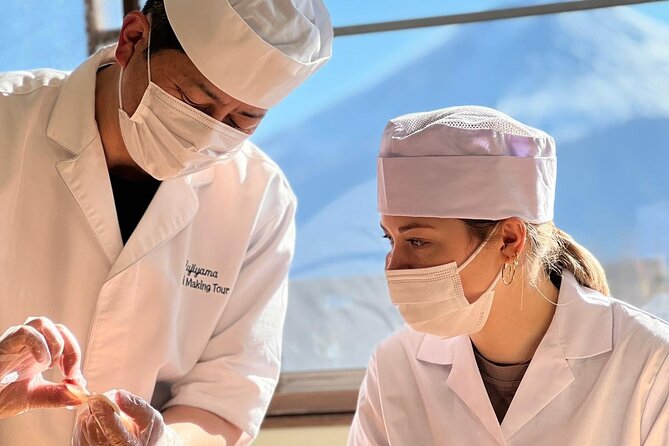
- Mount Fuji views while you cook makes the class feel special, not like a generic workshop
- Nigiri plus sushi rolls gives you two core styles to take home
- Japanese table etiquette and sushi history helps you understand why the steps matter
- English explanations from a veteran chef keeps it usable for non-Japanese speakers
- Vegetarian sushi available when you notify them ahead of time
- Private tour for your group means less waiting, more attention
Why sushi-making near Kawaguchiko Station feels different
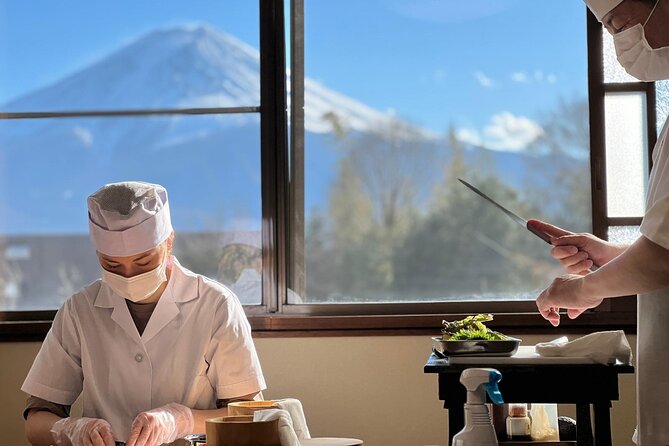
Kawaguchiko (the Fuji Five Lakes area) has a built-in sense of place. Instead of learning sushi in a back-room kitchen, you’re doing it in a setting tied to Mount Fuji, and that changes your mood immediately. You’re still there to learn technique, but you’re also watching the horizon while you work—an easy mental reset between travel days.
And because the class is designed for foreigners and expatriates (not just locals), the teaching style is practical. You’re not expected to already know how to hold rice, how to season, or how to behave at the table. You’re taught the approach, then helped with the execution.
You can also read our reviews of more tours and experiences in Fujikawaguchiko machi
The 3-hour format: what you’ll do and what you’ll actually learn
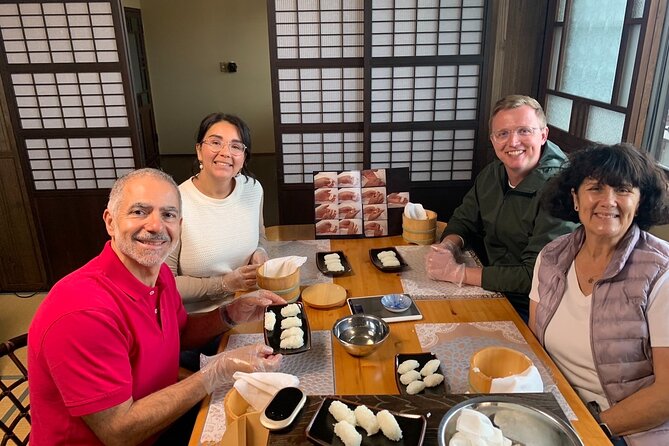
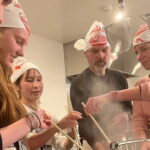
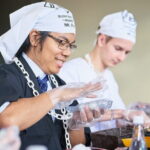
This is an approximately 3-hour lesson, and it’s short enough that it won’t swallow your whole day—but long enough to cover more than one style. The core focus is two techniques: making Nigiri-sushi and making sushi rolls. That matters because sushi learning often gets stuck at one end: either rolling or shaping. Here you get both.
Along with food prep, you’ll learn Japanese table etiquette and the tradition/history of sushi. That might sound like a “nice bonus,” but it’s more useful than it seems. Etiquette affects how you assemble and eat sushi respectfully, and history gives context for why certain methods became standard rather than arbitrary rules.
If you’re thinking about bringing these skills home, the key promise is repeatable methods: you’re taught cooking methods you can easily imitate at home. That’s the difference between a fun activity and a skill you can use again.
Stop 1: Mount Fuji views before you touch the rice
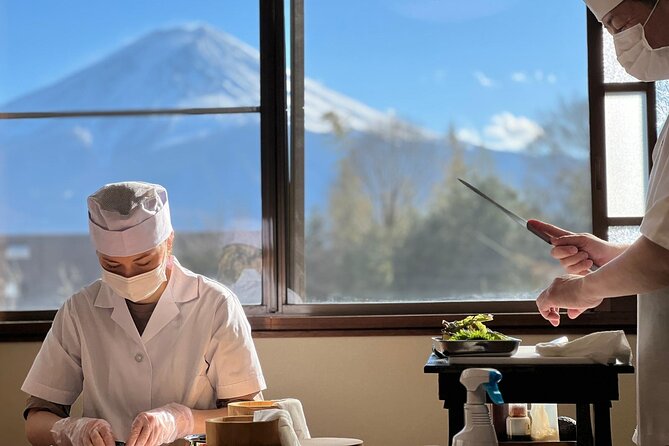
Your start point is Kawaguchiko Station (3641 Funatsu, Fujikawaguchiko, Minamitsuru District, Yamanashi 401-0301). From there, the experience is tied to the Mount Fuji area and designed so you can enjoy views while preparing sushi.
Why this start matters: it sets the tone for the whole class. If you’ve come to the Fuji Five Lakes just to check a box, this turns it into a hands-on memory. And if you’re already tired from transit, the view helps you feel like you’re “arrived,” not rushing between things.
Practical note: the lesson is near public transportation, so you can plan this as part of your day without needing taxis everywhere.
Nigiri-sushi practice: shaping, seasoning, and the chef’s cues
Nigiri is where sushi moves from “pretty” to “precise.” You’ll learn the process for making nigiri-sushi with a professional sushi chef who teaches in English. Expect instruction focused on how to shape the sushi so it holds together and feels balanced—rice base, topping placement, and the hand movements that keep everything consistent.
The most useful part of learning nigiri isn’t any one secret ingredient. It’s the method: how to handle rice, how to form it without compressing it into something unpleasant, and how to place toppings with control. A good chef can fix issues fast, and a lesson like this is set up for that correction in real time.
Also, you’ll get Japanese table etiquette alongside the cooking. That means you can understand how to present and eat nigiri properly, rather than just assembling it and hoping you’re doing it right.
Sushi roll practice: getting the structure without losing the point
Sushi rolls teach a different skill set than nigiri. Rolling requires timing and pressure control, plus knowing how to keep everything aligned. You’ll be taught how to make sushi rolls as part of the lesson, with the chef explaining techniques in English.
Here’s what you should pay attention to if you want the lesson to pay off at home: the goal isn’t only to roll something that looks correct. It’s to roll something that stays cleanly shaped when cut, with fillings distributed in a way that makes sense with the overall bite.
If you’ve ever eaten a roll that fell apart or tasted unevenly, that’s what this portion helps you avoid. You’re learning how the structure affects the eating experience, which is exactly where home practice usually falls short.




Table etiquette and sushi history: small rules that improve the meal
Learning sushi etiquette and sushi history might sound like extra listening time—but it’s tied directly to how sushi is meant to function as culture and craft. The lesson includes the history and the traditions of sushi, so you understand why certain practices became standard.
Table etiquette is where the “why” turns into behavior. It’s the difference between eating casually and eating correctly for the setting. You’ll learn Japanese table etiquette as part of the class, so you’re not guessing. That makes your dinner in Japan, or sushi night back home, feel less awkward and more respectful.
A detail from the feedback that I found especially promising: the class includes a slideshow and trivia questions. That combination usually means the chef isn’t just lecturing—you’re getting quick checks for understanding while the story of sushi sticks.
English guidance with real Japanese touches
You’ll be taught by a professional sushi chef with worldwide cooking experience who explains in English. That’s a big deal for value, because you can actually connect each instruction to what you’re doing with your hands.
At the same time, the class is described as being in Japanese in at least some parts, and that matters if you’re trying to learn the language. Even if the main guidance is in English, you’ll likely hear Japanese terms and see Japanese-style communication cues. That can be a plus, not a problem, especially if you enjoy learning through context instead of through textbooks.
If you’re someone who gets thrown off by mixed languages, here’s the consideration: allow yourself to follow both the explanation and the Japanese cues without insisting every second is perfectly translated. The payoff is you’ll understand technique and pick up the vibe of the food culture.
Vegetarian sushi: a real option when you plan ahead
Vegetarian is available. The important practical detail is that you should let them know in advance if you have food allergies. Vegetarian planning is usually easiest when the kitchen can prepare substitutes and workflow ahead of time, and this lesson explicitly asks you to communicate allergy needs ahead of the session.
If you eat vegetarian sometimes, this is also a useful way to learn how sushi can shift beyond the default fish-and-roe assumptions. You’ll still get the same fundamental technique focus—nigiri shaping and roll structure—while tailoring the ingredients.
Price and value: is $229.91 worth it?
At $229.91 per person for an approximately 3-hour lesson, this isn’t a bargain class. But it also isn’t priced like a casual demo. You’re paying for a professional chef, a guided lesson that covers multiple sushi styles, and cultural instruction (etiquette and history), all in a Fuji Five Lakes setting.
There’s also group discounts, and the experience is private for your group. Private format can drive the cost up when you’re solo, but it often turns the class into a higher-touch experience when you come with friends or family. If you’re traveling with one or two other people, the per-person value can feel more reasonable.
One more practical value point: because it’s designed to teach cooking methods you can imitate at home, you’re not just buying a meal. You’re buying a skill session plus context—something you can repeat. If your goal is to learn, not just eat, that changes the math.
Who this works best for (and who should look elsewhere)
This lesson is a great fit if you want hands-on technique with cultural context. It’s especially ideal for people staying around Fujikawaguchiko who want an activity that feels local and memorable, not another generic tour stop.
You’ll likely enjoy it if you:
- want to learn nigiri and sushi rolls in the same class
- like structured learning with slides and short trivia
- appreciate an experience taught in English, with Japanese cultural cues
- need a vegetarian option (when you tell them ahead of time)
If you’re only interested in eating sushi and don’t care about technique or etiquette, this may feel like more effort than you want. And if you’re extremely sensitive to language switching, plan to follow both English instructions and Japanese moments without expecting perfect one-to-one translation.
Practical tips so your sushi lesson helps you cook at home
Here’s how to get the most from a 3-hour workshop without overthinking it:
- Come ready to watch hands, not just listen. Sushi technique is mostly muscle memory.
- Ask questions while you’re working. Waiting until the end can be too late if the chef moves on.
- Focus on one thing at a time during nigiri and one thing at a time during rolling. Your brain will thank you later.
- If you’re vegetarian or have allergies, communicate clearly in advance so ingredient choices and timing work smoothly.
- Treat the etiquette section as part of the cooking lesson. It’ll improve how you eat what you make.
Also, because the class is close to public transportation, it’s easier to slot into a real itinerary. If you’re pairing it with Fuji views and lakeside walking, this can become your “active” day highlight.
Should you book Fujisan Sushi Making Lesson?
If you’re the kind of traveler who likes learning a craft, not just touring, this is a smart choice. The combination of hands-on nigiri and roll making, plus table etiquette and sushi history, gives the lesson real depth for the time you spend. Add the Mount Fuji setting and the professional chef teaching in English, and you get a memorable skill session that isn’t just performative.
I’d book it if you’re traveling with at least one other person and want a private, focused class in the Fuji area. If you’re solo and price-sensitive, you might want to compare how many practical techniques you’ll truly use again. But if you’ll practice sushi at home—or if you just want a high-quality food experience in a spectacular setting—this one makes a lot of sense.
FAQ
Where is the sushi making lesson meeting point?
The experience starts at Kawaguchiko Station, located at 3641 Funatsu, Fujikawaguchiko, Minamitsuru District, Yamanashi 401-0301, Japan.
How long does the Fujisan sushi making lesson last?
It runs for about 3 hours.
What type of sushi will I learn to make?
You’ll learn to make Nigiri-sushi and sushi rolls.
Do I learn anything besides cooking?
Yes. The class includes Japanese table etiquette and the history/tradition of sushi.
Is the chef able to teach in English?
Yes. The chef explains the lesson in English.
Is there a vegetarian option?
Yes, vegetarian is available.
What should I do if I have food allergies?
Let the provider know in advance about any food allergies.
Is this experience a private tour?
Yes. It is listed as a private tour/activity, meaning only your group participates.
How and when will I get confirmation, and what about cancellations?
You should receive confirmation within 48 hours of booking, subject to availability. The experience offers free cancellation if you cancel at least 24 hours before the start time.