REVIEW · TOKYO
Tokyo: Making a Lantern Workshop in Asakusa with a Craftsman
Book on GetYourGuide →Operated by Roomy's Inc · Bookable on GetYourGuide
Want a souvenir you made in Tokyo? In Asakusa, this lantern workshop lets you work inside a 100+ year-old atelier and create a Japanese chochin with a real craftsman, not a demo-only classroom. You’ll use traditional materials, follow hands-on guidance, and finish with a lantern you can take home.
What I love most is the craftsmanship comes from the source. You learn the process from a master chochin artisan (often referred to as Oyakata, with help from co-master Uehala), and English support has included interpreters like David Park, plus guides such as Rinka and Noriko in past sessions.
Second, I like that the experience is genuinely creative without being complicated. You’ll work with bamboo and washi paper, see lanterns hanging all around the workshop, and decorate your own piece at a relaxed pace over two hours. One thing to watch: the meeting point changes during 2026 Grand Sumo Tournament periods, so check your booking date carefully.
In This Review
- Key highlights worth your time
- Step into an Asakusa atelier where chochin are still made by hand
- The two-hour flow: from first instructions to a lantern you can carry home
- Washi paper and bamboo: why these materials change the whole experience
- Your lantern is more than a craft: it’s a local skill you can explain
- Where to meet in 2026: Yokokawa vs Ryogoku Kokugikan during sumo dates
- Price and value: what $96 buys you (and why it’s not just materials)
- Who this workshop fits best (and who should think twice)
- Practical tips so you don’t lose time or get stressed
- Should you book this Tokyo lantern workshop?
- FAQ
- What is the duration of the Tokyo lantern workshop?
- How much does it cost per person?
- Where is the meeting point, and does it ever change?
- Is prior experience required?
- What age is this workshop suitable for?
- What languages are available during the workshop?
- What should I bring with me?
- Is it okay to bring food, drinks, or pets?
Key highlights worth your time
- A 100+ year-old Asakusa lantern atelier with authentic tools and materials
- Guidance from a chochin master artisan, with English help available
- Hands-on washi paper + bamboo lantern building, no prior experience needed
- Photo-friendly workshop space packed with colorful lanterns
- Take-home value: you finish with your own handmade lantern
Step into an Asakusa atelier where chochin are still made by hand
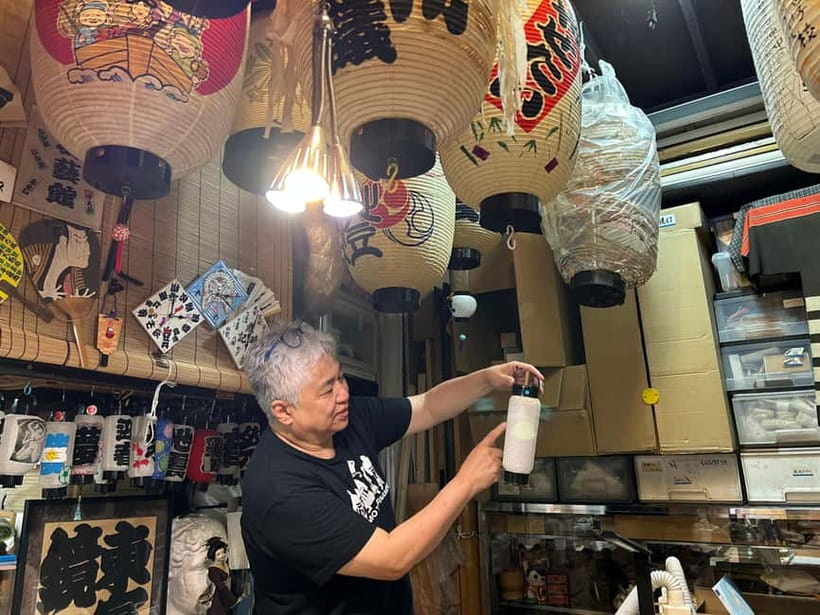
Tokyo has plenty of shopping and plenty of photo stops. This is different. You’re not just seeing lanterns—you’re making one, from the materials up, in a workshop that’s part of the craft’s everyday life.
The term chochin simply means Japanese paper lantern, but the point here is the craft behind the glow. You start by learning what lanterns are for and how their design links to tradition. Then you get to work with the practical pieces: bamboo structure, washi paper, glue and brushes, and the basic techniques that keep the lantern sturdy enough to last.
The setting matters. The workshop is full of finished lanterns in lots of shapes and colors, so your brain understands the goal fast. You can also take photos during the experience, which is handy because the final lantern looks best when you catch the details—paper texture, layout, and how the lantern shape holds after assembly.
You can also read our reviews of more tours and experiences in Tokyo



The two-hour flow: from first instructions to a lantern you can carry home
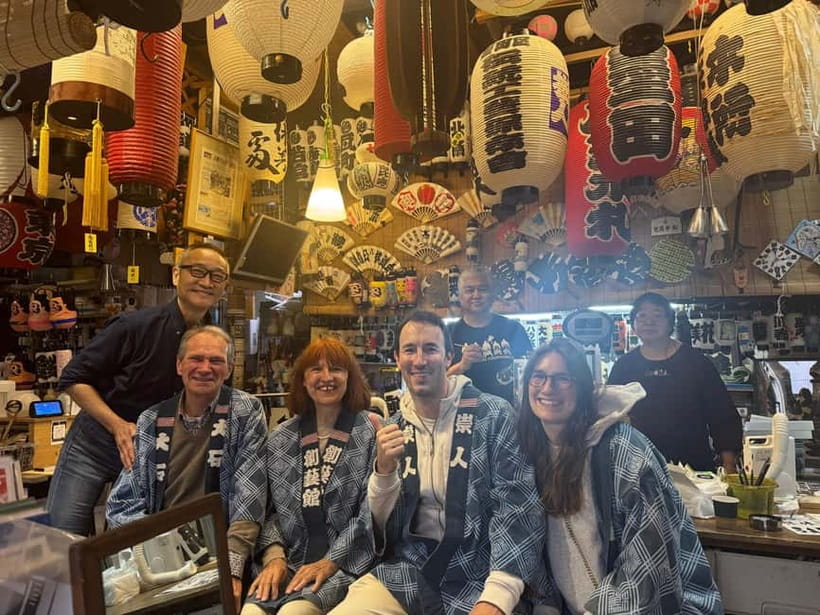
This is a straightforward 2-hour class, and that’s a sweet spot. Long enough to do the real work, short enough to fit neatly into a day of sightseeing.
Here’s how the time typically feels:
1) Meet and gear up
You’ll meet at the workshop address tied to your booking date. Then you’ll get instructions for what you’re about to do and how the tools should be handled. English support is available through a guide or interpreter.
2) History and meaning, then immediate hands-on
You’ll learn the origin and meaning of Japanese lanterns before you start building. That context helps your lantern feel more intentional—like you’re learning a technique, not just copying a craft template.
3) Build the frame and apply the paper
This is where the class turns from explanation into real making. You’ll use bamboo and washi paper, with guided steps for cutting, positioning, and attaching. You’ll also use traditional tools (glue and brushes are provided), and you’ll work at a pace that keeps you from rushing.
4) Decoration time (including handwriting-style work when included)
Decoration is part of what makes a chochin yours. In one past session, decoration included calligraphy work that took enough time that the two-hour window felt perfectly timed. So plan for some careful handwork, not just quick pasting.
5) Wrap-up and take-home prep
At the end, you take your completed lantern home. In practice, it’s treated like a real souvenir—so it’s handled with care for safe travel back.
If you’re worried you’ll feel lost, don’t be. The class is designed for people with no prior experience, and the guidance is the core of the experience.
Washi paper and bamboo: why these materials change the whole experience
Washi paper isn’t just a craft supply. It behaves differently than modern paper, and the master’s process shows why. When washi is placed correctly, it holds its look and gives the lantern its characteristic feel. When it’s stretched or aligned wrong, you’ll see it immediately.
Bamboo is the other half of the equation. It’s what gives the lantern structure so the paper can be both delicate and functional. You’re not working with a flimsy model—you’re building something designed to keep its shape.
The practical side matters for your comfort:
- The workshop may involve ink or paint, so wear clothes you don’t mind staining.
- You’ll be using glue and brushes, so plan on a hands-on day, not a dress-up photo outing.
This material mix is also where the value comes from. A mass-produced lantern is pretty. A handmade chochin has a story in the fibers and the alignment of the paper.
Your lantern is more than a craft: it’s a local skill you can explain
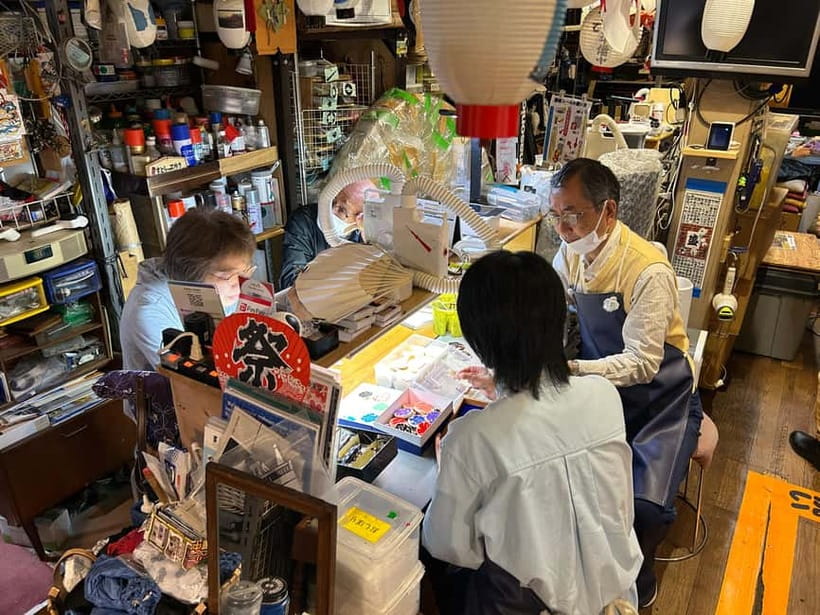
A big reason I’d pick this class over a generic souvenir stop is how it teaches you to talk about what you made.
During the workshop, you learn the history and beauty behind chochin, and you see how the craft links to daily Japanese craftsmanship. Then you finish with a lantern you can point to and say: I built that. I used washi paper. I followed the maker’s method.
That’s the kind of souvenir that feels personal because it isn’t just owned—it’s understood. And that makes it easier to share with friends when you get home.
Where to meet in 2026: Yokokawa vs Ryogoku Kokugikan during sumo dates
This part is important enough to treat like part of the itinerary.
The meeting point depends on whether your date falls during official Grand Sumo Tournament periods in 2026. If you show up at the wrong place, you might lose time—or miss the class.
Regular workshop location (outside sumo periods):
〒130-0003 2-10-8 Yokokawa, Sumida City, Tokyo
Special venue during Grand Sumo Tournament periods (Ryogoku area):
〒130-0015 1-3-20 Yokoami, Sumida City, Tokyo, Ryogoku Kokugikan (1st floor)
Grand Sumo Tournament periods in 2026:
- January 11–25
- May 10–24
- September 13–27
If your plans involve any of those dates, double-check your booking date before you head over. This is also why I’d avoid stacking your schedule too tightly around the class start time.
The good news: the workshop is located near Tokyo Skytree (Oshiage Station), so you can build the rest of your day around the general area easily.





Price and value: what $96 buys you (and why it’s not just materials)
At about $96 per person for a 2-hour workshop, you’re paying for more than paper and bamboo. You’re paying for:
- instruction from a lantern master artisan
- an English-speaking guide or interpreter
- all materials (bamboo, washi paper, glue, brushes)
- a completed lantern to take home
That last part is key. Many craft classes create something small. This one ends with a lantern you can actually display, gift, or keep. And because it’s a traditional craft, you’re getting a skill-based product, not just an art project.
Also, you get the benefit of learning in the workshop environment itself—where lanterns are everywhere and the makers are working with real tools. That adds value you can feel immediately when you compare it to a classroom setup.
Who this workshop fits best (and who should think twice)
This class is designed for ages 6+, so it works for families who want a hands-on Tokyo activity. It’s also a great choice for couples and solo travelers who want something meaningful that doesn’t depend on finding a restaurant reservation.
Solo travel is especially friendly here. English support is included, and the workshop is set up so you’re not stuck without guidance if you come alone.
One more practical fit: it’s wheelchair accessible, which matters for families and mobility needs.
You might want to think twice if:
- you hate anything involving ink/paint or stain-prone materials
- you’re the type who wants zero planning around the meeting point (because sumo dates change the venue)
Practical tips so you don’t lose time or get stressed
If you want this to feel calm and enjoyable, handle the basics early.
- Bring an ID or passport since it’s required.
- Wear old clothes because ink/paint can be part of the process.
- Plan your transportation: getting to and from the venue isn’t included, so give yourself enough buffer to reach the correct meeting address.
- Take photos during the workshop while you’re working—this is one of those experiences where the background makes your pictures look instantly more Tokyo.
- If you want the option of a professionally made lantern, there may be opportunities to purchase one on-site in addition to your own.
Because the workshop lasts two hours, the biggest risk is not the activity—it’s arriving late or at the wrong place during sumo tournament dates.
Should you book this Tokyo lantern workshop?
I’d book it if you want a Tokyo souvenir with real craft behind it. If you enjoy hands-on work, want to use traditional materials like washi paper and bamboo, and like the idea of leaving with a take-home lantern you built yourself, this is a strong match.
You might skip it if your schedule is too tight around start times on 2026 sumo dates, or if you’re not comfortable with the possibility of ink/paint on your clothes. In that case, you may prefer a less hands-on experience.
For most people, though, this is one of those rare activities where the time feels well-used: you learn something, you make something, and you walk away with something you can actually display.
FAQ
What is the duration of the Tokyo lantern workshop?
The workshop lasts 2 hours.
How much does it cost per person?
The price is $96 per person.
Where is the meeting point, and does it ever change?
Yes. The meeting point changes during official Grand Sumo Tournament periods in 2026. Outside those dates, it’s at 〒130-0003 2-10-8 Yokokawa, Sumida City, Tokyo. During sumo periods, it moves to 〒130-0015 1-3-20 Yokoami, Sumida City, Tokyo, Ryogoku Kokugikan (1st floor).
Is prior experience required?
No prior experience is needed.
What age is this workshop suitable for?
It’s suitable for ages 6 and up. Children under 6 are not suitable.
What languages are available during the workshop?
The workshop has Japanese and English support.
What should I bring with me?
You should bring a passport or an ID card.
Is it okay to bring food, drinks, or pets?
Pets are not allowed, and alcohol and drugs are not allowed. Meals or drinks are not included.