REVIEW · TOKYO
Japanese Traditional Entertainment Experience in Tokyo
Book on GetYourGuide →Operated by Japanticket Inc. · Bookable on GetYourGuide
Some nights in Tokyo feel like they were made for your phone.
This one plays it differently: you wear a kimono, wander at night, and end up in an Ozashiki parlor built for conversation, music, and dancing. I especially like that it’s not just watching from a seat—you get a transformation into Edo town life before the performance starts. The food options are also a strong pull, from matcha sweets to a full kaiseki-style meal. The one drawback to think about: the whole experience is only 30 minutes, so it’s more of a concentrated taste than a long, slow cultural evening.
If you’re the type who likes to connect dots—why people do what they do, not just how it looks—this format gives you that. The host-led flow and the geisha entertainment focus on etiquette, presentation, and performance, so you’ll leave with a clearer picture of traditional parlor culture and Edo-era tastes. One thing to consider before you book: you’ll be responsible for getting to the venue, and the value depends on choosing the course that matches your appetite for food vs. entertainment.
In This Review
- Key Highlights You’ll Feel in the Room
- Edo-Style Night Vibes: What This Actually Feels Like
- Meeting at Fukagawa Odori Hachiman Zashiki (and Why Location Matters)
- Kimono Change + Edo Town Walk: The “Before the Show” Advantage
- The Ozashiki Parlor Experience: Geisha Entertainment Without the Guesswork
- Edo Music and Dance: Shamisen + Traditional Performance Pieces
- Food Options: Choosing UME vs TAKE vs MATSU (and Getting the Value Right)
- UME COURSE: Matcha Sweets + Entertainment Focus
- TAKE COURSE: Fukagawa Meal Set + Geisha Entertainment
- MATSU COURSE: Kaiseki-Style Meal + Fukagawa Meshi + Drink
- A practical value note on the $74 price
- The Wrap-Up: Souvenir, Host Energy, and What You Take Home
- Who This Fits Best (and Who Might Prefer Something Else)
- Should You Book This Japanese Traditional Entertainment in Tokyo?
- FAQ
- How long is the experience?
- How much does it cost?
- Where is the meeting point?
- What are the available course options?
- What is included with the UME course?
- What is included with the TAKE course?
- What is included with the MATSU course?
- Are transportation costs included?
- What languages are supported?
- Is there free cancellation?
Key Highlights You’ll Feel in the Room
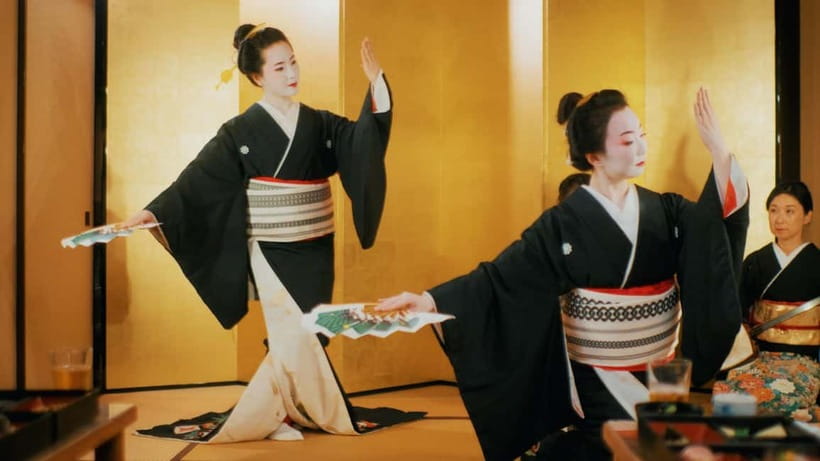
- Kimono transformation + Edo townsman walk at night around the temple grounds
- Geisha-led parlor entertainment in an Ozashiki setting
- Traditional performing arts such as dancing and shamisen
- Course-based food choices from matcha sweets to Fukagawa meal set to kaiseki with Fukagawa meshi
- A party vibe with strangers that’s designed for easy chatting
Edo-Style Night Vibes: What This Actually Feels Like
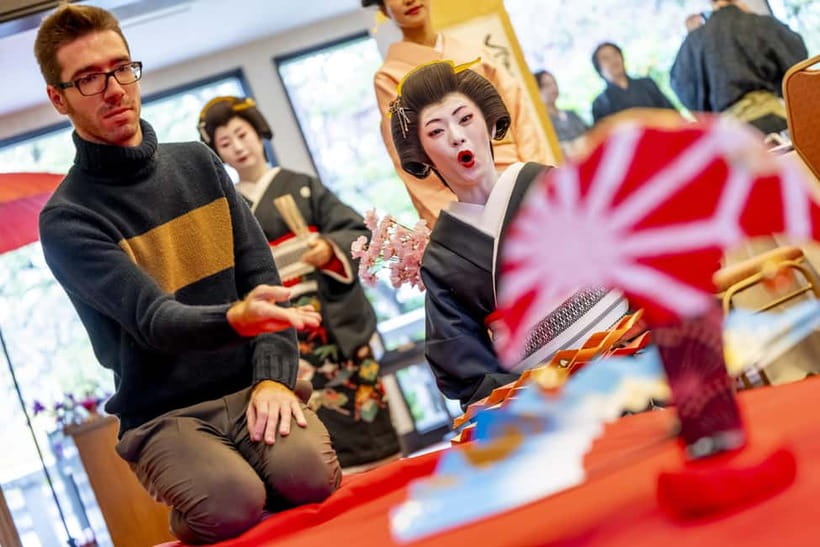
The biggest surprise with this experience is that it starts before the performance. You don’t just arrive, sit, and clap on cue. You’re transformed into kimono attire, and then you get to move through the grounds at night in an Edo townsman look. That matters because your brain stops treating the evening like a show you attend and starts treating it like a world you’re temporarily living in.
The venue is a specific kind of Tokyo space: Fukagawa Odori Hachiman Zashiki in Koto-ku (that’s where you meet). It’s the kind of place where the architecture and mood help the experience work, especially after dark. If you’ve ever felt like Tokyo entertainment can be too fast and too polished, this one leans into atmosphere and tradition instead.
And the energy shifts again once you’re inside. The night isn’t only about performances on a stage—it’s also about the Ozashiki party concept, where conversation and personality matter. One review summed up the hosts as hospitable and professional, and you’ll likely feel that in the way the evening is guided.
The time frame is short, though: 30 minutes total. So go in with the right mindset. Think: quick, well-run cultural night snack, not a slow dinner theater marathon.
You can also read our reviews of more tours and experiences in Tokyo.



Meeting at Fukagawa Odori Hachiman Zashiki (and Why Location Matters)
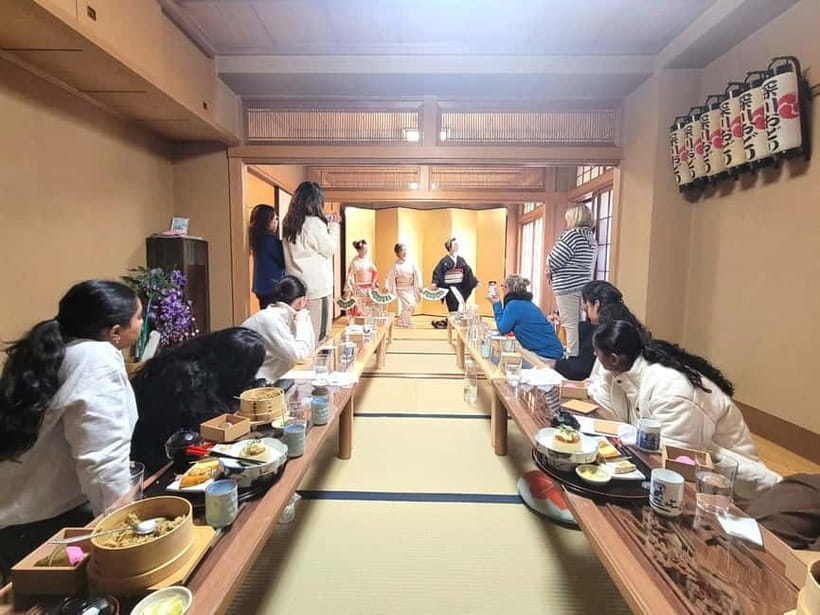
You’ll meet at Fukagawa Odori Hachiman Zashiki, 1-22-8 Tomioka, Koto-ku, Tokyo (Japanese address: 東京都江東区富岡1-22-8 深川おどり八幡座敷). This address detail is useful because it pins down the exact venue rather than a generic neighborhood meeting point.
Why this matters for your planning: you need to handle transport on your own. Nothing in the provided info includes rides or transit assistance. So if you’re building your day around this, give yourself extra margin to reach the venue on time—Tokyo time is unforgiving, and this experience is designed around a tight schedule.
Also note that the duration is fixed at 30 minutes, but starting times depend on availability. If your schedule is rigid (like you only have one night free), check your options early so you don’t end up with a last-minute compromise.
Kimono Change + Edo Town Walk: The “Before the Show” Advantage
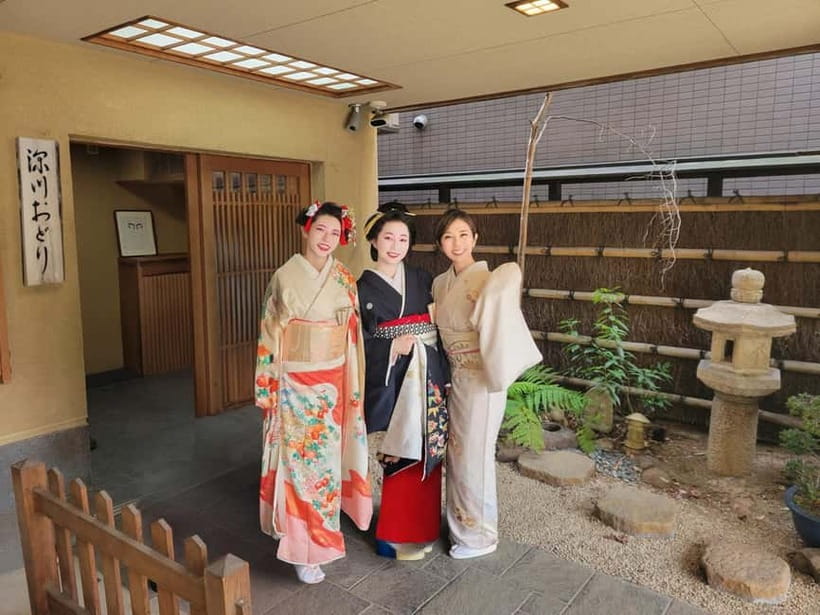
The early step—your kimono transformation—isn’t just costume. It sets the tone and helps you understand the event’s framing. You’ll look the part, and that makes the night walk around the temple grounds feel like part of the script, not a photo op that happens to come first.
Then comes the key moment: you can walk around the temple grounds at night as an Edo townsman. This is one of those rare experiences where the setting is doing real work. Darker light levels mean the atmosphere turns from daytime tourist scenery into something more theatrical. You’ll feel like you’re stepping into a time period rather than just changing clothes and waiting for a seat.
Possible consideration: a short duration plus a quick transformation can leave you wanting more time to roam. If you’re the type who likes wandering slowly and taking in details for 45–90 minutes, you might find this section brief. But if you want the fun part fast—kimono look, night atmosphere, then performance—that short pacing is a feature.
The Ozashiki Parlor Experience: Geisha Entertainment Without the Guesswork
After the walk, you shift into the parlor stage of the night. This is where the event becomes distinctly Ozashiki—a private-parlor style setup focused on attentive hosting, traditional performance, and the kind of social energy that encourages interaction.
Geisha entertainment is part of the experience on two of the three courses:
- TAKE COURSE includes an Ozashiki Geisha entertainment experience
- MATSU COURSE includes an Ozashiki Geisha entertainment experience
So if geisha performance is the core reason you’re booking, plan to choose TAKE or MATSU rather than UME.
From the reviews included in your info, the hosts are described as elegant, gracious, and professional. One review specifically praised the hosts for hospitality and for explaining traditional aspects of tea culture alongside the entertainment. While tea ceremony details aren’t laid out in the course list, the UME course includes Japanese sweets and matcha, which is exactly the kind of pairing that often comes with an explanation of how matcha is traditionally served and presented.
What you’ll likely value most here: you’re not stuck decoding a foreign cultural script in silence. You’ll get guidance, and the performance is set up for you to understand what you’re seeing and why it matters.
Edo Music and Dance: Shamisen + Traditional Performance Pieces
The entertainment component centers on traditional performing arts. The info explicitly mentions dancing and shamisen. That combination is a strong one because it gives you both rhythm and melody, plus visible movement through dance.
This is the moment where the event “pays off.” The night walk gives you the look and setting. The Ozashiki parlor gives you closeness and hosting. Then the dancing and shamisen bring the culture to life in a way that’s easy to feel even if you don’t know the background.
One review called out delightful geishas and a charming traditional dance at the end of the session. That’s exactly the shape of a good short performance: a warm opening, strong mid-point, and then a satisfying closer that lands emotionally.
If you usually prefer long performances, you might want to know what you’re getting: this is not a 2–3 hour stage night. It’s a 30-minute concentrated package. You’ll get the essence, not the extended rehearsal of tradition.


Food Options: Choosing UME vs TAKE vs MATSU (and Getting the Value Right)
This is where you get to decide what kind of night you want. The experience has three courses, and each one nudges the focus toward different comfort levels with food, social energy, and geisha entertainment.
UME COURSE: Matcha Sweets + Entertainment Focus
The UME course is described as an Ozashiki experience, with Japanese sweets and matcha included.
If you want something lighter—more of a palate intro than a full meal—UME is your best fit. It also makes sense if you’re splitting your day with other Tokyo food plans and just want a traditional “dessert-and-performance” style evening.
TAKE COURSE: Fukagawa Meal Set + Geisha Entertainment
The TAKE course includes:
- Fukagawa meal set
- Ozashiki Geisha entertainment experience
This is the course I’d point to if you want a balanced night: you get a proper meal element and the geisha parlor entertainment in the Ozashiki setting. Fukagawa is tied to the Edo-style food world, and having a meal set here makes the experience feel complete rather than like a snack attached to a show.
MATSU COURSE: Kaiseki-Style Meal + Fukagawa Meshi + Drink
The MATSU course includes:
- Kaiseki cuisine with Fukagawa meshi
- Drink
- Ozashiki Geisha entertainment experience
If you want maximum “dinner value” in one sitting, MATSU is the clear choice. It’s the most food-forward option, and the inclusion of a drink makes the whole thing feel more like a night out, not just a ticketed performance.
One review described the meal as delicious and suggested you should be prepared for a full meal. That lines up with MATSU being the richest food option. Even if you don’t eat kaiseki every day, this is the kind of course where you’ll likely feel taken care of.
A practical value note on the $74 price
At $74 per person for 30 minutes, the value isn’t about “hours of entertainment.” It’s about access: kimono transformation, geisha/or parlor entertainment depending on the course, traditional performance, and included extras like a souvenir and food (depending on course).
If you’re the kind of traveler who pays for cultural access (not just sightseeing), the price can feel fair. If you’re shopping only for long duration, then 30 minutes will feel tight—so choose the course that gives you what you actually want: meal, geisha entertainment, or matcha-sweets culture.
The Wrap-Up: Souvenir, Host Energy, and What You Take Home
You’ll receive a souvenir, plus the experience is hosted with English and Japanese support (Japanese/English greeter). That matters because cultural performances can feel awkward if you can’t understand what you’re being shown.
From the review snippets you have, the tone is consistently positive: hosts are hospitable, explanations are clear, and the evening ends with a traditional dance moment. That kind of pacing is important in a short experience. You’re not rushed through something confusing; you’re guided through something enjoyable.
If you decide to add the optional professional filming, that can be a bonus. The info says there’s an optional short movie in period-drama style shot by a professional cameraman, but it’s not included in the standard price.
Who This Fits Best (and Who Might Prefer Something Else)
This experience is a great match if you:
- want a Tokyo geisha and traditional performance night without complicated planning
- like cultural activities where you actively participate (kimono, walk, parlor)
- want a course-based meal option so you can tailor the value
- prefer guided explanations over guesswork
It’s less ideal if you:
- want a long, slow cultural immersion (this is 30 minutes)
- don’t want to manage transport to the venue yourself
- are only interested in geisha entertainment but pick the wrong course (choose TAKE or MATSU)
Should You Book This Japanese Traditional Entertainment in Tokyo?
I think you should book it if your goal is a high-effort cultural night in a short window—especially if you choose the course that matches your priorities. If you want the geisha parlor experience, go with TAKE or MATSU. If you want a lighter intro with matcha, choose UME.
If you’re on the fence, make your decision using two questions:
1) Do you want a meal included or just sweets?
2) Do you care about the Ozashiki geisha entertainment specifically?
Answer those, and the choice gets easy. For $74, you’re paying for access, guidance, performance, and atmosphere—not for a long evening. If that’s your style, this one can be a memorable, straightforward Tokyo night.
FAQ
How long is the experience?
It lasts 30 minutes.
How much does it cost?
The price is $74 per person.
Where is the meeting point?
You meet at Fukagawa Odori Hachiman Zashiki, 1-22-8 Tomioka, Koto-ku, Tokyo (東京都江東区富岡1-22-8 深川おどり八幡座敷).
What are the available course options?
There are three courses: UME, TAKE, and MATSU.
What is included with the UME course?
The UME course includes admission, performance, a souvenir, plus Japanese sweets and matcha.
What is included with the TAKE course?
The TAKE course includes admission, performance, a souvenir, a Fukagawa meal set, and Ozashiki Geisha entertainment.
What is included with the MATSU course?
The MATSU course includes admission, performance, a souvenir, kaiseki cuisine with Fukagawa meshi, drink, and Ozashiki Geisha entertainment.
Are transportation costs included?
No. Transportation to the venue is not included.
What languages are supported?
The host or greeter provides Japanese and English.
Is there free cancellation?
Yes. You can cancel up to 7 days in advance for a full refund.