REVIEW · TOKYO
Kintsugi Experience with Arita Ware in Tokyo (English Guide)
Book on GetYourGuide →Operated by Yomiuri Travel Service · Bookable on GetYourGuide
Broken pottery becomes something beautiful. In this Kintsugi session in Nihonbashi, you repair ceramic the traditional way, using gold to celebrate flaws instead of hiding them, all with an English guide and Arita ware that traces back 400 years. It’s a calm, hands-on craft break from Tokyo sightseeing, set inside a shop steeped in trade and craftsmanship.
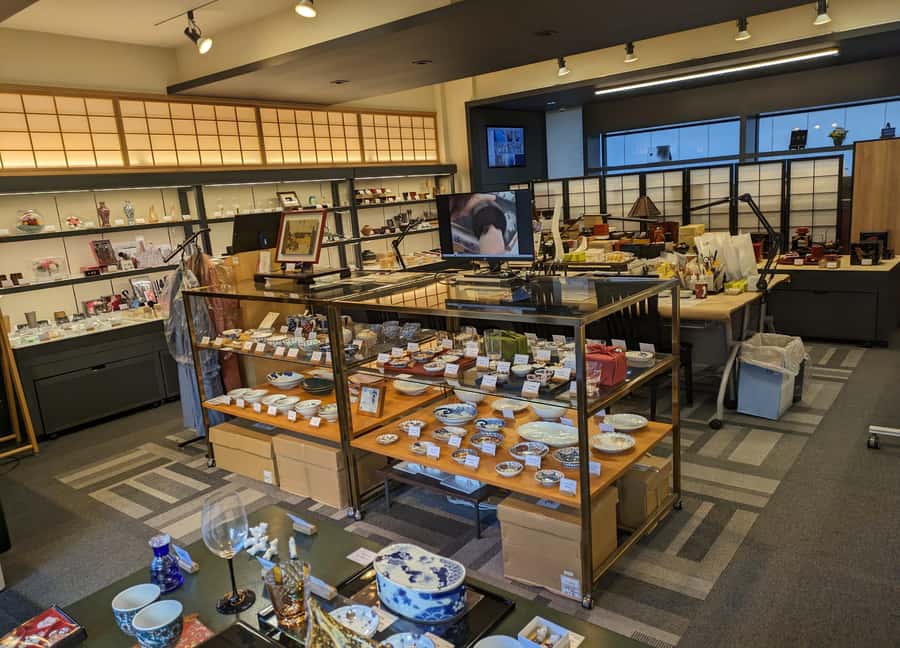
I love that you leave with a real, personal souvenir you made yourself, not just photos. I also like how the setting is practical and inspiring: Nihonbashi Mutoh’s Main Store, established in 1923, gives you that old-school craft-shop feel, with high-end lacquerware and glassware around you while you work.
One consideration: the repaired piece needs special care afterward, including drying indoors for about a week and using it for decoration only, not eating or drinking.
In This Review
- Key points to know before you go
- Kintsugi in Tokyo: where a 15th-century philosophy becomes real
- The Nihonbashi Mutoh setting (est. 1923) and why it’s part of the value
- Arita ware with a 400-year thread to Japan’s first porcelain
- Your 90 minutes at the Kintsugi table: what you’ll do, in plain terms
- Choosing your item: the included plate vs. bringing your own broken treasure
- After class: drying, washing, and how to treat your repaired piece
- Price and value: what $139 buys you in Tokyo craft time
- Who this is best for (and who might hesitate)
- Should you book? My practical recommendation
- FAQ
- How long is the Kintsugi workshop?
- What times does the workshop run?
- Where is the meeting place?
- Is there an English-speaking instructor?
- What is included in the price?
- Can I bring my own broken item to repair?
- Is there a take-home souvenir?
- How should I care for the repaired piece?
- Is the workshop wheelchair accessible, and is it suitable for children?
Key points to know before you go
- 90 minutes of hands-on Kintsugi with an English-speaking instructor
- Small group (max 10), so you can actually ask questions
- Arita ware experience tied to Japan’s early porcelain tradition
- Take-home piece included (and you can bring your own item if it fits the rules)
- Clear guidance during the process, with steps explained and supported in English
- Workshop timing matters since sessions end at the scheduled time even if you’re late
Kintsugi in Tokyo: where a 15th-century philosophy becomes real
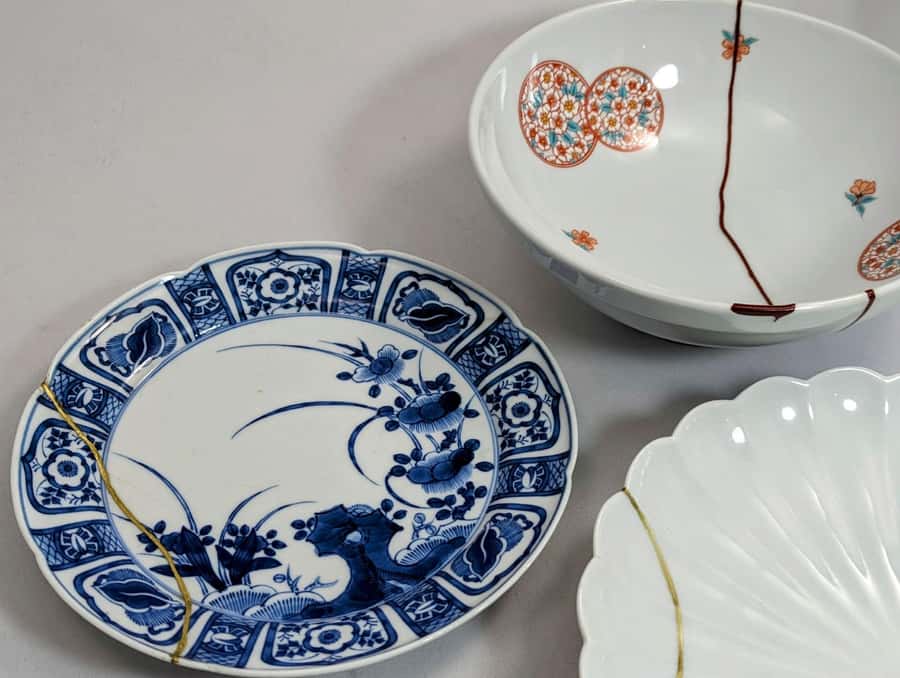
There’s something quietly powerful about Kintsugi. You start with damage, then you repair it in a way that makes the repair part of the story. The concept comes from a 15th-century tradition and connects to wabi-sabi, the Japanese idea that imperfection is part of life, not a problem to erase.
What I like for you is how this turns a theme into a skill. You’re not just learning the meaning of Kintsugi from a poster; you’re doing it with your own hands, and you get to watch how the process respects the object’s past. And because it’s set in a shop environment rather than a generic studio, it feels more like craft culture and less like a one-off demo.
Also, the session is short and focused: 90 minutes. That matters in Tokyo, where a “short” experience can still feel like a chore if it’s crowded or confusing. Here, the pacing is designed around finishing one item you can actually take home.
You can also read our reviews of more guided tours in Tokyo



The Nihonbashi Mutoh setting (est. 1923) and why it’s part of the value
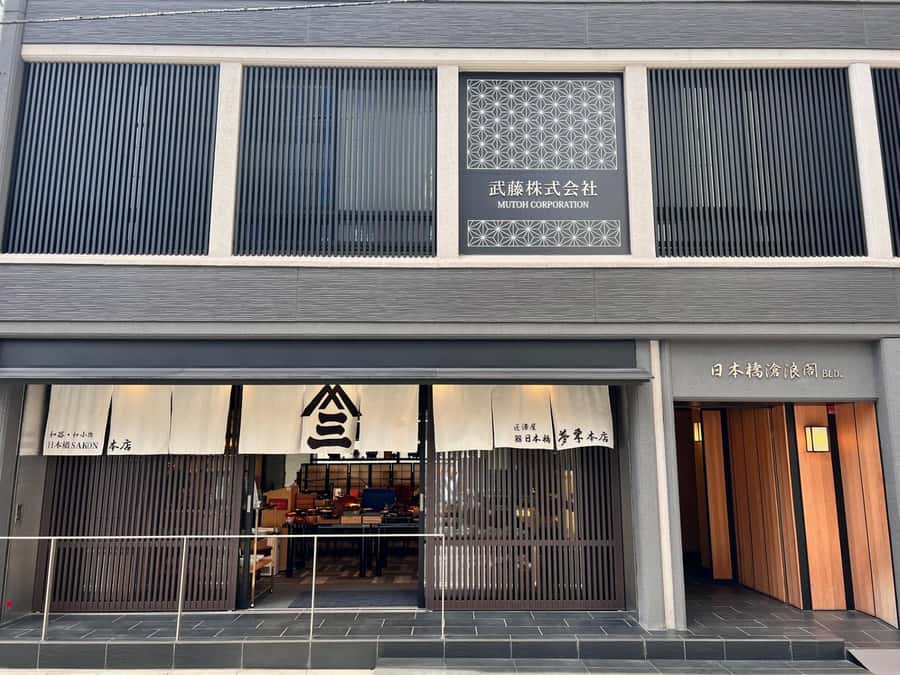
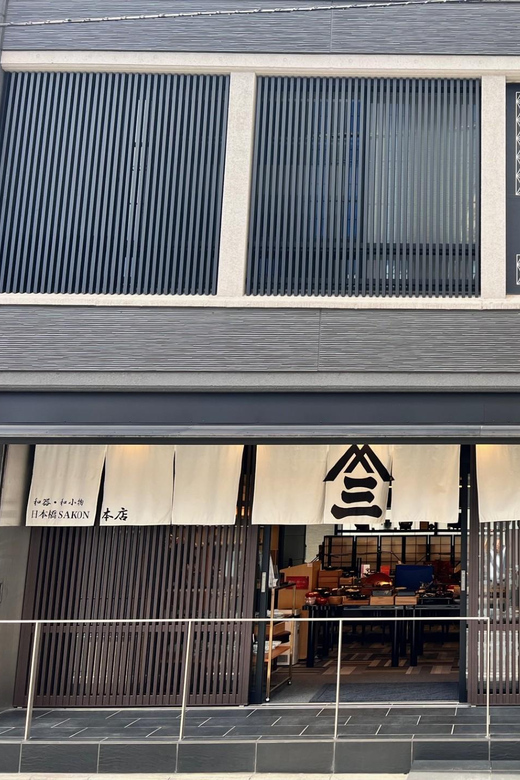
The meeting place is Nihonbashi Mutoh Main Store at 1-8-3 Honcho, Nihonbashi, Chuo City, Tokyo (1030023). This isn’t a minimal classroom. It’s a long-running wholesaler of high-quality lacquerware and glassware, established in 1923, and it carries that serious “we sell great objects” energy.
Why that matters: Kintsugi isn’t only about sticking pieces back together. It’s also about aesthetics—choosing how the repaired lines look, and understanding why gold lines are treated as something to admire. Being in a shop full of fine items helps you see what kind of object Kintsugi is meant for.
One more practical note: the workshop may run alongside regular customers. That’s not a problem, but it does mean you should expect a real store atmosphere rather than a silent museum room. For most people, that’s actually a plus. It feels lived-in.
Arita ware with a 400-year thread to Japan’s first porcelain
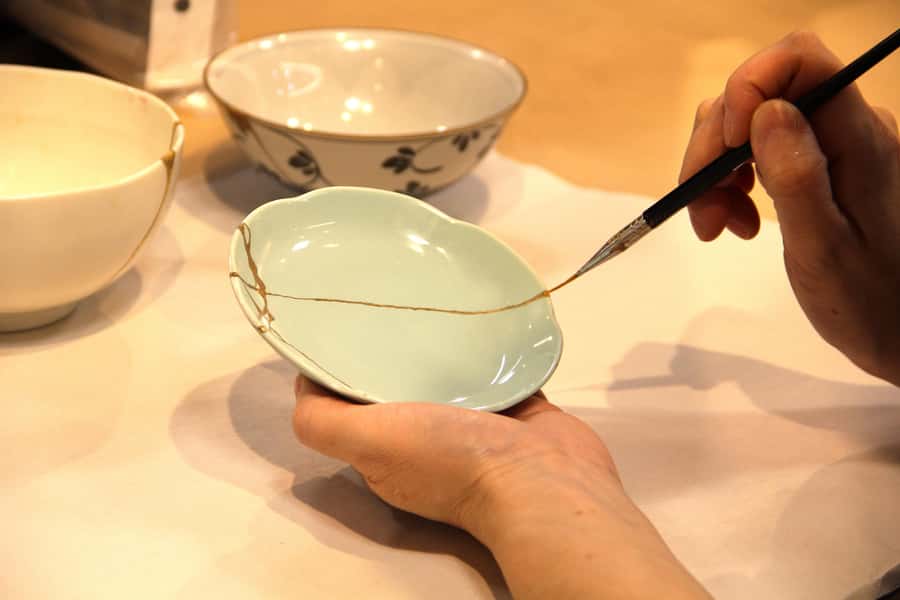
This workshop uses Arita ware, which you can think of as the backbone of Japanese porcelain history. Arita ware has a 400-year story, and it’s described here as the first porcelain produced in Japan. That’s a big claim, and whether you’re a porcelain nerd or not, it sets the tone for why this experience is more than a generic craft class.
You’ll also learn that Shobido Honten’s Arita ware pieces are what you work with during the session, and the brand is popular both in Japan and internationally. What I like about that for you: you’re not repairing an anonymous souvenir blank. You’re working with a recognizable, culturally rooted style of porcelain, which makes your take-home piece feel more meaningful.
If you’re hoping for authenticity, this is where it shows. Kintsugi is a repair technique, but it’s also a marriage of material and philosophy. Gold repairs on porcelain have a long visual tradition, and using Arita ware gives you a clearer sense of the original craft context.
Your 90 minutes at the Kintsugi table: what you’ll do, in plain terms
The experience runs for 1.5 hours (90 minutes). Sessions are scheduled at 10:30–12:00, 13:30–15:00, and 15:30–17:00, so you can match it to your day in central Tokyo.
Here’s what the flow feels like, based on how the workshop is set up:
- You start with instruction from an English-speaking instructor.
- You follow steps to repair a ceramic or porcelain piece using the Kintsugi method.
- You finish with a completed item (a plate is used in the experience and is available to bring home).
One helpful detail: instructions are provided clearly, with explanations that include Japanese first and then English translation. That helps you even if your Japanese is minimal, because you still see the process as the instructor talks through it.
Is it for beginners? Yes. You’re not required to have artistic skill. The point is guided craft, with time to finish one object. That also keeps the pressure low. You’re there to make something you’ll actually live with after you return home.
Choosing your item: the included plate vs. bringing your own broken treasure
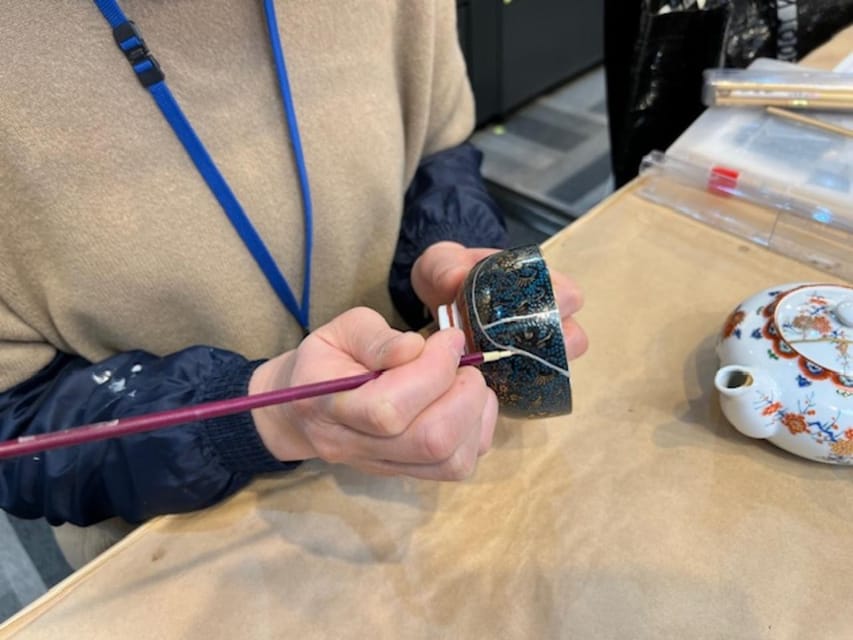
You don’t have to bring anything. The workshop includes a plate used in the experience, and you can take it home.
But you can also bring your own item for the Kintsugi experience, as long as it fits the size and condition rules:
- Size: up to about 15 cm in diameter and 15 cm in height
- Damage: 1 to 2 broken parts
- Material: ceramic or porcelain
This is a great option if you have a meaningful object already—something from home, a previous souvenir, or a family piece. If you do bring your own, read the limits carefully. Over-sized items or heavy damage may not qualify, and the workshop is timed to complete one object.
Also note the workshop is not recommended for children under 13. If you’re traveling with a teen who really wants craft time, it’s still worth checking in advance, since the stated suitability is age-based.





After class: drying, washing, and how to treat your repaired piece
The workshop doesn’t end when the lesson does. After you finish, you bring your repaired piece home, and you have to treat it with care.
Here’s what you need to know:
- Dry it indoors for about 1 week
- Hand wash only, using dishwashing detergent
- No microwave, and no dishwasher
- Use it for decoration only, not for eating or drinking
That might sound fussy, but it’s part of protecting the repair. Kintsugi repairs are meant to preserve the object and its beauty, not turn it into everyday kitchenware.
Clothing tip: wear something you don’t mind getting dirty. Even though you’re making one finished souvenir, craft repair can still be messy in small ways.
If you follow the care rules, you’ll be able to display your piece for a long time. And honestly, that’s the best kind of souvenir: one that adds meaning to a corner of your home instead of collecting dust in a drawer.
Price and value: what $139 buys you in Tokyo craft time
The price is listed as $139 per person for about 90 minutes. Is that “cheap”? No. But you’re paying for a few things that add up fast in Tokyo: guided instruction in English, a small group setting (limited to 10 participants), materials provided, and a take-home plate that you repaired yourself.
You’re also paying for the cultural packaging that makes the experience feel complete: Arita ware is used, and the shop environment (Nihonbashi Mutoh, established in 1923) adds authenticity beyond a regular workshop room. For many people, that’s why this type of activity works better than buying a mass-produced souvenir.
Small group also matters. The better reviews emphasize groups small enough to feel personal and not crowded. In a class like this, you don’t want to be waiting while your turn gets delayed.
If you’re choosing between a craft class that ends in a store, and a pricey “thing you buy” experience, I’d personally lean toward this kind of hands-on workshop. You’ll come away with something that actually reflects your own effort.
Who this is best for (and who might hesitate)
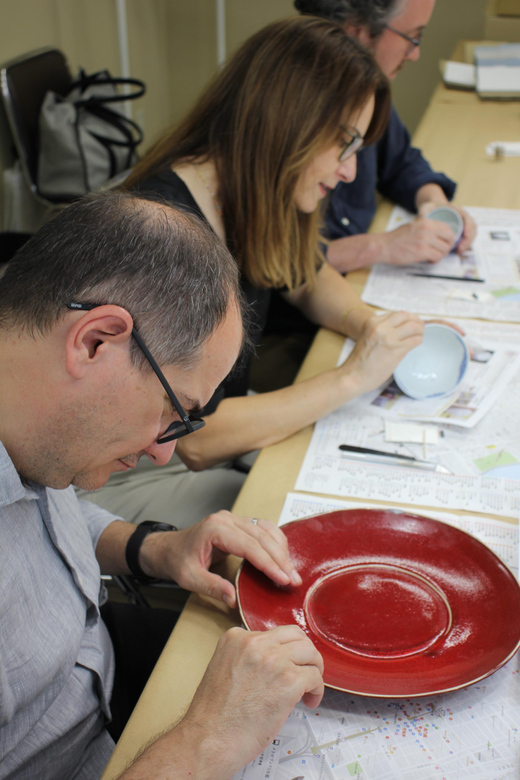
This Kintsugi experience is a strong fit if you want:
- A hands-on traditional craft that’s understandable even if your art skills are basic
- An English-led class in central Tokyo
- A meaningful souvenir tied to Japanese porcelain culture
- A calmer activity that doesn’t require long travel outside the city
It’s also a good choice if you like crafts where “imperfect” is part of the beauty. The whole point of wabi-sabi becomes practical: you see how damage can turn into design.
Who might hesitate? If you really need your souvenirs to be food-safe or machine-washable, this won’t match that expectation. The finished piece is explicitly for decoration only, with drying and hand-wash instructions. Also, if you’re traveling with small kids, the class isn’t suitable for children under 13.
Should you book? My practical recommendation
Book it if you want a genuinely different Tokyo day. Kintsugi is one of those experiences where the meaning and the skill are tightly connected, and the result is something you’ll display rather than discard. Add in the English instruction, the small group size, and the included take-home plate, and it’s good value for what you’re getting.
Skip it if you dislike “care instructions” souvenirs or you need a fast in-and-out activity with zero follow-up at home. Also skip it if you’d be disappointed by the fact that your repaired piece is for decoration only.
If you’re on the fence, pick a time that works with your schedule and don’t aim for rushing. Arrive early enough so you can settle in. The workshop still ends at the original time even if you arrive late, so being punctual protects your full 90 minutes.
FAQ
How long is the Kintsugi workshop?
It lasts about 1.5 hours (90 minutes).
What times does the workshop run?
The scheduled sessions are 10:30–12:00, 13:30–15:00, and 15:30–17:00.
Where is the meeting place?
You meet at Nihonbashi Mutoh Main Store, 1-8-3 Honcho Nihonbashi, Chuo City, Tokyo 1030023.
Is there an English-speaking instructor?
Yes, the workshop includes an English-speaking instructor.
What is included in the price?
Admission to the Kintsugi workshop for 90 minutes, all necessary materials, an English-speaking instructor, and a plate used in the experience that you can bring home.
Can I bring my own broken item to repair?
Yes, if it’s ceramic or porcelain, up to about 15 cm in diameter and 15 cm in height, and has 1 to 2 broken parts.
Is there a take-home souvenir?
Yes. A plate used in the experience is provided and you can take it home.
How should I care for the repaired piece?
Dry it indoors for about 1 week, hand wash only with dishwashing detergent, and avoid the microwave and dishwasher. Use it for decoration, not for eating or drinking.
Is the workshop wheelchair accessible, and is it suitable for children?
It is wheelchair accessible. It is not suitable for children under 13.