REVIEW · TOKYO
Tokyo: Asakusa & Tokyo’s Oldest Temple Senso-ji Walking Tour
Book on GetYourGuide →Operated by Goen Japan · Bookable on GetYourGuide
Two hours, one ancient block of Tokyo. This Asakusa Senso-ji walking tour turns a landmark visit into a story you can actually follow, with an English-speaking guide who brings the place to life. I really like the way the tour leans on legends and neighborhood history, and how guides like Lax (and Shoma, in other groups) can make religion and local life feel understandable instead of like a lecture.
I also love the simple, practical payoff: you spend real time under Kaminarimon Gate, along the snack-and-souvenir lane of Nakamise, and around the temple area for photos. It’s designed for first-timers who want the highlights without building an itinerary from scratch, and it stays fun with plenty of room to browse and snack.
One possible drawback: this is a focused walk in a single pocket of Asakusa. If you’re the type who wants lots of distance, big variety, or changing scenery every few minutes, you might wish it ranged farther. Also, the overall feel can depend on how story-forward your specific guide is.
In This Review
- Key things that make this tour worth your time
- Finding the feel of old Tokyo at 雷門交番 (Kaminari-mon Police Station)
- Kaminarimon Gate to Nakamise Street: snacks, souvenirs, and street rhythm
- Sensō-ji Temple: the iconic gate, the big sights, and why the stories matter
- Asakusa after the temple front: time for the neighborhood, not just the postcard
- Price and value: why $11 can make sense here
- Who the guides are like: Lax, Shoma, and what style you should expect
- Timing: a 2-hour walk that works for busy Tokyo days
- Getting the most out of it: small moves that change the whole experience
- Should you book this walking tour of Asakusa and Senso-ji?
- FAQ
- Where does the tour meet?
- How long is the tour?
- How big is the group?
- What language is the guide?
- What stops are included?
- Is temple or area admission included?
- Is hotel pickup or drop-off included?
- Can I cancel, and is payment flexible?
Key things that make this tour worth your time
- Small group (up to 10) means fewer people in your photos and more chance to ask questions.
- English live guide helps you connect temple customs to what you’re seeing on the street.
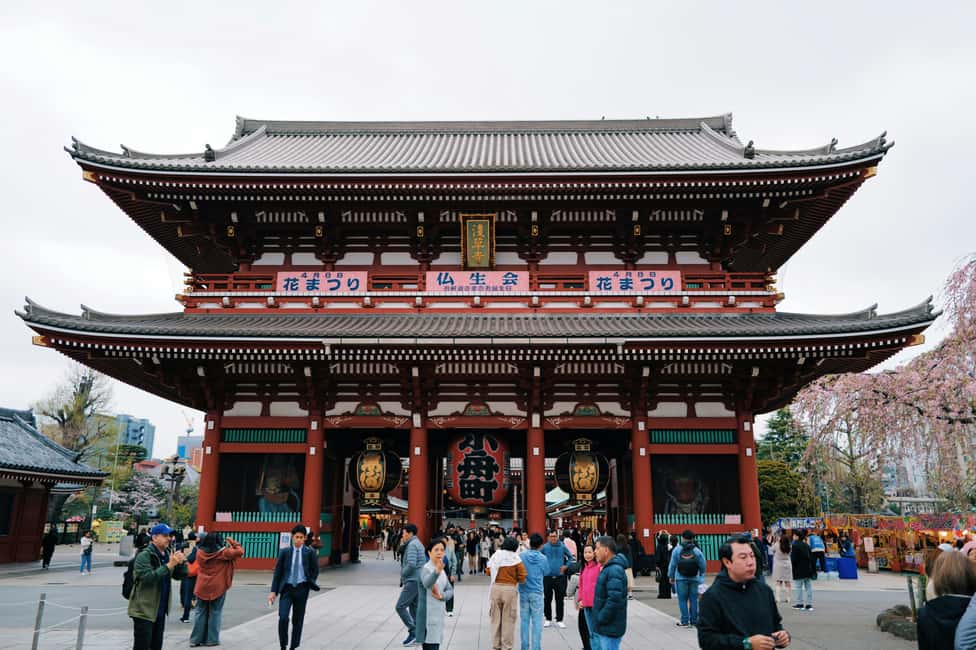
- Kaminarimon + Nakamise are timed so you don’t just “pass through,” you actually soak it in.
- Senso-ji photo stops keep you from missing the most iconic angles.
- Asakusa neighborhood time adds context beyond the main temple building.
- Good value at $11 with guide and listed admission included.
Finding the feel of old Tokyo at 雷門交番 (Kaminari-mon Police Station)
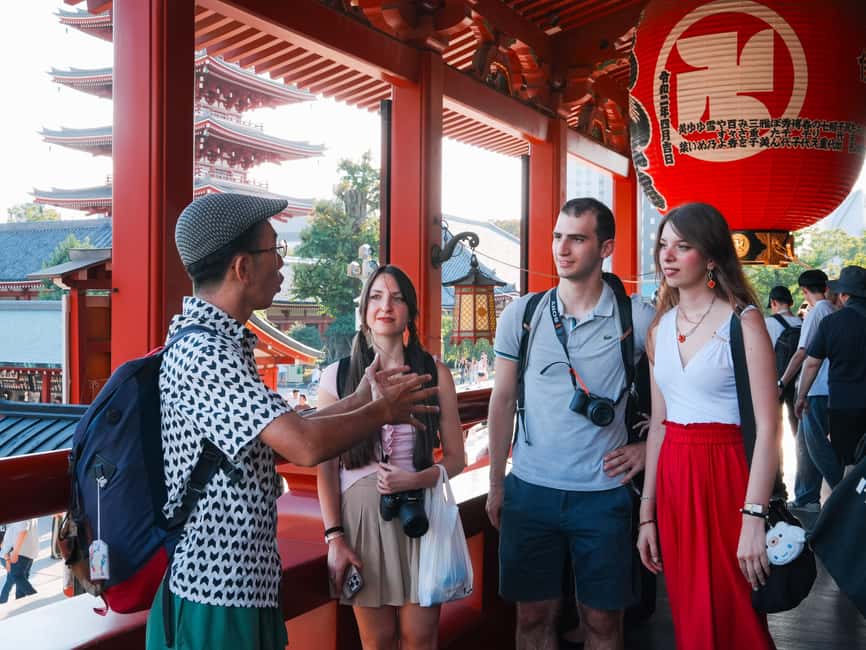
Your tour starts at 雷門交番 (Kaminari-mon Police Station). That matters more than it sounds, because Asakusa can feel like a maze if you’re wandering on your own. Starting right by the entrance area helps you get your bearings fast and keeps the first minutes from feeling like logistics.
Also, when a walk tour begins near a landmark gateway, you get instant momentum. You’re not waiting to “get to the interesting part.” You’re already there, with the temple-front energy and the shopping street atmosphere pulling you forward.
The tour is run by Goen Japan, and the structure is straightforward: a guided walk with planned stops, photo time, and time to look around. For a short 2-hour outing, that’s a smart way to keep things from dragging.
You can also read our reviews of more walking tours in Tokyo


Kaminarimon Gate to Nakamise Street: snacks, souvenirs, and street rhythm
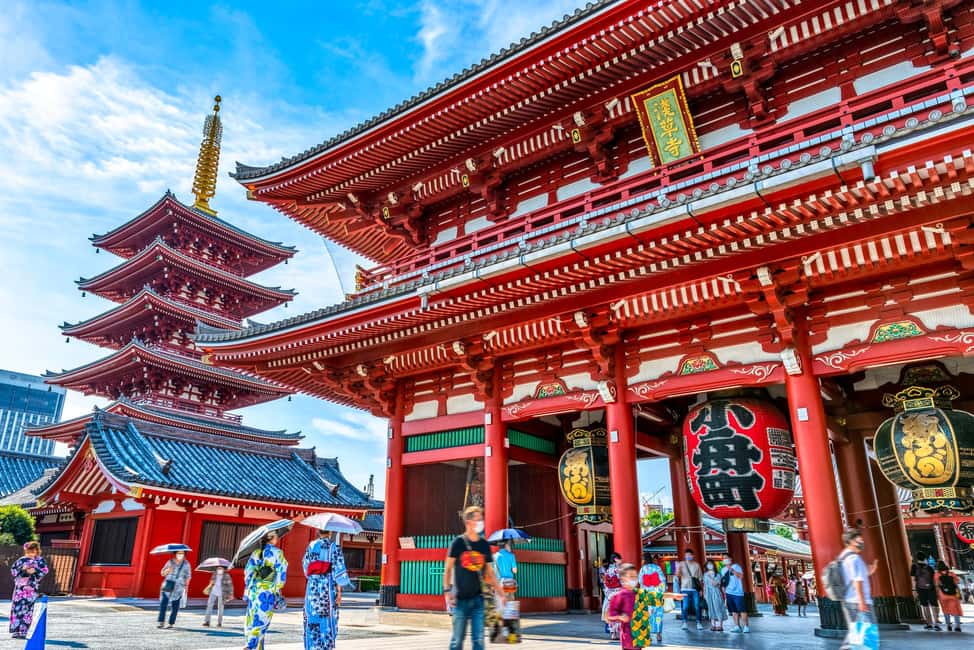
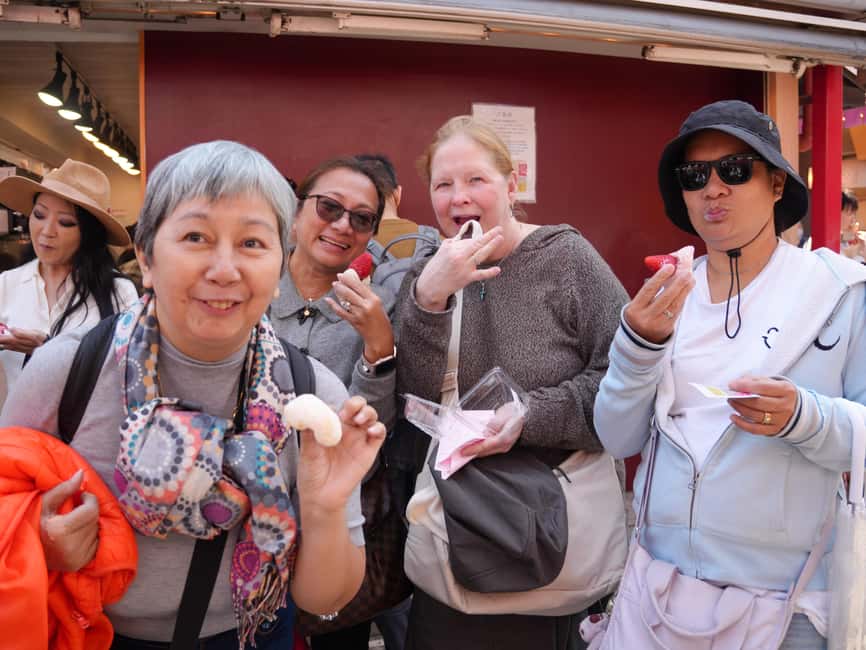
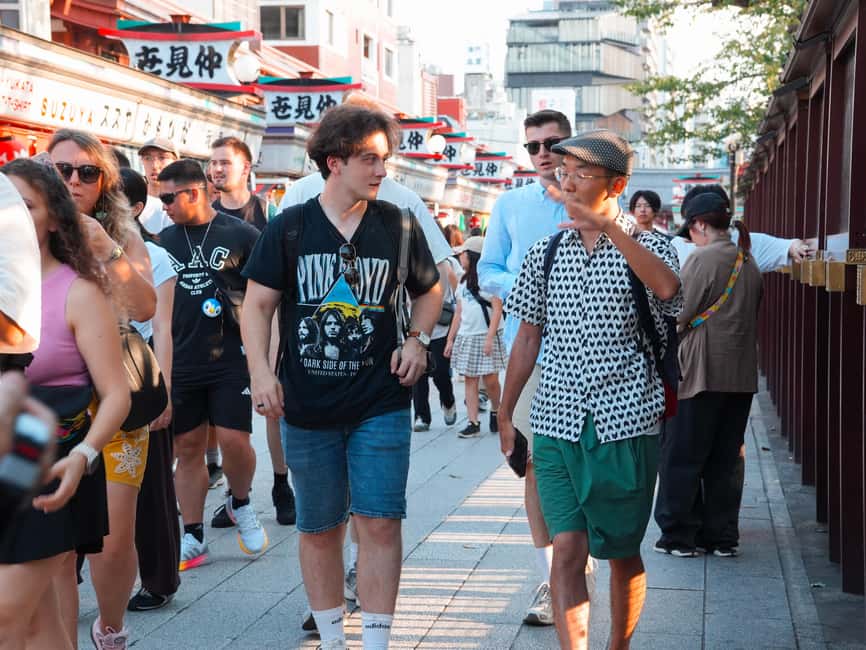
The first major stop is Nakamise Shopping Street, and the best way to understand Nakamise is that it’s part market, part stage. You’ll be surrounded by rows of shops built for browsing, with the smell of street food and sweets in the air. Even if you don’t buy much, you’ll feel the “this is how people live near a temple” vibe.
This is also where you’ll likely do some of your simplest wins: quick photo moments, people-watching, and picking up small items you can actually carry home. The tour gives you about an hour here, which is enough time to walk the lane, not just sprint it.
Practical tip: plan for a snack strategy. Nakamise is the kind of street where it’s easy to overdo it early, then regret it later when you’re still hungry. If you want to sample, pick one savory and one sweet, then save room for a second bite later around the temple area.
And if you care about meaning, the guide can help you connect the dots between what you’re seeing and why the street exists in the first place. One review highlight you’ll likely appreciate is how some guides like Lax can explain the cultural and religious logic behind what visitors see as just “shops and crowds.” That kind of framing turns a shopping street into a cultural snapshot.
Sensō-ji Temple: the iconic gate, the big sights, and why the stories matter
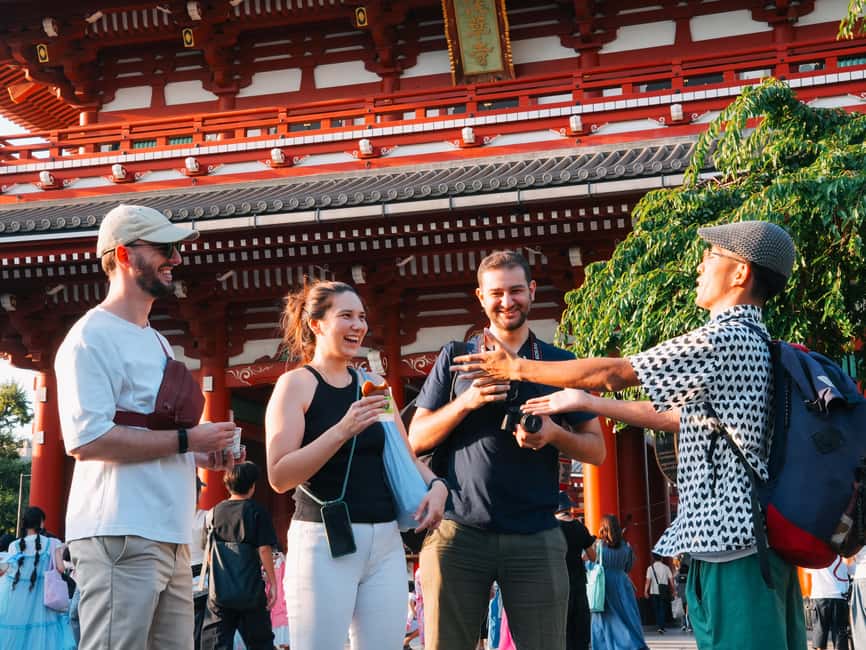
Next comes Senso-ji, Tokyo’s oldest and most celebrated temple. You get both a photo stop and time to visit, plus more room for browsing around the temple area. For most people, Senso-ji is the moment the tour becomes more than a walk. It’s where the scale, the symbolism, and the visual details start to land.
Even if you’ve seen temple photos before, standing in the area changes things. The architecture and the movement of people create a different kind of “read” than a screen does. The tour’s pacing helps you slow down just enough to notice details, then catch the angles you’ll actually want later.
What really makes this part work is how the guide handles legends and everyday temple life. The tour focuses on the temple’s deep background—starting from the fact that Senso-ji dates back to the 7th century—and then ties that timeline to Asakusa’s changing role over time. You might hear stories about geisha quarters, shrines tucked into the neighborhood, and how the area shifted through different eras.
That’s useful because temples in Tokyo aren’t just monuments; they’re part of a living city. A guided explanation can help you spot why certain things feel “serious” to locals, even when the streets around them are playful and snack-focused.
Practical tip: if you want photos, don’t wait until the busiest moment. Use your guide’s pauses for the best angles, then step aside to let crowds pass. The tour’s structure gives you built-in moments to do that without you having to figure it all out on the fly.
Asakusa after the temple front: time for the neighborhood, not just the postcard
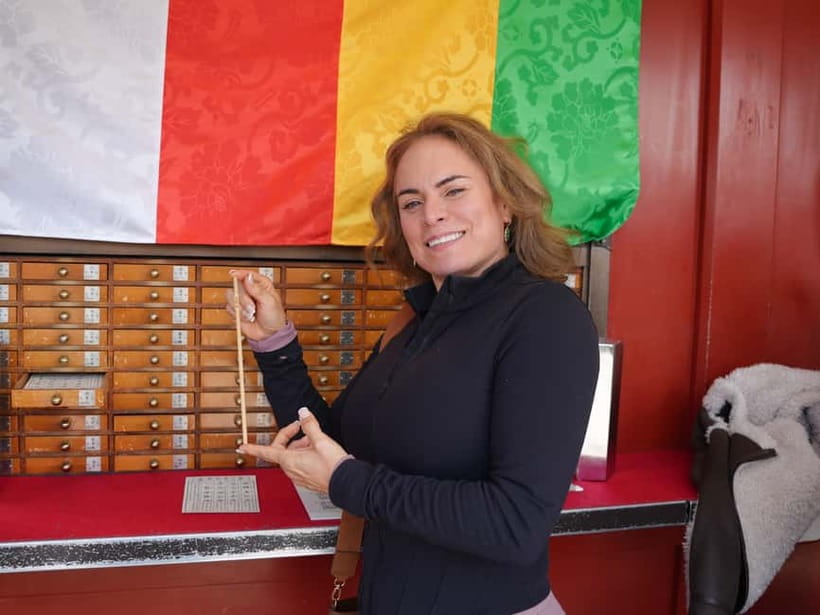
The last stretch is Asakusa, with about 80 minutes for the neighborhood portion. This is where the tour earns its keep for people who don’t just want the headline temple experience. Instead of leaving right after the main sight, you stay long enough to feel the area as a district.
Asakusa still carries echoes of its older identity, and the tour aims to show that transition: how the neighborhood moved from older strongholds and Edo-era life into a post-war revival—and how those layers are still visible when you slow down and look.
This part is also where a good guide can point you toward smaller, less-obvious sights—like tucked-away shrines or side streets that feel like the real neighborhood. The descriptions for this tour highlight that you won’t only get the famous stops. You should get a more intimate look at local traditions, even within a short 2-hour window.
Practical tip: wear shoes you can trust. Asakusa is flat-ish, but it’s still a lot of sidewalk and curb navigation. If you’re wearing fashion sneakers, keep an eye on traction, especially if the ground is slick or crowded.
Price and value: why $11 can make sense here
The price is listed at $11 per person, and for a short guided experience, that’s a standout figure. What helps is what’s included: you get a guide, a walking tour, and admission that’s listed for Senso-ji and the areas named Asakusa and Nakamise Shopping Street.
There’s no hotel pickup or drop-off, so you’re responsible for getting to Kaminari-mon on your own. But if you’re already staying in or near central Tokyo, the meeting point setup keeps things simple.
Small group also adds to the value. With a limit of 10 participants, you’re more likely to feel like you’re part of a group rather than being herded. That can matter a lot for photos, since temple-front crowds can make group navigation messy fast.
In plain terms: if you want a guided “starter course” to Asakusa that covers the key sights without overpaying for a long tour, this price makes it easy to justify.



Who the guides are like: Lax, Shoma, and what style you should expect
The guide factor is a major reason this tour scores well. You’ll see names like Lax and Shoma associated with standout experiences. The strongest praise points are consistent: guides who are friendly, clear in English, and passionate about explaining how Japan’s culture and religion connect to what you see on the street.
One theme I’d take seriously: since the tour concentrates on one area, the storytelling needs to do more than point and walk. When a guide is able to turn facts into a conversation, the two hours feel like more than a route. When the pacing is less story-forward, the tour can feel more like “here’s the place, next place.”
So if you’re booking and you really want the narrative side, come with one or two questions you’d like answered. For example: what people do at a temple, why specific symbols matter, or how Asakusa changed over time. A good guide will use your questions to connect dots.
Timing: a 2-hour walk that works for busy Tokyo days
A 2-hour duration is a sweet spot. It gives you enough time to do the iconic temple front, walk a meaningful stretch of Nakamise, and then get a neighborhood feel in Asakusa without wiping out your whole afternoon.
This makes it a good fit if:
- You’re in Tokyo for a limited number of days.
- You want your first taste of traditional Tokyo in an easy, guided format.
- You’re planning another activity later and don’t want a long tour schedule.
It can be less ideal if:
- You prefer slow, unstructured wandering with no checkpoints.
- You’re hoping to cover multiple major districts in one go.
Getting the most out of it: small moves that change the whole experience
Here are a few ways to make your two hours feel richer.
First, come hungry, but not reckless. Nakamise is built for sampling. If you want to try snacks, pick a couple and keep going. You’ll get more from browsing when you’re not weighed down by early over-ordering.
Second, plan your photos with your guide’s rhythm. The tour includes photo-worthy moments around the gate and temple area. If you run ahead, you may miss the explanation that tells you what you’re looking at. If you lag too far behind, you’ll end up repeating steps and losing time.
Third, ask at least one question about something you notice. Maybe it’s a custom you see people doing at the temple. Maybe it’s how street shopping connects to the religious setting. A guide like Lax or Shoma (based on the patterns of feedback) tends to answer well because the questions give them a chance to tailor the story.
Should you book this walking tour of Asakusa and Senso-ji?
If you want the quickest route to seeing Tokyo’s temple classic plus the Asakusa neighborhood around it, this tour is easy to recommend. The price is low enough that the risk feels small, and the structure is tight: you get a guide, key stops, and time to walk, shop a little, and take photos.
I’d especially book it if you:
- Like history told through real places (not just dates).
- Want a small-group setup with an English-speaking guide.
- Need help understanding what you’re looking at, especially around temple customs.
I’d think twice if:
- You want a tour that spreads across multiple districts.
- You’re expecting a lot of variety beyond Asakusa itself.
- You strongly prefer solo wandering over guided pacing.
Overall, this is a practical, value-minded way to connect with Asakusa’s old-world atmosphere—starting right where the action begins at 雷門交番 and finishing with a better sense of how this neighborhood fits into Tokyo’s bigger story.
FAQ
Where does the tour meet?
You meet at KAMINARIMON POLICE STATION (雷門交番).
How long is the tour?
The tour lasts 2 hours.
How big is the group?
The group is small, limited to 10 participants.
What language is the guide?
The live tour guide speaks English.
What stops are included?
You’ll cover Nakamise Shopping Street, Senso-ji Temple, and time in Asakusa.
Is temple or area admission included?
Yes. The price includes admission listed for Senso-ji and the areas named Asakusa and Nakamise Shopping Street.
Is hotel pickup or drop-off included?
No. Hotel pickup and drop-off are not included.
Can I cancel, and is payment flexible?
You can cancel up to 24 hours in advance for a full refund, and there is a reserve now & pay later option.