REVIEW · TOKYO
Private Tokyo Tour with Local Guide
Book on Viator →Operated by ABU · Bookable on Viator
Tokyo feels less chaotic with help. This private Tokyo tour is built for smart routing: you cover major sights across multiple neighborhoods without spending half your day figuring out which train goes where. I like the flexible start time (you pick when the tour begins), and I also like how the guide angle tends to focus on meaning, not just photos and checklists.
One thing to consider: this is a walking + subway day. Depending on the pace your guide sets and the group size, you may end up covering a fair distance, so comfortable shoes matter.
In This Review
- Key things that make this tour worth your time
- Why this private Tokyo plan beats getting lost on your own
- Tsukiji Fish Market: early energy and a food-focused start
- Asakusa’s big trio: Nakamise Street, Kaminarimon, and Senso-ji
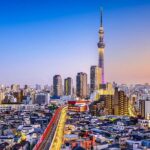
- Sumida River Side Park: a calm reset with Tokyo Skytree views
- Ueno Park and Ameyoko: culture space then street shopping
- Akihabara: electronics and anime culture, without getting lost in the noise
- How the public-transport piece actually helps (and why pickup matters)
- Price and what’s included versus what you’ll still pay
- The pacing reality: walking can be part of the deal
- Who this tour suits best (and who might want a different style)
- Should you book this private Tokyo tour with a local guide?
- FAQ
- How long is the private Tokyo tour?
- What does the $130 price include?
- Is pickup included, and how does it work?
- Is lunch included?
- Which stops are on the itinerary?
- Are any tickets included?
- Is the tour really private?
- Can I choose when the tour starts?
Key things that make this tour worth your time
- Private, not group-rushed: you decide the start time, and it’s only your group.
- Public transportation included: you learn the routes while someone handles the tricky transfers.
- Tsukiji early-morning feel: you start early to catch the market’s fast-paced atmosphere.
- Asakusa set up to make sense: Kaminarimon and Nakamise Shopping Street connect you directly to Senso-ji.
- Ueno + shopping contrast: Ueno Park adds cultural space, while Ameyoko and Akihabara swing you back to street-and-store energy.
- Guides are a big part of the value: names like Maruf, Abu, and Amir show up with consistent praise for clear English and context.
Why this private Tokyo plan beats getting lost on your own
Tokyo is easy to love and easy to misunderstand at the same time. The main win here is simple: you get a guide who helps you move through major districts in a fixed window of time, instead of wandering and guessing.
Because it’s private, you’re not stuck behind a fast-moving group or waiting for someone who wants to window-shop at every corner. You can set the tone: slower if you want photos, faster if you want more train stations conquered. And with public transport included, you’re not paying extra to hop between neighborhoods.
You can also read our reviews of more guided tours in Tokyo

Tsukiji Fish Market: early energy and a food-focused start
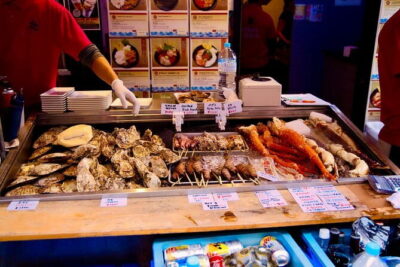
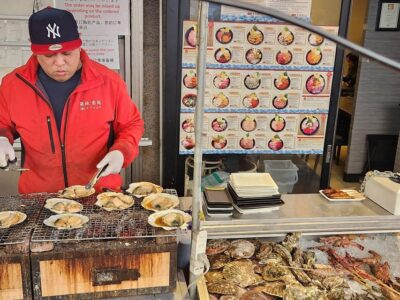
The day begins at Tsukiji Fish Market, with the emphasis on the early hours. The idea is to meet the market at a time when it feels active and purposeful, not like a sleepy stroll.
This is a good first stop because it sets up your Tokyo day as a mix of food culture and street-level life, rather than starting with temples and saving food for later. If you’re the kind of person who wants your first Tokyo morning to feel like a real local routine, this is the start point that usually delivers.
Practical tip: arrive ready for crowds and quick movement. Even with a guide, market areas can get tight as people pass through stalls and walkways.
Asakusa’s big trio: Nakamise Street, Kaminarimon, and Senso-ji
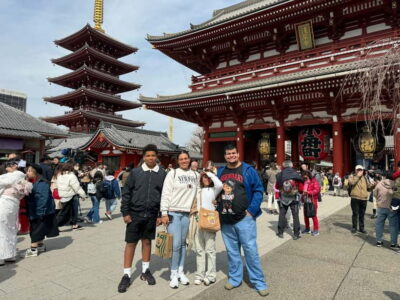
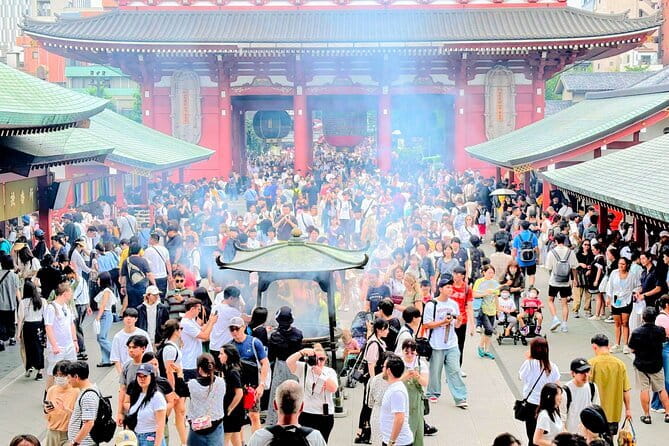
After Tsukiji, the route shifts to Asakusa, where the walking gets more story-driven. You go to Nakamise Shopping Street (from the Kaminarimon area) first, then you hit the Kaminarimon Gate, and then you reach Senso-ji Temple.
Here’s what makes this sequence work:
- Nakamise Street acts like a corridor of old-school shopping and snacks right up to the temple grounds.
- Kaminarimon is the classic landmark that tells you you’re at the right doorstep.
- Senso-ji is the spiritual center you can spend a bit more time at once you’ve found your way through the lively approach.
Your time at each stop is planned (around 10–20 minutes at the gate/streets and 20 minutes at Senso-ji). That’s enough to see what’s going on without turning the day into a long temple marathon.
Reality check: if you expect quiet, this isn’t that kind of stop. It’s popular and it’s crowded, so plan on taking your photos quickly and focusing on the walk-through experience.
Sumida River Side Park: a calm reset with Tokyo Skytree views
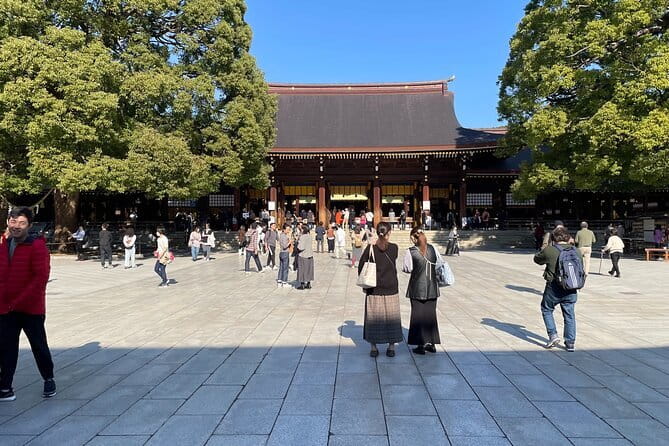
Between the shopping and the more concentrated city scenes, you get a breather at Sumida River Side Park. This stop is all about slowing down and getting outdoor perspective, especially with those views of Tokyo Skytree.
I like this kind of mid-route pause. Tokyo can feel like one long line of streets and stations, and a riverfront break helps you reset before the next shopping-heavy districts.
It’s also a useful strategy for keeping your energy up for the afternoon. If you’re the type who gets tired after a lot of walking, this is one of the spots that makes the overall route feel manageable.
Ueno Park and Ameyoko: culture space then street shopping
From Sumida, the tour shifts to Ueno. You’ll visit Ameyoko Shopping Street and then Ueno Park.
Ameyoko is described as a lively marketplace with a history tied to a post–World War II black market setup that evolved into what you see today. The point of including Ameyoko is that it adds street shopping texture to the day: you’re not only looking at landmarks, you’re also seeing how Tokyo people browse and snack and haggle their attention.
Ueno Park, on the other hand, is presented as a big urban green zone that covers over 130 acres and connects to cultural attractions like museums, temples, and gardens. The contrast is smart. You get a market lane vibe in Ameyoko, then you step into a larger cultural space where the pace feels more spread out.
Tip: if you’re trying to keep your day easy on your feet, you’ll feel better planning a slower walk through Ueno Park rather than pushing it like a race. This part of the route is the best time to adjust your pace to your energy level.
You can also read our reviews of more private tours in Tokyo

Akihabara: electronics and anime culture, without getting lost in the noise
The last major neighborhood stop is Akihabara, Tokyo’s go-to area for electronics and anime/otaku culture. The tour positions it as a district lined with countless electronics shops, so you’re not just passing by—you’re spending time in the place where that obsession culture is the main event.
This is a great ending stop because Akihabara rewards casual browsing. Even if you’re not hunting for anything specific, the area is built for people who like to look, compare, and wander.
What to expect: you’ll likely be surrounded by crowds and storefront displays. That’s exactly where having a guide helps, since they can point out where to head next so you’re not zigzagging randomly.
How the public-transport piece actually helps (and why pickup matters)
This experience includes public transportation and offers pickup with public transit. The real value isn’t just convenience. It’s that you get help using Tokyo’s subway and rail systems in a practical way, so you’re not stuck staring at station maps while everyone else moves.
One of the strongest themes from guide praise is how much they help people understand the subway quickly. In particular, guides like Maruf and Abu have been highlighted for clear English and for making the route feel doable on day one. That matters because Tokyo’s station signage and transfer patterns can feel intimidating until you’ve seen it once with a plan.
Also, this tour is private, so your guide can adjust based on how you’re doing with the walking, and whether you need extra time to regroup before a transfer.
Price and what’s included versus what you’ll still pay
The price is $130 per person for a 4 to 5 hour private tour. That’s not cheap compared to group options, but it can be good value when you look at what’s included: a local guide, public transportation, and pickup using public transport.
You still cover some costs. The tour does not include lunch, private transportation, and tickets for Tokyo Sky Tree or TeamLab Planet/TeamLab Borderless. So if you’re hoping to add those extras during the tour window, budget for them separately.
On admissions, the itinerary notes that Nakamise Shopping Street and Kaminarimon Gate include admission ticket coverage, while Senso-ji Temple is listed as free. That matters because it helps avoid surprise add-ons in the middle of your day.
My take on value: if you’re spending your first day in Tokyo trying to “find your bearings,” this can be money well spent. If you already have the subway figured out and you’re happy building your own route, it may feel pricey for what you could replicate solo.
The pacing reality: walking can be part of the deal
This is a 4 to 5 hour experience, and it includes multiple stops across distinct neighborhoods. The route is designed for movement, not long sit-down breaks.
Some guide runs have involved around 5 miles of walking for at least one couple. That’s not guaranteed for every schedule, but it’s a strong hint about what your feet should prepare for. If you’re visiting with mobility limitations, you’ll want to ask your guide about pacing and whether you can minimize walking between stops.
In general, wear comfortable shoes and plan to hydrate. Tokyo weather can change fast, and no tour magic cancels that out.
Who this tour suits best (and who might want a different style)
This tour fits best if you want a first-day structure and you like the idea of learning how to move around Tokyo while doing it. It also suits people who like variety: market morning, temple approach, river views, a park/culture stop, then electronics and anime shopping.
It can be especially good for groups with mixed interests, because a private guide can generally shift emphasis. In the notes for this experience, guides such as Erica and Amir have been praised for tailoring and for staying responsive to needs, including families with kids.
If you’re the type who hates walking and prefers slow, long museum time, you might feel pressed by the multi-neighborhood format. In that case, you may prefer a single-area deep focus tour instead of a “see a lot” route.
Should you book this private Tokyo tour with a local guide?
Book it if:
- You want a clear plan for a half-day that strings together iconic areas in a sensible order.
- You care about more than landmarks and want context as you walk.
- You’d rather learn the subway once with help than get stuck figuring it out on your own.
Skip or reconsider if:
- You hate walking days or need minimal transit and minimal foot travel.
- You expect car-based touring. This experience is built around public transportation, not private driving.
- You’re only looking for one neighborhood and don’t need the cross-town structure.
If you want Tokyo to feel understandable by the end of the day, this tour is one of the more direct ways to get there.
FAQ
How long is the private Tokyo tour?
It runs about 4 to 5 hours.
What does the $130 price include?
You get a local guide, public transportation, and pickup with public transportation.
Is pickup included, and how does it work?
Pickup is offered, specifically with public transportation.
Is lunch included?
No. Lunch is not included.
Which stops are on the itinerary?
The route includes Tsukiji Fish Market, Nakamise Shopping Street (Kaminarimon), Kaminarimon Gate, Senso-ji Temple, Sumida River Side Park, Ameyoko Shopping Street, Ueno Park, and Akihabara.
Are any tickets included?
Nakamise Shopping Street and Kaminarimon Gate are listed as having admission ticket included. Senso-ji Temple is listed as free. Tickets for Tokyo Sky Tree and TeamLab Planet/TeamLab Borderless are not included.
Is the tour really private?
Yes. It’s a private tour/activity, and only your group participates.
Can I choose when the tour starts?
Yes. Unlike group tours, you decide the tour start time.