REVIEW · TOKYO
Tokyo’s Authentic and Finest Taiko Drumming Experience
Book on GetYourGuide →Operated by Eva Kestner · Bookable on GetYourGuide
Taiko has a way of jolting you awake. In a 90-minute studio workshop in central Tokyo, Eva Kestner teaches you taiko basics in English and Japanese, then moves you into a real traditional-and-contemporary drumming piece with a performance moment. I love how the class mixes technique with meaning, not just noise, and I love that you leave with a personalized practice video to replay and tighten your form. One possible drawback: this is physical work, so plan on sore arms and some real sweat.
The drums and sticks are provided, and you do the whole thing without prior experience. Meeting points can vary by booking option, and for larger groups the studio is about 20 minutes from Shibuya by train. It is not a passive cultural show, so if you want hands-on rhythm training, this is the kind of class that actually sticks with you.
In This Review
- Key Things That Make This Taiko Workshop Worth Your Time
- Why This Taiko Lesson Hits Different in Central Tokyo
- Meet Eva Kestner: Credentials You Can Feel in the Teaching
- The 90-Minute Workshop Flow, Step by Step
- Foundation Training: Grip, Stance, and Control
- Rhythm Drills That Turn Chaos into Timing
- Traditional Meets Contemporary: The Piece You Perform
- The Instructor’s Performance and the Cultural Story
- Your Personalized Video: Take-Home Proof and Practice
- Price and Value at $120 for a 90-Minute Session
- Who Should Book, and Who Might Want Another Activity
- Before You Go: What to Wear and How to Plan
- Should You Book This Taiko Drumming Workshop in Tokyo?
- FAQ
- How long is the taiko drumming workshop?
- What does the $120 per person price include?
- Do I need any prior taiko experience?
- What languages is the workshop taught in?
- What should I wear or bring?
- Is there a demonstration performance during the workshop?
- Do I get any recording of my playing?
- Where is the meeting point?
- Can I book a private group?
- What is the cancellation policy?
Key Things That Make This Taiko Workshop Worth Your Time
- Eva Kestner’s teaching pedigree: founder and first musical director of Cornell University’s Taiko Drumming group, plus awards from the Tokyo University of the Arts New Artists Competition
- 90 minutes of structured training: foundation technique, then rhythm drills, then learning a performance piece
- Traditional plus contemporary material: you practice a composition with both heritage and present-day energy
- You take something home: a personalized video of your playing, meant for review and practice
- A real instructor demonstration: you see how the beats and movement come together, not just how to hold sticks
- A workout disguised as culture: expect arms, shoulders, and stamina to get a workout
Why This Taiko Lesson Hits Different in Central Tokyo
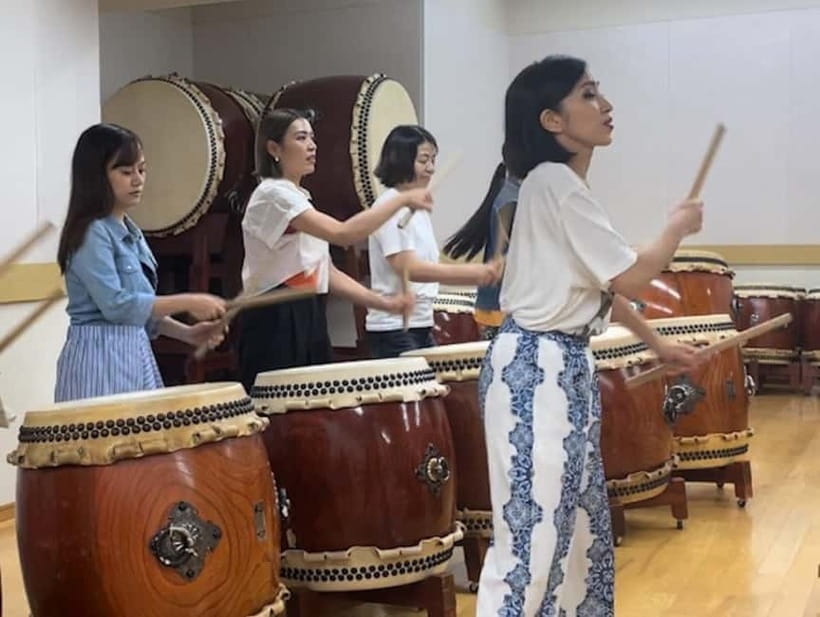
A lot of Tokyo experiences give you a quick taste and then move on. This one is different because the core goal is skill, rhythm, and coordination, not just photos. The room becomes a practice space where you go from basics to performing in one session.
What makes it feel authentic is the way the class ties movement to sound. You learn that taiko is not only about striking a drum head, it is about posture, timing, and energy you can feel in your body. If you like hands-on learning, this format is satisfying: you are doing the work the whole time.
And yes, it can feel athletic. Multiple sessions emphasize how you will likely sweat, and I think that is the trade-off: the best rhythm lessons are physical because your body has to learn the pattern.
You can also read our reviews of more tours and experiences in Tokyo.



Meet Eva Kestner: Credentials You Can Feel in the Teaching
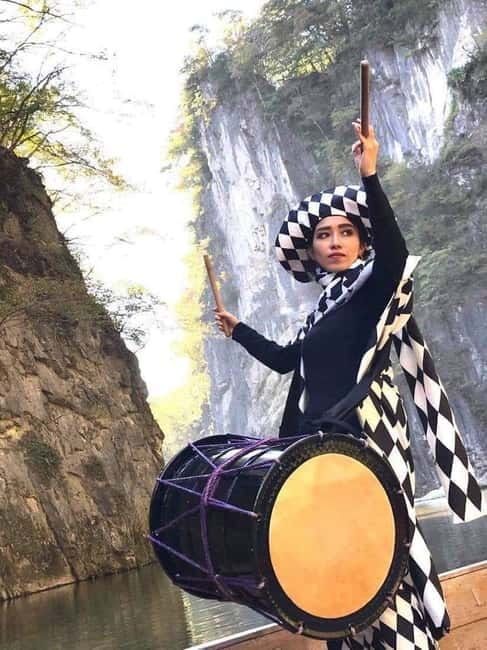
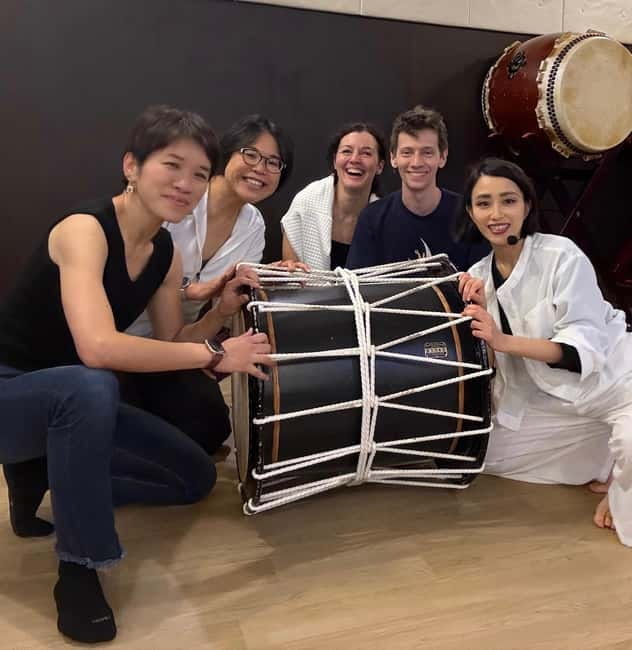
Eva Kestner is not just a performer who happens to teach. She is a professional taiko drummer with a track record that goes beyond Japan, including her role with Cornell University’s Taiko Drumming group as founder and first musical director. She has also received an excellence award from the Tokyo University of the Arts New Artists Competition.
That matters because it shapes how she teaches. When an instructor has both performance and organization experience, your practice moves faster without turning into chaos. You get clear instruction in English (and Japanese support), plus pacing that keeps you progressing through the session rather than stuck at the beginner stage.
Her original music being published by Harper Collins and Cambridge International Curriculum also signals something practical: she understands how to build learning materials. In class, that often translates into a structure you can follow even if you are new to taiko.
The 90-Minute Workshop Flow, Step by Step
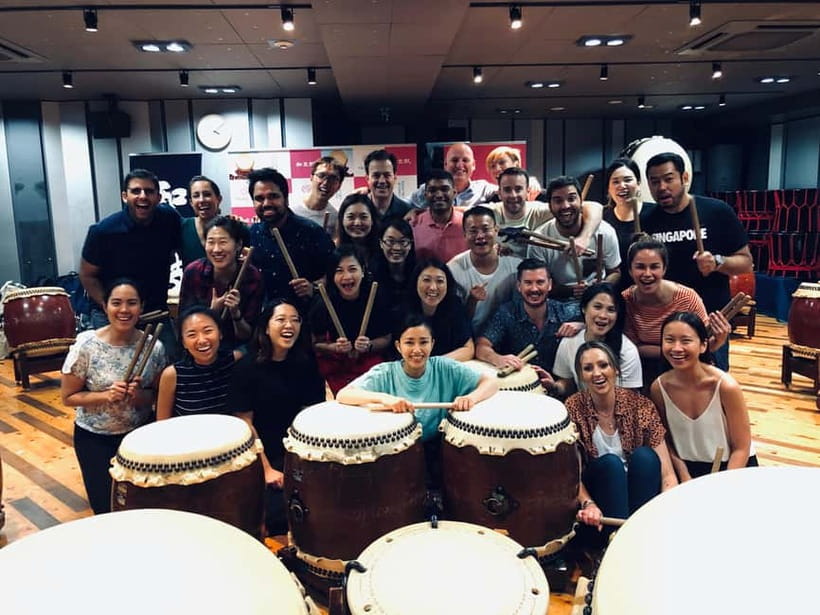
The class runs for 90 minutes, and the schedule is built so you do not spend all your time on warmups. You start with meeting Eva and a short history framing of taiko drumming and its role in Japanese culture. It is brief, but it gives you a reason to care about what you are learning.
Then the session shifts into hands-on training:
- Foundation training focuses on basic technique and how you hold the drumsticks.
- Rhythm training helps you internalize timing, accents, and coordinated hits.
- You then learn a traditional and contemporary taiko drumming piece, with a performance built into the end of the workshop.
Some classes also include pairing moments where your rhythm and movement connect with another person’s part. That is one of the reasons this feels like more than a single-beat demo: you practice interaction, not only solo motion.
At the end, you get to watch Eva demonstrate, then you leave with your personalized video of your drumming. That video is not just a souvenir; it is a reference you can use while your muscle memory is forming.
Foundation Training: Grip, Stance, and Control
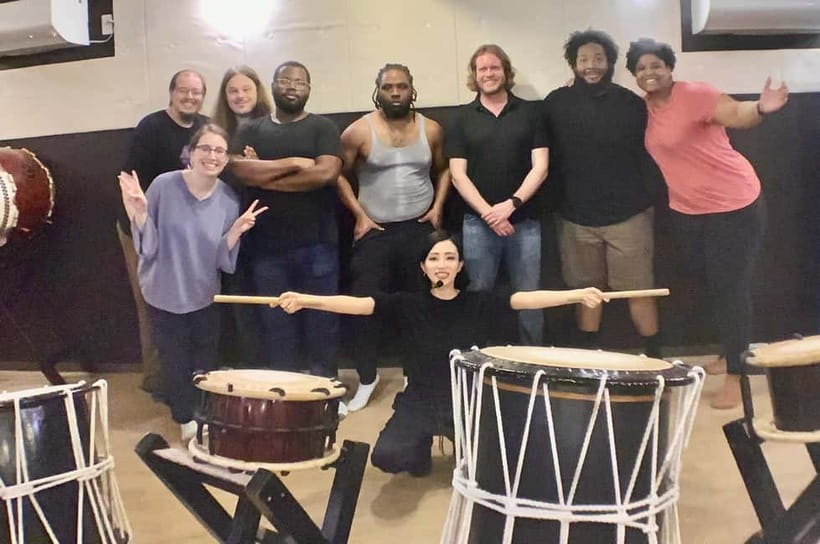
The foundation part is where your experience either becomes fun fast or turns frustrating. Here, the emphasis is on getting your stick position and your body setup right so your hits land with control. You will go over how to hold the sticks and how to manage the basic mechanics so the patterns feel learnable.
This is also where the class starts to feel more like training than entertainment. You learn what to do with your arms and shoulders, and you begin understanding why posture matters in taiko. A lot of people expect it to be simple striking, but the best results come from form.
One useful tip from the vibe of the class: wear clothing that lets you move freely. If you are restricted by fit, the technique feels harder than it needs to be. You are also advised to bring water, since the session can run warm.
Rhythm Drills That Turn Chaos into Timing
After your grip and stance are set, you move into rhythm training. This is where most of the learning happens, because rhythm is the real language of taiko. You practice different beat patterns, then layer them into the piece you will perform.
The goal is not perfection; it is clarity. You learn to recognize accents and how your timing affects the overall sound. When multiple parts click, even if you are still new, the rhythm feels powerful in a way you cannot get from listening alone.
In several sessions, people described moving through rhythms quickly in a high-energy format. That sounds intense, but it also explains why the workshop can feel like it packs a lot in. You are not trapped repeating one pattern for most of the class—you build momentum.
And yes, this is often tiring. If you are used to walking tours and gentle museum time, taiko can hit your stamina in a hurry. That fatigue is part of why the learning sticks: your body registers the rhythm through physical effort.





Traditional Meets Contemporary: The Piece You Perform
The workshop includes learning a piece that blends traditional taiko structure with contemporary emphasis. Your instructor teaches it in a way that makes the music feel real, not like a simplified classroom exercise.
A common theme in the sessions is learning a composition with regional origins near Tokyo, including a traditional piece associated with Miyake Island. If your class chooses that kind of selection, you will likely work with two types of drums and practice different approaches to the beats.
You also may practice performance elements like switching roles or coordinating movement and sound. Some participants noted a paired performance where each person alternated or connected parts through timing and pose. Even if you are new, it is easier when the instructor breaks the music into doable steps.
The best part is finishing with a sense of completion. By the end, you are not just learning a rhythm to copy. You are performing a portion of a genuine composition, which gives the whole session meaning.
The Instructor’s Performance and the Cultural Story
Before you start drumming, you get a brief history explanation. The workshop frames taiko as more than percussion, tied to Japanese culture and a wider tradition of music and performance. That matters because it prevents the class from becoming purely mechanical.
Then Eva demonstrates, so you can see how technique and musical intent line up. Watching a skilled taiko player from the inside out is one of those rare moments where you understand what you were trying to imitate during training. Your instructor’s energy and clarity make the performance feel educational rather than just loud.
If you care about cultural context, you will also appreciate how the piece selection is treated as music with roots, not as random beats. In taiko, style and form are not extras. They are the difference between hitting a drum and playing taiko.
Your Personalized Video: Take-Home Proof and Practice
One of the most practical takeaways is the personalized video of you playing. This is included, and it changes the value of the experience in a big way.
Instead of relying on memory, you can watch how your grip looks, how your timing lands, and where your posture shifts when you get tired. That is useful because in the moment, you are focused on doing your part, not evaluating technique.
Some sessions include a private video link format, which makes it easy to return to your practice later. I like this because it turns the workshop into a mini-training cycle. You learn once in the studio, then keep polishing at home.
If you are worried you will forget everything you learn in one session, this solves that problem.
Price and Value at $120 for a 90-Minute Session
At $120 per person, it is not the cheapest activity in Tokyo. But it is also not a quick stop.
You are paying for:
- a 90-minute, instructor-led skill-building workshop
- foundation and rhythm training, not just a show
- drums and sticks included
- a traditional-and-contemporary piece that you perform
- an instructor demonstration
- a take-home personalized video
In other words, you are buying coaching time and performance practice time, plus documentation for your own review. That is why the price can make sense for people who like active learning, group classes, or hands-on art forms.
If you only want a light cultural activity, it could feel pricey. But if you want something you can practice after, the video makes it more like an experience with a finish line.
Who Should Book, and Who Might Want Another Activity
This workshop fits best if you want an active cultural lesson. It is designed for beginners, so you do not need prior taiko experience. If you like workshops where you learn by doing, you will probably enjoy the structure and the fast progress.
It also works well for couples or families who want shared momentum. Several people described doing it with family members, and taiko can be a great bonding activity because everyone can contribute to the rhythm.
On the other hand, I would think twice if you dislike physical effort or do not like working in a warm room. The workout aspect is real, and people noted feeling exhausted or sore afterwards. If you have limited shoulder or arm stamina, you should consider whether this is the right style of activity for you.
Also, if you want a quiet sightseeing day, this will not match that mood. This is rhythm training where you move, hit, and focus.
Before You Go: What to Wear and How to Plan
Comfort matters here. The essentials are:
- wear comfortable clothing
- bring a water bottle
Based on how the room can feel, it helps to dress for movement. Many participants recommended being ready to sweat and noted the room getting warm. If you tend to overheat, shorts and breathable layers can make the difference.
You do not need to bring drums or sticks. They are provided, and the instructor takes care of the setup so you can focus on technique.
For timing, the session is 90 minutes. Starting times depend on availability, so pick a slot that fits your energy level. If you plan the next day as a walking-heavy day, you might want to schedule this earlier rather than right before long flights or big walking plans.
For group sizes over 20 people, the provider asks you to coordinate directly by email, so plan accordingly if you are organizing a larger group.
Should You Book This Taiko Drumming Workshop in Tokyo?
If you want a real taiko practice session taught by a pro, I think this is a strong choice. The class structure makes it beginner-friendly while still pushing you toward an actual performance piece. The personalized video adds real value because you can keep practicing long after you leave Japan.
I would skip it only if you hate physical workouts or want something passive. Taiko is rhythmic, energetic, and physical, and that is part of why it feels memorable.
If you are in central Tokyo and want an authentic, hands-on cultural activity with a take-home practice tool, booking this workshop is an easy yes.
FAQ
How long is the taiko drumming workshop?
The workshop lasts 90 minutes.
What does the $120 per person price include?
It includes the 90-minute taiko drumming workshop with foundation training, rhythm training, learning a traditional and contemporary taiko piece, an instructor demonstration, a brief history of taiko drumming, and a personalized video of you playing. Taiko drums and sticks are provided.
Do I need any prior taiko experience?
No prior experience is required.
What languages is the workshop taught in?
Eva teaches in English, with Japanese also available.
What should I wear or bring?
Bring comfortable clothing and a water bottle.
Is there a demonstration performance during the workshop?
Yes. You get a demonstration performance by Eva.
Do I get any recording of my playing?
Yes. After the workshop, you receive a personalized video of your playing to take home.
Where is the meeting point?
The meeting point may vary depending on the option booked. For large groups, the studio is about 20 minutes from Shibuya by train.
Can I book a private group?
Yes. Private group available.
What is the cancellation policy?
You can cancel up to 24 hours in advance for a full refund.