REVIEW · TOKYO
Tokyo: Guided Walking Tour of Tsukiji Market with Lunch
Book on GetYourGuide →Operated by True Japan Tour · Bookable on GetYourGuide
Tsukiji tastes better when you have a guide. You’ll start at Tsukiji Hongwanji Temple, then get led through the nine tastings that turn an overwhelming market into a clear, delicious route. I like how the tour connects what you eat to the local culture and religion around the temple area, and I love that you’re watching real wholesalers at work, not just shopping for souvenirs. One possible drawback: if you expect a full, heavy-on-food gourmet marathon, a 165-minute walk with set tastings may feel more “guided sampling” than “eat your way through.”
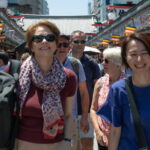
The best part is how the guide handles the street-level logistics of Tsukiji Outer Market. With True Japan Tour, guides such as Tomoko or Yumiko (and assistants like Sachiko) help you find the right stalls, keep the line-moving, and stay organized while you taste. You’ll do it in a small group (up to 10), with an English-speaking live guide, which makes asking questions and moving through tight lanes much easier.
In This Review
- Key things I’d bookmark before you go
- Tsukiji Hongwanji Temple: the cultural warm-up before you eat
- Tsukiji Outer Market lanes: seeing wholesale work up close
- Nine tastings for lunch: what you’ll actually eat and why it works
- How the guide turns a chaotic market into a clean route
- Price and value: is $113 for Tsukiji worth it?
- Getting ready: what to bring and how to pace yourself
- Who should book this Tsukiji walking tour
- Should you book this Tsukiji market tour?
- FAQ
- What’s the duration of the Tokyo Tsukiji Market guided walking tour with lunch?
- Where do I meet for the tour?
- How do I get there from Tsukiji Station?
- How many tastings are included?
- Is the tour in English?
- What’s the group size limit?
- Is the tour wheelchair accessible?
- FAQ
- Can I cancel for a full refund?
- Do I have to pay immediately to reserve a spot?
- What should I bring?
- Is the lunch included?
Key things I’d bookmark before you go
- Start at Tsukiji Hongwanji Temple so you understand why food and faith get talked about together here
- Nine tastings across seafood, beef skewers, omelette, sushi, dashi, and tea for a lunch you don’t have to plan
- Observe expert wholesalers as you walk past the real work side of the market
- Queue with support: guides help you order and line up, including practical help to stay tidy
- Small-group pacing that keeps you from getting lost or stuck waiting too long
Tsukiji Hongwanji Temple: the cultural warm-up before you eat

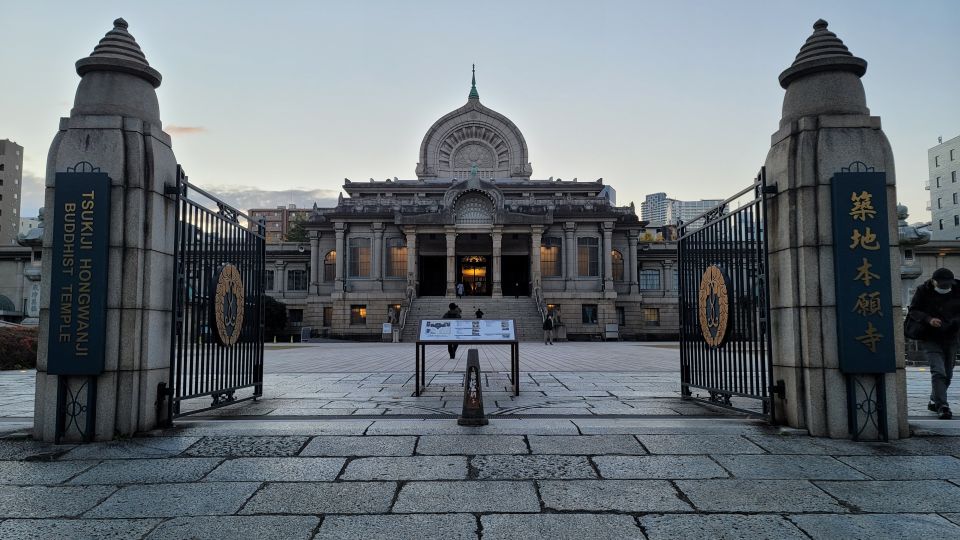
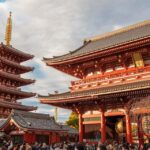
Your tour begins in front of Tsukiji Hongwanji Temple, right near Tsukiji Station (Hibiya Line), Exit A1. From there, it’s about a 50-meter walk to the temple entrance. This matters because Tsukiji can hit you fast: sights, smells, crowds, and sound all at once. Starting with the temple gives you a calmer first moment—and it sets the tone for the way your guide will explain the food.
The exterior is what you get here: an ancient look tied to Buddhist-inspired architecture, described as having an Indian-influenced feel. Even if you’re not deep into architectural history, I like this stop because it frames the rest of the experience. In Japan, food isn’t just fuel. It’s connected to routines, seasons, and religious ideas about purity and respect. Your guide also brings that thread into the market walk, so the tastings feel like part of a bigger picture instead of random bites.
Practical tip: don’t rush the temple moment. Use it to get oriented for what comes next—where the lanes open up, where crowds funnel, and how quickly you’ll move.
You can also read our reviews of more walking tours in Tokyo

Tsukiji Outer Market lanes: seeing wholesale work up close
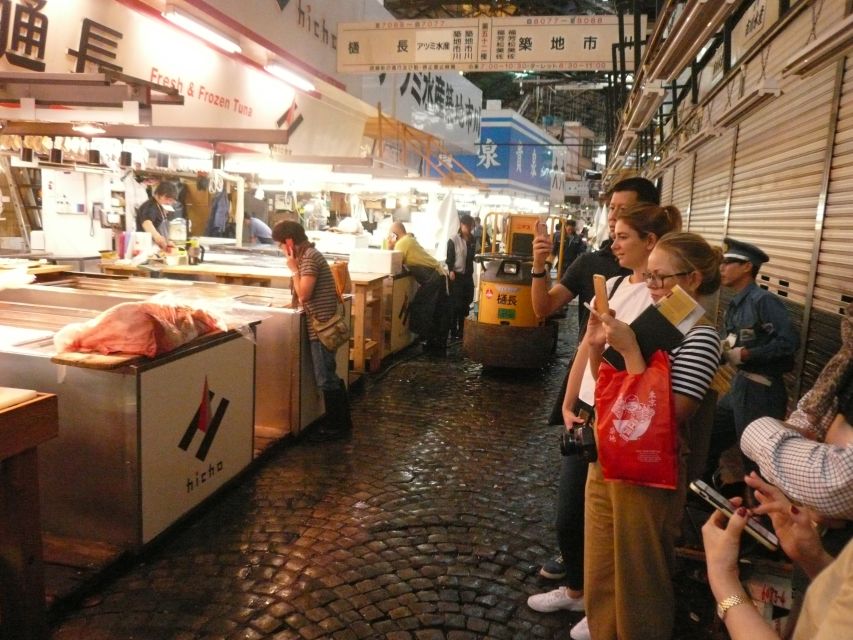
After the temple, you move into Tsukiji Outer Market, one of the largest wholesale fish market zones in the world—and a place food lovers love for a reason. This is the “outer” area, which means you’ll still feel the wholesale energy without needing special access. You’ll pass restaurants, shops, and stalls where vendors and workers do what they do all day.
The tour’s real value here is your guide’s line-of-sight and timing. Without help, Tsukiji can feel like sensory overload: too many options, too many smells, and no obvious way to know what’s worth tasting right now. With a guide, you’re walking a route that makes sense for the set tastings. You also get help reading the market vibe—who’s busy, what’s moving fast, and what’s likely to be fresh in the moment.
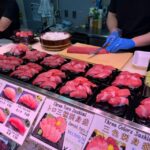
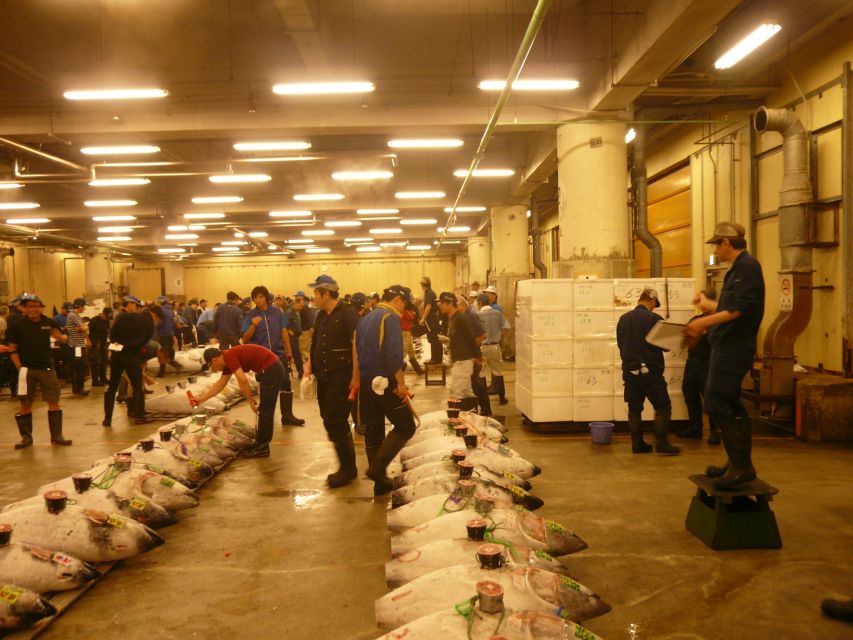
I also like that you’re observing wholesalers as you go. You’ll see expert workers handling product with speed and confidence, and you’ll notice the oddities too—unfamiliar cuts, unusual forms of fish and seafood products, and the way shops display items so they’re easy to inspect. It’s not just entertainment. It’s education you can see with your eyes.
One note: the tour covers a limited area and moves at walking speed. If you’re hoping to roam freely and browse without time pressure, you might find the route feels more “guided path” than “full explore.”
Nine tastings for lunch: what you’ll actually eat and why it works
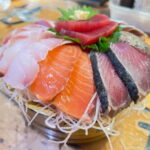
You’re tasting 9 local specialties over about 165 minutes. The spread is built to hit different categories of Japanese market food: grilled skewers, egg-based comfort food, sushi, fried fish-paste bites, rice fillings, and hot/cold drinks.
Here’s what your lunch includes:
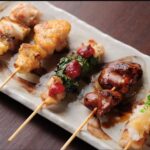
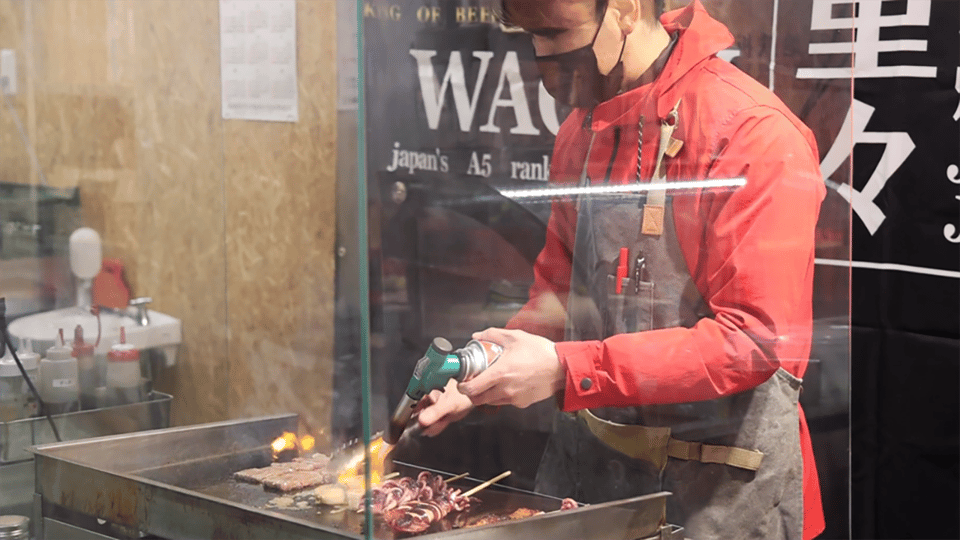
- grilled seafood or beef skewers
- wagyu beef
- a Japanese-style omelette
- tuna sushi
- fried fish paste skewers
- filled rice balls
- a dessert
- a drink
- a sample of Japanese tea
- a sample of dashi soup stock
Why this set works: it’s not only about tasting fish. You also get texture variety. Skewers give you char and salt. Omelette adds softness and egg richness. Sushi (especially tuna) gives you something cleaner and more “knife-and-fish” focused. Rice balls bring carbs and comfort, while dashi gives you a savory baseline so you can recognize flavors as the tour goes on.
Also, dashi is a sneaky win. You might think you’re just sipping something warm, but tasting it early helps you connect what you’re eating later—seafood flavors in Japanese food often trace back to broth-based foundations like dashi.
Food-expectation reality check: quality and presentation can vary by stall, and you’re sampling small portions. If you’re the kind of eater who wants one perfect, restaurant-grade set piece after another, this may not match your idea of a food-only tour. Still, as an introduction to Tsukiji-style flavors, it’s well structured.
How the guide turns a chaotic market into a clean route
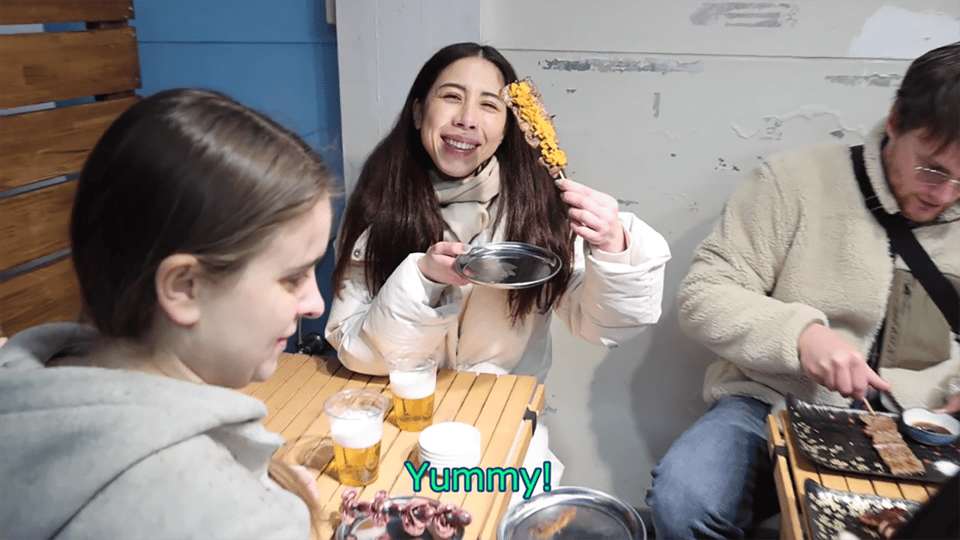
This is the part I’d consider the heart of the tour. Tsukiji Outer Market is not a place where most first-timers naturally know where to go and what to order. The guide handles that.
I’ve seen comments praising how guides keep things calm and organized. In particular, one experience highlighted that the guide didn’t just point you at stalls—she queued for people while the group explored nearby, and she brought food boxes and cleaning wipes to help you stay tidy while sampling. That kind of small help sounds basic, but it’s what keeps your hands-from-eating reality from ruining your walk.
The guide also shapes what you notice. You’re learning how Japanese culture and religion link to cuisine, but you’re also learning how wholesalers work—what products mean, why certain items get prepared a certain way, and how market sellers manage workflow while customers drift through.
What this means for you: you’ll spend less time guessing and more time eating and watching. You’ll also be able to ask simple questions in English without feeling like you’re interrupting someone’s job.
Small group benefits are practical, not just comfortable. With a maximum of 10 participants, you avoid that situation where you’re stuck behind a larger group that moves slowly or crowds the tastings.
Price and value: is $113 for Tsukiji worth it?
At $113 per person for about 165 minutes, you’re paying for four things:
1) an English-speaking live guide
2) nine tasting portions (plus tea, drink, dessert, and dashi sample)
3) route planning through a complex market
4) context: culture, religion, and how wholesale work connects to what you eat
If you were to do this on your own, you’d still have to solve the “what do I buy and where” problem. Tsukiji is famous, which means stalls can be busy and choices can be overwhelming. The guide reduces your decision load and increases your odds of tasting a good mix rather than accidentally buying the wrong thing or missing the best-prepared items at the moment.
That said, value depends on your taste expectations. Some feedback criticized the food as not matching a food-tour promise, especially when portions felt average or the route seemed small. In plain terms: if you want a long, heavy sampling binge with lots of freedom, this may disappoint. If you want a guided cultural food walk that includes a structured lunch set, it can feel like a good use of time.
My advice: think of it as a curated market introduction with lunch built in. Not as a limitless all-you-can-eat mission.
You can also read our reviews of more guided tours in Tokyo

Getting ready: what to bring and how to pace yourself
You’ll do a walking tour, and the market environment can be tight. Bring comfortable shoes and plan for lots of standing and short waits. This is the kind of experience where your feet matter more than your outfit.
Also, show up ready to move. The tour format means you’ll taste multiple items within the same window of time. If you’re the type who needs a long sit-down break between every bite, you may feel time pressure.
If you’re sensitive to strong fish smells or busy crowds, give yourself a moment at the temple start to reset your senses. The temple stop is small, but it can help you transition into the market energy without feeling instantly overwhelmed.
Who should book this Tsukiji walking tour
I think this tour fits best if you:
- want a guided entry into Tsukiji Outer Market instead of wandering blind
- like learning how Japanese food connects to everyday culture and religion
- enjoy variety rather than one or two “big ticket” meals
- prefer a small group pace (up to 10)
- want an English-speaking guide who can help you order and keep you on track
It’s less ideal if you:
- expect a long food festival feel with lots of optional stops
- are chasing top-tier tasting like you’d get from a dedicated high-end restaurant meal
- strongly dislike any guided structure and want total freedom
Should you book this Tsukiji market tour?
Yes, if you want a time-efficient way to experience Tsukiji with lunch included. The combination of starting at Tsukiji Hongwanji Temple, then walking through the wholesale-driven lanes with 9 tastings, is a practical route for first-timers who don’t want to spend their morning guessing.
I’d especially book it if you’re happy with tasting portions and you want cultural context, not only food. The small group size and the guide’s ability to handle queues and organization can make the difference between a fun walk and a frustrating scramble.
If you’re the strict type about food quality expecting restaurant-level excellence at every stop, readjust your expectations. This tour is built for sampling plus learning. It may not satisfy a person who wants an all-you-can-eat, big-flavor binge with maximum freedom.
FAQ
What’s the duration of the Tokyo Tsukiji Market guided walking tour with lunch?
The tour lasts 165 minutes.
Where do I meet for the tour?
Meet in front of Tsukiji Hongwanji Temple.
How do I get there from Tsukiji Station?
From Tsukiji Station on the Hibiya Line, take Exit A1 and turn left. The temple entrance is about 50 meters from the station.
How many tastings are included?
You’ll get tastings of 9 local specialties, including items like grilled skewers, omelette, tuna sushi, filled rice balls, dessert, drinks, Japanese tea, and a dashi soup stock sample.
Is the tour in English?
Yes, the live tour guide is English.
What’s the group size limit?
The group is limited to 10 participants.
Is the tour wheelchair accessible?
Yes, it’s wheelchair accessible.
FAQ
Can I cancel for a full refund?
Yes. You can cancel up to 24 hours in advance for a full refund.
Do I have to pay immediately to reserve a spot?
No. You can reserve now and pay later, so you pay nothing today.
What should I bring?
Wear comfortable shoes.
Is the lunch included?
Yes. The tour includes tasting of 9 local specialties that make up your lunch experience.