REVIEW · TOKYO
Tokyo: 7 Kinds of Sake Tasting with Japanese Food Pairings
Book on GetYourGuide →Operated by True Japan Tour · Bookable on GetYourGuide
Sake can taste like a meal. In Tokyo near Tokyo Tower, this 75-minute session lets you sample seven sake varieties and learn how food pairings change what you taste, with English guidance from instructors such as Tanaka-san and Taka-san. I also like that it covers the basics of how sake is made and how different styles are meant to be enjoyed, not just what to drink.
One thing to plan for: there’s no hotel pickup, and the meeting spot is inside the Kikai Shinko Kaikan building, so you’ll want a little extra time to find the exact entrance.
In This Review
- Key takeaways before you go
- Seven sake styles with food pairings that actually make sense
- What you’ll taste: from sparkling to dessert-style sake
- How the sommelier lessons fit into the tasting
- The multi-course meal: Japanese and Western pairings
- Duration and pacing: exactly long enough to learn without fatigue
- Price and value: is $106 worth it?
- Where to meet near Tokyo Tower (and why timing matters)
- Who this experience suits best
- Should you book this Tokyo sake-and-food tasting?
- FAQ
- How long is the sake and food tasting?
- What’s included in the price?
- Is the tour conducted in English?
- How many people are in the group?
- Where exactly is the meeting point?
- Is hotel pickup included?
- Is it wheelchair accessible?
- Who can join?
Key takeaways before you go
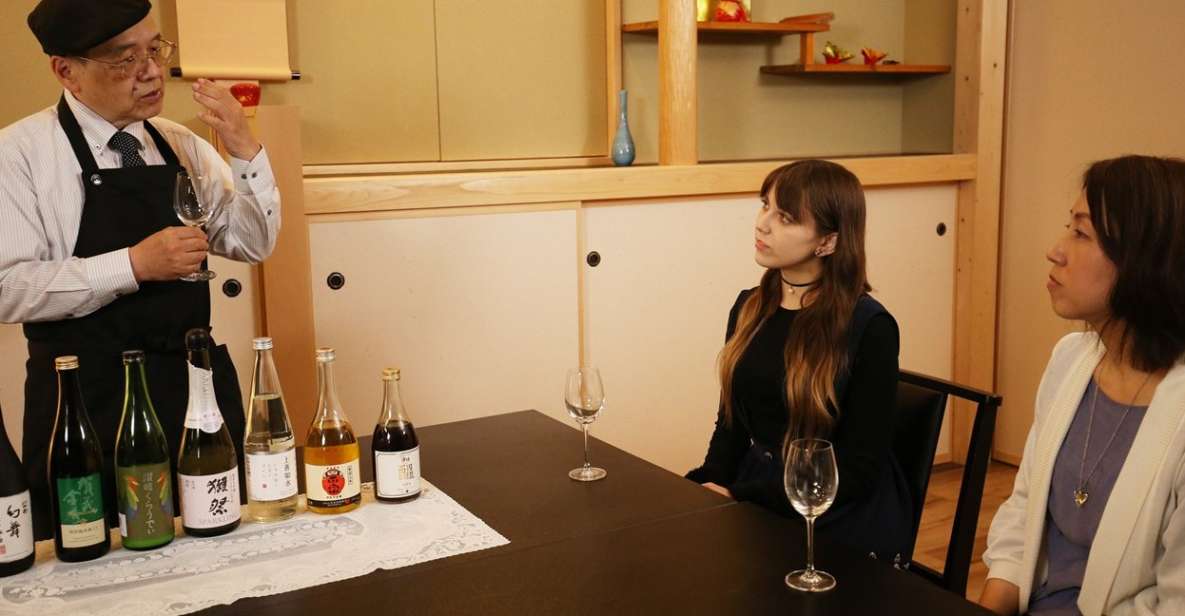
- Seven pours, one lesson: You taste a range from sparkling to sweet and end with dessert-style sake.
- Pairings that teach your palate: Each sake comes with a planned bite from both Japanese and Western foods.
- An English-accredited instructor leads the flow: You get history and production basics alongside the tastings.
- Small group feel: Max 10 participants means more Q&A and a calmer pace.
- Tokyo Tower area, but inside the building: Meeting instructions are specific, so don’t roll in at the last second.
Seven sake styles with food pairings that actually make sense
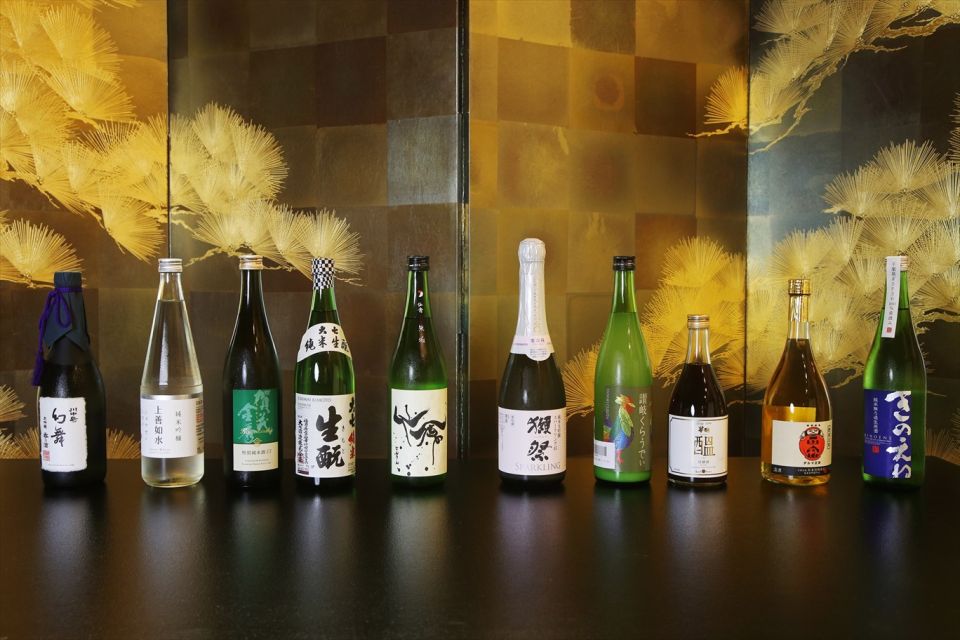
This is the kind of tasting that works even if you’ve only had sake at restaurants and never thought much about what makes one bottle sweet, dry, or savory. The format is simple and smart: you move through seven different sake styles while eating seven paired bites, so you can connect flavor to style right away instead of guessing later.
You’ll also get the context that turns sake from a mystery drink into something you can order with confidence. The instructor explains the role sake plays in Japanese culture, and then ties that back to production basics. That matters because sake isn’t just alcohol here; it’s woven into tradition, religion, and everyday rituals that go back more than a thousand years.
The time block is tight—75 minutes—so you won’t get bored or stuck waiting for the next pour. This is hands-on learning, with short explanations and regular tasting moments. Think “bite, sip, understand,” repeated seven times.
You can also read our reviews of more food & drink experiences in Tokyo

What you’ll taste: from sparkling to dessert-style sake
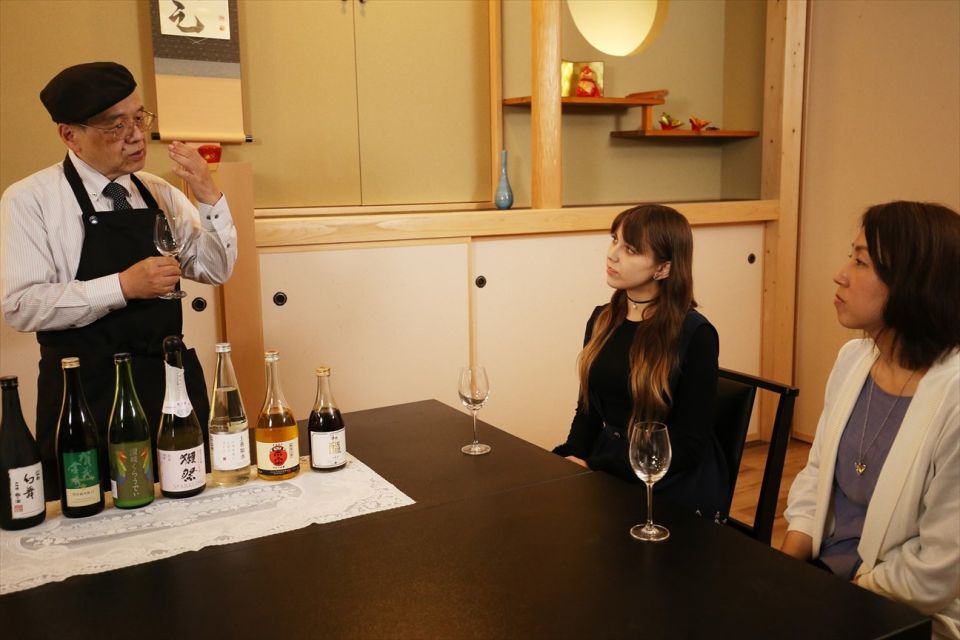
The standout for me is the range. You’re not just getting a few similar sips. The lineup is designed to show how sake can move across styles, including sparkling, sweet, and even dessert-style sake at the end.
Here’s how that helps you as a visitor:
- Sparkling sake shows you that sake isn’t always heavy or flat. If you’ve only known sake as a straight-laced drink, this can reset your expectations fast.
- Sweet and fruit-leaning styles give you a clear comparison point. You start noticing how sweetness affects acidity and how it changes the feel of a bite.
- Savory or savory-leaning pours (the range is described as sweet to savory) make food pairings more than a gimmick. You can taste why some sips work with richer flavors and why others don’t.
And yes, you finish on a sweet note with a dessert-style sample. That’s not just for fun. It’s a practical way to end the tasting when your palate is already warmed up, so you walk away with a “best of” memory instead of a dry afterthought.
How the sommelier lessons fit into the tasting
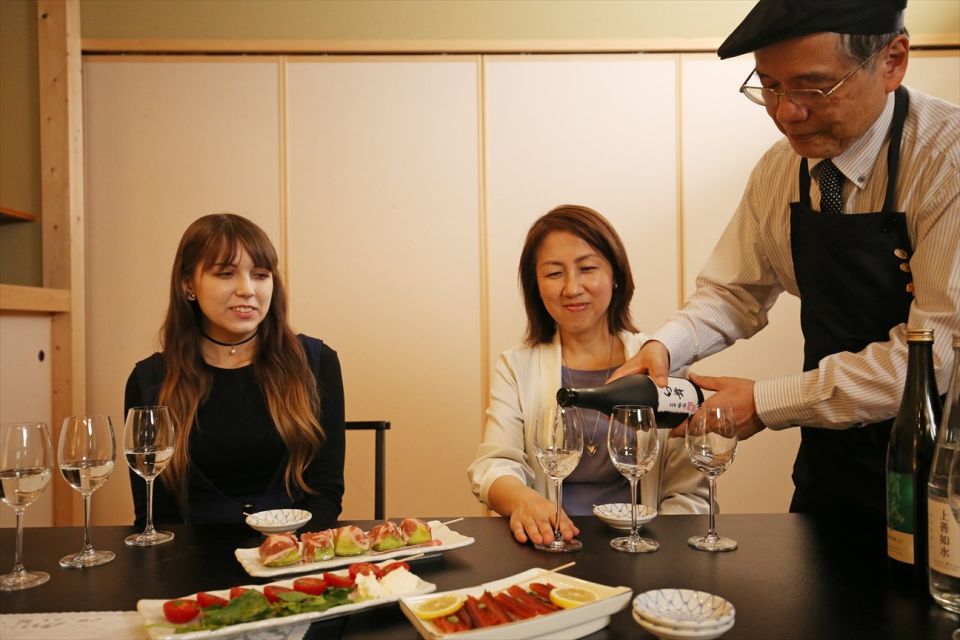
You’ll be guided by an English instructor who’s described as nationally accredited. That education component is part of why this feels more satisfying than a basic tasting where you only get “this one is fruity” type of notes.
During the session, you can expect three main things:
- A quick history of sake and why it matters in Japan.
- How sake is made, in plain terms that connect to what you’re tasting.
- How the different sake varieties differ, including what style you’re currently tasting and how to think about it.
This is where the small group format helps. With a cap of 10 participants, the pace stays comfortable, and questions feel doable rather than rushed. If you’re the type who likes to ask why—why served style matters, why certain pairings work better—you’ll probably get more out of it than you would in a bigger crowd.
Also, names like Tanaka-san and Taka-san come up as hosts you can get to know a bit. That human touch makes the explanations feel less like a lecture and more like a conversation at table level.
The multi-course meal: Japanese and Western pairings
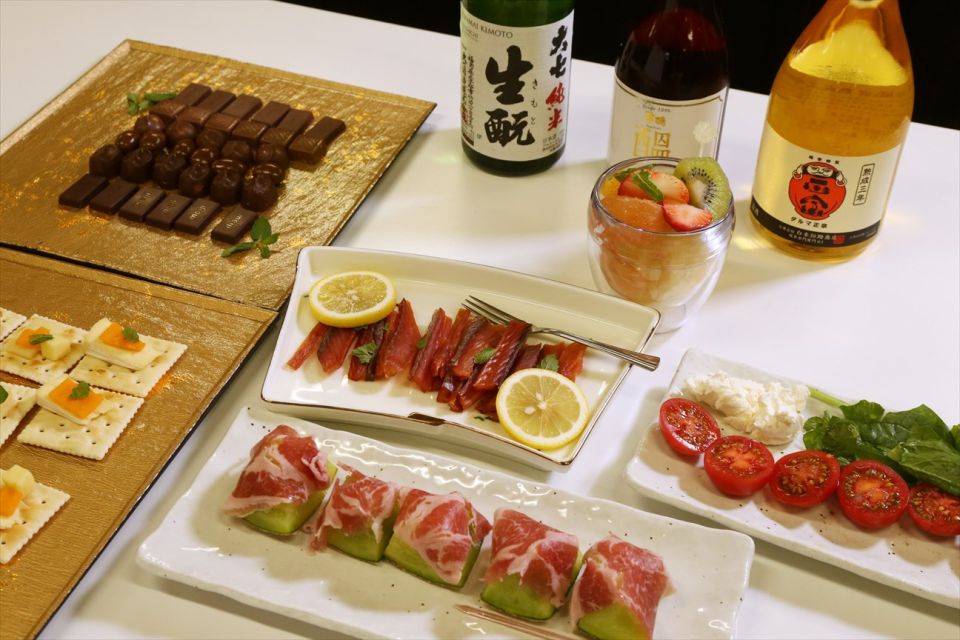
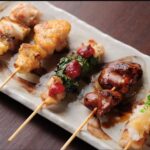
The pairing strategy is the best part for food lovers. Each sake sample comes with a matching bite—seven food pairings—and the meal includes a mix of Japanese and Western dishes. That combination is genuinely useful for visitors because it gives you a bridge. You can understand how sake plays with familiar Western flavors while also learning what Japanese flavors are doing with it.
In practice, the goal is to show how sake can complement:
- savory bites (where you notice balance and mouthfeel),
- lighter items (where you notice freshness and aroma),
- and richer flavors (where you notice how the sake cuts through or smooths).
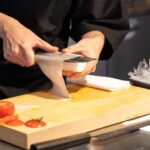
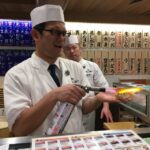
You may even see some items prepared right in front of you. That helps because hot bites and fresh aromas make the pairings feel immediate, not preplanned-on-a-plate in a detached way.
A practical tip: when you’re tasting, don’t treat each sip as a separate experience. Treat it like a “compare-and-contrast exercise.” Take a breath before you start eating, then sip first, then bite. You’ll catch more differences that way.
Duration and pacing: exactly long enough to learn without fatigue
75 minutes sounds short, but it’s a good length for a tasting like this. The content stays focused: history and production basics, then taste-and-eat repetition across seven styles.
The pacing matters because sake aroma changes as you taste and eat. If the timeline were longer with lots of downtime, you’d likely forget the exact flavor direction of each sip. Here, you move in sequence and end with dessert-style sake, which helps your palate finish on a high note.
In other words, you’re not sitting for hours wondering when it ends. You’re learning quickly, with enough time to ask one or two follow-ups.
You can also read our reviews of more tours and experiences in Tokyo

Price and value: is $106 worth it?
At $106 per person, this isn’t a “quick tasting snack.” But it also isn’t just seven sips in a corner.
You’re paying for:
- 7 sake samples (not just a couple),
- 7 food pairings in a multi-course format,
- and a sake instructor described as nationally accredited, delivering history and production education in English.
When I evaluate value, I think about what I’m getting for my money. This experience does three things at once: drink, food, and learning. If you’re the kind of traveler who wants to understand what you’re tasting—how and why—this tends to feel more worthwhile than a purely food-focused tour where you just eat and move on.
If your goal is only to get drunk cheaply, this likely won’t feel like a bargain. But if your goal is to leave Tokyo with better instincts for ordering sake (and pairing it with food), the price becomes easier to justify.
Where to meet near Tokyo Tower (and why timing matters)
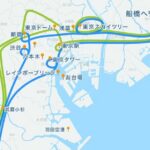
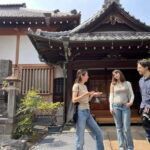
This is one area where planning beats luck. You meet the instructor at the main entrance of the Kikai Shinko Kaikan building on the 1st floor, and the building is directly opposite Tokyo Tower.
If you can’t find the instructor, the backup is specific: visit True Japan Tour (Room #B109) on the B1 floor of the same building.
A small caution based on real-world confusion: this isn’t an outdoor street corner meetup. It’s inside a building, so signs and entrances can feel less obvious—especially if you arrive slightly late or flustered. My advice: give yourself buffer time, and aim to arrive a few minutes early so you’re not scanning doors while hungry.
Also remember: no hotel pickup or drop-off is included, so you’ll need to handle transit to the area yourself.
Who this experience suits best
This tasting is a great match if:
- you like food and want pairings that teach you something,
- you want a structured introduction to sake styles,
- and you’re comfortable with a short, focused session (not a half-day tour).
It’s also a strong choice if you want an English experience with a small-group feel. The cap of 10 participants makes it easier to ask questions and get clearer explanations.
It’s not suitable for people under 20, so if you’re traveling with younger teens or children, you’ll need a different activity.
Should you book this Tokyo sake-and-food tasting?
Book it if you want your Tokyo sake experience to be more than sip-and-smile. The combination of seven distinct sake styles, planned pairings, and an English instructor who explains production and cultural context is exactly what turns a tasting into real know-how.
Skip it if you’re only looking for casual drinking or you’d rather roam freely without a timed format. Also consider skipping if you strongly dislike indoor meeting points and you hate navigating instructions—this one has a clear meeting plan, but it’s inside a specific building.
If you’re on the fence, think of it like this: for 75 minutes, you get a mini education plus a full-flavor meal pairing experience, in an area near Tokyo Tower where you can easily build the rest of your day around it.
FAQ
How long is the sake and food tasting?
It lasts 75 minutes.
What’s included in the price?
You get a nationally accredited sake instructor, 7 sake samples, and 7 food pairings.
Is the tour conducted in English?
Yes, the instructor works in English.
How many people are in the group?
It’s a small group, limited to 10 participants.
Where exactly is the meeting point?
Meet the instructor at the main entrance of the Kikai Shinko Kaikan building on the 1st floor, opposite Tokyo Tower. If needed, go to True Japan Tour, Room #B109 on the B1 floor.
Is hotel pickup included?
No, hotel pickup and drop-off are not included.
Is it wheelchair accessible?
Yes, it is listed as wheelchair accessible.
Who can join?
The experience is not suitable for people under 20 years.