REVIEW · TOKYO
Tokyo: Taishu Engeki Show with Kimono and Sword Lesson
Book on GetYourGuide →Operated by 有限会社篠原演劇企画 · Bookable on GetYourGuide
Two hours of theater, plus a sword lesson.
This Asakusa experience pairs a live Taishu Engeki show at Mokubakan Theater with a hands-on kimono + fan and sword workshop, so you get both the spectacle and the practice in one ticket. I also love how close the performance feels, with action and movement you can really see and follow even if you do not speak Japanese. The only real catch: the professional show uses flashing lights and loud sounds, so if that bothers you, plan ahead.
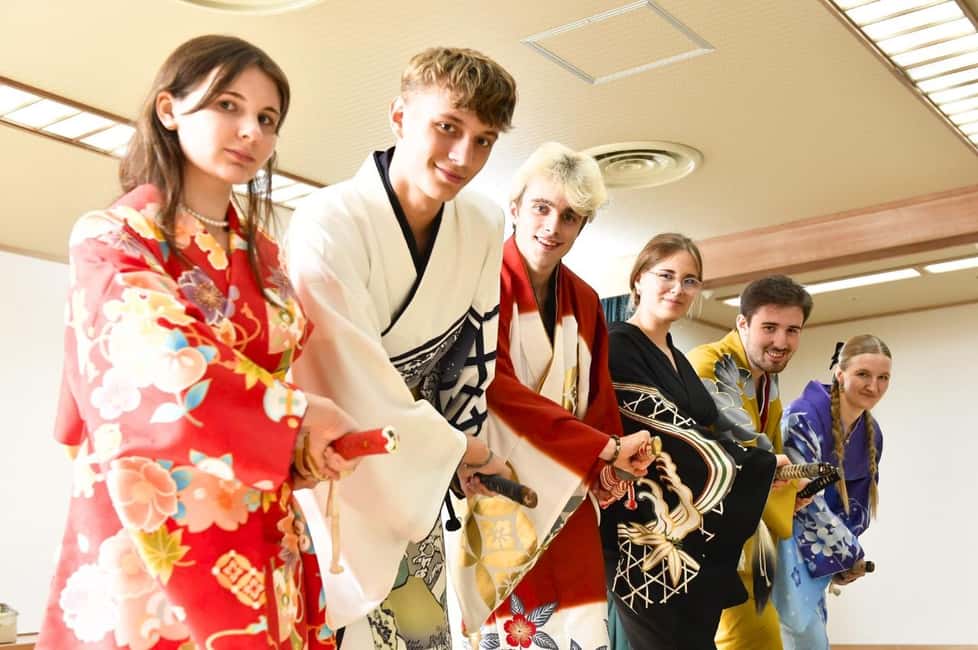
You’ll be in a small group (limited to 6), guided in English or German, and coached in beginner-friendly movements rather than strict choreography. The program runs about 3 hours, includes a commemorative photo shoot in your kimono, and wraps everything in the kind of traditional popular theater that is made for everyday audiences, not just theater nerds.
In This Review
- Key takeaways before you go
- Taishu Engeki in plain terms: why this theater works for non-Japanese speakers
- Mokubakan Theater in Asakusa: the setting that keeps it close and personal
- The full 3-hour flow: show timing, kimono change, and fan-and-sword practice
- Afternoon version (meeting at 2:20pm)
- Evening version (meeting at 5:40pm)
- Kimono dressing and your photo shoot: how to make the look last
- Fan dance and samurai swordplay (chanbara): what you’re actually learning
- The show: what makes Taishu Engeki feel like a live event
- The ohana gift custom and how tipping fits the program
- Meeting points and where to start: Asakusa navigation that won’t waste time
- Price and value: why $12 can be a smart buy
- Who should book this Taishu Engeki show (and who shouldn’t)
- Should you book this Taishu Engeki show and kimono sword lesson?
- FAQ
- How long is the Taishu Engeki show with kimono and sword lesson?
- How much does it cost?
- Where does the experience take place?
- Where do I meet my guide?
- Are there different start times?
- What language is instruction offered in?
- What happens during the workshop?
- Are photos included?
- Is the workshop physically active?
- Is alcohol allowed?
- Is it suitable for pregnant women?
Key takeaways before you go
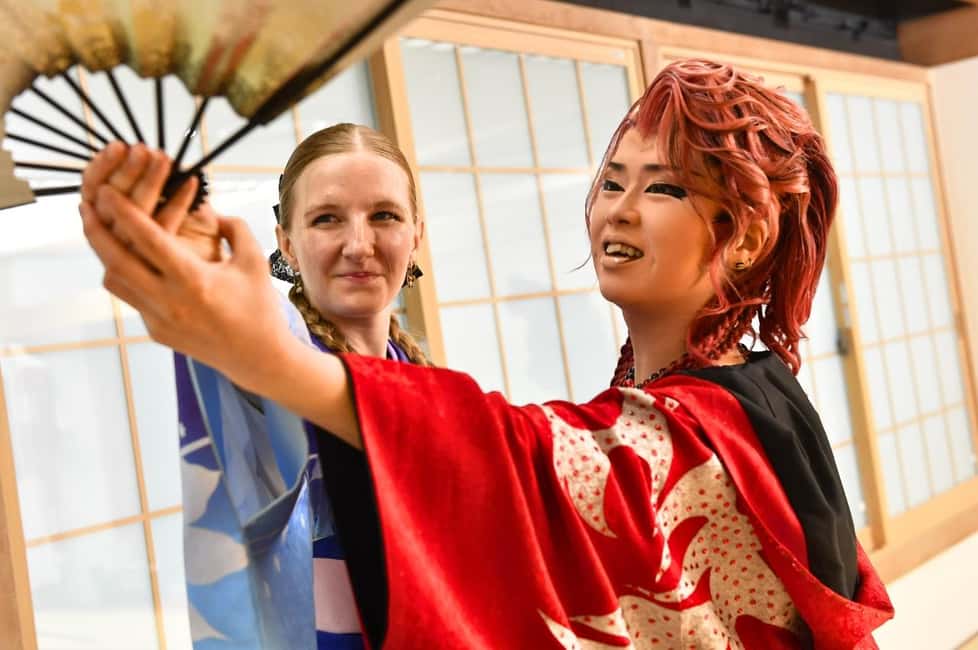
- Mokubakan Theater since 1977: Taishu Engeki focused, and designed for real audience connection.
- Kimono dressing + tatami workshop: you change into a kimono and learn in a traditional room.
- Sensu (folding fan) and chanbara (sword combat dance): guided, fun, and beginner-friendly.
- Show is the short, intense part: flashing lights and loud sounds happen during the professional performance.
- Commemorative photos included: capture the kimono look with a photo shoot guided by local pros.
Taishu Engeki in plain terms: why this theater works for non-Japanese speakers
Taishu Engeki is popular theater in Japan, built to be accessible. Think of it as drama plus music and dance, with strong acting and big physical storytelling. You do not need perfect Japanese to follow what is happening because the communication is mostly visual: faces, posture, timing, and those stylized movements that read instantly.
One reason I like this style is the way it mixes different forms under one roof. You get dramatic scenes, musical energy, and then the action sequences where swordplay and dance take center stage. If you are used to theater that relies heavily on spoken language, this format can feel refreshingly clear.
You may also notice something called the onnagata tradition, where male actors play female roles. It is part of the craft and the stage discipline, and it adds a layer of elegance and theatrical precision that you can see even from a distance.
You can also read our reviews of more tours and experiences in Tokyo

Mokubakan Theater in Asakusa: the setting that keeps it close and personal
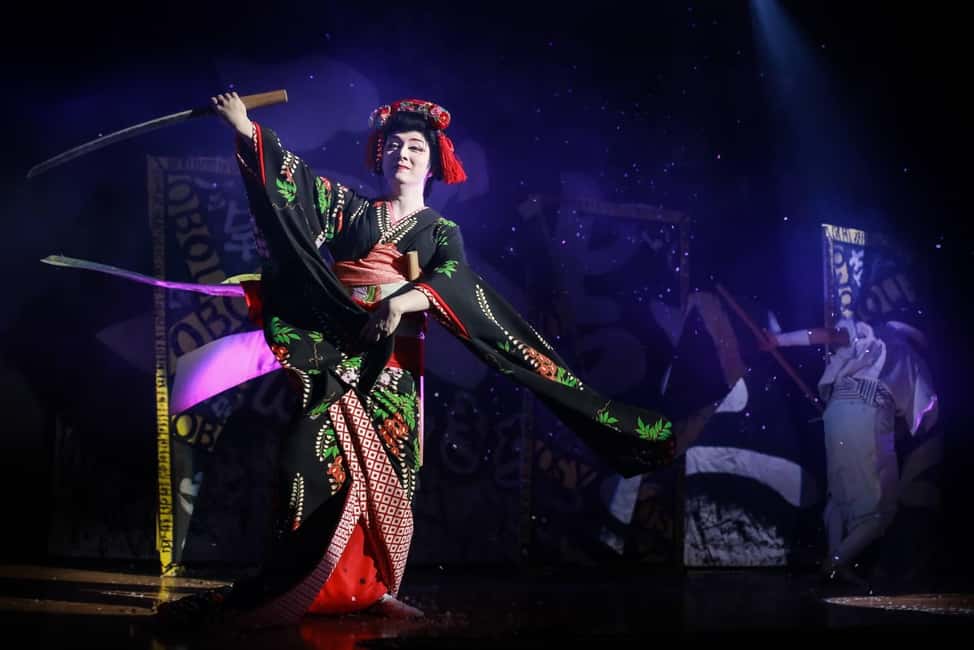
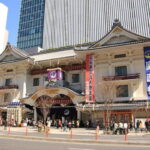
Your performance happens at Mokubakan Theater in Asakusa. This venue has dedicated itself to Taishu Engeki since 1977, which matters because it shapes the whole experience. Instead of a rotating stage or a show that happens occasionally, this is a place built around this exact performance style.
The big practical benefit: you get that feeling of being right there with the actors. In the program, the show is not treated like a far-away spectacle. It is staged so the physical energy lands on the audience. If you like watching movement—feet, jumps, entrances—this format makes it easier to follow.
Also, because you are coming in as a small group, you are not lost in a crowd. You have a program leader and staff around you, so you know what step comes next and where to stand.
The full 3-hour flow: show timing, kimono change, and fan-and-sword practice
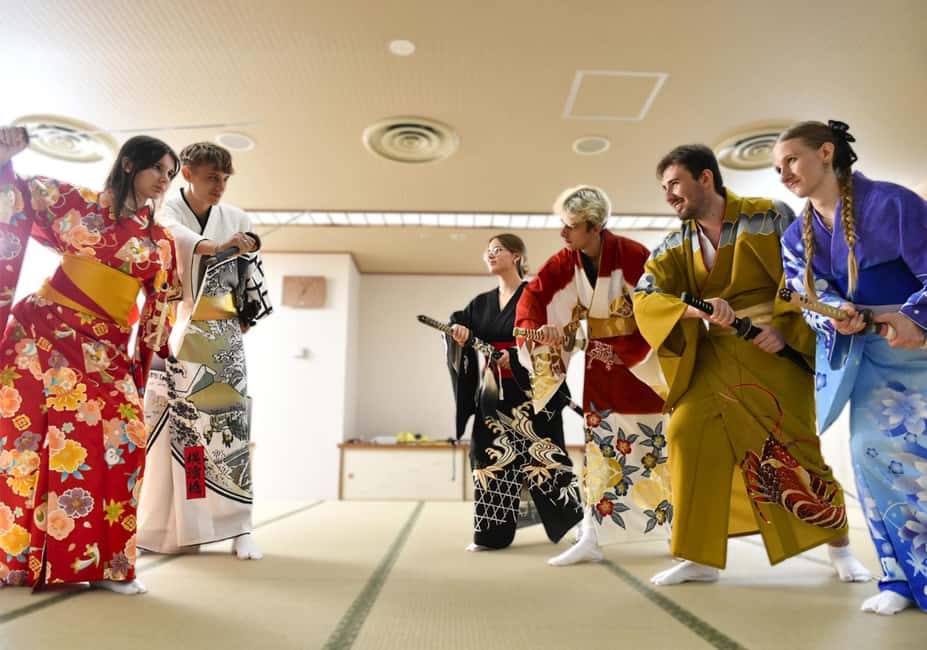
The experience runs about 3 hours, but the order depends on whether you book the afternoon slot or the evening slot.
Afternoon version (meeting at 2:20pm)
1) Welcome and briefing: meet your international program leader at the theater area and get introduced to Taishu Engeki and how the day will work.
2) Professional performance: watch the live show in the Mokubakan theater. The professional portion includes the lighting and sound effects mentioned in the notice.
3) Short transfer: a walk of about 5–7 minutes to a separate cultural venue for the workshop.
4) Kimono dressing: change into your kimono for the hands-on session.
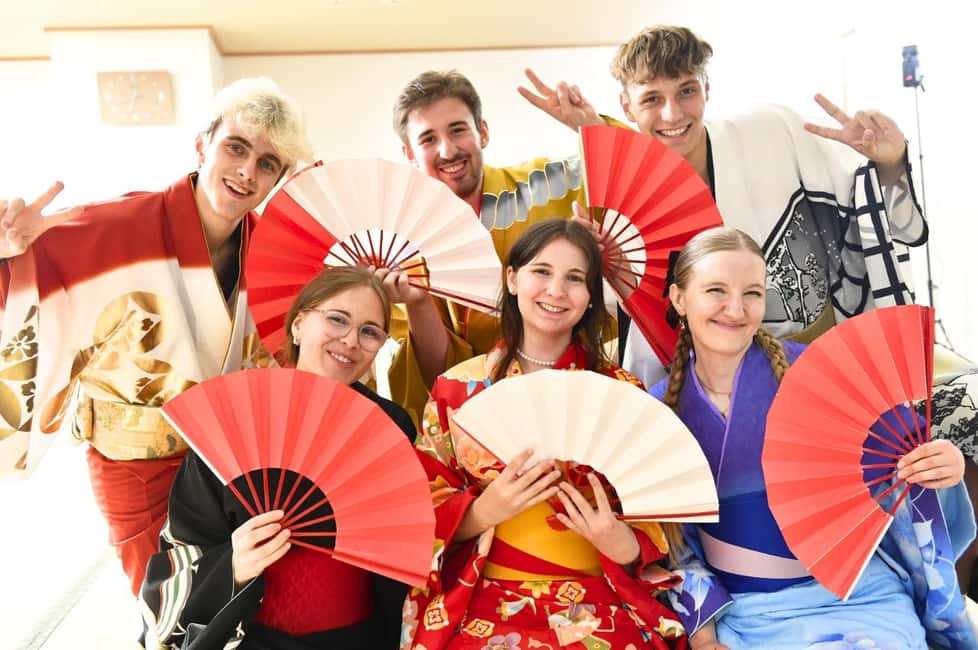
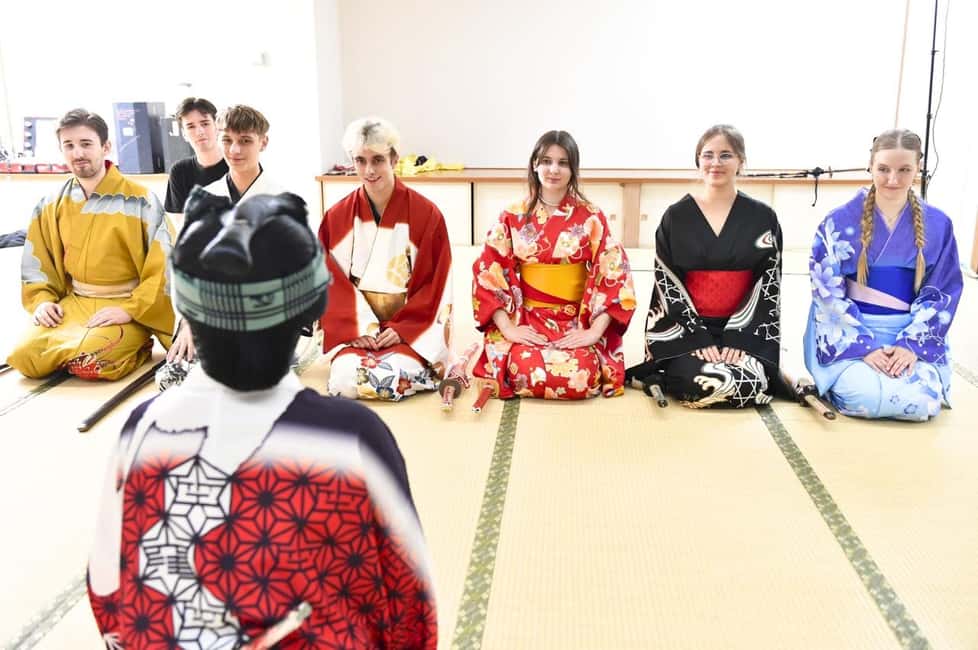
5) Cultural workshop in a tatami room: learn fan dance movements and chanbara sword-combat choreography, taught by a local professional dancer.
6) Commemorative photos: wrap up with photos in your kimono.
Evening version (meeting at 5:40pm)
The schedule is reversed. You meet at 5:40pm, do the workshop first (including the kimono change), then walk back to the show portion later.
Either way, the order makes sense. You get the show first (in the afternoon slot) so you can copy the feel during the workshop. Or, if you do the evening slot, you learn the basics first so the performance later hits harder because you recognize the movements.
You can also read our reviews of more tours and experiences in Tokyo



Kimono dressing and your photo shoot: how to make the look last
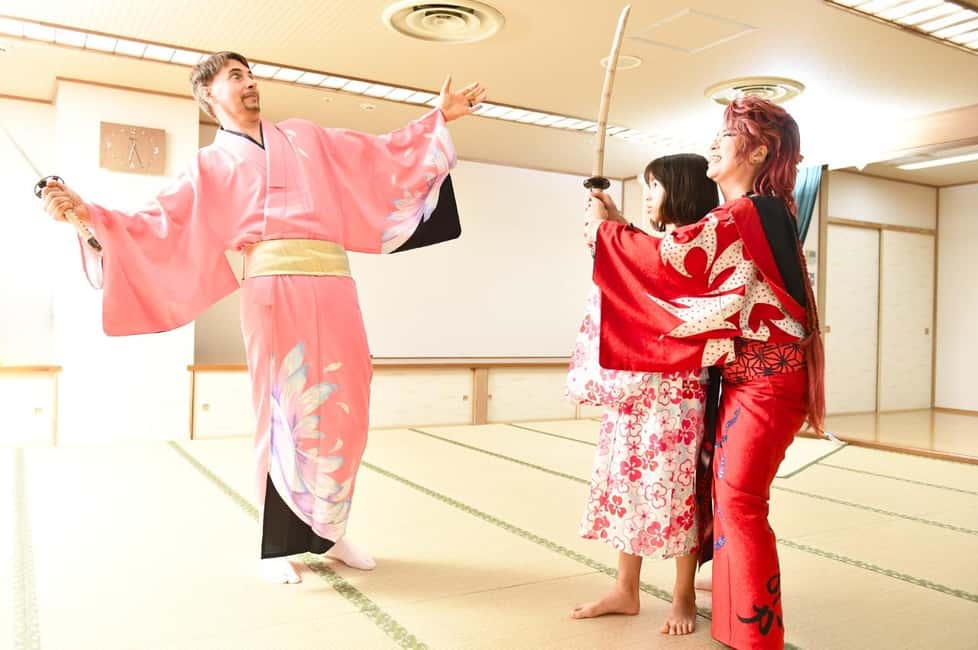
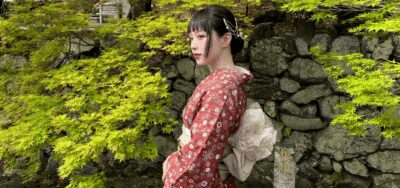
A core part of the value here is that the kimono is not just a costume. You actually dress into it, then use that look for photos at the end. That is a simple but effective way to turn the theater experience into a real memory you can keep.
The photo shoot is guided, and it is designed to happen after you finish the workshop. You will be in your kimono, and you will be able to capture the full theme: Taishu Engeki, the fan, and the sword lesson energy.
Practical mindset: treat the kimono portion as part of the choreography. The staff guide you through the change, then you shift into a traditional tatami setting. If you go in relaxed and ready to follow instructions, it feels smooth rather than stressful.
Fan dance and samurai swordplay (chanbara): what you’re actually learning
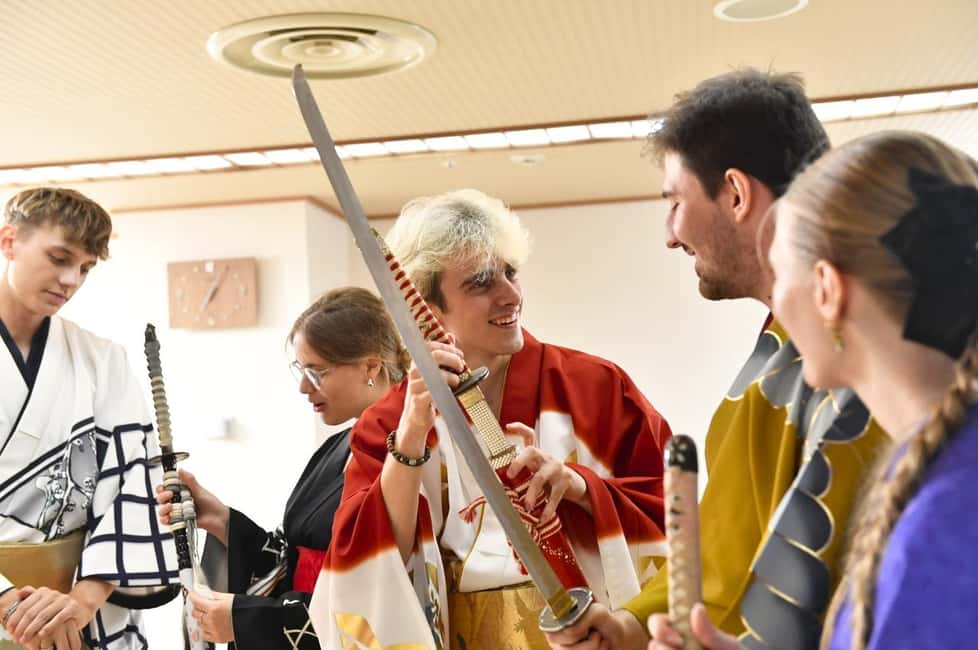
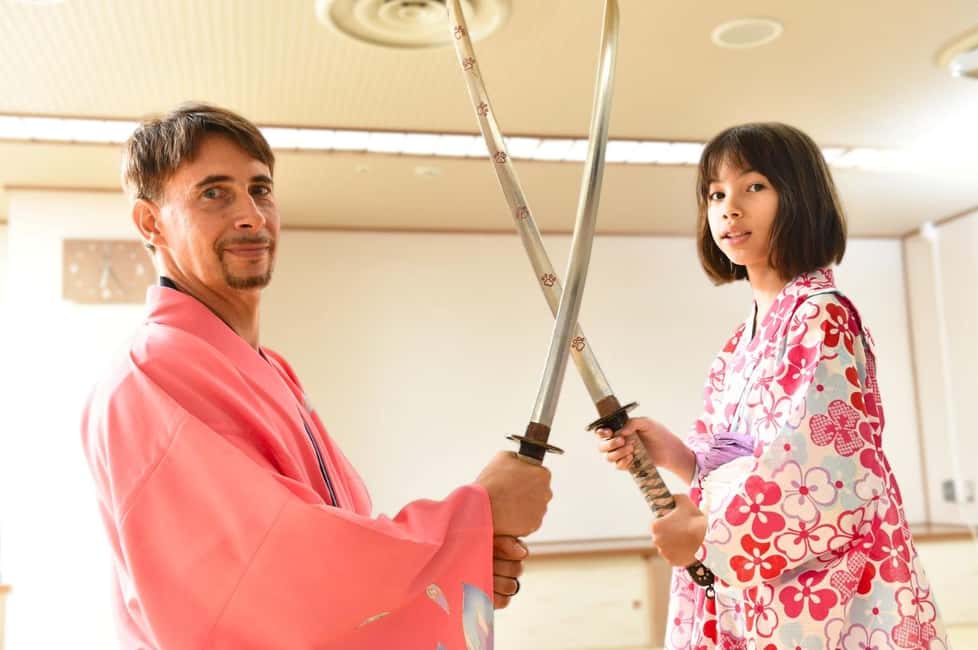
This is the hands-on highlight. You learn two big performance skills:
1) Sensu fan dance with a folding fan
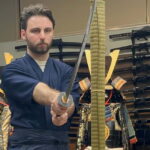
2) Chanbara sword-combat choreography (a dynamic, theatrical version of swordplay)
The workshop is designed for fun and enjoyment rather than difficult choreography. That shows up in how the program teaches movements: it is structured, but it is not about demanding you master a complicated sequence. In the same way that the show is easy to follow visually, the workshop focuses on beginner-friendly steps that let you participate right away.
The instructor is a local professional dancer. You also get guidance from staff and your program leader, so you are not left figuring it out yourself.
Safety and comfort matter. This part is physically active. If you feel dizzy or unwell, you should notify staff right away. Also, alcohol and drugs are not allowed, which helps keep the workshop safe and distraction-free.
The show: what makes Taishu Engeki feel like a live event
The professional Taishu Engeki show is where the production shines. Expect a mix of drama, music, and expressive body language. Even when the storyline might be hard to catch perfectly, the physical storytelling does the job.
This is also where you need to plan around the effects. The notice is specific: flashing lights and loud sounds are used during the professional performance portion only. If you are sensitive to strobe effects or high-volume sound, contact the operator beforehand so they can advise you.
One more reason the show works so well as a vacation experience: it is close. When the action happens, you feel the energy through the staging. It is not like watching from far away where only heads and hands are visible.
The ohana gift custom and how tipping fits the program
You are guided through a local custom during the performance. The program fee includes a small token of appreciation, and staff also encourage you to participate in the tradition of offering a small gift to performers (お花を贈る, ohana o okuru).
Do not overthink it. The program leader and staff handle the guidance, and you follow their lead for how to do it properly. It is a respectful way to connect to the performers beyond clapping and smiling.
Meeting points and where to start: Asakusa navigation that won’t waste time
The program is based in Asakusa and starts at a clear meeting location.
- For the evening slot, the meeting point address is 1 Chome-38-6 Asakusa, Taito City, Tokyo 111-0032.
- Your program leader will be in front of Asakusa Mokubanan Theater with a sign that indicates the meeting point.
- A provided coordinate point for the meeting location is 35.7143669128418, 139.79486083984375.
If you are doing the afternoon slot, your leader meets you at the theater area as well, with the timing set for 2:20pm in the afternoon version. Build in a few minutes buffer because punctuality is part of how the whole 3-hour flow stays smooth.
Price and value: why $12 can be a smart buy
At about $12 per person, this is priced like a bargain compared to how much you get packed into 3 hours.
Here’s where the value comes from:
- A live professional theater show at a venue dedicated to Taishu Engeki
- Kimono dressing as an actual, guided part of the program
- A structured workshop on both fan dance and chanbara sword movements
- Instruction and guidance in English or German
- Commemorative photos in your kimono
- A small group size (limited to 6), which usually means more attention and less confusion
The main trade-off is that the experience is theater-focused and a bit intense during the show segment. But if flashing lights and loud sounds do not bother you, the combination of performance + instruction + photos at this price is hard to beat.
Who should book this Taishu Engeki show (and who shouldn’t)
This works especially well if you:
- Want a genuinely Japanese performing arts experience without needing a deep theater background
- Like hands-on activities, not just watching
- Enjoy costumes and photography that are part of the action
- Prefer small groups with guided instruction in English or German
- Want to see and practice both fan dance and theatrical swordplay
It may not be the best choice if:
- You are pregnant (the program states it is not suitable)
- You are sensitive to flashing lights or loud sounds, since those effects are used during the professional performance portion
- You have health concerns that could be worsened by a physically active workshop; if you feel unwell, you should notify staff immediately
Should you book this Taishu Engeki show and kimono sword lesson?
If you want one ticket that gives you theater, costume, and movement practice in Asakusa, book it. The value is strong at $12, and the format makes Taishu Engeki easy to understand through visuals. Just take the show-light and sound notice seriously, and plan to go in with a calm, cooperative attitude for the kimono and active workshop.
FAQ
How long is the Taishu Engeki show with kimono and sword lesson?
The total experience lasts about 3 hours.
How much does it cost?
It is listed at about $12 per person.
Where does the experience take place?
The performance happens at Mokubakan Theater in Asakusa, Tokyo.
Where do I meet my guide?
For the evening slot, the meeting point address is 1 Chome-38-6 Asakusa, Taito City, Tokyo 111-0032. Your leader meets you in front of Asakusa Mokubanan Theater with a meeting point sign.
Are there different start times?
Yes. There is an afternoon slot with meeting time at 2:20pm, and an evening slot with meeting time at 5:40pm. In the evening, the workshop and show order is reversed.
What language is instruction offered in?
Instruction is offered in English and German.
What happens during the workshop?
After you dress in a kimono, you join a tatami-room workshop with a local professional dancer where you learn sensu fan dance and chanbara sword-combat choreography.
Are photos included?
Yes. The program ends with commemorative photos in your kimono.
Is the workshop physically active?
Yes, it includes a physically active workshop. If you feel dizzy or unwell, notify staff right away.
Is alcohol allowed?
No. Alcohol and drugs are not allowed.
Is it suitable for pregnant women?
No. The experience is not suitable for pregnant women.